Download as ODP, PPTX

![THANKS.... GIVE YOUR SUGGESTIONS AND JOIN AFTERSCHOOOL NETWORK / START AFTERSCHOOOL NETWORK IN YOUR CITY [email_address] PGPSE – WORLD'S MOST COMPREHENSIVE PROGRAMME IN SOCIAL ENTREPRENEURSHIP](https://image.slidesharecdn.com/centralexciseact1944-100113212544-phpapp02/85/Central-Excise-Act-1944-34-320.jpg)

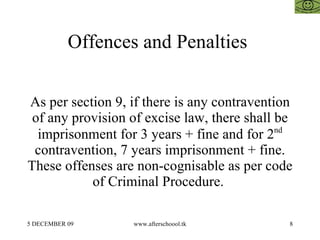
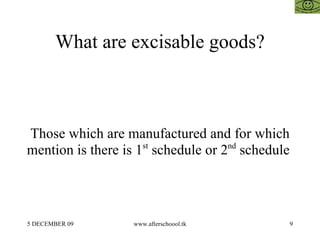
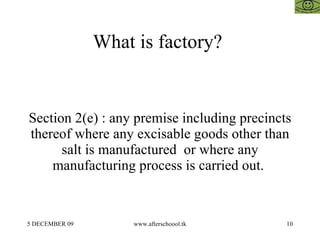
The Central Excise Act of 1944 establishes an excise tax on goods manufactured in India. The tax is collected by the manufacturer at the time of production. The key points of the act are: 1) It levies a tax called Central Value Added Tax (CENVAT) on most goods based on schedules set by other acts. 2) It defines valuation methods, exemptions, and defines excisable goods. 3) It establishes offenses for non-compliance and associated penalties like fines and imprisonment. 4) It provides the power for the government to exempt some industries and refund excess duty paid with interest.


