Cell Cycle Checkpoints and
Carcinogenesis
Hussein Sabit, Ph.D
College of Biotechnology, Misr University for
Science & Technology.
hussein.sabit@must.edu.eg
01069737737
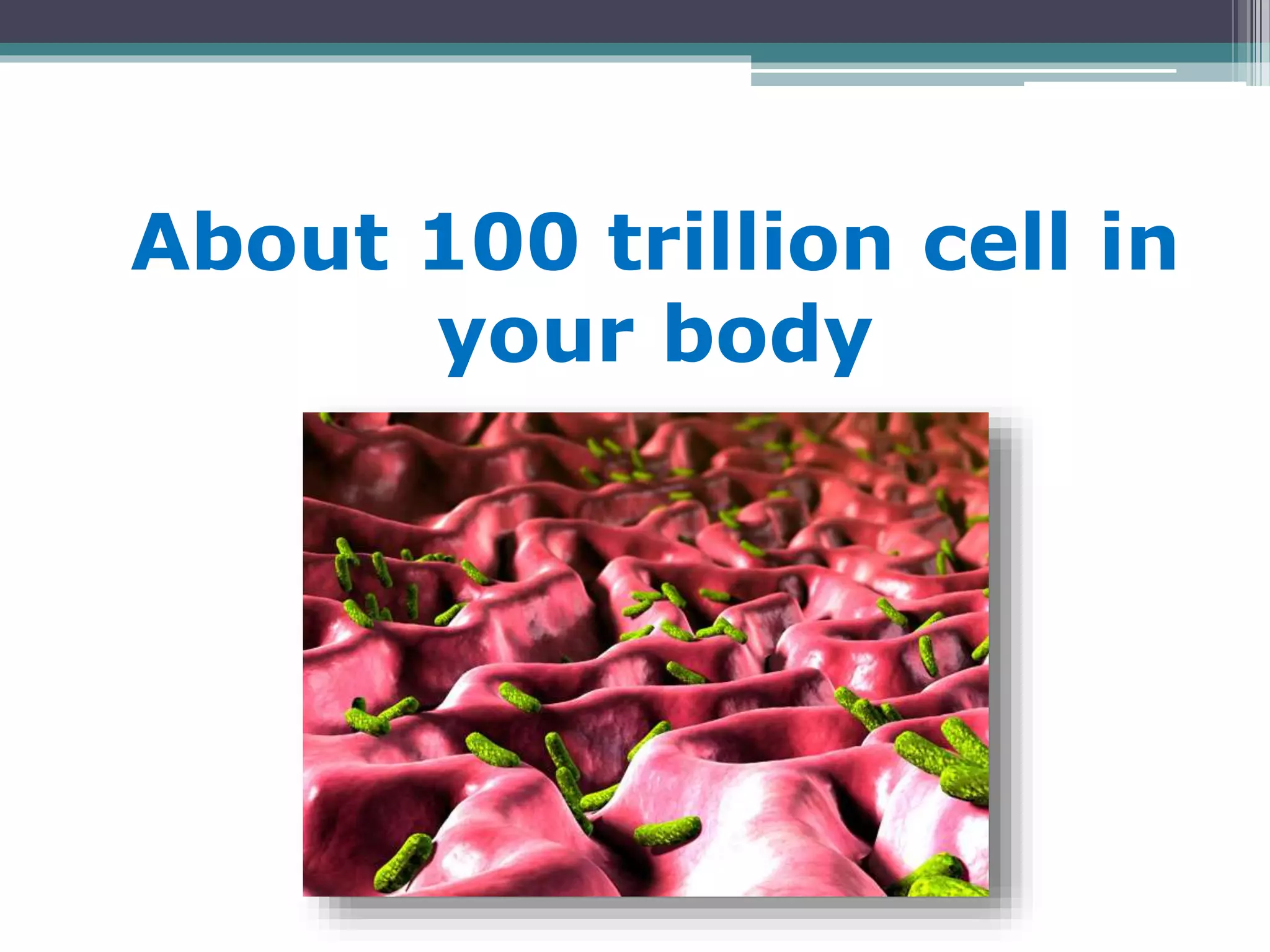
About 100 trillion cell in
your body
Thinking about the cell cycle?
• Cell cycle functions according
to some sort of internal clock,
which would determine how
long a phase should take.
• However, the cell cycle is
depicted like the falling
dominoes.
DNA
DNA
DNA
DNA
DNA
DNA
DNA
DNA
DNA
G1
Cell growth
S
DNA replication
G2
Cell growth
preparation for
division
Mitotic Phase (M)
Interphase
Interphase
Interphase
Cell cycle
Interphase
Represents 90% of the cell cycle, it
consists of:
• Go phase.
• G1 phase.
• S phase.
• G2 phase.
Mitotic Cell Division
 Karyokinesis (mitosis):
consists of prophase, metaphase, anaphase and
telophase.
Cytokinesis (cytoplasmic division):
The cytoplasm and its contents are divided. In animal
cells a cleavage furrow forms that essentially pinches
the cell in two.
Prophase
 In this phase, chromatin condenses into
chromosome.
 Prophase accounts for approximately 3% of
the cell cycle's duration (35 min.)
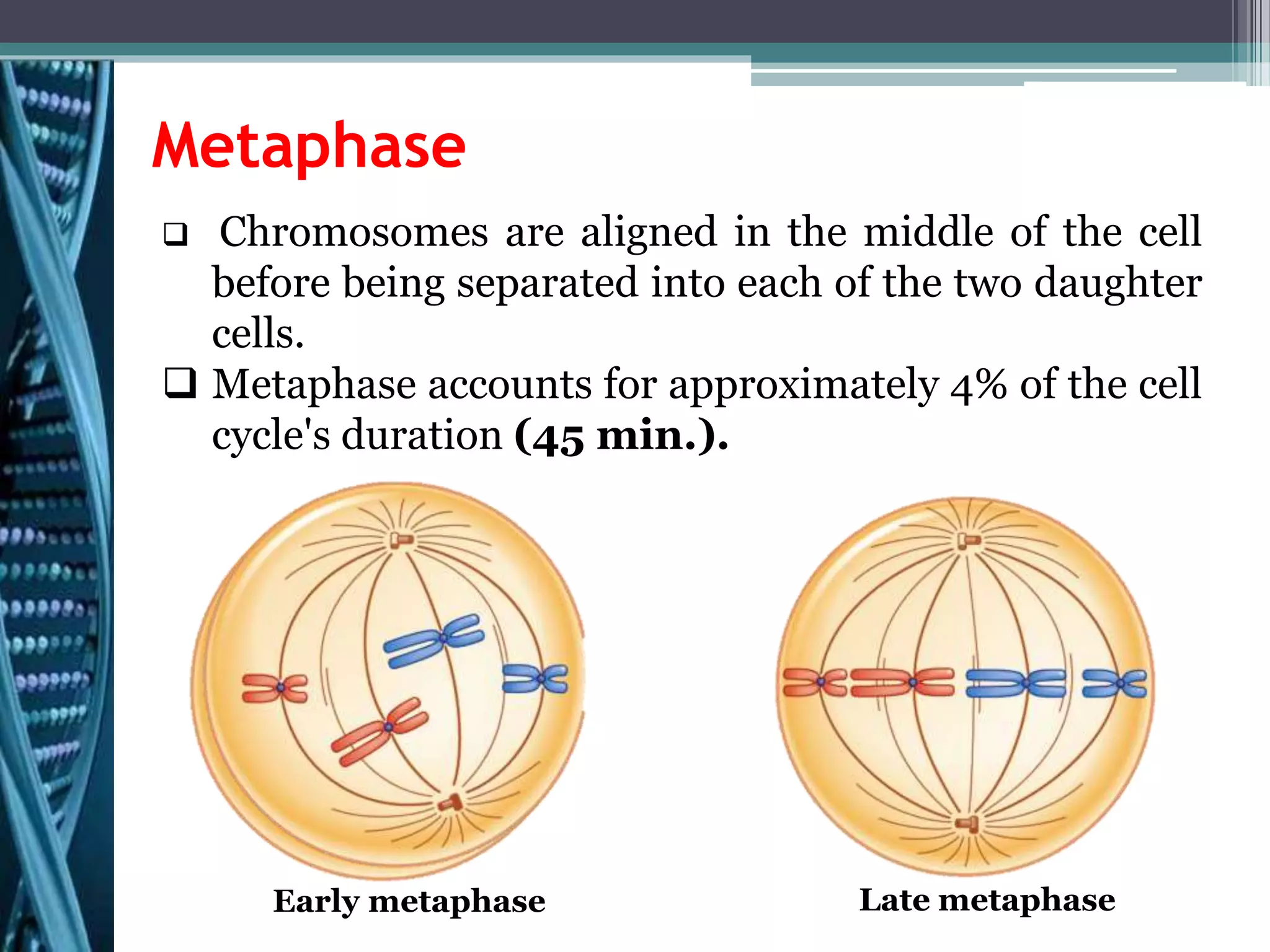
Metaphase
 Chromosomes are aligned in the middle of the cell
before being separated into each of the two daughter
cells.
 Metaphase accounts for approximately 4% of the cell
cycle's duration (45 min.).
Early metaphase Late metaphase
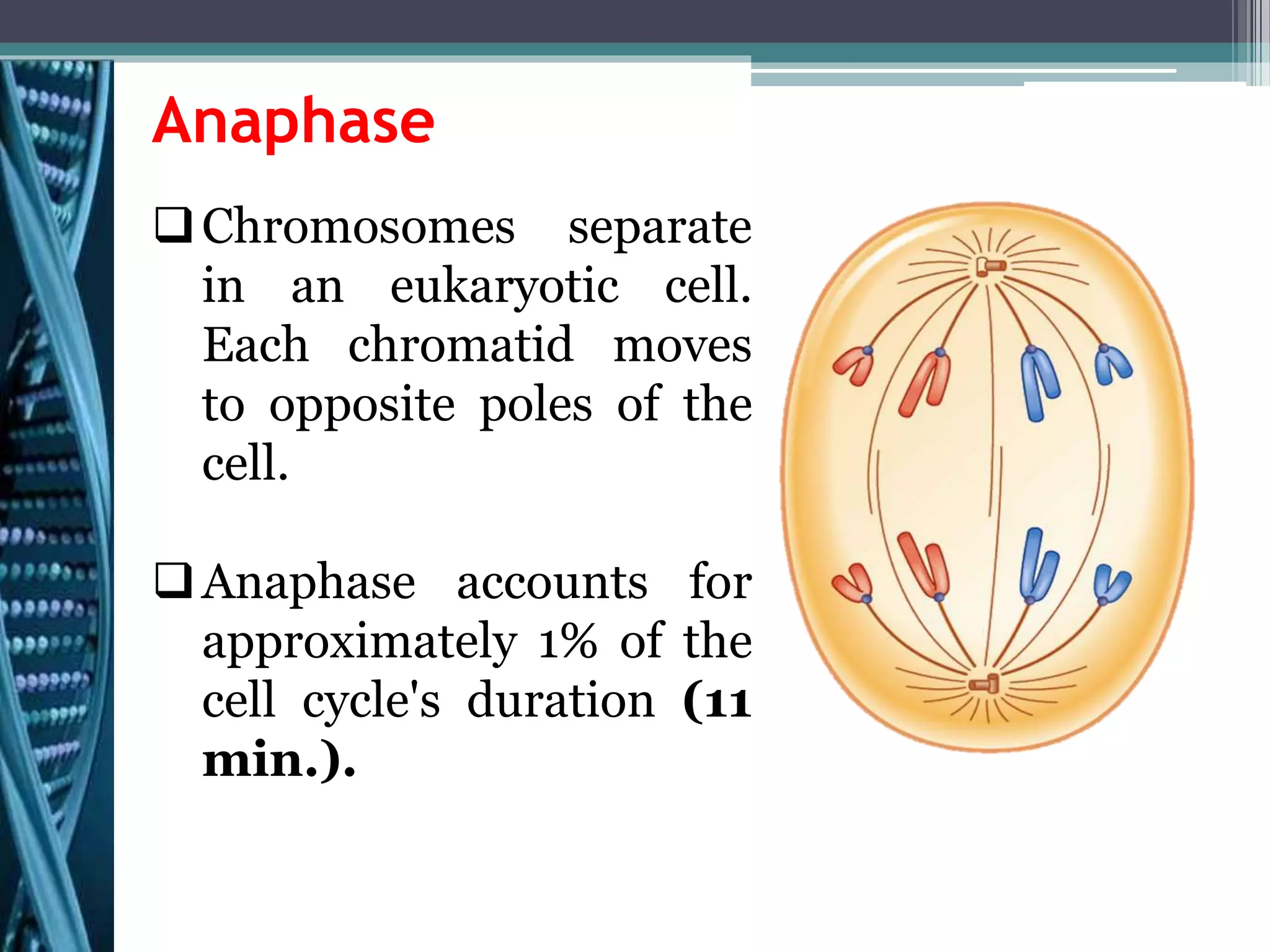
Anaphase
Chromosomes separate
in an eukaryotic cell.
Each chromatid moves
to opposite poles of the
cell.
Anaphase accounts for
approximately 1% of the
cell cycle's duration (11
min.).
Cytokinesis
 It is the division
of the cytoplasm.
 Cytokinesis must
be controlled to
ensure that it
occurs only after
sister anaphase
separation.
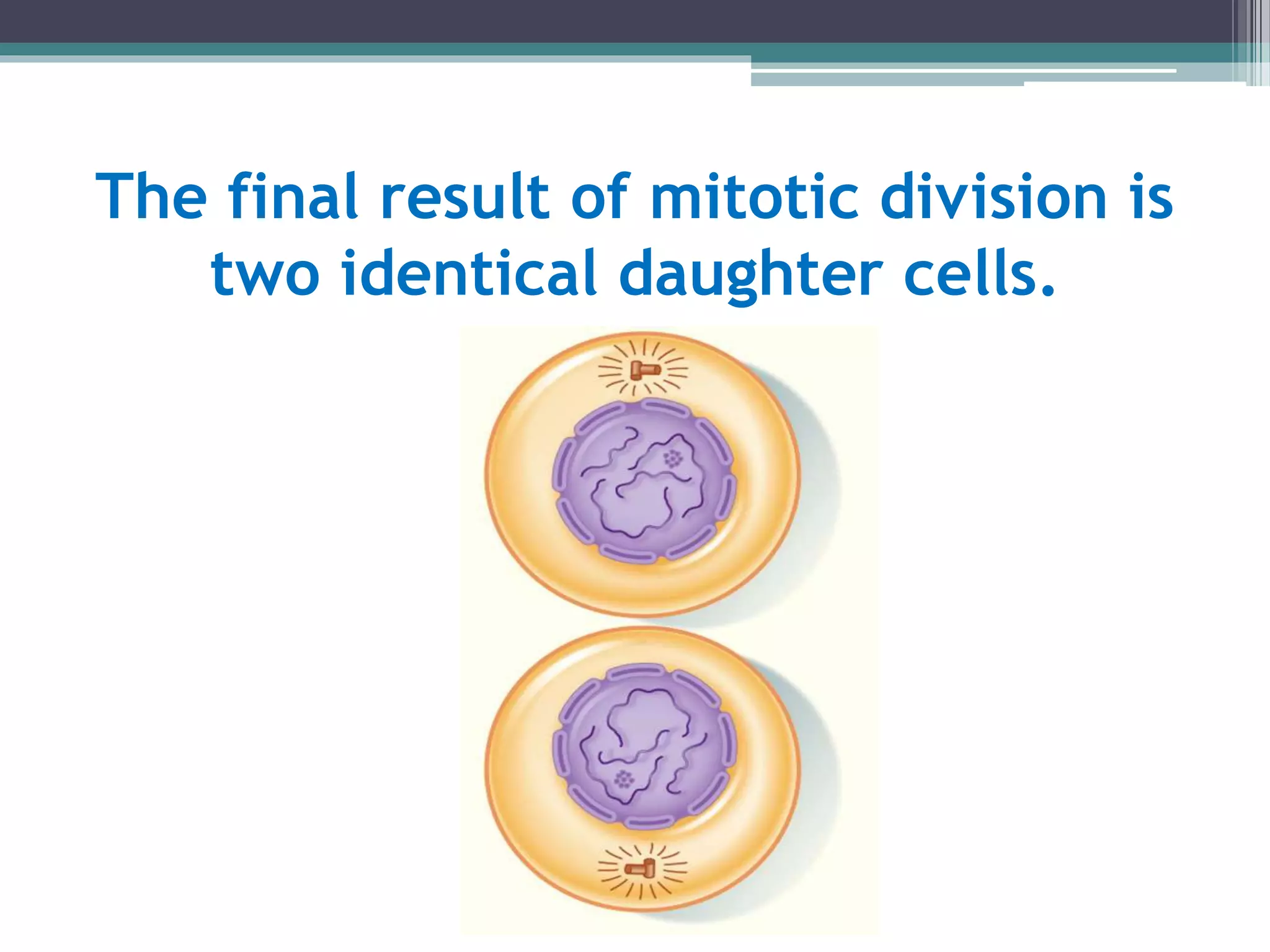
The final result of mitotic division is
two identical daughter cells.
Cell cycle
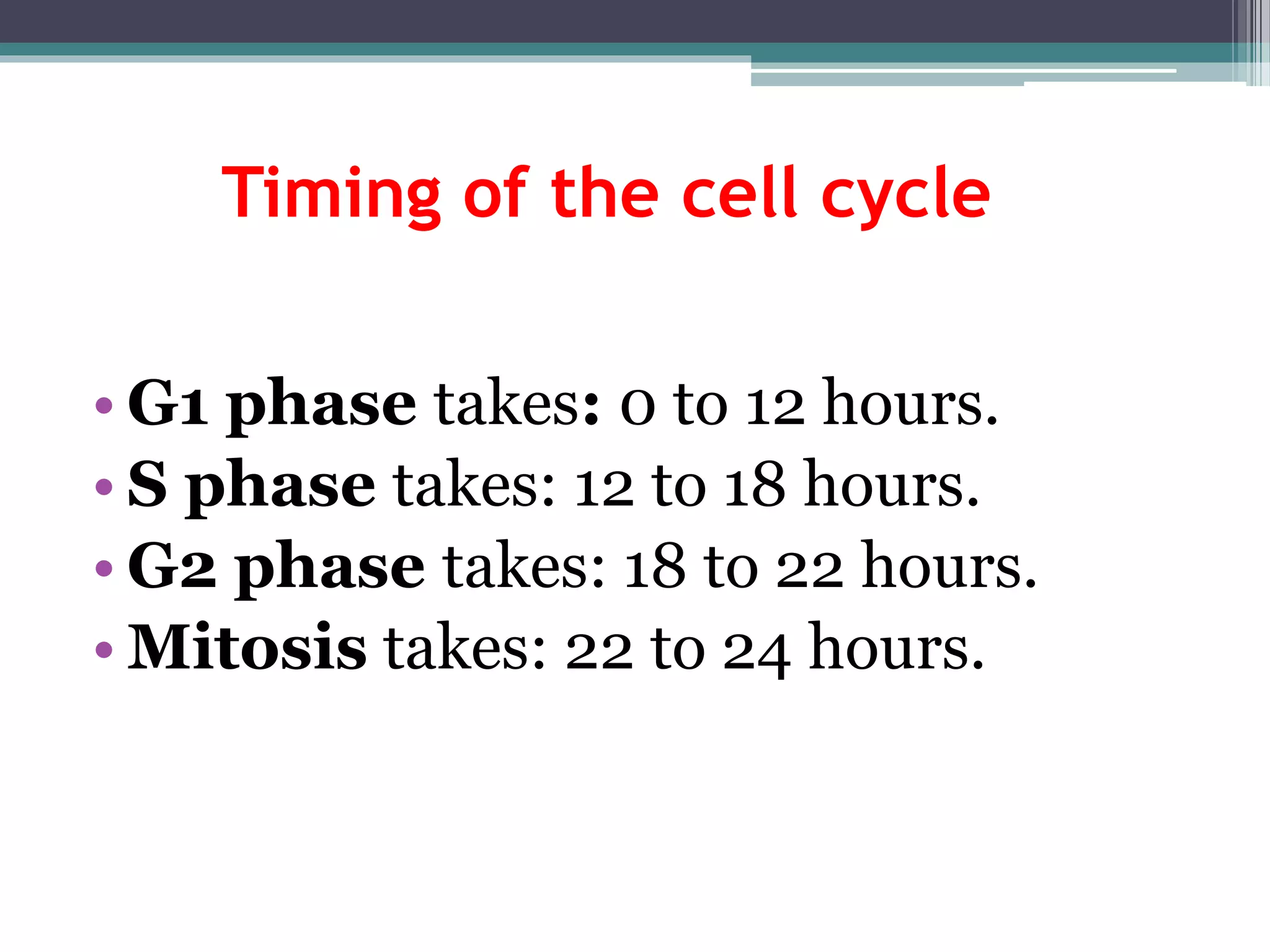
Timing of the cell cycle
• G1 phase takes: 0 to 12 hours.
• S phase takes: 12 to 18 hours.
• G2 phase takes: 18 to 22 hours.
• Mitosis takes: 22 to 24 hours.
 This is a .. control mechanisms that
ensure the fidelity of cell division in
eukaryotic cells.
 These checkpoints verify whether the
processes at each phase of the cell cycle
have been accurately completed or not.
 Multiple checkpoints have been
identified.
Cell cycle checkpoints
1
23
G1 Checkpoint
 The first checkpoint is
located at the end of the
cell cycle's G1 phase, just
before entry into S phase.
 It makes the key decision
of whether the cell should
divide, delay division, or
enter a resting stage (G0).
G1
G0
G1 checkpoint
(a) Cell receives a go-ahead
signal
G1
(b) Cell does not receive a
go-ahead signal
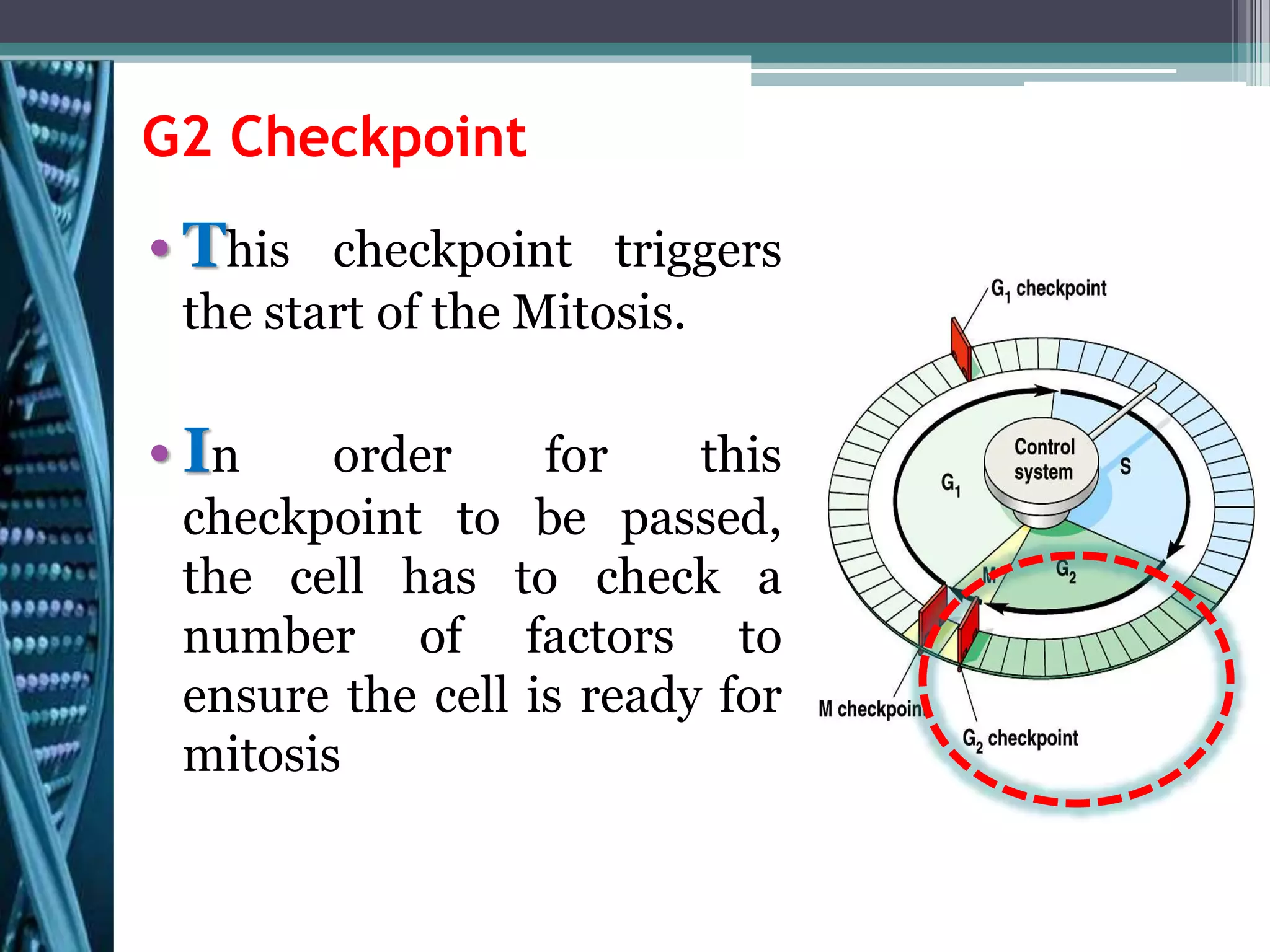
G2 Checkpoint
• This checkpoint triggers
the start of the Mitosis.
• In order for this
checkpoint to be passed,
the cell has to check a
number of factors to
ensure the cell is ready for
mitosis
Metaphase Checkpoint
• The mitotic spindle
checkpoint occurs at the
point in metaphase where
the chromosomes have
aligned at the mitotic plate
and be under bipolar
tension.
• The tension created by
this bipolar attachment is
what initiates the
anaphase entry.
Cont.
• Securin is a protein whose
function is to inhibit
Separase, the protein
composite responsible for the
separation of sister
chromatids.
• Once this inhibitory protein is
degraded via ubiquitination
and subsequent proteolysis,
Separase then causes sister
chromatid separation.
• After the cell has split into its
two daughter cells, the cell
enters G1 again.
Carcinogenesis
Cancer terms
Benign
▫ Harmless and limited in scope. In cancer, the opposite of
malignant.
Malignant
▫ A cancer whose scope extends beyond the initial tumor.
Characterized by anaplasia, invasion and metastasis.
Anaplasia
▫ Loss of differentiation in cells.
Invasion
▫ Movement of cells from a tumor into immediately surrounding
tissue.
Metastasis
▫ Movement of cancer cells into tissues beyond the original tumor.
Usually involves transit through the blood stream.
Angiogenesis
▫ Growth of new blood vessels. Important in cancer growth.
Oncogene
▫ A gene whose product causes uncontrolled cell growth.
Proto-oncogene
▫ A normal gene whose normal product does not cause cancer,
but in which a mutation will cause cancer.
Tumor-suppressor gene
▫ A gene whose product impedes uncontrolled cell growth.
Apoptosis
▫ Programmed cell death.
Cancer terms
What is cancer?
• Characterized by uncontrolled cell proliferation
• Arises from:
1. Irreversible genetic damage to cell’s DNA.
2. Block in normal process of differentiation.
3. Block in apoptosis.
• Several proteins contribute to oncogenesis:
▫ p53, p16, and β-catenin.
Standard Dogma
 Proto-oncogenes (e.g. Ras – Rb genes),
 Tumor suppressor genes (e.g. p53).
Modified Dogma
 Mutation in a DNA repair gene leads to the
accumulation of unrepaired mutations.
Early-Instability Theory
 Master genes required for adequate cell
reproduction are disabled, resulting in
aneuploidy.
Theories of cancer genesis
Proliferation
Differentiation
Death
Transit
Proliferating
Exiting
Renewing
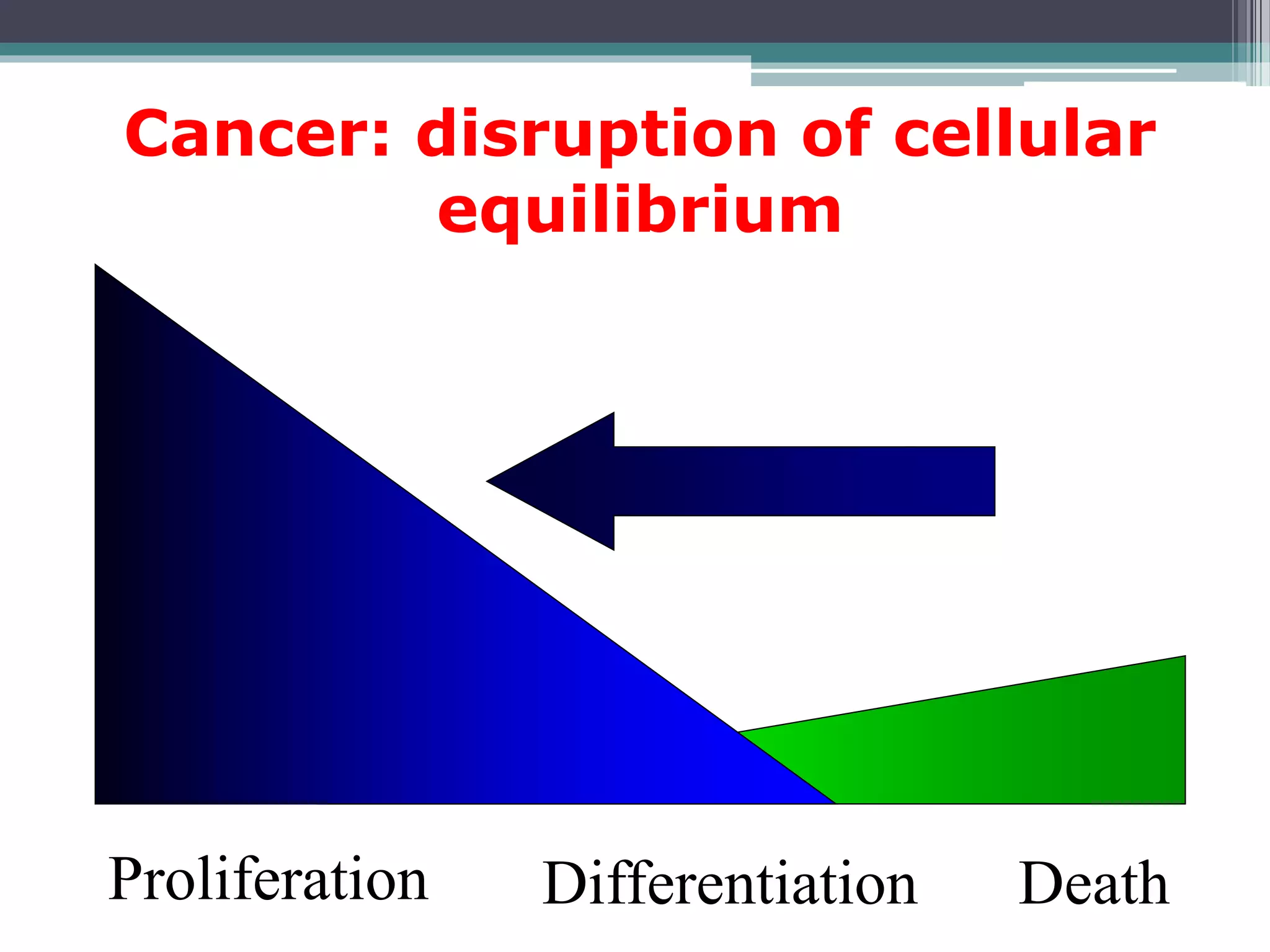
Cellular equilibrium
Proliferation Differentiation Death
Cancer: disruption of cellular
equilibrium
28
•Benign tumors
generally do not
spread by invasion
or metastasis.
• Malignant tumors
are capable of
spreading by
invasion and
metastasis.
Malignant versus Benign Tumors
Six Hallmarks of Cancer cell
1- Self-sufficient growth signals:
 Constitutively activated growth factor
signalling.
2- Resistance to anti-growth signals:
 Inactivated cell cycle checkpoint.
3- Immortality:
 Inactivated cell death pathway.
Cont.
4- Resistance to cell death:
 Activated anti- cell death signalling.
5- Sustained angiogenesis:
 Activated Vascular Endothelial Growth
Factor (VEGF) signalling.
6- Invasion and metastasis:
 Loss of cell-to-cell interactions, etc.
metastasis
What controls cancer are:
• Tumor suppressor gens
• Oncogenes
• Apoptosis
P53 Tumor Suppressor Gene
(as an example)
• The most frequently mutated gene in
human cancers.
• Critical roles:
▫ Prevents mutations and repairs DNA.
▫ Cell cycle arrest in G1.
• Also responsible for the activation of
several proteins involved in apoptosis.
▫ Mutant p53 has lost ability to activate
apoptosis.
p53 Tumor Suppressor Gene
• Mutated (switched OFF) in more than
50% of all cancers.
• Activated p53 levels rise rapidly if DNA
is damaged during the cell cycle.
Proto-oncogenes
 Normal growth factor genes that
become oncogenes (cancer-causing)
when mutated.
 Stimulates cell growth.
 If switched “ON” can cause cancer.
 Example: RAS, Cyclin D1 and Cyclin
E.
Oncogens
Oncogenes are mutated forms of
cellular proto-oncogenes.
Proto-oncogenes code for cellular
proteins which regulate normal cell
growth and differentiation.
 Class I: Growth Factors
 Class II: Receptors for Growth Factors
and Hormones
 Class III: Intracellular Signal Transducers
 Class IV: Nuclear Transcription Factors
 Class V: Cell-Cycle Control Proteins
Five types of proteins encoded
by proto-oncogenes
Cancer is not easy to happen !!
• In order for an oncogene to cause
cancer, only one copy must be
mutated.
• A tumor suppressor gene must be
completely absent to allow
cancerous cell division to occur.
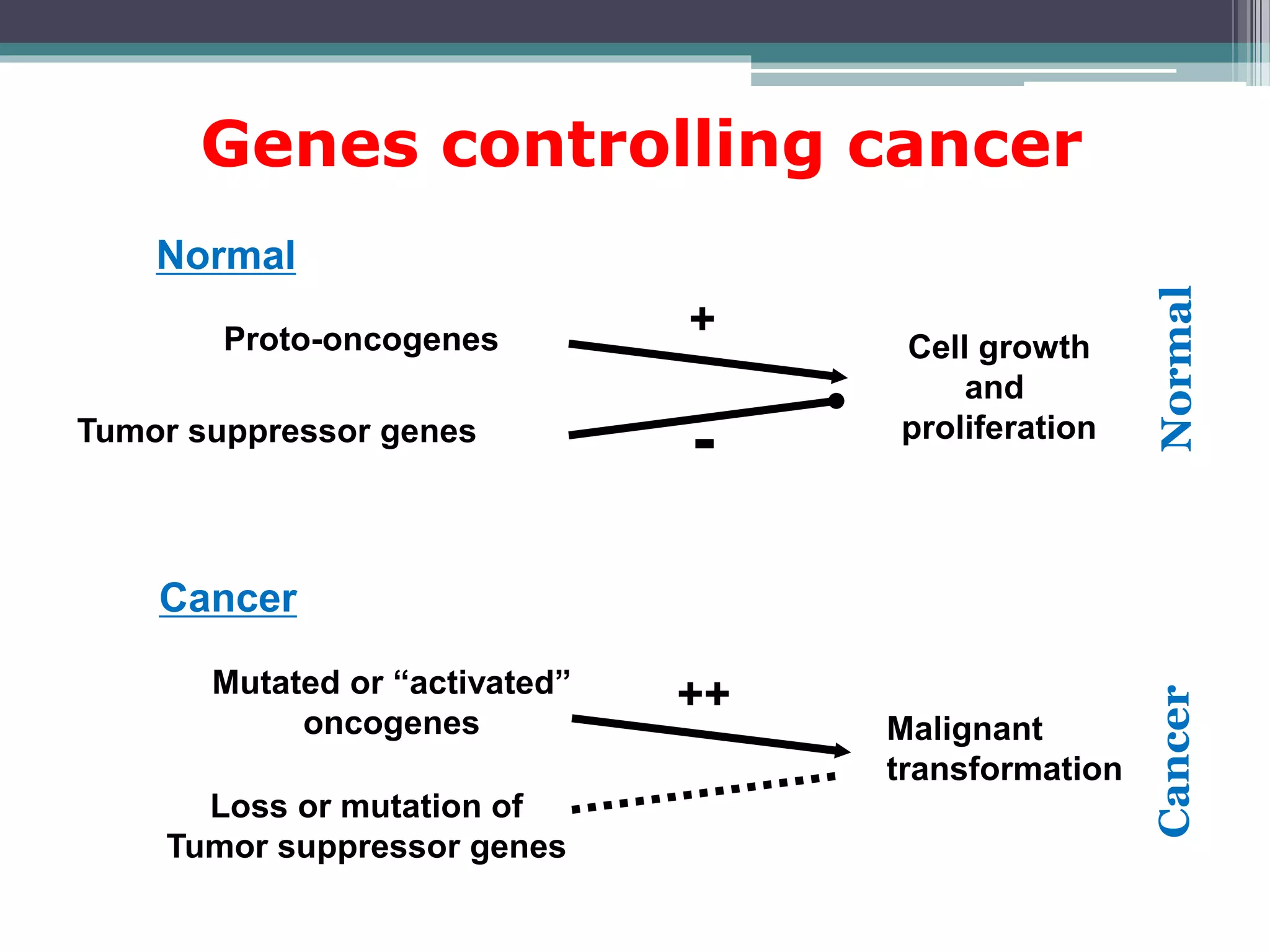
Genes controlling cancer
Normal
Cancer
Proto-oncogenes Cell growth
and
proliferationTumor suppressor genes
+
-
Mutated or “activated”
oncogenes Malignant
transformation
Loss or mutation of
Tumor suppressor genes
++
NormalCancer
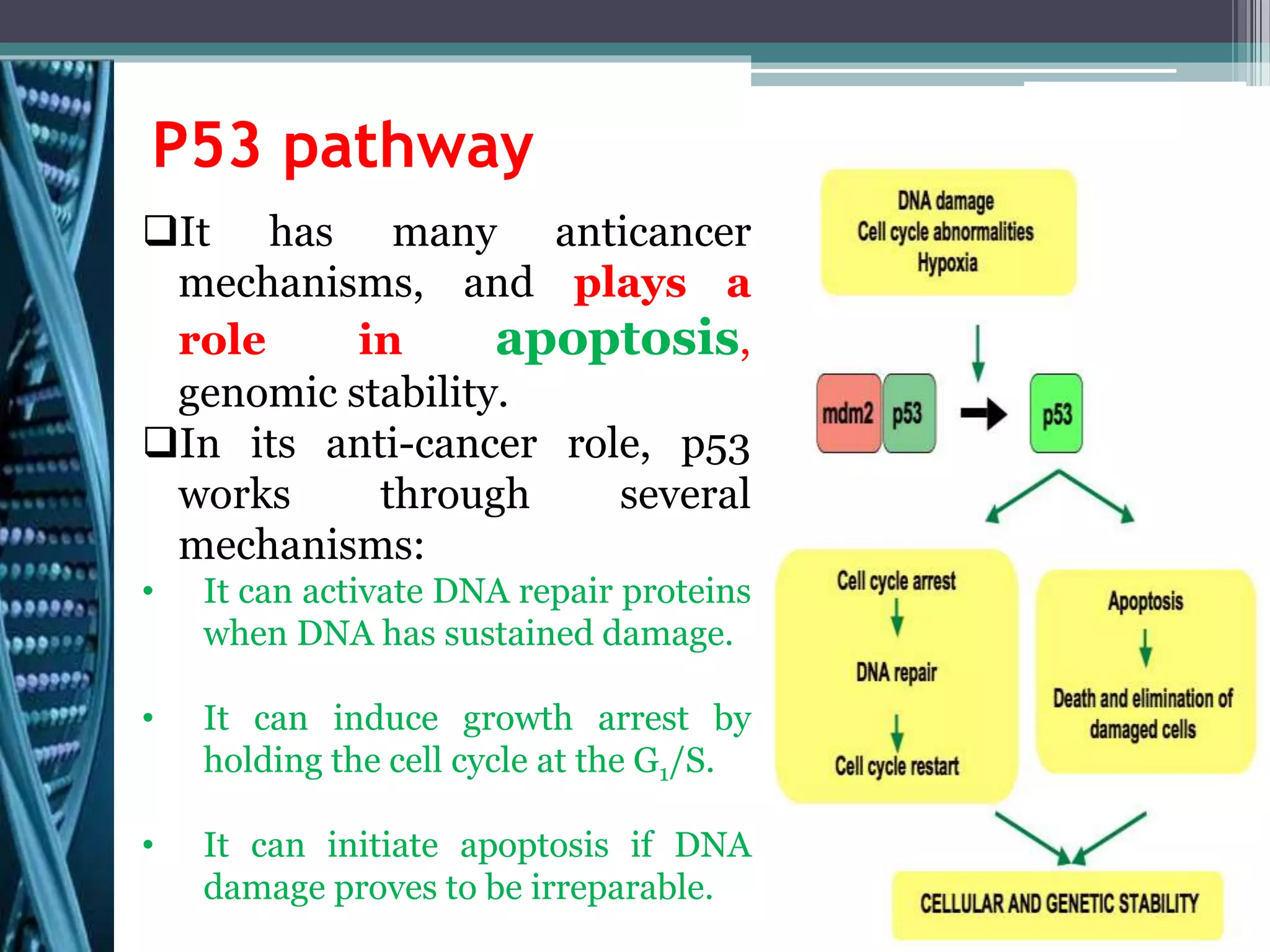
P53 pathway
It has many anticancer
mechanisms, and plays a
role in apoptosis,
genomic stability.
In its anti-cancer role, p53
works through several
mechanisms:
• It can activate DNA repair proteins
when DNA has sustained damage.
• It can induce growth arrest by
holding the cell cycle at the G1/S.
• It can initiate apoptosis if DNA
damage proves to be irreparable.
P53 pathway
It has many anticancer
mechanisms, and plays a
role in apoptosis,
genomic stability.
In its anti-cancer role, p53
works through several
mechanisms:
• It can activate DNA repair proteins
when DNA has sustained damage.
• It can induce growth arrest by
holding the cell cycle at the G1/S.
• It can initiate apoptosis if DNA
damage proves to be irreparable.
Apoptosis
(programmed cellular death)
“Life cannot exist without cellular death”
It implies that:
Apoptosis and Mitosis.. The balance
“Life cannot exist without cellular proliferation”
It implies that:
Apoptosis
• Apoptosis is the default disposal system to
delete cells that have accumulated
unrepairable DNA damage to protect genomic
integrity.
• This process takes about 30 - 60 min in
average.
• Programmed cell death, cell suicide.
• Regulated by Bcl2 and BAX
▫ BAX homodimer promotes apoptosis,
▫ Bcl2 homodimer blocks apoptosis,
▫ Some cancer cells overproduce Bcl2.
Where it happens in Human body?
Epithelial cells must die to
allow fusion of palate
Mammary epithelium
cells die when deprived
of hormones at end of
lactation
Up to 80% neurons die
in some ganglia
Over 95% of
immature T cells
die in thymus
Cells of
interdigital
webbing die
Cells of müllerian
duct die in males
Prostate cells die when
deprived of hormone
Dysregulation of apoptotic signaling can play a role in
various Human diseases.
Insufficient apoptosis leads to:
• Cancer,
• Autoimmunity (failure to eliminate autoreactive
lymphocytes), or
• Persistent infections (failure to eradicate infected cells).
Excessive apoptosis leads to:
• Neurodegeneration (Alzheimers’, Parkinson’s,
Huntington’s disease),
• Autoimmunity,
• AIDS (depletion of T lymphocytes), and
• Ischaemia (stroke, myocardial infarction).
Apoptosis and Human disease
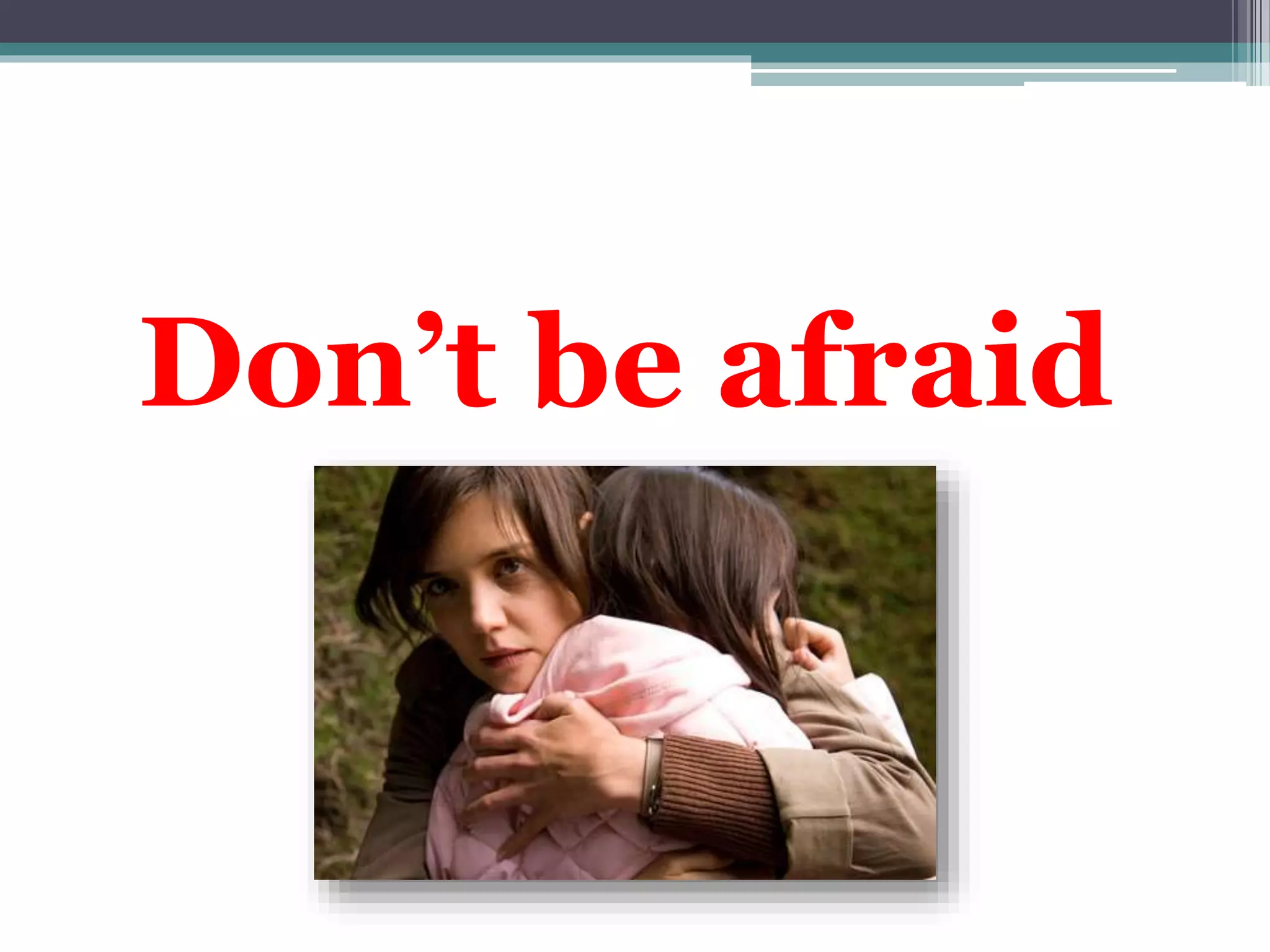
Don’t be afraid
51
 90-95% of all
cancers are
sporadic.
 5-10% are
inherited.
Cancer genetics
Cell cycle and carcinogenesis by Hussein Sabit

Cell cycle and carcinogenesis by Hussein Sabit

  • 1.
    Cell Cycle Checkpointsand Carcinogenesis Hussein Sabit, Ph.D College of Biotechnology, Misr University for Science & Technology. hussein.sabit@must.edu.eg 01069737737
  • 2.
    About 100 trillioncell in your body
  • 3.
    Thinking about thecell cycle? • Cell cycle functions according to some sort of internal clock, which would determine how long a phase should take. • However, the cell cycle is depicted like the falling dominoes.
  • 4.
    DNA DNA DNA DNA DNA DNA DNA DNA DNA G1 Cell growth S DNA replication G2 Cellgrowth preparation for division Mitotic Phase (M) Interphase Interphase Interphase Cell cycle
  • 5.
    Interphase Represents 90% ofthe cell cycle, it consists of: • Go phase. • G1 phase. • S phase. • G2 phase.
  • 6.
    Mitotic Cell Division Karyokinesis (mitosis): consists of prophase, metaphase, anaphase and telophase. Cytokinesis (cytoplasmic division): The cytoplasm and its contents are divided. In animal cells a cleavage furrow forms that essentially pinches the cell in two.
  • 7.
    Prophase  In thisphase, chromatin condenses into chromosome.  Prophase accounts for approximately 3% of the cell cycle's duration (35 min.)
  • 8.
    Metaphase  Chromosomes arealigned in the middle of the cell before being separated into each of the two daughter cells.  Metaphase accounts for approximately 4% of the cell cycle's duration (45 min.). Early metaphase Late metaphase
  • 9.
    Anaphase Chromosomes separate in aneukaryotic cell. Each chromatid moves to opposite poles of the cell. Anaphase accounts for approximately 1% of the cell cycle's duration (11 min.).
  • 10.
    Cytokinesis  It isthe division of the cytoplasm.  Cytokinesis must be controlled to ensure that it occurs only after sister anaphase separation.
  • 11.
    The final resultof mitotic division is two identical daughter cells.
  • 12.
  • 13.
    Timing of thecell cycle • G1 phase takes: 0 to 12 hours. • S phase takes: 12 to 18 hours. • G2 phase takes: 18 to 22 hours. • Mitosis takes: 22 to 24 hours.
  • 14.
     This isa .. control mechanisms that ensure the fidelity of cell division in eukaryotic cells.  These checkpoints verify whether the processes at each phase of the cell cycle have been accurately completed or not.  Multiple checkpoints have been identified. Cell cycle checkpoints
  • 15.
  • 16.
    G1 Checkpoint  Thefirst checkpoint is located at the end of the cell cycle's G1 phase, just before entry into S phase.  It makes the key decision of whether the cell should divide, delay division, or enter a resting stage (G0).
  • 17.
    G1 G0 G1 checkpoint (a) Cellreceives a go-ahead signal G1 (b) Cell does not receive a go-ahead signal
  • 18.
    G2 Checkpoint • Thischeckpoint triggers the start of the Mitosis. • In order for this checkpoint to be passed, the cell has to check a number of factors to ensure the cell is ready for mitosis
  • 19.
    Metaphase Checkpoint • Themitotic spindle checkpoint occurs at the point in metaphase where the chromosomes have aligned at the mitotic plate and be under bipolar tension. • The tension created by this bipolar attachment is what initiates the anaphase entry.
  • 20.
    Cont. • Securin isa protein whose function is to inhibit Separase, the protein composite responsible for the separation of sister chromatids. • Once this inhibitory protein is degraded via ubiquitination and subsequent proteolysis, Separase then causes sister chromatid separation. • After the cell has split into its two daughter cells, the cell enters G1 again.
  • 21.
  • 22.
    Cancer terms Benign ▫ Harmlessand limited in scope. In cancer, the opposite of malignant. Malignant ▫ A cancer whose scope extends beyond the initial tumor. Characterized by anaplasia, invasion and metastasis. Anaplasia ▫ Loss of differentiation in cells. Invasion ▫ Movement of cells from a tumor into immediately surrounding tissue. Metastasis ▫ Movement of cancer cells into tissues beyond the original tumor. Usually involves transit through the blood stream.
  • 23.
    Angiogenesis ▫ Growth ofnew blood vessels. Important in cancer growth. Oncogene ▫ A gene whose product causes uncontrolled cell growth. Proto-oncogene ▫ A normal gene whose normal product does not cause cancer, but in which a mutation will cause cancer. Tumor-suppressor gene ▫ A gene whose product impedes uncontrolled cell growth. Apoptosis ▫ Programmed cell death. Cancer terms
  • 24.
    What is cancer? •Characterized by uncontrolled cell proliferation • Arises from: 1. Irreversible genetic damage to cell’s DNA. 2. Block in normal process of differentiation. 3. Block in apoptosis. • Several proteins contribute to oncogenesis: ▫ p53, p16, and β-catenin.
  • 25.
    Standard Dogma  Proto-oncogenes(e.g. Ras – Rb genes),  Tumor suppressor genes (e.g. p53). Modified Dogma  Mutation in a DNA repair gene leads to the accumulation of unrepaired mutations. Early-Instability Theory  Master genes required for adequate cell reproduction are disabled, resulting in aneuploidy. Theories of cancer genesis
  • 26.
  • 27.
    Proliferation Differentiation Death Cancer:disruption of cellular equilibrium
  • 28.
    28 •Benign tumors generally donot spread by invasion or metastasis. • Malignant tumors are capable of spreading by invasion and metastasis. Malignant versus Benign Tumors
  • 29.
    Six Hallmarks ofCancer cell 1- Self-sufficient growth signals:  Constitutively activated growth factor signalling. 2- Resistance to anti-growth signals:  Inactivated cell cycle checkpoint. 3- Immortality:  Inactivated cell death pathway.
  • 30.
    Cont. 4- Resistance tocell death:  Activated anti- cell death signalling. 5- Sustained angiogenesis:  Activated Vascular Endothelial Growth Factor (VEGF) signalling. 6- Invasion and metastasis:  Loss of cell-to-cell interactions, etc.
  • 32.
  • 33.
    What controls cancerare: • Tumor suppressor gens • Oncogenes • Apoptosis
  • 34.
    P53 Tumor SuppressorGene (as an example) • The most frequently mutated gene in human cancers. • Critical roles: ▫ Prevents mutations and repairs DNA. ▫ Cell cycle arrest in G1. • Also responsible for the activation of several proteins involved in apoptosis. ▫ Mutant p53 has lost ability to activate apoptosis.
  • 35.
    p53 Tumor SuppressorGene • Mutated (switched OFF) in more than 50% of all cancers. • Activated p53 levels rise rapidly if DNA is damaged during the cell cycle.
  • 36.
    Proto-oncogenes  Normal growthfactor genes that become oncogenes (cancer-causing) when mutated.  Stimulates cell growth.  If switched “ON” can cause cancer.  Example: RAS, Cyclin D1 and Cyclin E.
  • 37.
    Oncogens Oncogenes are mutatedforms of cellular proto-oncogenes. Proto-oncogenes code for cellular proteins which regulate normal cell growth and differentiation.
  • 38.
     Class I:Growth Factors  Class II: Receptors for Growth Factors and Hormones  Class III: Intracellular Signal Transducers  Class IV: Nuclear Transcription Factors  Class V: Cell-Cycle Control Proteins Five types of proteins encoded by proto-oncogenes
  • 39.
    Cancer is noteasy to happen !! • In order for an oncogene to cause cancer, only one copy must be mutated. • A tumor suppressor gene must be completely absent to allow cancerous cell division to occur.
  • 40.
    Genes controlling cancer Normal Cancer Proto-oncogenesCell growth and proliferationTumor suppressor genes + - Mutated or “activated” oncogenes Malignant transformation Loss or mutation of Tumor suppressor genes ++ NormalCancer
  • 41.
    P53 pathway It hasmany anticancer mechanisms, and plays a role in apoptosis, genomic stability. In its anti-cancer role, p53 works through several mechanisms: • It can activate DNA repair proteins when DNA has sustained damage. • It can induce growth arrest by holding the cell cycle at the G1/S. • It can initiate apoptosis if DNA damage proves to be irreparable.
  • 42.
    P53 pathway It hasmany anticancer mechanisms, and plays a role in apoptosis, genomic stability. In its anti-cancer role, p53 works through several mechanisms: • It can activate DNA repair proteins when DNA has sustained damage. • It can induce growth arrest by holding the cell cycle at the G1/S. • It can initiate apoptosis if DNA damage proves to be irreparable.
  • 43.
    Apoptosis (programmed cellular death) “Lifecannot exist without cellular death” It implies that:
  • 44.
    Apoptosis and Mitosis..The balance “Life cannot exist without cellular proliferation” It implies that:
  • 45.
    Apoptosis • Apoptosis isthe default disposal system to delete cells that have accumulated unrepairable DNA damage to protect genomic integrity. • This process takes about 30 - 60 min in average. • Programmed cell death, cell suicide. • Regulated by Bcl2 and BAX ▫ BAX homodimer promotes apoptosis, ▫ Bcl2 homodimer blocks apoptosis, ▫ Some cancer cells overproduce Bcl2.
  • 46.
    Where it happensin Human body?
  • 47.
    Epithelial cells mustdie to allow fusion of palate Mammary epithelium cells die when deprived of hormones at end of lactation Up to 80% neurons die in some ganglia Over 95% of immature T cells die in thymus Cells of interdigital webbing die Cells of müllerian duct die in males Prostate cells die when deprived of hormone
  • 48.
    Dysregulation of apoptoticsignaling can play a role in various Human diseases. Insufficient apoptosis leads to: • Cancer, • Autoimmunity (failure to eliminate autoreactive lymphocytes), or • Persistent infections (failure to eradicate infected cells). Excessive apoptosis leads to: • Neurodegeneration (Alzheimers’, Parkinson’s, Huntington’s disease), • Autoimmunity, • AIDS (depletion of T lymphocytes), and • Ischaemia (stroke, myocardial infarction). Apoptosis and Human disease
  • 49.
  • 51.
    51  90-95% ofall cancers are sporadic.  5-10% are inherited. Cancer genetics