X inactivation
Hussein Sabit, PhD
Mechanisms and impacts
• The human X chromosome is about 155 mega
bases (MB) in length, consisting of approximately
51 MB of genes—somewhat less gene-dense
than other chromosomes of its size.
• The rest of the chromosome consists of
interspersed DNA sequences that are not unique
to the X because they occur as repeats all over
our genome. There are 826 protein coding genes
on the X chromosome.
• There are more than 8,000 X-linked CpG islands
that occur all along the chromosome, with a
frequency of 5.2 islands per MB of DNA.
X chromosome
X chromosome
evolution
From the beginning!
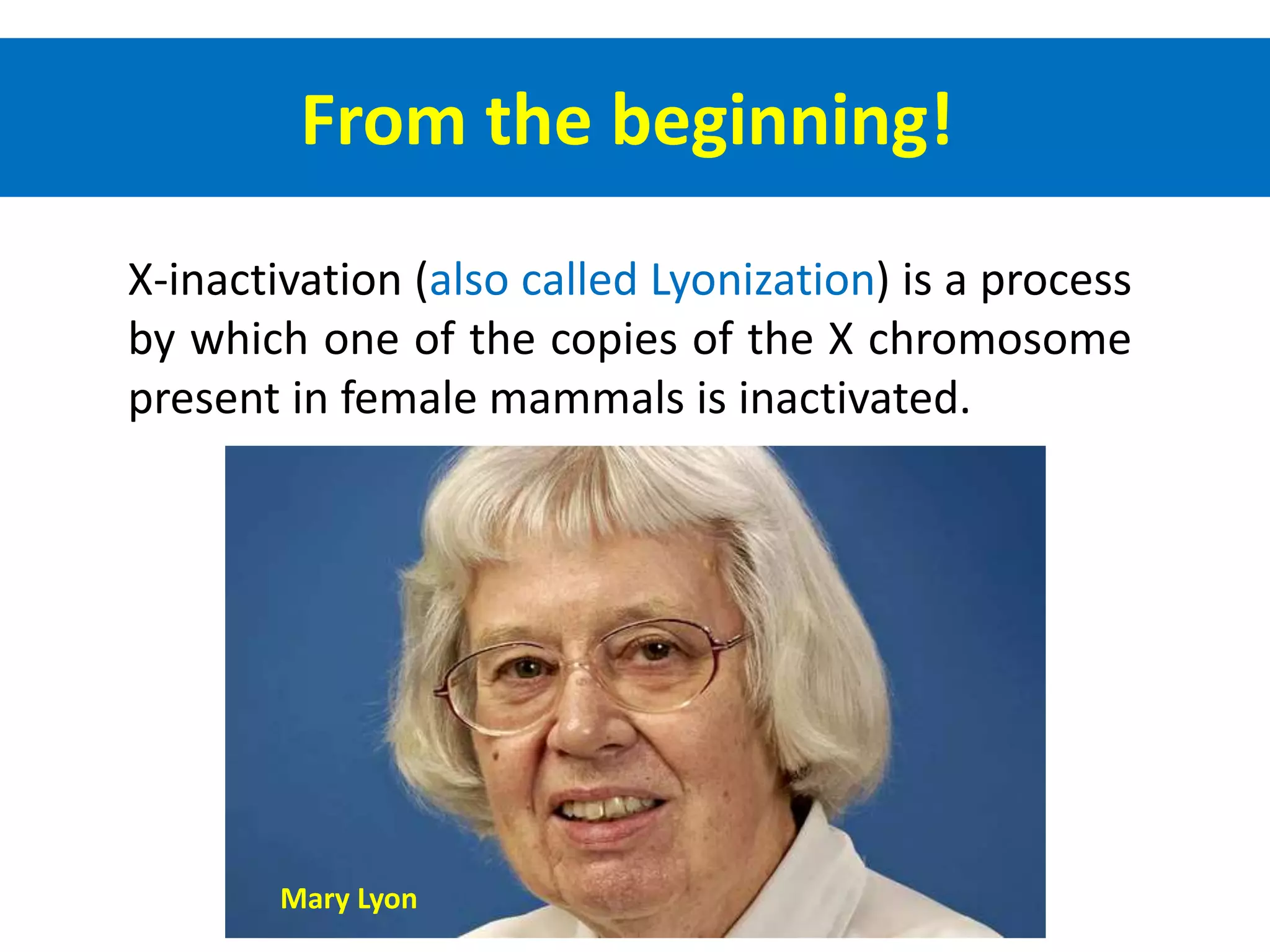
X-inactivation (also called Lyonization) is a process
by which one of the copies of the X chromosome
present in female mammals is inactivated.
Mary Lyon
• It was just a hypothesis in 1960
• It became a scientific fact in 2011
Mary Lyon
From the beginning!
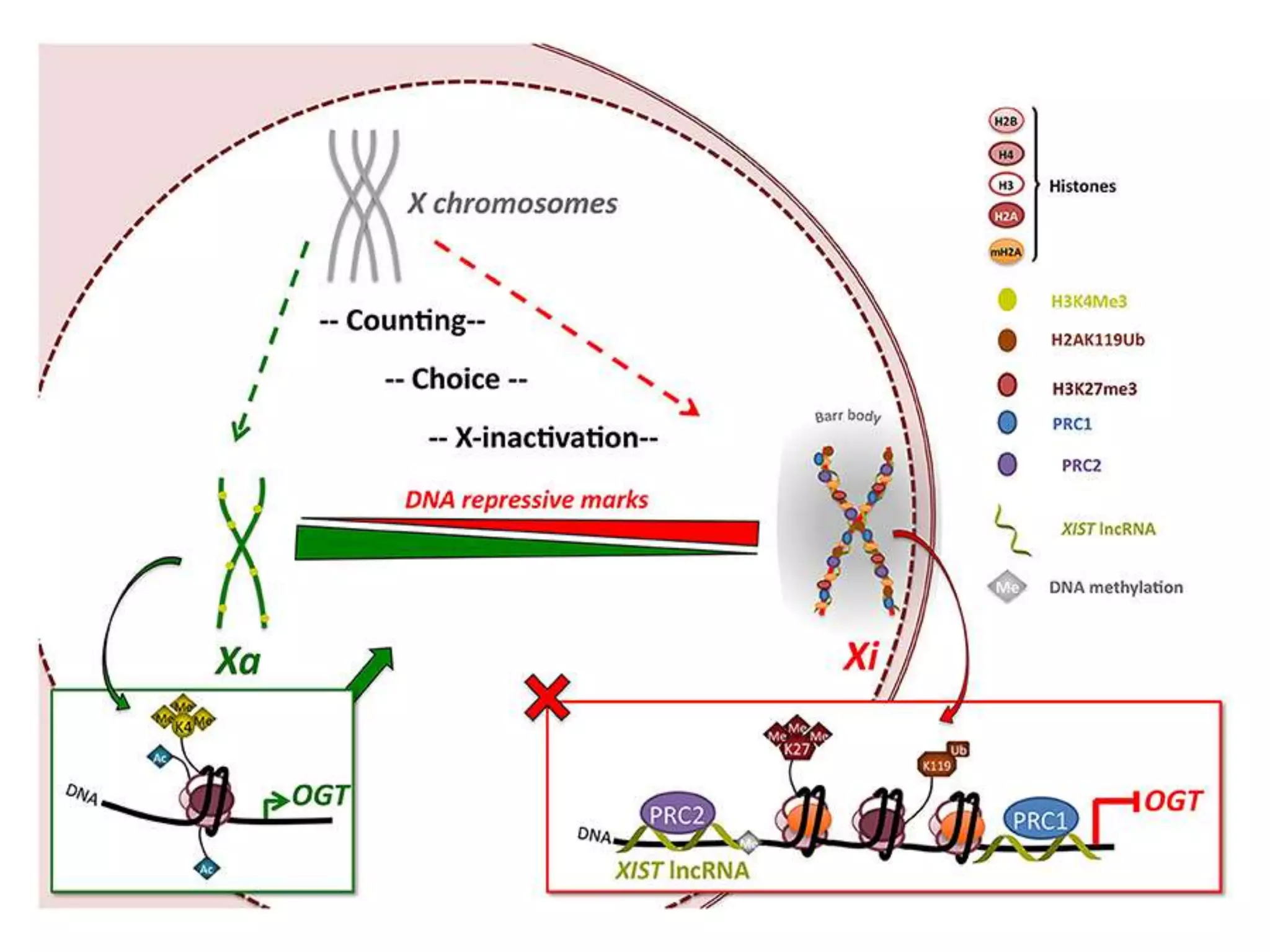
Barr Body
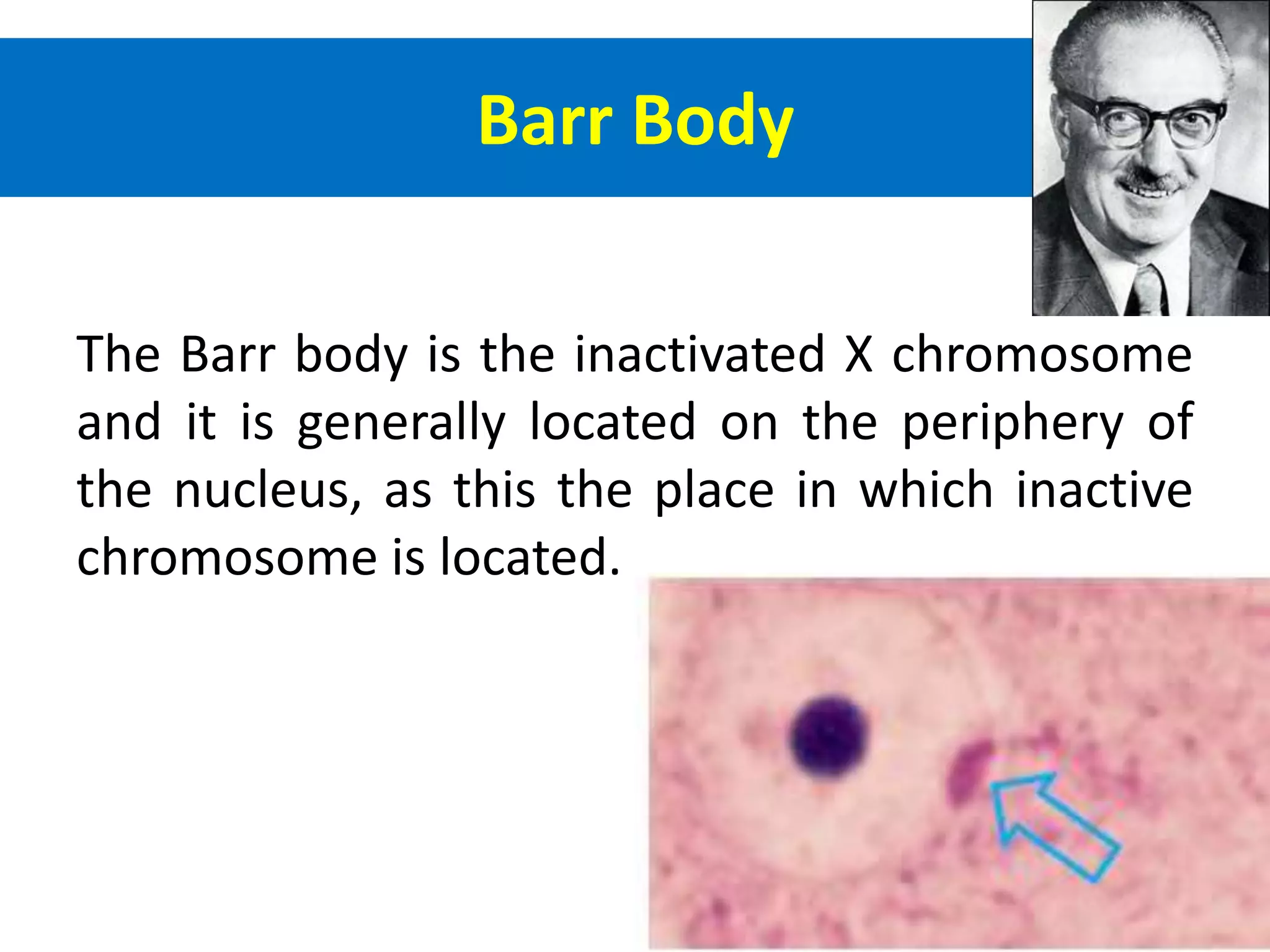
The Barr body is the inactivated X chromosome
and it is generally located on the periphery of
the nucleus, as this the place in which inactive
chromosome is located.
The ultimate goal of X inactivation is …
Dosage compensation
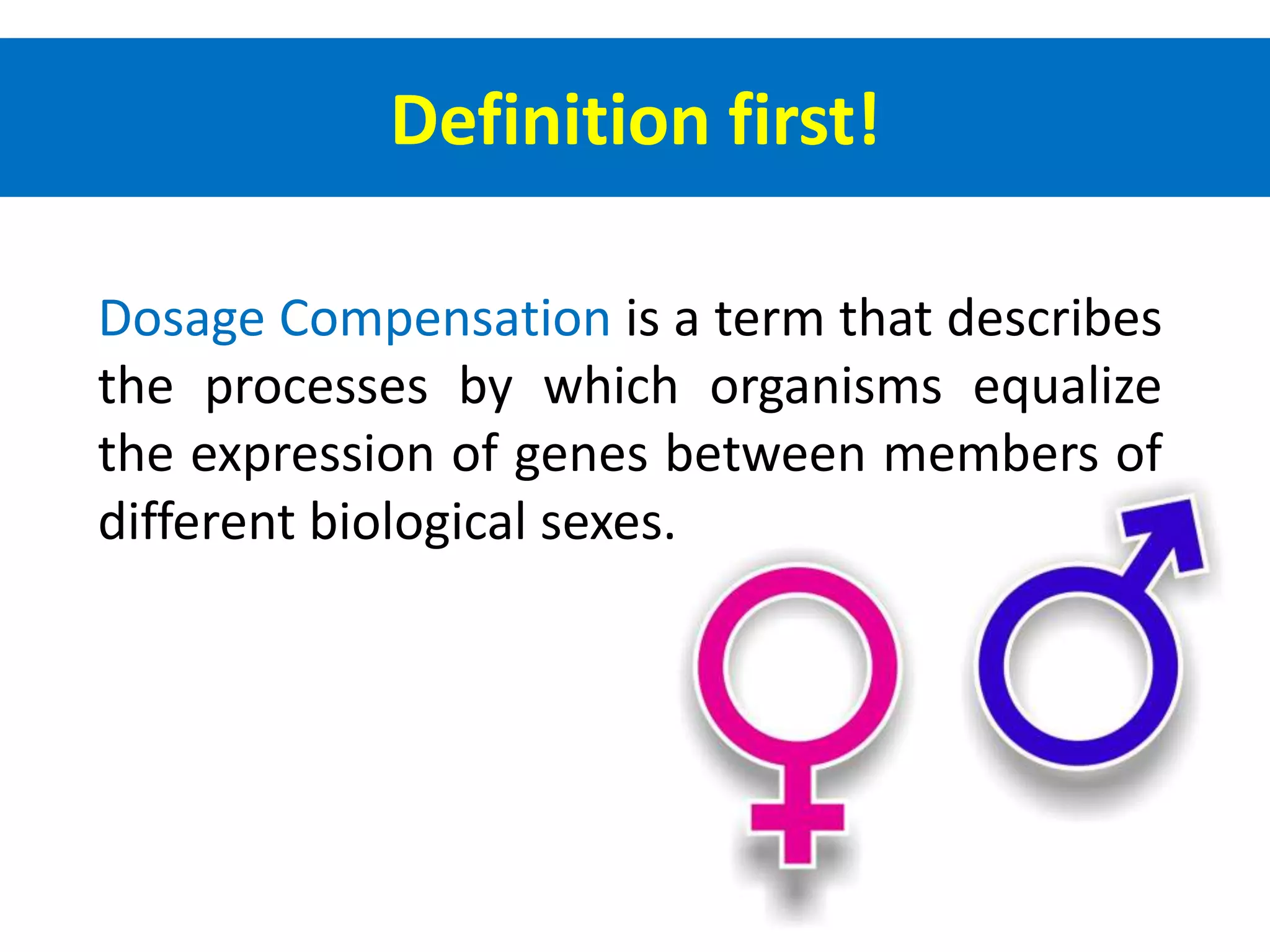
Definition first!
Dosage Compensation is a term that describes
the processes by which organisms equalize
the expression of genes between members of
different biological sexes.
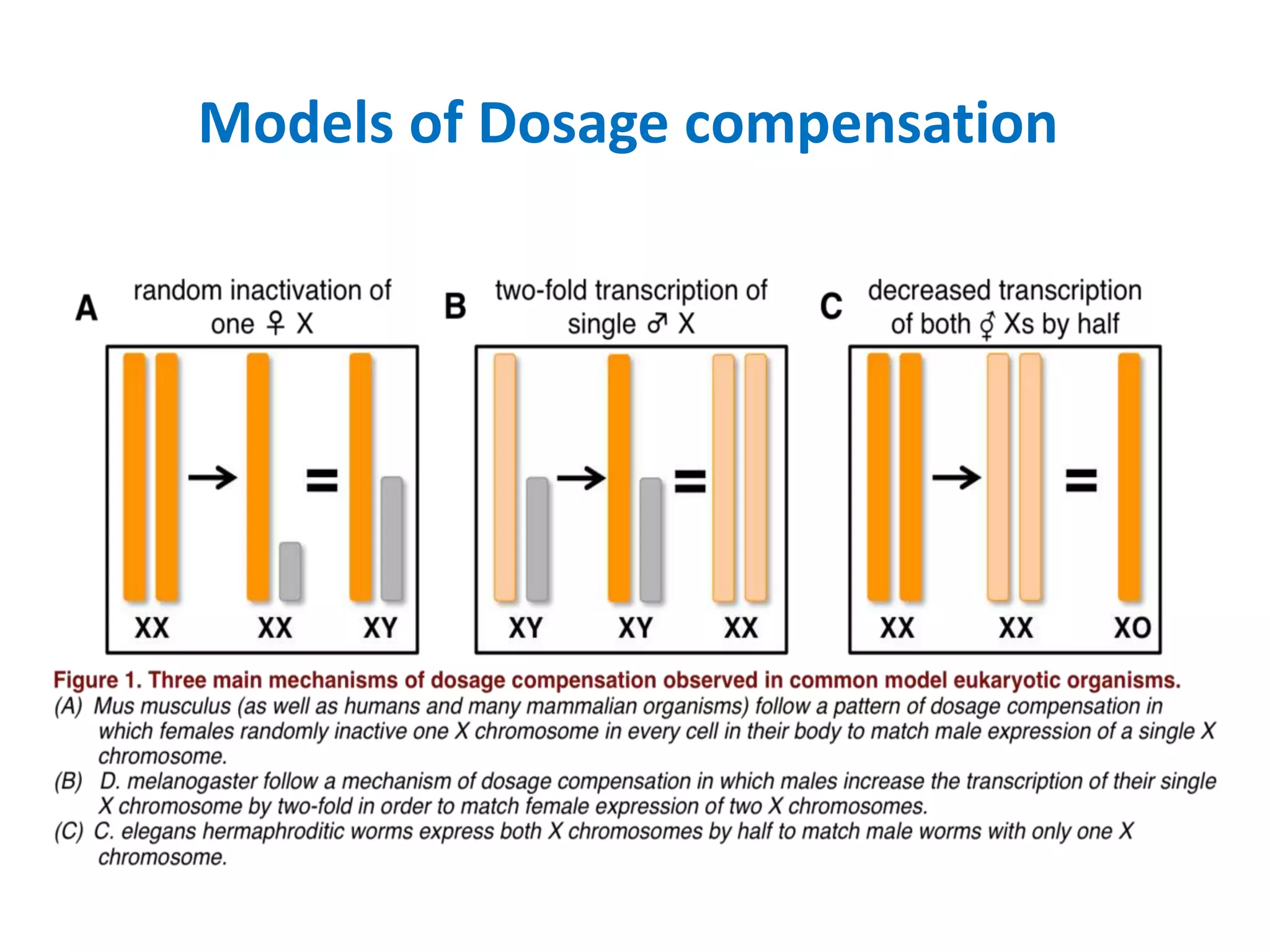
Models of Dosage compensation
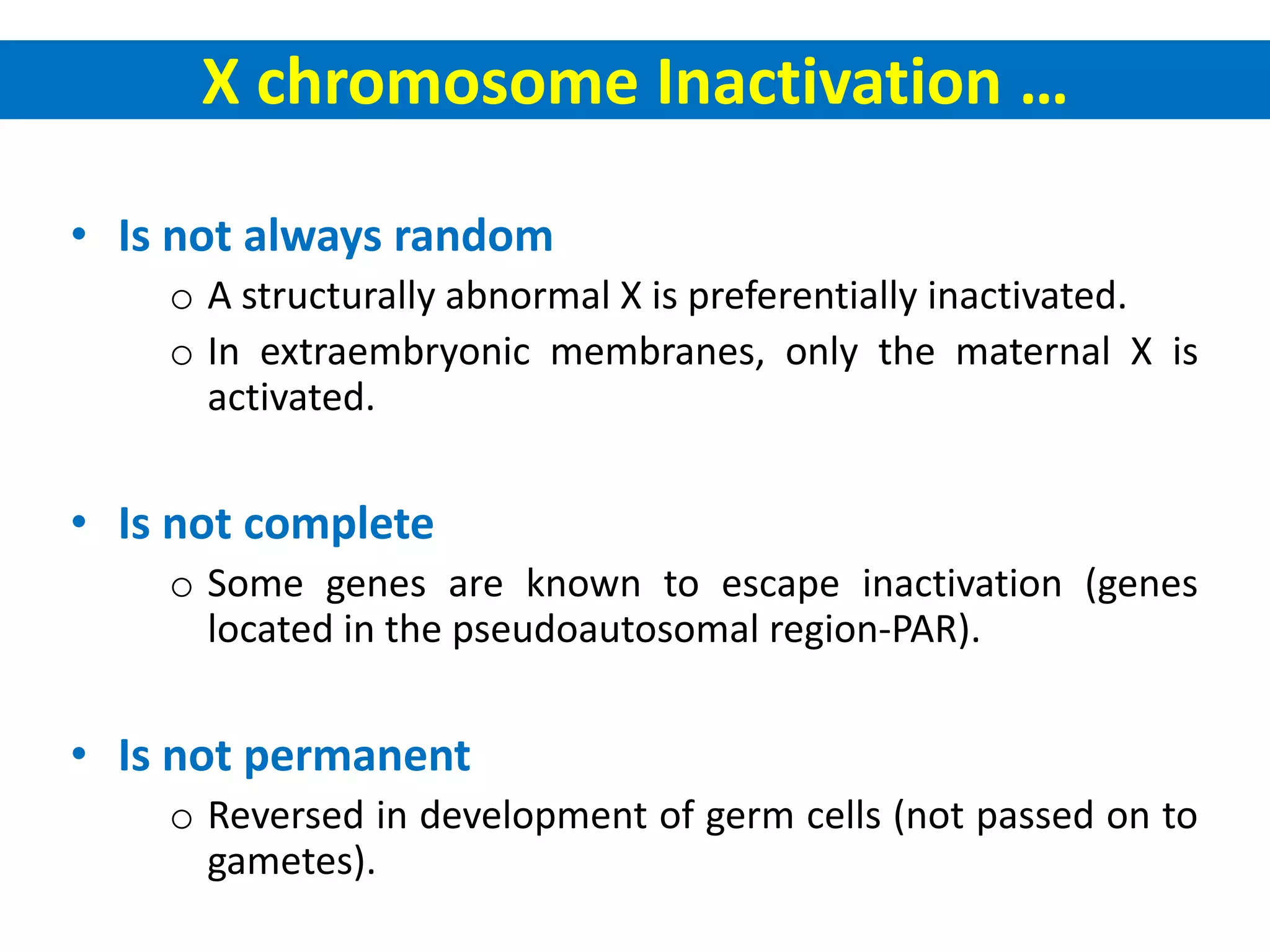
X chromosome Inactivation …
• Is not always random
o A structurally abnormal X is preferentially inactivated.
o In extraembryonic membranes, only the maternal X is
activated.
• Is not complete
o Some genes are known to escape inactivation (genes
located in the pseudoautosomal region-PAR).
• Is not permanent
o Reversed in development of germ cells (not passed on to
gametes).
Who decides?
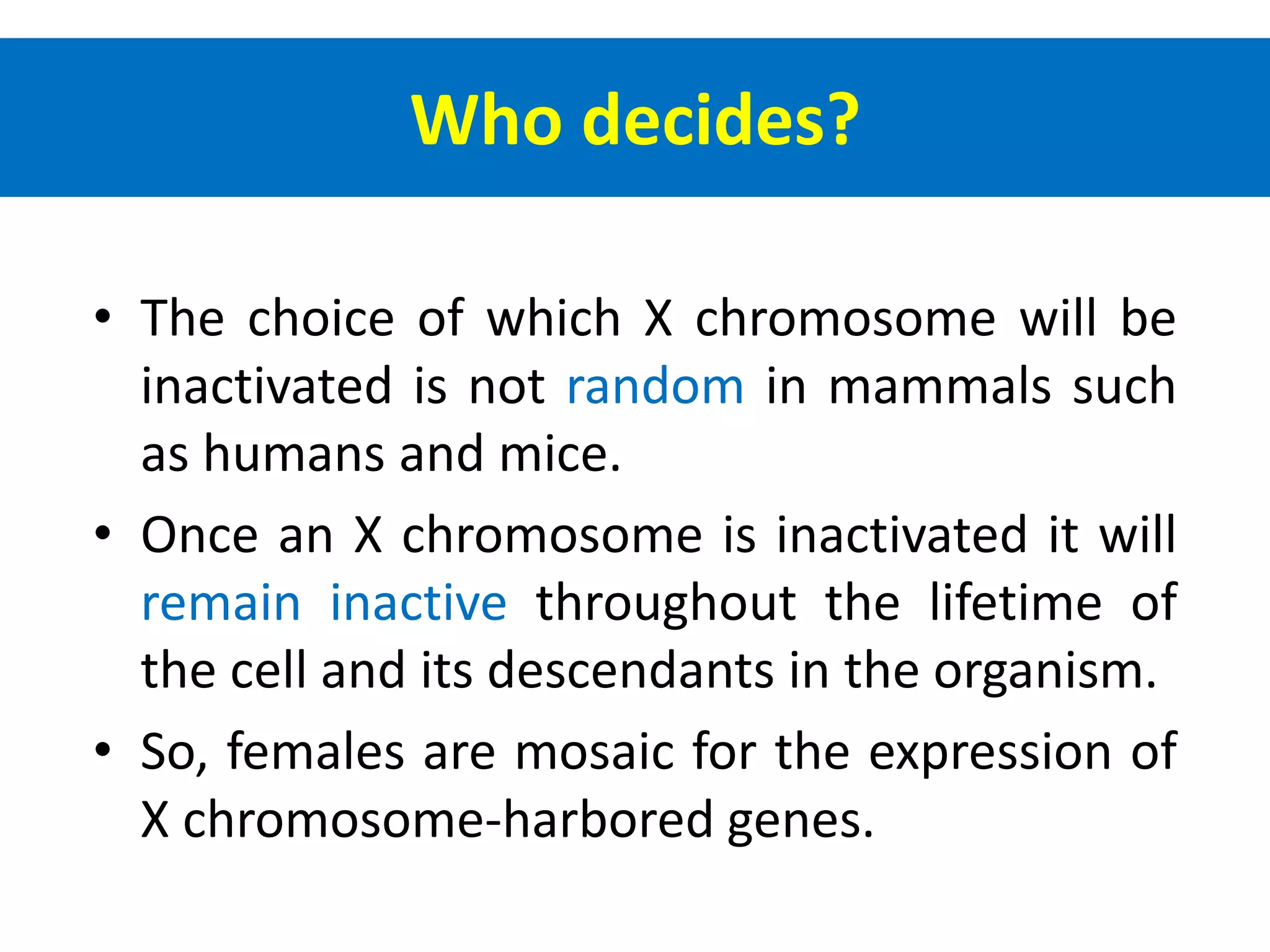
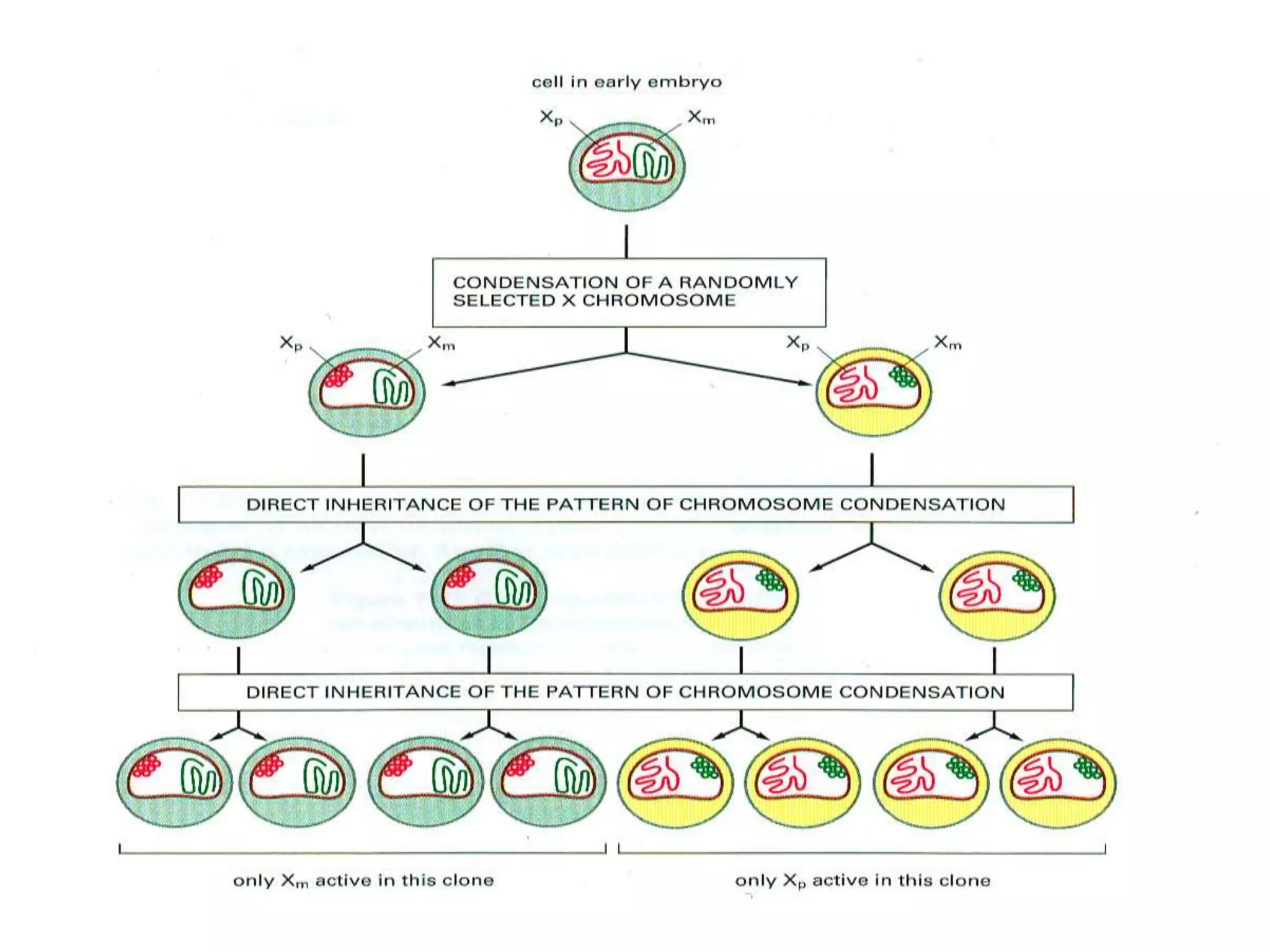
• The choice of which X chromosome will be
inactivated is not random in mammals such
as humans and mice.
• Once an X chromosome is inactivated it will
remain inactive throughout the lifetime of
the cell and its descendants in the organism.
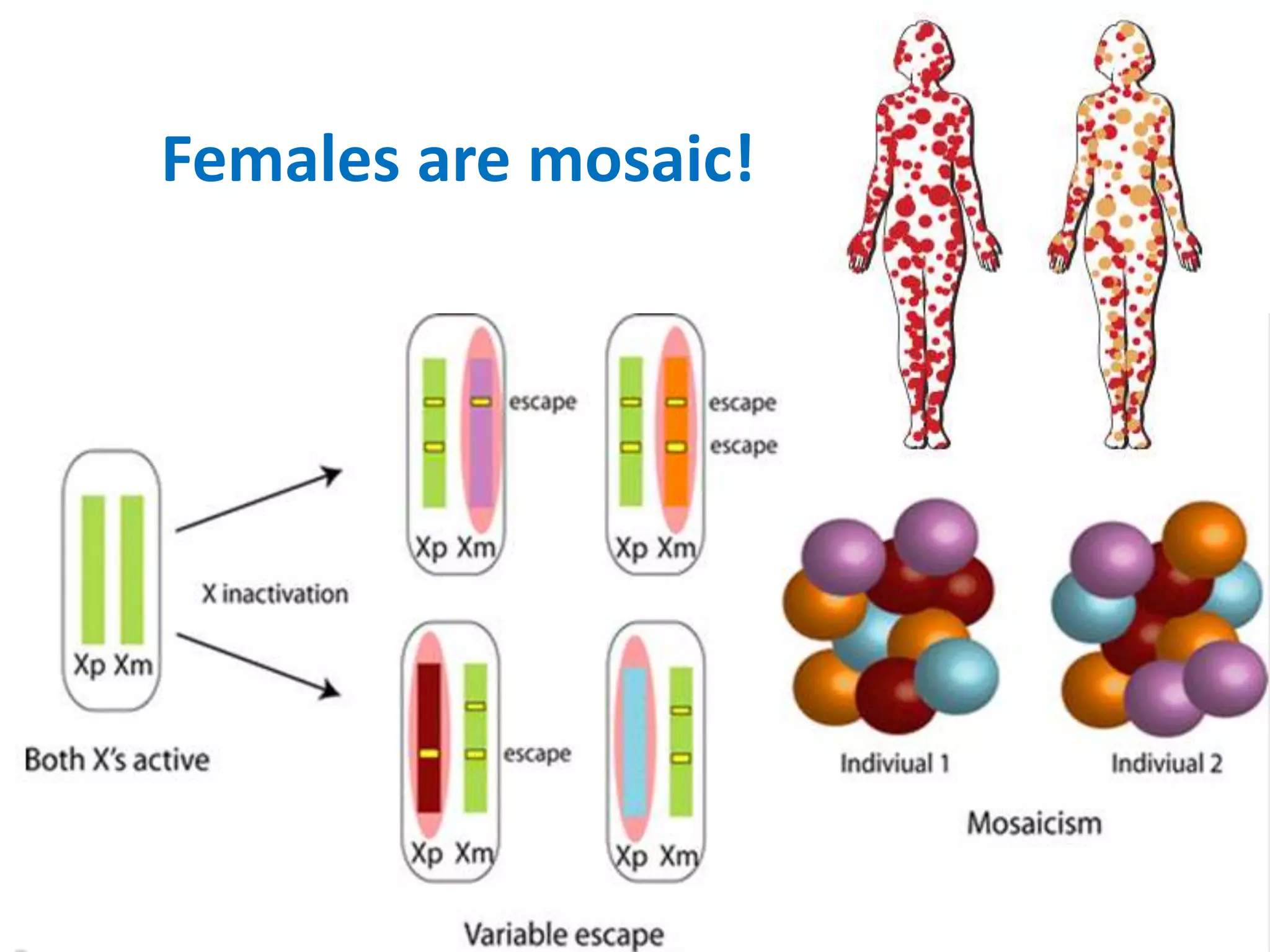
• So, females are mosaic for the expression of
X chromosome-harbored genes.
Females are mosaic!
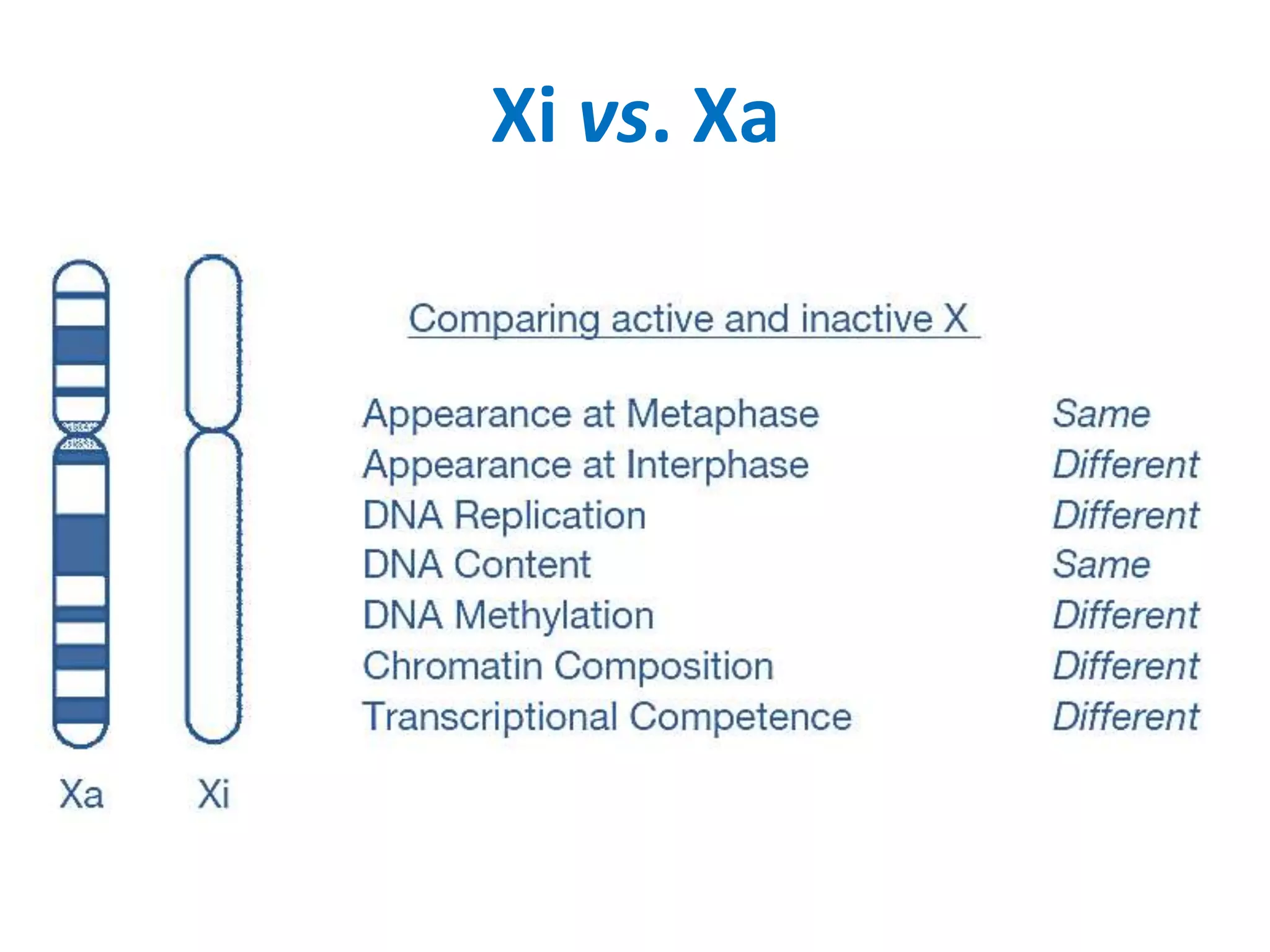
Xi vs. Xa
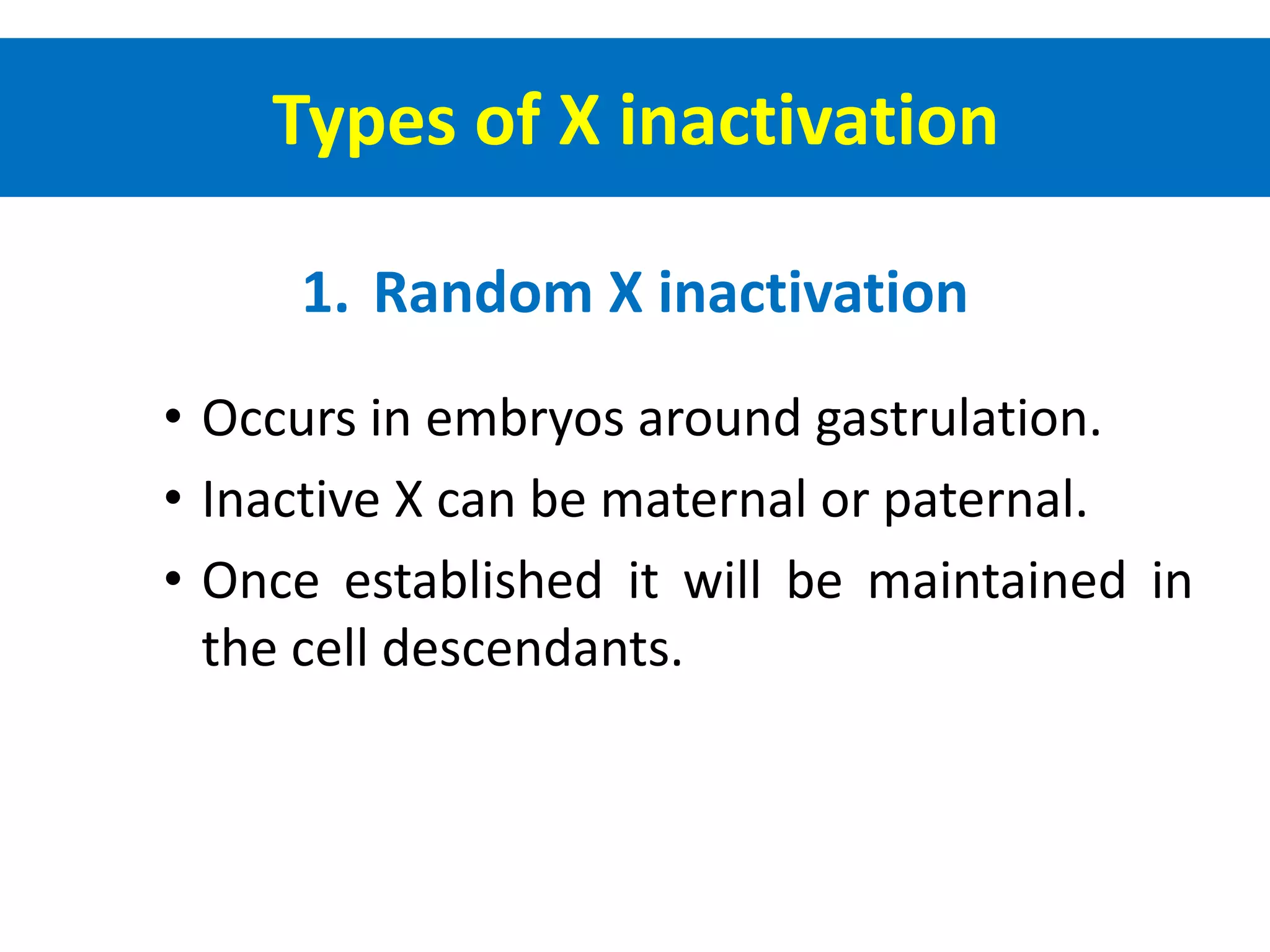
Types of X inactivation
• Occurs in embryos around gastrulation.
• Inactive X can be maternal or paternal.
• Once established it will be maintained in
the cell descendants.
1. Random X inactivation
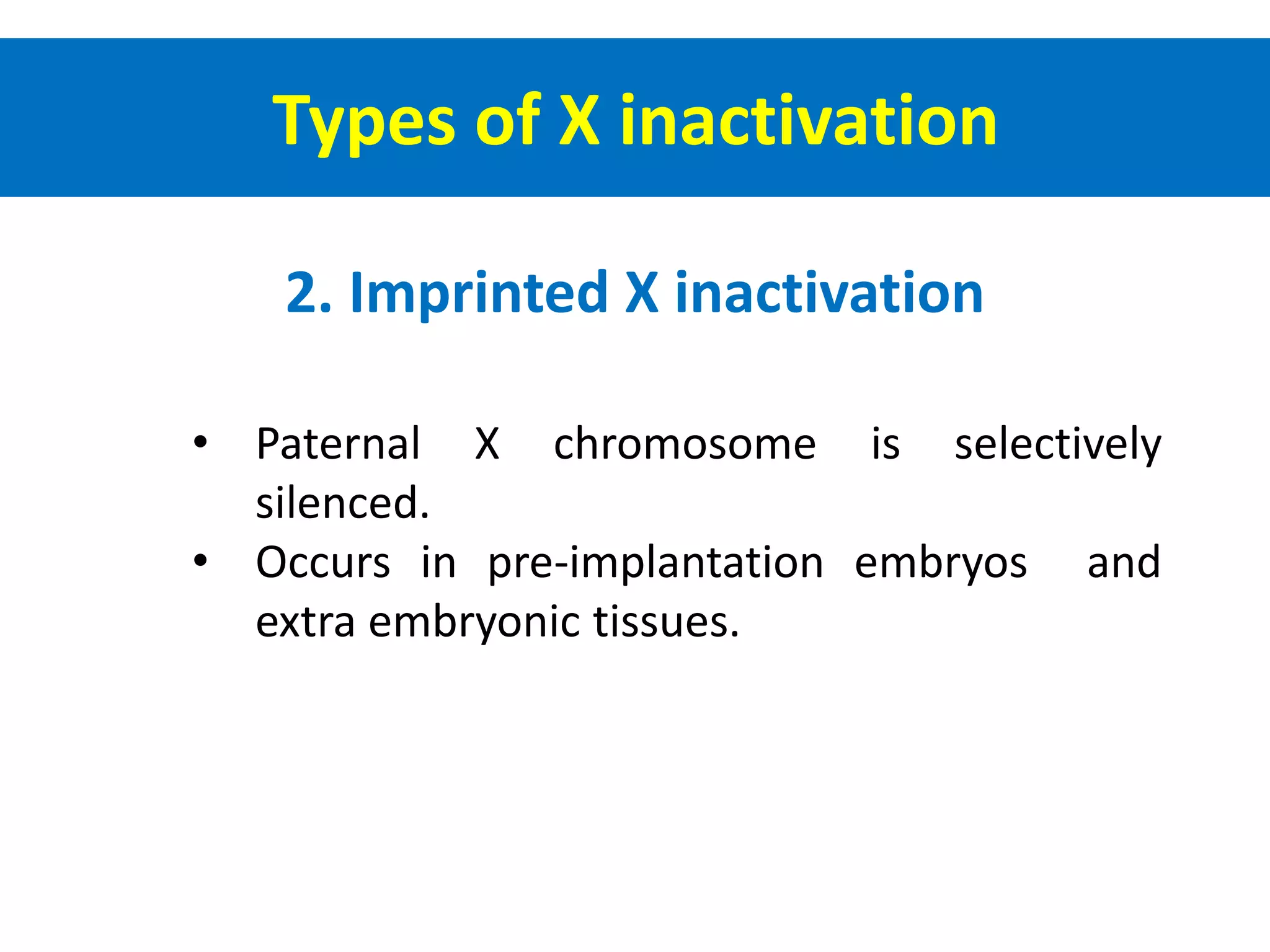
2. Imprinted X inactivation
• Paternal X chromosome is selectively
silenced.
• Occurs in pre-implantation embryos and
extra embryonic tissues.
Types of X inactivation
Skewed vs. random X inactivation
In the extraembryonic tissues only the
maternal X chromosome is active,
whereas, the paternal X will be always
imprinted.
Itisnot100%random!
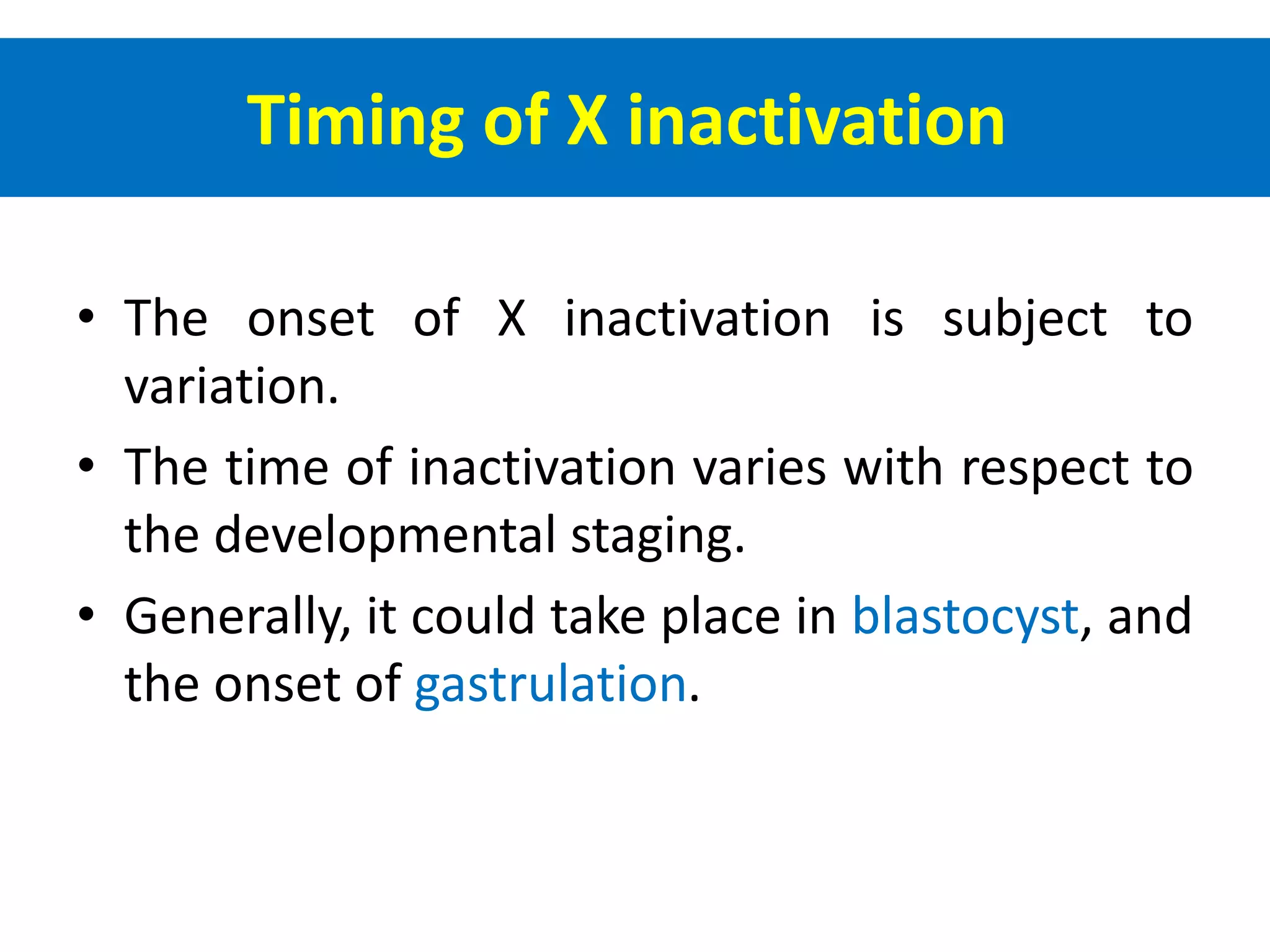
Timing of X inactivation
• The onset of X inactivation is subject to
variation.
• The time of inactivation varies with respect to
the developmental staging.
• Generally, it could take place in blastocyst, and
the onset of gastrulation.
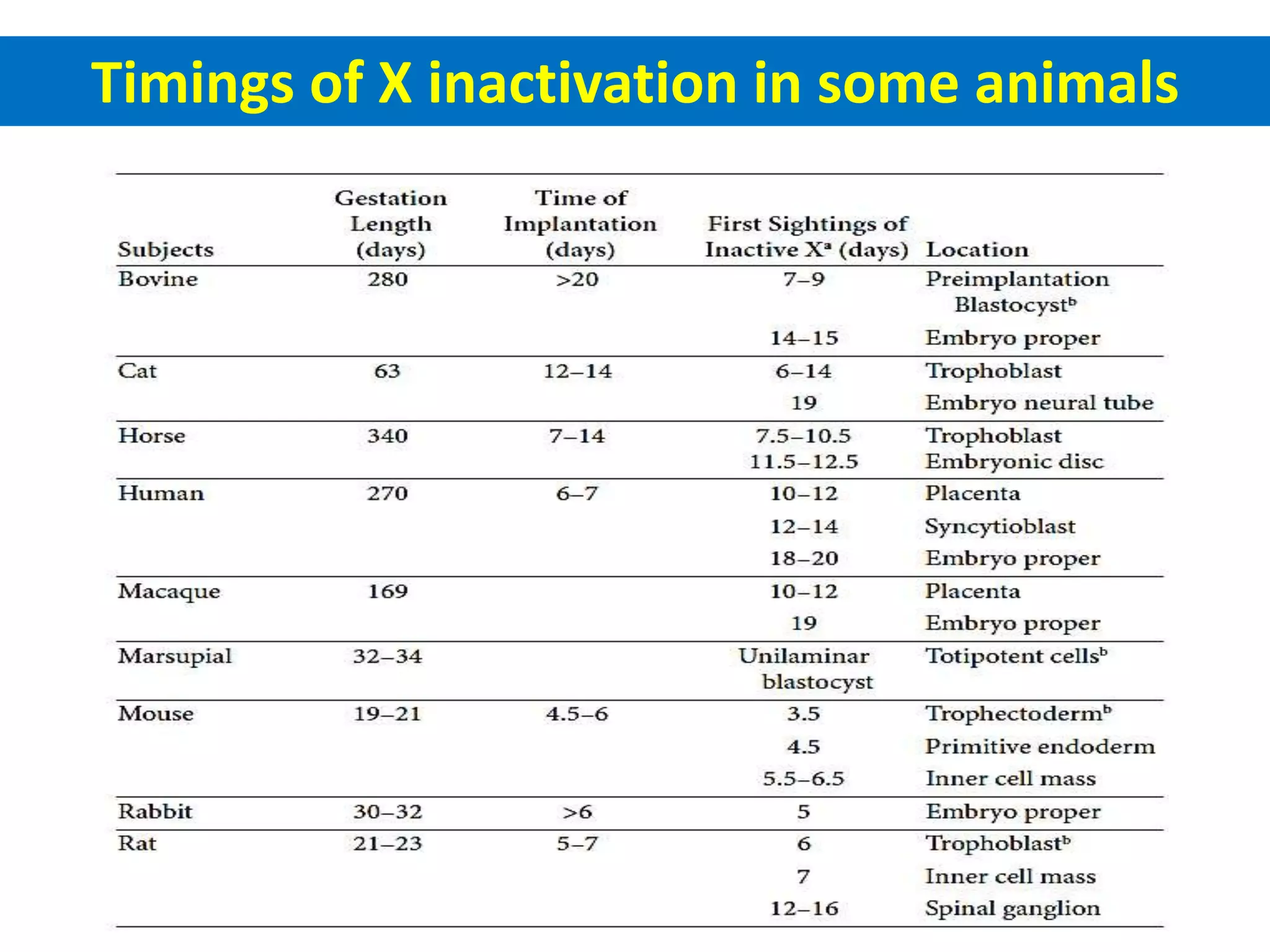
• In mouse embryos, X inactivation
begins in the blastocyst about 96 hr
p.c., and was complete in
trophectoderm by 120 hr p.c.;
• In rabbit embryo cells it begins a day
later at 120 hr p.c.; in analogous cells
of human embryos there was no
evidence of silence up to the day 7
blastocyst stage-the latest stage
analyzed.
Rhesus monkey shows
biallelic expression of X-
linked genes in the 11-day
blastocyst, indicating that
inactivation had not yet
occurred.
Timings of X inactivation in some animals
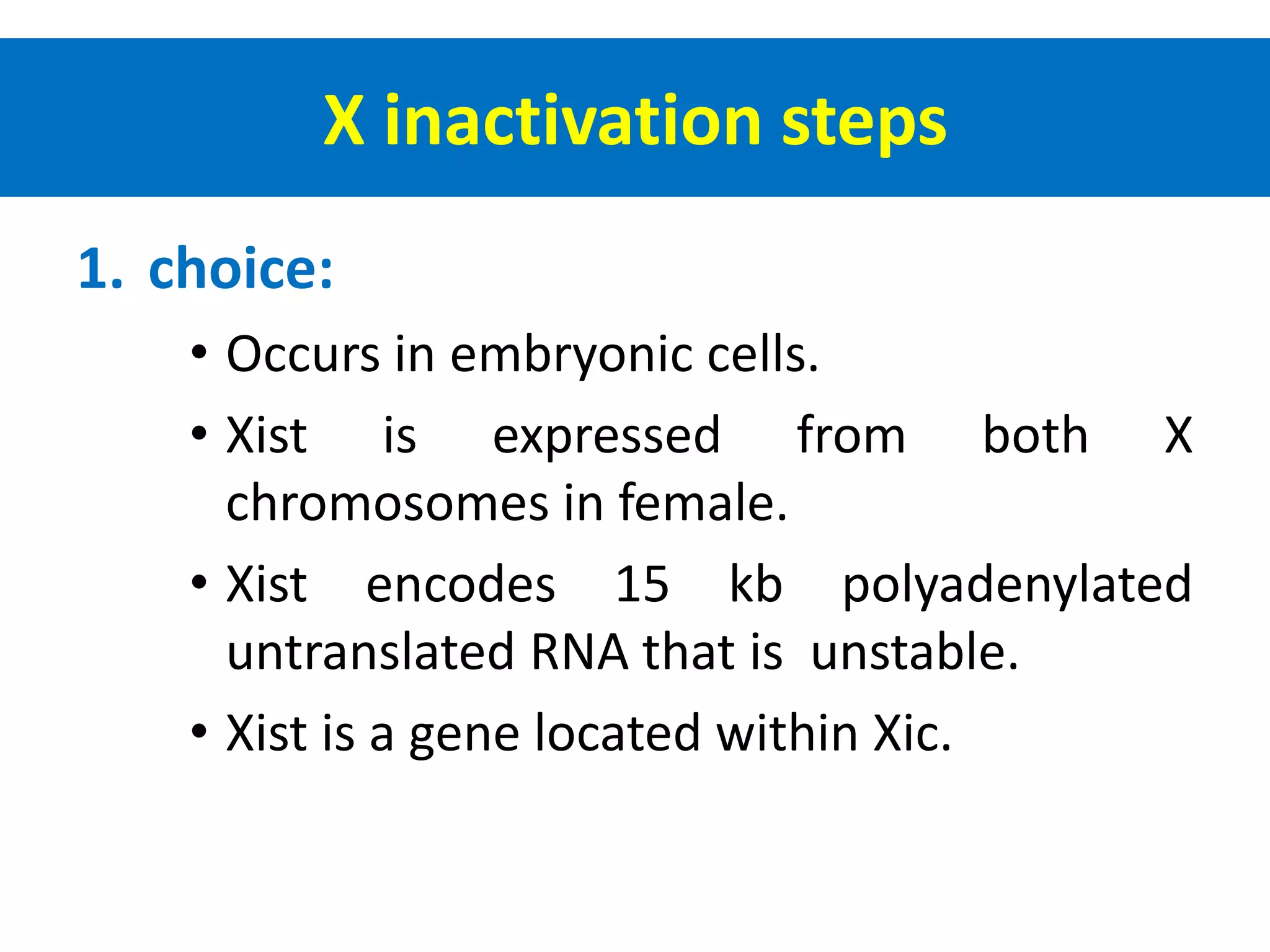
X inactivation steps
1. choice:
• Occurs in embryonic cells.
• Xist is expressed from both X
chromosomes in female.
• Xist encodes 15 kb polyadenylated
untranslated RNA that is unstable.
• Xist is a gene located within Xic.
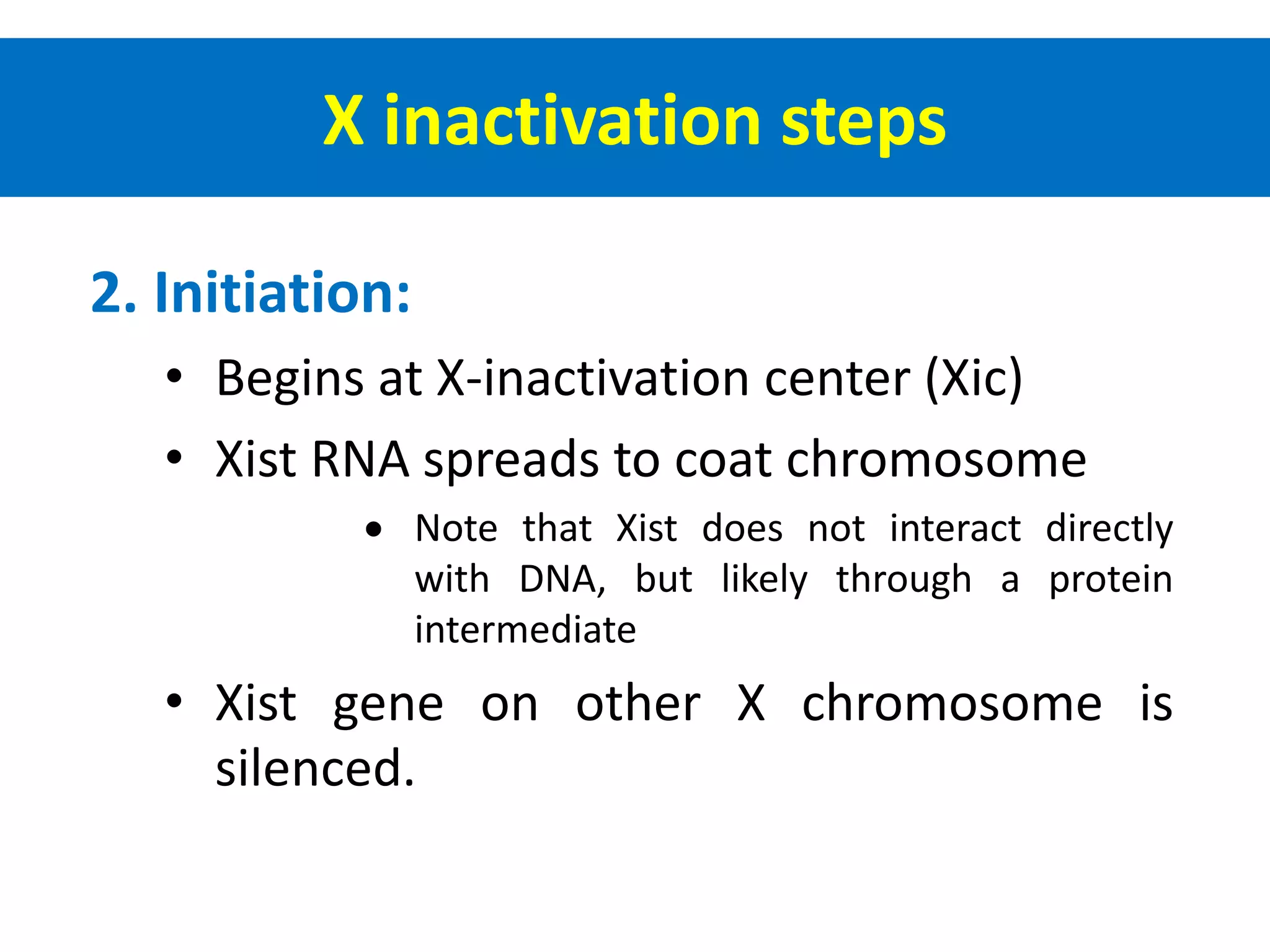
2. Initiation:
• Begins at X-inactivation center (Xic)
• Xist RNA spreads to coat chromosome
 Note that Xist does not interact directly
with DNA, but likely through a protein
intermediate
• Xist gene on other X chromosome is
silenced.
X inactivation steps
3. Spread:
• Propagated bi-directionally from Xic.
• Xist methylation required for silencing
of Xist.
X inactivation steps
Players
in the inactivation process
X chromosome structure
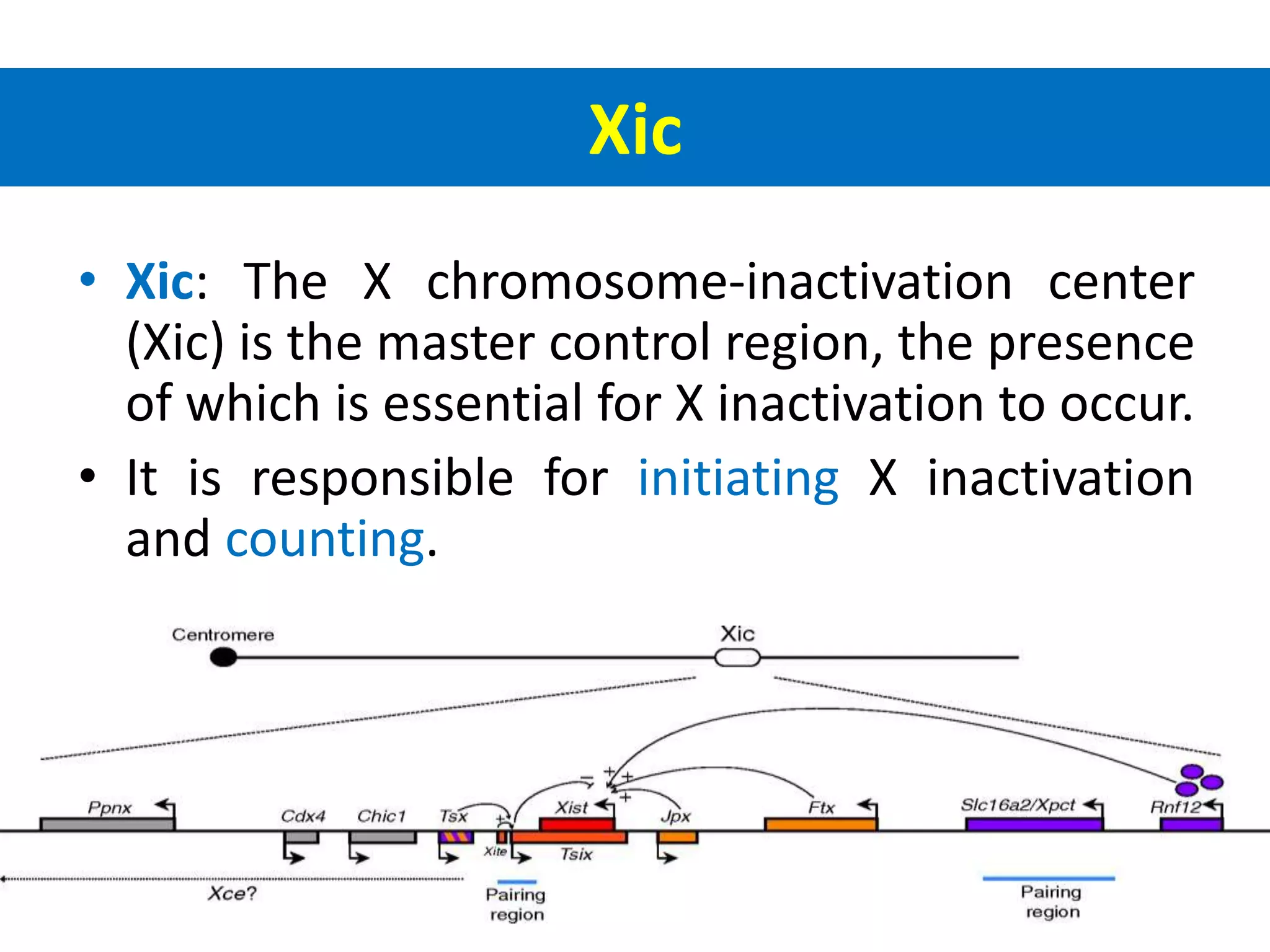
Xic
• Xic: The X chromosome-inactivation center
(Xic) is the master control region, the presence
of which is essential for X inactivation to occur.
• It is responsible for initiating X inactivation
and counting.
Xist
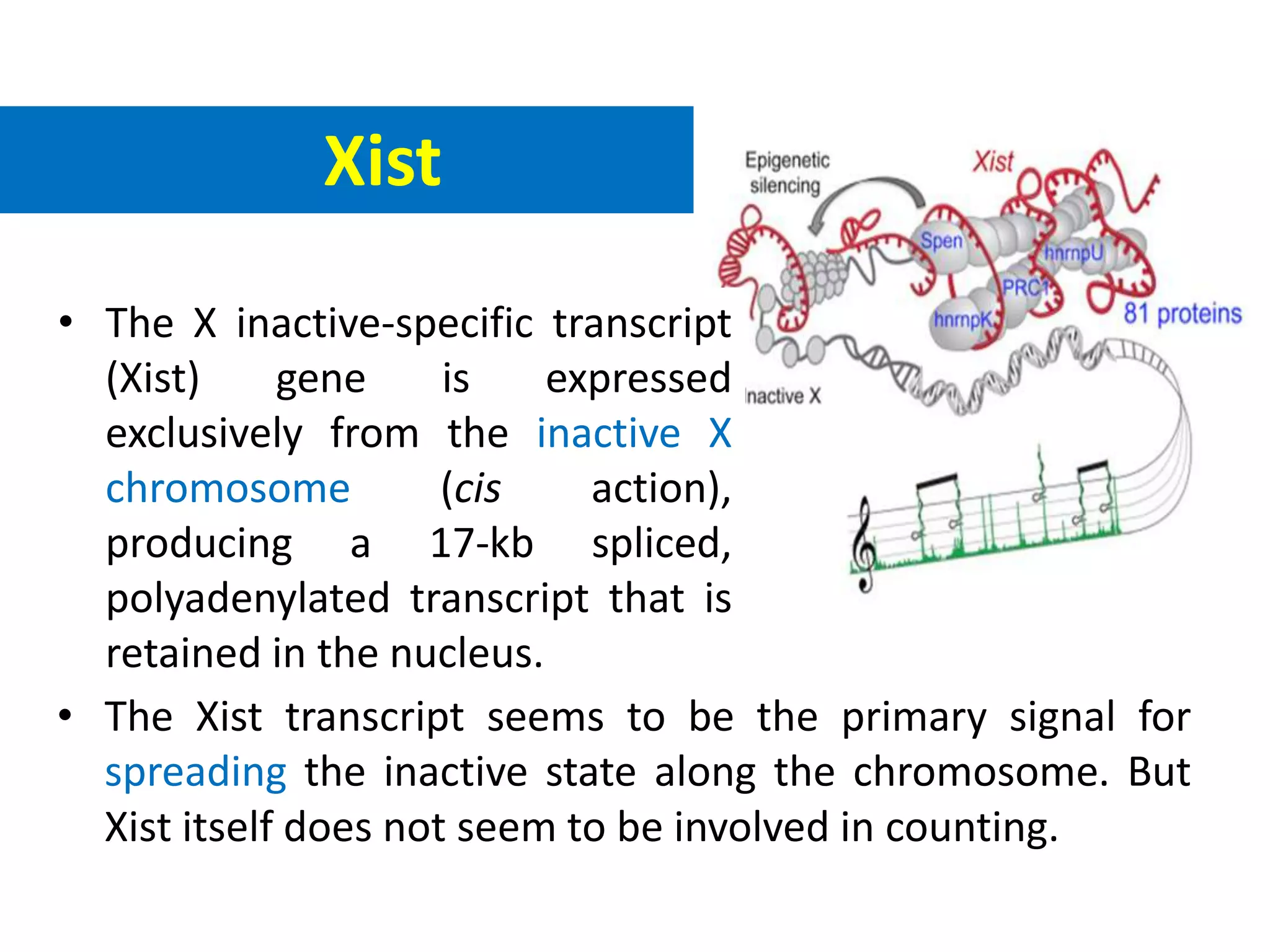
• The X inactive-specific transcript
(Xist) gene is expressed
exclusively from the inactive X
chromosome (cis action),
producing a 17-kb spliced,
polyadenylated transcript that is
retained in the nucleus.
• The Xist transcript seems to be the primary signal for
spreading the inactive state along the chromosome. But
Xist itself does not seem to be involved in counting.
• Prior to inactivation, both X chromosomes
weakly express Xist RNA from the Xist gene.
• During the inactivation process, the future Xa
ceases to express Xist, whereas the future Xi
dramatically increases Xist RNA production.
• On the future Xi, the Xist RNA progressively
coats the chromosome, spreading out from
the XIC; the Xist RNA does not localize to the
Xa.
Xist action
Forcing choice by Xce
• Xce: The X chromosome-controlling element
(Xce) affects the choice of X to be inactivated
(or to remain active).
• In females heterozygous for Xce alleles, the X
chromosome that carries a strong Xce allele is
more likely to remain active than one that
carries a weak Xce allele, thereby leading to
skewed X inactivation.
Xce alleles
• Three alleles at the Xce locus have been
identified: Xcea, Xceb and Xcec.
• In Xcea/Xceb heterozygotes, the X chromosome
carrying the Xcea allele is more likely to be
inactivated than that carrying the Xceb allele.
• In Xceb/Xcec heterozygotes, the X chromosome
carrying the Xceb allele is more likely to be
inactivated in most cells.
• The most extreme non-randomness is seen
in Xcea/Xcec heterozygotes.
Tsix
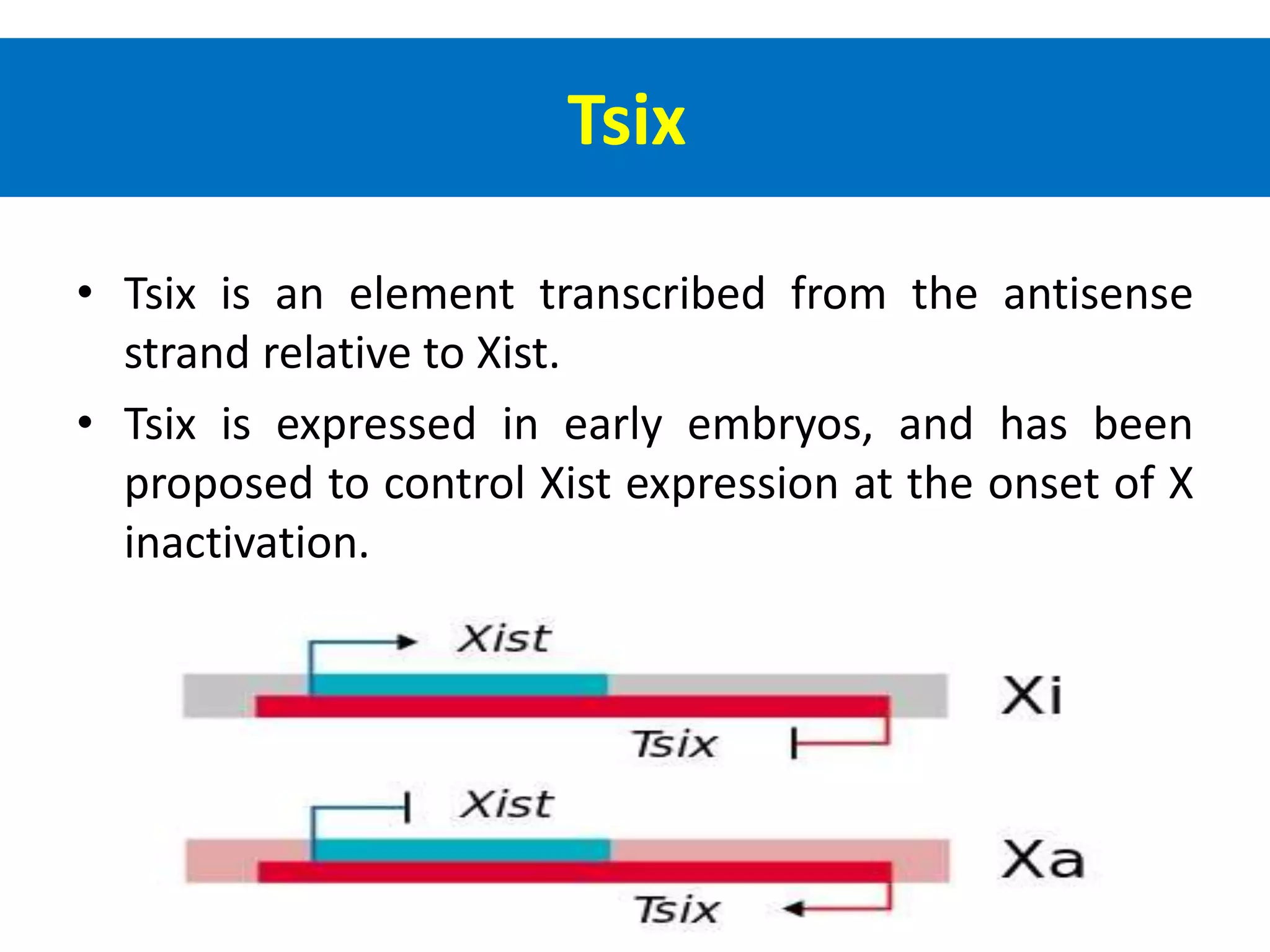
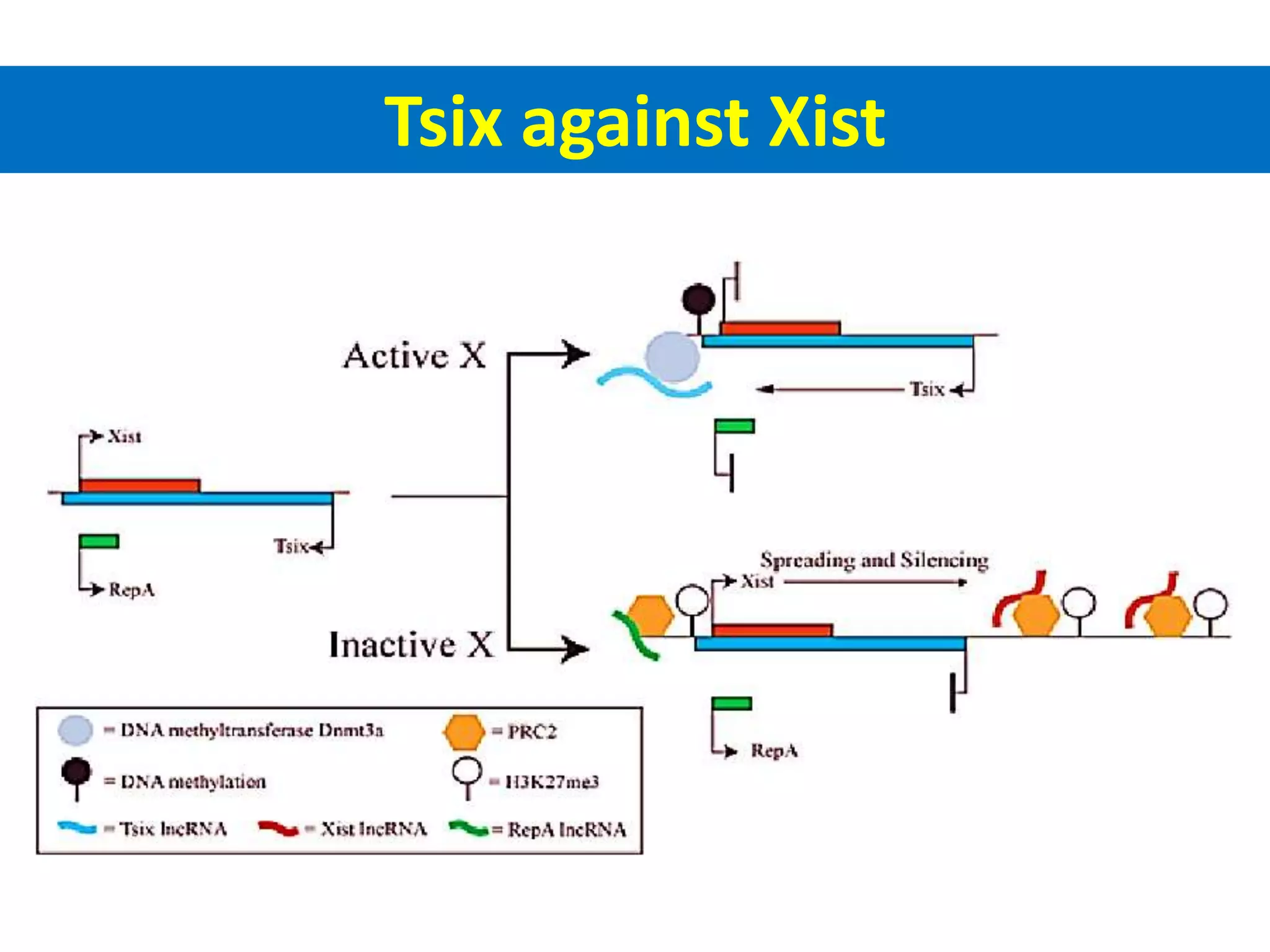
• Tsix is an element transcribed from the antisense
strand relative to Xist.
• Tsix is expressed in early embryos, and has been
proposed to control Xist expression at the onset of X
inactivation.
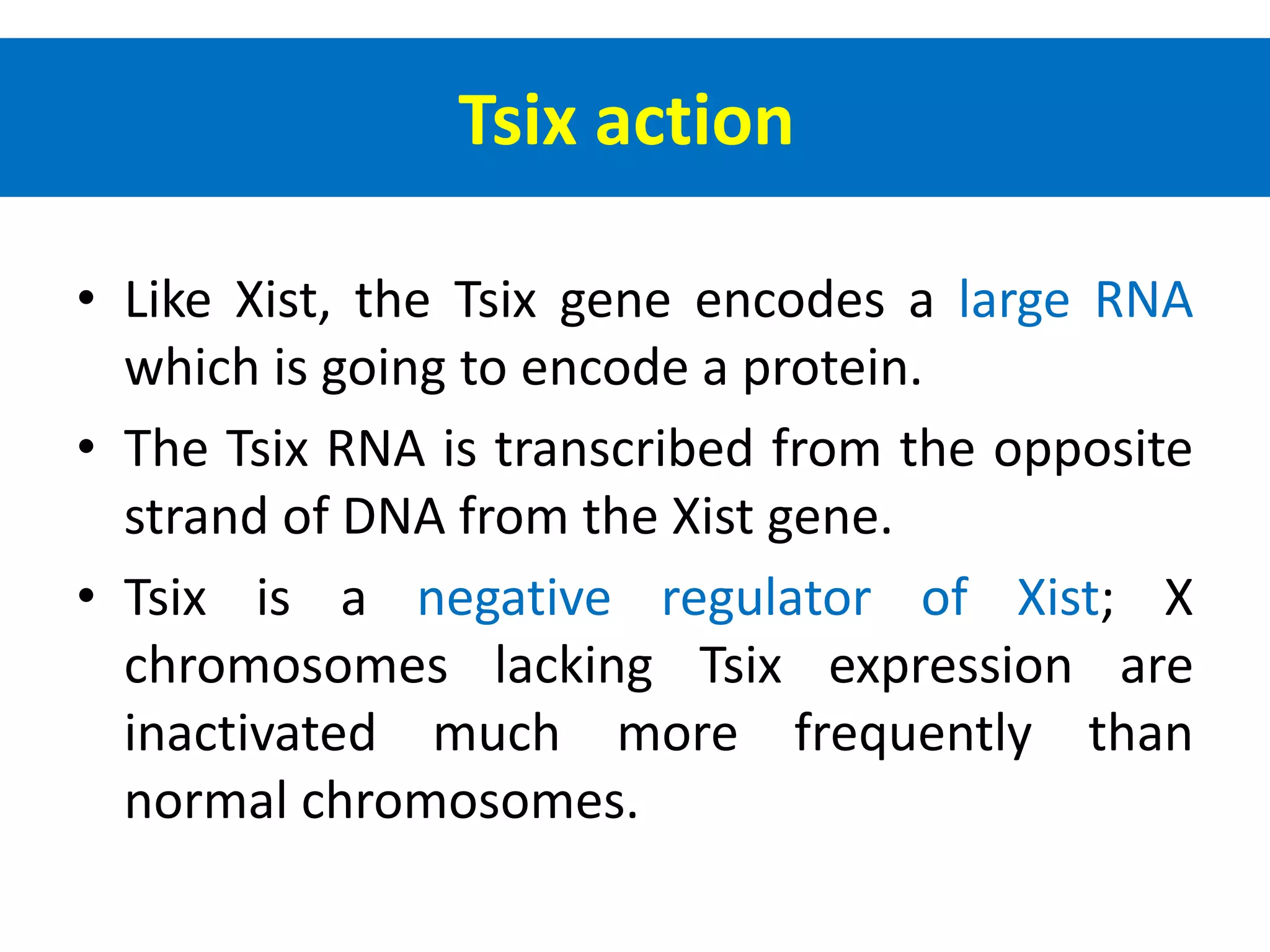
• Like Xist, the Tsix gene encodes a large RNA
which is going to encode a protein.
• The Tsix RNA is transcribed from the opposite
strand of DNA from the Xist gene.
• Tsix is a negative regulator of Xist; X
chromosomes lacking Tsix expression are
inactivated much more frequently than
normal chromosomes.
Tsix action
Tsix against Xist
Before the decision is taken After the decision is taken
Tsix against Xist
X chromosome inactivation and differentiation
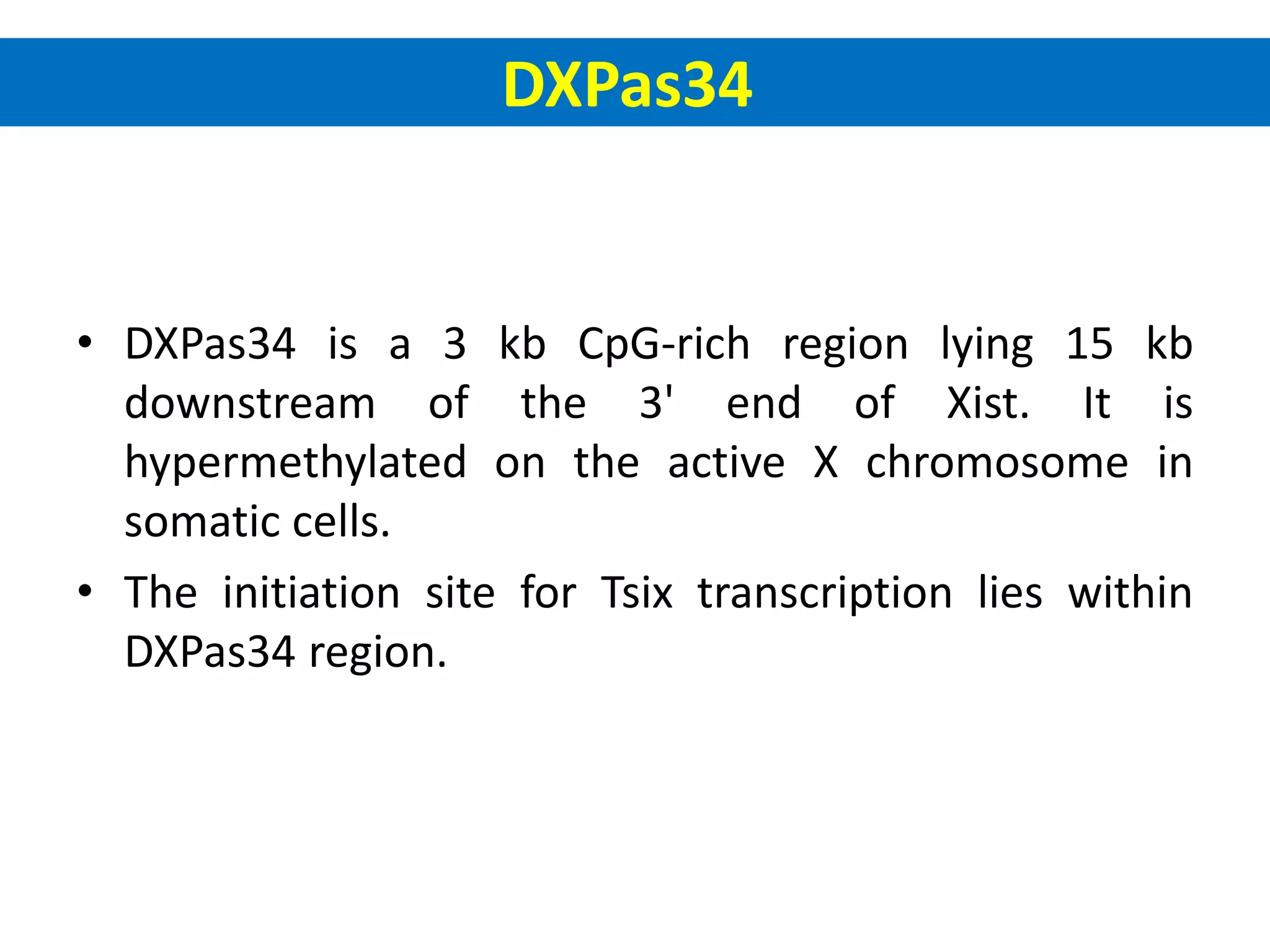
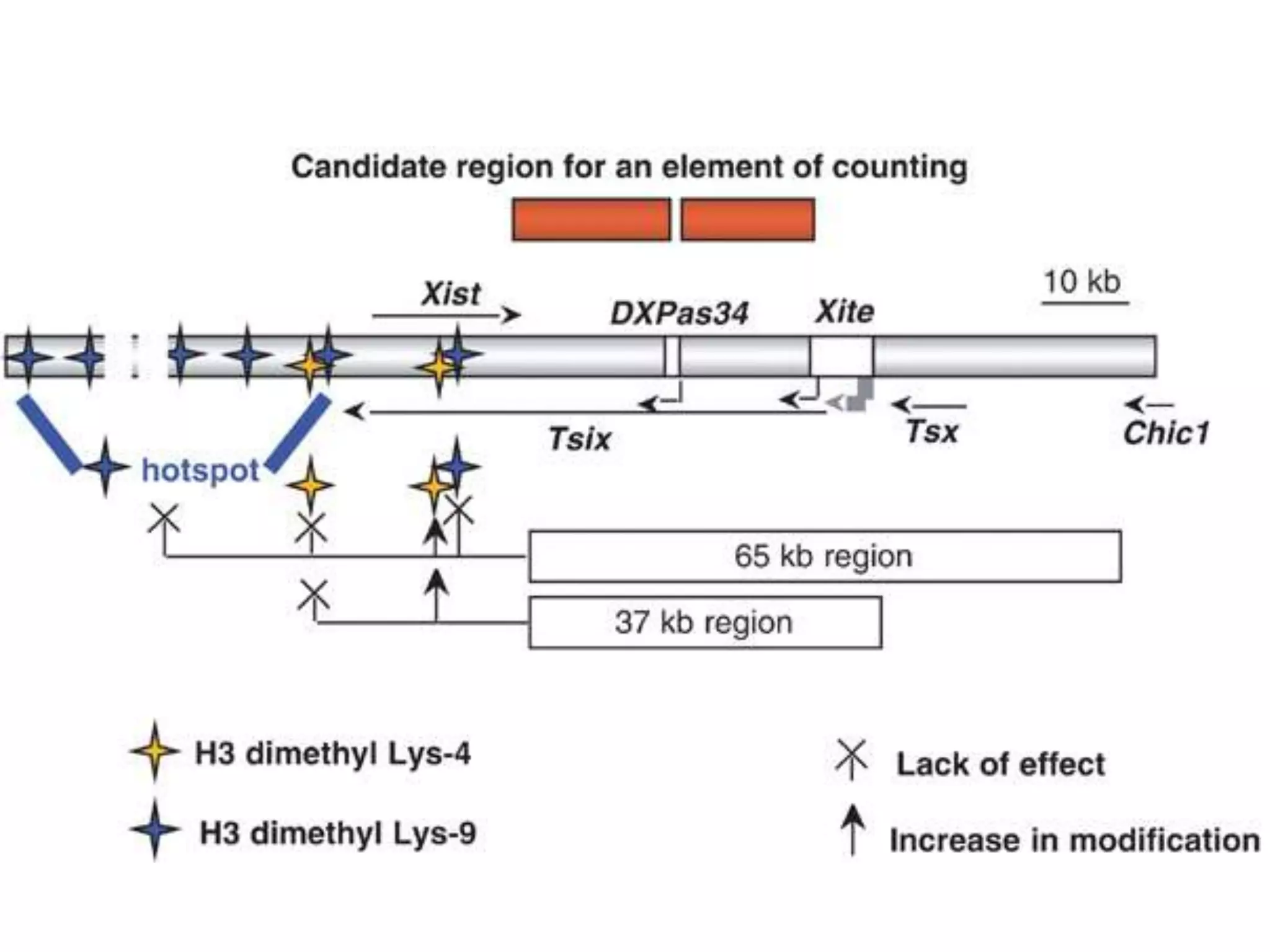
DXPas34
• DXPas34 is a 3 kb CpG-rich region lying 15 kb
downstream of the 3' end of Xist. It is
hypermethylated on the active X chromosome in
somatic cells.
• The initiation site for Tsix transcription lies within
DXPas34 region.
• High levels of DNA methylation
• Low levels of histone acetylation
• Low levels of H3K4me
• High levels of H3K9me
• High levels H3K27me
In nutshell, Xi undergoes:
Again X chromosome Inactivation …
• Is not always random
o A structurally abnormal X is preferentially inactivated.
o In extraembryonic membranes, only the maternal X is
activated.
• Is not complete
o Some genes are known to escape inactivation (genes
located in the pseudoautosomal region).
• Is not permanent
o Reversed in development of germ cells (not passed on to
gametes).
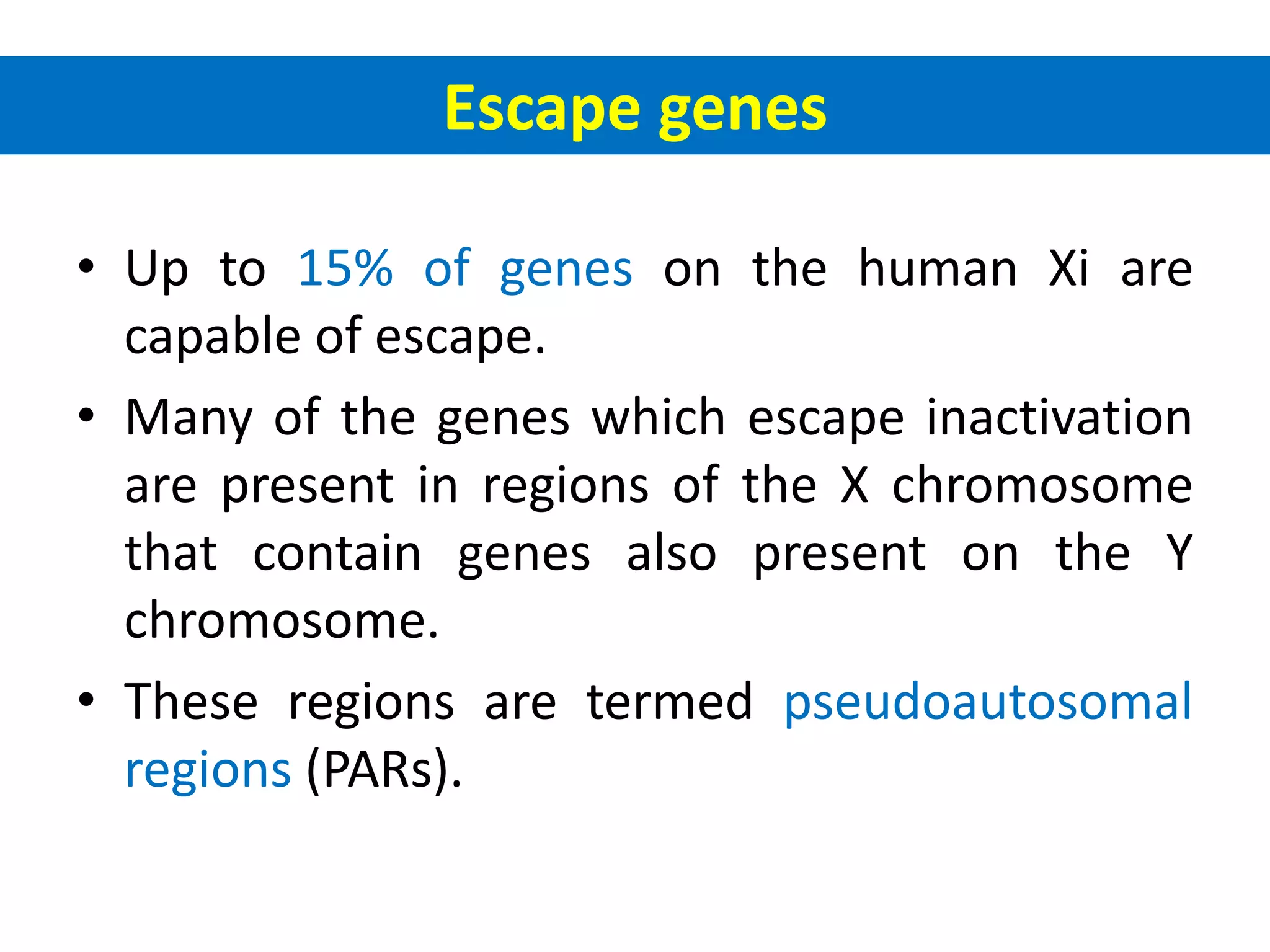
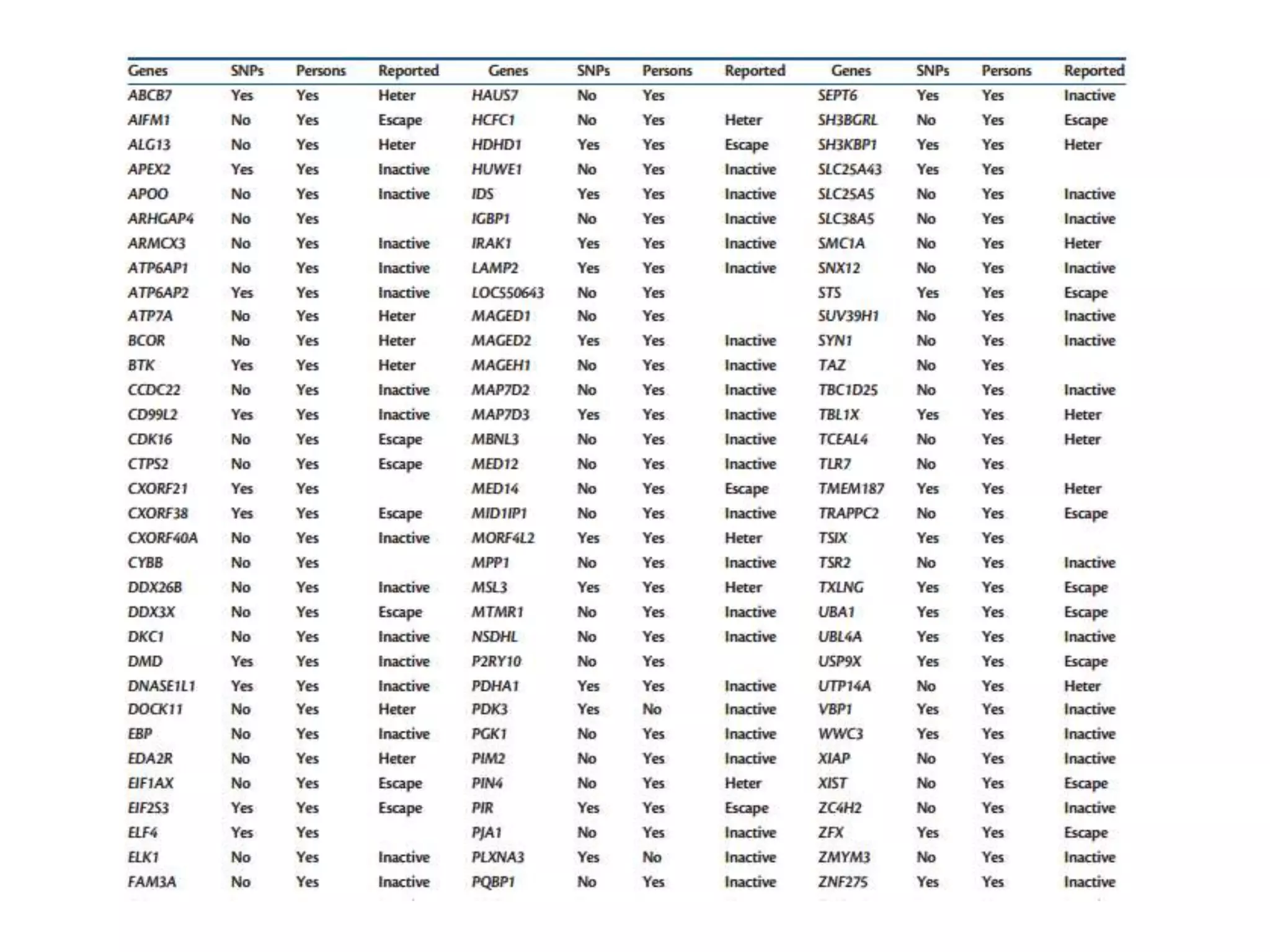
• Up to 15% of genes on the human Xi are
capable of escape.
• Many of the genes which escape inactivation
are present in regions of the X chromosome
that contain genes also present on the Y
chromosome.
• These regions are termed pseudoautosomal
regions (PARs).
Escape genes
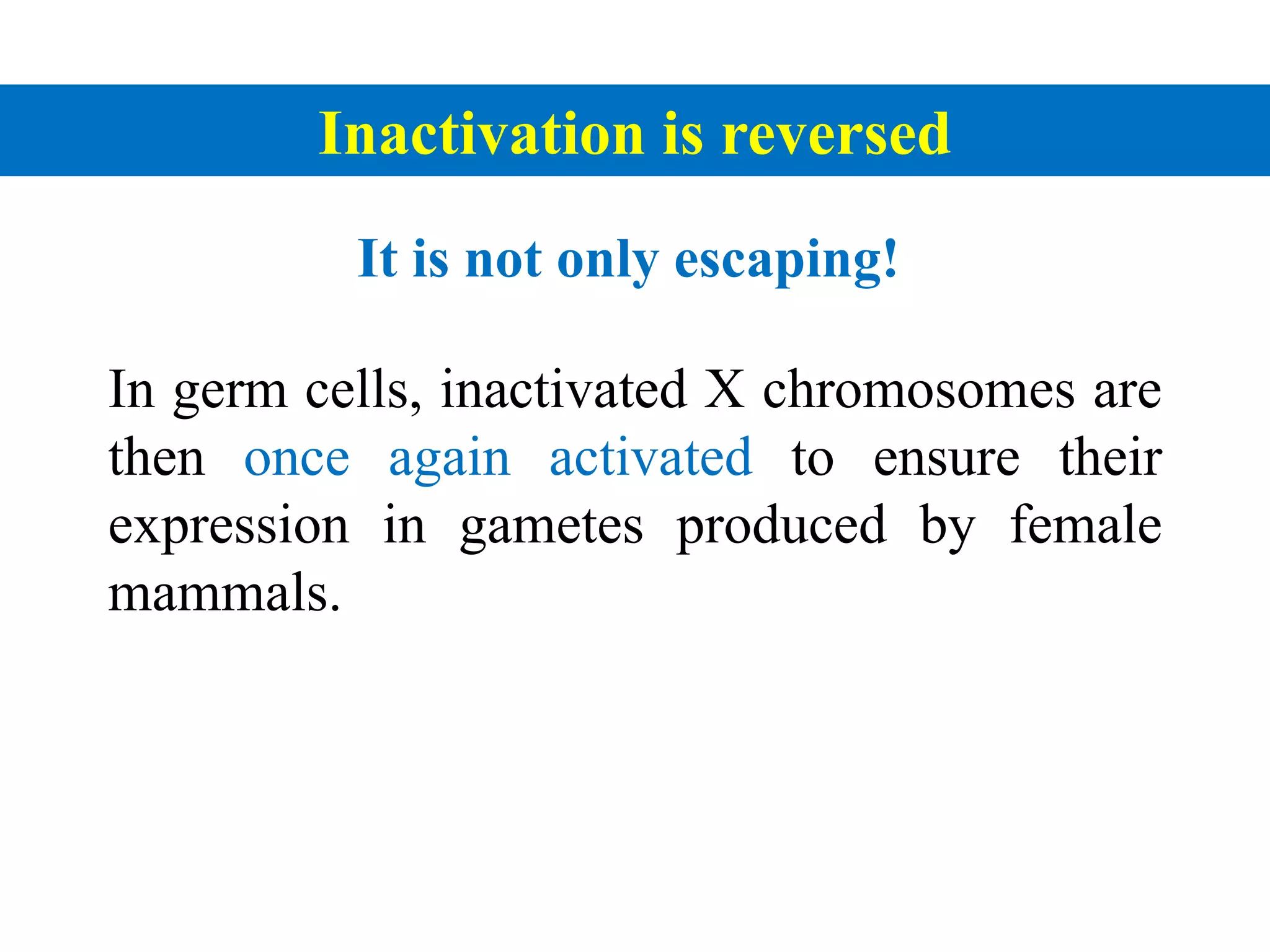
Inactivation is reversed
In germ cells, inactivated X chromosomes are
then once again activated to ensure their
expression in gametes produced by female
mammals.
It is not only escaping!
Genes that escape are those
located in the PARs
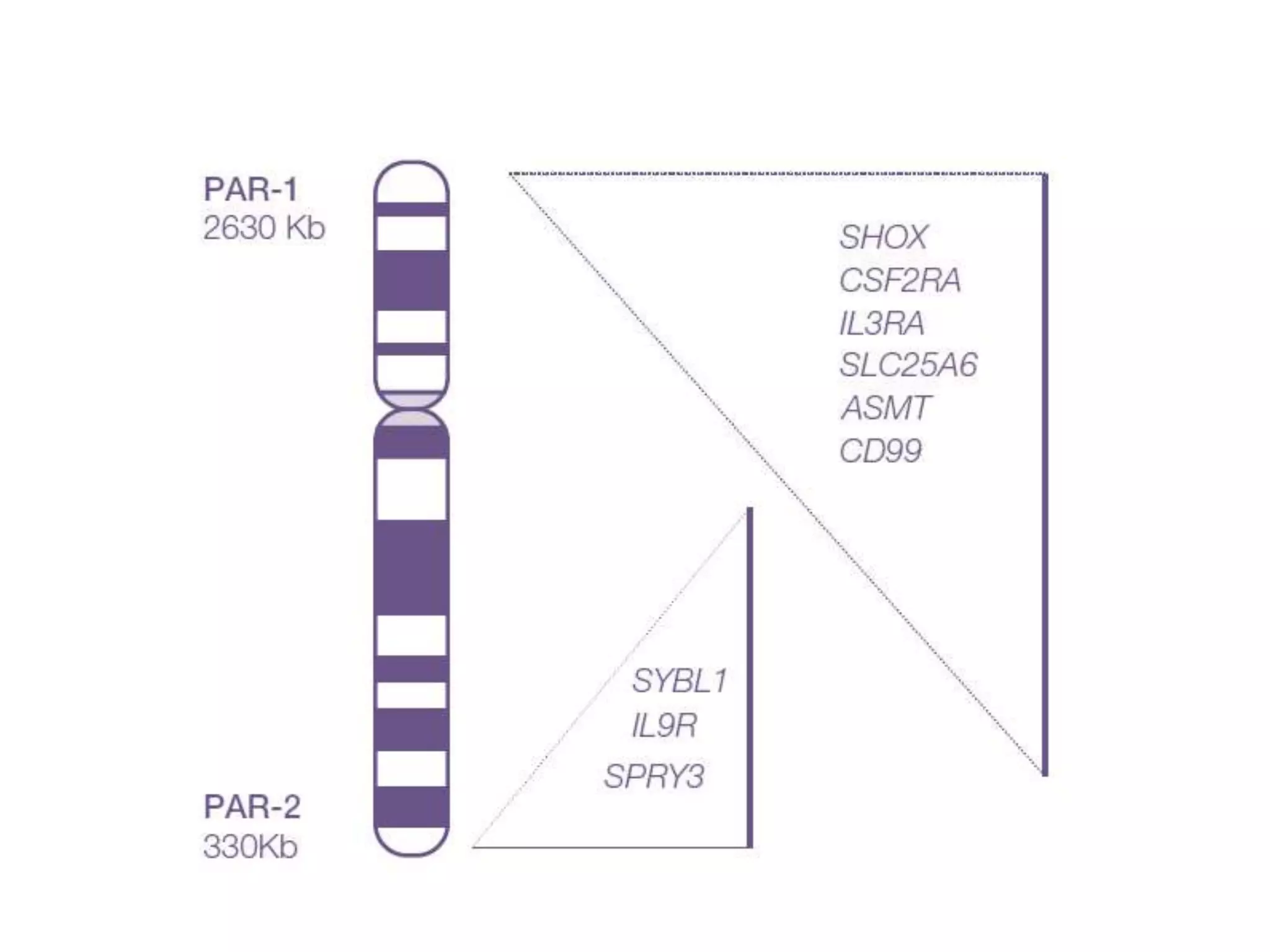
• The pseudoautosomal regions, PAR1, PAR2 are
homologous sequences of nucleotides on the
X and Y chromosomes.
• Although genetic recombination is known to
be limited only to the pseudoautosomal
regions (PAR1 and PAR2), new studies
reported a new PAR; PAR3.
Pseudoautosomal regions (PARs)
• The X chromosome in
humans spans more than
155 million base pairs.
• It contains about 1600
genes.
X Chromosome
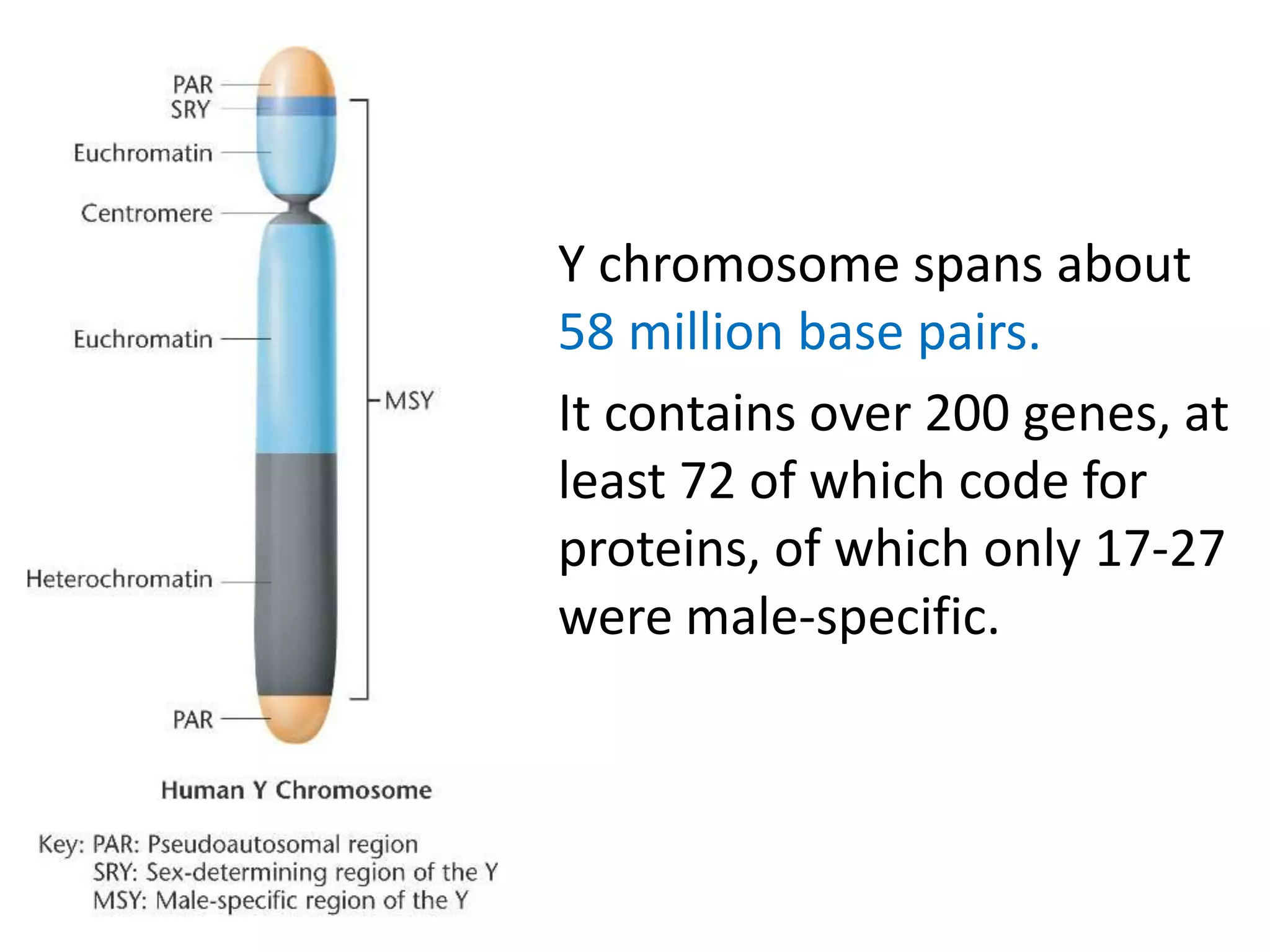
Y chromosome spans about
58 million base pairs.
It contains over 200 genes, at
least 72 of which code for
proteins, of which only 17-27
were male-specific.
The function of these pseudoautosomal regions
is that they allow the X and Y chromosomes to
pair and properly segregate during meiosis in …
Pseudoautosomal regions (PARs)
• Pairing of the X and Y chromosomes and crossing
over between their pseudoautosomal regions is
necessary for the normal progression of male
meiosis.
• Thus, those cells in which X-Y recombination does
not occur will fail to complete meiosis.
• Structural and/or genetic dissimilarity (due to
mutation) between the pseudoautosomal regions
can disrupt pairing and recombination, and
consequently cause male infertility.
Cross over is important here!
Male-specific lethal proteins
• Male specific lethal proteins (MSLs) are a
family of four proteins that bind to the X
chromosome exclusively in males.
• The name MSL is used because mutations
in these genes cause inability to effectively
upregulate X-linked genes appropriately,
and are thus lethal to males only and not
their female counterparts.
X Inactivation in disease
• However, in cases of skewed X
inactivation, there may not be enough
healthy X chromosomes present and some
degree of muscle disease (symptomatology)
may be expressed.
• This phenomenon is rare but is seen in X
linked muscular disorders like Duchenne
Muscular Dystrophy and Becker Muscular
Dystrophy.
Duchenne Muscular Dystrophy Becker Muscular Dystrophy
Thank you
• The Y chromosome is less than one-third the size of the X,
and has less than 1% of its genes.
• Y chromosome has expanded and contracted due to the
addition and deletion of repeated sequences, with the result
that among human males, the Y chromosome is more
variable in size than any other chromosome.
• The DNA sequence shows an accumulation of repetitive
DNA sequences unique to the Y that lend bulk to the
chromosome—presumably facilitating proper chromosome
segregation. Such palindromic reduplications within the
chromosome may be needed to maintain the presence of a
chromosome large enough to pair with the X chromosome
during meiosis
Y chromosome
Y chromosome
Y chromosome is gene-poor except for those
genes involved in male sexual functions.
Therefore, other putative male-specific
attributes are likely to be due to modifications
not involving the DNA sequence, or to
environmental and social factors, rather than
to sex differences in the genetic blueprint.
SRY gene
• As a result, the SRY gene is occasionally transferred
from Y to the tip of the X chromosome, a region
where recombination still occurs; these infrequent
exchanges account for rare occurrences of XX males
(having gained SRY) and XY females (having lost
SRY ).
• It is clear that the human X and Y chromosomes
continue to be subject to modification, and the
evolution of our sex chromosomes is a dynamic
process with no end in sight.
XY females
XX males
X chromosome Inactivation

X chromosome Inactivation

  • 1.
    X inactivation Hussein Sabit,PhD Mechanisms and impacts
  • 2.
    • The humanX chromosome is about 155 mega bases (MB) in length, consisting of approximately 51 MB of genes—somewhat less gene-dense than other chromosomes of its size. • The rest of the chromosome consists of interspersed DNA sequences that are not unique to the X because they occur as repeats all over our genome. There are 826 protein coding genes on the X chromosome. • There are more than 8,000 X-linked CpG islands that occur all along the chromosome, with a frequency of 5.2 islands per MB of DNA. X chromosome
  • 3.
  • 4.
    From the beginning! X-inactivation(also called Lyonization) is a process by which one of the copies of the X chromosome present in female mammals is inactivated. Mary Lyon
  • 5.
    • It wasjust a hypothesis in 1960 • It became a scientific fact in 2011 Mary Lyon From the beginning!
  • 6.
    Barr Body The Barrbody is the inactivated X chromosome and it is generally located on the periphery of the nucleus, as this the place in which inactive chromosome is located.
  • 7.
    The ultimate goalof X inactivation is …
  • 8.
  • 9.
    Definition first! Dosage Compensationis a term that describes the processes by which organisms equalize the expression of genes between members of different biological sexes.
  • 10.
    Models of Dosagecompensation
  • 11.
    X chromosome Inactivation… • Is not always random o A structurally abnormal X is preferentially inactivated. o In extraembryonic membranes, only the maternal X is activated. • Is not complete o Some genes are known to escape inactivation (genes located in the pseudoautosomal region-PAR). • Is not permanent o Reversed in development of germ cells (not passed on to gametes).
  • 12.
    Who decides? • Thechoice of which X chromosome will be inactivated is not random in mammals such as humans and mice. • Once an X chromosome is inactivated it will remain inactive throughout the lifetime of the cell and its descendants in the organism. • So, females are mosaic for the expression of X chromosome-harbored genes.
  • 14.
  • 15.
  • 16.
    Types of Xinactivation • Occurs in embryos around gastrulation. • Inactive X can be maternal or paternal. • Once established it will be maintained in the cell descendants. 1. Random X inactivation
  • 17.
    2. Imprinted Xinactivation • Paternal X chromosome is selectively silenced. • Occurs in pre-implantation embryos and extra embryonic tissues. Types of X inactivation
  • 18.
    Skewed vs. randomX inactivation
  • 19.
    In the extraembryonictissues only the maternal X chromosome is active, whereas, the paternal X will be always imprinted. Itisnot100%random!
  • 20.
    Timing of Xinactivation • The onset of X inactivation is subject to variation. • The time of inactivation varies with respect to the developmental staging. • Generally, it could take place in blastocyst, and the onset of gastrulation.
  • 22.
    • In mouseembryos, X inactivation begins in the blastocyst about 96 hr p.c., and was complete in trophectoderm by 120 hr p.c.; • In rabbit embryo cells it begins a day later at 120 hr p.c.; in analogous cells of human embryos there was no evidence of silence up to the day 7 blastocyst stage-the latest stage analyzed. Rhesus monkey shows biallelic expression of X- linked genes in the 11-day blastocyst, indicating that inactivation had not yet occurred.
  • 23.
    Timings of Xinactivation in some animals
  • 24.
    X inactivation steps 1.choice: • Occurs in embryonic cells. • Xist is expressed from both X chromosomes in female. • Xist encodes 15 kb polyadenylated untranslated RNA that is unstable. • Xist is a gene located within Xic.
  • 25.
    2. Initiation: • Beginsat X-inactivation center (Xic) • Xist RNA spreads to coat chromosome  Note that Xist does not interact directly with DNA, but likely through a protein intermediate • Xist gene on other X chromosome is silenced. X inactivation steps
  • 26.
    3. Spread: • Propagatedbi-directionally from Xic. • Xist methylation required for silencing of Xist. X inactivation steps
  • 28.
  • 29.
  • 30.
  • 31.
    Xic • Xic: TheX chromosome-inactivation center (Xic) is the master control region, the presence of which is essential for X inactivation to occur. • It is responsible for initiating X inactivation and counting.
  • 32.
    Xist • The Xinactive-specific transcript (Xist) gene is expressed exclusively from the inactive X chromosome (cis action), producing a 17-kb spliced, polyadenylated transcript that is retained in the nucleus. • The Xist transcript seems to be the primary signal for spreading the inactive state along the chromosome. But Xist itself does not seem to be involved in counting.
  • 33.
    • Prior toinactivation, both X chromosomes weakly express Xist RNA from the Xist gene. • During the inactivation process, the future Xa ceases to express Xist, whereas the future Xi dramatically increases Xist RNA production. • On the future Xi, the Xist RNA progressively coats the chromosome, spreading out from the XIC; the Xist RNA does not localize to the Xa. Xist action
  • 34.
    Forcing choice byXce • Xce: The X chromosome-controlling element (Xce) affects the choice of X to be inactivated (or to remain active). • In females heterozygous for Xce alleles, the X chromosome that carries a strong Xce allele is more likely to remain active than one that carries a weak Xce allele, thereby leading to skewed X inactivation.
  • 35.
    Xce alleles • Threealleles at the Xce locus have been identified: Xcea, Xceb and Xcec. • In Xcea/Xceb heterozygotes, the X chromosome carrying the Xcea allele is more likely to be inactivated than that carrying the Xceb allele. • In Xceb/Xcec heterozygotes, the X chromosome carrying the Xceb allele is more likely to be inactivated in most cells. • The most extreme non-randomness is seen in Xcea/Xcec heterozygotes.
  • 36.
    Tsix • Tsix isan element transcribed from the antisense strand relative to Xist. • Tsix is expressed in early embryos, and has been proposed to control Xist expression at the onset of X inactivation.
  • 37.
    • Like Xist,the Tsix gene encodes a large RNA which is going to encode a protein. • The Tsix RNA is transcribed from the opposite strand of DNA from the Xist gene. • Tsix is a negative regulator of Xist; X chromosomes lacking Tsix expression are inactivated much more frequently than normal chromosomes. Tsix action
  • 38.
  • 39.
    Before the decisionis taken After the decision is taken Tsix against Xist
  • 40.
    X chromosome inactivationand differentiation
  • 41.
    DXPas34 • DXPas34 isa 3 kb CpG-rich region lying 15 kb downstream of the 3' end of Xist. It is hypermethylated on the active X chromosome in somatic cells. • The initiation site for Tsix transcription lies within DXPas34 region.
  • 43.
    • High levelsof DNA methylation • Low levels of histone acetylation • Low levels of H3K4me • High levels of H3K9me • High levels H3K27me In nutshell, Xi undergoes:
  • 44.
    Again X chromosomeInactivation … • Is not always random o A structurally abnormal X is preferentially inactivated. o In extraembryonic membranes, only the maternal X is activated. • Is not complete o Some genes are known to escape inactivation (genes located in the pseudoautosomal region). • Is not permanent o Reversed in development of germ cells (not passed on to gametes).
  • 45.
    • Up to15% of genes on the human Xi are capable of escape. • Many of the genes which escape inactivation are present in regions of the X chromosome that contain genes also present on the Y chromosome. • These regions are termed pseudoautosomal regions (PARs). Escape genes
  • 46.
    Inactivation is reversed Ingerm cells, inactivated X chromosomes are then once again activated to ensure their expression in gametes produced by female mammals. It is not only escaping!
  • 48.
    Genes that escapeare those located in the PARs
  • 49.
    • The pseudoautosomalregions, PAR1, PAR2 are homologous sequences of nucleotides on the X and Y chromosomes. • Although genetic recombination is known to be limited only to the pseudoautosomal regions (PAR1 and PAR2), new studies reported a new PAR; PAR3. Pseudoautosomal regions (PARs)
  • 50.
  • 51.
    • The Xchromosome in humans spans more than 155 million base pairs. • It contains about 1600 genes. X Chromosome
  • 52.
    Y chromosome spansabout 58 million base pairs. It contains over 200 genes, at least 72 of which code for proteins, of which only 17-27 were male-specific.
  • 53.
    The function ofthese pseudoautosomal regions is that they allow the X and Y chromosomes to pair and properly segregate during meiosis in … Pseudoautosomal regions (PARs)
  • 56.
    • Pairing ofthe X and Y chromosomes and crossing over between their pseudoautosomal regions is necessary for the normal progression of male meiosis. • Thus, those cells in which X-Y recombination does not occur will fail to complete meiosis. • Structural and/or genetic dissimilarity (due to mutation) between the pseudoautosomal regions can disrupt pairing and recombination, and consequently cause male infertility. Cross over is important here!
  • 57.
    Male-specific lethal proteins •Male specific lethal proteins (MSLs) are a family of four proteins that bind to the X chromosome exclusively in males. • The name MSL is used because mutations in these genes cause inability to effectively upregulate X-linked genes appropriately, and are thus lethal to males only and not their female counterparts.
  • 58.
    X Inactivation indisease • However, in cases of skewed X inactivation, there may not be enough healthy X chromosomes present and some degree of muscle disease (symptomatology) may be expressed. • This phenomenon is rare but is seen in X linked muscular disorders like Duchenne Muscular Dystrophy and Becker Muscular Dystrophy.
  • 59.
    Duchenne Muscular DystrophyBecker Muscular Dystrophy
  • 60.
  • 61.
    • The Ychromosome is less than one-third the size of the X, and has less than 1% of its genes. • Y chromosome has expanded and contracted due to the addition and deletion of repeated sequences, with the result that among human males, the Y chromosome is more variable in size than any other chromosome. • The DNA sequence shows an accumulation of repetitive DNA sequences unique to the Y that lend bulk to the chromosome—presumably facilitating proper chromosome segregation. Such palindromic reduplications within the chromosome may be needed to maintain the presence of a chromosome large enough to pair with the X chromosome during meiosis Y chromosome
  • 62.
    Y chromosome Y chromosomeis gene-poor except for those genes involved in male sexual functions. Therefore, other putative male-specific attributes are likely to be due to modifications not involving the DNA sequence, or to environmental and social factors, rather than to sex differences in the genetic blueprint.
  • 63.
    SRY gene • Asa result, the SRY gene is occasionally transferred from Y to the tip of the X chromosome, a region where recombination still occurs; these infrequent exchanges account for rare occurrences of XX males (having gained SRY) and XY females (having lost SRY ). • It is clear that the human X and Y chromosomes continue to be subject to modification, and the evolution of our sex chromosomes is a dynamic process with no end in sight.
  • 64.
  • 65.

Editor's Notes

  • #55 Sabit’s notes>>: SHOX, short stature homeobox; CSF2RA , colony stimulating factor 2; IL3RA , interleukin-3 receptor; SLC25A6 , solute carrier family 25, member A6; ASMT , acetylserotonin methyltransferase; CD99 ( MIC2 ); SPRY3 , homolog of sprouty; SYBL1 , vesicle-associated membrane protein 7; 1L9R , interleukin-9 receptor