E2- Building Bridges Between Indigenous
and Non-Indigenous Communities in
Canada and Overseas
Embracing Indigenous Education in our Role as
International Educators
Julie Vaudrin-Charette, Cégep de l’Outaouais, Qc,
jvaudrincharette@gmail.com
A Space for Conversation
In this workshop, we will explore the connections
between our role as international educators and
the current state of Indigenous Education in
Canada.
Some statistics : 8% - 23%
Current efforts within our organizations :
Curriculum Changes/ Student Mobility/
Student Services
A Dialogical
Whisper

How do we relate to First Peoples of Canada ?
What has brought us here to be part of this
conversation on Indigenous Education and the
International Curriculum ?
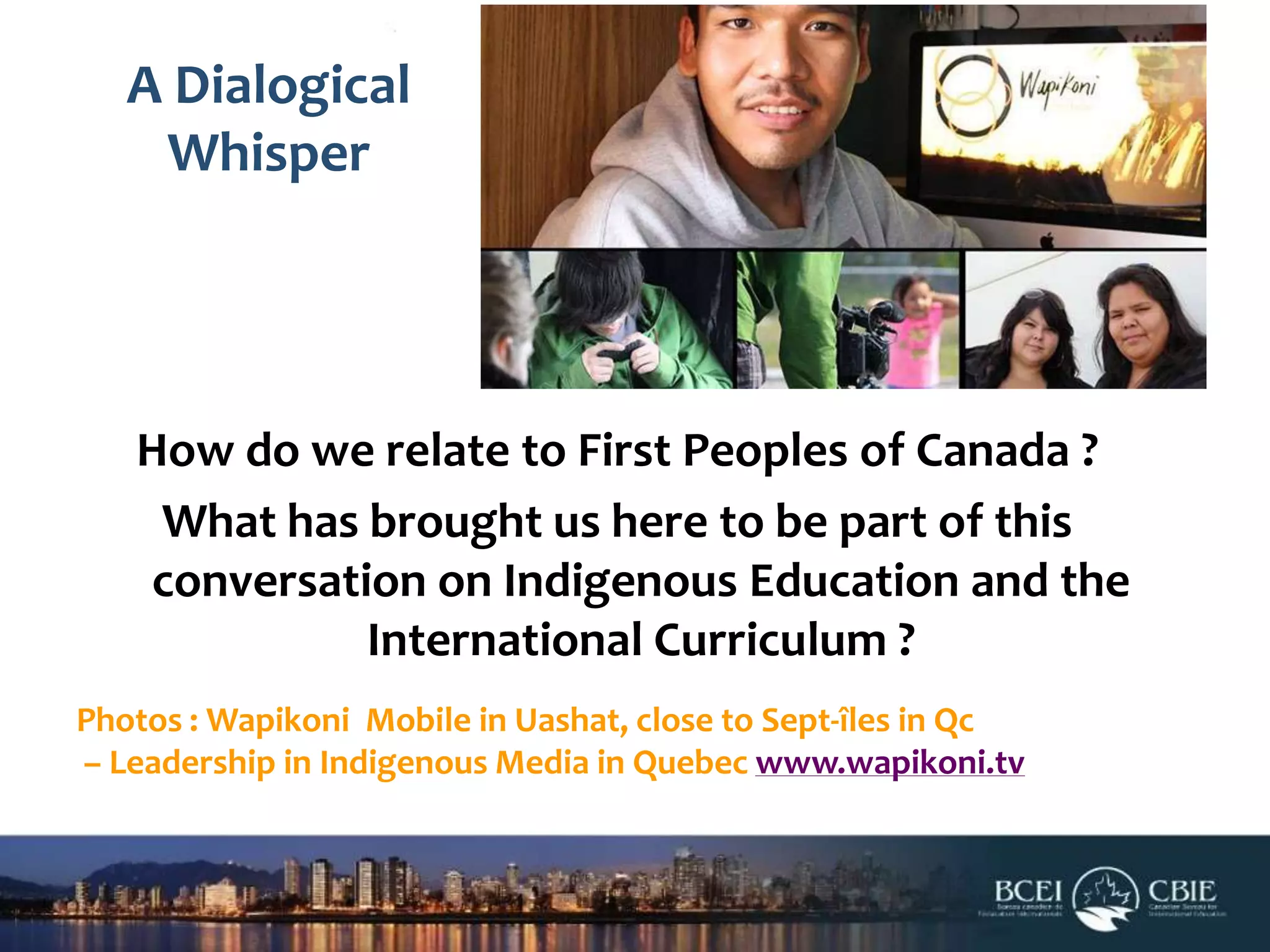
Photos : Wapikoni Mobile in Uashat, close to Sept-îles in Qc
– Leadership in Indigenous Media in Quebec www.wapikoni.tv
Indigenizing Education
•
•
•
•
•
•

Embracing complexity
Healing
Respect for Elders
Reciprocity
Intercultural
Holistic approach to
learning
• Learning by Doing
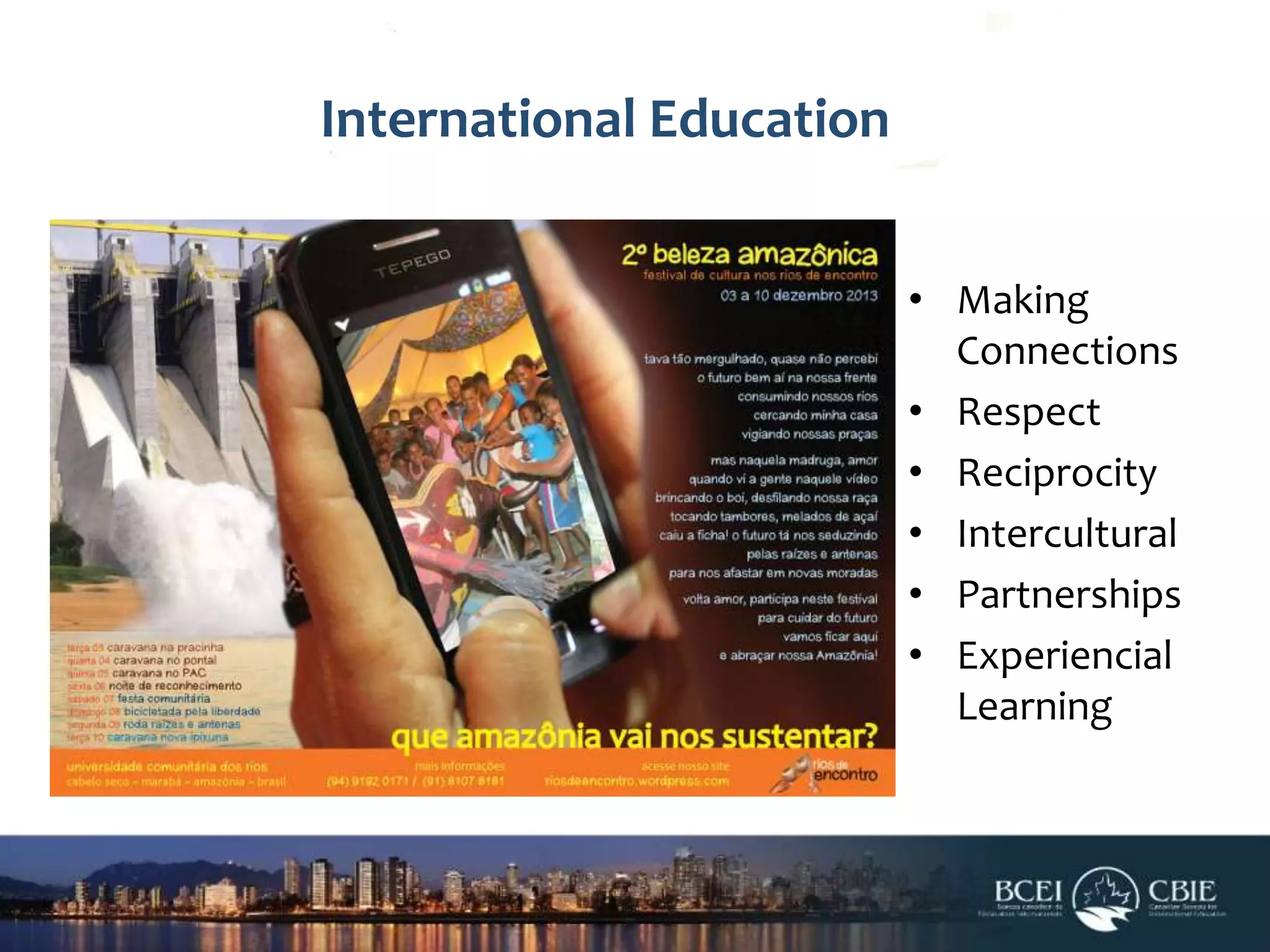
International Education
• Making
Connections
• Respect
• Reciprocity
• Intercultural
• Partnerships
• Experiencial
Learning
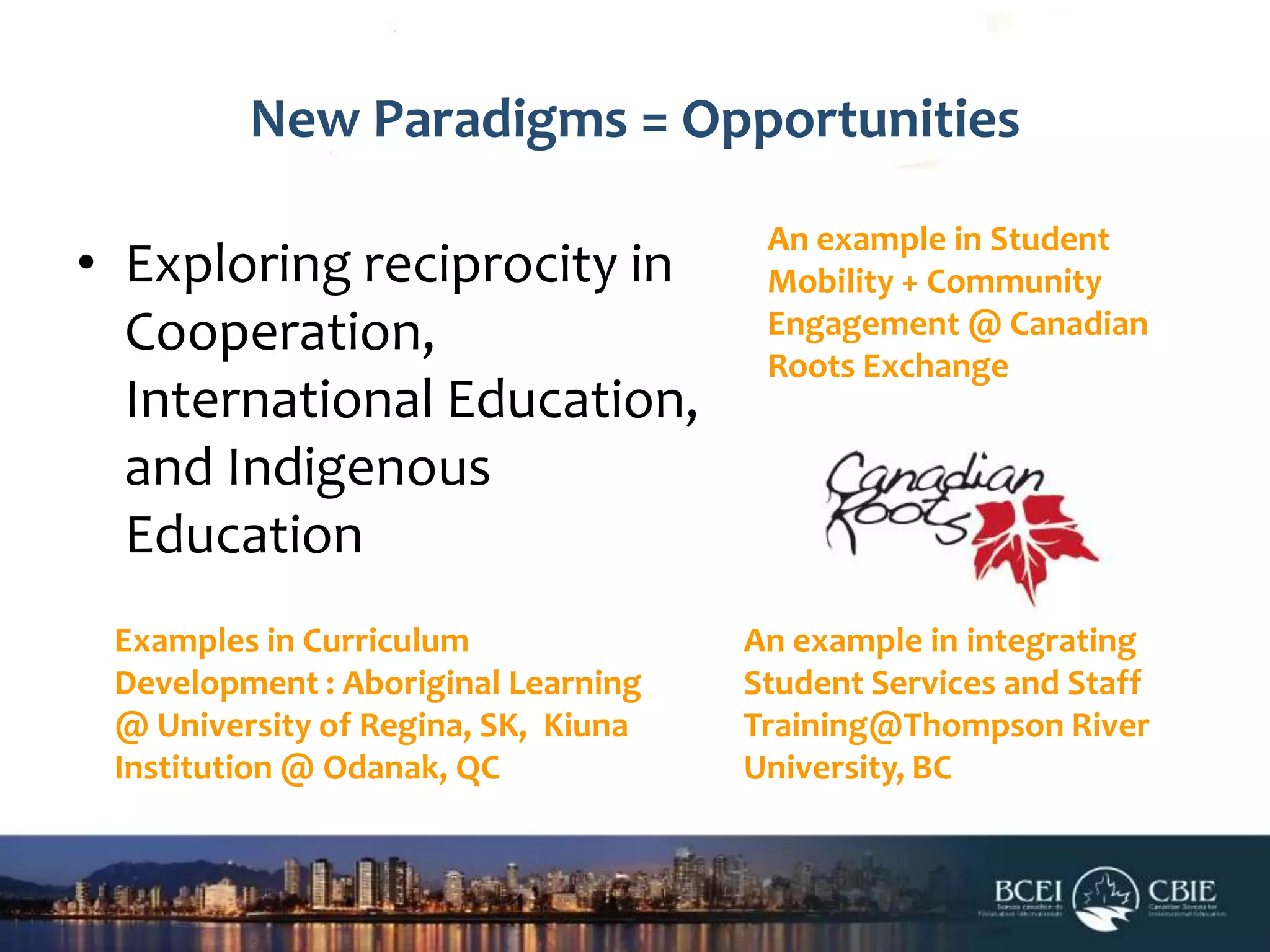
New Paradigms = Opportunities
• Exploring reciprocity in
Cooperation,
International Education,
and Indigenous
Education
Examples in Curriculum
Development : Aboriginal Learning
@ University of Regina, SK, Kiuna
Institution @ Odanak, QC

An example in Student
Mobility + Community
Engagement @ Canadian
Roots Exchange

An example in integrating
Student Services and Staff
Training@Thompson River
University, BC
A Collective Map in Indigenizing Education
Reciprocity
Intercultural
Feasibility
Technological
Environmental
Curriculum Design
Out-of-the-Box
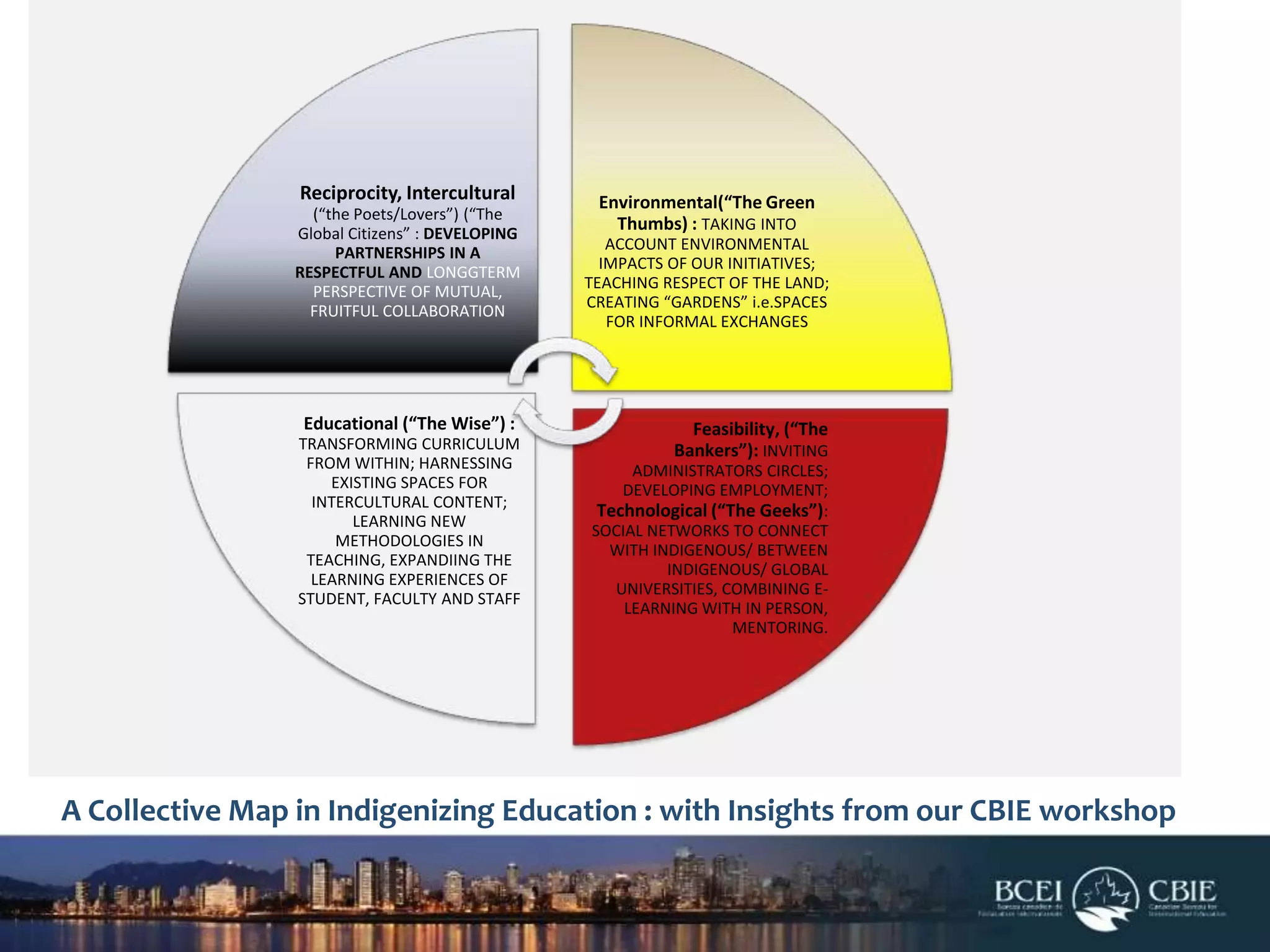
Reciprocity, Intercultural
(“the Poets/Lovers”) (“The
Global Citizens” : DEVELOPING
PARTNERSHIPS IN A
RESPECTFUL AND LONGGTERM
PERSPECTIVE OF MUTUAL,
FRUITFUL COLLABORATION

Educational (“The Wise”) :
TRANSFORMING CURRICULUM
FROM WITHIN; HARNESSING
EXISTING SPACES FOR
INTERCULTURAL CONTENT;
LEARNING NEW
METHODOLOGIES IN
TEACHING, EXPANDIING THE
LEARNING EXPERIENCES OF
STUDENT, FACULTY AND STAFF

Environmental(“The Green
Thumbs) : TAKING INTO
ACCOUNT ENVIRONMENTAL
IMPACTS OF OUR INITIATIVES;
TEACHING RESPECT OF THE LAND;
CREATING “GARDENS” i.e.SPACES
FOR INFORMAL EXCHANGES

Feasibility, (“The
Bankers”): INVITING
ADMINISTRATORS CIRCLES;
DEVELOPING EMPLOYMENT;
Technological (“The Geeks”):
SOCIAL NETWORKS TO CONNECT
WITH INDIGENOUS/ BETWEEN
INDIGENOUS/ GLOBAL
UNIVERSITIES, COMBINING ELEARNING WITH IN PERSON,
MENTORING.

A Collective Map in Indigenizing Education : with Insights from our CBIE workshop
New Paradigms = Opportunities
Developing a pride in the actions that are currently done towards Indigenous
Education in Canada…and setting high standards for the present !
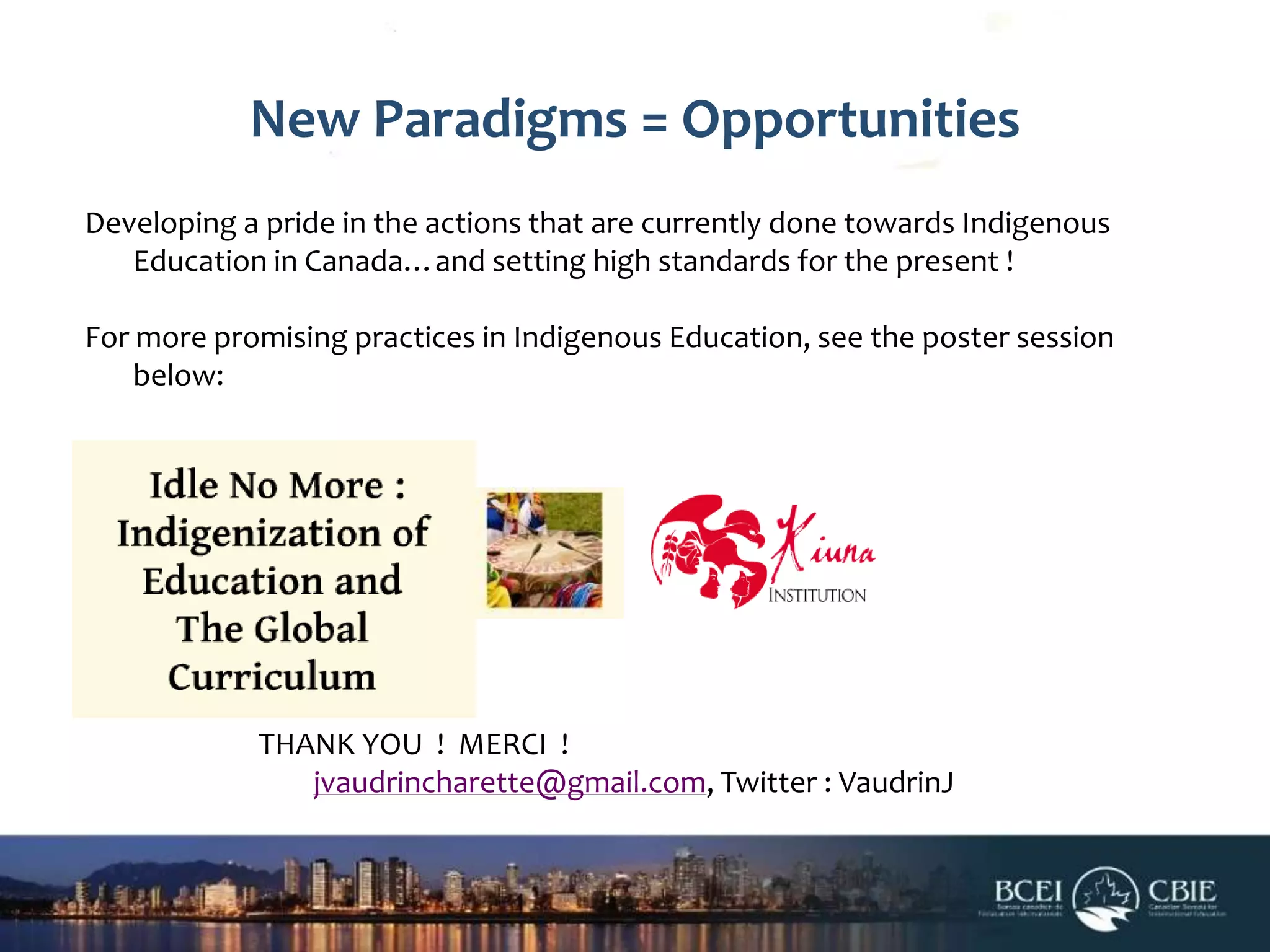
For more promising practices in Indigenous Education, see the poster session
below:

THANK YOU ! MERCI !
jvaudrincharette@gmail.com, Twitter : VaudrinJ
Inspirations…
Baron Cohen, D (2005) « Towards a performance-based pedagogy of self-determination », in
Popular Education: Engaging the Academy, ed. Crowther, Galloway and Martin, NIACE,
Leister, pp 192-203.
Battiste, Marie : « Enabling the Automn Seed: Toward a Decolonized Approach to Indigenous
Knowledge, Language and Education »,in Schooling in Transition: Readings in Canadian
History in Education, Toronto: University of Toronto Press, 2012.
Battiste, M. (2002) “Indigenous Knowledge and Pedagogy in First Nation Education : A Litterature
Review with Reccomendations” Prepared for National Working Group on Education and Minister
of Indian Affairs of Canada, Apamuek Institute.
King, T. (1997) “I am not the Indian you have in mind,” Visual poem by National Screen Institute.
Francis (1992) “The Imaginary Indian: The Image of the Indian in Canadian Culture”, Arsenal Pulp
Press.
Serperau, A. (2011) “Pratiques médiatiques alternatives et espaces publics : le cas du Wapikoni
Mobile”, UQAM, Nov. 2011, P.392.
Wacowich, N. and Scobie (2010) W. “Uploading selves : Inuit digital storytelling on YouTube”,
Etudes/Inuit/Studies, vol. 34, no.2, pp. 81-105

Building Bridges : Indigenizing International Education

  • 1.
    E2- Building BridgesBetween Indigenous and Non-Indigenous Communities in Canada and Overseas Embracing Indigenous Education in our Role as International Educators Julie Vaudrin-Charette, Cégep de l’Outaouais, Qc, jvaudrincharette@gmail.com
  • 2.
    A Space forConversation In this workshop, we will explore the connections between our role as international educators and the current state of Indigenous Education in Canada. Some statistics : 8% - 23% Current efforts within our organizations : Curriculum Changes/ Student Mobility/ Student Services
  • 3.
    A Dialogical Whisper How dowe relate to First Peoples of Canada ? What has brought us here to be part of this conversation on Indigenous Education and the International Curriculum ? Photos : Wapikoni Mobile in Uashat, close to Sept-îles in Qc – Leadership in Indigenous Media in Quebec www.wapikoni.tv
  • 4.
    Indigenizing Education • • • • • • Embracing complexity Healing Respectfor Elders Reciprocity Intercultural Holistic approach to learning • Learning by Doing
  • 5.
    International Education • Making Connections •Respect • Reciprocity • Intercultural • Partnerships • Experiencial Learning
  • 6.
    New Paradigms =Opportunities • Exploring reciprocity in Cooperation, International Education, and Indigenous Education Examples in Curriculum Development : Aboriginal Learning @ University of Regina, SK, Kiuna Institution @ Odanak, QC An example in Student Mobility + Community Engagement @ Canadian Roots Exchange An example in integrating Student Services and Staff Training@Thompson River University, BC
  • 7.
    A Collective Mapin Indigenizing Education Reciprocity Intercultural Feasibility Technological Environmental Curriculum Design Out-of-the-Box
  • 8.
    Reciprocity, Intercultural (“the Poets/Lovers”)(“The Global Citizens” : DEVELOPING PARTNERSHIPS IN A RESPECTFUL AND LONGGTERM PERSPECTIVE OF MUTUAL, FRUITFUL COLLABORATION Educational (“The Wise”) : TRANSFORMING CURRICULUM FROM WITHIN; HARNESSING EXISTING SPACES FOR INTERCULTURAL CONTENT; LEARNING NEW METHODOLOGIES IN TEACHING, EXPANDIING THE LEARNING EXPERIENCES OF STUDENT, FACULTY AND STAFF Environmental(“The Green Thumbs) : TAKING INTO ACCOUNT ENVIRONMENTAL IMPACTS OF OUR INITIATIVES; TEACHING RESPECT OF THE LAND; CREATING “GARDENS” i.e.SPACES FOR INFORMAL EXCHANGES Feasibility, (“The Bankers”): INVITING ADMINISTRATORS CIRCLES; DEVELOPING EMPLOYMENT; Technological (“The Geeks”): SOCIAL NETWORKS TO CONNECT WITH INDIGENOUS/ BETWEEN INDIGENOUS/ GLOBAL UNIVERSITIES, COMBINING ELEARNING WITH IN PERSON, MENTORING. A Collective Map in Indigenizing Education : with Insights from our CBIE workshop
  • 9.
    New Paradigms =Opportunities Developing a pride in the actions that are currently done towards Indigenous Education in Canada…and setting high standards for the present ! For more promising practices in Indigenous Education, see the poster session below: THANK YOU ! MERCI ! jvaudrincharette@gmail.com, Twitter : VaudrinJ
  • 10.
    Inspirations… Baron Cohen, D(2005) « Towards a performance-based pedagogy of self-determination », in Popular Education: Engaging the Academy, ed. Crowther, Galloway and Martin, NIACE, Leister, pp 192-203. Battiste, Marie : « Enabling the Automn Seed: Toward a Decolonized Approach to Indigenous Knowledge, Language and Education »,in Schooling in Transition: Readings in Canadian History in Education, Toronto: University of Toronto Press, 2012. Battiste, M. (2002) “Indigenous Knowledge and Pedagogy in First Nation Education : A Litterature Review with Reccomendations” Prepared for National Working Group on Education and Minister of Indian Affairs of Canada, Apamuek Institute. King, T. (1997) “I am not the Indian you have in mind,” Visual poem by National Screen Institute. Francis (1992) “The Imaginary Indian: The Image of the Indian in Canadian Culture”, Arsenal Pulp Press. Serperau, A. (2011) “Pratiques médiatiques alternatives et espaces publics : le cas du Wapikoni Mobile”, UQAM, Nov. 2011, P.392. Wacowich, N. and Scobie (2010) W. “Uploading selves : Inuit digital storytelling on YouTube”, Etudes/Inuit/Studies, vol. 34, no.2, pp. 81-105