Ensuring Equity, Access, Success
           Wanda Frazier
             ASLT 623

   Joquetta Johnson, Lead Learner
           June 30, 2012
   It’s not just about content; learners are trying to get better at
    something.

   It is never just problem solving. It also involves problem finding.

   It is never just about getting the correct answers. It involves
    justification and explanation.

   It is never just about the routine. It involves deep, critical thought that
    extends the learner.

   It involves curiosity, discovery, creativity, and Collaboration. Emotions
    are involved.

   It is never in a vacuum. It involves social context, integration of
    disciplines and accepting new challenges and opportunities.
                  From: “Making Learning Whole” by David Perkins
 Rose Lammel (1952) wrote, Here at the
 halfway mark of the twentieth century,
 teacher education, along with every other
 aspect of education, is confronted with
 the urgent necessity of giving its full
 strength and effort to cooperating in the
 development of a program that is more
 adequate to the needs and the insights of
 our times (pg. 343).
 Children’ssocial class is STILL the most
 significant factor in determining their
 success rate.

 Thoseborn to poor homes perform worse on
 educational and developmental tests than
 those from rich homes.

  what can schools do differently and
                better?
                     And
  Why Must We Be Committed to Trying?
 Limited resources – money, teachers, books,
  technology
 Limited access to extended services
 Societal perceptions
 Social Reproduction and Tracking
 Lack of personalization and cultural
  responsiveness
Persistent Inequality of education in terms of:

   Access to education

                   Content of education

                                   Process of education
 Children are sorted and tracked based on
  potential for upward mobility.
 Lower-class children regarded as deficient.
 Schooling helps some students move up, but
  locks others out.
 Cycle of poverty and low achievement
  continue.
To give kids what they need and deserve

Advocacy             Global Citizenship
  Awareness of trends           Equal Access
          Passionate, data-focused leadership
INNOVATIVE
      RELEVANT
      ENGAGING
OPEN TO POSSIBILITIES
DISTINCTLY DIFFERENT.
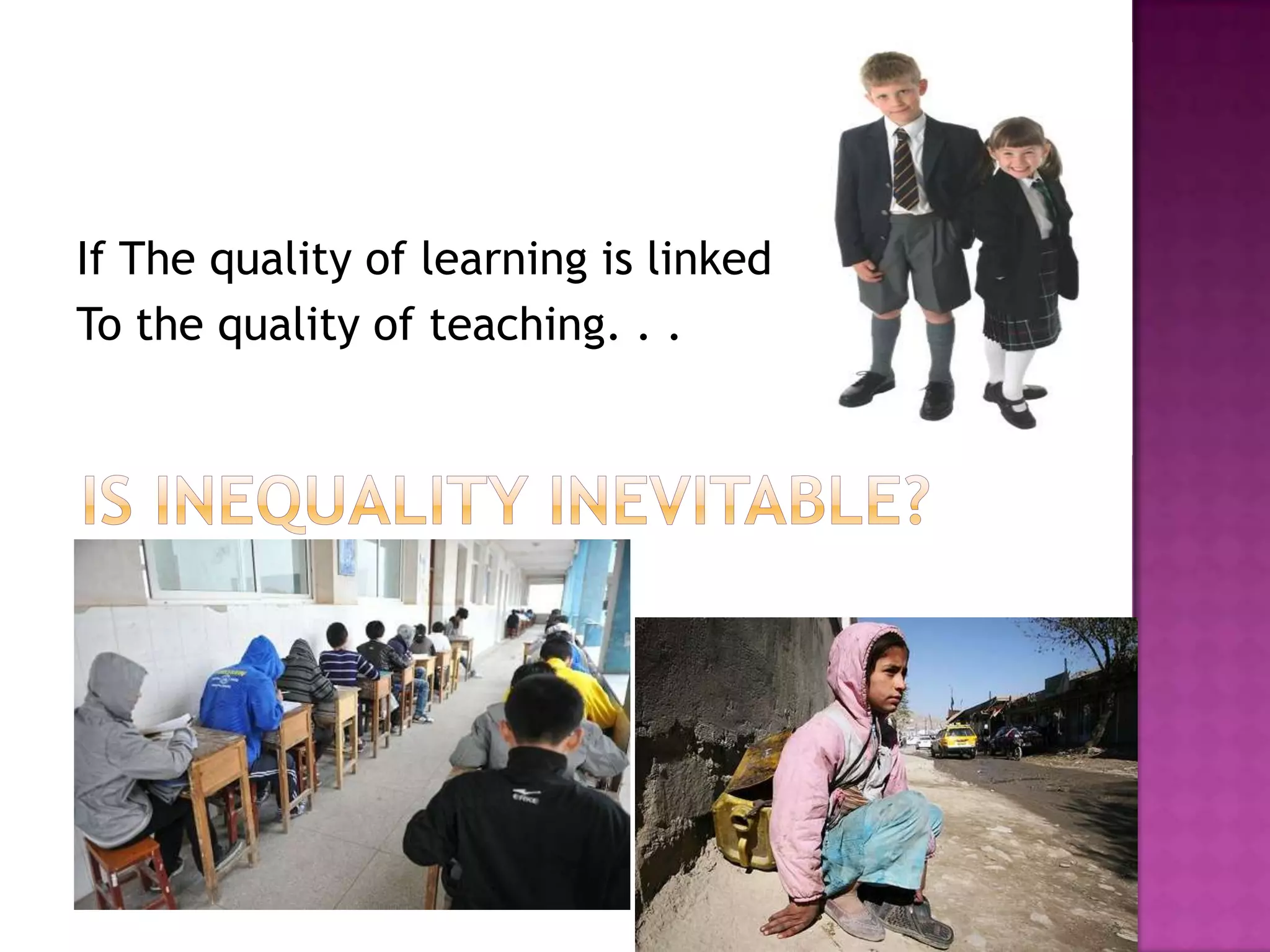
If The quality of learning is linked
To the quality of teaching. . .
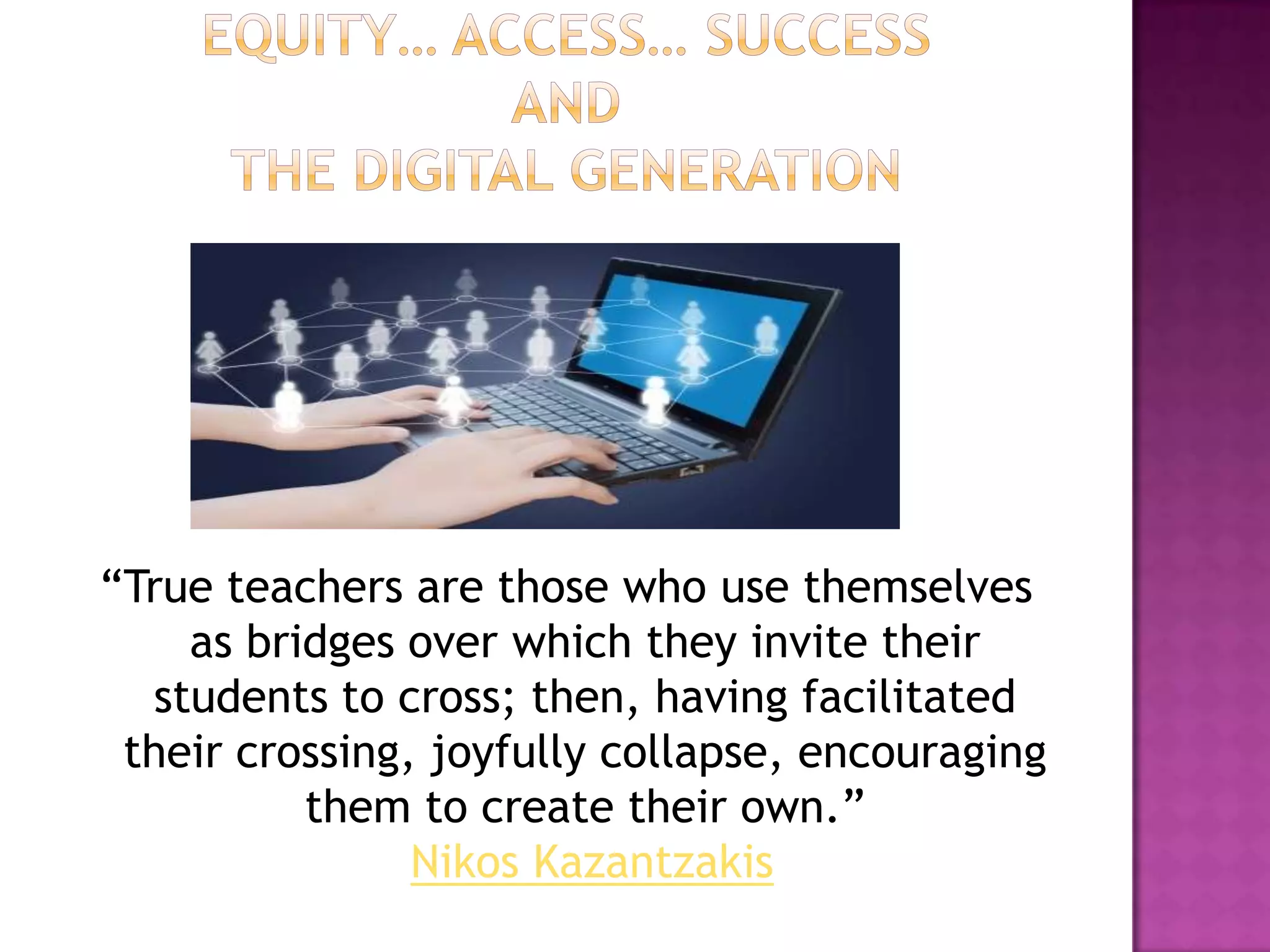
“True teachers are those who use themselves
    as bridges over which they invite their
  students to cross; then, having facilitated
 their crossing, joyfully collapse, encouraging
          them to create their own.”
                Nikos Kazantzakis
   Ballantine, J. (2001). The Sociology of Education. Upper Saddle River: Prentice Hall.
   Mickelson, R., & Smith, S. Can Education Eliminate Race, Class, and Gender
    Inequality.
   Noguera, P. (2003). City Schools and the American Dream. New York: Teachers
    College, Columbia University
   Slide 3-- . http://leading-learning.blogspot.com/2009/01/advice-from-david-
    perkins-to-make.html
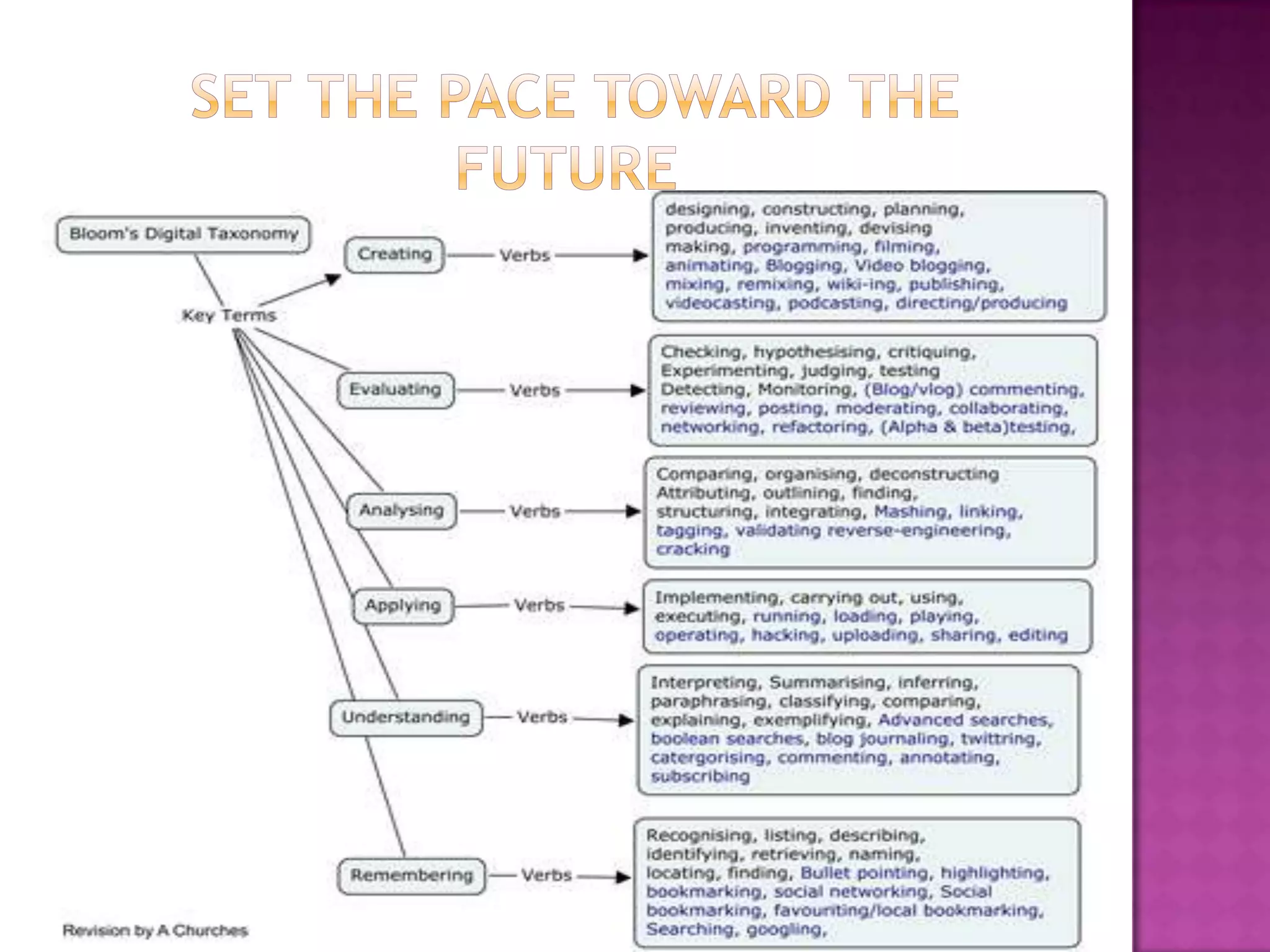
   Slide 13-
    http://www.techlearning.com/techlearning/archives/2008/04/Bloom'sDigitalTaxono
    mymap.gif
   Slide , 11,14, 16-Images: FreeDigitalPhotos.net

Slideshare Powerpoint Project

  • 1.
    Ensuring Equity, Access,Success Wanda Frazier ASLT 623 Joquetta Johnson, Lead Learner June 30, 2012
  • 3.
    It’s not just about content; learners are trying to get better at something.  It is never just problem solving. It also involves problem finding.  It is never just about getting the correct answers. It involves justification and explanation.  It is never just about the routine. It involves deep, critical thought that extends the learner.  It involves curiosity, discovery, creativity, and Collaboration. Emotions are involved.  It is never in a vacuum. It involves social context, integration of disciplines and accepting new challenges and opportunities. From: “Making Learning Whole” by David Perkins
  • 4.
     Rose Lammel(1952) wrote, Here at the halfway mark of the twentieth century, teacher education, along with every other aspect of education, is confronted with the urgent necessity of giving its full strength and effort to cooperating in the development of a program that is more adequate to the needs and the insights of our times (pg. 343).
  • 5.
     Children’ssocial classis STILL the most significant factor in determining their success rate.  Thoseborn to poor homes perform worse on educational and developmental tests than those from rich homes. what can schools do differently and better? And Why Must We Be Committed to Trying?
  • 6.
     Limited resources– money, teachers, books, technology  Limited access to extended services  Societal perceptions  Social Reproduction and Tracking  Lack of personalization and cultural responsiveness
  • 7.
    Persistent Inequality ofeducation in terms of:  Access to education  Content of education  Process of education
  • 8.
     Children aresorted and tracked based on potential for upward mobility.  Lower-class children regarded as deficient.  Schooling helps some students move up, but locks others out.  Cycle of poverty and low achievement continue.
  • 10.
    To give kidswhat they need and deserve Advocacy Global Citizenship Awareness of trends Equal Access Passionate, data-focused leadership
  • 11.
    INNOVATIVE RELEVANT ENGAGING OPEN TO POSSIBILITIES DISTINCTLY DIFFERENT.
  • 14.
    If The qualityof learning is linked To the quality of teaching. . .
  • 15.
    “True teachers arethose who use themselves as bridges over which they invite their students to cross; then, having facilitated their crossing, joyfully collapse, encouraging them to create their own.” Nikos Kazantzakis
  • 16.
    Ballantine, J. (2001). The Sociology of Education. Upper Saddle River: Prentice Hall.  Mickelson, R., & Smith, S. Can Education Eliminate Race, Class, and Gender Inequality.  Noguera, P. (2003). City Schools and the American Dream. New York: Teachers College, Columbia University  Slide 3-- . http://leading-learning.blogspot.com/2009/01/advice-from-david- perkins-to-make.html  Slide 13- http://www.techlearning.com/techlearning/archives/2008/04/Bloom'sDigitalTaxono mymap.gif  Slide , 11,14, 16-Images: FreeDigitalPhotos.net