Introduction 
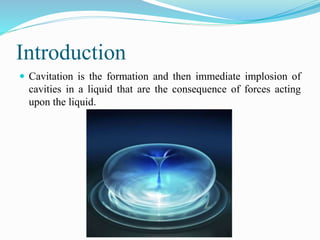
 Cavitation is the formation and then immediate implosion of 
cavities in a liquid that are the consequence of forces acting 
upon the liquid.
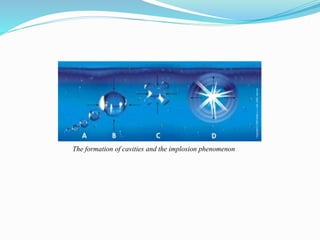
The formation of cavities and the implosion phenomenon
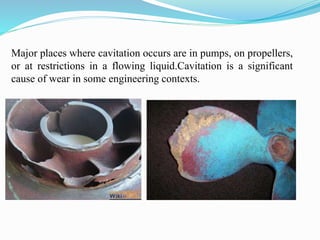
Major places where cavitation occurs are in pumps, on propellers, 
or at restrictions in a flowing liquid.Cavitation is a significant 
cause of wear in some engineering contexts.
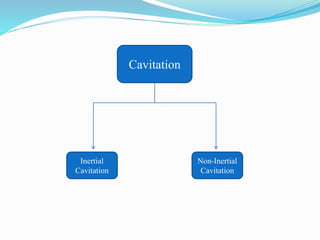
Cavitation 
Inertial 
Cavitation 
Non-Inertial 
Cavitation
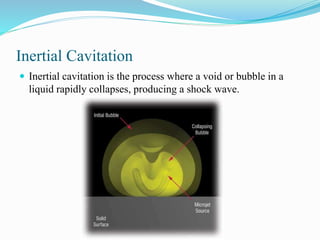
Inertial Cavitation 
 Inertial cavitation is the process where a void or bubble in a 
liquid rapidly collapses, producing a shock wave.
Inertial Cavitation takes place in : 
 Nature 
Mantis shrimps 
Pistol shrimps 
Vascular tissues of plants 
 Man-made Objects : control valves, pumps, propellers and impellers.
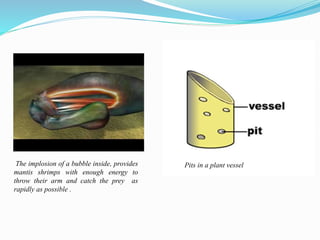
The implosion of a bubble inside, provides 
mantis shrimps with enough energy to 
throw their arm and catch the prey as 
rapidly as possible . 
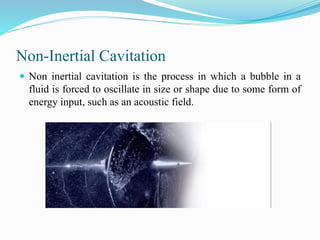
Pits in a plant vessel
Non-Inertial Cavitation 
 Non inertial cavitation is the process in which a bubble in a 
fluid is forced to oscillate in size or shape due to some form of 
energy input, such as an acoustic field.
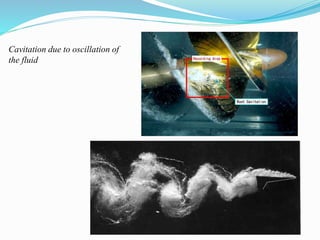
Cavitation due to oscillation of 
the fluid
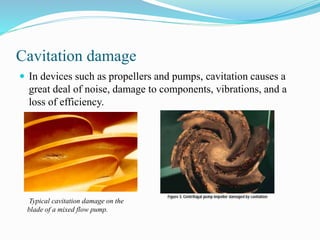
Cavitation damage 
 In devices such as propellers and pumps, cavitation causes a 
great deal of noise, damage to components, vibrations, and a 
loss of efficiency. 
Typical cavitation damage on the 
blade of a mixed flow pump.
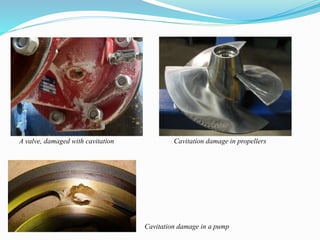
A valve, damaged with cavitation Cavitation damage in propellers 
Cavitation damage in a pump
Some cases of cavitation occurrence 
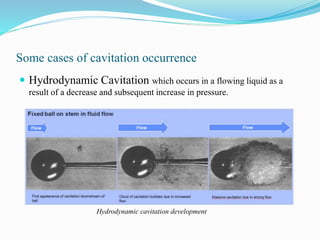
 Hydrodynamic Cavitation which occurs in a flowing liquid as a 
result of a decrease and subsequent increase in pressure. 
Hydrodynamic cavitation development
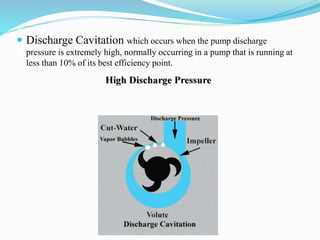
 Discharge Cavitation which occurs when the pump discharge 
k 
pressure is extremely high, normally occurring in a pump that is running at 
less than 10% of its best efficiency point.
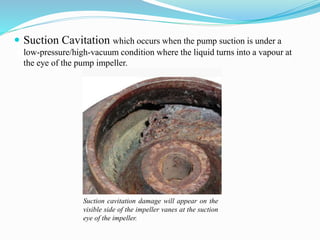
 Suction Cavitation which occurs when the pump suction is under a 
k 
low-pressure/high-vacuum condition where the liquid turns into a vapour at 
the eye of the pump impeller. 
Suction cavitation damage will appear on the 
visible side of the impeller vanes at the suction 
eye of the impeller.
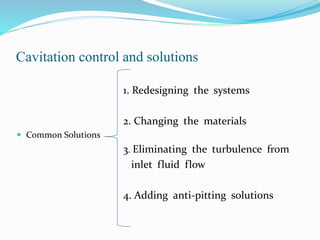
Cavitation control and solutions 
1. Redesigning the systems 
2. Changing the materials 
 Common Solutions 
3. Eliminating the turbulence from 
inlet fluid flow 
4. Adding anti-pitting solutions
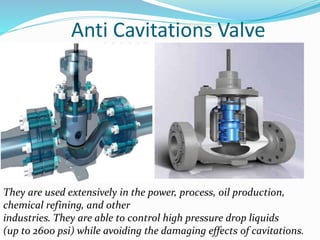
Anti Cavitations Valve 
They are used extensively in the power, process, oil production, 
chemical refining, and other 
industries. They are able to control high pressure drop liquids 
(up to 2600 psi) while avoiding the damaging effects of cavitations.
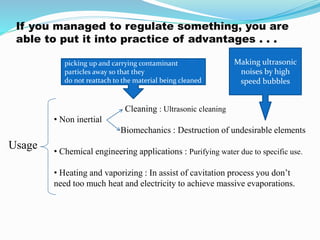
If you managed to regulate something, you are 
able to put it into practice of advantages . . . 
Usage 
picking up and carrying contaminant 
particles away so that they 
do not reattach to the material being cleaned 
Cleaning : Ultrasonic cleaning 
• Non inertial 
Making ultrasonic 
noises by high 
speed bubbles 
Biomechanics : Destruction of undesirable elements 
• Chemical engineering applications : Purifying water due to specific use. 
• Heating and vaporizing : In assist of cavitation process you don’t 
need too much heat and electricity to achieve massive evaporations.
Thanks to your consideration 
Shahab Mehranfar ( 1st part) 
Muhamad Ali Mirtaheri (2nd part) 
Ardalan Amiri ( 3rd part)

Cavitation

  • 2.
    Introduction  Cavitationis the formation and then immediate implosion of cavities in a liquid that are the consequence of forces acting upon the liquid.
  • 3.
    The formation ofcavities and the implosion phenomenon
  • 4.
    Major places wherecavitation occurs are in pumps, on propellers, or at restrictions in a flowing liquid.Cavitation is a significant cause of wear in some engineering contexts.
  • 5.
    Cavitation Inertial Cavitation Non-Inertial Cavitation
  • 6.
    Inertial Cavitation Inertial cavitation is the process where a void or bubble in a liquid rapidly collapses, producing a shock wave.
  • 7.
    Inertial Cavitation takesplace in :  Nature Mantis shrimps Pistol shrimps Vascular tissues of plants  Man-made Objects : control valves, pumps, propellers and impellers.
  • 8.
    The implosion ofa bubble inside, provides mantis shrimps with enough energy to throw their arm and catch the prey as rapidly as possible . Pits in a plant vessel
  • 9.
    Non-Inertial Cavitation Non inertial cavitation is the process in which a bubble in a fluid is forced to oscillate in size or shape due to some form of energy input, such as an acoustic field.
  • 10.
    Cavitation due tooscillation of the fluid
  • 11.
    Cavitation damage In devices such as propellers and pumps, cavitation causes a great deal of noise, damage to components, vibrations, and a loss of efficiency. Typical cavitation damage on the blade of a mixed flow pump.
  • 12.
    A valve, damagedwith cavitation Cavitation damage in propellers Cavitation damage in a pump
  • 13.
    Some cases ofcavitation occurrence  Hydrodynamic Cavitation which occurs in a flowing liquid as a result of a decrease and subsequent increase in pressure. Hydrodynamic cavitation development
  • 14.
     Discharge Cavitationwhich occurs when the pump discharge k pressure is extremely high, normally occurring in a pump that is running at less than 10% of its best efficiency point.
  • 15.
     Suction Cavitationwhich occurs when the pump suction is under a k low-pressure/high-vacuum condition where the liquid turns into a vapour at the eye of the pump impeller. Suction cavitation damage will appear on the visible side of the impeller vanes at the suction eye of the impeller.
  • 16.
    Cavitation control andsolutions 1. Redesigning the systems 2. Changing the materials  Common Solutions 3. Eliminating the turbulence from inlet fluid flow 4. Adding anti-pitting solutions
  • 17.
    Anti Cavitations Valve They are used extensively in the power, process, oil production, chemical refining, and other industries. They are able to control high pressure drop liquids (up to 2600 psi) while avoiding the damaging effects of cavitations.
  • 18.
    If you managedto regulate something, you are able to put it into practice of advantages . . . Usage picking up and carrying contaminant particles away so that they do not reattach to the material being cleaned Cleaning : Ultrasonic cleaning • Non inertial Making ultrasonic noises by high speed bubbles Biomechanics : Destruction of undesirable elements • Chemical engineering applications : Purifying water due to specific use. • Heating and vaporizing : In assist of cavitation process you don’t need too much heat and electricity to achieve massive evaporations.
  • 19.
    Thanks to yourconsideration Shahab Mehranfar ( 1st part) Muhamad Ali Mirtaheri (2nd part) Ardalan Amiri ( 3rd part)