The Causes of WWII in
       Europe
       Hitler’s War
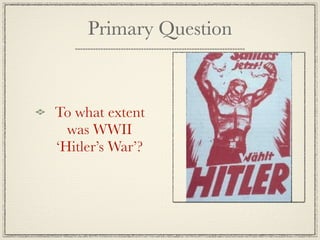
Primary Question


To what extent
  was WWII
‘Hitler’s War’?
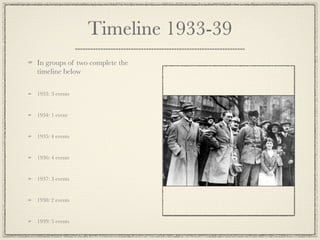
Timeline 1933-39
In groups of two complete the
timeline below

1933: 3 events


1934: 1 event


1935: 4 events


1936: 4 events


1937: 3 events


1938: 2 events


1939: 5 events
Hitler’s Foreign Policy Aims: 1919-33


Results of the Treaty of Brest-Litovsk 1917, German
domination of Eastern Europe. Resent loosing Poland

Results of Post TOV Germany is they are still the
dominating force in continental Europe.
Additionally resistant to reparation payments.

The Nazi 25 point program 1920

Calls for union of all Germans, end of the TOV, a strong state, national army, exclusion of Jews.


What is the O,P,V,L of the 25 point program?
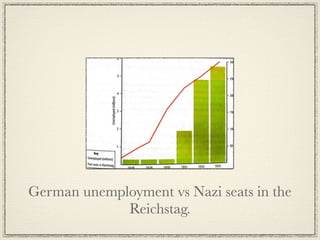
German unemployment vs Nazi seats in the
             Reichstag.
Hitler’s Foreign Policy Aims: 1919-33

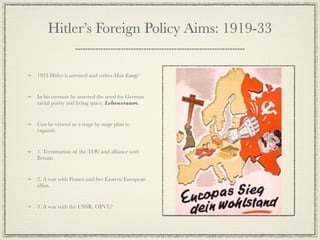
1923 Hitler is arrested and writes Mein Kampf


In his memoir he asserted the need for German
racial purity and living space, Lebensraum.


Can be viewed as a stage by stage plan to
expand:


1. Termination of the TOV and alliance with
Britain.


2. A war with France and her Eastern European
allies.


3. A war with the USSR. OPVL?
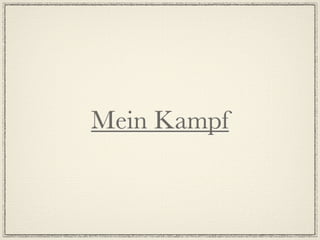
Mein Kampf
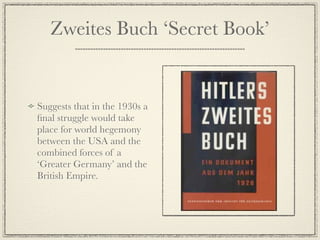
Zweites Buch ‘Secret Book’


Suggests that in the 1930s a
final struggle would take
place for world hegemony
between the USA and the
combined forces of a
‘Greater Germany’ and the
British Empire.
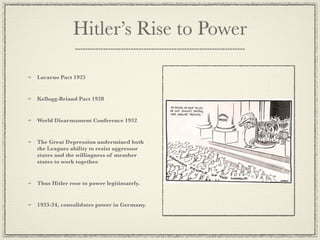
Hitler’s Rise to Power

Lacarno Pact 1925


Kellogg-Briand Pact 1928


World Disarmament Conference 1932


The Great Depression undermined both
the Leagues ability to resist aggressor
states and the willingness of member
states to work together.


Thus Hitler rose to power legitimately.


1933-34, consolidates power in Germany.
Hitler’s Foreign Policies.
Discussion Questions

1. From what has been presented what evidence is there
that Hitler had a long-term plan that lead to a general
European war?
2. To what extent should a) German moderates and b)
foreign governments have been aware of the potential
danger of Hitler?
3. How far do you agree that the Nazis’ popularity was
due to the economic crisis in Germany?
Hitler and the Short-term Causes of WWII


 Revisiting the Treaty of Versailles: Reparations were
 suspended prior to Hitlers being appointed, he reasserted this resistance. German
 withdraw from the league 1933.


 German increase in military spending: Five-
 fold increase in 1934-35.

 Non-aggression pact with Poland, 1934. Directly
 counteracted the ‘Little Entente’, French
 alliance system in E.Europe, by undermining
 the Franco-Polish alliance 1925.
Hitler and the Short-term Causes of WWII


 Austria: Hitler stated goals to: unify Austria with
 Germany, Mein Kampf.
 Pro-Nazi group murdered Austrian Chancellor
 Engelbert Dollfuss in an attempted coup.
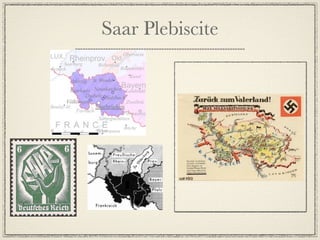
 Saar Plebiscite 1935: Positive propaganda, 9-1
 vote in favor of unifying.
 Immediately responds with compulsory military service.
Saar Plebiscite
Hitler and the Short-term Causes of WWII


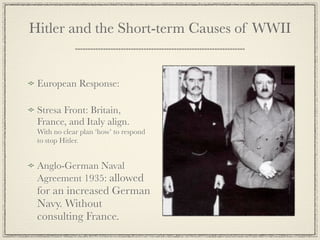
 European Response:

 Stresa Front: Britain,
 France, and Italy align.
 With no clear plan ‘how’ to respond
 to stop Hitler.


 Anglo-German Naval
 Agreement 1935: allowed
 for an increased German
 Navy. Without
 consulting France.
Hitler and the Short-term Causes of WWII


 Revision Questions:
 1. Which of Hitler’s aims, as set down in Mein Kampf, had
 been achieved by 1935?
 2. Based on Hitler’s stated long-term ambitions, what
 would his next objectives be?
 3. How far do you agree that Germany was the only
 country causing tension in Europe in the mid 1930’s?
Hitler and the Short-term Causes of WWII


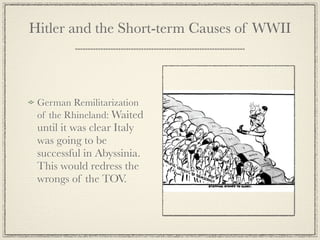
 German Remilitarization
 of the Rhineland: Waited
 until it was clear Italy
 was going to be
 successful in Abyssinia.
 This would redress the
 wrongs of the TOV.
Hitler and the Short-term Causes of WWII


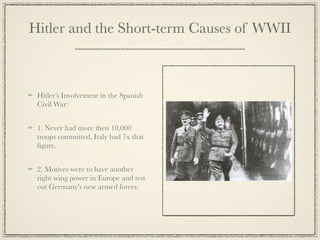
 Hitler’s Involvement in the Spanish
 Civil War:


 1. Never had more then 10,000
 troops committed, Italy had 7x that
 figure.


 2. Motives were to have another
 right wing power in Europe and test
 out Germany’s new armed forces.
Hitler and the Short-term Causes of WWII


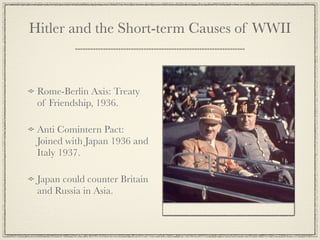
 Rome-Berlin Axis: Treaty
 of Friendship, 1936.

 Anti Comintern Pact:
 Joined with Japan 1936 and
 Italy 1937.

 Japan could counter Britain
 and Russia in Asia.
Hitler and the Short-term Causes of WWII


 Hossbach Memorandum: Meeting of key
 military men. Hitler launched his ‘Four Year
 Plan’ to prepare Germany for war by 1940.
 Presented his ‘last will and testament.’
 1. Key aim of this German policy would be to secure
 and preserve the racial community and enlarge it.

 2. Focused on ‘concrete questions of armament’
Hitler and the Short-term Causes of WWII


 Revision and research questions:
 1. What were the key aims, as set out by Hitler in
 the Hossbach meeting?
 2. Why would Hitler not want to keep record of
 this meeting?
 3. In Pairs discuss the OPVL of Hitler’s ‘last will
 and testament’
Hitler and the Short-term Causes of WWII


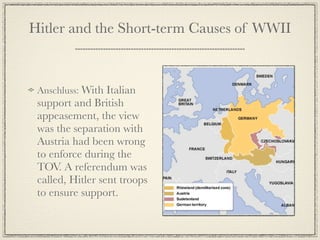
 Anschluss: With Italian
 support and British
 appeasement, the view
 was the separation with
 Austria had been wrong
 to enforce during the
 TOV. A referendum was
 called, Hitler sent troops
 to ensure support.
Hitler and the Short-term Causes of WWII


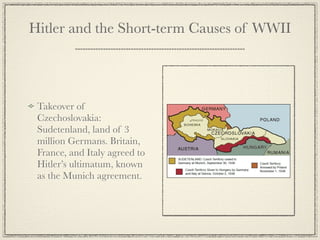
 Takeover of
 Czechoslovakia:
 Sudetenland, land of 3
 million Germans. Britain,
 France, and Italy agreed to
 Hitler’s ultimatum, known
 as the Munich agreement.
Hitler and the Immediate Causes of WWII
                 (1939)


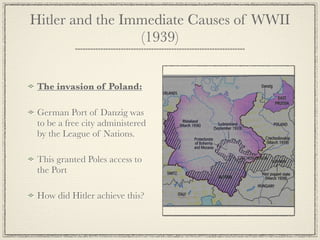
 The invasion of Poland:

 German Port of Danzig was
 to be a free city administered
 by the League of Nations.

 This granted Poles access to
 the Port

 How did Hitler achieve this?
Appeasement as a Cause of WWII


  To what extent has the policy of appeasement
  had a negative impact on international relations
  since the 1930’s?
Reviewing the Causes of WWII


 Outline for the nations below the actions each
 nation took which contributed to the outbreak of
 WWII.
 Britain 7 , France 5, USSR 5, Italy 2, USA 2.
Possible essay questions.

Outline one of the following essay questions: (thesis, 3 supporting
arguments, evidence, conclusion)


To what extent was WWII Hitler’s war?
To what extent did the unsatisfactory outcome of WWI
lead to WWII?
Why did WWII break out in 1939?
To what extent should Germany be held responsible for
both the First and Second World Wars?

Causes wwii hitler's war

  • 1.
    The Causes ofWWII in Europe Hitler’s War
  • 2.
    Primary Question To whatextent was WWII ‘Hitler’s War’?
  • 3.
    Timeline 1933-39 In groupsof two complete the timeline below 1933: 3 events 1934: 1 event 1935: 4 events 1936: 4 events 1937: 3 events 1938: 2 events 1939: 5 events
  • 4.
    Hitler’s Foreign PolicyAims: 1919-33 Results of the Treaty of Brest-Litovsk 1917, German domination of Eastern Europe. Resent loosing Poland Results of Post TOV Germany is they are still the dominating force in continental Europe. Additionally resistant to reparation payments. The Nazi 25 point program 1920 Calls for union of all Germans, end of the TOV, a strong state, national army, exclusion of Jews. What is the O,P,V,L of the 25 point program?
  • 5.
    German unemployment vsNazi seats in the Reichstag.
  • 6.
    Hitler’s Foreign PolicyAims: 1919-33 1923 Hitler is arrested and writes Mein Kampf In his memoir he asserted the need for German racial purity and living space, Lebensraum. Can be viewed as a stage by stage plan to expand: 1. Termination of the TOV and alliance with Britain. 2. A war with France and her Eastern European allies. 3. A war with the USSR. OPVL?
  • 7.
  • 8.
    Zweites Buch ‘SecretBook’ Suggests that in the 1930s a final struggle would take place for world hegemony between the USA and the combined forces of a ‘Greater Germany’ and the British Empire.
  • 9.
    Hitler’s Rise toPower Lacarno Pact 1925 Kellogg-Briand Pact 1928 World Disarmament Conference 1932 The Great Depression undermined both the Leagues ability to resist aggressor states and the willingness of member states to work together. Thus Hitler rose to power legitimately. 1933-34, consolidates power in Germany.
  • 10.
  • 11.
  • 12.
    Discussion Questions 1. Fromwhat has been presented what evidence is there that Hitler had a long-term plan that lead to a general European war? 2. To what extent should a) German moderates and b) foreign governments have been aware of the potential danger of Hitler? 3. How far do you agree that the Nazis’ popularity was due to the economic crisis in Germany?
  • 13.
    Hitler and theShort-term Causes of WWII Revisiting the Treaty of Versailles: Reparations were suspended prior to Hitlers being appointed, he reasserted this resistance. German withdraw from the league 1933. German increase in military spending: Five- fold increase in 1934-35. Non-aggression pact with Poland, 1934. Directly counteracted the ‘Little Entente’, French alliance system in E.Europe, by undermining the Franco-Polish alliance 1925.
  • 14.
    Hitler and theShort-term Causes of WWII Austria: Hitler stated goals to: unify Austria with Germany, Mein Kampf. Pro-Nazi group murdered Austrian Chancellor Engelbert Dollfuss in an attempted coup. Saar Plebiscite 1935: Positive propaganda, 9-1 vote in favor of unifying. Immediately responds with compulsory military service.
  • 15.
  • 16.
    Hitler and theShort-term Causes of WWII European Response: Stresa Front: Britain, France, and Italy align. With no clear plan ‘how’ to respond to stop Hitler. Anglo-German Naval Agreement 1935: allowed for an increased German Navy. Without consulting France.
  • 17.
    Hitler and theShort-term Causes of WWII Revision Questions: 1. Which of Hitler’s aims, as set down in Mein Kampf, had been achieved by 1935? 2. Based on Hitler’s stated long-term ambitions, what would his next objectives be? 3. How far do you agree that Germany was the only country causing tension in Europe in the mid 1930’s?
  • 18.
    Hitler and theShort-term Causes of WWII German Remilitarization of the Rhineland: Waited until it was clear Italy was going to be successful in Abyssinia. This would redress the wrongs of the TOV.
  • 19.
    Hitler and theShort-term Causes of WWII Hitler’s Involvement in the Spanish Civil War: 1. Never had more then 10,000 troops committed, Italy had 7x that figure. 2. Motives were to have another right wing power in Europe and test out Germany’s new armed forces.
  • 20.
    Hitler and theShort-term Causes of WWII Rome-Berlin Axis: Treaty of Friendship, 1936. Anti Comintern Pact: Joined with Japan 1936 and Italy 1937. Japan could counter Britain and Russia in Asia.
  • 21.
    Hitler and theShort-term Causes of WWII Hossbach Memorandum: Meeting of key military men. Hitler launched his ‘Four Year Plan’ to prepare Germany for war by 1940. Presented his ‘last will and testament.’ 1. Key aim of this German policy would be to secure and preserve the racial community and enlarge it. 2. Focused on ‘concrete questions of armament’
  • 22.
    Hitler and theShort-term Causes of WWII Revision and research questions: 1. What were the key aims, as set out by Hitler in the Hossbach meeting? 2. Why would Hitler not want to keep record of this meeting? 3. In Pairs discuss the OPVL of Hitler’s ‘last will and testament’
  • 23.
    Hitler and theShort-term Causes of WWII Anschluss: With Italian support and British appeasement, the view was the separation with Austria had been wrong to enforce during the TOV. A referendum was called, Hitler sent troops to ensure support.
  • 24.
    Hitler and theShort-term Causes of WWII Takeover of Czechoslovakia: Sudetenland, land of 3 million Germans. Britain, France, and Italy agreed to Hitler’s ultimatum, known as the Munich agreement.
  • 25.
    Hitler and theImmediate Causes of WWII (1939) The invasion of Poland: German Port of Danzig was to be a free city administered by the League of Nations. This granted Poles access to the Port How did Hitler achieve this?
  • 26.
    Appeasement as aCause of WWII To what extent has the policy of appeasement had a negative impact on international relations since the 1930’s?
  • 27.
    Reviewing the Causesof WWII Outline for the nations below the actions each nation took which contributed to the outbreak of WWII. Britain 7 , France 5, USSR 5, Italy 2, USA 2.
  • 28.
    Possible essay questions. Outlineone of the following essay questions: (thesis, 3 supporting arguments, evidence, conclusion) To what extent was WWII Hitler’s war? To what extent did the unsatisfactory outcome of WWI lead to WWII? Why did WWII break out in 1939? To what extent should Germany be held responsible for both the First and Second World Wars?