How to Write a
Cause-Effect Essay
What is a Cause-Effect
Essay?
• We all understand cause-effect
relationships; for example, lightning
can cause a fire. If a student doesn’t
study for a test, he/she may not
perform well. A cause effect essay
tells how one event (the cause)
leads to another event (the effect)
What is a Cause-Effect
Essay?
• In five-paragraph essays, we usually
focus on the causes or the effects.
• It’s not so much a cause and effect
essay as a cause or effect essay.
• A thesis statement in the
introduction will tell if the essay is
about causes or effects.
What is a Cause-Effect
Essay
• A cause-effect essay can do one of
two things:
– It can analyze the ways in which one or
more effects can result from a
particular cause (“Focus on Effects”
method)
– Or it can analyze the ways in which one
or more causes lead to a particular
effect (“Focus on Causes” method)
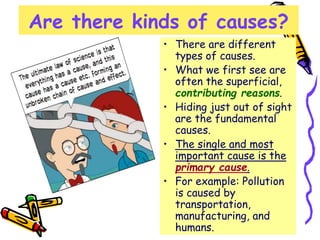
Are there kinds of causes?
• There are different
types of causes.
• What we first see are
often the superficial,
contributing reasons.
• Hiding just out of sight
are the fundamental
causes.
• The single and most
important cause is the
primary cause.
• For example: Pollution
is caused by
transportation,
manufacturing, and
humans.
Can we write on effects?
• Of course, not every
cause-effect essay is
about the causes.
• In fact, some may center
on the effects of a single
cause.
• Example Topic:
What are the effects of
air pollution?
• Example Thesis:
Air pollution negatively
affects plants, animals,
and humans.
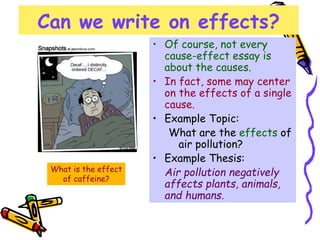
What is the effect
of caffeine?
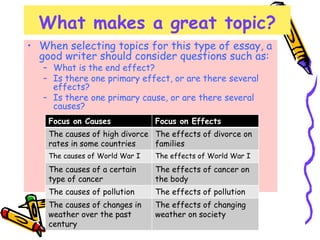
What makes a great topic?
• When selecting topics for this type of essay, a
good writer should consider questions such as:
– What is the end effect?
– Is there one primary effect, or are there several
effects?
– Is there one primary cause, or are there several
causes?
Focus on Causes Focus on Effects
The causes of high divorce
rates in some countries
The effects of divorce on
families
The causes of World War I The effects of World War I
The causes of a certain
type of cancer
The effects of cancer on
the body
The causes of pollution The effects of pollution
The causes of changes in
weather over the past
century
The effects of changing
weather on society
What should be avoided?
• Don’t lose focus by
covering too many
parts of an issue.
• You can’t cover all of
the effects of air
pollution: just pick
three important ones
to write about.
• For example, use air
pollution’s effect on
plants, animals, and
humans.
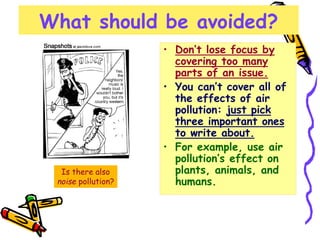
Is there also
noise pollution?
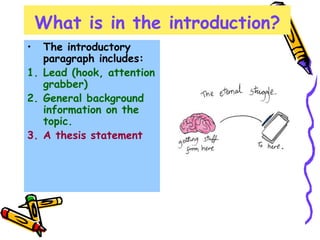
What is in the introduction?
• The introductory
paragraph includes:
1. Lead (hook, attention
grabber)
2. General background
information on the
topic.
3. A thesis statement
The Body
• Each cause or effect gets its own body paragraph
• First sentence is a topic sentence that states
what the cause or effect is
• Give supporting details/facts to support your
claim
• Uses transition words to analyze the process
rather than describe it.
• Remember, we’re telling WHY.
The Conclusion
• Rewords the thesis and basis for the
effects
• Summarizes the primary cause or
effects
• Speculates on the best solution to
the problem

Cause effect Essay

  • 1.
    How to Writea Cause-Effect Essay
  • 2.
    What is aCause-Effect Essay? • We all understand cause-effect relationships; for example, lightning can cause a fire. If a student doesn’t study for a test, he/she may not perform well. A cause effect essay tells how one event (the cause) leads to another event (the effect)
  • 3.
    What is aCause-Effect Essay? • In five-paragraph essays, we usually focus on the causes or the effects. • It’s not so much a cause and effect essay as a cause or effect essay. • A thesis statement in the introduction will tell if the essay is about causes or effects.
  • 4.
    What is aCause-Effect Essay • A cause-effect essay can do one of two things: – It can analyze the ways in which one or more effects can result from a particular cause (“Focus on Effects” method) – Or it can analyze the ways in which one or more causes lead to a particular effect (“Focus on Causes” method)
  • 5.
    Are there kindsof causes? • There are different types of causes. • What we first see are often the superficial, contributing reasons. • Hiding just out of sight are the fundamental causes. • The single and most important cause is the primary cause. • For example: Pollution is caused by transportation, manufacturing, and humans.
  • 6.
    Can we writeon effects? • Of course, not every cause-effect essay is about the causes. • In fact, some may center on the effects of a single cause. • Example Topic: What are the effects of air pollution? • Example Thesis: Air pollution negatively affects plants, animals, and humans. What is the effect of caffeine?
  • 7.
    What makes agreat topic? • When selecting topics for this type of essay, a good writer should consider questions such as: – What is the end effect? – Is there one primary effect, or are there several effects? – Is there one primary cause, or are there several causes? Focus on Causes Focus on Effects The causes of high divorce rates in some countries The effects of divorce on families The causes of World War I The effects of World War I The causes of a certain type of cancer The effects of cancer on the body The causes of pollution The effects of pollution The causes of changes in weather over the past century The effects of changing weather on society
  • 8.
    What should beavoided? • Don’t lose focus by covering too many parts of an issue. • You can’t cover all of the effects of air pollution: just pick three important ones to write about. • For example, use air pollution’s effect on plants, animals, and humans. Is there also noise pollution?
  • 9.
    What is inthe introduction? • The introductory paragraph includes: 1. Lead (hook, attention grabber) 2. General background information on the topic. 3. A thesis statement
  • 10.
    The Body • Eachcause or effect gets its own body paragraph • First sentence is a topic sentence that states what the cause or effect is • Give supporting details/facts to support your claim • Uses transition words to analyze the process rather than describe it. • Remember, we’re telling WHY.
  • 11.
    The Conclusion • Rewordsthe thesis and basis for the effects • Summarizes the primary cause or effects • Speculates on the best solution to the problem