Cassandra


Tuesday, February 22, 2011               1
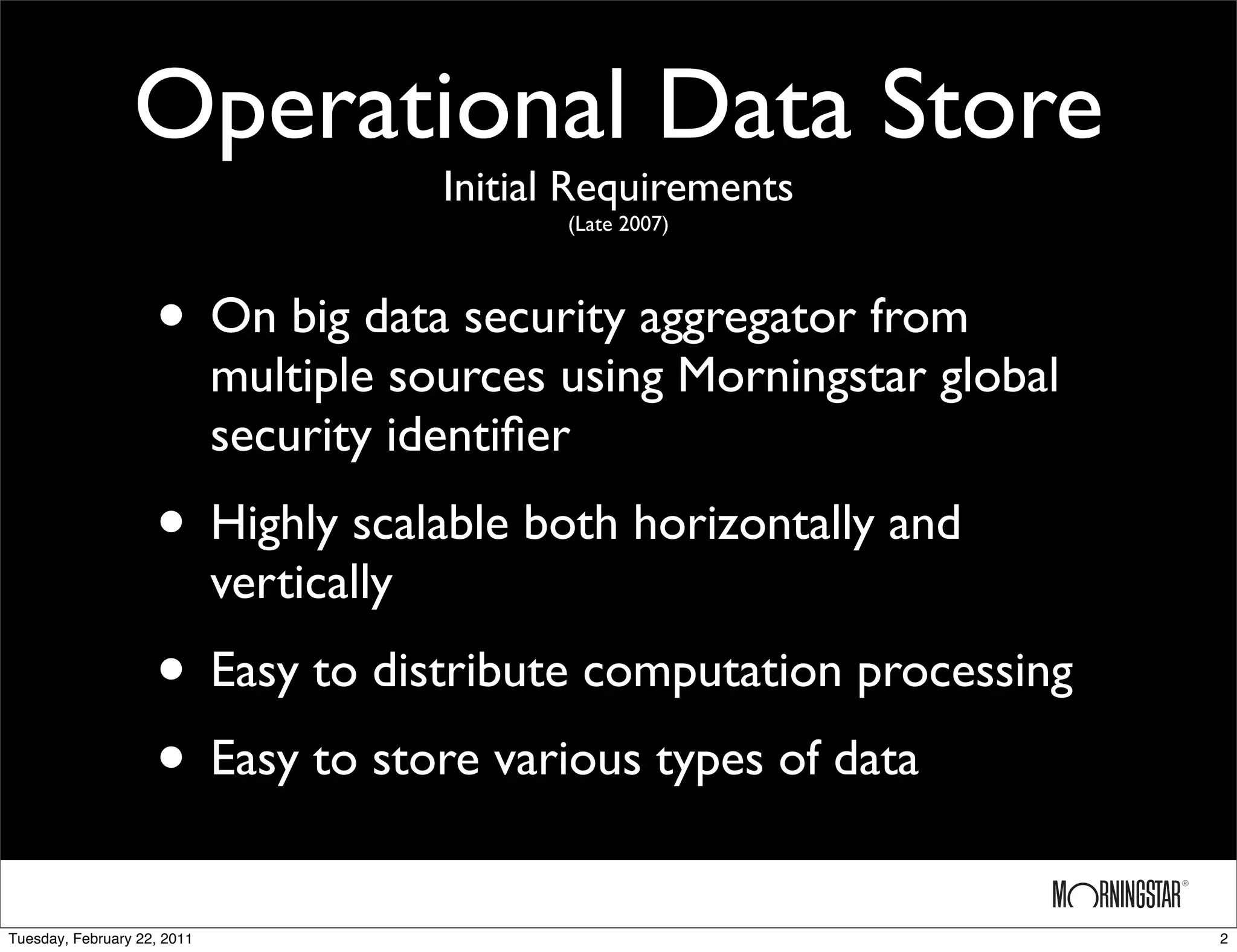
Operational Data Store
                                          Initial Requirements
                                                 (Late 2007)


                    • On big data security aggregator from
                             multiple sources using Morningstar global
                             security identifier
                    • Highly scalable both horizontally and
                             vertically
                    • Easy to distribute computation processing
                    • Easy to store various types of data
Tuesday, February 22, 2011                                               2
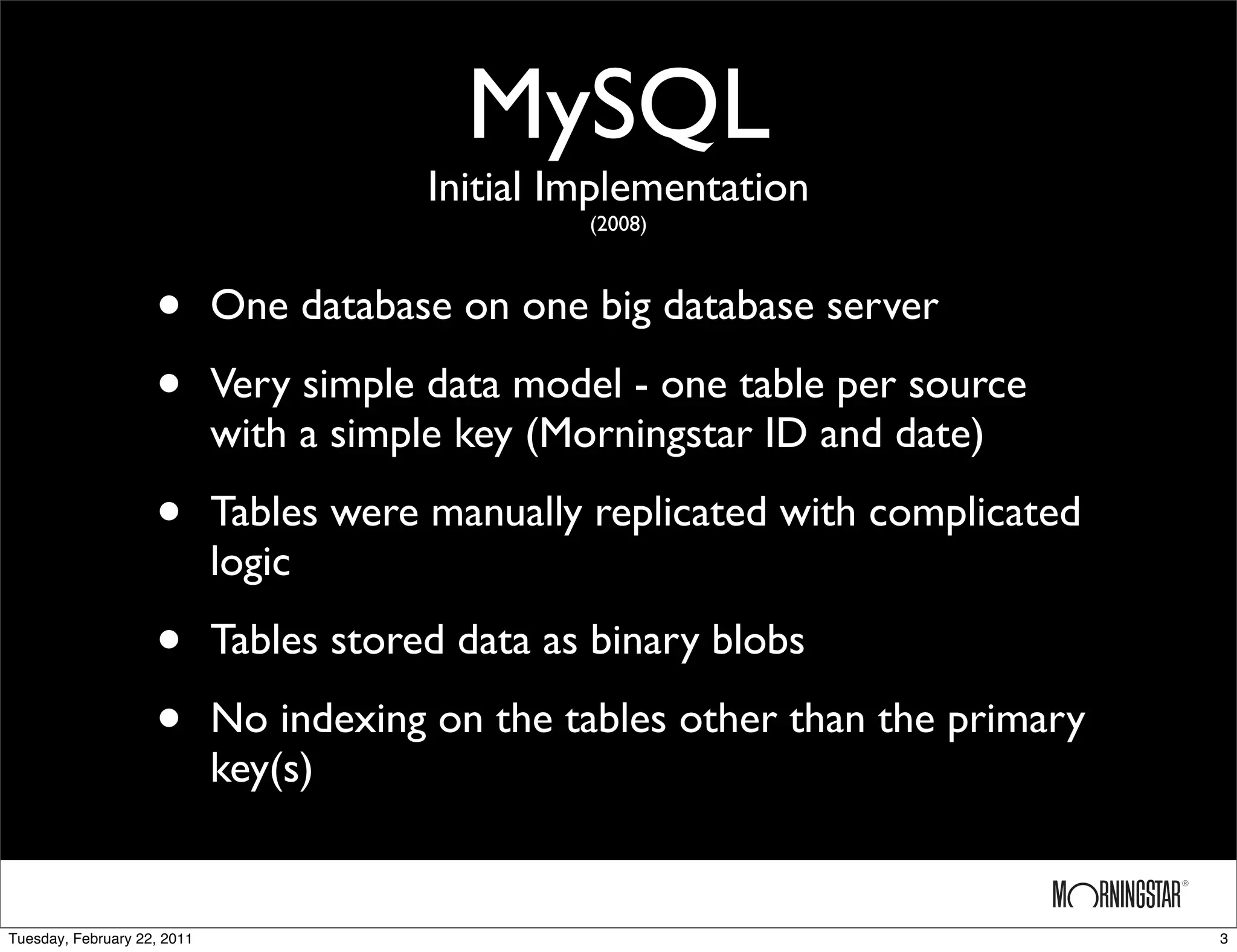
MySQL
                                         Initial Implementation
                                                  (2008)


                    •        One database on one big database server

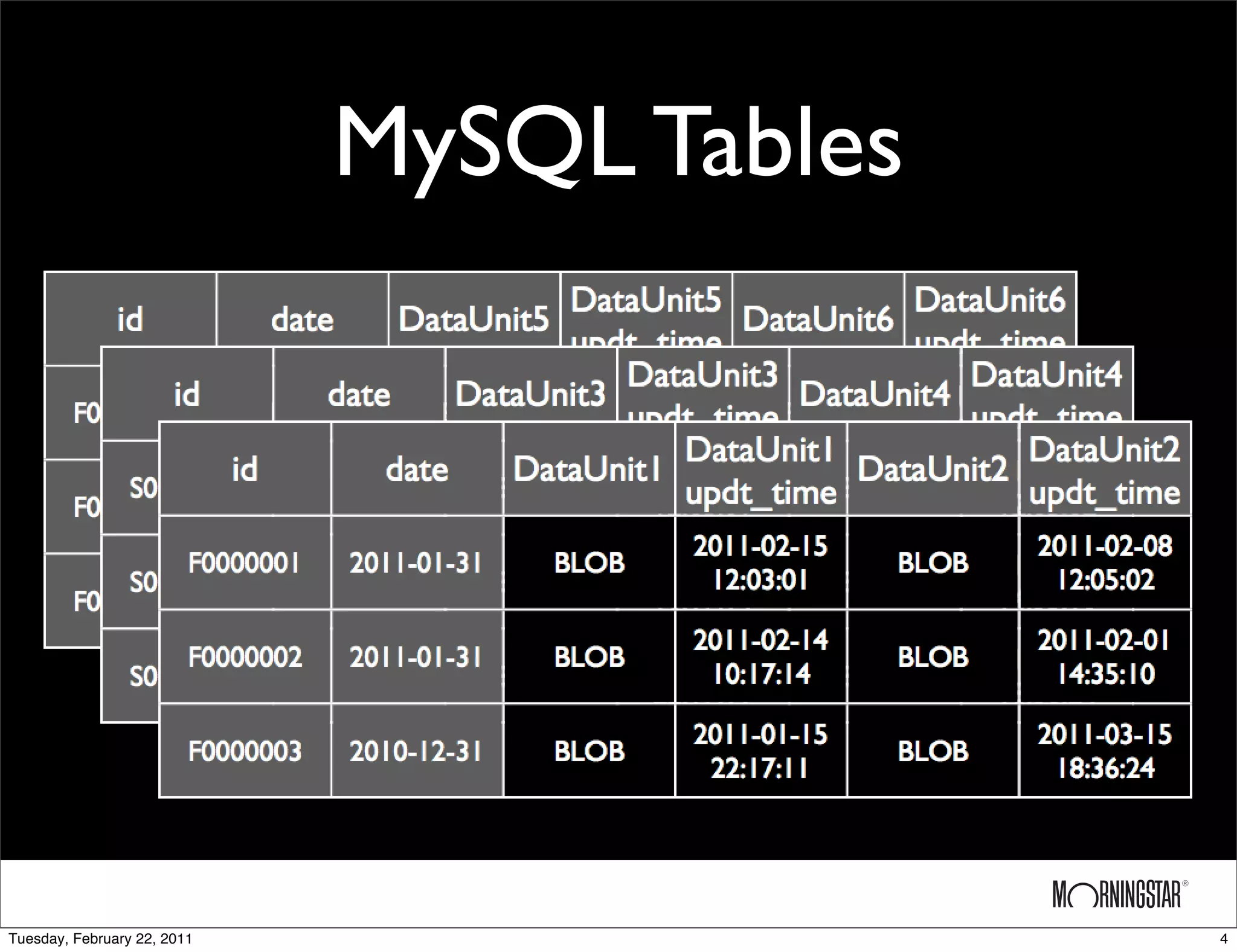
                    •        Very simple data model - one table per source
                             with a simple key (Morningstar ID and date)

                    •        Tables were manually replicated with complicated
                             logic

                    •        Tables stored data as binary blobs

                    •        No indexing on the tables other than the primary
                             key(s)


Tuesday, February 22, 2011                                                      3
MySQL Tables


Tuesday, February 22, 2011                  4
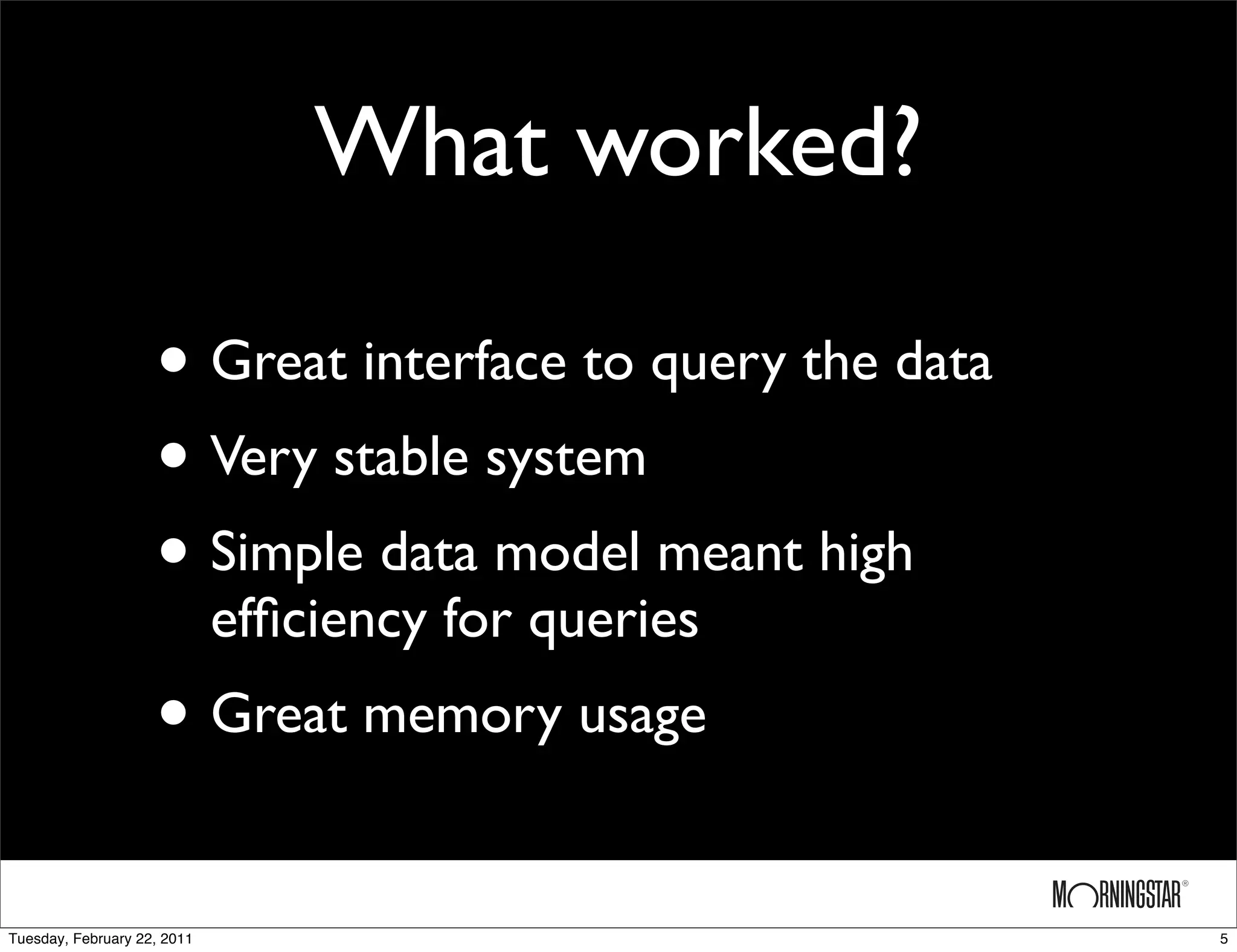
What worked?

                    • Great interface to query the data
                    • Very stable system
                    • Simple data model meant high
                             efficiency for queries
                    • Great memory usage
Tuesday, February 22, 2011                                5
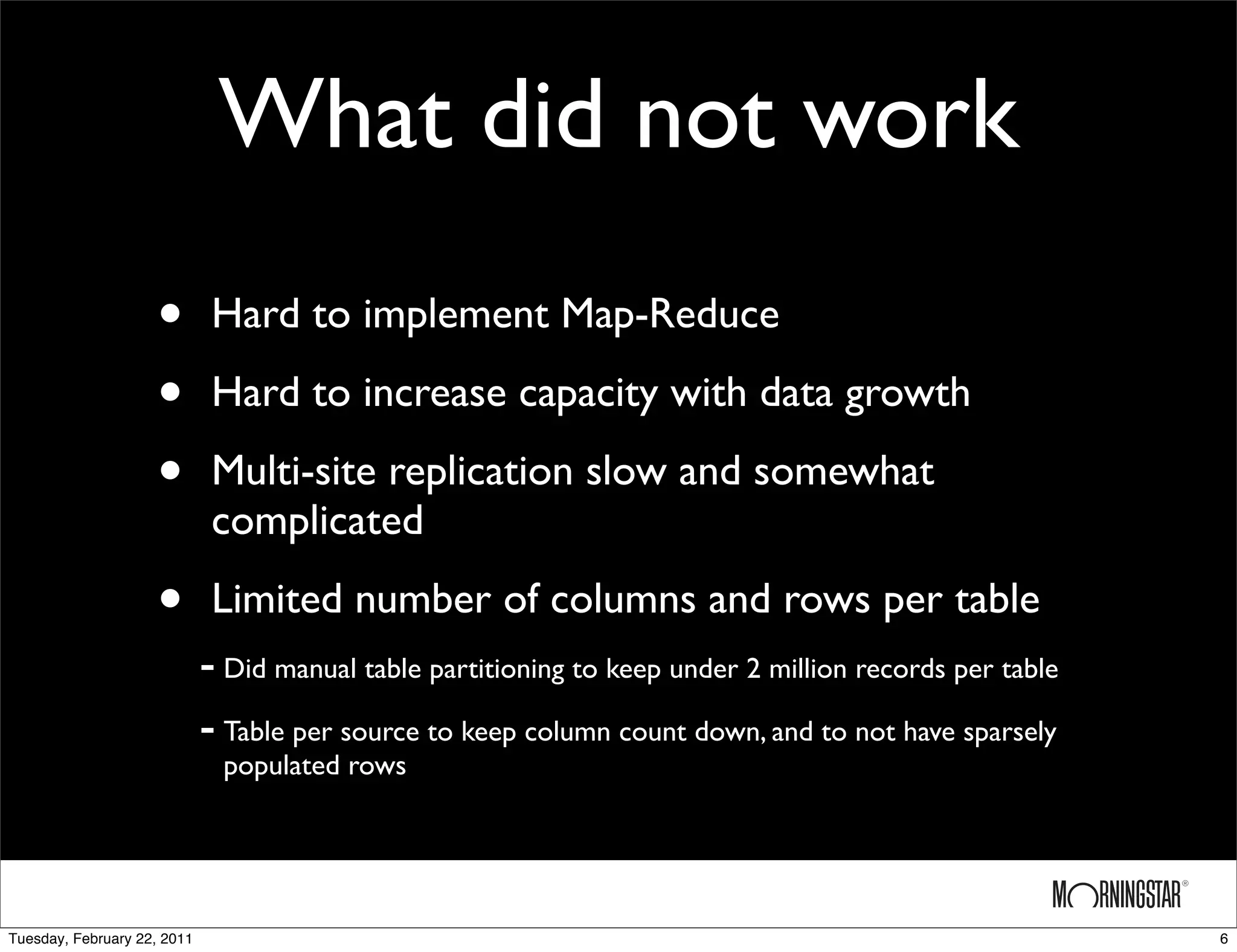
What did not work
                    •         Hard to implement Map-Reduce

                    •         Hard to increase capacity with data growth

                    •         Multi-site replication slow and somewhat
                              complicated

                    •         Limited number of columns and rows per table
                             - Did manual table partitioning to keep under 2 million records per table
                             - Table per source to keep column count down, and to not have sparsely
                               populated rows


Tuesday, February 22, 2011                                                                               6
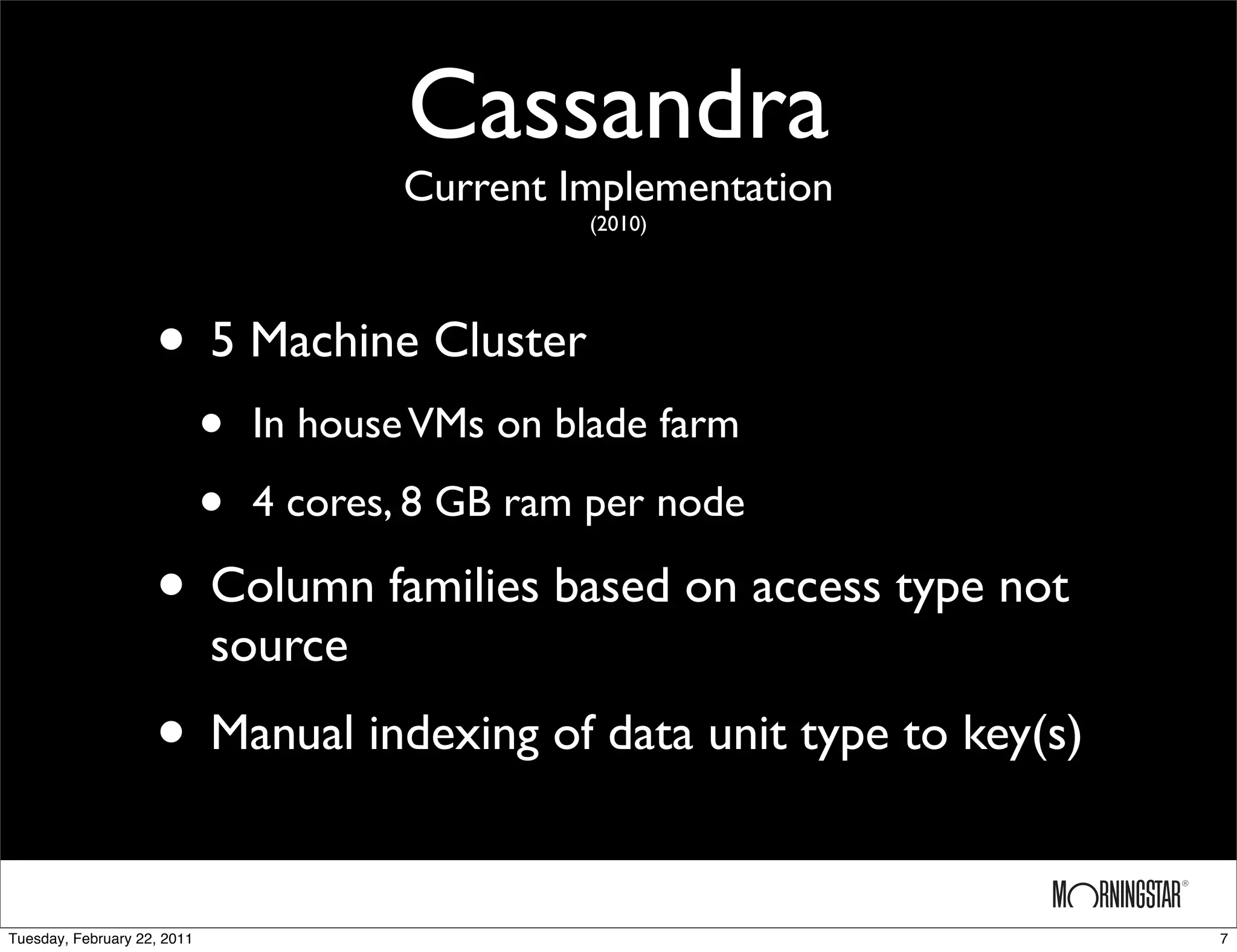
Cassandra
                                         Current Implementation
                                                  (2010)


                    • 5 Machine Cluster
                             •   In house VMs on blade farm

                             •   4 cores, 8 GB ram per node

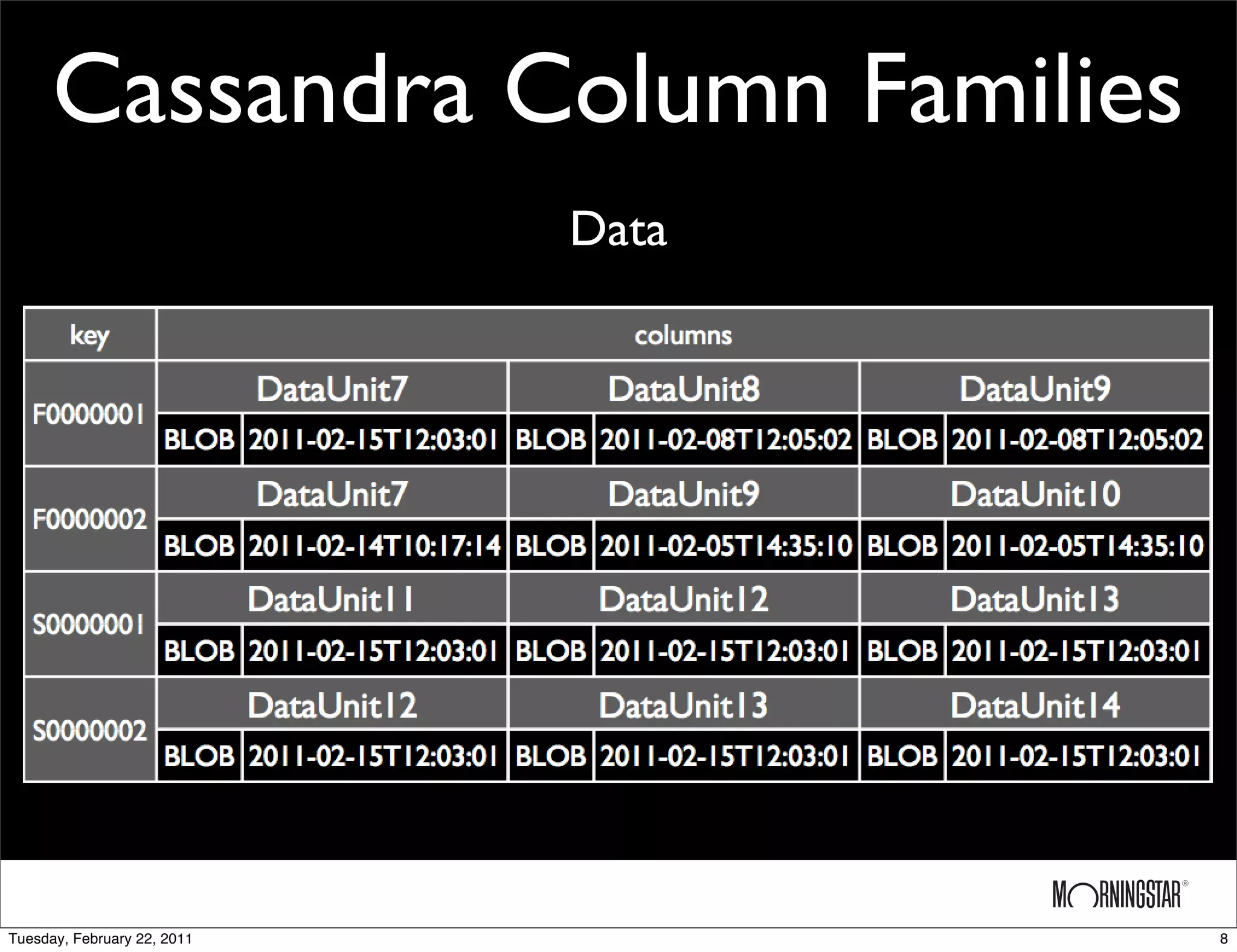
                    • Column families based on access type not
                             source
                    • Manual indexing of data unit type to key(s)

Tuesday, February 22, 2011                                          7
Cassandra Column Families
                             Data


Tuesday, February 22, 2011          8
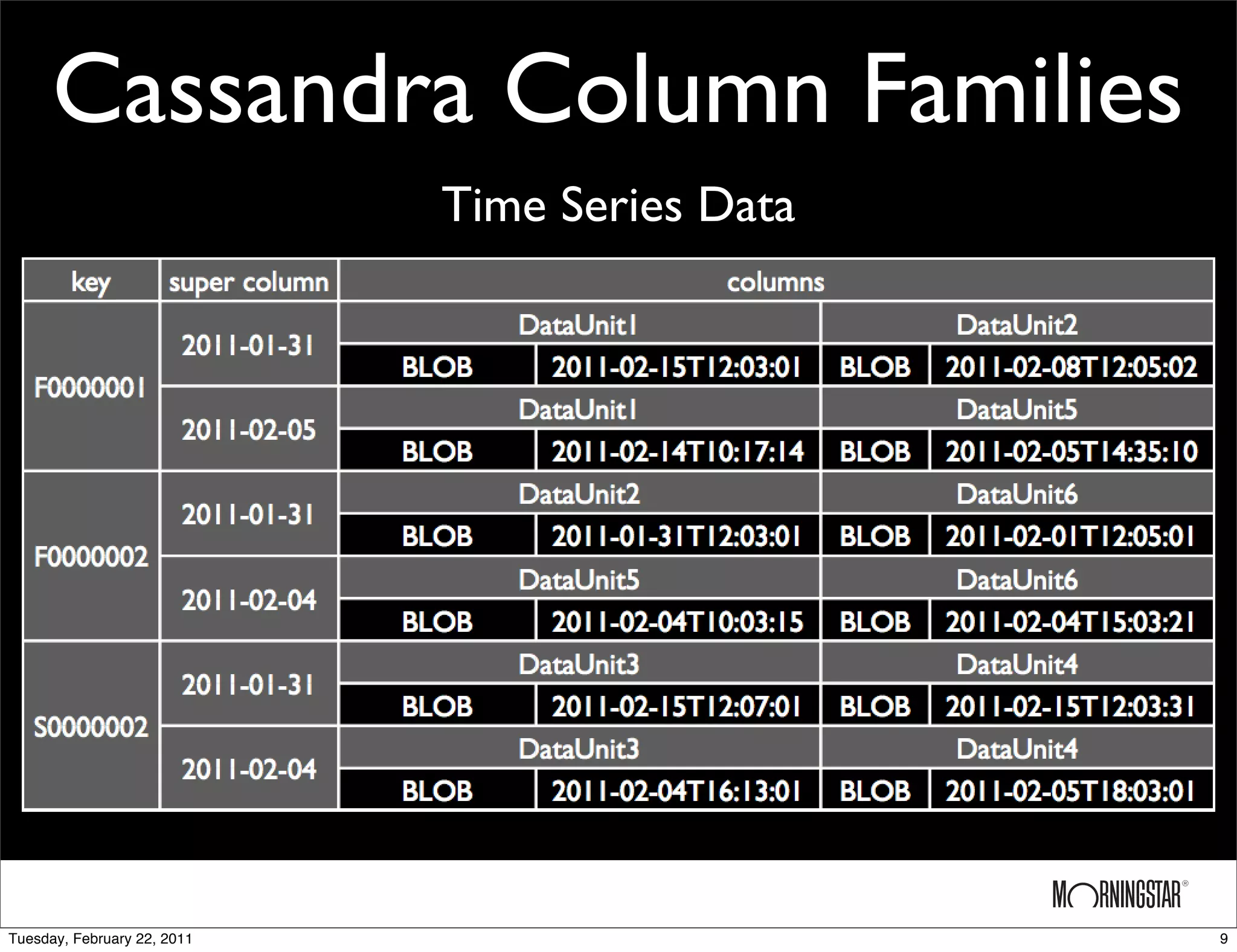
Cassandra Column Families
                             Time Series Data


Tuesday, February 22, 2011                      9
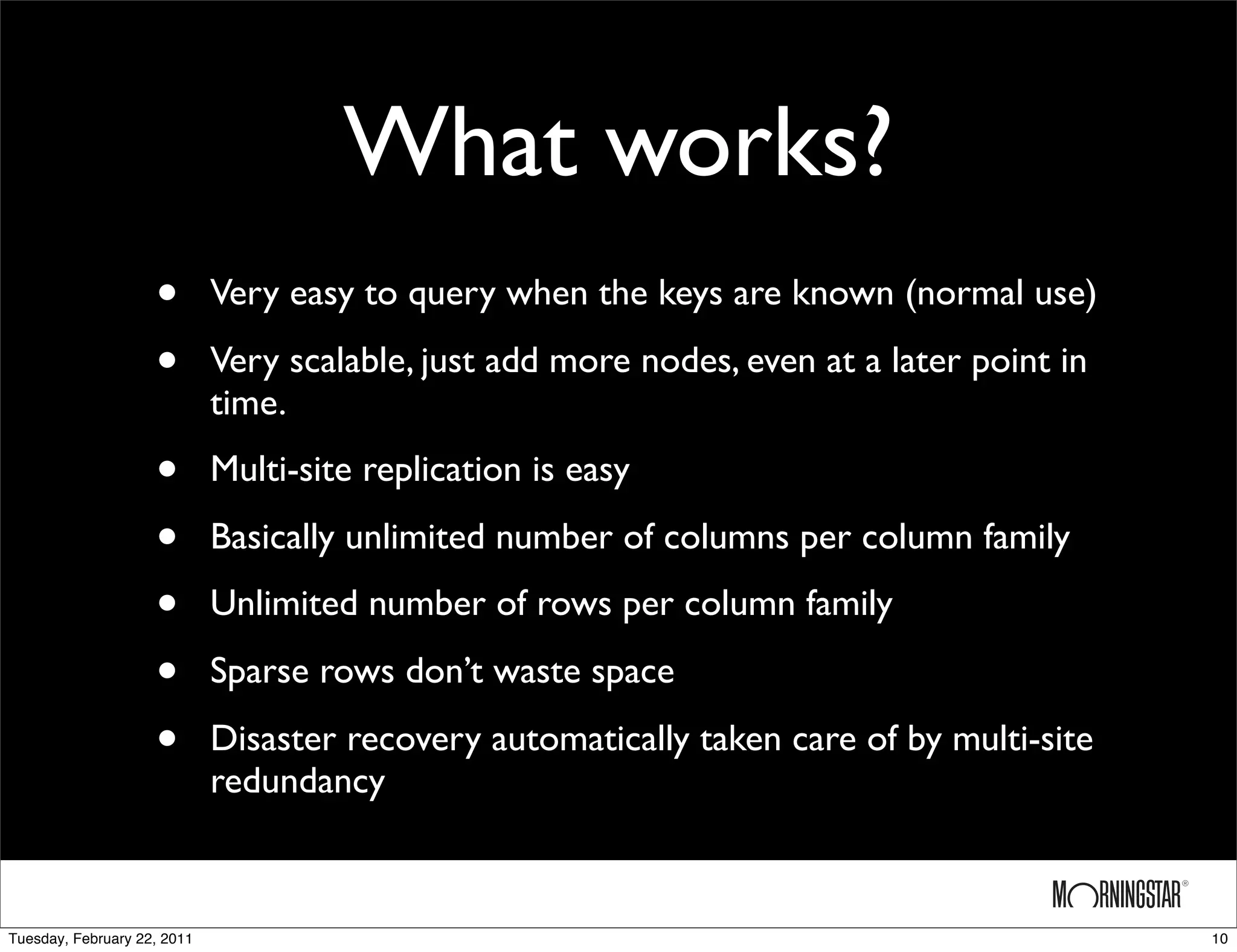
What works?
                    •        Very easy to query when the keys are known (normal use)

                    •        Very scalable, just add more nodes, even at a later point in
                             time.

                    •        Multi-site replication is easy

                    •        Basically unlimited number of columns per column family

                    •        Unlimited number of rows per column family

                    •        Sparse rows don’t waste space

                    •        Disaster recovery automatically taken care of by multi-site
                             redundancy


Tuesday, February 22, 2011                                                                  10
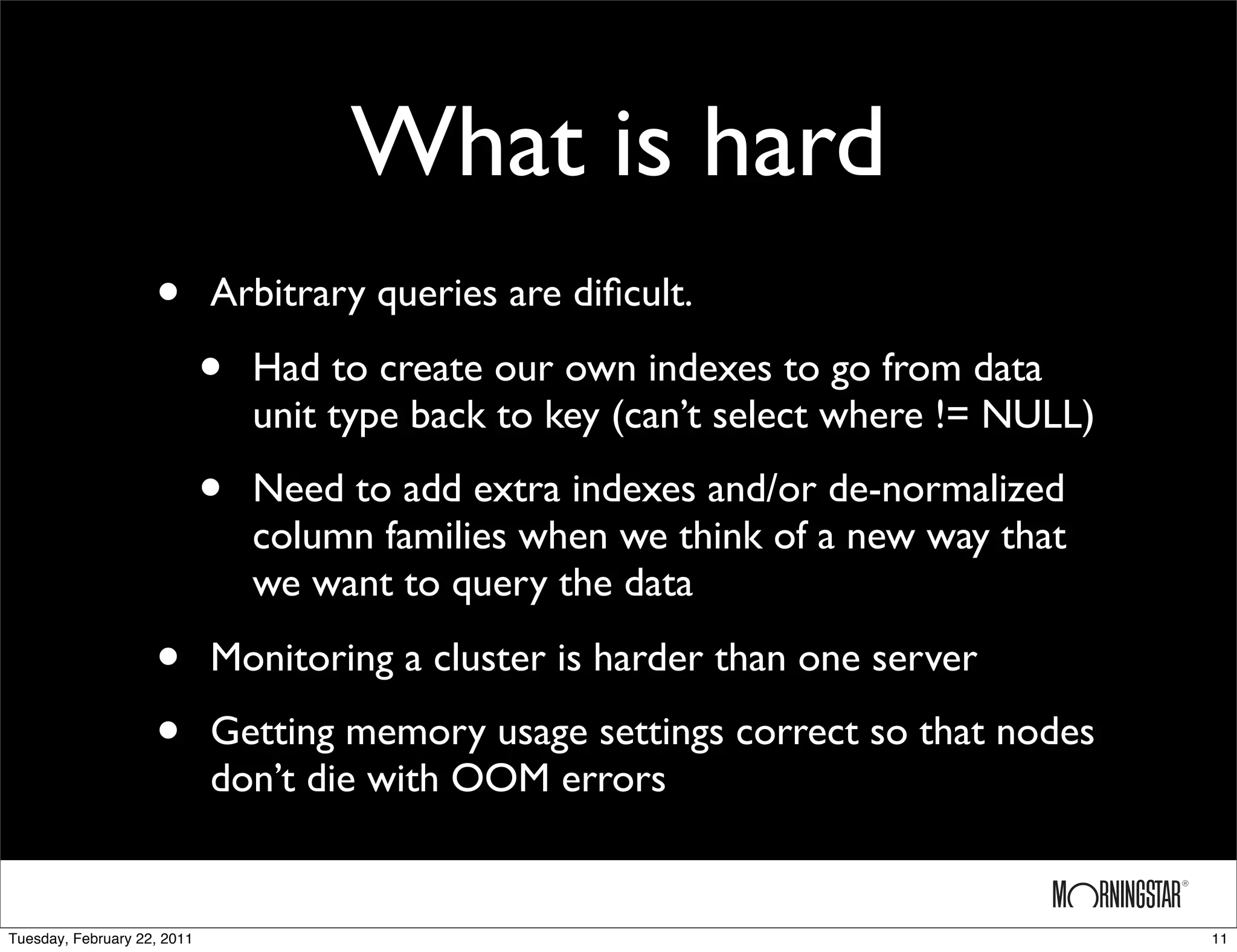
What is hard
                    •        Arbitrary queries are dificult.

                             •   Had to create our own indexes to go from data
                                 unit type back to key (can’t select where != NULL)

                             •   Need to add extra indexes and/or de-normalized
                                 column families when we think of a new way that
                                 we want to query the data

                    •        Monitoring a cluster is harder than one server

                    •        Getting memory usage settings correct so that nodes
                             don’t die with OOM errors


Tuesday, February 22, 2011                                                            11
Future Plans


                    • Upgrade to 0.7
                    • Expand cluster to multiple data centers
                             around the globe


Tuesday, February 22, 2011                                      12

Cassandra at Morningstar (Feb 2011)

  • 1.
  • 2.
    Operational Data Store Initial Requirements (Late 2007) • On big data security aggregator from multiple sources using Morningstar global security identifier • Highly scalable both horizontally and vertically • Easy to distribute computation processing • Easy to store various types of data Tuesday, February 22, 2011 2
  • 3.
    MySQL Initial Implementation (2008) • One database on one big database server • Very simple data model - one table per source with a simple key (Morningstar ID and date) • Tables were manually replicated with complicated logic • Tables stored data as binary blobs • No indexing on the tables other than the primary key(s) Tuesday, February 22, 2011 3
  • 4.
  • 5.
    What worked? • Great interface to query the data • Very stable system • Simple data model meant high efficiency for queries • Great memory usage Tuesday, February 22, 2011 5
  • 6.
    What did notwork • Hard to implement Map-Reduce • Hard to increase capacity with data growth • Multi-site replication slow and somewhat complicated • Limited number of columns and rows per table - Did manual table partitioning to keep under 2 million records per table - Table per source to keep column count down, and to not have sparsely populated rows Tuesday, February 22, 2011 6
  • 7.
    Cassandra Current Implementation (2010) • 5 Machine Cluster • In house VMs on blade farm • 4 cores, 8 GB ram per node • Column families based on access type not source • Manual indexing of data unit type to key(s) Tuesday, February 22, 2011 7
  • 8.
    Cassandra Column Families Data Tuesday, February 22, 2011 8
  • 9.
    Cassandra Column Families Time Series Data Tuesday, February 22, 2011 9
  • 10.
    What works? • Very easy to query when the keys are known (normal use) • Very scalable, just add more nodes, even at a later point in time. • Multi-site replication is easy • Basically unlimited number of columns per column family • Unlimited number of rows per column family • Sparse rows don’t waste space • Disaster recovery automatically taken care of by multi-site redundancy Tuesday, February 22, 2011 10
  • 11.
    What is hard • Arbitrary queries are dificult. • Had to create our own indexes to go from data unit type back to key (can’t select where != NULL) • Need to add extra indexes and/or de-normalized column families when we think of a new way that we want to query the data • Monitoring a cluster is harder than one server • Getting memory usage settings correct so that nodes don’t die with OOM errors Tuesday, February 22, 2011 11
  • 12.
    Future Plans • Upgrade to 0.7 • Expand cluster to multiple data centers around the globe Tuesday, February 22, 2011 12