CASE PRESENTATION
CRANIOSYNOSTOSIS
Premature fusion of one or more cranial
sutures
1. characteristic skull shape deformities
2. facial asymmetry
3. Functional consequences
 increased intracranial pressure (ICP),
 visual impairment,
 deafness
 cognitive deficits
PRIMARILY AND SECONDARILY.
Primary Craniosynostosis due to a
developmental error during embryogenesis
Secondary Craniosynostosis is due to
mechanical
causes such as
 intrauterine compression of the fetal Skull
 metabolic causes
 effect of teratogens
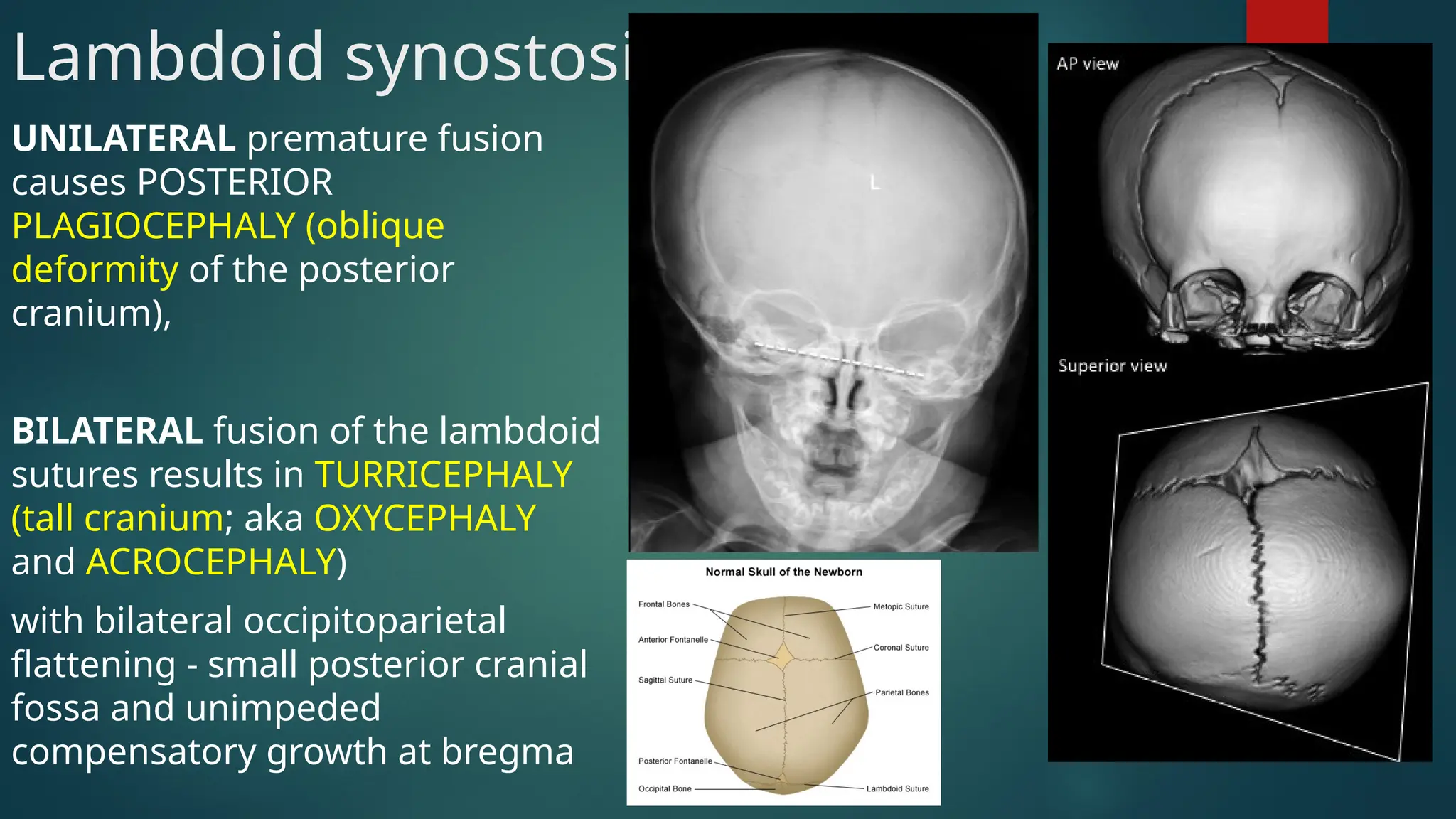
Cranial sutures in neonates appear wide open and fuse with
age from back to front and lateral to medial
exception : metopic suture, which fuses from front to back.
Metopic suture fuses between 9 months and 2 years of age
Followed by the Saggittal sutures(22yrs),Coronal(24yrs),
Lambdoid(26yrs) and then the squamous(60years).
Disappears between 30-40 years of age, as the growth of
cranial bones at saggital, coronal and lambdoid sutures
ceases early in 2nd
decade
Anterior fontanale- 18months Posterior fontanel:3-6months
Premature fusion of the cranial sutures restricts
cranial growth perpendicular to the affected suture
with compensatory overgrowth along the other
patent sutures
characteristic skull shape deformities noted in
craniosynostosis
Sagittal synostosis
Restriction of growth perpendicular to
the sagittal suture
narrow and elongated cranium with
frontal bossing,
occipital protrusion and ridging of the
fused, heaped suture.
This deformity is characterized by
SCAPHOCEPHALY (inverted boat with a
keel), CLINOCEPHALY (flat cranium due to
loss of cranial convexity), and
LEPTOCEPHALY (tall and narrow cranium)
Coronal synostosis
restriction of growth in the anterior- posterior
direction, perpendicular to the coronal suture
with compensatory overgrowth in the parietal
direction, perpendicular to the patent sagittal
suture.
Unicoronal synostosis results in ANTERIOR
PLAGIOCEPHALY (oblique cranium)
Bicoronal synostosis restricts skull growth in
the anterior-posterior direction, which
generally results IN BRACHYCEPHALY (SHORT
CRANIUM)
Metopic synostosis
Palpable ectocranial ridge or omega-shaped
notch and
small anterior cranial fossa with a triangular
pointed forehead (TRIGONOCEPHALY) and
parieto-occipital bossing due to bilateral
constriction of the frontal bones.
Imaging findings
 decreased interorbital distance (hypotelorism),
 hypoplastic ethmoid sinus,
 and medially upward slanted orbital roof
(“quizzical eye” appearance)
One-third of cases of metopic synostosis are
syndromic, with associated midline anomalies of
the brain and the palate.
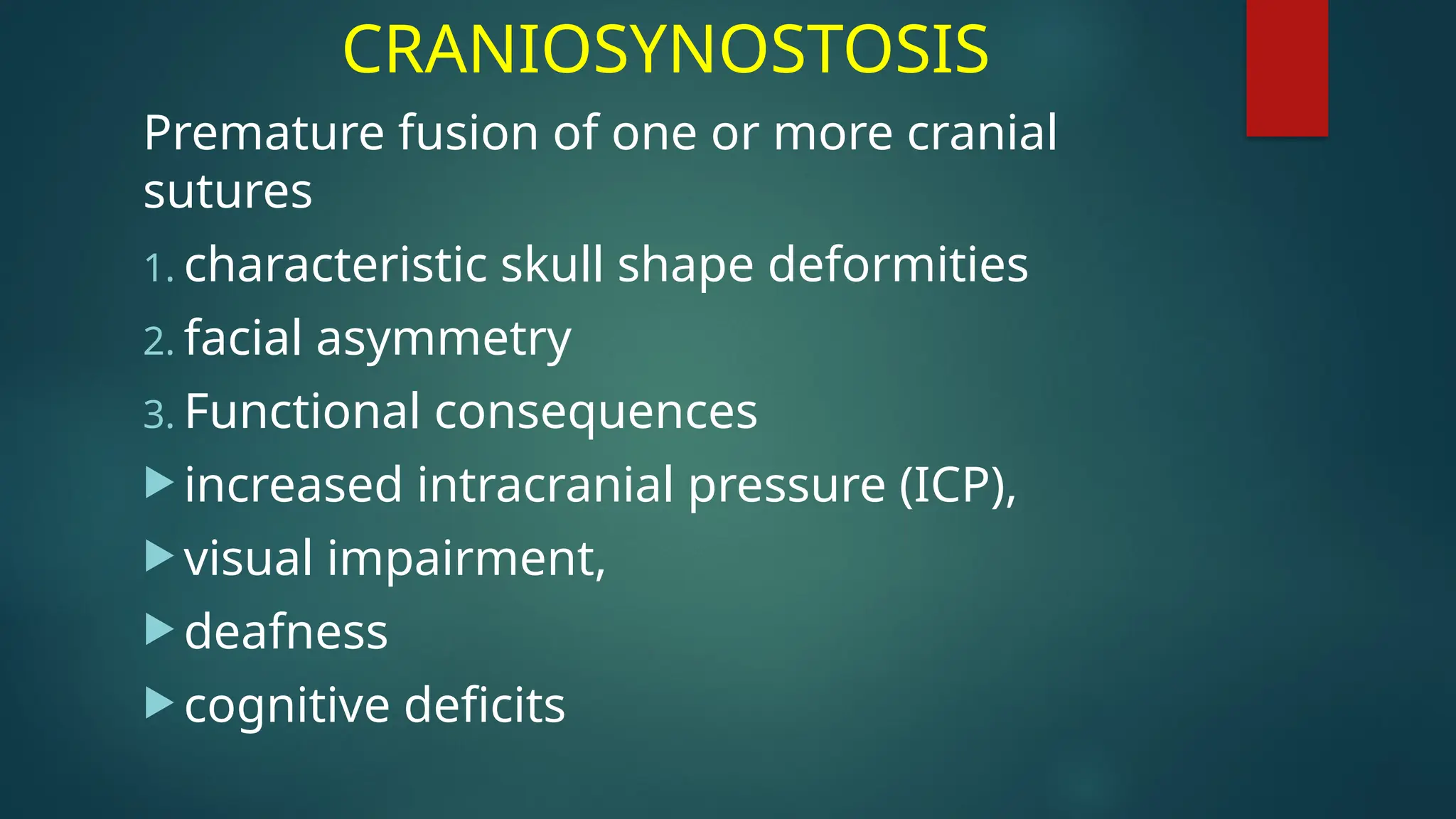
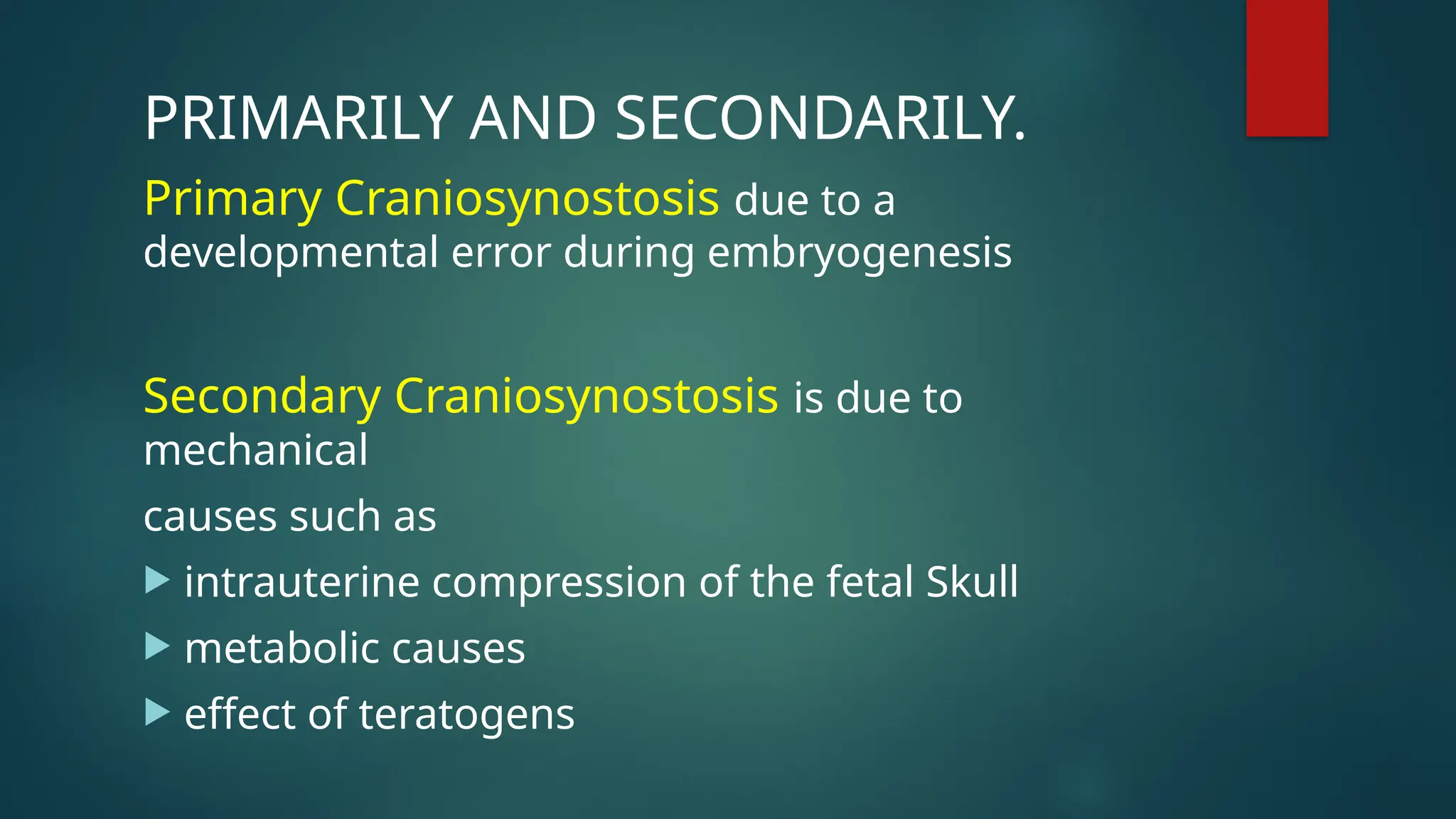
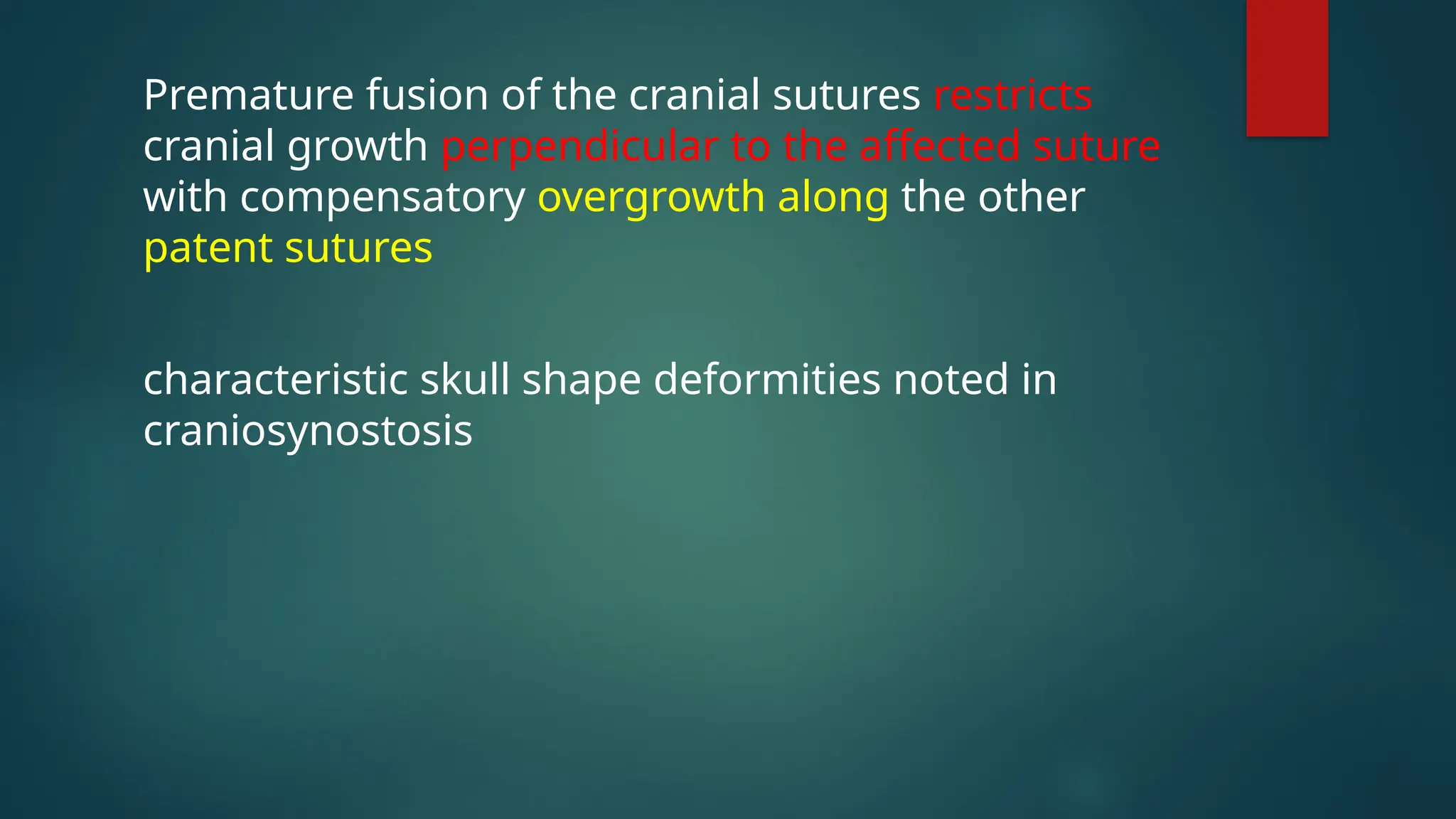
Lambdoid synostosis
UNILATERAL premature fusion
causes POSTERIOR
PLAGIOCEPHALY (oblique
deformity of the posterior
cranium),
BILATERAL fusion of the lambdoid
sutures results in TURRICEPHALY
(tall cranium; aka OXYCEPHALY
and ACROCEPHALY)
with bilateral occipitoparietal
flattening - small posterior cranial
fossa and unimpeded
compensatory growth at bregma

CASE PRESENTATIOn in Radiology SYntostosis

CASE PRESENTATIOn in Radiology SYntostosis

  • 1.
  • 5.
    CRANIOSYNOSTOSIS Premature fusion ofone or more cranial sutures 1. characteristic skull shape deformities 2. facial asymmetry 3. Functional consequences  increased intracranial pressure (ICP),  visual impairment,  deafness  cognitive deficits
  • 6.
    PRIMARILY AND SECONDARILY. PrimaryCraniosynostosis due to a developmental error during embryogenesis Secondary Craniosynostosis is due to mechanical causes such as  intrauterine compression of the fetal Skull  metabolic causes  effect of teratogens
  • 7.
    Cranial sutures inneonates appear wide open and fuse with age from back to front and lateral to medial exception : metopic suture, which fuses from front to back. Metopic suture fuses between 9 months and 2 years of age Followed by the Saggittal sutures(22yrs),Coronal(24yrs), Lambdoid(26yrs) and then the squamous(60years). Disappears between 30-40 years of age, as the growth of cranial bones at saggital, coronal and lambdoid sutures ceases early in 2nd decade Anterior fontanale- 18months Posterior fontanel:3-6months
  • 8.
    Premature fusion ofthe cranial sutures restricts cranial growth perpendicular to the affected suture with compensatory overgrowth along the other patent sutures characteristic skull shape deformities noted in craniosynostosis
  • 9.
    Sagittal synostosis Restriction ofgrowth perpendicular to the sagittal suture narrow and elongated cranium with frontal bossing, occipital protrusion and ridging of the fused, heaped suture. This deformity is characterized by SCAPHOCEPHALY (inverted boat with a keel), CLINOCEPHALY (flat cranium due to loss of cranial convexity), and LEPTOCEPHALY (tall and narrow cranium)
  • 10.
    Coronal synostosis restriction ofgrowth in the anterior- posterior direction, perpendicular to the coronal suture with compensatory overgrowth in the parietal direction, perpendicular to the patent sagittal suture. Unicoronal synostosis results in ANTERIOR PLAGIOCEPHALY (oblique cranium) Bicoronal synostosis restricts skull growth in the anterior-posterior direction, which generally results IN BRACHYCEPHALY (SHORT CRANIUM)
  • 11.
    Metopic synostosis Palpable ectocranialridge or omega-shaped notch and small anterior cranial fossa with a triangular pointed forehead (TRIGONOCEPHALY) and parieto-occipital bossing due to bilateral constriction of the frontal bones. Imaging findings  decreased interorbital distance (hypotelorism),  hypoplastic ethmoid sinus,  and medially upward slanted orbital roof (“quizzical eye” appearance) One-third of cases of metopic synostosis are syndromic, with associated midline anomalies of the brain and the palate.
  • 12.
    Lambdoid synostosis UNILATERAL prematurefusion causes POSTERIOR PLAGIOCEPHALY (oblique deformity of the posterior cranium), BILATERAL fusion of the lambdoid sutures results in TURRICEPHALY (tall cranium; aka OXYCEPHALY and ACROCEPHALY) with bilateral occipitoparietal flattening - small posterior cranial fossa and unimpeded compensatory growth at bregma