Case in pediatric
gastroenterology -
constipation
History
Tanya is a 4-year-old girl who presents to outpatients with a 2-year history of
constipation.
She opens her bowels about once every 5 days and strains.
She soils her knickers on most days.
She has intermittent abdominal pain, which is relieved by opening her bowels.
Recently, there has been fresh blood on the toilet tissue. Lactulose has been used,
with little success.
Her mother states that she did not have a dirty nappy until 40 hours of age. She has
recently had a urine infection diagnosed by her GP. The illness was mild and
responded well to antibiotics. She was delivered by emergency Caesarean section
because of fetal distress and meconium staining
PE
A faecal mass is palpable in the left iliac fossa.
The anus appears normal.
Rectal examination – hard stool palpated.
The back is normal.
Blood pressure is 101/62 mmHg. Weight is on the 50th
centile and height is on the 25th centile.
There are no other signs.
Importance of bowel movement
control
• Social
• Hygiene
• constipation
Definition
• Stool frequency
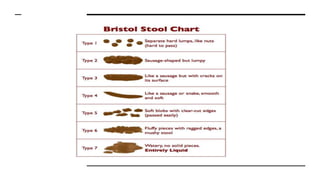
• Stool consistency
• Significant enough to cause distress
• “normal”-depend on age
Breast fed baby
• Frequency- 10 /day – once every 10 days
• Consistency-soft , yellow (“cottage” like )
• Need to be sure – no vomiting
abdomen is not distended
good weight gain
Stooling
• Depend on- bowel peristalsis
anal reaction to stool mass
• Internal sphincter- reflexogenic relaxation
• External sphincter- self controlled
relaxation
Organic causes
• Stricture- anal stenosis, post surgery
• Muscular –prune belly , gastroschisis
• Neurogenic – hirschprung ,pseudo-
obstruction
• Medication- narcotic, anticholinergic
• Metabolic-hypothyroidism , hypokalemia
, hypercalcemia
Other diseases
* Celiac disease
* Cow milk protein allergy
* Cystic fibrosis (DIOS/ meconium ileus
equivalent)
* IBD (stricture)
Functional constipation
• Start after neonatal period
• Acute episode precedes the chronic course
• The acute episode can be-change of diet
Toilet training period
acute gastro-enteritis
inconvenient stooling
(dirty toilet, trip)
• Painful passage of bowel movements causes pain-
withholding
Clinical presentation
• Avoid stooling
• Caregiver may misinterpret behavior as straining
• Abdominal pain
• Large diameter stool
• Rectal bleeding
• Encopresis
• Recurrent UTI
History
• When constipation started
• When did the child passed meconium
• Frequency of bowel movement
• Consistency of stool
• Blood on toilet paper
• Behavior before defecation
• abdominal pain and connection to meals and
defecation
• Diet / water
• Toilet training
Physical examination
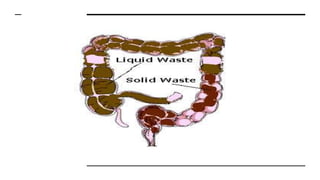
• Large volume of stool palpated at descending colon
• Underwear soiling (mistaken as diarrhea)
• Rectal examination-dilated rectum filled with hard
stool , anal fissure
• Spinal dimple/hair tuft over spine
• Cremasteric reflex
• Lower legs reflexes
evaluation
• In refractory patient
• Blood tests- thyroid function , calcium level, celiac serology
• Rectal biopsy
• Motility tests-colonic transient time , anal manometry
• MRI of spine
• Contrast enema
Treatment
• Softening of stool-polyethylene glycol
lactulose
mineral oil
• Relief of impaction-enema
• Patient education-balanced diet
regular post prandial toilet sitting
reward the child for adherence
avoid power struggles
• Behavioral management
• Surgery
Case in pediatric gastroenterology - constipation.pptx

Case in pediatric gastroenterology - constipation.pptx

  • 1.
  • 2.
    History Tanya is a4-year-old girl who presents to outpatients with a 2-year history of constipation. She opens her bowels about once every 5 days and strains. She soils her knickers on most days. She has intermittent abdominal pain, which is relieved by opening her bowels. Recently, there has been fresh blood on the toilet tissue. Lactulose has been used, with little success. Her mother states that she did not have a dirty nappy until 40 hours of age. She has recently had a urine infection diagnosed by her GP. The illness was mild and responded well to antibiotics. She was delivered by emergency Caesarean section because of fetal distress and meconium staining
  • 3.
    PE A faecal massis palpable in the left iliac fossa. The anus appears normal. Rectal examination – hard stool palpated. The back is normal. Blood pressure is 101/62 mmHg. Weight is on the 50th centile and height is on the 25th centile. There are no other signs.
  • 4.
    Importance of bowelmovement control • Social • Hygiene • constipation
  • 5.
    Definition • Stool frequency •Stool consistency • Significant enough to cause distress • “normal”-depend on age
  • 6.
    Breast fed baby •Frequency- 10 /day – once every 10 days • Consistency-soft , yellow (“cottage” like ) • Need to be sure – no vomiting abdomen is not distended good weight gain
  • 7.
    Stooling • Depend on-bowel peristalsis anal reaction to stool mass • Internal sphincter- reflexogenic relaxation • External sphincter- self controlled relaxation
  • 8.
    Organic causes • Stricture-anal stenosis, post surgery • Muscular –prune belly , gastroschisis • Neurogenic – hirschprung ,pseudo- obstruction • Medication- narcotic, anticholinergic • Metabolic-hypothyroidism , hypokalemia , hypercalcemia
  • 9.
    Other diseases * Celiacdisease * Cow milk protein allergy * Cystic fibrosis (DIOS/ meconium ileus equivalent) * IBD (stricture)
  • 10.
    Functional constipation • Startafter neonatal period • Acute episode precedes the chronic course • The acute episode can be-change of diet Toilet training period acute gastro-enteritis inconvenient stooling (dirty toilet, trip) • Painful passage of bowel movements causes pain- withholding
  • 12.
    Clinical presentation • Avoidstooling • Caregiver may misinterpret behavior as straining • Abdominal pain • Large diameter stool • Rectal bleeding • Encopresis • Recurrent UTI
  • 13.
    History • When constipationstarted • When did the child passed meconium • Frequency of bowel movement • Consistency of stool • Blood on toilet paper • Behavior before defecation • abdominal pain and connection to meals and defecation • Diet / water • Toilet training
  • 15.
    Physical examination • Largevolume of stool palpated at descending colon • Underwear soiling (mistaken as diarrhea) • Rectal examination-dilated rectum filled with hard stool , anal fissure • Spinal dimple/hair tuft over spine • Cremasteric reflex • Lower legs reflexes
  • 16.
    evaluation • In refractorypatient • Blood tests- thyroid function , calcium level, celiac serology • Rectal biopsy • Motility tests-colonic transient time , anal manometry • MRI of spine • Contrast enema
  • 17.
    Treatment • Softening ofstool-polyethylene glycol lactulose mineral oil • Relief of impaction-enema • Patient education-balanced diet regular post prandial toilet sitting reward the child for adherence avoid power struggles • Behavioral management • Surgery