Download to read offline

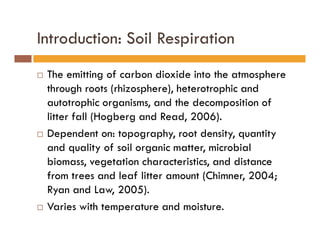
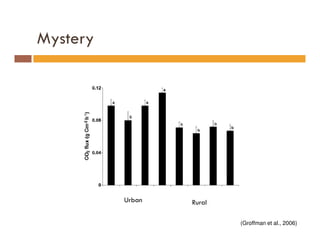
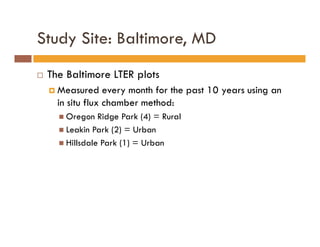
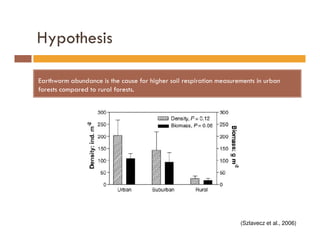
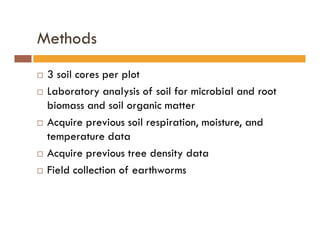
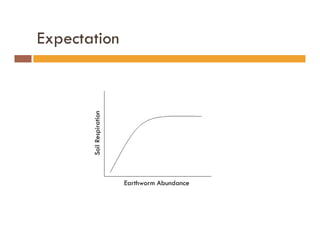

Soil respiration rates are higher in urban forests compared to rural forests. Soil respiration is the process by which carbon dioxide is released into the atmosphere through roots, organisms, and litter decomposition. It depends on factors like temperature, moisture, root density, and soil organic matter. A study measured soil respiration monthly for 10 years in Baltimore parks and found higher rates in urban forests. The hypothesis is that higher earthworm abundance in urban forests causes increased soil mixing and respiration. Methods included analyzing soil samples for microbial and root biomass, earthworm collection, and using previous temperature, moisture, tree density and soil respiration data. Understanding differences in soil respiration between urban and rural forests can provide insight into future forest carbon dynamics and climate change mitigation


