Welcome to the Career Technical Education In-Service August 2010By PresenterMedia.com
Today’s AgendaCareer Technical Education GoalsWelcome Back, Introductions, Overview of CTE, and Five District Focus Areas8:00amProgram Assessment ToolOverview – LEA Plan, CTE Plan; Self-Assessment; Overview of Tool and Implementation8:45amCurriculum Direction Overview; Counseling and QuestionsWhat to Expect , Goals, Articulation, a-g10:00amDataOverview, ACTE Career Readiness12:15pmFuture Job TrendsWrap up 1:15pm
Welcome Back!  (Betsy McKinstry, CTE Director)IntroductionsPop Quiz!  How Well Do You Know CTE?Welcome Back and Introductions
Betsy McKinstryCTE DirectorCareer Technical Education Goals
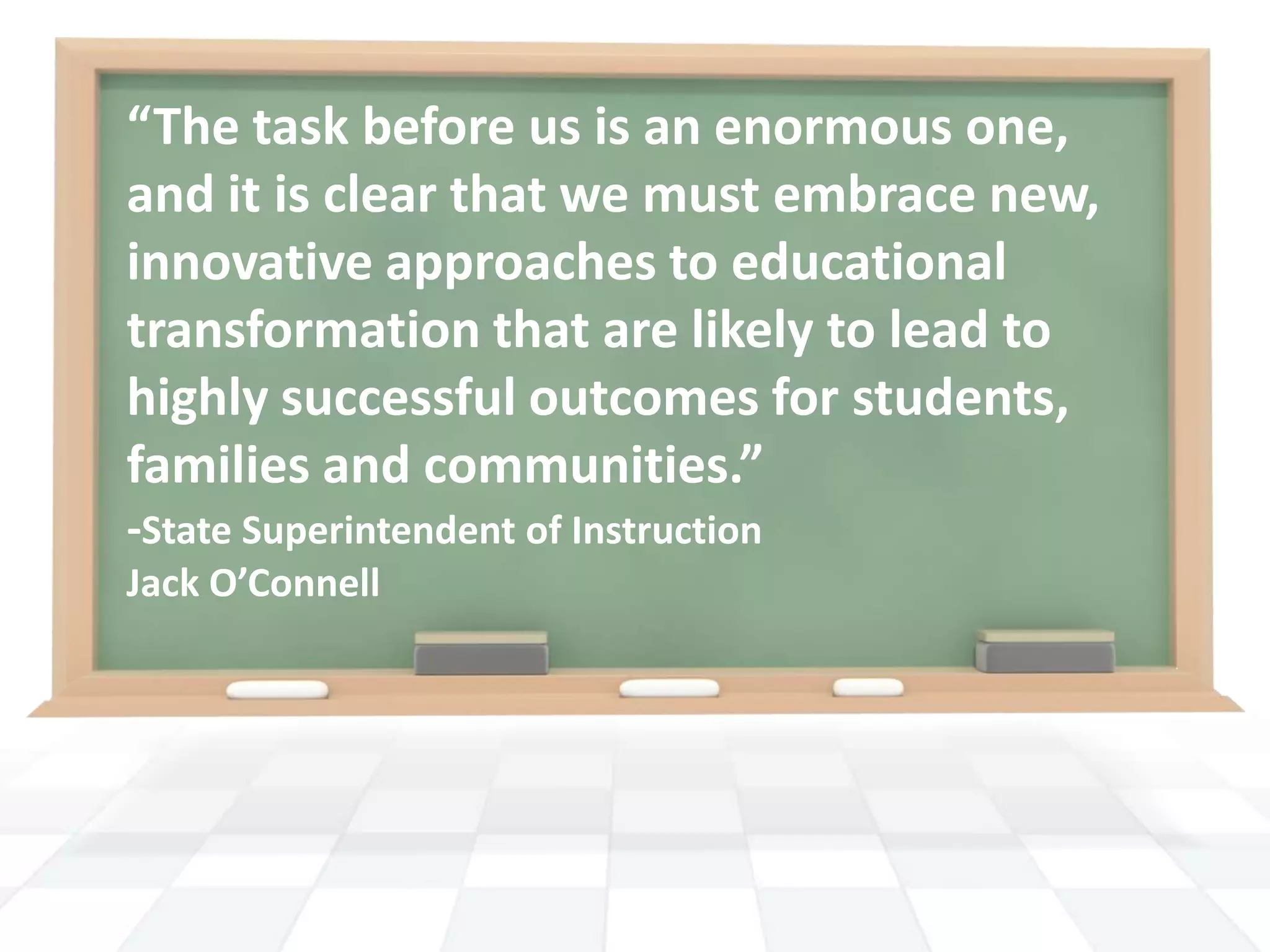
“The task before us is an enormous one, and it is clear that we must embrace new, innovative approaches to educational transformation that are likely to lead to highly successful outcomes for students, families and communities.”-State Superintendent of Instruction Jack O’Connell
IntroductionName School Site Course Did you take a CTE course in high school? What was the course? How is that high school CTE course related to your current job?
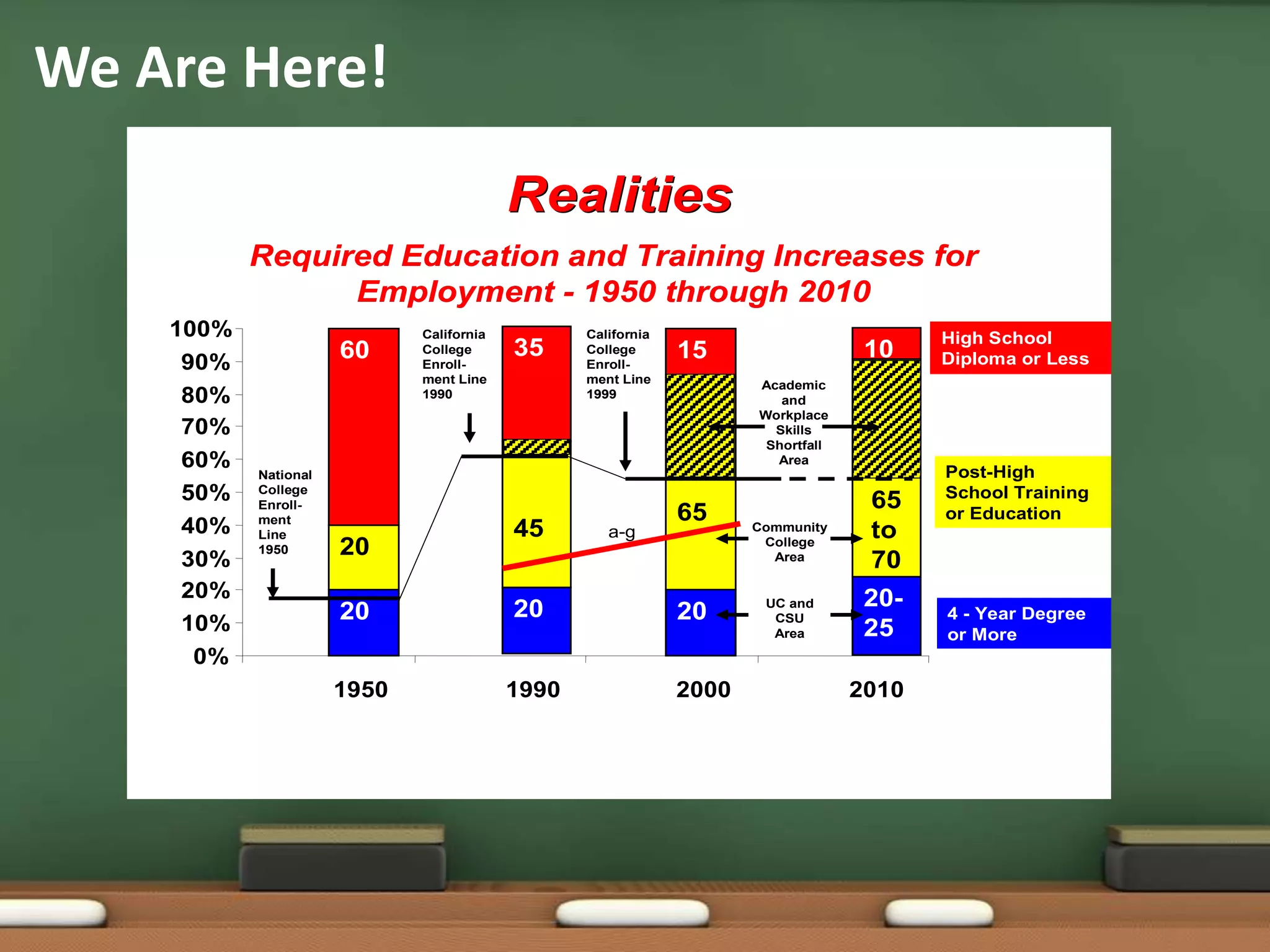
We Are Here!
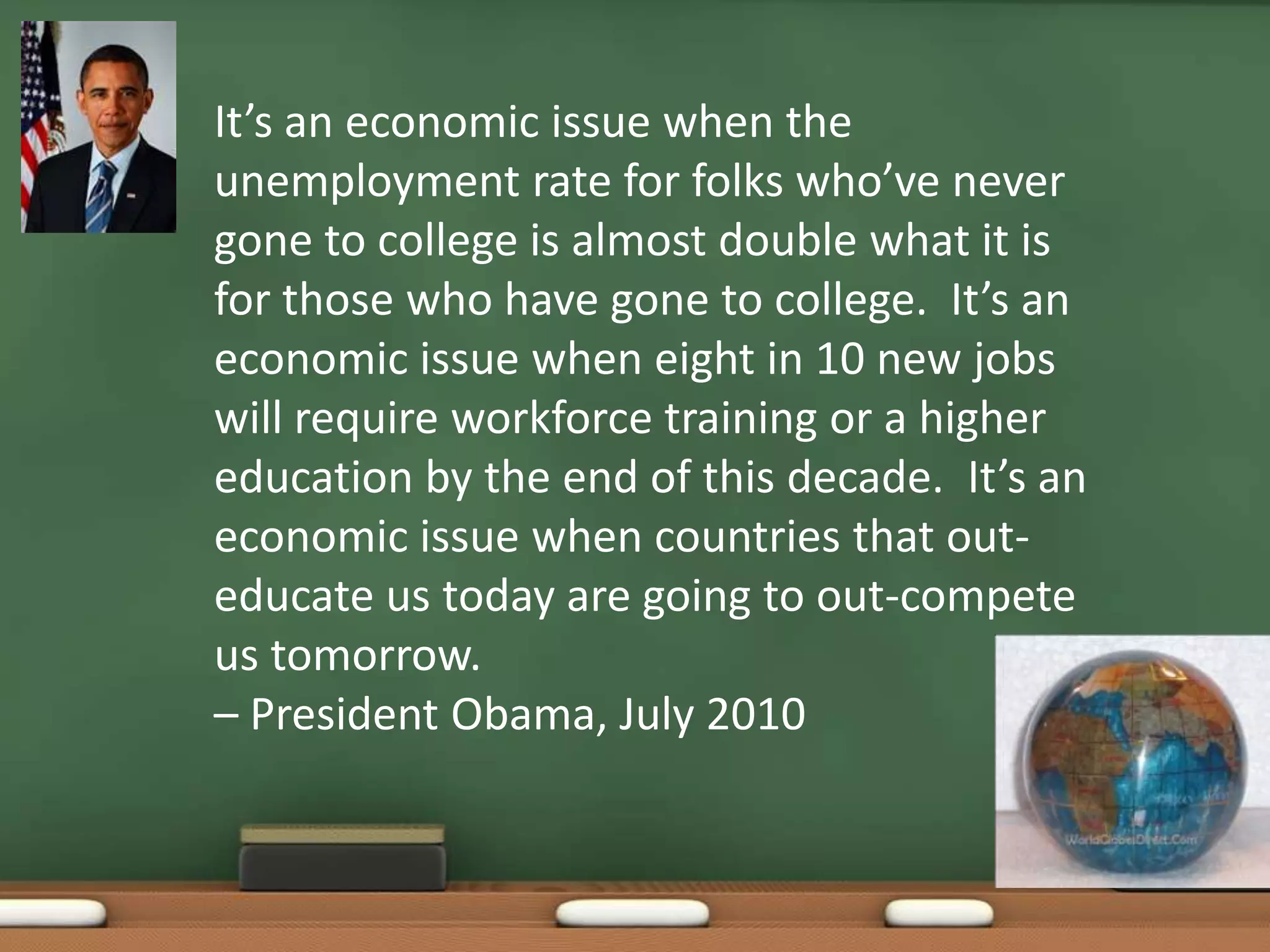
It’s an economic issue when the unemployment rate for folks who’ve never gone to college is almost double what it is for those who have gone to college.  It’s an economic issue when eight in 10 new jobs will require workforce training or a higher education by the end of this decade.  It’s an economic issue when countries that out-educate us today are going to out-compete us tomorrow. – President Obama, July 2010
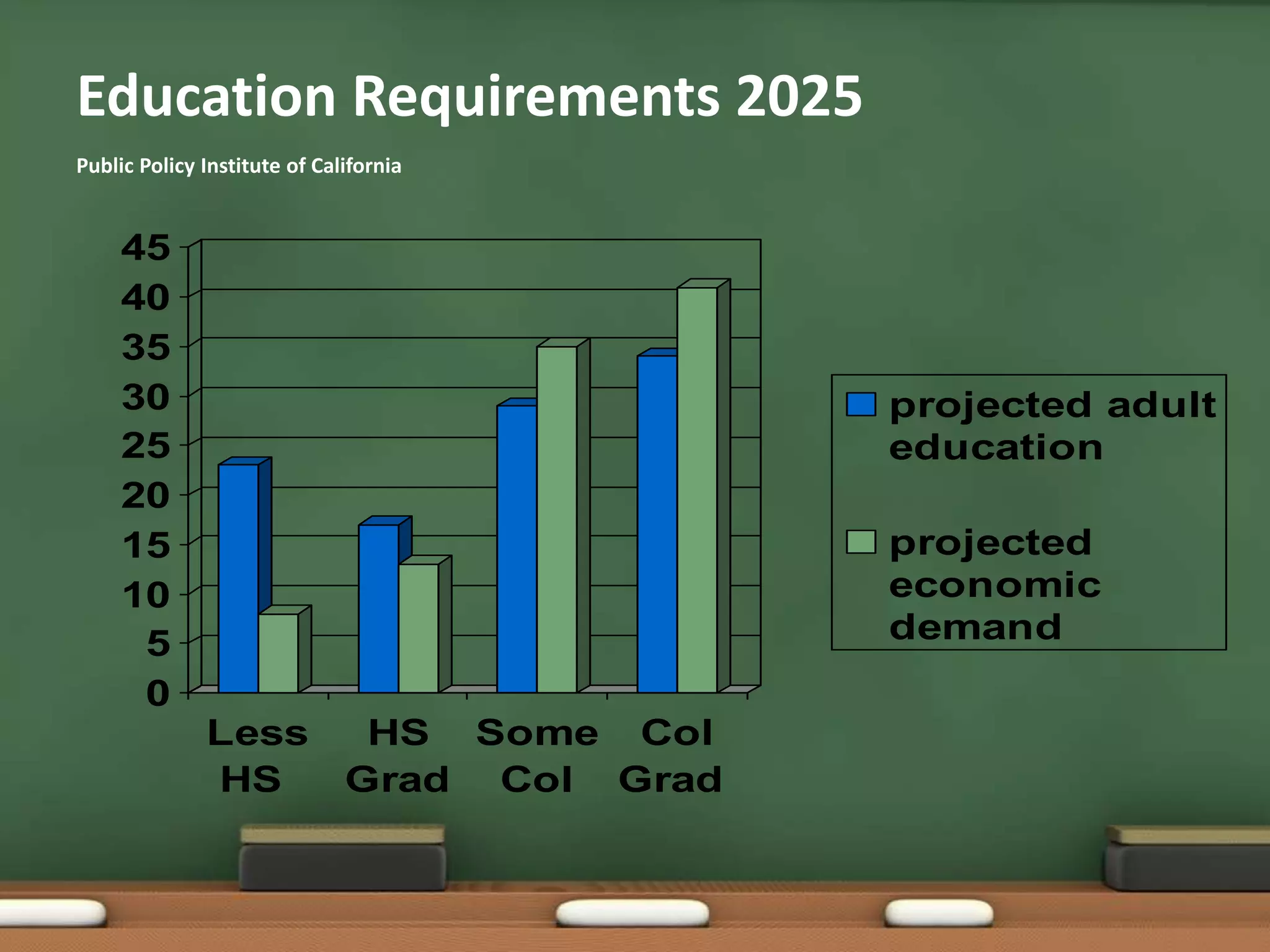
Education Requirements 2025Public Policy Institute of California
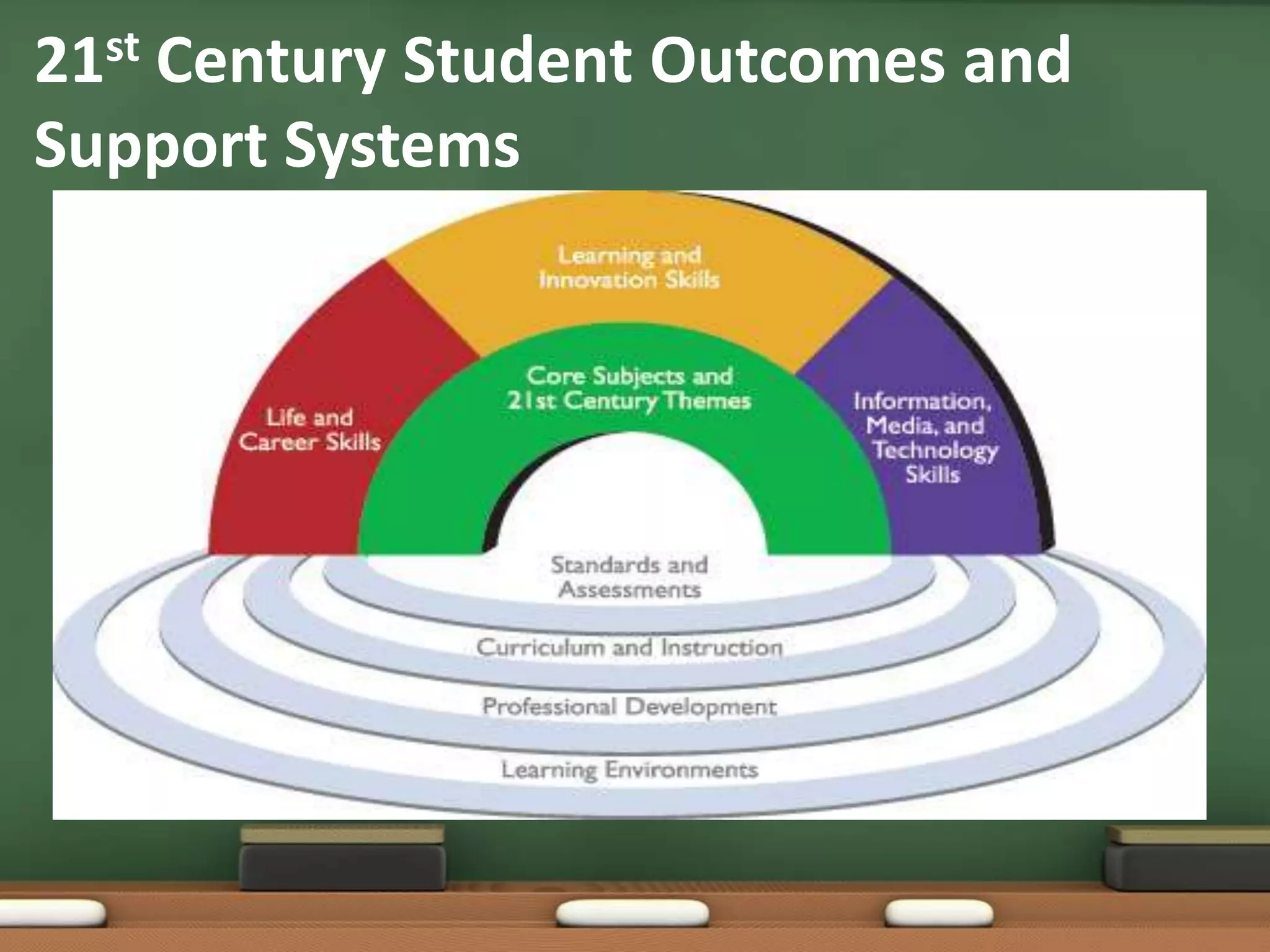
21stCentury Student Outcomes and Support Systems
District Five Focus Areas Math English Special Education AVID English Language Learners
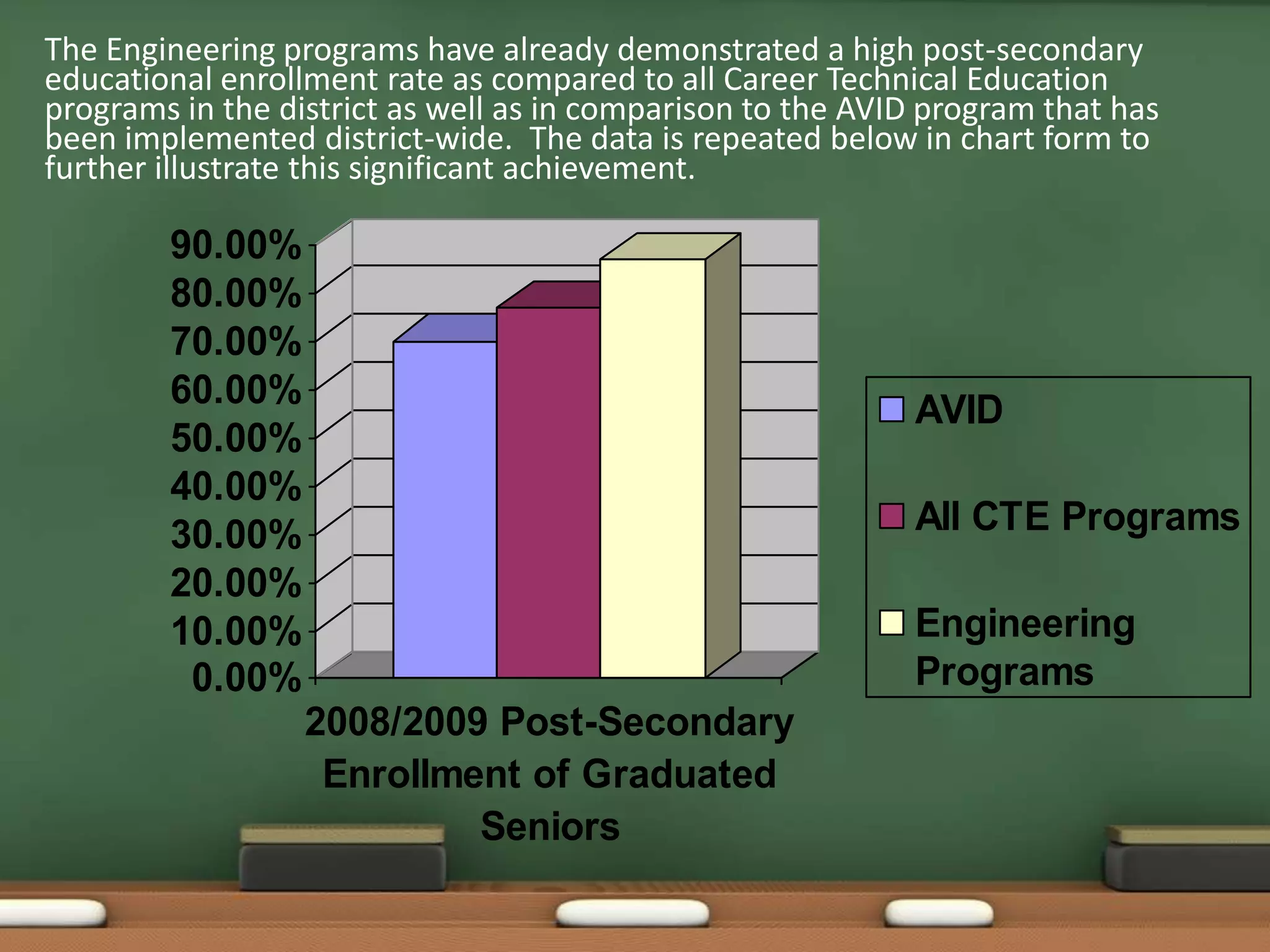
The Engineering programs have already demonstrated a high post-secondary educational enrollment rate as compared to all Career Technical Education programs in the district as well as in comparison to the AVID program that has been implemented district-wide.  The data is repeated below in chart form to further illustrate this significant achievement.
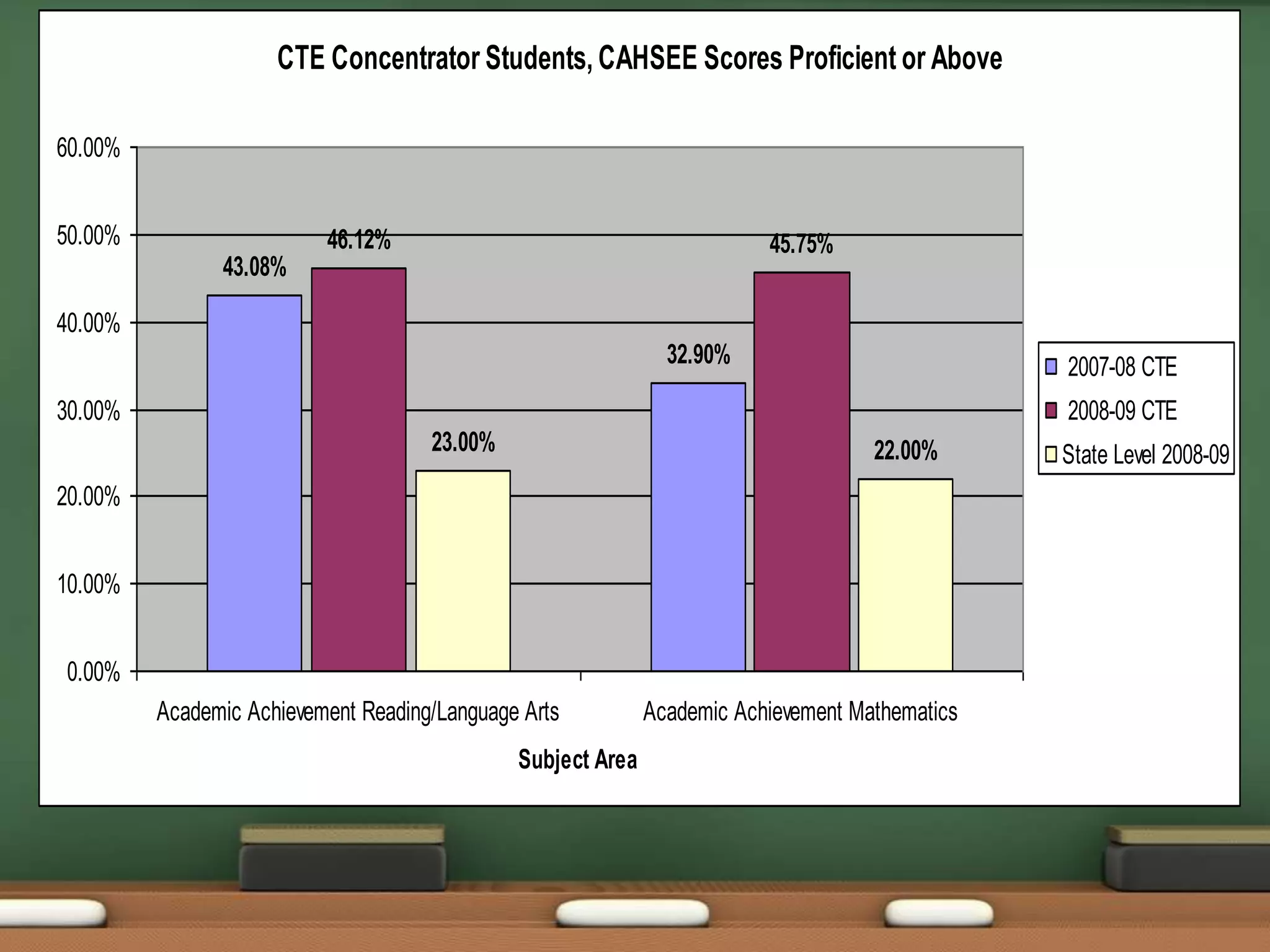
 Our Career Technical Education Programs have effectively supported the closing of the achievement gap for all sub-groups qualifying as “at risk” or “underrepresented”.  Students in our programs have consistently improved their standardized test scores and have more than doubled the achievement rates in the State of California.   The chart below illustrates this growth and compares our programs’ students to the State of California’s data as demonstrated through the California High School Exit Exam (Cahsee):
CTE Program Assessment ToolDiane Walker CTE Coordinator
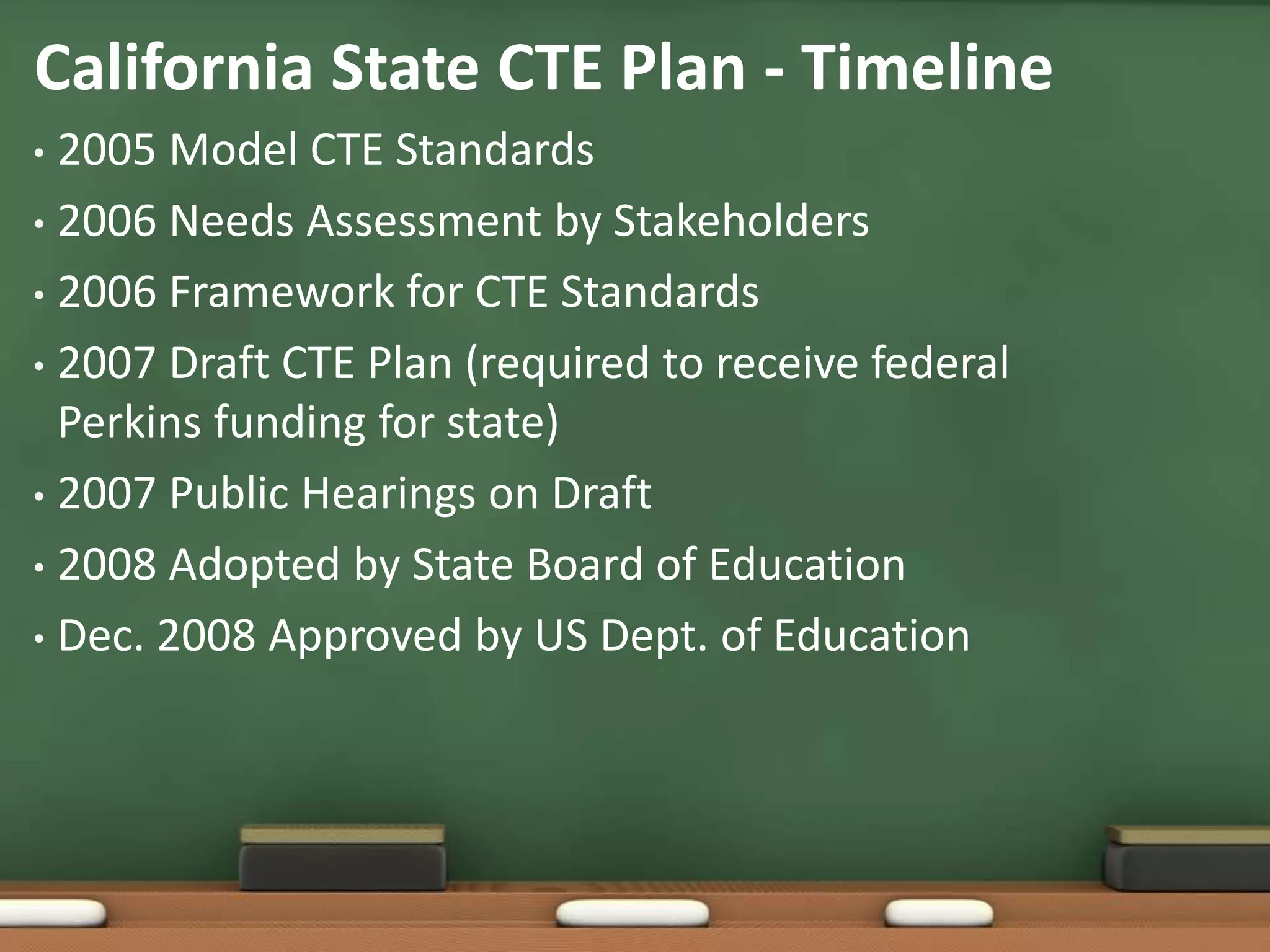
California State CTE Plan - Timeline2005 Model CTE Standards2006 Needs Assessment by Stakeholders2006 Framework for CTE Standards2007 Draft CTE Plan (required to receive federal Perkins funding for state)2007 Public Hearings on Draft2008 Adopted by State Board of EducationDec. 2008 Approved by US Dept. of Education
California State CTE PlanMajor elements:CTE Delivery Structure and EnrollmentWorkforce Development and Industry PartnershipsContext for CTE in CaliforniaDemographics, Economics, Education, PolicyVision for Building a High-Quality CTE SystemMission, Guiding Principles, Goals, IndicatorsResponses to US Dept. of Education Guide on Perkins FundingState Policies on Perkins Fundinghttp://www.schoolsmovingup.net/cs/ctep/print/htdocs/ctep/home.htm
Local CTE Plan – 2008 TimelineRequired for each LEA to receive Perkins funding for CTEStakeholder meetingsDraft planRevisionsBoard approval – submitted Oct. 2008CDE approval
Local CTE PlanMajor elements:Status of CTE Offerings LocallyProgram Goals and ObjectivesAlignment and Sequencing (including programs of study)Support for Special Populations StudentsGuidance and CounselingComprehensive Professional DevelopmentAccountability and EvaluationUse of Funds
Self-AssessmentPlease take a few minutes to pre-assess how successful you feel your CTE program is in meeting the 11 indicators for a high-quality programScale of 1-5
11 Elements of High-Quality CTE System*Leadership at All LevelsHigh-quality Curriculum and InstructionCareer Exploration and GuidanceStudent Support and Student Leadership DevelopmentIndustry Partnerships* from Ch. 3 of State CTE Plan
11 Elements - continuedSystem Alignment and CoherenceEffective Organizational DesignSystem Responsiveness to Changing Economic DemandsSkilled Faculty and Professional DevelopmentEvaluation, Accountability, and Continuous ImprovementCTE Promotion, Outreach, and Communication
Program Assessment ToolDrafted by staff at Solano County Office of EducationBased upon State CTE Plan 11 ElementsRevised and supplemented locallyElements and minimum examples of evidence to be gathered to support each sectionTimeline for completion of each section
Program Assessment Tool - continuedAt the end of each quarter, submit gathered evidence and completed comments for assigned sectionsIndustry sector meetings (one sub day) during a two-week window to work collaboratively through each element and receive additional professional developmentWorking document
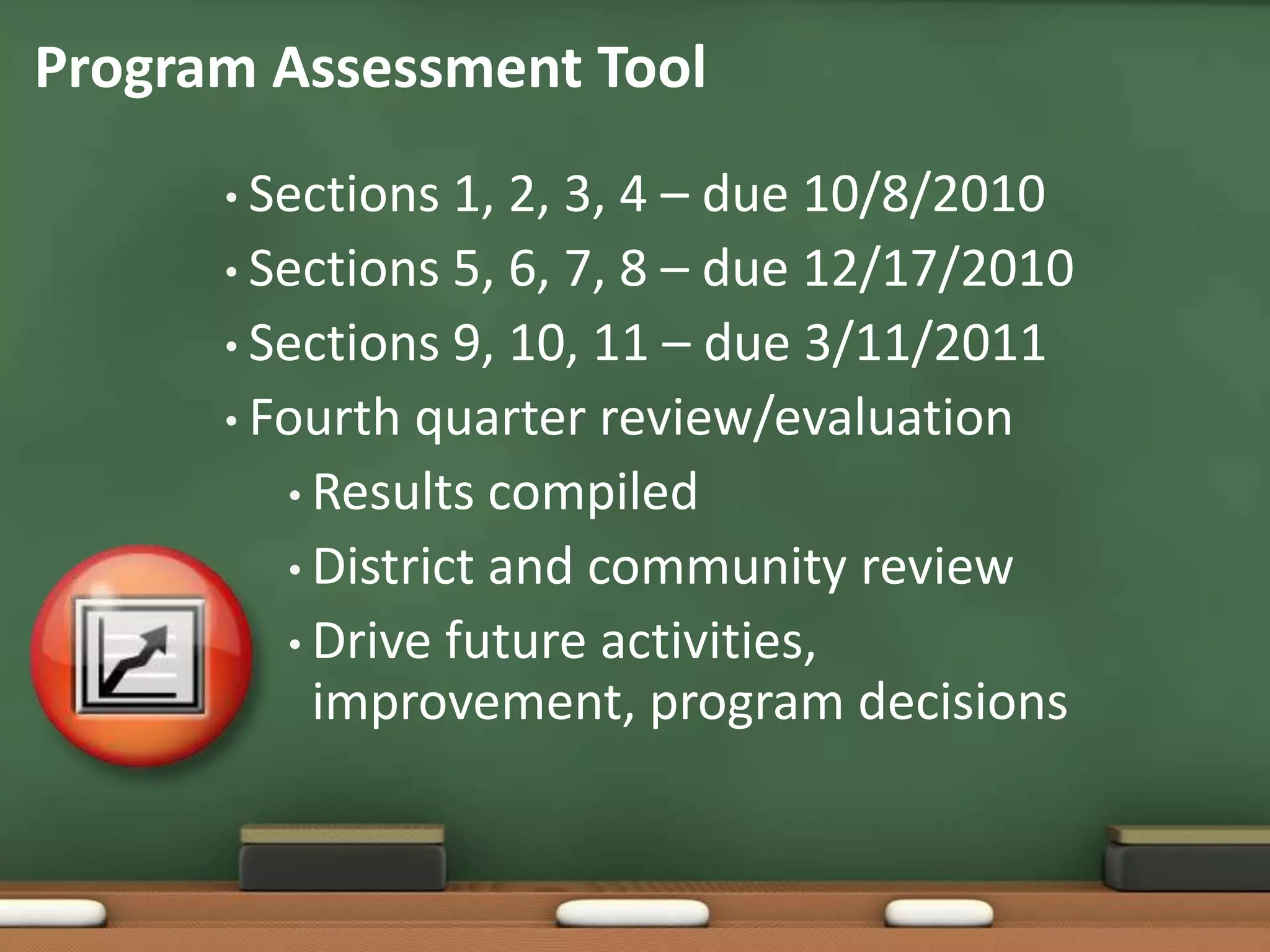
Program Assessment ToolSections 1, 2, 3, 4 – due 10/8/2010Sections 5, 6, 7, 8 – due 12/17/2010Sections 9, 10, 11 – due 3/11/2011Fourth quarter review/evaluationResults compiledDistrict and community reviewDrive future activities, improvement, program decisions
Preview	Calendar during wrap-up sessionRelated events (including future furlough days in October and March)Information regarding funding opportunities for professional development, field trips and/or supplemental equipment/instructional materials
 Q & A
BREAK!Scheduled Break from 9:45am to 10:00am
Curriculum Direction OverviewMariane DoyleCTE Coordinator
“Bring on the learning revolution”
What are your thoughts?
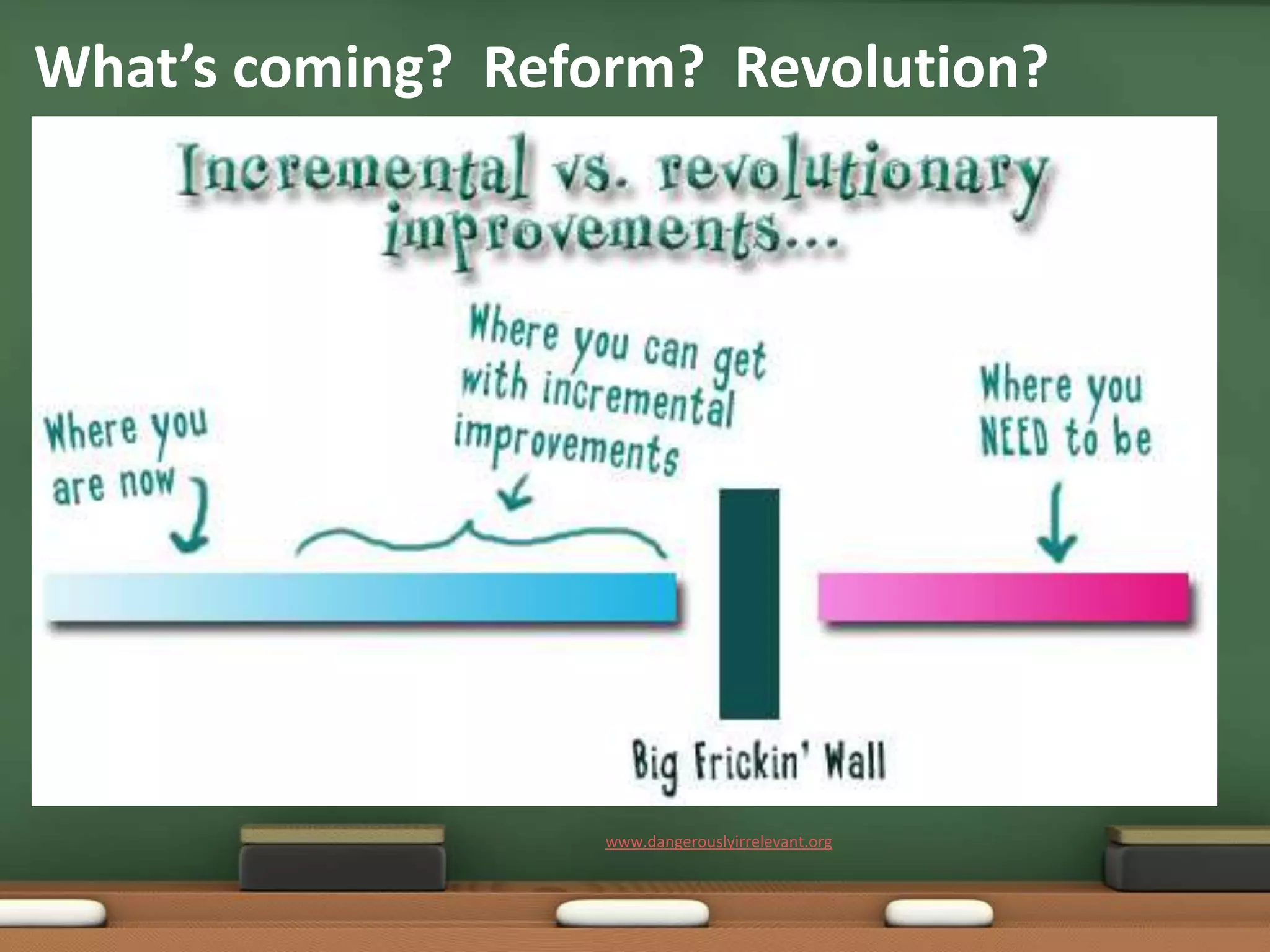
What’s coming?  Reform?  Revolution?www.dangerouslyirrelevant.org
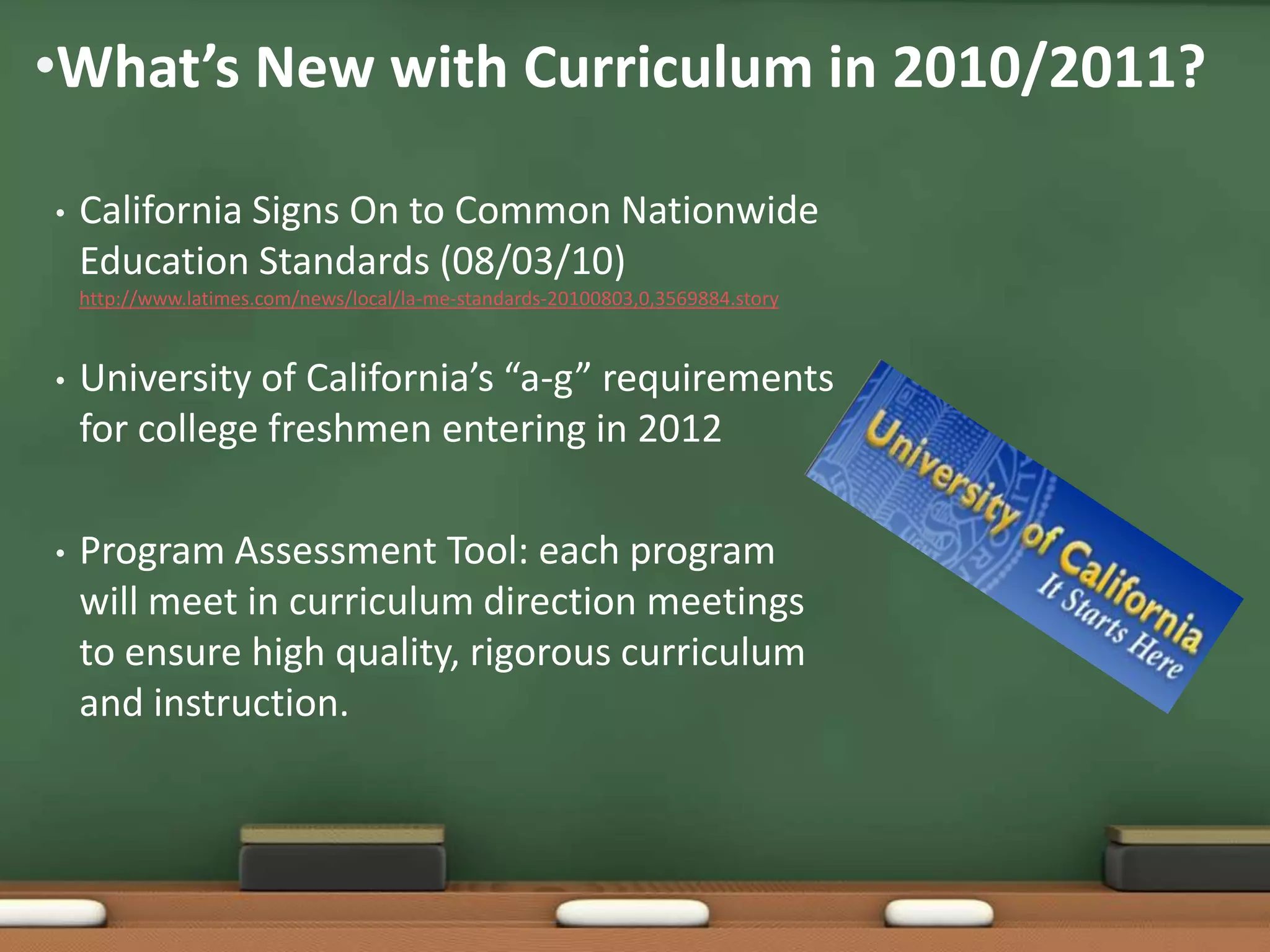
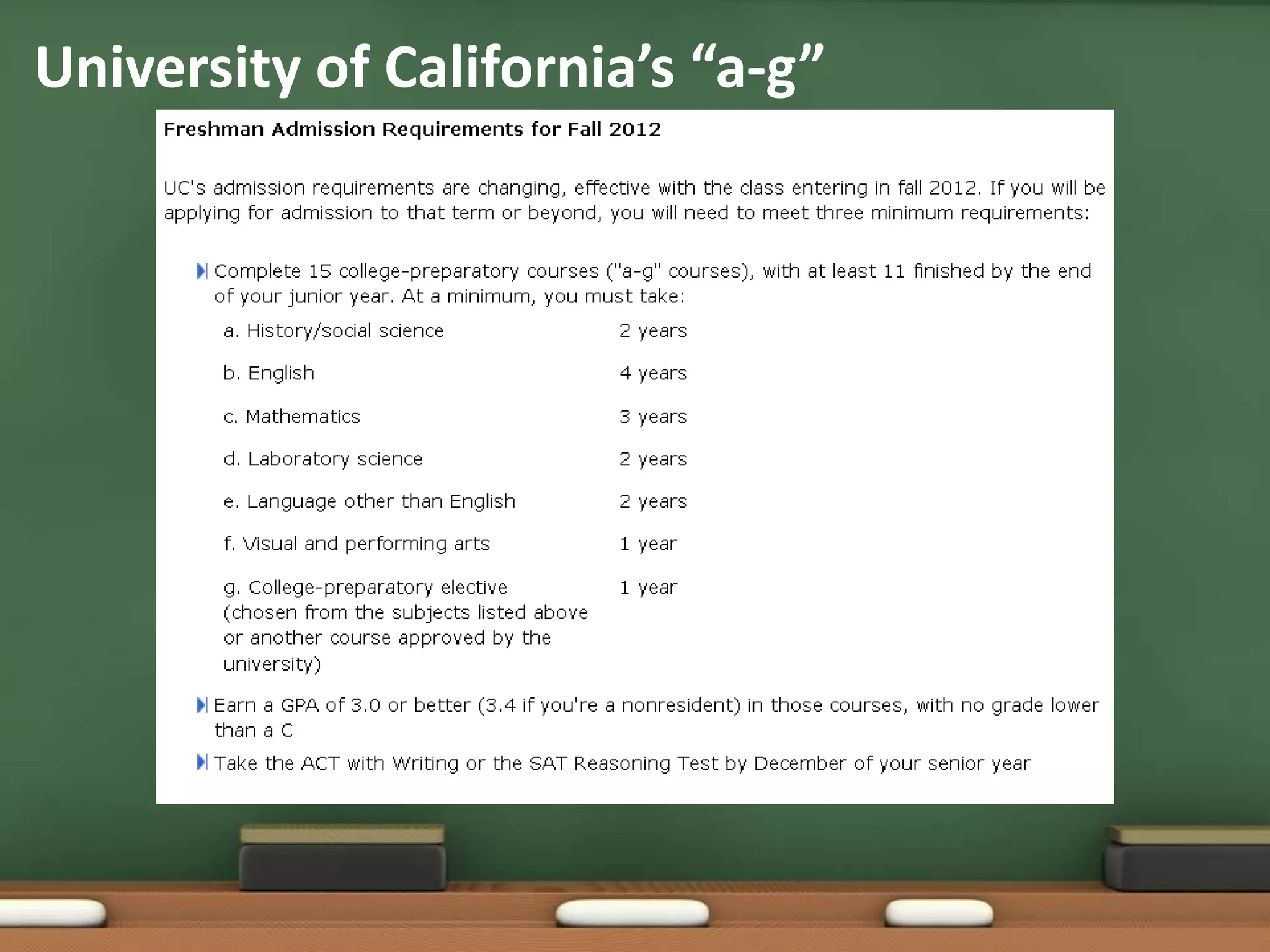
What’s New with Curriculum in 2010/2011?California Signs On to Common Nationwide Education Standards (08/03/10)   http://www.latimes.com/news/local/la-me-standards-20100803,0,3569884.storyUniversity of California’s “a-g” requirements for college freshmen entering in 2012Program Assessment Tool: each program will meet in curriculum direction meetings to ensure high quality, rigorous curriculum and instruction.
Career Technical Education Standardshttp://tinyurl.com/CTEStandardsFoundation Standards (Core Academics)Nationwide “Common Core Standards”http://www.corestandards.org/High Quality, Rigorous Curriculum (“a-g Ready”)Standards
University of California’s “a-g”
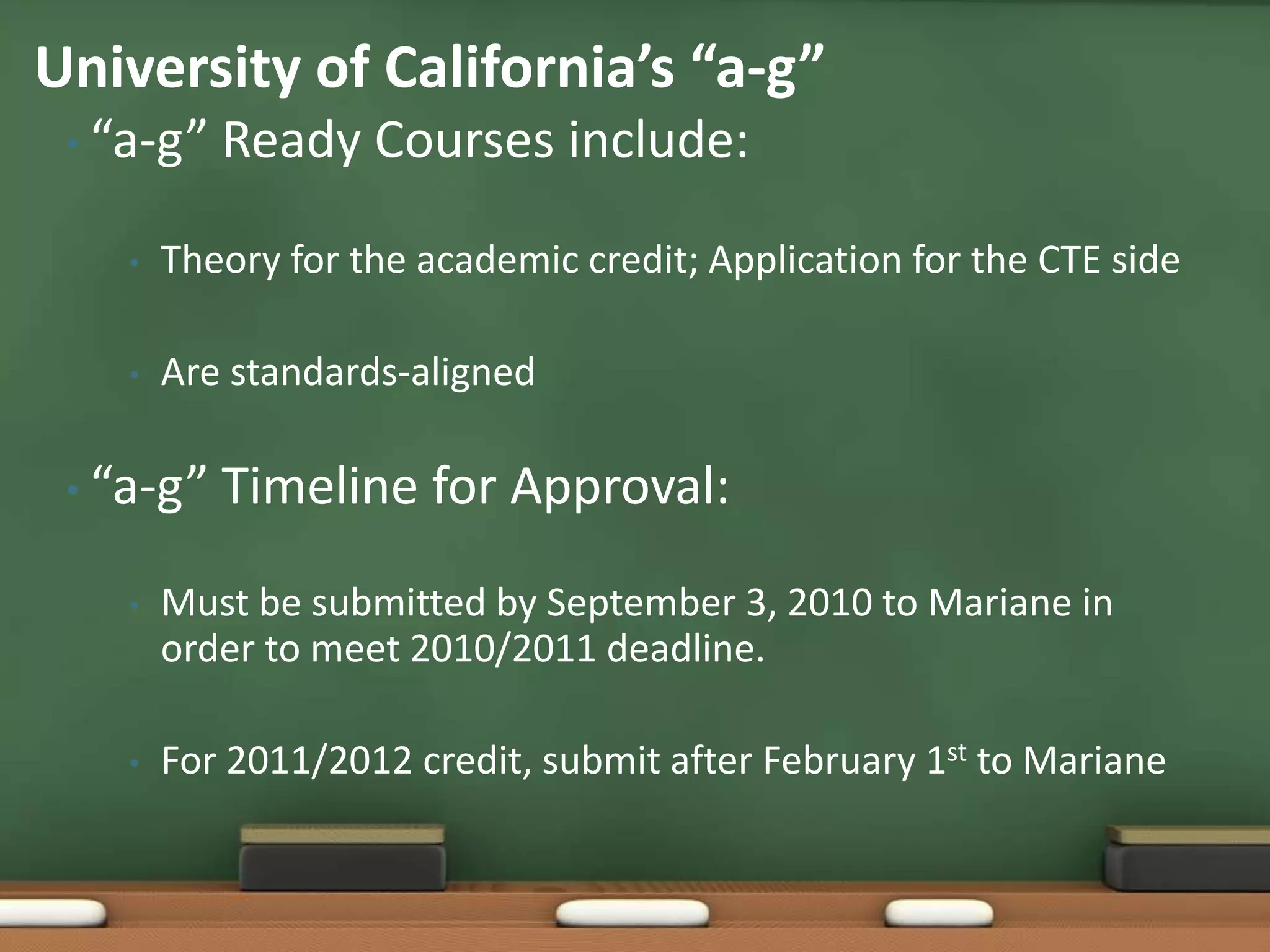
“a-g” Ready Courses include:Theory for the academic credit; Application for the CTE sideAre standards-aligned“a-g” Timeline for Approval:Must be submitted by September 3, 2010 to Mariane in order to meet 2010/2011 deadline.For 2011/2012 credit, submit after February 1st to MarianeUniversity of California’s “a-g”
Evaluate CurriculumProvide Guest SpeakersProvide Work-Based Learning OpportunitiesScholarships, Financial Support, EquipmentHow do industry professionals contribute to your program?Industry Connections
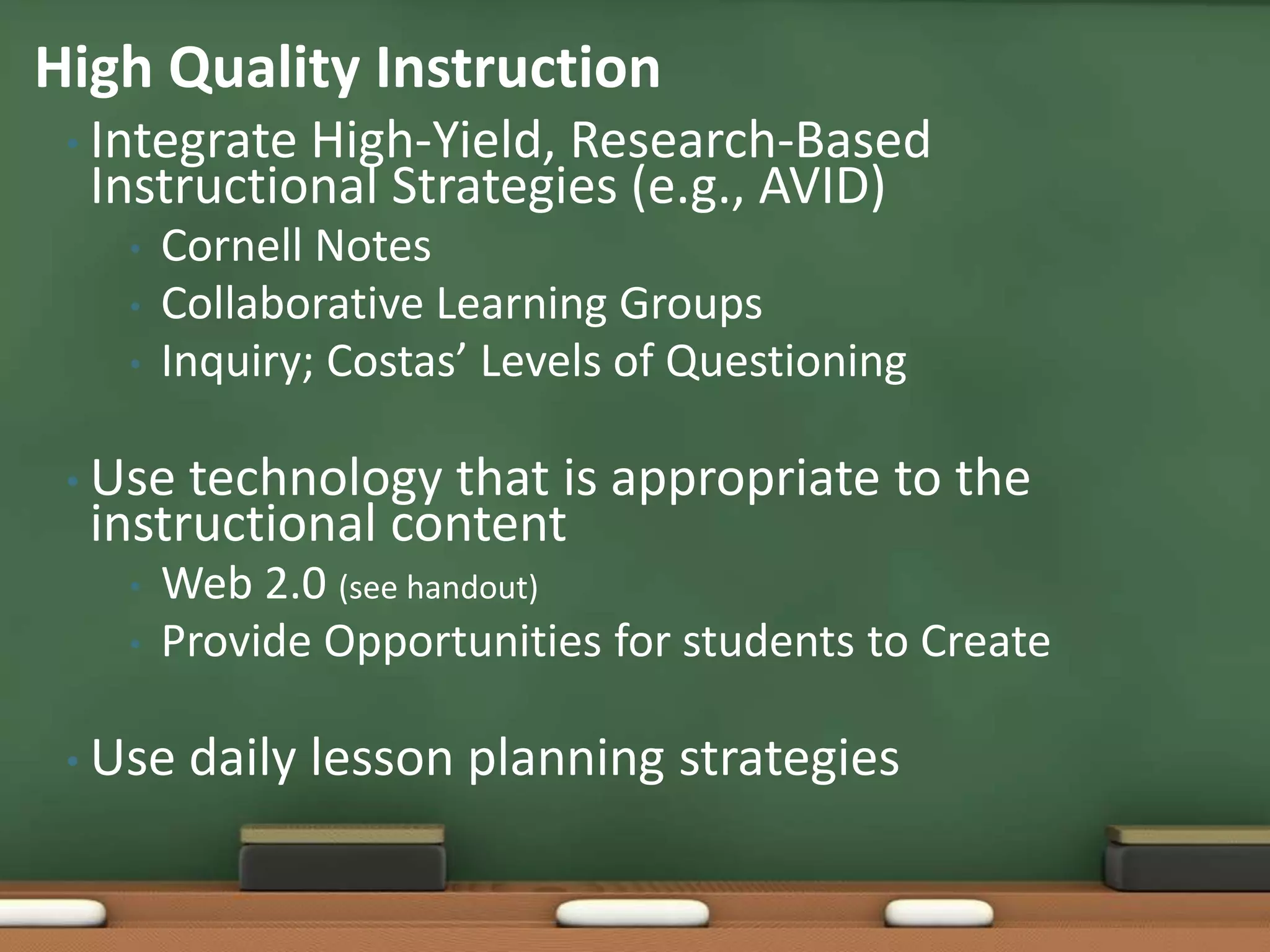
Integrate High-Yield, Research-Based Instructional Strategies (e.g., AVID)Cornell NotesCollaborative Learning GroupsInquiry; Costas’ Levels of QuestioningUse technology that is appropriate to the instructional contentWeb 2.0 (see handout)Provide Opportunities for students to CreateUse daily lesson planning strategiesHigh Quality Instruction
More Shift Happens…Integrating Technology with Pedagogy
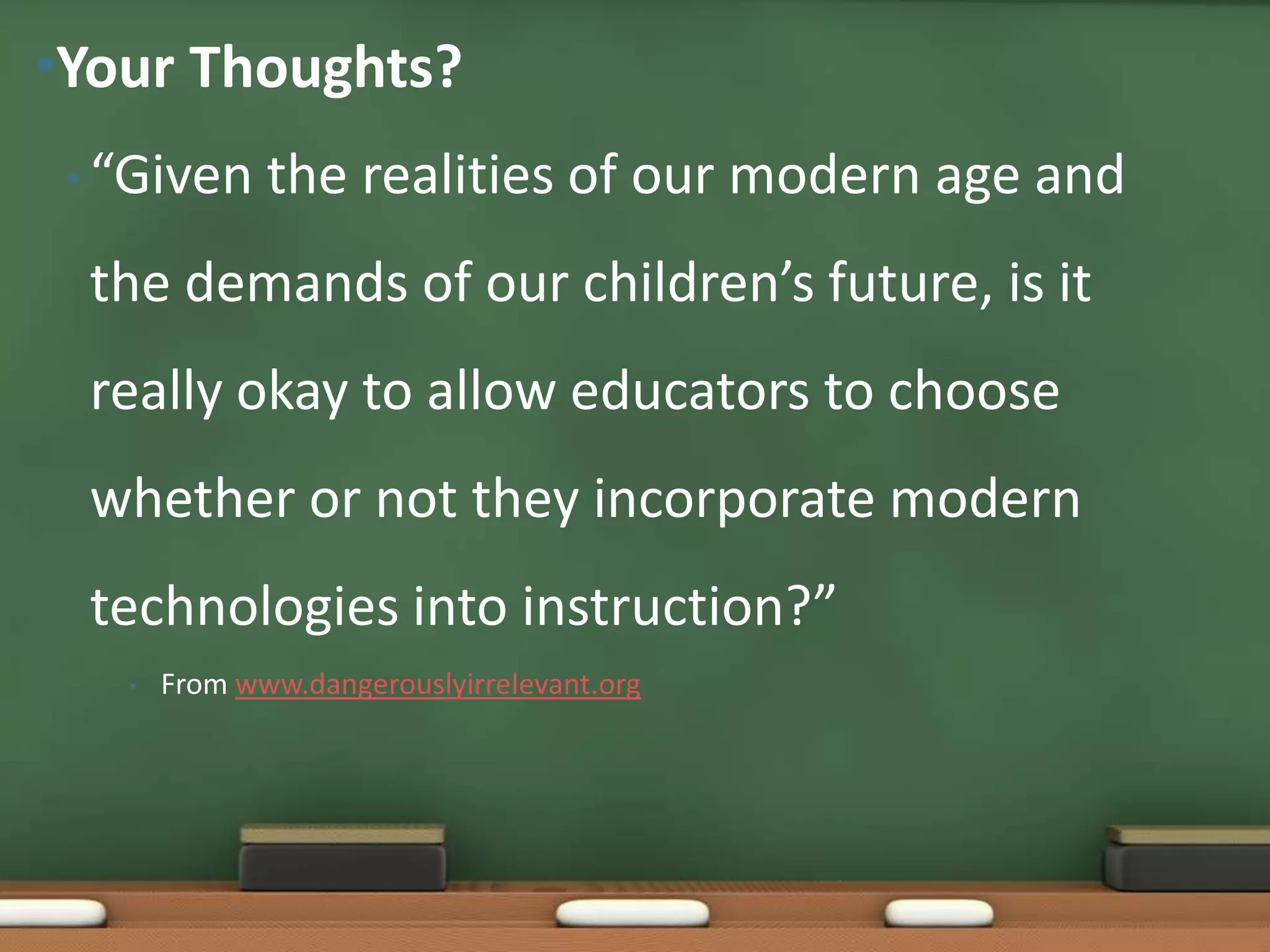
“Given the realities of our modern age and the demands of our children’s future, is it really okay to allow educators to choose whether or not they incorporate modern technologies into instruction?”From www.dangerouslyirrelevant.orgYour Thoughts?
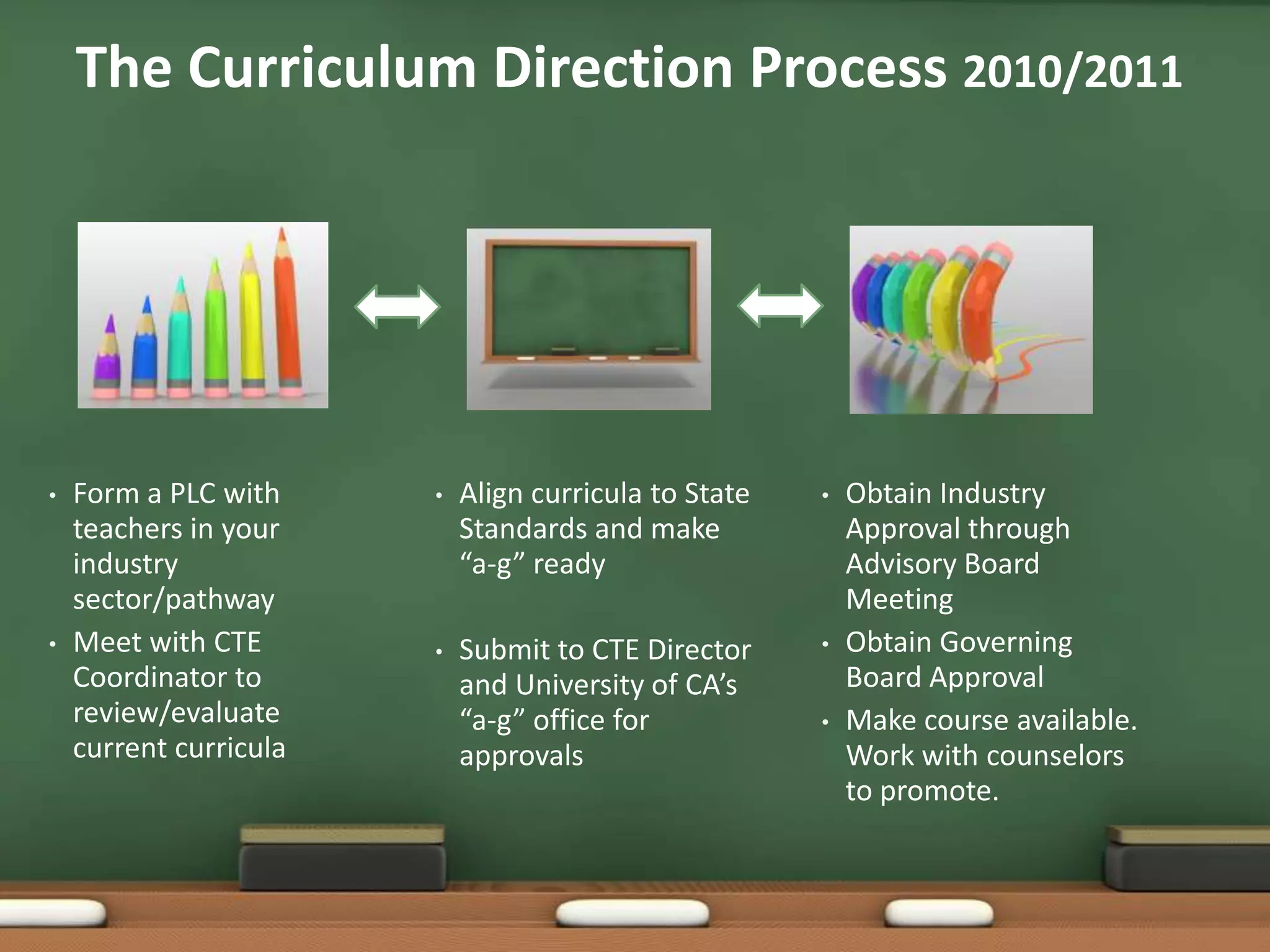
Form a PLC with teachers in your industry sector/pathwayMeet with CTE Coordinator to review/evaluate current curriculaAlign curricula to State Standards and make “a-g” readySubmit to CTE Director and University of CA’s “a-g” office for approvalsObtain Industry Approval through Advisory Board MeetingObtain Governing Board Approval Make course available.  Work with counselors to promote.The Curriculum Direction Process 2010/2011
Counseling and Questions
LUNCH!Scheduled Lunch from 11:30am to 12:15pmPlease return promptly!
DataDiane WalkerCTE Coordinator
Carl D. Perkins Career and Technical Education Improvement Act of 2006Supplemental federal funding for career-technical education Nine mandatory program goals:Integration of core academic and CTE skillsIntegration of All Aspects of the Industry and work-based learningEmbedded use of technology (both industry and computer) for teachers and students High-quality, sustained, intensive professional development for teachers, counselors, and administrators to meet program goalsAssessment of the programs, including meeting needs of special populations students (6 types)Prepare special populations students for high-wage, high-skill, or high-demand occupations leading to self-sufficiencyInitiate, improve, expand, or modernize quality CTE programsProvide effective CTE services of sufficient size and scopeCreate and maintain post-secondary connections
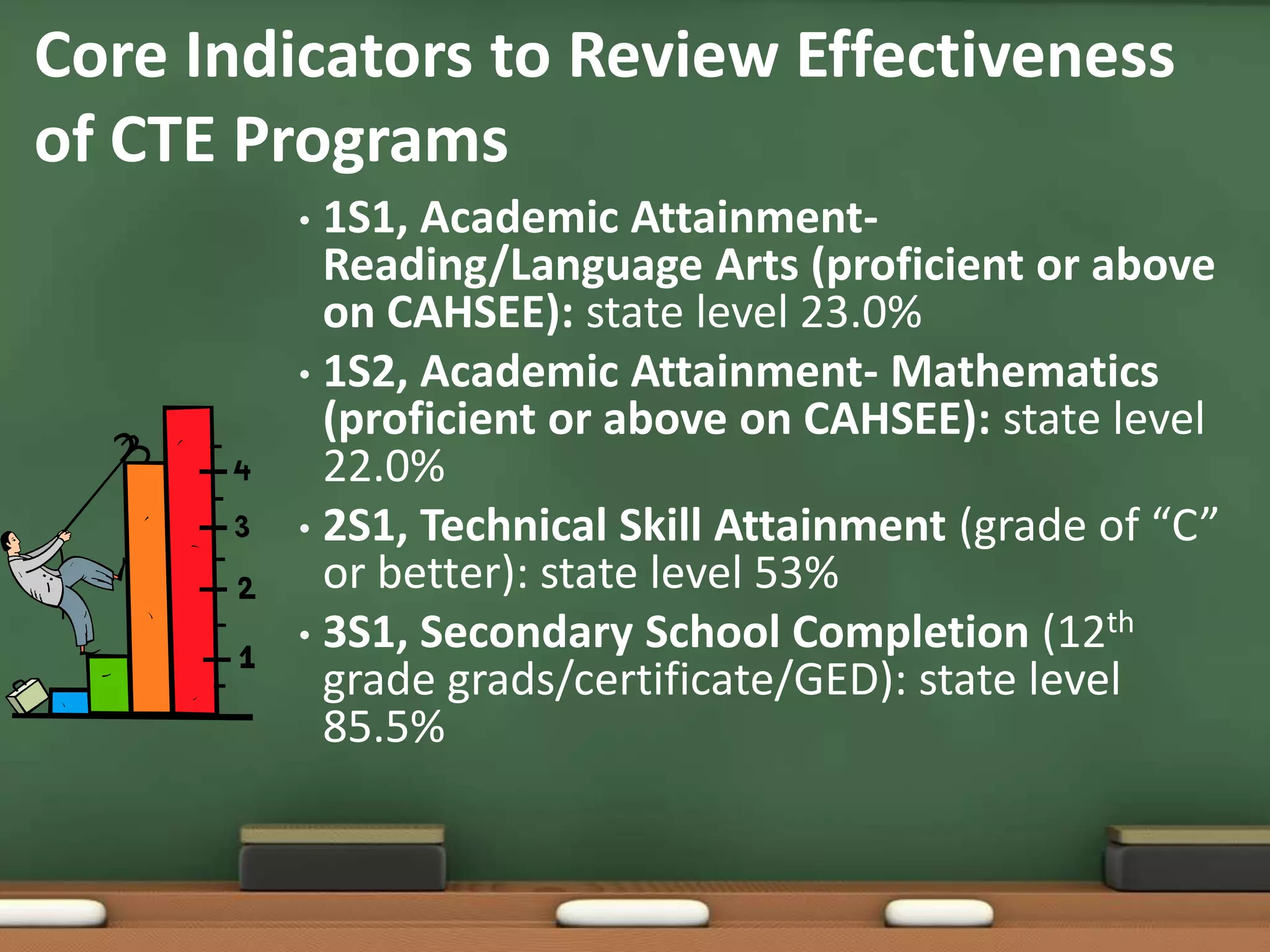
Core Indicators to Review Effectiveness of CTE Programs1S1, Academic Attainment- Reading/Language Arts (proficient or above on CAHSEE): state level 23.0% 1S2, Academic Attainment- Mathematics (proficient or above on CAHSEE): state level 22.0% 2S1, Technical Skill Attainment (grade of “C” or better): state level 53%3S1, Secondary School Completion (12th grade grads/certificate/GED): state level 85.5%
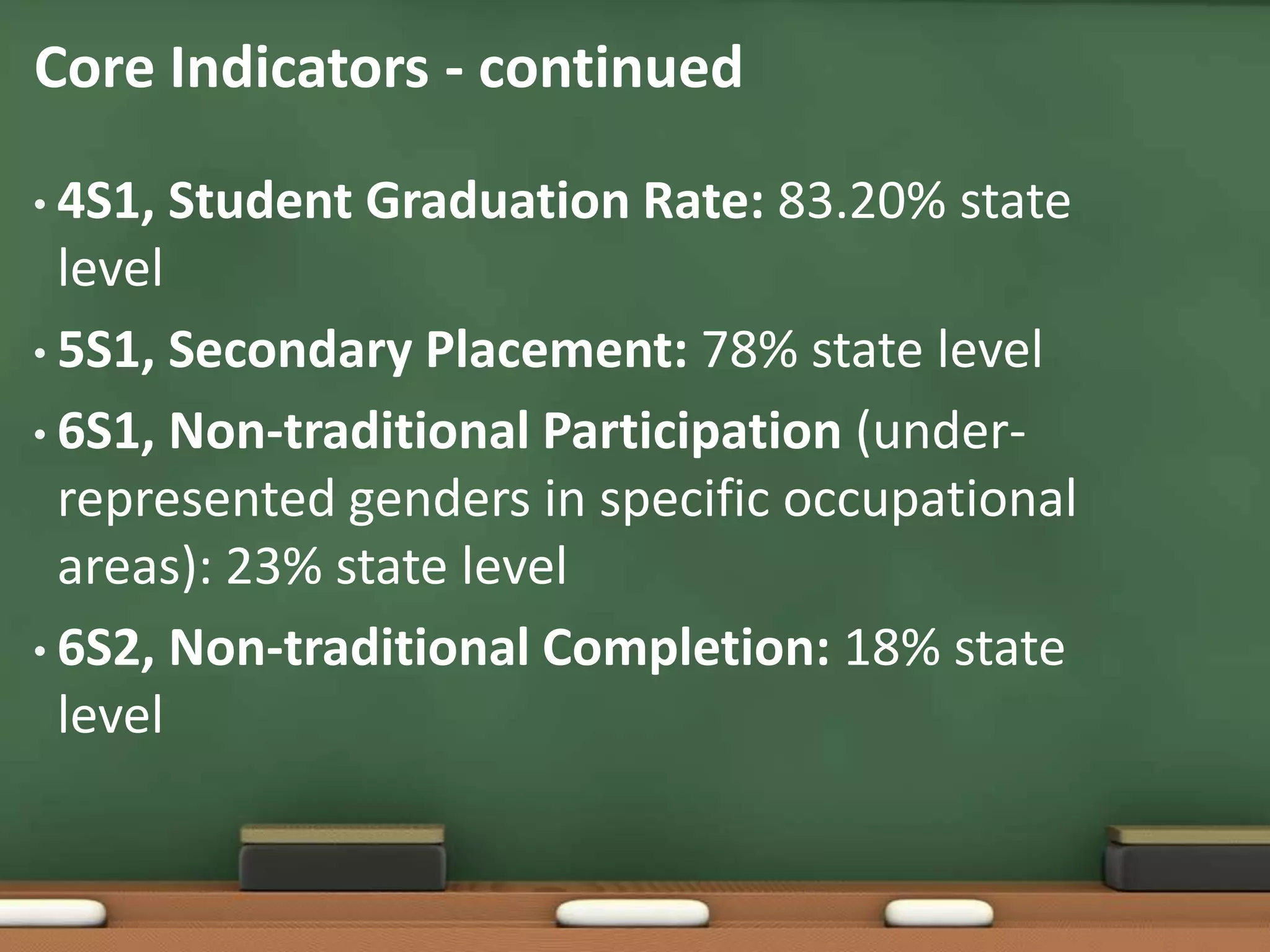
Core Indicators - continued4S1, Student Graduation Rate: 83.20% state level5S1, Secondary Placement: 78% state level6S1, Non-traditional Participation (under-represented genders in specific occupational areas): 23% state level 6S2, Non-traditional Completion: 18% state level
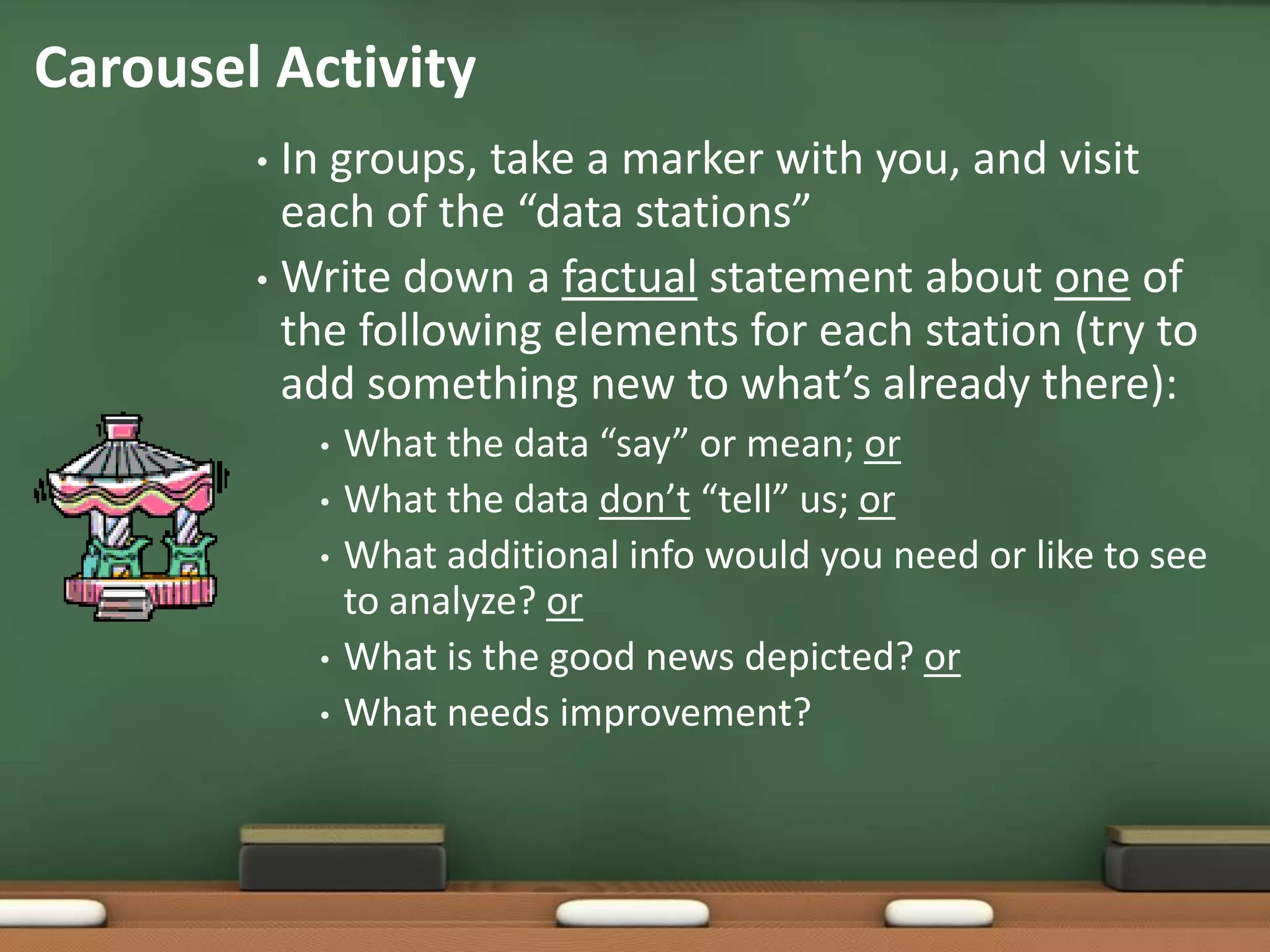
Carousel ActivityIn groups, take a marker with you, and visit each of the “data stations” Write down a factual statement about one of the following elements for each station (try to add something new to what’s already there):What the data “say” or mean; orWhat the data don’t “tell” us; orWhat additional info would you need or like to see to analyze? orWhat is the good news depicted? orWhat needs improvement?
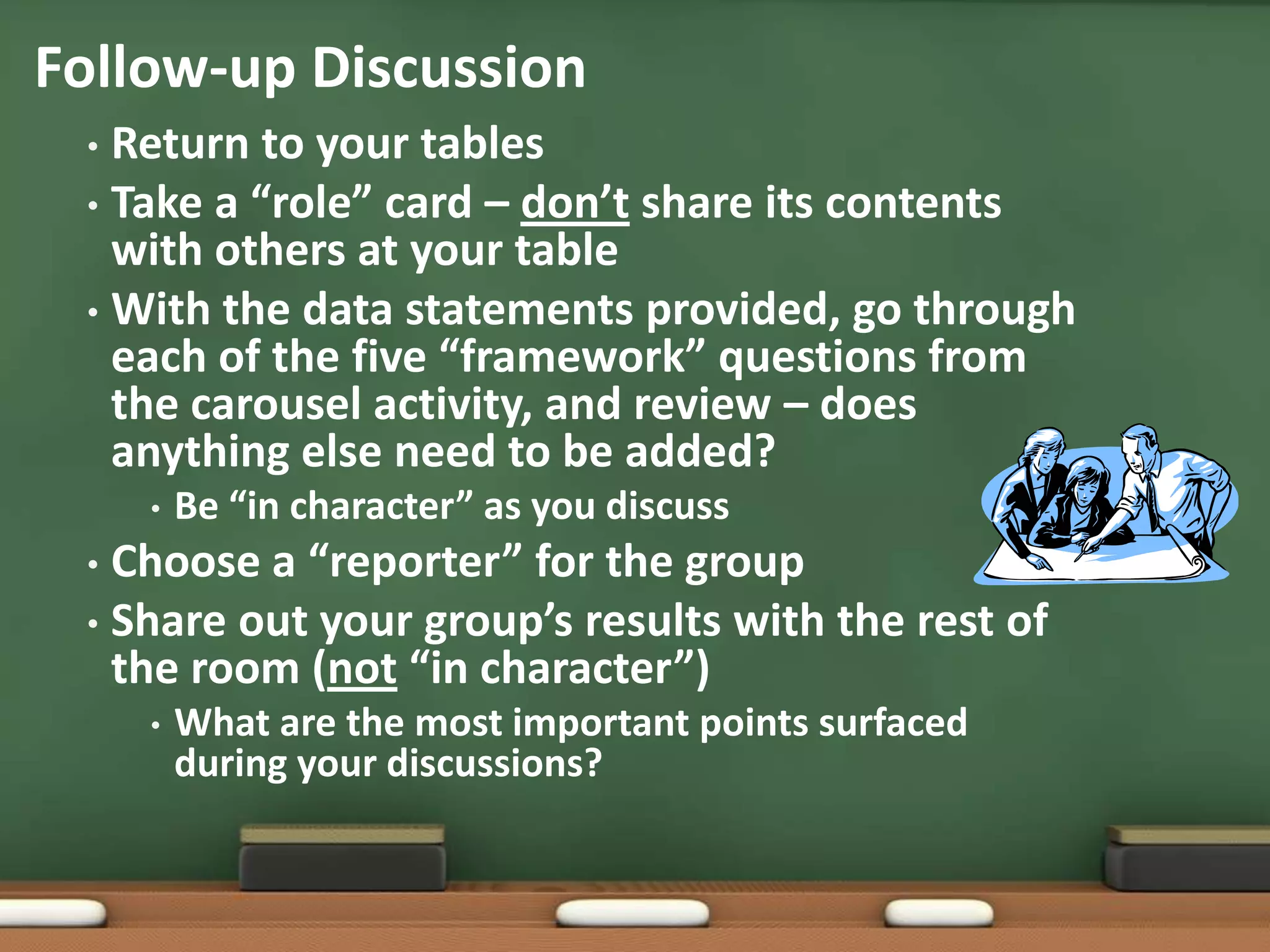
Follow-up DiscussionReturn to your tablesTake a “role” card – don’t share its contents with others at your tableWith the data statements provided, go through each of the five “framework” questions from the carousel activity, and review – does anything else need to be added?Be “in character” as you discussChoose a “reporter” for the groupShare out your group’s results with the rest of the room (not “in character”)What are the most important points surfaced during your discussions?
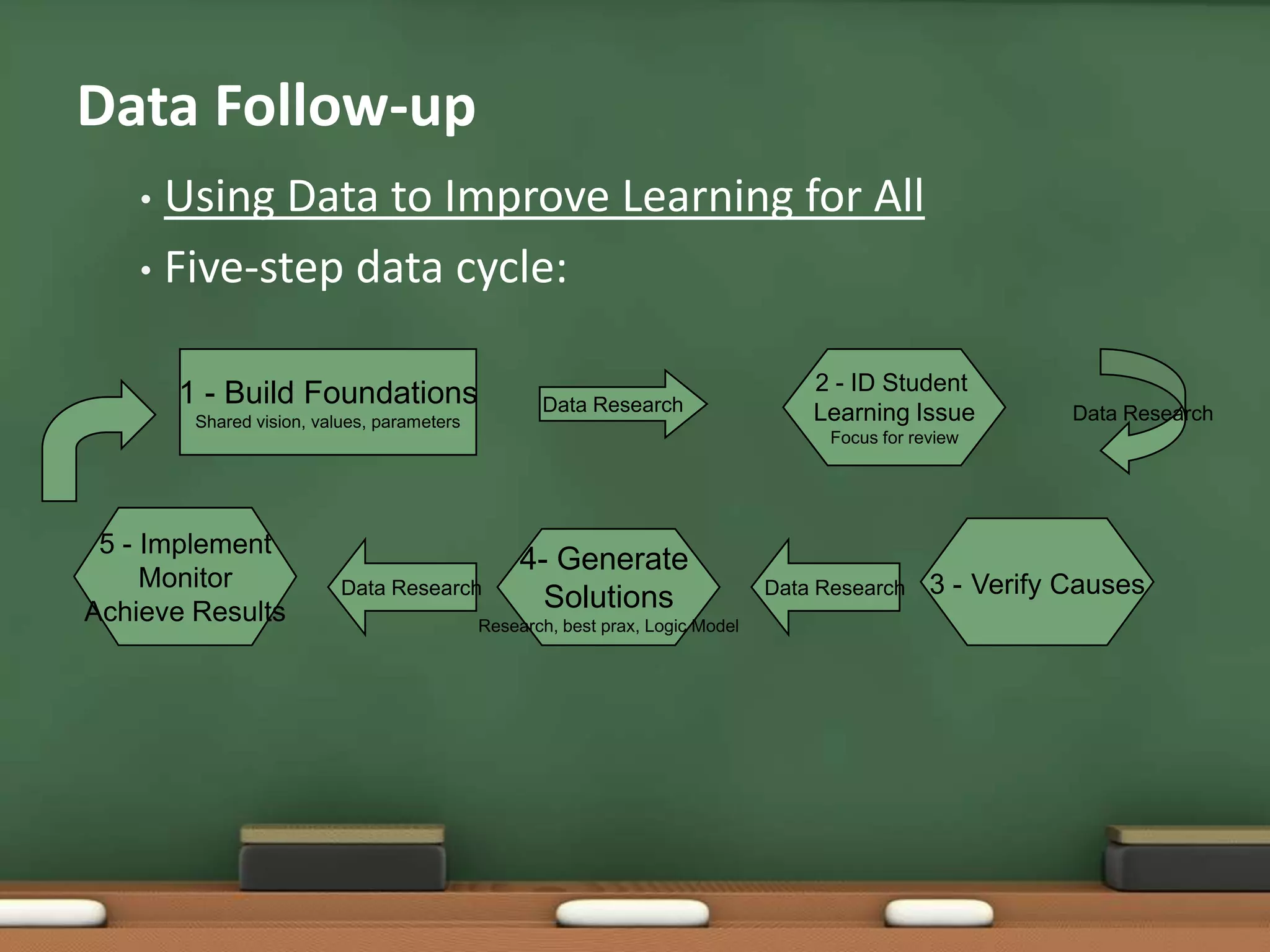
Data Follow-upUsing Data to Improve Learning for AllFive-step data cycle:1 - Build FoundationsShared vision, values, parameters2 - ID Student Learning IssueFocus for reviewData ResearchData Research5 - ImplementMonitorAchieve Results3 -Verify Causes4- Generate SolutionsResearch, best prax, Logic ModelData ResearchData Research
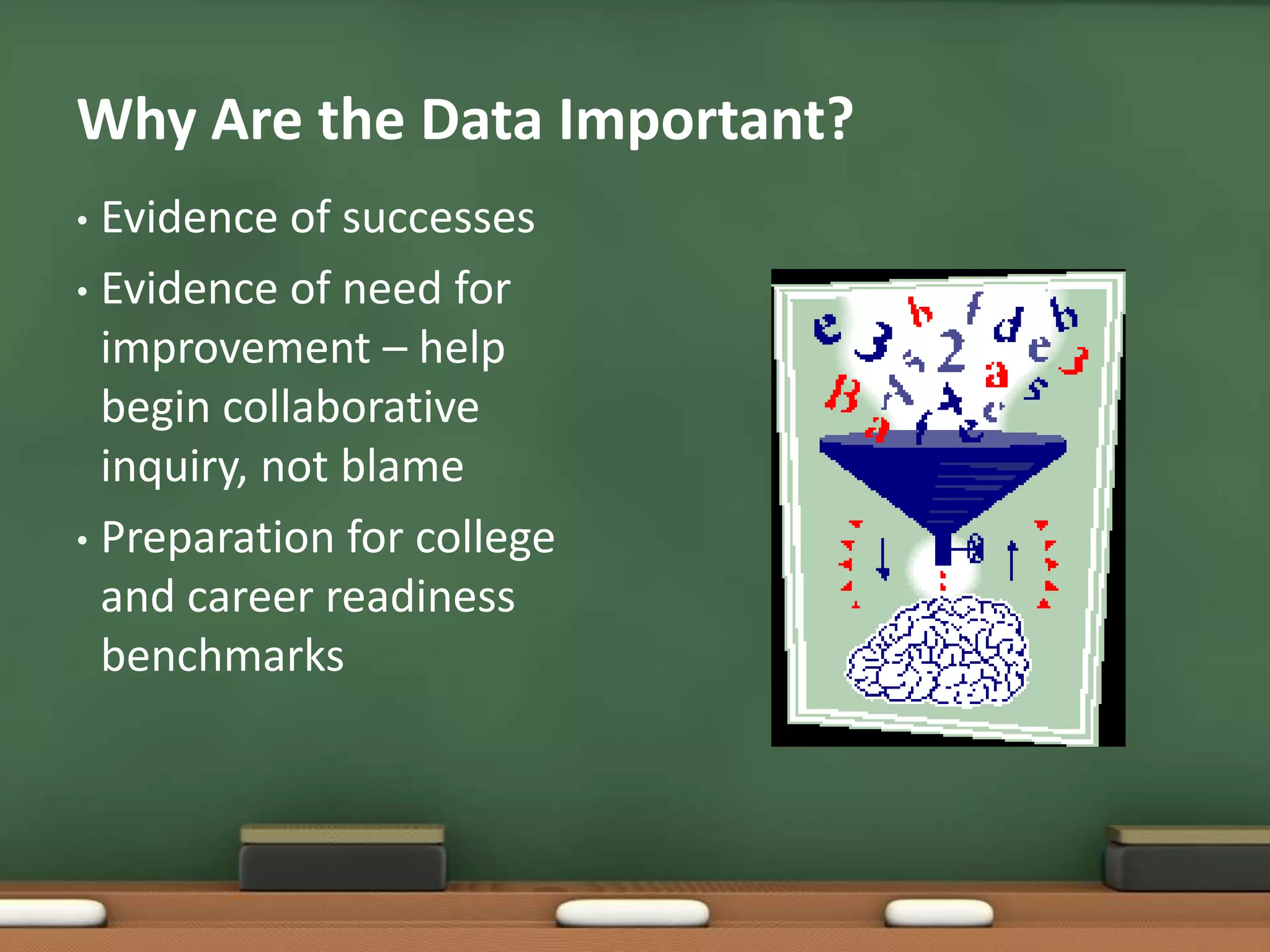
Why Are the Data Important?Evidence of successesEvidence of need for improvement – help begin collaborative inquiry, not blamePreparation for college and career readiness benchmarks
“We use data to move from a culture of blame to a culture of wonder.  We wonder why something is – or is not – occurring rather than ascribing blame.  This wonder leads us to ask better questions and attempts to get at the causes of behavior.”Kay McClenney
What Is Career Readiness?ACTE White PaperAchieve White PaperJigsaw reading activity – in groups, then share out
Jigsaw Activity Framework QuestionsWhat are 3 recommended skill sets for students to acquire in order to be career-ready?How do these skills differ from those required for college readiness?How do students benefit from being both college and career ready?How will you act to prepare students for both college and career readiness?
Quick-Write Write free-form for 3 minutes on your response to this prompt:How will the “career readiness” movement affect the day-to-day lives of my students in the coming five years?  Will it prepare them for jobs of the future?  Why or why not?
Mariane DoyleCTE CoordinatorFuture Job Trends
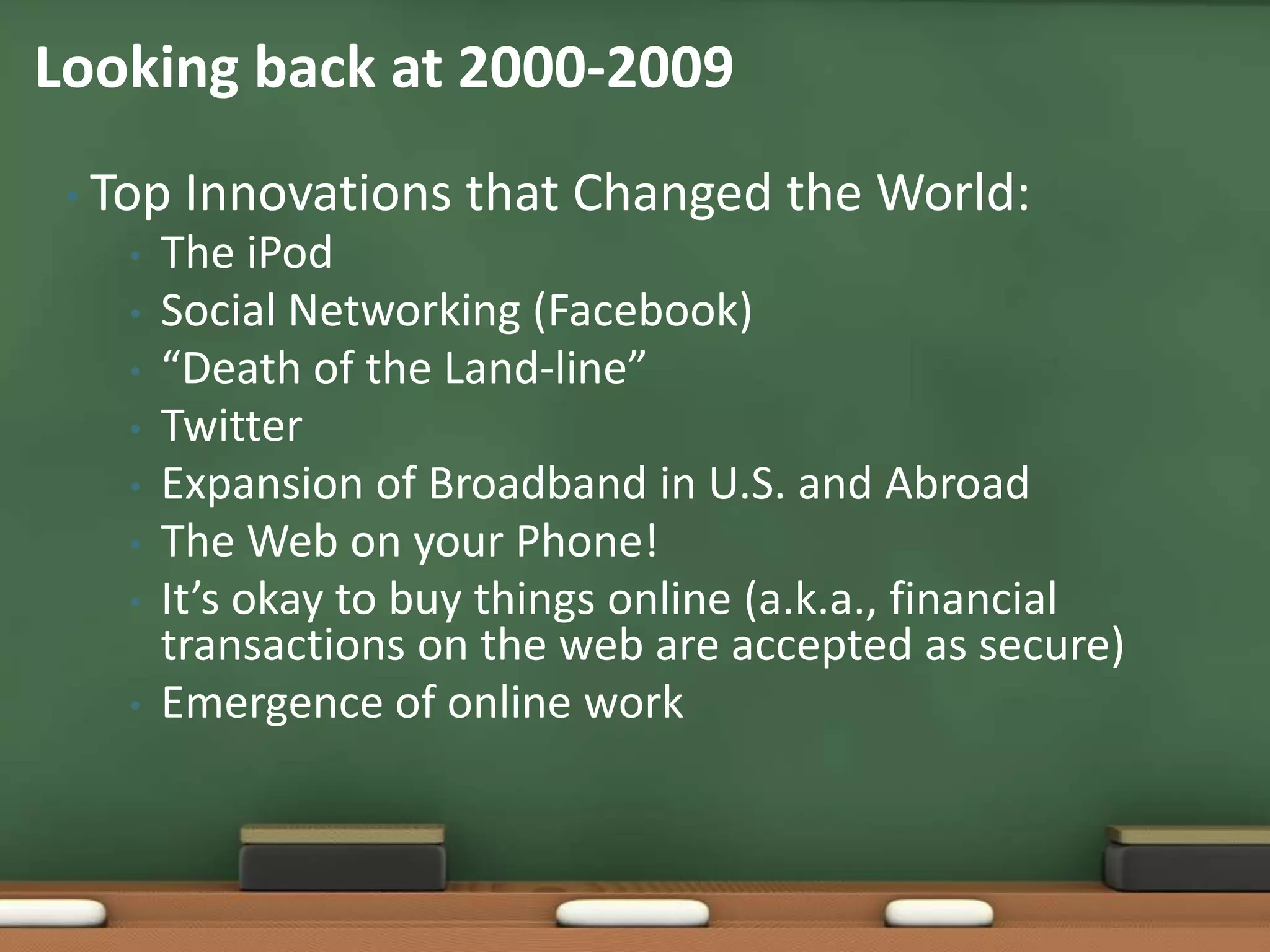
Top Innovations that Changed the World:The iPodSocial Networking (Facebook)“Death of the Land-line”TwitterExpansion of Broadband in U.S. and AbroadThe Web on your Phone!It’s okay to buy things online (a.k.a., financial transactions on the web are accepted as secure)Emergence of online workLooking back at 2000-2009
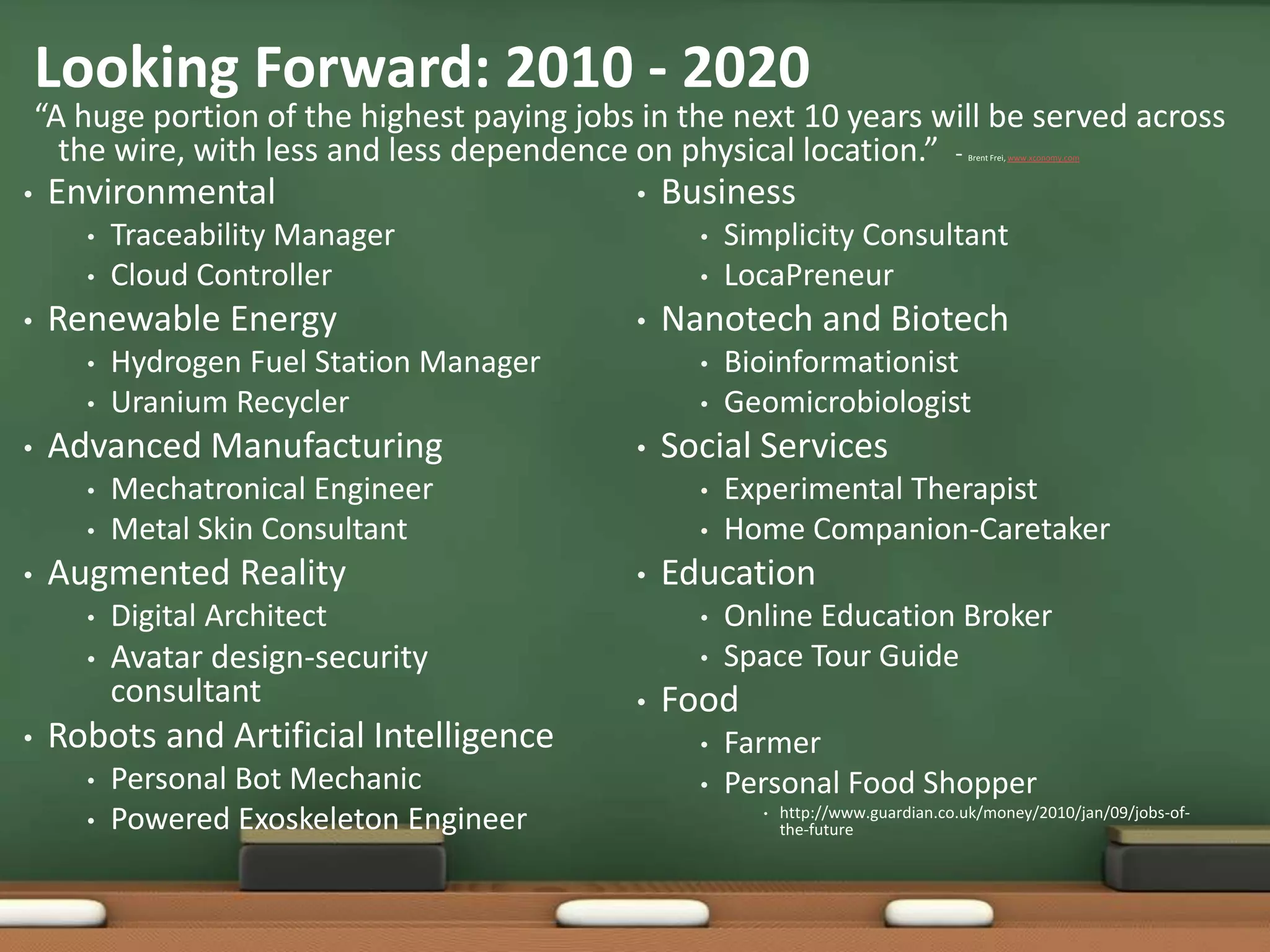
“A huge portion of the highest paying jobs in the next 10 years will be served across the wire, with less and less dependence on physical location.”  - Brent Frei, www.xconomy.comEnvironmentalTraceability ManagerCloud ControllerRenewable EnergyHydrogen Fuel Station ManagerUranium RecyclerAdvanced ManufacturingMechatronical EngineerMetal Skin ConsultantAugmented RealityDigital ArchitectAvatar design-security consultantRobots and Artificial IntelligencePersonal Bot MechanicPowered Exoskeleton EngineerBusinessSimplicity ConsultantLocaPreneurNanotech and BiotechBioinformationistGeomicrobiologistSocial ServicesExperimental TherapistHome Companion-CaretakerEducationOnline Education BrokerSpace Tour GuideFoodFarmerPersonal Food Shopperhttp://www.guardian.co.uk/money/2010/jan/09/jobs-of-the-futureLooking Forward: 2010 - 2020
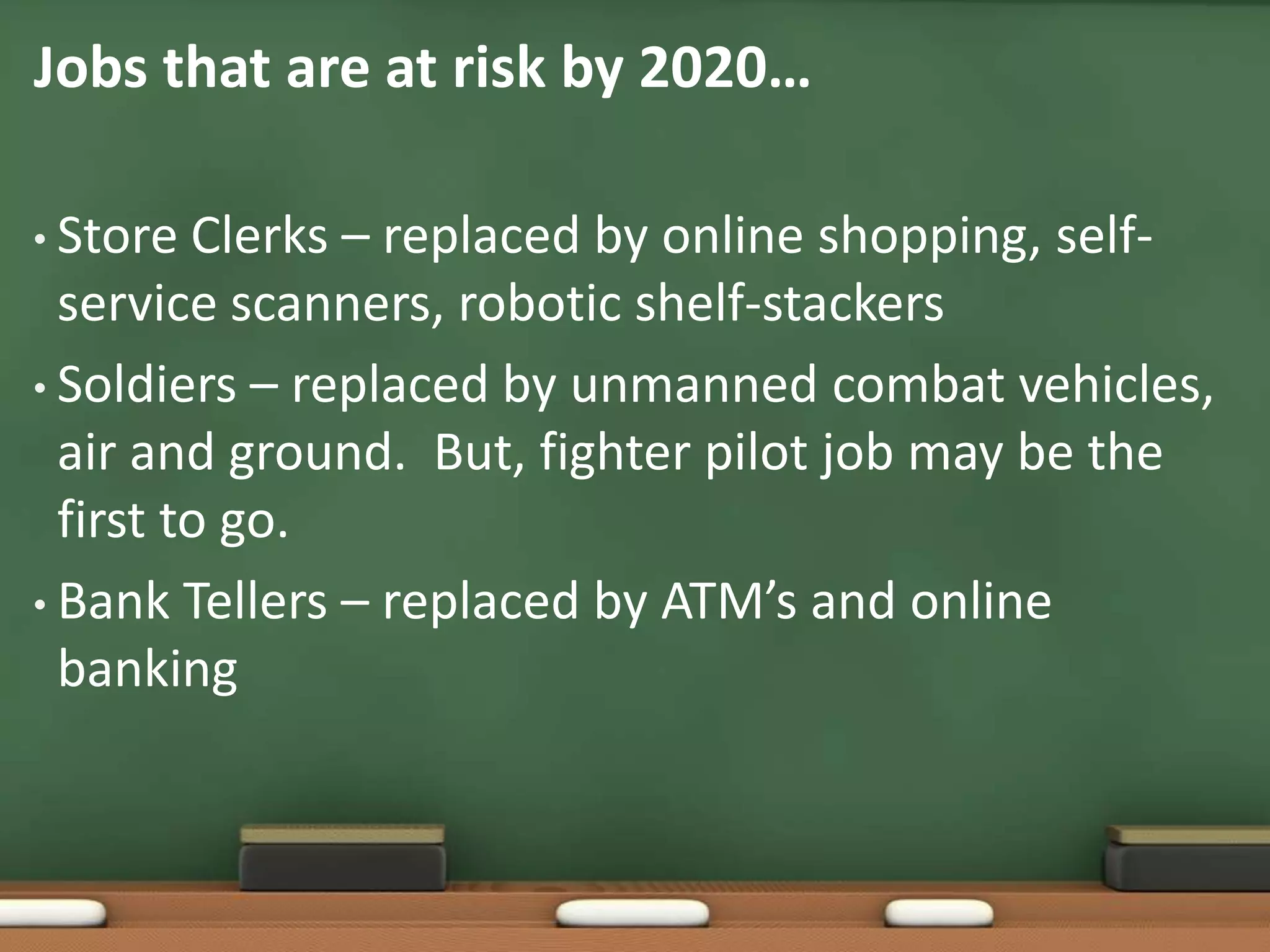
Jobs that are at risk by 2020…Store Clerks – replaced by online shopping, self-service scanners, robotic shelf-stackers Soldiers – replaced by unmanned combat vehicles, air and ground.  But, fighter pilot job may be the first to go.Bank Tellers – replaced by ATM’s and online banking
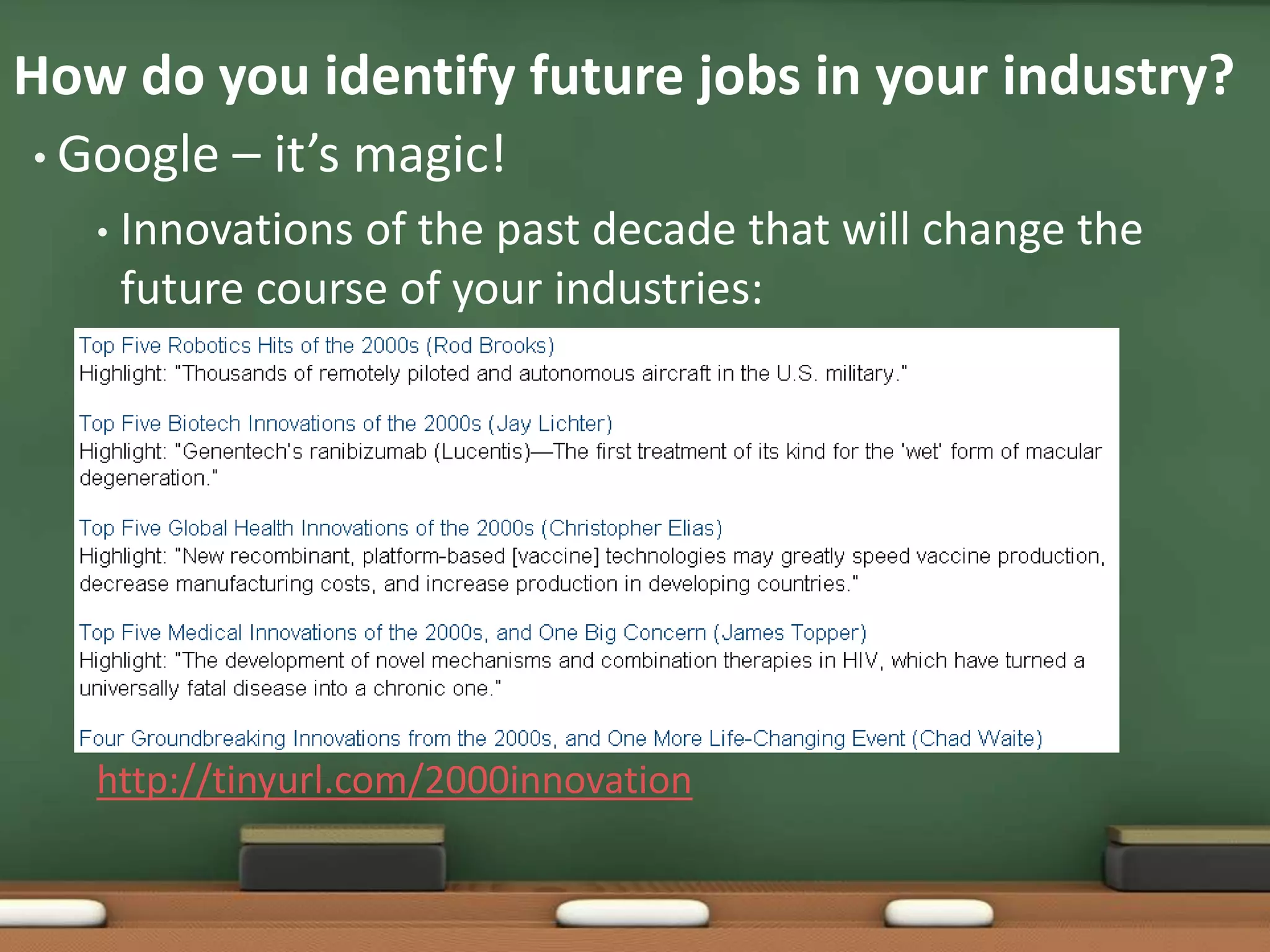
How do you identify future jobs in your industry?Google – it’s magic!Innovations of the past decade that will change the future course of your industries:http://tinyurl.com/2000innovation
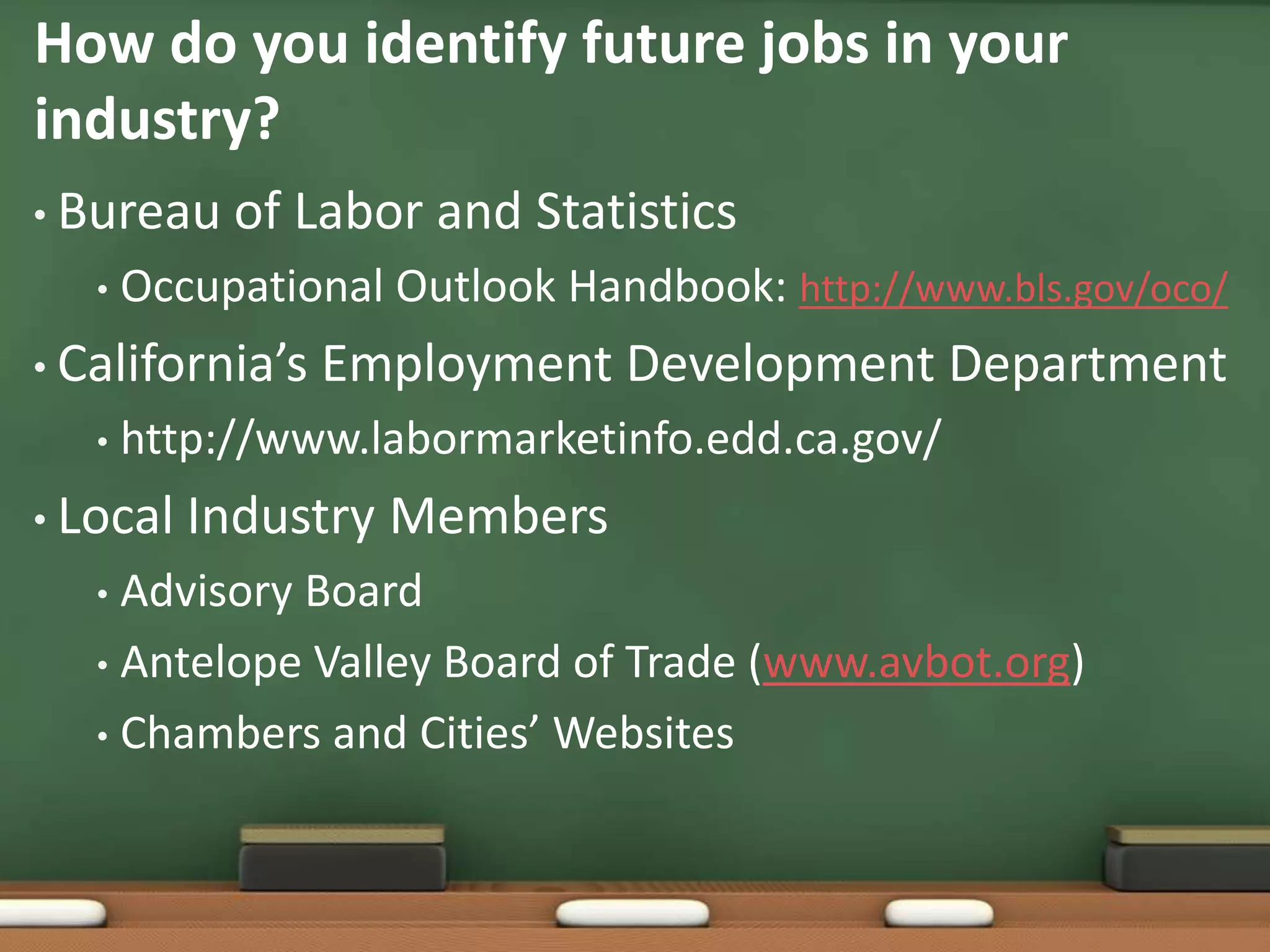
How do you identify future jobs in your industry?Bureau of Labor and StatisticsOccupational Outlook Handbook: http://www.bls.gov/oco/California’s Employment Development Departmenthttp://www.labormarketinfo.edd.ca.gov/Local Industry MembersAdvisory BoardAntelope Valley Board of Trade (www.avbot.org) Chambers and Cities’ Websites
How do YOU identify future jobs in your industry?
What does this mean for your classes, programs, curricula?  Changes?
CTE CalendarEquipment RequestsTrip RequestsWrap-Up.
HAVE A GREAT YEAR!Thank you for your attention today.  We look forward to working with each of you this year to increase student achievement through CTE!Adult Program Teachers – Meet with Andra in D-2

Career Technical Educators In Service Presentation

  • 1.
    Welcome to theCareer Technical Education In-Service August 2010By PresenterMedia.com
  • 2.
    Today’s AgendaCareer TechnicalEducation GoalsWelcome Back, Introductions, Overview of CTE, and Five District Focus Areas8:00amProgram Assessment ToolOverview – LEA Plan, CTE Plan; Self-Assessment; Overview of Tool and Implementation8:45amCurriculum Direction Overview; Counseling and QuestionsWhat to Expect , Goals, Articulation, a-g10:00amDataOverview, ACTE Career Readiness12:15pmFuture Job TrendsWrap up 1:15pm
  • 3.
    Welcome Back! (Betsy McKinstry, CTE Director)IntroductionsPop Quiz! How Well Do You Know CTE?Welcome Back and Introductions
  • 4.
    Betsy McKinstryCTE DirectorCareerTechnical Education Goals
  • 5.
    “The task beforeus is an enormous one, and it is clear that we must embrace new, innovative approaches to educational transformation that are likely to lead to highly successful outcomes for students, families and communities.”-State Superintendent of Instruction Jack O’Connell
  • 6.
    IntroductionName School SiteCourse Did you take a CTE course in high school? What was the course? How is that high school CTE course related to your current job?
  • 8.
  • 9.
    It’s an economicissue when the unemployment rate for folks who’ve never gone to college is almost double what it is for those who have gone to college.  It’s an economic issue when eight in 10 new jobs will require workforce training or a higher education by the end of this decade.  It’s an economic issue when countries that out-educate us today are going to out-compete us tomorrow. – President Obama, July 2010
  • 10.
    Education Requirements 2025PublicPolicy Institute of California
  • 11.
    21stCentury Student Outcomesand Support Systems
  • 12.
    District Five FocusAreas Math English Special Education AVID English Language Learners
  • 13.
    The Engineering programshave already demonstrated a high post-secondary educational enrollment rate as compared to all Career Technical Education programs in the district as well as in comparison to the AVID program that has been implemented district-wide. The data is repeated below in chart form to further illustrate this significant achievement.
  • 14.
    Our CareerTechnical Education Programs have effectively supported the closing of the achievement gap for all sub-groups qualifying as “at risk” or “underrepresented”. Students in our programs have consistently improved their standardized test scores and have more than doubled the achievement rates in the State of California. The chart below illustrates this growth and compares our programs’ students to the State of California’s data as demonstrated through the California High School Exit Exam (Cahsee):
  • 16.
    CTE Program AssessmentToolDiane Walker CTE Coordinator
  • 17.
    California State CTEPlan - Timeline2005 Model CTE Standards2006 Needs Assessment by Stakeholders2006 Framework for CTE Standards2007 Draft CTE Plan (required to receive federal Perkins funding for state)2007 Public Hearings on Draft2008 Adopted by State Board of EducationDec. 2008 Approved by US Dept. of Education
  • 18.
    California State CTEPlanMajor elements:CTE Delivery Structure and EnrollmentWorkforce Development and Industry PartnershipsContext for CTE in CaliforniaDemographics, Economics, Education, PolicyVision for Building a High-Quality CTE SystemMission, Guiding Principles, Goals, IndicatorsResponses to US Dept. of Education Guide on Perkins FundingState Policies on Perkins Fundinghttp://www.schoolsmovingup.net/cs/ctep/print/htdocs/ctep/home.htm
  • 19.
    Local CTE Plan– 2008 TimelineRequired for each LEA to receive Perkins funding for CTEStakeholder meetingsDraft planRevisionsBoard approval – submitted Oct. 2008CDE approval
  • 20.
    Local CTE PlanMajorelements:Status of CTE Offerings LocallyProgram Goals and ObjectivesAlignment and Sequencing (including programs of study)Support for Special Populations StudentsGuidance and CounselingComprehensive Professional DevelopmentAccountability and EvaluationUse of Funds
  • 21.
    Self-AssessmentPlease take afew minutes to pre-assess how successful you feel your CTE program is in meeting the 11 indicators for a high-quality programScale of 1-5
  • 22.
    11 Elements ofHigh-Quality CTE System*Leadership at All LevelsHigh-quality Curriculum and InstructionCareer Exploration and GuidanceStudent Support and Student Leadership DevelopmentIndustry Partnerships* from Ch. 3 of State CTE Plan
  • 23.
    11 Elements -continuedSystem Alignment and CoherenceEffective Organizational DesignSystem Responsiveness to Changing Economic DemandsSkilled Faculty and Professional DevelopmentEvaluation, Accountability, and Continuous ImprovementCTE Promotion, Outreach, and Communication
  • 24.
    Program Assessment ToolDraftedby staff at Solano County Office of EducationBased upon State CTE Plan 11 ElementsRevised and supplemented locallyElements and minimum examples of evidence to be gathered to support each sectionTimeline for completion of each section
  • 25.
    Program Assessment Tool- continuedAt the end of each quarter, submit gathered evidence and completed comments for assigned sectionsIndustry sector meetings (one sub day) during a two-week window to work collaboratively through each element and receive additional professional developmentWorking document
  • 26.
    Program Assessment ToolSections1, 2, 3, 4 – due 10/8/2010Sections 5, 6, 7, 8 – due 12/17/2010Sections 9, 10, 11 – due 3/11/2011Fourth quarter review/evaluationResults compiledDistrict and community reviewDrive future activities, improvement, program decisions
  • 27.
    Preview Calendar during wrap-upsessionRelated events (including future furlough days in October and March)Information regarding funding opportunities for professional development, field trips and/or supplemental equipment/instructional materials
  • 28.
  • 29.
  • 30.
  • 31.
    “Bring on thelearning revolution”
  • 32.
    What are yourthoughts?
  • 33.
    What’s coming? Reform? Revolution?www.dangerouslyirrelevant.org
  • 35.
    What’s New withCurriculum in 2010/2011?California Signs On to Common Nationwide Education Standards (08/03/10) http://www.latimes.com/news/local/la-me-standards-20100803,0,3569884.storyUniversity of California’s “a-g” requirements for college freshmen entering in 2012Program Assessment Tool: each program will meet in curriculum direction meetings to ensure high quality, rigorous curriculum and instruction.
  • 36.
    Career Technical EducationStandardshttp://tinyurl.com/CTEStandardsFoundation Standards (Core Academics)Nationwide “Common Core Standards”http://www.corestandards.org/High Quality, Rigorous Curriculum (“a-g Ready”)Standards
  • 37.
  • 38.
    “a-g” Ready Coursesinclude:Theory for the academic credit; Application for the CTE sideAre standards-aligned“a-g” Timeline for Approval:Must be submitted by September 3, 2010 to Mariane in order to meet 2010/2011 deadline.For 2011/2012 credit, submit after February 1st to MarianeUniversity of California’s “a-g”
  • 39.
    Evaluate CurriculumProvide GuestSpeakersProvide Work-Based Learning OpportunitiesScholarships, Financial Support, EquipmentHow do industry professionals contribute to your program?Industry Connections
  • 40.
    Integrate High-Yield, Research-BasedInstructional Strategies (e.g., AVID)Cornell NotesCollaborative Learning GroupsInquiry; Costas’ Levels of QuestioningUse technology that is appropriate to the instructional contentWeb 2.0 (see handout)Provide Opportunities for students to CreateUse daily lesson planning strategiesHigh Quality Instruction
  • 41.
    More Shift Happens…IntegratingTechnology with Pedagogy
  • 42.
    “Given the realitiesof our modern age and the demands of our children’s future, is it really okay to allow educators to choose whether or not they incorporate modern technologies into instruction?”From www.dangerouslyirrelevant.orgYour Thoughts?
  • 43.
    Form a PLCwith teachers in your industry sector/pathwayMeet with CTE Coordinator to review/evaluate current curriculaAlign curricula to State Standards and make “a-g” readySubmit to CTE Director and University of CA’s “a-g” office for approvalsObtain Industry Approval through Advisory Board MeetingObtain Governing Board Approval Make course available. Work with counselors to promote.The Curriculum Direction Process 2010/2011
  • 44.
  • 45.
    LUNCH!Scheduled Lunch from11:30am to 12:15pmPlease return promptly!
  • 46.
  • 47.
    Carl D. PerkinsCareer and Technical Education Improvement Act of 2006Supplemental federal funding for career-technical education Nine mandatory program goals:Integration of core academic and CTE skillsIntegration of All Aspects of the Industry and work-based learningEmbedded use of technology (both industry and computer) for teachers and students High-quality, sustained, intensive professional development for teachers, counselors, and administrators to meet program goalsAssessment of the programs, including meeting needs of special populations students (6 types)Prepare special populations students for high-wage, high-skill, or high-demand occupations leading to self-sufficiencyInitiate, improve, expand, or modernize quality CTE programsProvide effective CTE services of sufficient size and scopeCreate and maintain post-secondary connections
  • 48.
    Core Indicators toReview Effectiveness of CTE Programs1S1, Academic Attainment- Reading/Language Arts (proficient or above on CAHSEE): state level 23.0% 1S2, Academic Attainment- Mathematics (proficient or above on CAHSEE): state level 22.0% 2S1, Technical Skill Attainment (grade of “C” or better): state level 53%3S1, Secondary School Completion (12th grade grads/certificate/GED): state level 85.5%
  • 49.
    Core Indicators -continued4S1, Student Graduation Rate: 83.20% state level5S1, Secondary Placement: 78% state level6S1, Non-traditional Participation (under-represented genders in specific occupational areas): 23% state level 6S2, Non-traditional Completion: 18% state level
  • 50.
    Carousel ActivityIn groups,take a marker with you, and visit each of the “data stations” Write down a factual statement about one of the following elements for each station (try to add something new to what’s already there):What the data “say” or mean; orWhat the data don’t “tell” us; orWhat additional info would you need or like to see to analyze? orWhat is the good news depicted? orWhat needs improvement?
  • 51.
    Follow-up DiscussionReturn toyour tablesTake a “role” card – don’t share its contents with others at your tableWith the data statements provided, go through each of the five “framework” questions from the carousel activity, and review – does anything else need to be added?Be “in character” as you discussChoose a “reporter” for the groupShare out your group’s results with the rest of the room (not “in character”)What are the most important points surfaced during your discussions?
  • 52.
    Data Follow-upUsing Datato Improve Learning for AllFive-step data cycle:1 - Build FoundationsShared vision, values, parameters2 - ID Student Learning IssueFocus for reviewData ResearchData Research5 - ImplementMonitorAchieve Results3 -Verify Causes4- Generate SolutionsResearch, best prax, Logic ModelData ResearchData Research
  • 53.
    Why Are theData Important?Evidence of successesEvidence of need for improvement – help begin collaborative inquiry, not blamePreparation for college and career readiness benchmarks
  • 54.
    “We use datato move from a culture of blame to a culture of wonder. We wonder why something is – or is not – occurring rather than ascribing blame. This wonder leads us to ask better questions and attempts to get at the causes of behavior.”Kay McClenney
  • 55.
    What Is CareerReadiness?ACTE White PaperAchieve White PaperJigsaw reading activity – in groups, then share out
  • 56.
    Jigsaw Activity FrameworkQuestionsWhat are 3 recommended skill sets for students to acquire in order to be career-ready?How do these skills differ from those required for college readiness?How do students benefit from being both college and career ready?How will you act to prepare students for both college and career readiness?
  • 57.
    Quick-Write Write free-formfor 3 minutes on your response to this prompt:How will the “career readiness” movement affect the day-to-day lives of my students in the coming five years? Will it prepare them for jobs of the future? Why or why not?
  • 58.
  • 59.
    Top Innovations thatChanged the World:The iPodSocial Networking (Facebook)“Death of the Land-line”TwitterExpansion of Broadband in U.S. and AbroadThe Web on your Phone!It’s okay to buy things online (a.k.a., financial transactions on the web are accepted as secure)Emergence of online workLooking back at 2000-2009
  • 60.
    “A huge portionof the highest paying jobs in the next 10 years will be served across the wire, with less and less dependence on physical location.” - Brent Frei, www.xconomy.comEnvironmentalTraceability ManagerCloud ControllerRenewable EnergyHydrogen Fuel Station ManagerUranium RecyclerAdvanced ManufacturingMechatronical EngineerMetal Skin ConsultantAugmented RealityDigital ArchitectAvatar design-security consultantRobots and Artificial IntelligencePersonal Bot MechanicPowered Exoskeleton EngineerBusinessSimplicity ConsultantLocaPreneurNanotech and BiotechBioinformationistGeomicrobiologistSocial ServicesExperimental TherapistHome Companion-CaretakerEducationOnline Education BrokerSpace Tour GuideFoodFarmerPersonal Food Shopperhttp://www.guardian.co.uk/money/2010/jan/09/jobs-of-the-futureLooking Forward: 2010 - 2020
  • 61.
    Jobs that areat risk by 2020…Store Clerks – replaced by online shopping, self-service scanners, robotic shelf-stackers Soldiers – replaced by unmanned combat vehicles, air and ground. But, fighter pilot job may be the first to go.Bank Tellers – replaced by ATM’s and online banking
  • 62.
    How do youidentify future jobs in your industry?Google – it’s magic!Innovations of the past decade that will change the future course of your industries:http://tinyurl.com/2000innovation
  • 63.
    How do youidentify future jobs in your industry?Bureau of Labor and StatisticsOccupational Outlook Handbook: http://www.bls.gov/oco/California’s Employment Development Departmenthttp://www.labormarketinfo.edd.ca.gov/Local Industry MembersAdvisory BoardAntelope Valley Board of Trade (www.avbot.org) Chambers and Cities’ Websites
  • 64.
    How do YOUidentify future jobs in your industry?
  • 65.
    What does thismean for your classes, programs, curricula? Changes?
  • 66.
  • 67.
    HAVE A GREATYEAR!Thank you for your attention today. We look forward to working with each of you this year to increase student achievement through CTE!Adult Program Teachers – Meet with Andra in D-2

Editor's Notes

  • #31 Let’s start with the big picture
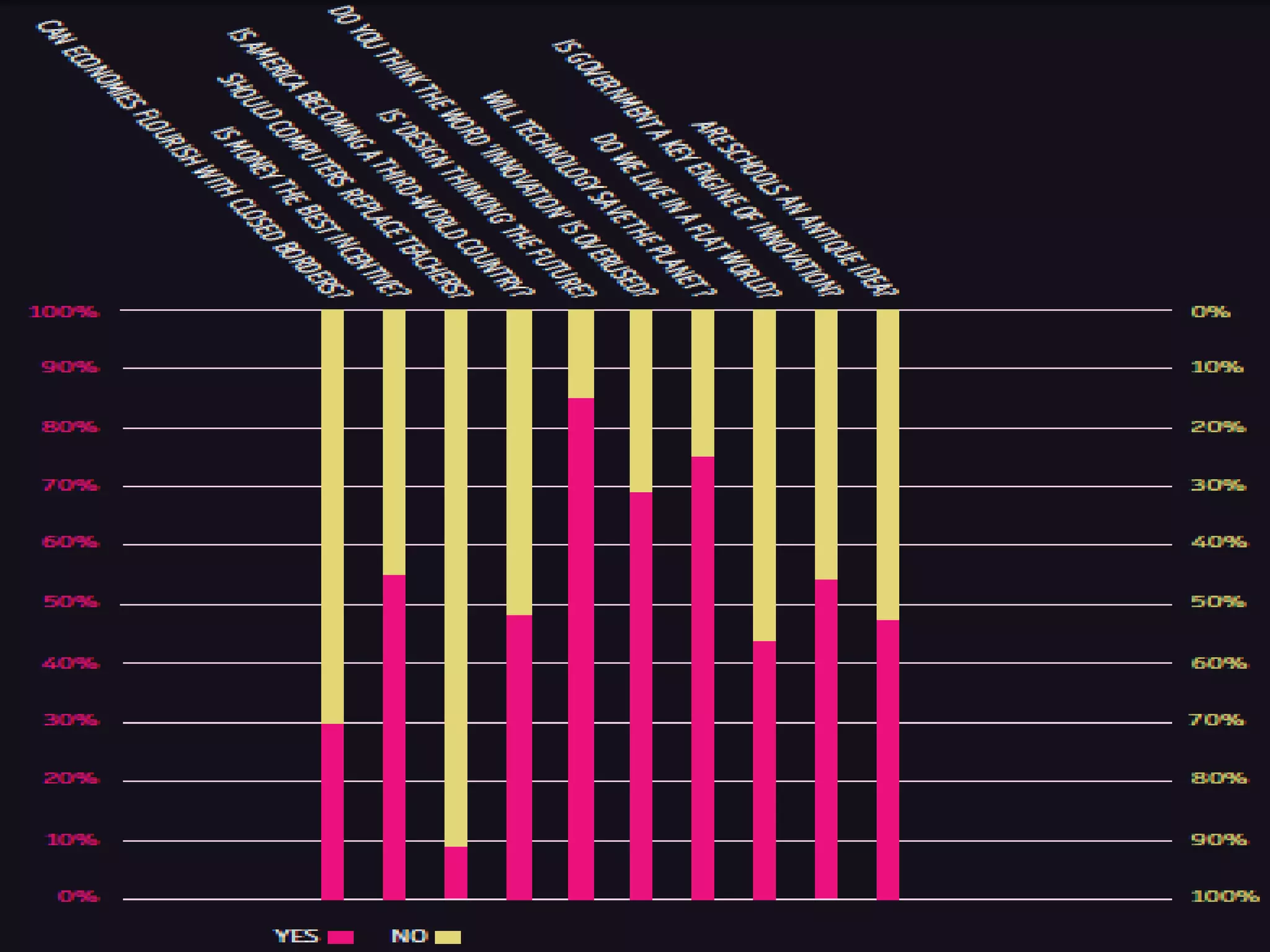
  • #35 From the economist “ideas” poll 2009. Where is education headed?“Are schools an antique idea?” nearly 50% say yes.“Will technology save the planet?” 85% yes!“Is Design thinking the future?” 85% yes!
  • #60 What do each of these innovations share in common?
  • #61 What kinds of skills do we need to foster in students to prepare them for jobs that don’t even exist yet??
  • #62 What do each of these jobs share in common?
  • #65 Web 2.0TwitterLinkedInMashableBlogs (blogger.com and wordpress.com)