Carburetion
• The fuel system on a small engine consists of
several components;
Carburetor
Fuel Lines
Fuel Filter
Fuel tank
Carburetion
• The function of the carburetor is threefold;
– It breaks up or atomizes the fuel into a fine spray
and it mixes with air to make a mixture that will
burn readily
– It regulates the ratio of fuel to air
– It regulates the amount of the fuel-air-mixture
going into the combustion chamber
Carburetion
• The ratio of fuel air is controlled by adjusting needle valves
and this allows you to select the proper mixture for the
conditions under which you operate your engine
• Too lean a fuel-air mixture may result in hard starting,
overheating, pre-ignition & valve burning
• Too rich a fuel-air mixture may result in excessive fuel
consumption, carbon build up in the cylinder and cause pre-
ignition
Carburetion: Principles of Operation
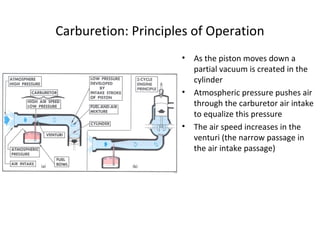
• As the piston moves down a
partial vacuum is created in the
cylinder
• Atmospheric pressure pushes air
through the carburetor air intake
to equalize this pressure
• The air speed increases in the
venturi (the narrow passage in
the air intake passage)
Carburetion: Principles of Operation
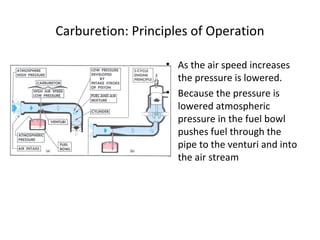
• As the air speed increases
the pressure is lowered.
• Because the pressure is
lowered atmospheric
pressure in the fuel bowl
pushes fuel through the
pipe to the venturi and into
the air stream
Carburetion: Principles of Operation
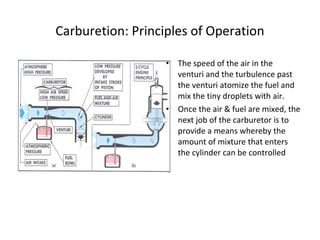
• The speed of the air in the
venturi and the turbulence past
the venturi atomize the fuel and
mix the tiny droplets with air.
• Once the air & fuel are mixed, the
next job of the carburetor is to
provide a means whereby the
amount of mixture that enters
the cylinder can be controlled
Carburetion: Principles of Operation
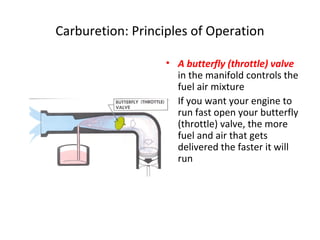
• A butterfly (throttle) valve
in the manifold controls the
fuel air mixture
• If you want your engine to
run fast open your butterfly
(throttle) valve, the more
fuel and air that gets
delivered the faster it will
run
Carburetion: Principles of Operation
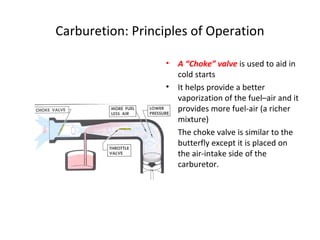
• A “Choke” valve is used to aid in
cold starts
• It helps provide a better
vaporization of the fuel–air and it
provides more fuel-air (a richer
mixture)
• The choke valve is similar to the
butterfly except it is placed on
the air-intake side of the
carburetor.
Carburetion: Principles of Operation
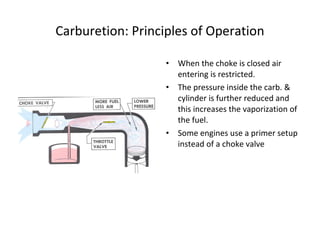
• When the choke is closed air
entering is restricted.
• The pressure inside the carb. &
cylinder is further reduced and
this increases the vaporization of
the fuel.
• Some engines use a primer setup
instead of a choke valve
Carburetion: Principles of Operation
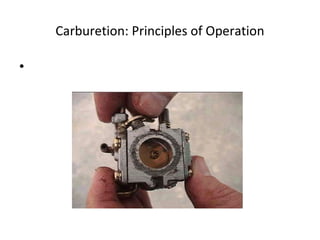
•
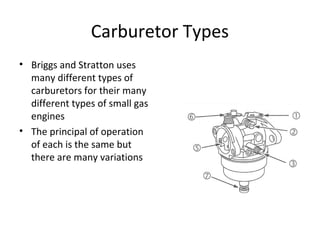
Carburetor Types
• Briggs and Stratton uses
many different types of
carburetors for their many
different types of small gas
engines
• The principal of operation
of each is the same but
there are many variations
Carburetor Types
There are basically three different types of
carburetors used in small gas engines depending on
how fuel is supplied from the tank to the fuel
chamber in the carburetor.
The Float Type
The Suction – Lift Type
The Diaphragm Type
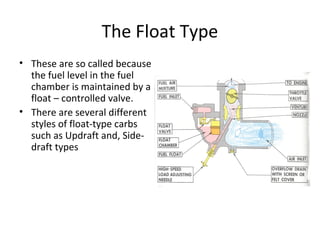
The Float Type
• These are so called because
the fuel level in the fuel
chamber is maintained by a
float – controlled valve.
• There are several different
styles of float-type carbs
such as Updraft and, Side-
draft types
The Float Type
• The float type carburetor has features which provide for
adjustment and regulation of the fuel air to meet different
operating conditions.
• When a sudden load or acceleration is demanded , a richer
mixture (more fuel-air) is required
• These carburetors have what is called an accelerating well
that surrounds the lower part of the fuel discharge nozzle and
remains full of fuel while the engine is operating under
normal load.
• When there is a sudden demand for power a governor opens
the throttle valve and air moves past the nozzle much faster
thus picking up more fuel
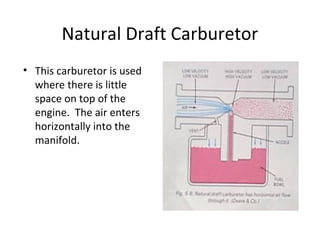
Natural Draft Carburetor
• This carburetor is used
where there is little
space on top of the
engine. The air enters
horizontally into the
manifold.
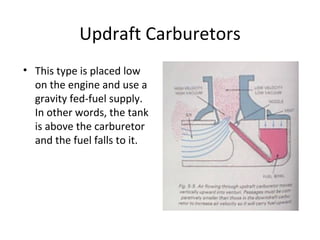
Updraft Carburetors
• This type is placed low
on the engine and use a
gravity fed-fuel supply.
In other words, the tank
is above the carburetor
and the fuel falls to it.
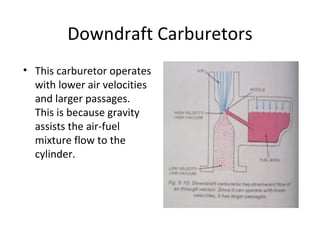
Downdraft Carburetors
• This carburetor operates
with lower air velocities
and larger passages.
This is because gravity
assists the air-fuel
mixture flow to the
cylinder.
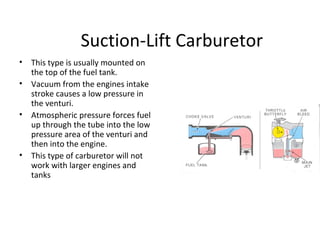
Suction-Lift Carburetor
• This type is usually mounted on
the top of the fuel tank.
• Vacuum from the engines intake
stroke causes a low pressure in
the venturi.
• Atmospheric pressure forces fuel
up through the tube into the low
pressure area of the venturi and
then into the engine.
• This type of carburetor will not
work with larger engines and
tanks
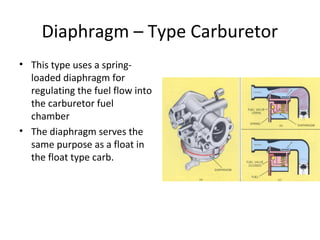
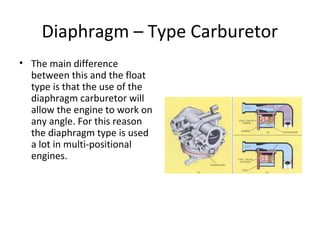
Diaphragm – Type Carburetor
• This type uses a spring-
loaded diaphragm for
regulating the fuel flow into
the carburetor fuel
chamber
• The diaphragm serves the
same purpose as a float in
the float type carb.
Diaphragm – Type Carburetor
• The main difference
between this and the float
type is that the use of the
diaphragm carburetor will
allow the engine to work on
any angle. For this reason
the diaphragm type is used
a lot in multi-positional
engines.
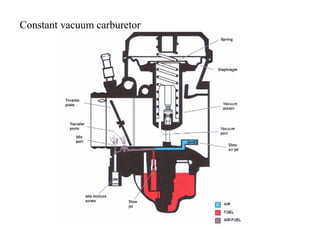
Constant vacuum carburetor

carburetors-prv-160214151937.pdf

  • 1.
    Carburetion • The fuelsystem on a small engine consists of several components; Carburetor Fuel Lines Fuel Filter Fuel tank
  • 2.
    Carburetion • The functionof the carburetor is threefold; – It breaks up or atomizes the fuel into a fine spray and it mixes with air to make a mixture that will burn readily – It regulates the ratio of fuel to air – It regulates the amount of the fuel-air-mixture going into the combustion chamber
  • 3.
    Carburetion • The ratioof fuel air is controlled by adjusting needle valves and this allows you to select the proper mixture for the conditions under which you operate your engine • Too lean a fuel-air mixture may result in hard starting, overheating, pre-ignition & valve burning • Too rich a fuel-air mixture may result in excessive fuel consumption, carbon build up in the cylinder and cause pre- ignition
  • 4.
    Carburetion: Principles ofOperation • As the piston moves down a partial vacuum is created in the cylinder • Atmospheric pressure pushes air through the carburetor air intake to equalize this pressure • The air speed increases in the venturi (the narrow passage in the air intake passage)
  • 5.
    Carburetion: Principles ofOperation • As the air speed increases the pressure is lowered. • Because the pressure is lowered atmospheric pressure in the fuel bowl pushes fuel through the pipe to the venturi and into the air stream
  • 6.
    Carburetion: Principles ofOperation • The speed of the air in the venturi and the turbulence past the venturi atomize the fuel and mix the tiny droplets with air. • Once the air & fuel are mixed, the next job of the carburetor is to provide a means whereby the amount of mixture that enters the cylinder can be controlled
  • 7.
    Carburetion: Principles ofOperation • A butterfly (throttle) valve in the manifold controls the fuel air mixture • If you want your engine to run fast open your butterfly (throttle) valve, the more fuel and air that gets delivered the faster it will run
  • 8.
    Carburetion: Principles ofOperation • A “Choke” valve is used to aid in cold starts • It helps provide a better vaporization of the fuel–air and it provides more fuel-air (a richer mixture) • The choke valve is similar to the butterfly except it is placed on the air-intake side of the carburetor.
  • 9.
    Carburetion: Principles ofOperation • When the choke is closed air entering is restricted. • The pressure inside the carb. & cylinder is further reduced and this increases the vaporization of the fuel. • Some engines use a primer setup instead of a choke valve
  • 10.
  • 11.
    Carburetor Types • Briggsand Stratton uses many different types of carburetors for their many different types of small gas engines • The principal of operation of each is the same but there are many variations
  • 12.
    Carburetor Types There arebasically three different types of carburetors used in small gas engines depending on how fuel is supplied from the tank to the fuel chamber in the carburetor. The Float Type The Suction – Lift Type The Diaphragm Type
  • 13.
    The Float Type •These are so called because the fuel level in the fuel chamber is maintained by a float – controlled valve. • There are several different styles of float-type carbs such as Updraft and, Side- draft types
  • 14.
    The Float Type •The float type carburetor has features which provide for adjustment and regulation of the fuel air to meet different operating conditions. • When a sudden load or acceleration is demanded , a richer mixture (more fuel-air) is required • These carburetors have what is called an accelerating well that surrounds the lower part of the fuel discharge nozzle and remains full of fuel while the engine is operating under normal load. • When there is a sudden demand for power a governor opens the throttle valve and air moves past the nozzle much faster thus picking up more fuel
  • 15.
    Natural Draft Carburetor •This carburetor is used where there is little space on top of the engine. The air enters horizontally into the manifold.
  • 16.
    Updraft Carburetors • Thistype is placed low on the engine and use a gravity fed-fuel supply. In other words, the tank is above the carburetor and the fuel falls to it.
  • 17.
    Downdraft Carburetors • Thiscarburetor operates with lower air velocities and larger passages. This is because gravity assists the air-fuel mixture flow to the cylinder.
  • 18.
    Suction-Lift Carburetor • Thistype is usually mounted on the top of the fuel tank. • Vacuum from the engines intake stroke causes a low pressure in the venturi. • Atmospheric pressure forces fuel up through the tube into the low pressure area of the venturi and then into the engine. • This type of carburetor will not work with larger engines and tanks
  • 19.
    Diaphragm – TypeCarburetor • This type uses a spring- loaded diaphragm for regulating the fuel flow into the carburetor fuel chamber • The diaphragm serves the same purpose as a float in the float type carb.
  • 20.
    Diaphragm – TypeCarburetor • The main difference between this and the float type is that the use of the diaphragm carburetor will allow the engine to work on any angle. For this reason the diaphragm type is used a lot in multi-positional engines.
  • 21.