Use of computer/robots in car manufacturing
                  process


                                 -Vipul Waigaonkar
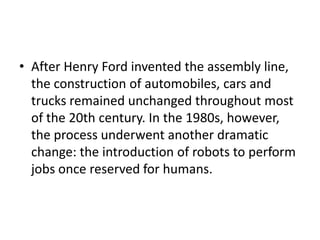
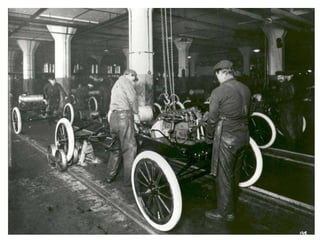
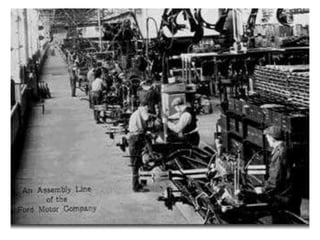
• After Henry Ford invented the assembly line,
  the construction of automobiles, cars and
  trucks remained unchanged throughout most
  of the 20th century. In the 1980s, however,
  the process underwent another dramatic
  change: the introduction of robots to perform
  jobs once reserved for humans.
Significance
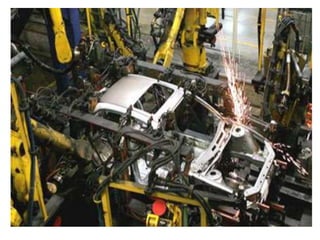
• Robots were initially retained to perform
  precise welding chores and other repetitive
  tasks that humans had long found boring,
  monotonous and injurious. By using robots to
  weld, handle dangerous objects and place
  items, auto manufacturers were able to
  ensure a consistent product with a minimum
  of worker injury. Currently, 50 percent of all
  robots in use today are used in automobile
  manufacture.
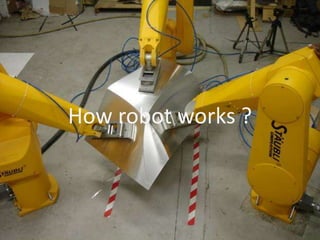
How robot works ?
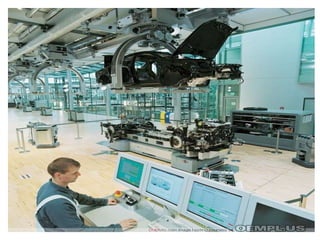
• To make a robot work, a computer program is
  installed on its controller computer. This
  provides a set of precise instructions--based
  on geometry and carefully timed--that tells
  the robot where to place things, how to rotate
  them, where to weld and how to perform all
  of its other functions.
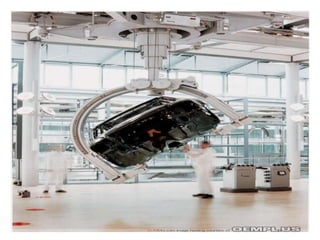
Robots do not think for themselves, and must
rely on humans to provide instructions.
Robots also can work in more extreme
environments on their own, or they can work
alongside humans, assisting them in their day-
to-day jobs--such as moving or rotating a car
so humans can work on parts of it that would
normally be difficult to reach.
Benefits of robots
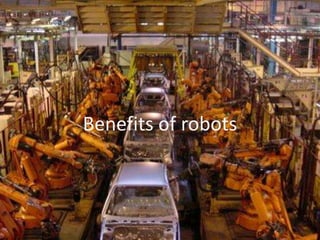
• Robots have been a boon to the auto-
  manufacturing industry. They have
  significantly reduced worker injuries, including
  repetitive stress injuries and more significant
  mishaps that can do major harm. Additionally,
  the robots turn out a more consistent product
  at a significantly cheaper cost than can
  humans.
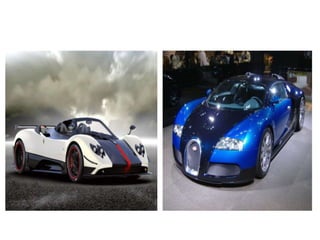
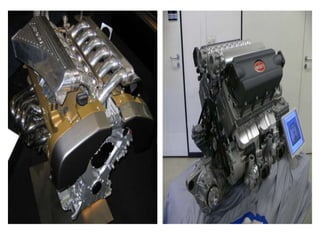
Comparison between Pagani Zonda and Buggati
                  Veyron
Any Questions ?
Thank you !

Car manufacturing

  • 1.
    Use of computer/robotsin car manufacturing process -Vipul Waigaonkar
  • 2.
    • After HenryFord invented the assembly line, the construction of automobiles, cars and trucks remained unchanged throughout most of the 20th century. In the 1980s, however, the process underwent another dramatic change: the introduction of robots to perform jobs once reserved for humans.
  • 5.
    Significance • Robots wereinitially retained to perform precise welding chores and other repetitive tasks that humans had long found boring, monotonous and injurious. By using robots to weld, handle dangerous objects and place items, auto manufacturers were able to ensure a consistent product with a minimum of worker injury. Currently, 50 percent of all robots in use today are used in automobile manufacture.
  • 7.
  • 8.
    • To makea robot work, a computer program is installed on its controller computer. This provides a set of precise instructions--based on geometry and carefully timed--that tells the robot where to place things, how to rotate them, where to weld and how to perform all of its other functions.
  • 11.
    Robots do notthink for themselves, and must rely on humans to provide instructions. Robots also can work in more extreme environments on their own, or they can work alongside humans, assisting them in their day- to-day jobs--such as moving or rotating a car so humans can work on parts of it that would normally be difficult to reach.
  • 12.
  • 13.
    • Robots havebeen a boon to the auto- manufacturing industry. They have significantly reduced worker injuries, including repetitive stress injuries and more significant mishaps that can do major harm. Additionally, the robots turn out a more consistent product at a significantly cheaper cost than can humans.
  • 14.
    Comparison between PaganiZonda and Buggati Veyron
  • 17.
  • 18.