CORPORATE
FINANCE
Name: Urvah Ashraf.
Roll no: F-363
Class: M.com 4.
Lecturer: Sir Awais
Akram.
Capital Structure Theories
 Capital Structure.
 Net Income Approach. ( NI )
 Net Operating Income Approach. (NOI)
 Traditional Approach.
 Miller and Modigliani Approach. (M.M)
Capital Structure
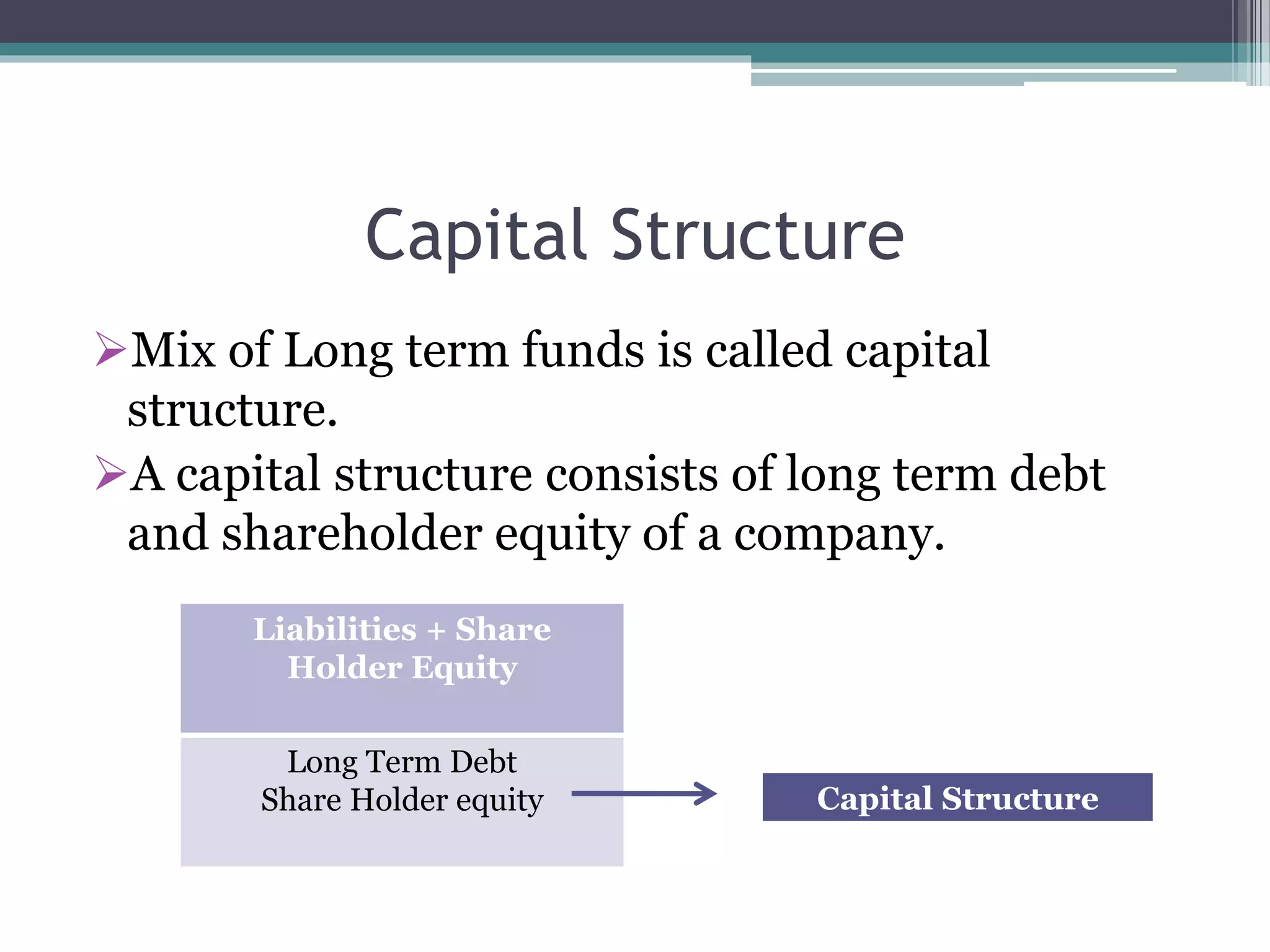
Mix of Long term funds is called capital
structure.
A capital structure consists of long term debt
and shareholder equity of a company.
Liabilities + Share
Holder Equity
Long Term Debt
Share Holder equity Capital Structure
Capital Structure Theories
 Types
• Net Income Approach. ( NI )
• Net Operating Income Approach. (NOI)
• Traditional Approach.
• Miller and Modigliani Approach. (M.M)
I. Net Income Approach (NI)
• According to David Durand, NI indicates that
there exists a relationship between the capital
structure of the company and the market value
of the company.
Capital
Structure
Market
Value
Net Income
Approach
I. Net Income Approach (NI)
• Assumptions:
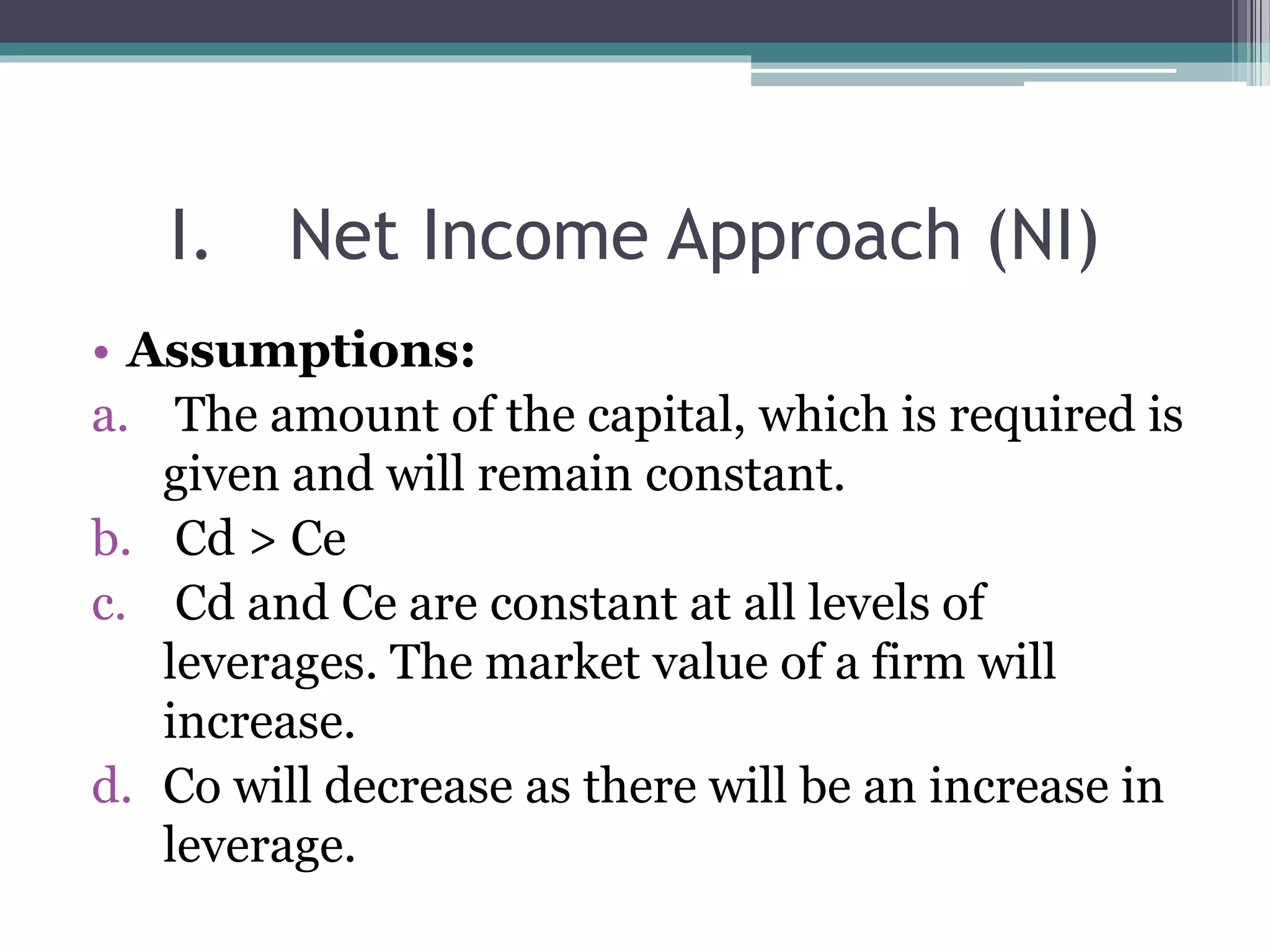
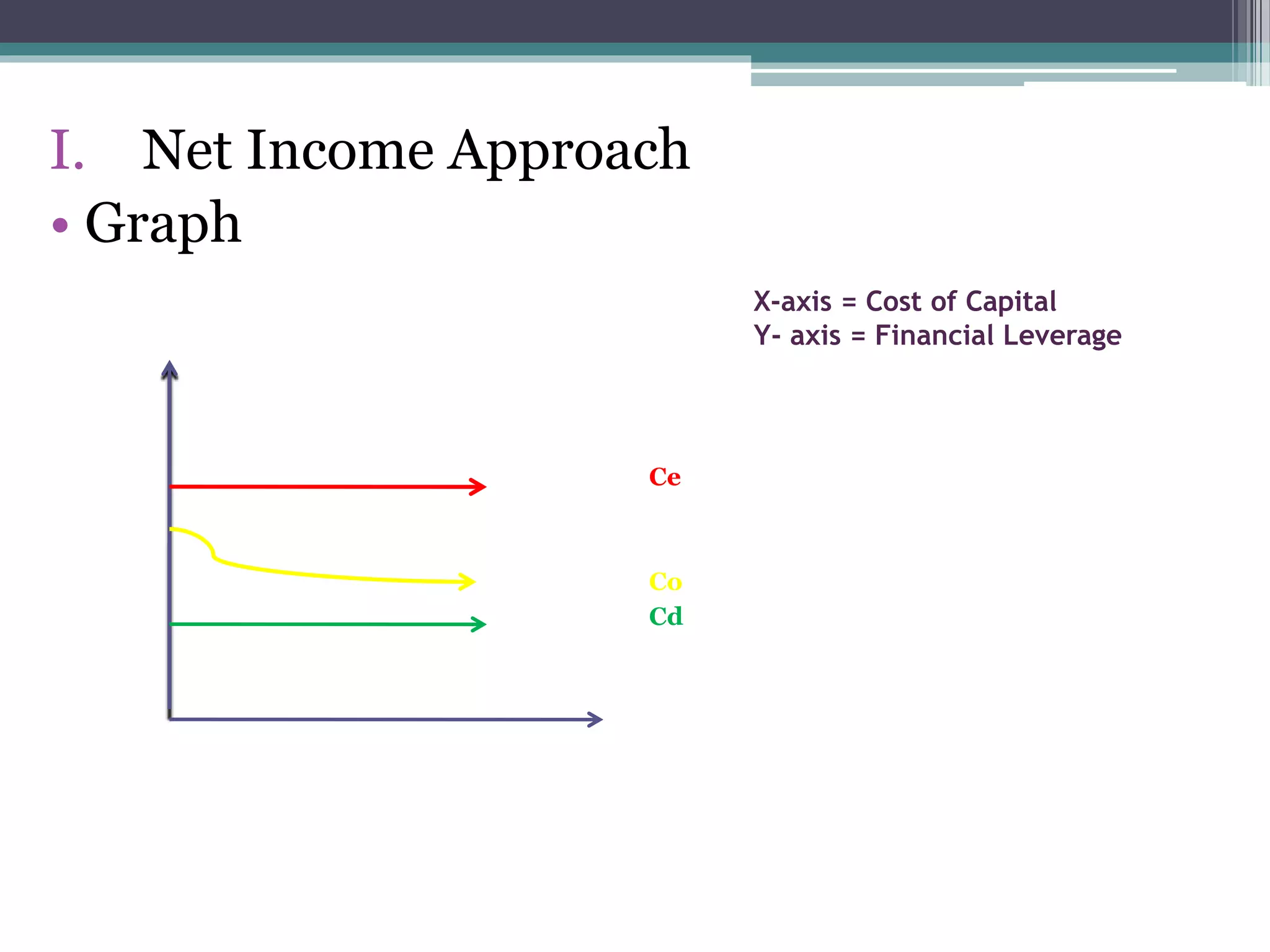
a. The amount of the capital, which is required is
given and will remain constant.
b. Cd > Ce
c. Cd and Ce are constant at all levels of
leverages. The market value of a firm will
increase.
d. Co will decrease as there will be an increase in
leverage.
X-axis = Cost of Capital
Y- axis = Financial Leverage
Ce
Co
Cd
I. Net Income Approach
• Graph
II. Net Operating Income Approach
(NOI)
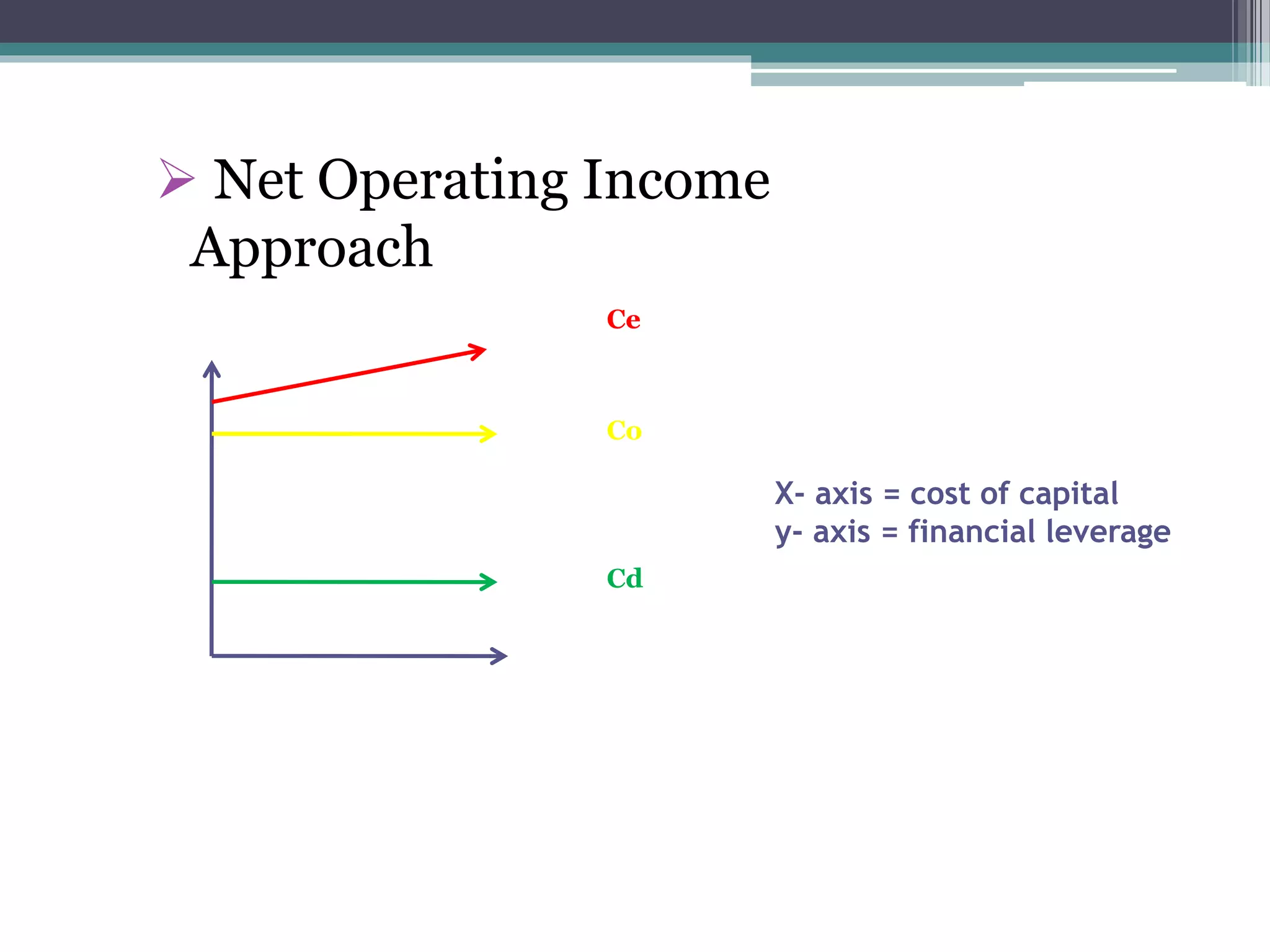
According to NOI the capital structure and the
value of the firm has no relationship and capital
structure decisions have no impact on the value
of the firm.
• Assumptions
a. Co and Cd remain constant.
b. Ce will change as the degree of financial
leverage will increase or decrease.
c. No taxation exists.
X- axis = cost of capital
y- axis = financial leverage
Ce
Co
Cd
 Net Operating Income
Approach
III. Traditional Approach
 Mixture of Net Income Approach and Net Operating
Income Approach
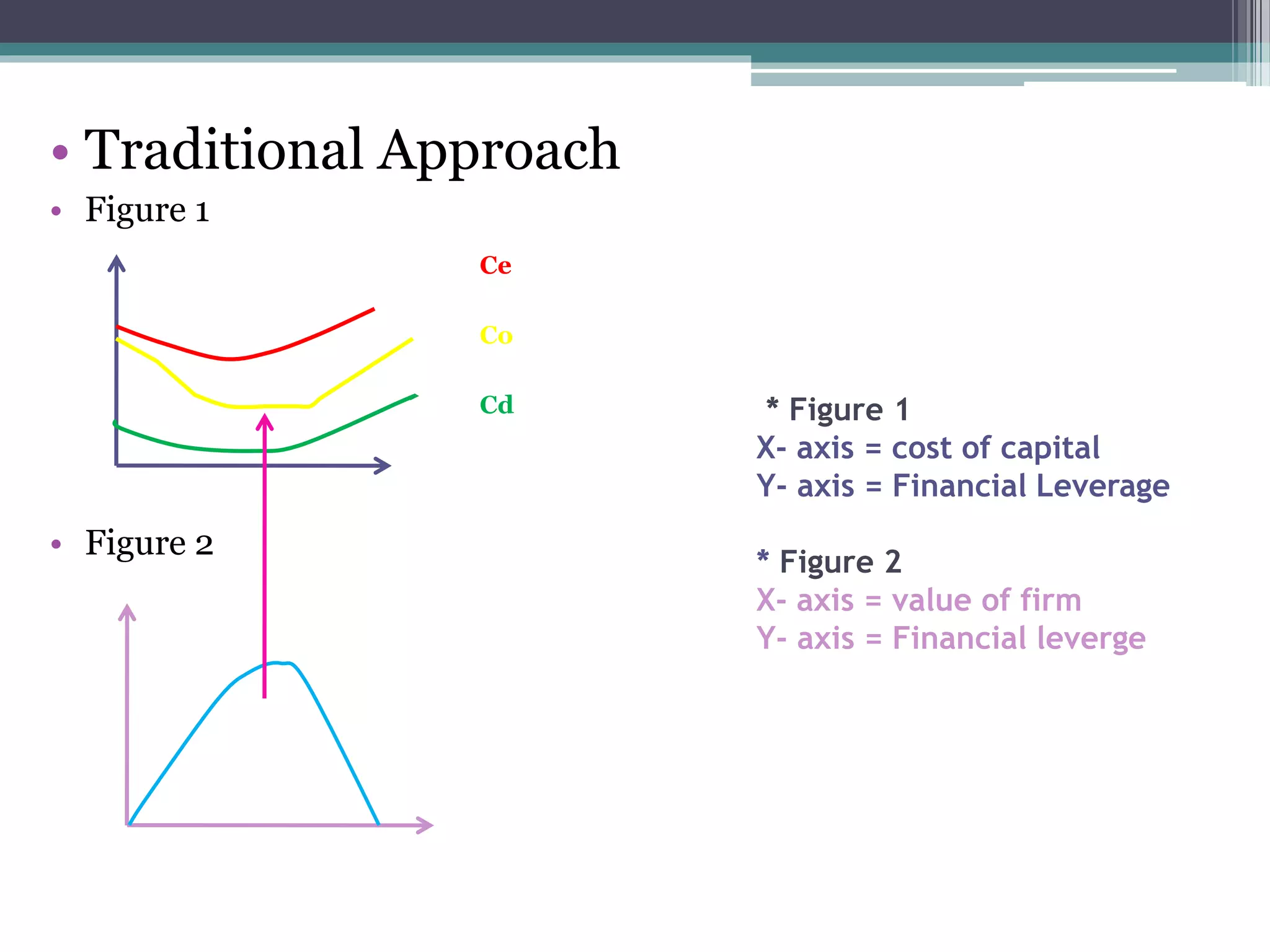
 Suggests that there exists an optimal capital structure at
a suitable use and point of financial leverage up to a
limit.
Assumptions.
a. The value of the firm will increase as the size of
financial leverage will increase, but conditionally up to
a certain limit only.
b. Cd < Ce
c. Co (Weighted Average Cost of Capital) will be
minimum where a range of optimal capital structure
will exist.
* Figure 1
X- axis = cost of capital
Y- axis = Financial Leverage
* Figure 2
X- axis = value of firm
Y- axis = Financial leverge
Ce
Co
Cd
• Traditional Approach
• Figure 1
• Figure 2
IV. Modigliani and Miller Approach
 The approach of Modigliani and
Miller (1958) is same like Net
Operating Income Approach.
IV. Modigliani and Miller Approach
Assumption
• Tax rate =0%
• Transaction cost
• = 0
• Same
information
access to
investors
• Floatation cost
• = 0
• CDT rate =0%
Propositions
without
taxes
• P1
• The capital structure
does not influence
the value of firm.
• Debt holders
&equity
shareholders have
same priority.
• P2
• financial leverage is
in direct proposition
to COE.
• With rise in debt,
the equity
shareholders
perceive a higher
risk.
Proposition
with
taxes
• It assumes
existence of
taxes, therefore
tax benefits due
to interest
payments are
recognized.
• So, COST OF
DEBT reduces
by interest Tax
shields.
• Therefore,
change in debt
component can
affect value of a
firm.
THANK YOU

Capital structure theories.

  • 1.
    CORPORATE FINANCE Name: Urvah Ashraf. Rollno: F-363 Class: M.com 4. Lecturer: Sir Awais Akram.
  • 2.
    Capital Structure Theories Capital Structure.  Net Income Approach. ( NI )  Net Operating Income Approach. (NOI)  Traditional Approach.  Miller and Modigliani Approach. (M.M)
  • 3.
    Capital Structure Mix ofLong term funds is called capital structure. A capital structure consists of long term debt and shareholder equity of a company. Liabilities + Share Holder Equity Long Term Debt Share Holder equity Capital Structure
  • 4.
    Capital Structure Theories Types • Net Income Approach. ( NI ) • Net Operating Income Approach. (NOI) • Traditional Approach. • Miller and Modigliani Approach. (M.M)
  • 5.
    I. Net IncomeApproach (NI) • According to David Durand, NI indicates that there exists a relationship between the capital structure of the company and the market value of the company. Capital Structure Market Value Net Income Approach
  • 6.
    I. Net IncomeApproach (NI) • Assumptions: a. The amount of the capital, which is required is given and will remain constant. b. Cd > Ce c. Cd and Ce are constant at all levels of leverages. The market value of a firm will increase. d. Co will decrease as there will be an increase in leverage.
  • 7.
    X-axis = Costof Capital Y- axis = Financial Leverage Ce Co Cd I. Net Income Approach • Graph
  • 8.
    II. Net OperatingIncome Approach (NOI) According to NOI the capital structure and the value of the firm has no relationship and capital structure decisions have no impact on the value of the firm. • Assumptions a. Co and Cd remain constant. b. Ce will change as the degree of financial leverage will increase or decrease. c. No taxation exists.
  • 9.
    X- axis =cost of capital y- axis = financial leverage Ce Co Cd  Net Operating Income Approach
  • 10.
    III. Traditional Approach Mixture of Net Income Approach and Net Operating Income Approach  Suggests that there exists an optimal capital structure at a suitable use and point of financial leverage up to a limit. Assumptions. a. The value of the firm will increase as the size of financial leverage will increase, but conditionally up to a certain limit only. b. Cd < Ce c. Co (Weighted Average Cost of Capital) will be minimum where a range of optimal capital structure will exist.
  • 11.
    * Figure 1 X-axis = cost of capital Y- axis = Financial Leverage * Figure 2 X- axis = value of firm Y- axis = Financial leverge Ce Co Cd • Traditional Approach • Figure 1 • Figure 2
  • 12.
    IV. Modigliani andMiller Approach  The approach of Modigliani and Miller (1958) is same like Net Operating Income Approach.
  • 13.
    IV. Modigliani andMiller Approach Assumption • Tax rate =0% • Transaction cost • = 0 • Same information access to investors • Floatation cost • = 0 • CDT rate =0% Propositions without taxes • P1 • The capital structure does not influence the value of firm. • Debt holders &equity shareholders have same priority. • P2 • financial leverage is in direct proposition to COE. • With rise in debt, the equity shareholders perceive a higher risk. Proposition with taxes • It assumes existence of taxes, therefore tax benefits due to interest payments are recognized. • So, COST OF DEBT reduces by interest Tax shields. • Therefore, change in debt component can affect value of a firm.
  • 14.