CAMERA GLOSSARY
BY ELLIE BROWN
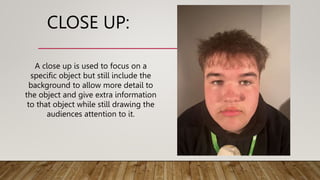
CLOSE UP:
A close up is used to focus on a
specific object but still include the
background to allow more detail to
the object and give extra information
to that object while still drawing the
audiences attention to it.
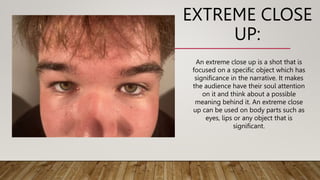
EXTREME CLOSE
UP:
An extreme close up is a shot that is
focused on a specific object which has
significance in the narrative. It makes
the audience have their soul attention
on it and think about a possible
meaning behind it. An extreme close
up can be used on body parts such as
eyes, lips or any object that is
significant.
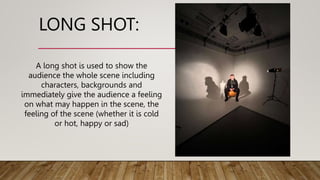
LONG SHOT:
A long shot is used to show the
audience the whole scene including
characters, backgrounds and
immediately give the audience a feeling
on what may happen in the scene, the
feeling of the scene (whether it is cold
or hot, happy or sad)
MEDIUM CLOSE
UP:
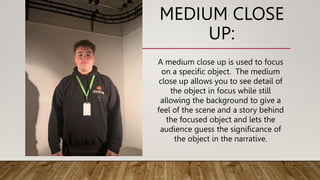
A medium close up is used to focus
on a specific object. The medium
close up allows you to see detail of
the object in focus while still
allowing the background to give a
feel of the scene and a story behind
the focused object and lets the
audience guess the significance of
the object in the narrative.
ESTABLISHING
SHOT:
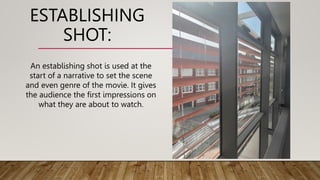
An establishing shot is used at the
start of a narrative to set the scene
and even genre of the movie. It gives
the audience the first impressions on
what they are about to watch.
HIGH ANGLE:
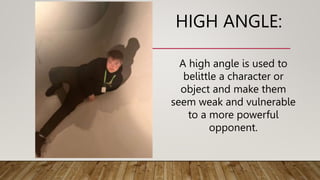
A high angle is used to
belittle a character or
object and make them
seem weak and vulnerable
to a more powerful
opponent.
LOW ANGLE:
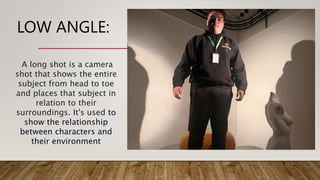
A long shot is a camera
shot that shows the entire
subject from head to toe
and places that subject in
relation to their
surroundings. It's used to
show the relationship
between characters and
their environment
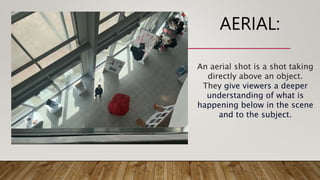
AERIAL:
An aerial shot is a shot taking
directly above an object.
They give viewers a deeper
understanding of what is
happening below in the scene
and to the subject.
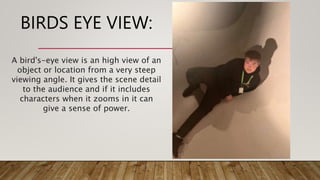
BIRDS EYE VIEW:
A bird's-eye view is an high view of an
object or location from a very steep
viewing angle. It gives the scene detail
to the audience and if it includes
characters when it zooms in it can
give a sense of power.
CANTED ANGLE:
A cantered angle or a Dutch angle
gives the audience a feeling of being
uneasy and unsettled making them
trying to anticipate what is going to
happen next. It can also make the
audience feel disorientated. Also, can
give focus on a specific character.
TRACKING SHOT:
A tracking shot would be used when
following a subject to show a direction
and follow the narrative.
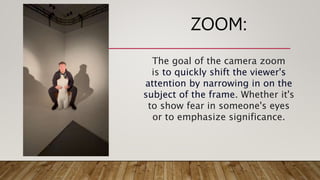
ZOOM:
The goal of the camera zoom
is to quickly shift the viewer's
attention by narrowing in on the
subject of the frame. Whether it's
to show fear in someone's eyes
or to emphasize significance.
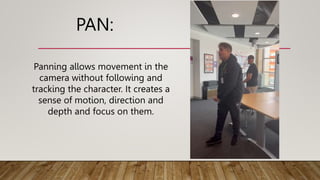
PAN:
Panning allows movement in the
camera without following and
tracking the character. It creates a
sense of motion, direction and
depth and focus on them.
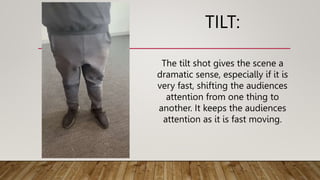
TILT:
The tilt shot gives the scene a
dramatic sense, especially if it is
very fast, shifting the audiences
attention from one thing to
another. It keeps the audiences
attention as it is fast moving.
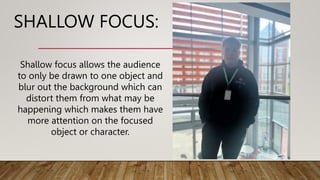
SHALLOW FOCUS:
Shallow focus allows the audience
to only be drawn to one object and
blur out the background which can
distort them from what may be
happening which makes them have
more attention on the focused
object or character.
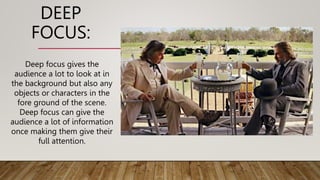
DEEP
FOCUS:
Deep focus gives the
audience a lot to look at in
the background but also any
objects or characters in the
fore ground of the scene.
Deep focus can give the
audience a lot of information
once making them give their
full attention.
EDITING TERMS:
CROSS CUT:
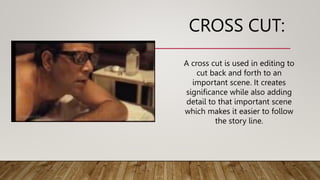
A cross cut is used in editing to
cut back and forth to an
important scene. It creates
significance while also adding
detail to that important scene
which makes it easier to follow
the story line.
CUTAWAY:
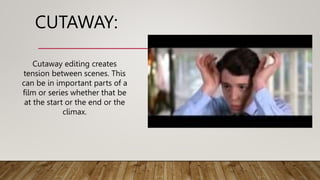
Cutaway editing creates
tension between scenes. This
can be in important parts of a
film or series whether that be
at the start or the end or the
climax.
TRANSITIONS:
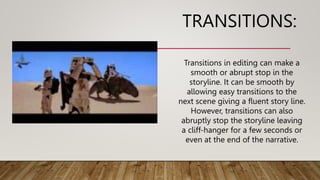
Transitions in editing can make a
smooth or abrupt stop in the
storyline. It can be smooth by
allowing easy transitions to the
next scene giving a fluent story line.
However, transitions can also
abruptly stop the storyline leaving
a cliff-hanger for a few seconds or
even at the end of the narrative.
USE OF
COLOUR:
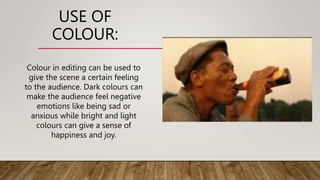
Colour in editing can be used to
give the scene a certain feeling
to the audience. Dark colours can
make the audience feel negative
emotions like being sad or
anxious while bright and light
colours can give a sense of
happiness and joy.

Camera glossary.pptx....................

  • 1.
  • 2.
    CLOSE UP: A closeup is used to focus on a specific object but still include the background to allow more detail to the object and give extra information to that object while still drawing the audiences attention to it.
  • 3.
    EXTREME CLOSE UP: An extremeclose up is a shot that is focused on a specific object which has significance in the narrative. It makes the audience have their soul attention on it and think about a possible meaning behind it. An extreme close up can be used on body parts such as eyes, lips or any object that is significant.
  • 4.
    LONG SHOT: A longshot is used to show the audience the whole scene including characters, backgrounds and immediately give the audience a feeling on what may happen in the scene, the feeling of the scene (whether it is cold or hot, happy or sad)
  • 5.
    MEDIUM CLOSE UP: A mediumclose up is used to focus on a specific object. The medium close up allows you to see detail of the object in focus while still allowing the background to give a feel of the scene and a story behind the focused object and lets the audience guess the significance of the object in the narrative.
  • 6.
    ESTABLISHING SHOT: An establishing shotis used at the start of a narrative to set the scene and even genre of the movie. It gives the audience the first impressions on what they are about to watch.
  • 7.
    HIGH ANGLE: A highangle is used to belittle a character or object and make them seem weak and vulnerable to a more powerful opponent.
  • 8.
    LOW ANGLE: A longshot is a camera shot that shows the entire subject from head to toe and places that subject in relation to their surroundings. It's used to show the relationship between characters and their environment
  • 9.
    AERIAL: An aerial shotis a shot taking directly above an object. They give viewers a deeper understanding of what is happening below in the scene and to the subject.
  • 10.
    BIRDS EYE VIEW: Abird's-eye view is an high view of an object or location from a very steep viewing angle. It gives the scene detail to the audience and if it includes characters when it zooms in it can give a sense of power.
  • 11.
    CANTED ANGLE: A canteredangle or a Dutch angle gives the audience a feeling of being uneasy and unsettled making them trying to anticipate what is going to happen next. It can also make the audience feel disorientated. Also, can give focus on a specific character.
  • 12.
    TRACKING SHOT: A trackingshot would be used when following a subject to show a direction and follow the narrative.
  • 13.
    ZOOM: The goal ofthe camera zoom is to quickly shift the viewer's attention by narrowing in on the subject of the frame. Whether it's to show fear in someone's eyes or to emphasize significance.
  • 14.
    PAN: Panning allows movementin the camera without following and tracking the character. It creates a sense of motion, direction and depth and focus on them.
  • 15.
    TILT: The tilt shotgives the scene a dramatic sense, especially if it is very fast, shifting the audiences attention from one thing to another. It keeps the audiences attention as it is fast moving.
  • 16.
    SHALLOW FOCUS: Shallow focusallows the audience to only be drawn to one object and blur out the background which can distort them from what may be happening which makes them have more attention on the focused object or character.
  • 17.
    DEEP FOCUS: Deep focus givesthe audience a lot to look at in the background but also any objects or characters in the fore ground of the scene. Deep focus can give the audience a lot of information once making them give their full attention.
  • 18.
  • 19.
    CROSS CUT: A crosscut is used in editing to cut back and forth to an important scene. It creates significance while also adding detail to that important scene which makes it easier to follow the story line.
  • 20.
    CUTAWAY: Cutaway editing creates tensionbetween scenes. This can be in important parts of a film or series whether that be at the start or the end or the climax.
  • 21.
    TRANSITIONS: Transitions in editingcan make a smooth or abrupt stop in the storyline. It can be smooth by allowing easy transitions to the next scene giving a fluent story line. However, transitions can also abruptly stop the storyline leaving a cliff-hanger for a few seconds or even at the end of the narrative.
  • 22.
    USE OF COLOUR: Colour inediting can be used to give the scene a certain feeling to the audience. Dark colours can make the audience feel negative emotions like being sad or anxious while bright and light colours can give a sense of happiness and joy.