


Tasmina Ferdous Susmi
Presented by
A presentation on
Dept. of Genetic Engineering and
Biotechnology
Jessore University of Science and
Technology,
Bangladesh
Cake
Index
History
Types
Uses
Disadvantages
Procedure
Introduction
Cake
C
A Bread like food made
from a dough or batter
that is usually fried or
baked in small flat shapes
and is often unleavened
KA sweet baked food
made from a dough or
thick batter usually con-
taining flour and sugar
and often shortening,
eggs, raising agents
A
An item of soft sweet food
made from a mixture of
flour, fat, eggs, sugar and
other ingredients, baked
and sometimes iced or
decorated
E An item of savoury food
formed into flat round
shape and typically baked
or fried
History
The pastry chef became a job for the Romans. It was known as
Pastillarium. This period Cakes were large disk of fruit, seeds and
honey which was a rare treat and only the rich could afford it
Temperature controlled ovens came to be used in making of cake
which made it sweeter. Invention of Baking powder gradually im-
prove the technology of cakes.
Cake decorating continued after Industrial Revolution to progress
over the years and finally cake decorating truly evolved into what
is today.
Present time cakes are famous desert which are used for any event.
Many decorating agents and leavening agents make them outstand
ing both in shape size and taste
Around 300 B.C
17th Century
19th Century
Present Time
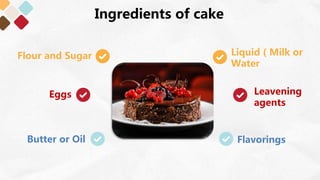
Ingredients of cake
Flour and Sugar
Eggs
Butter or Oil
Liquid ( Milk or
Water
Flavorings
Leavening
agents
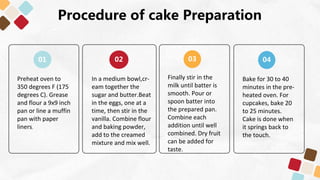
Procedure of cake Preparation
Preheat oven to
350 degrees F (175
degrees C). Grease
and flour a 9x9 inch
pan or line a muffin
pan with paper
liners.
01
In a medium bowl,cr-
eam together the
sugar and butter.Beat
in the eggs, one at a
time, then stir in the
vanilla. Combine flour
and baking powder,
add to the creamed
mixture and mix well.
02
Finally stir in the
milk until batter is
smooth. Pour or
spoon batter into
the prepared pan.
Combine each
addition until well
combined. Dry fruit
can be added for
taste.
03
Bake for 30 to 40
minutes in the pre-
heated oven. For
cupcakes, bake 20
to 25 minutes.
Cake is done when
it springs back to
the touch.
04
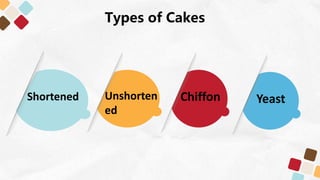
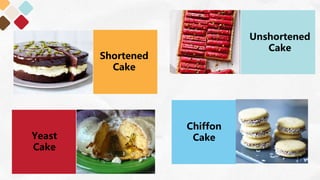
Types of Cakes
Shortened Unshorten
ed
Chiffon Yeast
Yeast
Cake
Shortened
Cake
Chiffon
Cake
Unshortened
Cake
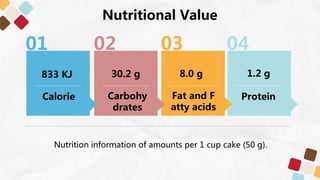
Nutritional Value
Nutrition information of amounts per 1 cup cake (50 g).
Protein
04
Fat and F
atty acids
03
Carbohy
drates
02
Calorie
01
833 KJ 30.2 g 8.0 g 1.2 g
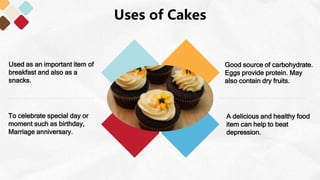
Uses of Cakes
Good source of carbohydrate.
Eggs provide protein. May
also contain dry fruits.
A delicious and healthy food
item can help to beat
depression.
Used as an important item of
breakfast and also as a
snacks.
To celebrate special day or
moment such as birthday,
Marriage anniversary.
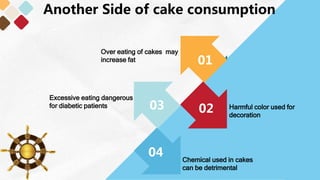
Another Side of cake consumption
01
03 02
04
Over eating of cakes may
increase fat
Harmful color used for
decoration
Excessive eating dangerous
for diabetic patients
Chemical used in cakes
can be detrimental
cake and details

cake and details

  • 1.
  • 2.
    A presentation on Dept.of Genetic Engineering and Biotechnology Jessore University of Science and Technology, Bangladesh Cake
  • 3.
  • 4.
    Cake C A Bread likefood made from a dough or batter that is usually fried or baked in small flat shapes and is often unleavened KA sweet baked food made from a dough or thick batter usually con- taining flour and sugar and often shortening, eggs, raising agents A An item of soft sweet food made from a mixture of flour, fat, eggs, sugar and other ingredients, baked and sometimes iced or decorated E An item of savoury food formed into flat round shape and typically baked or fried
  • 5.
    History The pastry chefbecame a job for the Romans. It was known as Pastillarium. This period Cakes were large disk of fruit, seeds and honey which was a rare treat and only the rich could afford it Temperature controlled ovens came to be used in making of cake which made it sweeter. Invention of Baking powder gradually im- prove the technology of cakes. Cake decorating continued after Industrial Revolution to progress over the years and finally cake decorating truly evolved into what is today. Present time cakes are famous desert which are used for any event. Many decorating agents and leavening agents make them outstand ing both in shape size and taste Around 300 B.C 17th Century 19th Century Present Time
  • 6.
    Ingredients of cake Flourand Sugar Eggs Butter or Oil Liquid ( Milk or Water Flavorings Leavening agents
  • 7.
    Procedure of cakePreparation Preheat oven to 350 degrees F (175 degrees C). Grease and flour a 9x9 inch pan or line a muffin pan with paper liners. 01 In a medium bowl,cr- eam together the sugar and butter.Beat in the eggs, one at a time, then stir in the vanilla. Combine flour and baking powder, add to the creamed mixture and mix well. 02 Finally stir in the milk until batter is smooth. Pour or spoon batter into the prepared pan. Combine each addition until well combined. Dry fruit can be added for taste. 03 Bake for 30 to 40 minutes in the pre- heated oven. For cupcakes, bake 20 to 25 minutes. Cake is done when it springs back to the touch. 04
  • 8.
    Types of Cakes ShortenedUnshorten ed Chiffon Yeast
  • 9.
  • 10.
    Nutritional Value Nutrition informationof amounts per 1 cup cake (50 g). Protein 04 Fat and F atty acids 03 Carbohy drates 02 Calorie 01 833 KJ 30.2 g 8.0 g 1.2 g
  • 11.
    Uses of Cakes Goodsource of carbohydrate. Eggs provide protein. May also contain dry fruits. A delicious and healthy food item can help to beat depression. Used as an important item of breakfast and also as a snacks. To celebrate special day or moment such as birthday, Marriage anniversary.
  • 12.
    Another Side ofcake consumption 01 03 02 04 Over eating of cakes may increase fat Harmful color used for decoration Excessive eating dangerous for diabetic patients Chemical used in cakes can be detrimental