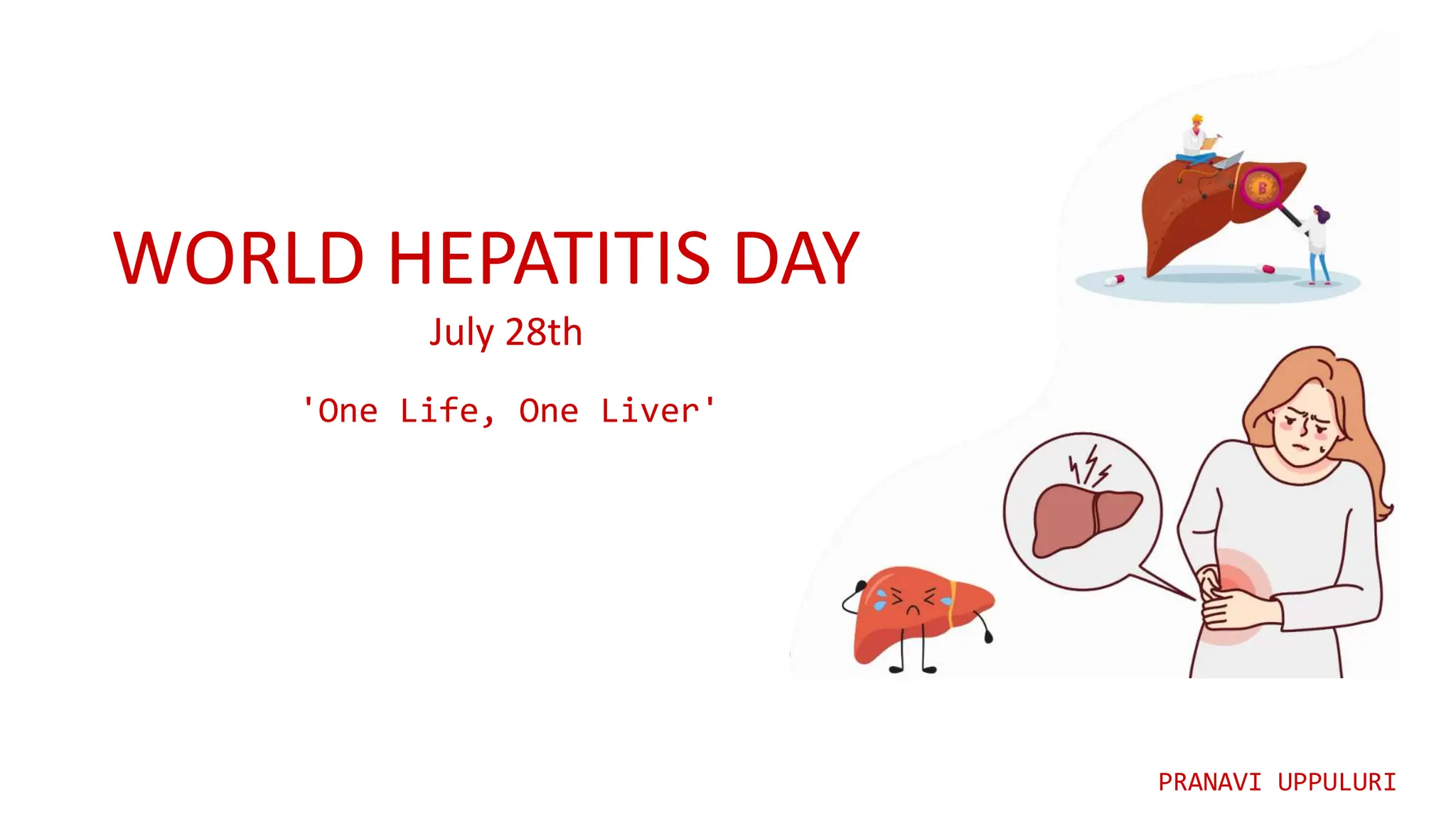
WORLD HEPATITIS DAY
July 28th
'One Life, One Liver'
PRANAVI UPPULURI
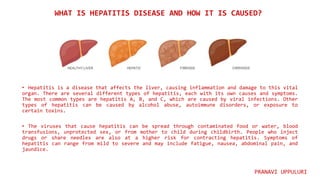
• Hepatitis is a disease that affects the liver, causing inflammation and damage to this vital
organ. There are several different types of hepatitis, each with its own causes and symptoms.
The most common types are hepatitis A, B, and C, which are caused by viral infections. Other
types of hepatitis can be caused by alcohol abuse, autoimmune disorders, or exposure to
certain toxins.
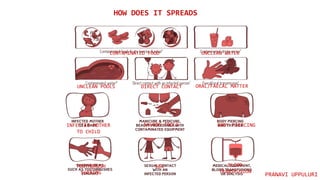
• The viruses that cause hepatitis can be spread through contaminated food or water, blood
transfusions, unprotected sex, or from mother to child during childbirth. People who inject
drugs or share needles are also at a higher risk for contracting hepatitis. Symptoms of
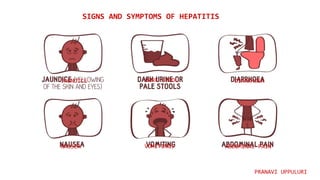
hepatitis can range from mild to severe and may include fatigue, nausea, abdominal pain, and
jaundice.
WHAT IS HEPATITIS DISEASE AND HOW IT IS CAUSED?
PRANAVI UPPULURI
• Hepatitis is a major global health concern,
affecting millions of people worldwide. According to
the World Health Organization (WHO), an estimated 325
million people are living with chronic hepatitis B or
C, which can lead to liver cirrhosis or cancer.
Hepatitis A and E are also prevalent in many parts of
the world, particularly in areas with poor sanitation
and hygiene.
• The burden is highest in low- and middle-income
countries, where access to prevention, testing, and
treatment is often limited. However, hepatitis is
also a significant problem in high-income countries,
where it disproportionately affects marginalized
populations such as people who inject drugs and men
who have sex with men. Despite the availability of
effective treatments for hepatitis B and C, many
people remain undiagnosed and untreated, leading to
unnecessary morbidity and mortality.
THE GLOBAL BURDEN OF HEPATITIS AND EPIDEMIOLOGY
PRANAVI UPPULURI
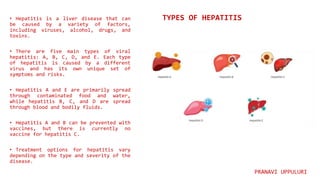
• Hepatitis is a liver disease that can
be caused by a variety of factors,
including viruses, alcohol, drugs, and
toxins.
• There are five main types of viral
hepatitis: A, B, C, D, and E. Each type
of hepatitis is caused by a different
virus and has its own unique set of
symptoms and risks.
• Hepatitis A and E are primarily spread
through contaminated food and water,
while hepatitis B, C, and D are spread
through blood and bodily fluids.
• Hepatitis A and B can be prevented with
vaccines, but there is currently no
vaccine for hepatitis C.
• Treatment options for hepatitis vary
depending on the type and severity of the
disease.
TYPES OF HEPATITIS
PRANAVI UPPULURI
SIGNS AND SYMPTOMS OF HEPATITIS
PRANAVI UPPULURI
DARK STOOL
JAUNDICE DIARRHOEA
VOMITINGS
NAUSEA ABDOMINAL PAIN
HOW DOES IT SPREADS
PRANAVI UPPULURI
CONTAMINATED FOOD UNCLEAN WATER
UNCLEAN POOLS DIRECT CONTACT ORAL/FAECAL MATTER
INFECTED MOTHER
TO CHILD
SALOON TOOLS BODY PIERCING
TOOTHBRUSH
SHARING
SEX BLOOD
TRANSFUSION
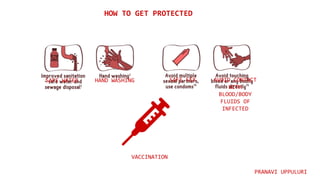
HOW TO GET PROTECTED
HAND WASHING
SAFE WATER SAFE SEX AVOID CONTACT
WITH
BLOOD/BODY
FLUIDS OF
INFECTED
VACCINATION
PRANAVI UPPULURI
• Testing for hepatitis is important because it allows for early detection and treatment.
Hepatitis can be asymptomatic, meaning that a person may not show any symptoms for years. By
the time symptoms appear, the disease may have already caused significant damage to the
liver. Testing can help catch the disease before it progresses too far.
• Prognosis for hepatitis varies depending on the type of virus and the severity of the
infection. Acute hepatitis B and C infections can sometimes clear up on their own, while
chronic infections can lead to liver damage or even liver cancer. It is important to seek
medical attention and follow recommended treatment plans to improve prognosis.
THE IMPORTANCE OF TESTING AND PROGNOSIS
PRANAVI UPPULURI
"In conclusion, World Hepatitis Day serves as a
critical reminder that hepatitis remains a global
health challenge, affecting millions of lives every
year. As we unite in the fight against this
preventable and treatable disease, let us continue
to raise awareness, advocate for better access to
screening and treatment, and work together to
eliminate hepatitis by 2030, as set forth by the
World Health Organization. By taking collective
action and promoting education, we can make a
lasting impact on reducing the burden of hepatitis
and create a healthier, hepatitis-free world for
generations to come."
ENDNOTE
PRANAVI UPPULURI

hepatitis day post.pptx

  • 1.
    WORLD HEPATITIS DAY July28th 'One Life, One Liver' PRANAVI UPPULURI
  • 2.
    • Hepatitis isa disease that affects the liver, causing inflammation and damage to this vital organ. There are several different types of hepatitis, each with its own causes and symptoms. The most common types are hepatitis A, B, and C, which are caused by viral infections. Other types of hepatitis can be caused by alcohol abuse, autoimmune disorders, or exposure to certain toxins. • The viruses that cause hepatitis can be spread through contaminated food or water, blood transfusions, unprotected sex, or from mother to child during childbirth. People who inject drugs or share needles are also at a higher risk for contracting hepatitis. Symptoms of hepatitis can range from mild to severe and may include fatigue, nausea, abdominal pain, and jaundice. WHAT IS HEPATITIS DISEASE AND HOW IT IS CAUSED? PRANAVI UPPULURI
  • 3.
    • Hepatitis isa major global health concern, affecting millions of people worldwide. According to the World Health Organization (WHO), an estimated 325 million people are living with chronic hepatitis B or C, which can lead to liver cirrhosis or cancer. Hepatitis A and E are also prevalent in many parts of the world, particularly in areas with poor sanitation and hygiene. • The burden is highest in low- and middle-income countries, where access to prevention, testing, and treatment is often limited. However, hepatitis is also a significant problem in high-income countries, where it disproportionately affects marginalized populations such as people who inject drugs and men who have sex with men. Despite the availability of effective treatments for hepatitis B and C, many people remain undiagnosed and untreated, leading to unnecessary morbidity and mortality. THE GLOBAL BURDEN OF HEPATITIS AND EPIDEMIOLOGY PRANAVI UPPULURI
  • 4.
    • Hepatitis isa liver disease that can be caused by a variety of factors, including viruses, alcohol, drugs, and toxins. • There are five main types of viral hepatitis: A, B, C, D, and E. Each type of hepatitis is caused by a different virus and has its own unique set of symptoms and risks. • Hepatitis A and E are primarily spread through contaminated food and water, while hepatitis B, C, and D are spread through blood and bodily fluids. • Hepatitis A and B can be prevented with vaccines, but there is currently no vaccine for hepatitis C. • Treatment options for hepatitis vary depending on the type and severity of the disease. TYPES OF HEPATITIS PRANAVI UPPULURI
  • 5.
    SIGNS AND SYMPTOMSOF HEPATITIS PRANAVI UPPULURI DARK STOOL JAUNDICE DIARRHOEA VOMITINGS NAUSEA ABDOMINAL PAIN
  • 6.
    HOW DOES ITSPREADS PRANAVI UPPULURI CONTAMINATED FOOD UNCLEAN WATER UNCLEAN POOLS DIRECT CONTACT ORAL/FAECAL MATTER INFECTED MOTHER TO CHILD SALOON TOOLS BODY PIERCING TOOTHBRUSH SHARING SEX BLOOD TRANSFUSION
  • 7.
    HOW TO GETPROTECTED HAND WASHING SAFE WATER SAFE SEX AVOID CONTACT WITH BLOOD/BODY FLUIDS OF INFECTED VACCINATION PRANAVI UPPULURI
  • 8.
    • Testing forhepatitis is important because it allows for early detection and treatment. Hepatitis can be asymptomatic, meaning that a person may not show any symptoms for years. By the time symptoms appear, the disease may have already caused significant damage to the liver. Testing can help catch the disease before it progresses too far. • Prognosis for hepatitis varies depending on the type of virus and the severity of the infection. Acute hepatitis B and C infections can sometimes clear up on their own, while chronic infections can lead to liver damage or even liver cancer. It is important to seek medical attention and follow recommended treatment plans to improve prognosis. THE IMPORTANCE OF TESTING AND PROGNOSIS PRANAVI UPPULURI
  • 9.
    "In conclusion, WorldHepatitis Day serves as a critical reminder that hepatitis remains a global health challenge, affecting millions of lives every year. As we unite in the fight against this preventable and treatable disease, let us continue to raise awareness, advocate for better access to screening and treatment, and work together to eliminate hepatitis by 2030, as set forth by the World Health Organization. By taking collective action and promoting education, we can make a lasting impact on reducing the burden of hepatitis and create a healthier, hepatitis-free world for generations to come." ENDNOTE PRANAVI UPPULURI