Chemistry 20 – Unit 1 Matter Energy and The Periodic Table   What is Chemistry?   Chemistry deals with:  a)   what things are made of  ( matter ).   b)  properties of matter  ( characteristics ).   c)  how matter interacts  ( chemical reactions ).   d)  energy changes  ( energy released or absorbed ).   Important Terms in Chemistry:   a)  Matter : anything that has  mass  and  takes up space  (has  volume ).   b)   Composition : what  kinds of particles  are in the matter and  how many  of each.   c)  Structure : how the particles are  bonded  together.   d)  Properties :  characteristics  of matter that are used to  identify  it.   e)  Transformations :  changes in matter   *
Three  types of changes:   i)  Phase Change :  state of matter  ( solid, liquid or gas )   Example:  H 2 O (s)      H 2 O (l)   - Solid –  - Liquid –  - Gas –  - Plasma –  definite shape and definite volume   varied shape and definite volume   varied shape and varied volume   gas charged with high energy electricity  ( Northern Lights  –  Fluorescent lights )   ii)  Chemical Change : atoms within a substance are  rearranged  to form  new substances   Example:  2 H 2 O (l)      2 H 2(g)   +  O 2(g)   iii)  Nuclear Change :  elements  are changed into different elements   * Example :
Energy : something that gives you the  ability to do work   Scientific Methods   Scientists are always making  observations .  Observations can be of two types:   Qualitative :  Quantitative : descriptive statements ,  using the 5 senses , about what has been observed For example:  colour ,  texture ,  descriptive   size  etc measured  observations, using  instruments For example: 5.0 g (mass), 2.75 cm (length), 2.50 L (volume)   Properties  of a substance are used to  identify  a substance. There are 2 types of properties:   *
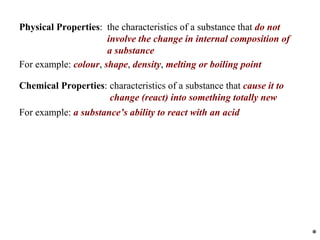
Physical Properties :    Chemical Properties : the characteristics of a substance that  do not involve the change in internal composition of a substance For example:  colour ,  shape ,  density ,  melting or boiling point characteristics of a substance that  cause it to change (react) into something totally new For example:  a substance’s ability to react with an acid *

C20 Unit 1 1 Intro

  • 1.
    Chemistry 20 –Unit 1 Matter Energy and The Periodic Table What is Chemistry? Chemistry deals with: a) what things are made of ( matter ). b) properties of matter ( characteristics ). c) how matter interacts ( chemical reactions ). d) energy changes ( energy released or absorbed ). Important Terms in Chemistry: a) Matter : anything that has mass and takes up space (has  volume ). b) Composition : what kinds of particles are in the matter and how many of each. c) Structure : how the particles are bonded together. d) Properties : characteristics of matter that are used to identify it. e) Transformations : changes in matter *
  • 2.
    Three typesof changes: i) Phase Change : state of matter ( solid, liquid or gas ) Example: H 2 O (s)  H 2 O (l) - Solid – - Liquid – - Gas – - Plasma – definite shape and definite volume varied shape and definite volume varied shape and varied volume gas charged with high energy electricity ( Northern Lights – Fluorescent lights ) ii) Chemical Change : atoms within a substance are rearranged to form new substances Example: 2 H 2 O (l)  2 H 2(g) + O 2(g) iii) Nuclear Change : elements are changed into different elements * Example :
  • 3.
    Energy : somethingthat gives you the ability to do work Scientific Methods Scientists are always making observations . Observations can be of two types: Qualitative : Quantitative : descriptive statements , using the 5 senses , about what has been observed For example: colour , texture , descriptive size etc measured observations, using instruments For example: 5.0 g (mass), 2.75 cm (length), 2.50 L (volume) Properties of a substance are used to identify a substance. There are 2 types of properties: *
  • 4.
    Physical Properties :   Chemical Properties : the characteristics of a substance that do not involve the change in internal composition of a substance For example: colour , shape , density , melting or boiling point characteristics of a substance that cause it to change (react) into something totally new For example: a substance’s ability to react with an acid *