C2 - Material ChoicesC2 - Material Choices
RevisionRevision
Material Choices (C2) Revision forMaterial Choices (C2) Revision for
ExamsExams
Properties of MaterialsProperties of Materials
 When we decide which material toWhen we decide which material to useuse,,
we have to think about thewe have to think about the propertiesproperties
of the material.of the material.
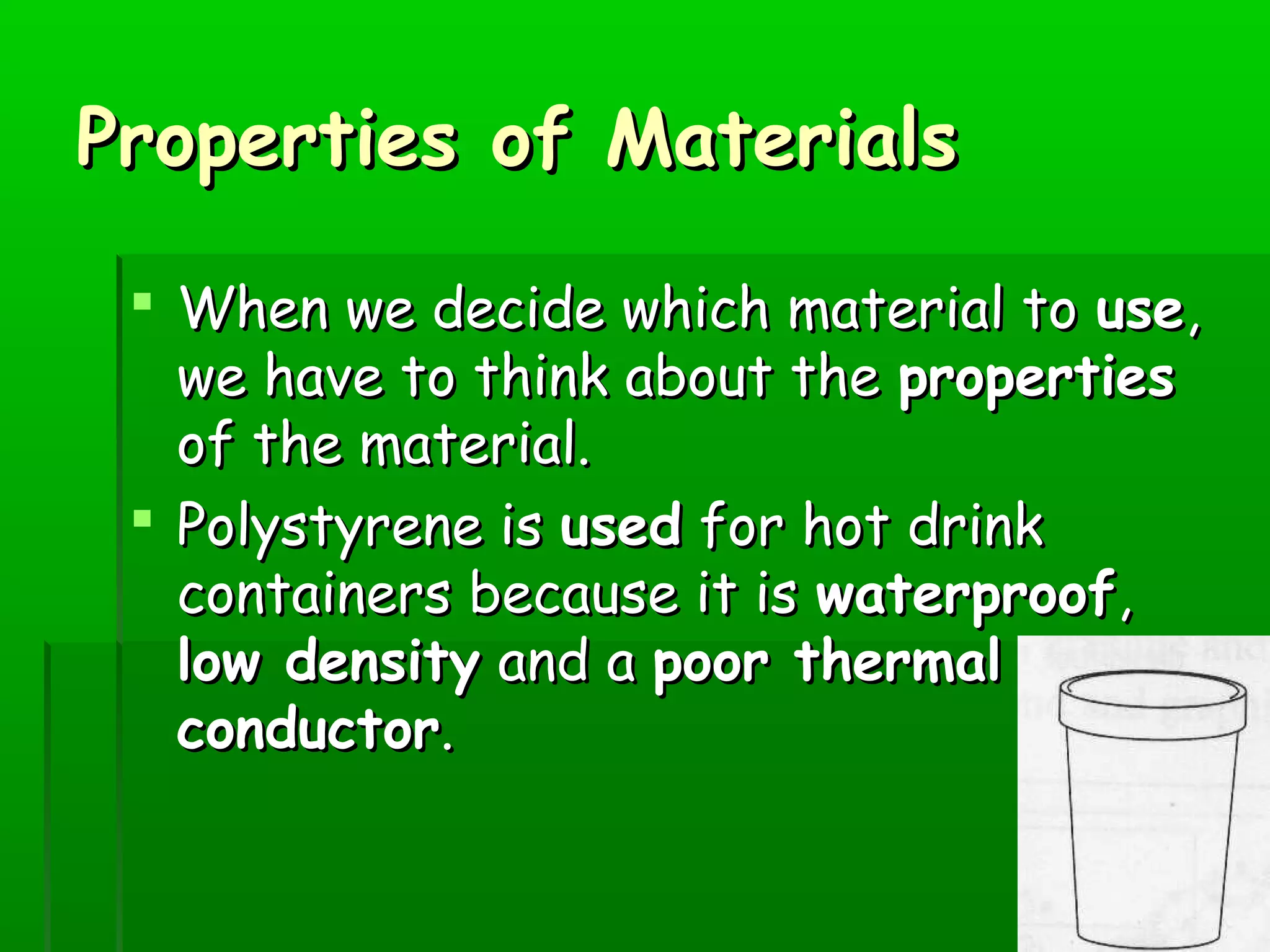
 Polystyrene isPolystyrene is usedused for hot drinkfor hot drink
containers because it iscontainers because it is waterproofwaterproof,,
low densitylow density and aand a poor thermalpoor thermal
conductorconductor..
Property WordsProperty Words
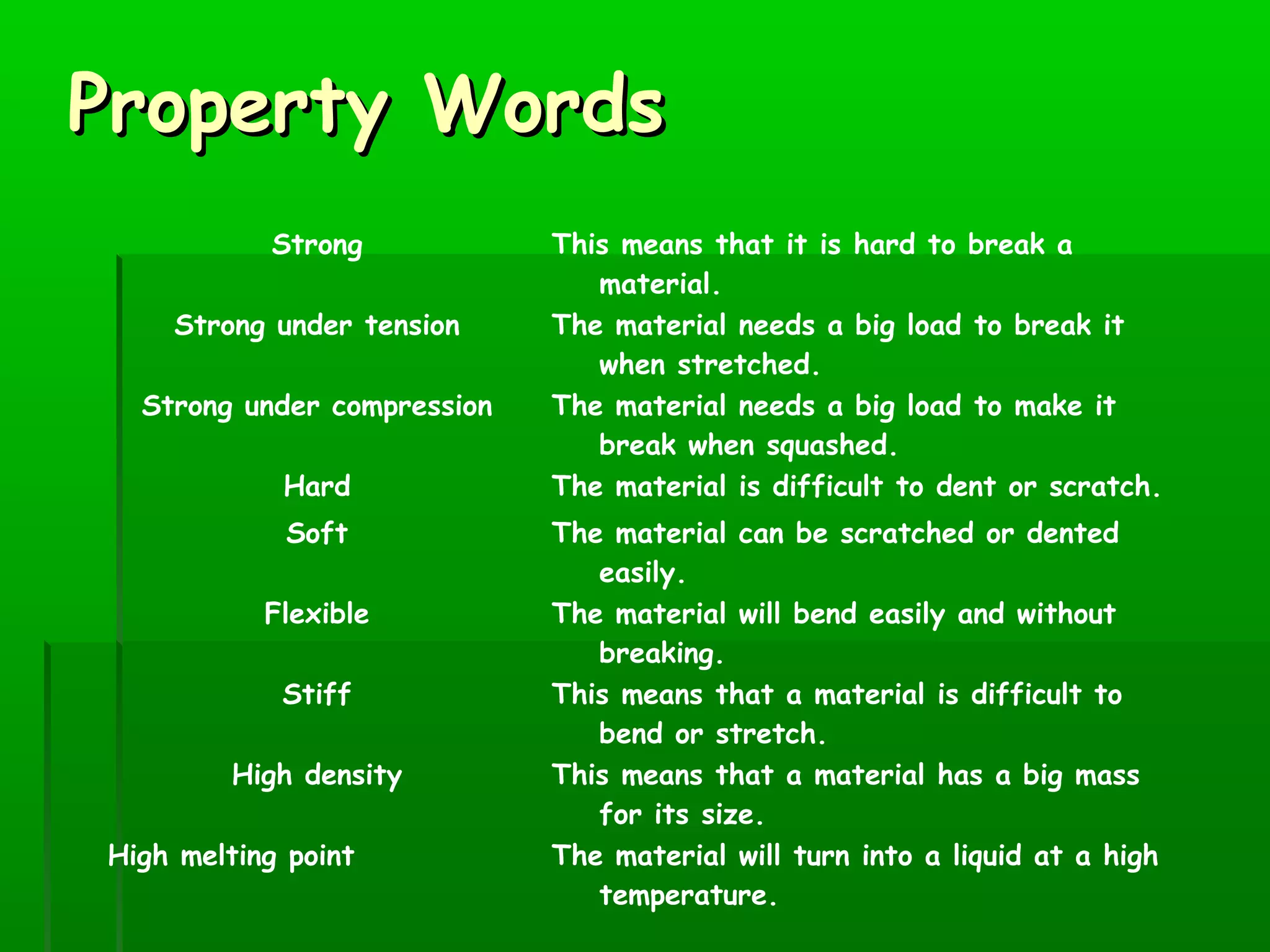
Strong This means that it is hard to break a
material.
Strong under tension The material needs a big load to break it
when stretched.
Strong under compression The material needs a big load to make it
break when squashed.
Hard The material is difficult to dent or scratch.
Soft The material can be scratched or dented
easily.
Flexible The material will bend easily and without
breaking.
Stiff This means that a material is difficult to
bend or stretch.
High density This means that a material has a big mass
for its size.
High melting point The material will turn into a liquid at a high
temperature.
Testing MaterialsTesting Materials
Is there a real difference?Is there a real difference?
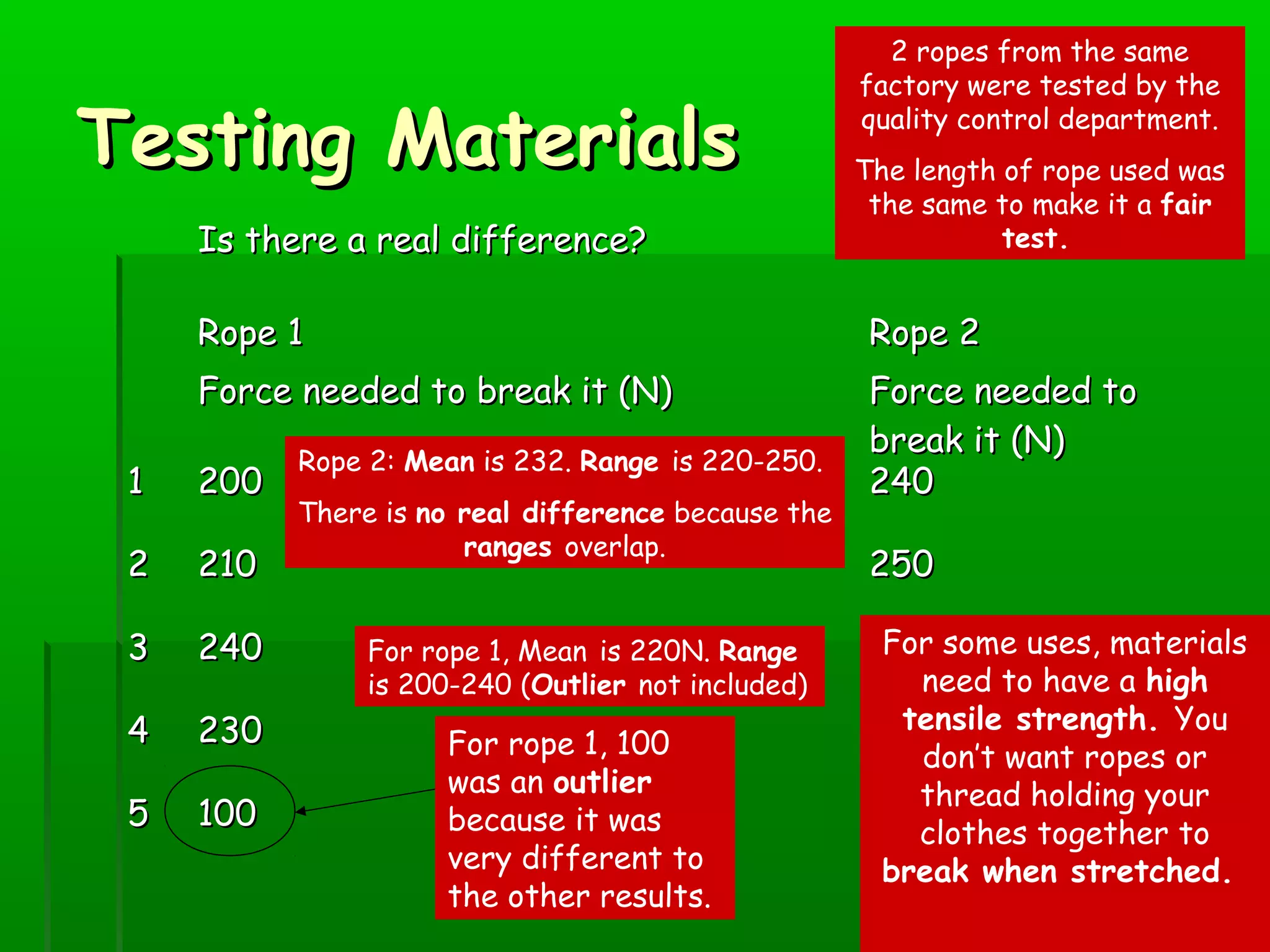
Rope 1Rope 1
Force needed to break it (N)Force needed to break it (N)
Rope 2Rope 2
Force needed toForce needed to
break it (N)break it (N)
11 200200 240240
22 210210 250250
33 240240 230230
44 230230 220220
55 100100 220220
For some uses, materials
need to have a high
tensile strength. You
don’t want ropes or
thread holding your
clothes together to
break when stretched.
2 ropes from the same
factory were tested by the
quality control department.
The length of rope used was
the same to make it a fair
test.
For rope 1, 100
was an outlier
because it was
very different to
the other results.
For rope 1, Mean is 220N. Range
is 200-240 (Outlier not included)
Rope 2: Mean is 232. Range is 220-250.
There is no real difference because the
ranges overlap.
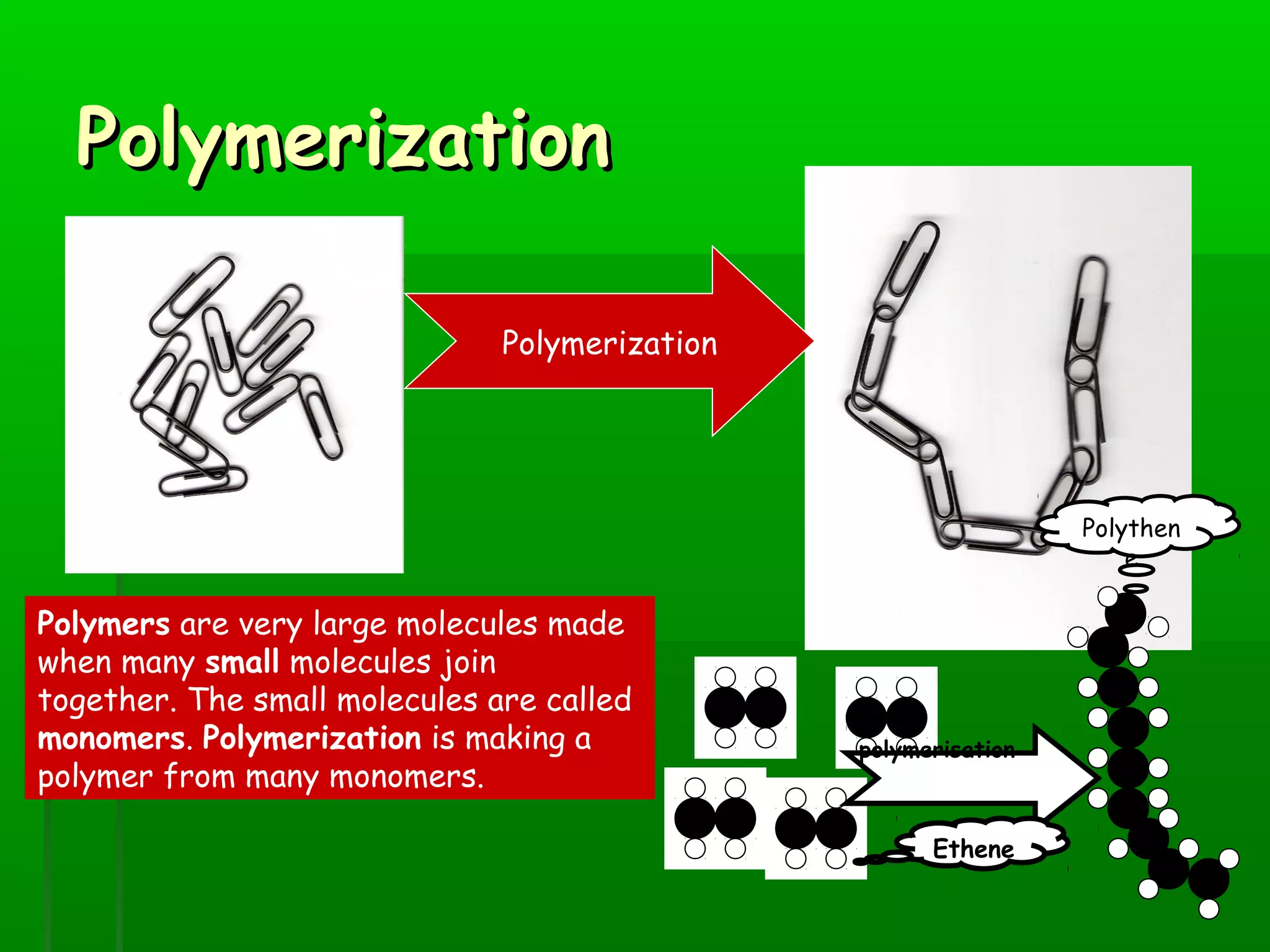
PolymerizationPolymerization
Polymerization
Polymers are very large molecules made
when many small molecules join
together. The small molecules are called
monomers. Polymerization is making a
polymer from many monomers.
polymerisation
Polythen
e
Ethene
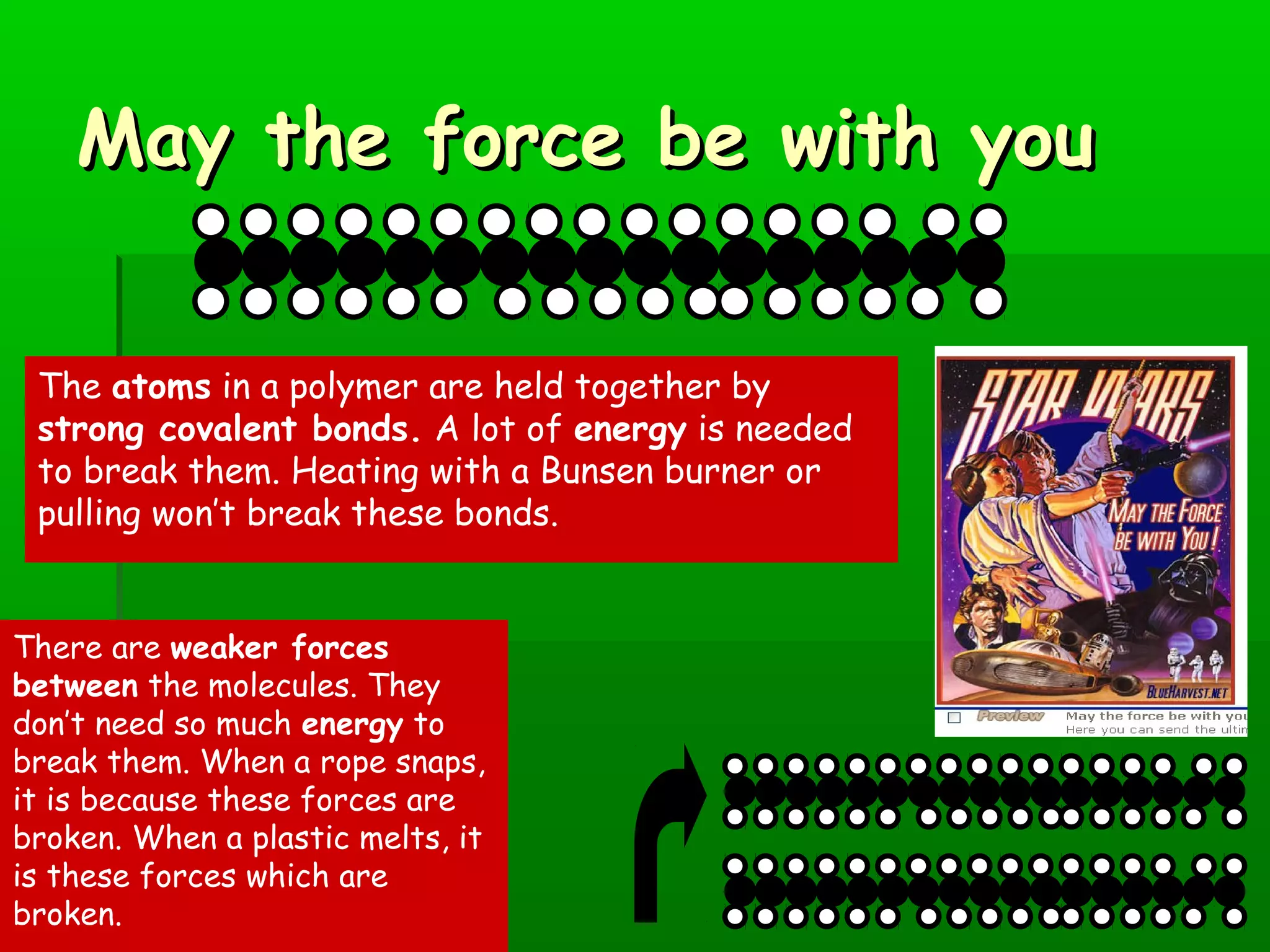
May the force be with youMay the force be with you
The atoms in a polymer are held together by
strong covalent bonds. A lot of energy is needed
to break them. Heating with a Bunsen burner or
pulling won’t break these bonds.
There are weaker forces
between the molecules. They
don’t need so much energy to
break them. When a rope snaps,
it is because these forces are
broken. When a plastic melts, it
is these forces which are
broken.
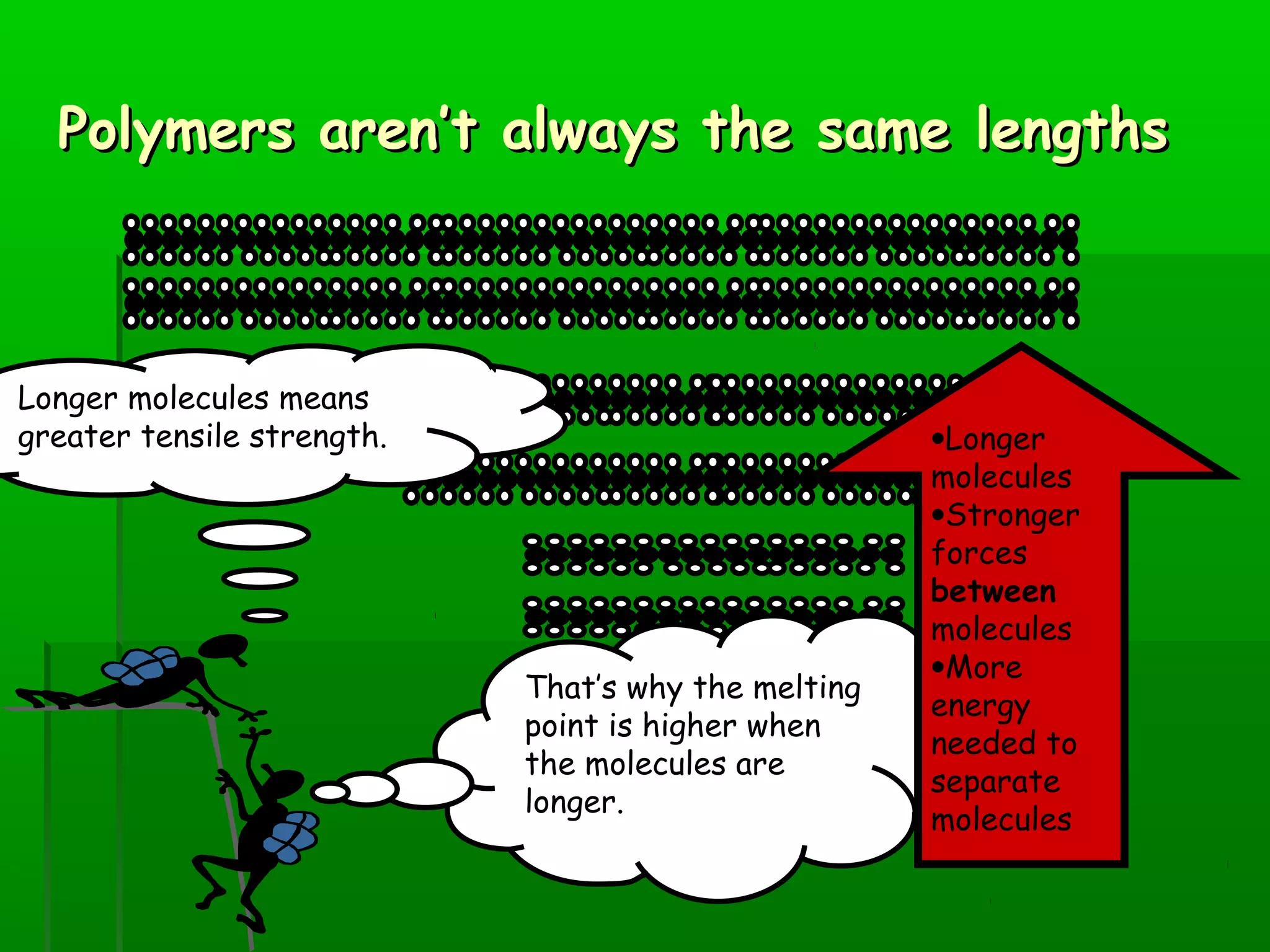
Polymers aren’t always the same lengthsPolymers aren’t always the same lengths
That’s why the melting
point is higher when
the molecules are
longer.
Longer molecules means
greater tensile strength. •Longer
molecules
•Stronger
forces
between
molecules
•More
energy
needed to
separate
molecules
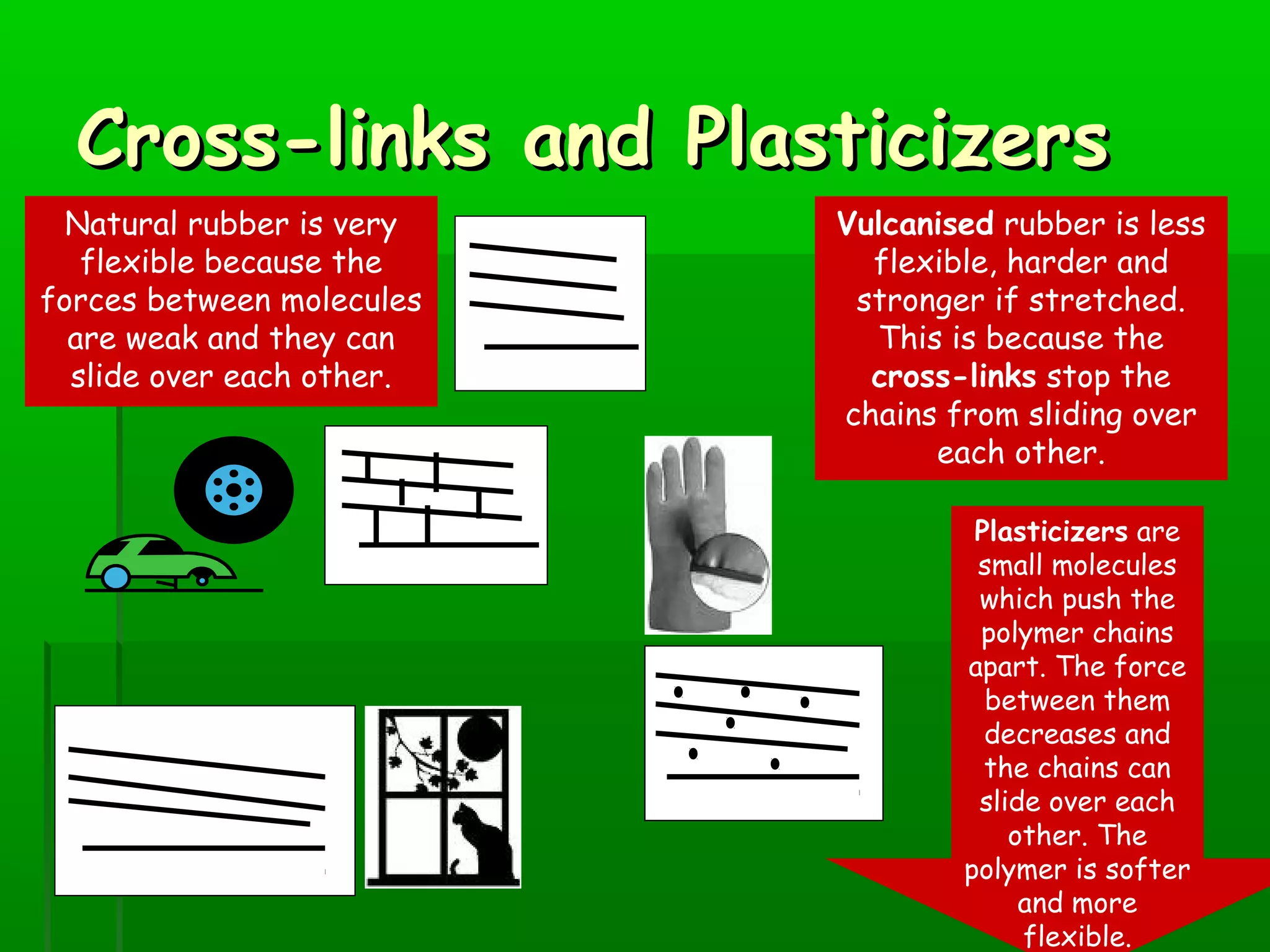
Cross-links and PlasticizersCross-links and Plasticizers
Plasticizers are
small molecules
which push the
polymer chains
apart. The force
between them
decreases and
the chains can
slide over each
other. The
polymer is softer
and more
flexible.
Natural rubber is very
flexible because the
forces between molecules
are weak and they can
slide over each other.
Vulcanised rubber is less
flexible, harder and
stronger if stretched.
This is because the
cross-links stop the
chains from sliding over
each other.
Crystallinity is crazy? (Higher only)Crystallinity is crazy? (Higher only)
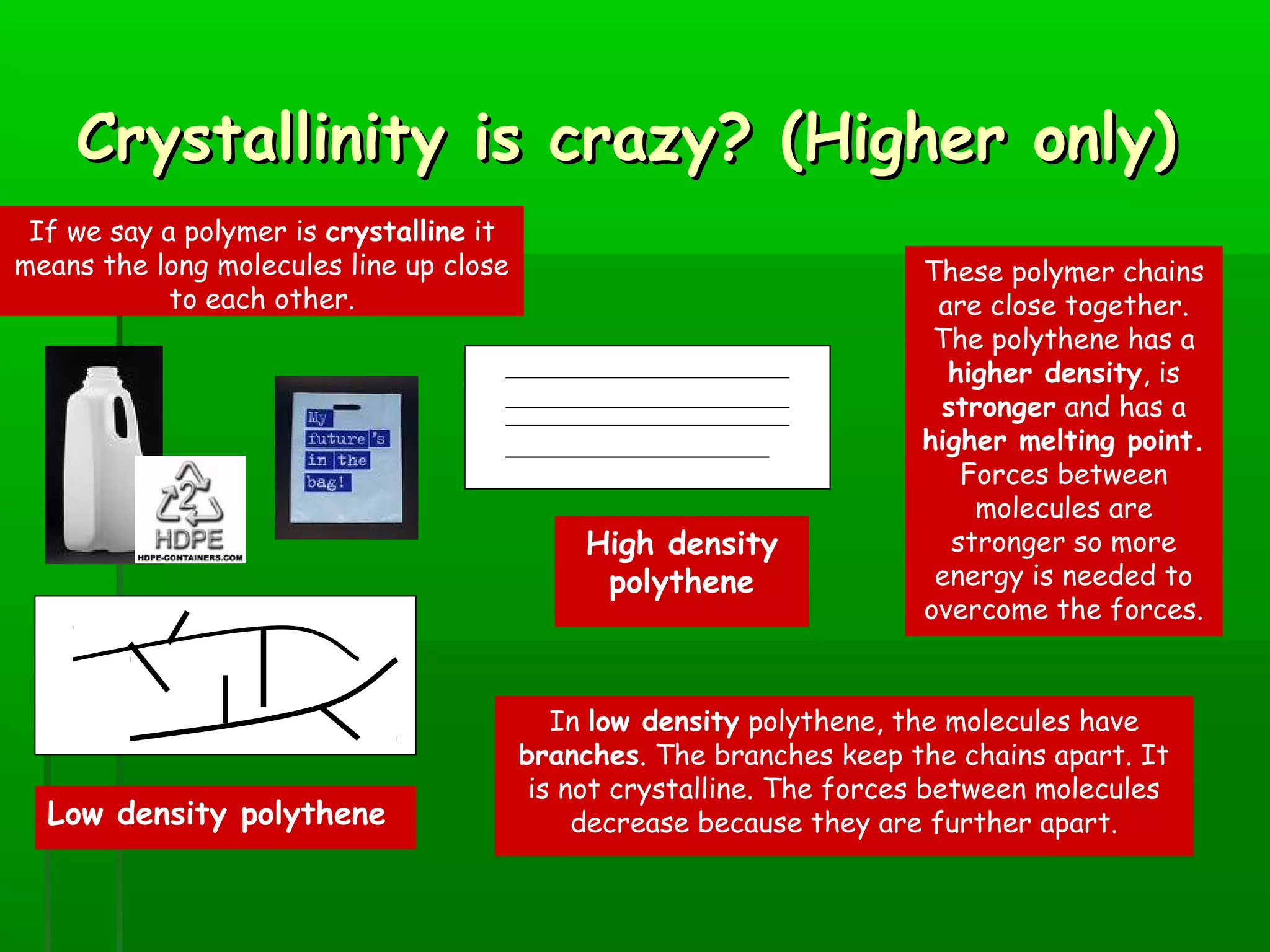
These polymer chains
are close together.
The polythene has a
higher density, is
stronger and has a
higher melting point.
Forces between
molecules are
stronger so more
energy is needed to
overcome the forces.
If we say a polymer is crystalline it
means the long molecules line up close
to each other.
High density
polythene
In low density polythene, the molecules have
branches. The branches keep the chains apart. It
is not crystalline. The forces between molecules
decrease because they are further apart.Low density polythene
Crude OilCrude Oil Millions
of
years
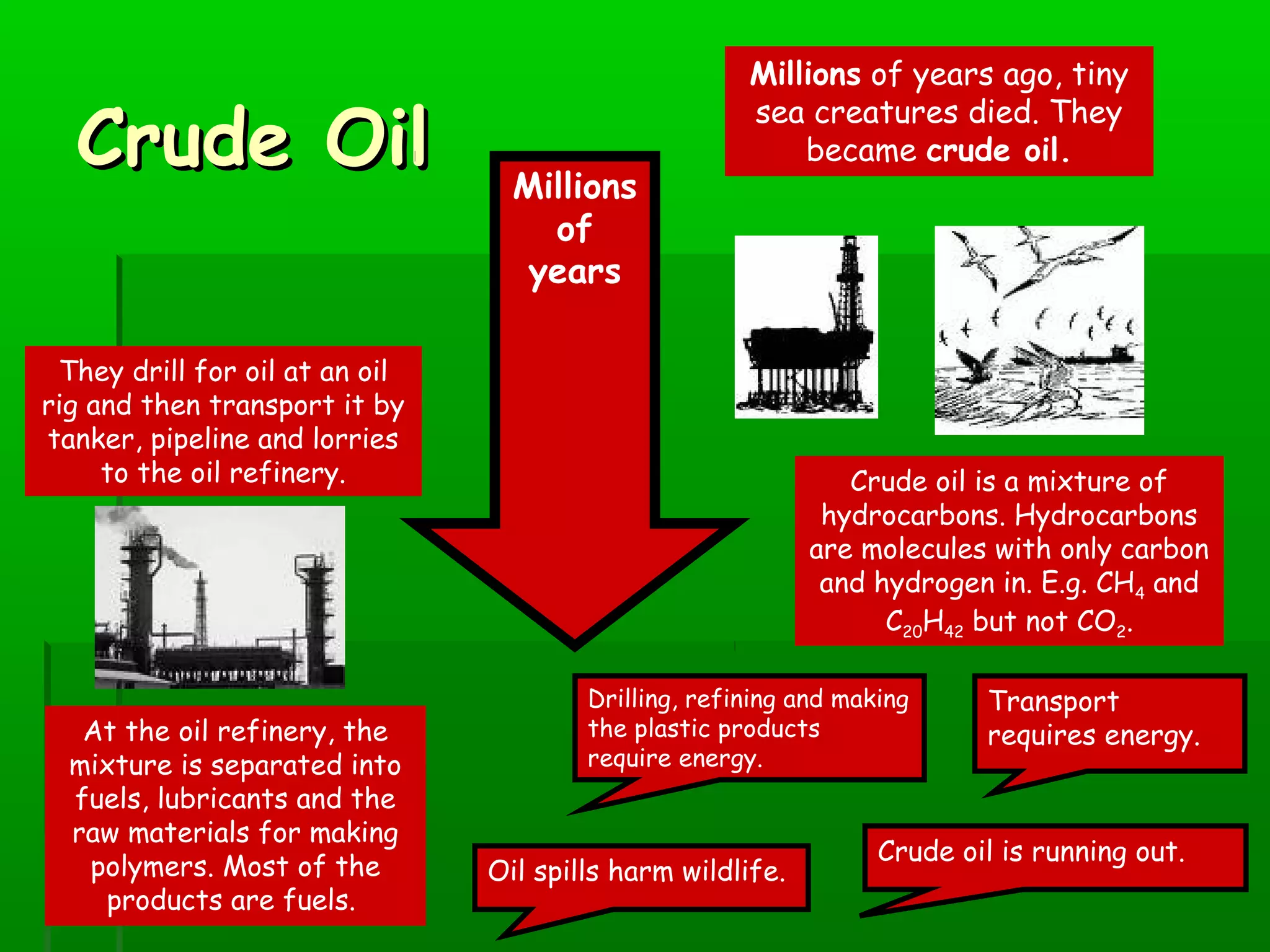
Millions of years ago, tiny
sea creatures died. They
became crude oil.
They drill for oil at an oil
rig and then transport it by
tanker, pipeline and lorries
to the oil refinery. Crude oil is a mixture of
hydrocarbons. Hydrocarbons
are molecules with only carbon
and hydrogen in. E.g. CH4 and
C20H42 but not CO2.
At the oil refinery, the
mixture is separated into
fuels, lubricants and the
raw materials for making
polymers. Most of the
products are fuels.
Crude oil is running out.
Drilling, refining and making
the plastic products
require energy.
Transport
requires energy.
Oil spills harm wildlife.
Natural or SyntheticNatural or Synthetic
Lots of materials are synthetic now. Synthetic means
made by a chemical reaction. Anything with a name
starting with poly is synthetic, for example
polythene, polyester and pvc (polyvinylchloride ).
Other synthetic materials include acrylic, viscose
and nylon. The raw material is usually crude oil.
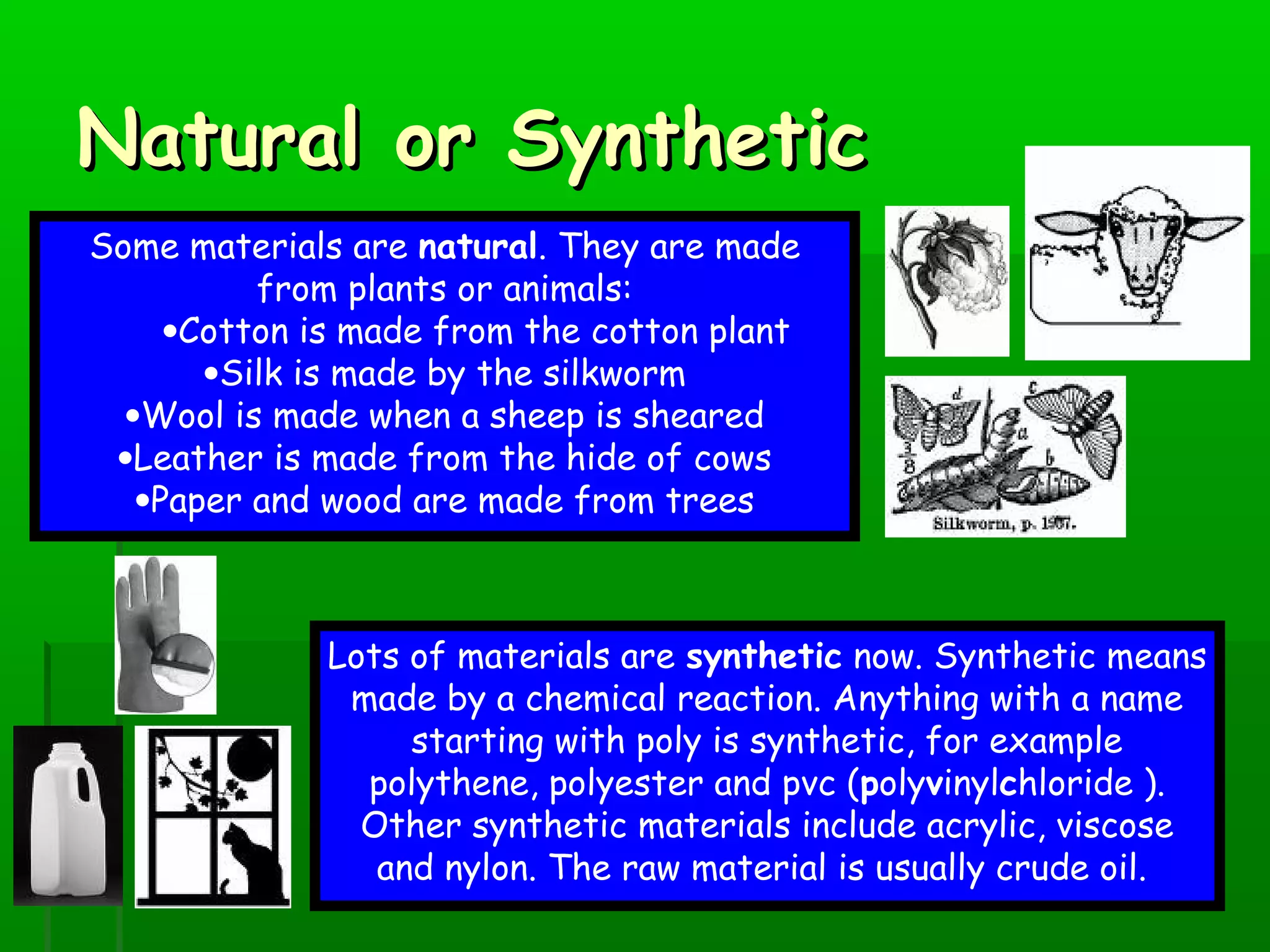
Some materials are natural. They are made
from plants or animals:
•Cotton is made from the cotton plant
•Silk is made by the silkworm
•Wool is made when a sheep is sheared
•Leather is made from the hide of cows
•Paper and wood are made from trees
Cradle to GraveCradle to Grave
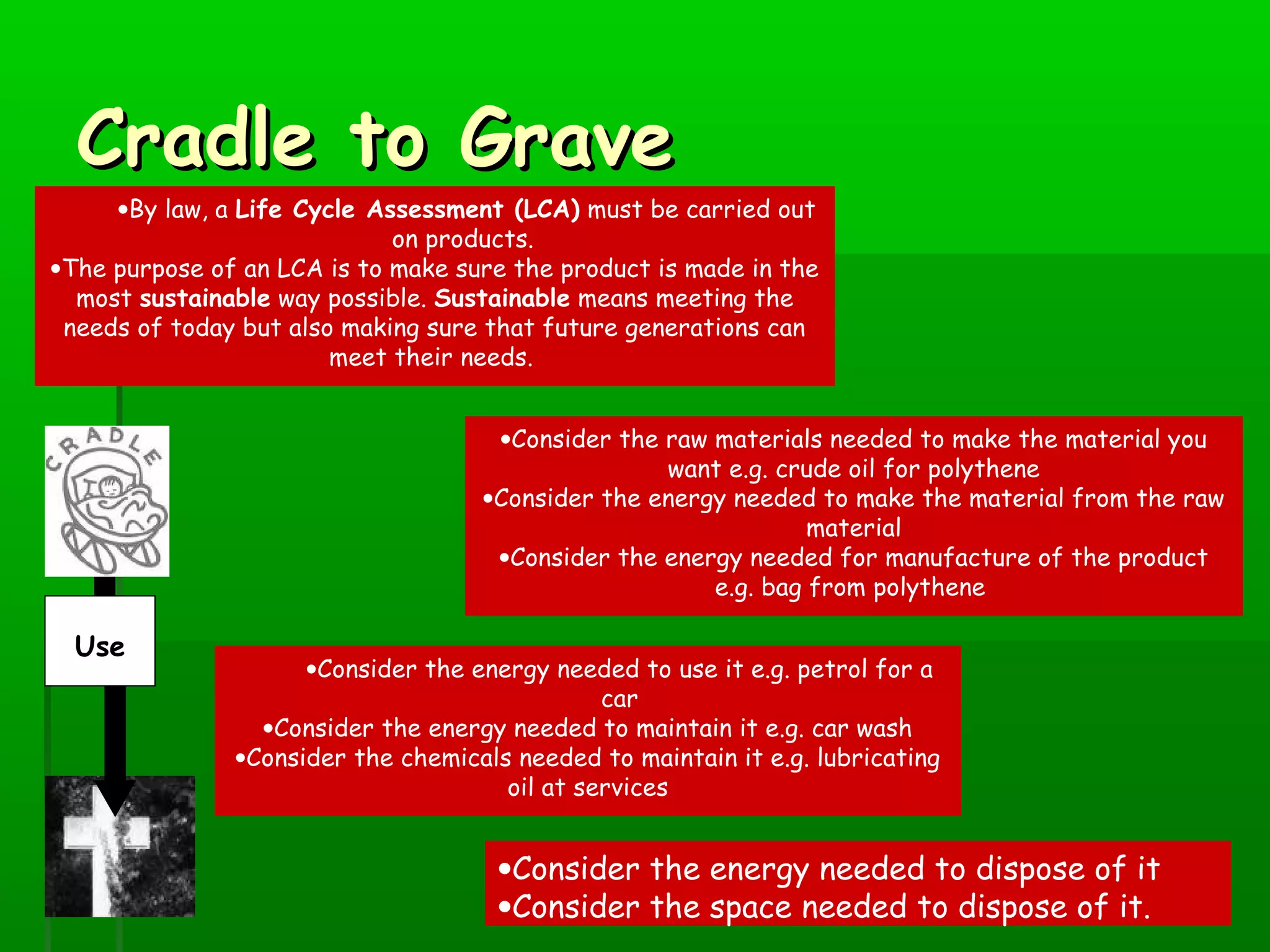
•By law, a Life Cycle Assessment (LCA) must be carried out
on products.
•The purpose of an LCA is to make sure the product is made in the
most sustainable way possible. Sustainable means meeting the
needs of today but also making sure that future generations can
meet their needs.
•Consider the raw materials needed to make the material you
want e.g. crude oil for polythene
•Consider the energy needed to make the material from the raw
material
•Consider the energy needed for manufacture of the product
e.g. bag from polythene
•Consider the energy needed to use it e.g. petrol for a
car
•Consider the energy needed to maintain it e.g. car wash
•Consider the chemicals needed to maintain it e.g. lubricating
oil at services
•Consider the energy needed to dispose of it
•Consider the space needed to dispose of it.
Use
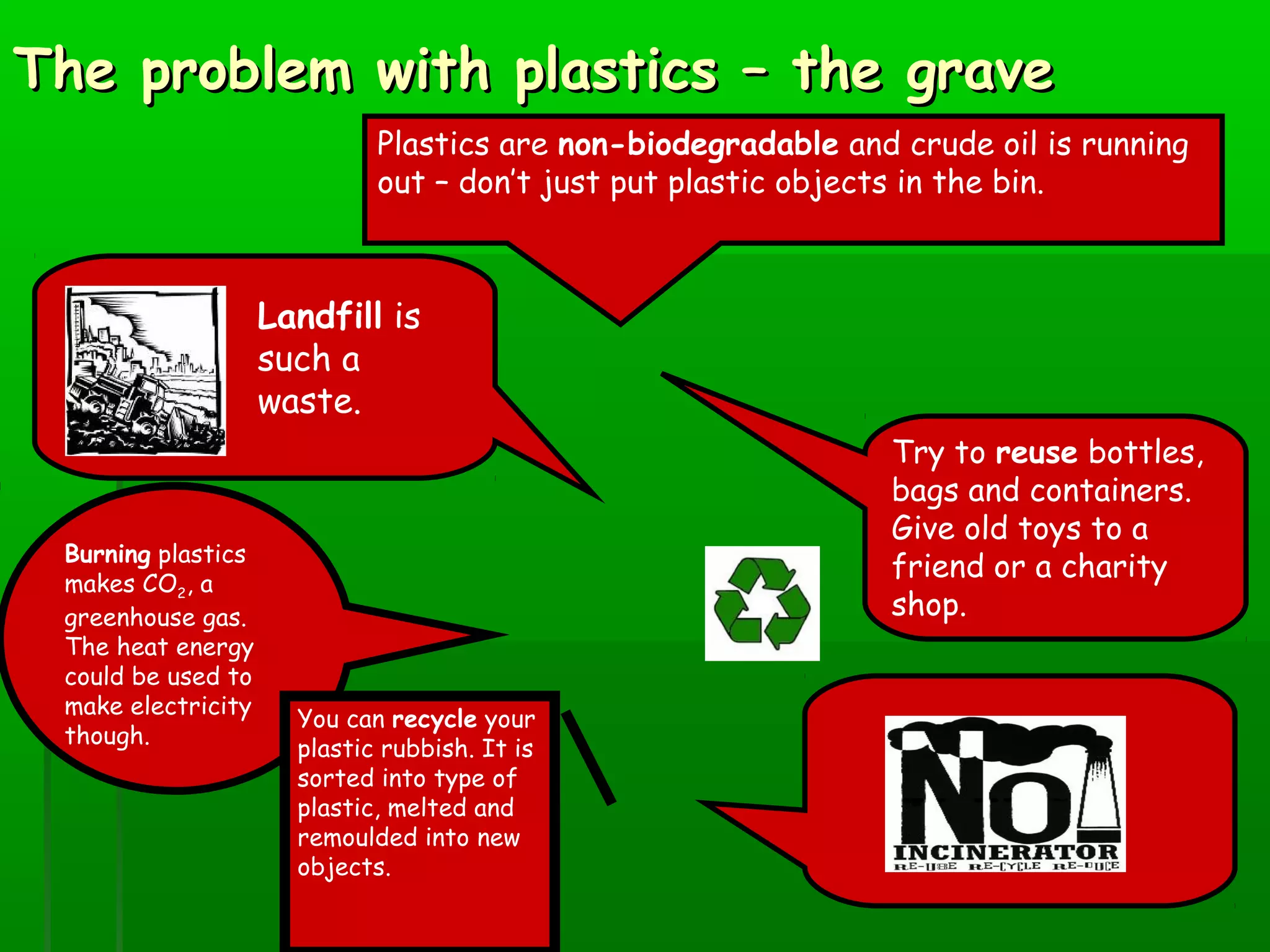
The problem with plastics – the graveThe problem with plastics – the grave
Plastics are non-biodegradable and crude oil is running
out – don’t just put plastic objects in the bin.
Try to reuse bottles,
bags and containers.
Give old toys to a
friend or a charity
shop.
Burning plastics
makes CO2, a
greenhouse gas.
The heat energy
could be used to
make electricity
though.
You can recycle your
plastic rubbish. It is
sorted into type of
plastic, melted and
remoulded into new
objects.
Landfill is
such a
waste.
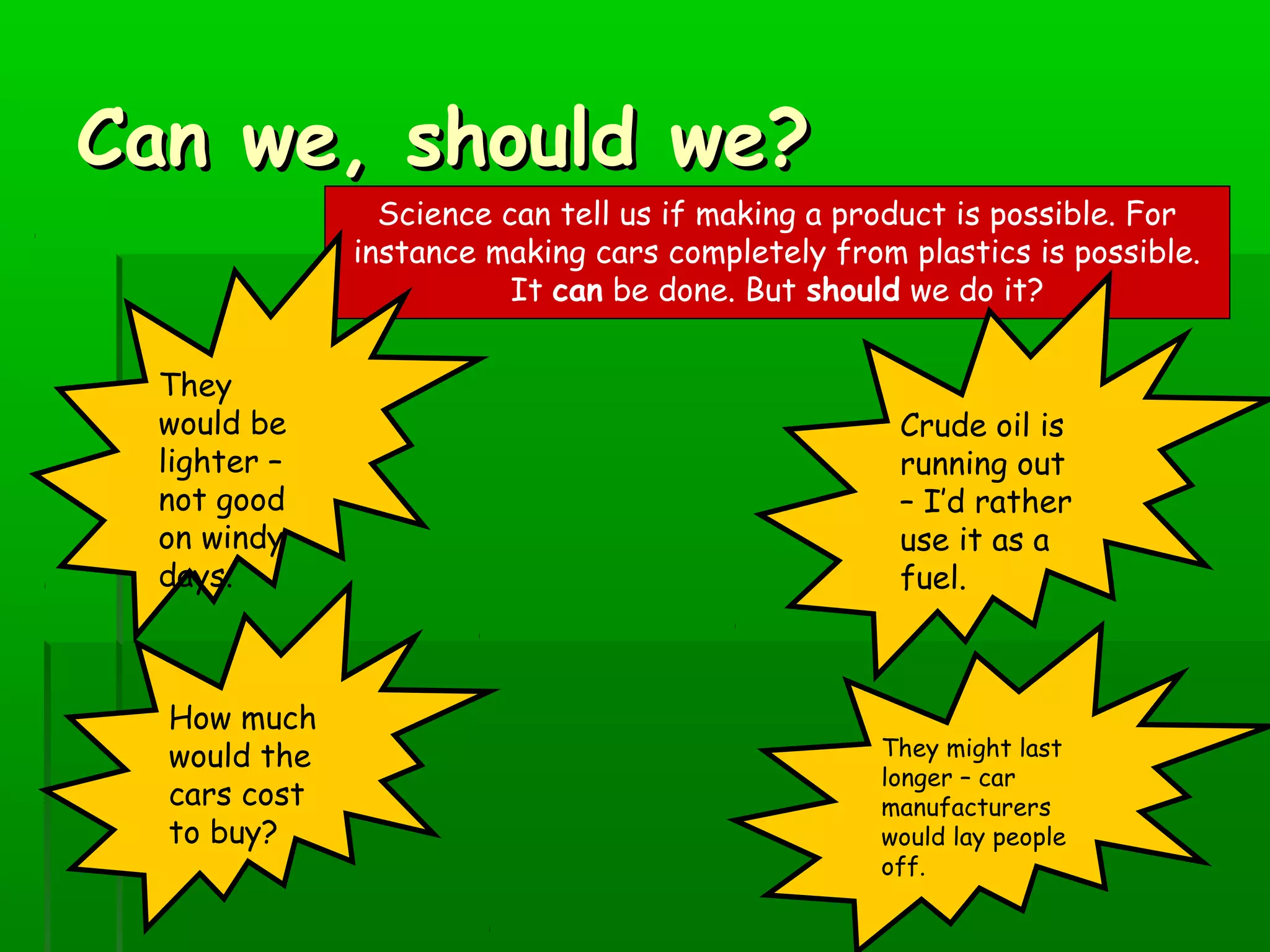
Can we, should we?Can we, should we?
Science can tell us if making a product is possible. For
instance making cars completely from plastics is possible.
It can be done. But should we do it?
They
would be
lighter –
not good
on windy
days.
Crude oil is
running out
– I’d rather
use it as a
fuel.
They might last
longer – car
manufacturers
would lay people
off.
How much
would the
cars cost
to buy?

C2 Material Choices revision

  • 1.
    C2 - MaterialChoicesC2 - Material Choices RevisionRevision Material Choices (C2) Revision forMaterial Choices (C2) Revision for ExamsExams
  • 2.
    Properties of MaterialsPropertiesof Materials  When we decide which material toWhen we decide which material to useuse,, we have to think about thewe have to think about the propertiesproperties of the material.of the material.  Polystyrene isPolystyrene is usedused for hot drinkfor hot drink containers because it iscontainers because it is waterproofwaterproof,, low densitylow density and aand a poor thermalpoor thermal conductorconductor..
  • 3.
    Property WordsProperty Words StrongThis means that it is hard to break a material. Strong under tension The material needs a big load to break it when stretched. Strong under compression The material needs a big load to make it break when squashed. Hard The material is difficult to dent or scratch. Soft The material can be scratched or dented easily. Flexible The material will bend easily and without breaking. Stiff This means that a material is difficult to bend or stretch. High density This means that a material has a big mass for its size. High melting point The material will turn into a liquid at a high temperature.
  • 4.
    Testing MaterialsTesting Materials Isthere a real difference?Is there a real difference? Rope 1Rope 1 Force needed to break it (N)Force needed to break it (N) Rope 2Rope 2 Force needed toForce needed to break it (N)break it (N) 11 200200 240240 22 210210 250250 33 240240 230230 44 230230 220220 55 100100 220220 For some uses, materials need to have a high tensile strength. You don’t want ropes or thread holding your clothes together to break when stretched. 2 ropes from the same factory were tested by the quality control department. The length of rope used was the same to make it a fair test. For rope 1, 100 was an outlier because it was very different to the other results. For rope 1, Mean is 220N. Range is 200-240 (Outlier not included) Rope 2: Mean is 232. Range is 220-250. There is no real difference because the ranges overlap.
  • 5.
    PolymerizationPolymerization Polymerization Polymers are verylarge molecules made when many small molecules join together. The small molecules are called monomers. Polymerization is making a polymer from many monomers. polymerisation Polythen e Ethene
  • 6.
    May the forcebe with youMay the force be with you The atoms in a polymer are held together by strong covalent bonds. A lot of energy is needed to break them. Heating with a Bunsen burner or pulling won’t break these bonds. There are weaker forces between the molecules. They don’t need so much energy to break them. When a rope snaps, it is because these forces are broken. When a plastic melts, it is these forces which are broken.
  • 7.
    Polymers aren’t alwaysthe same lengthsPolymers aren’t always the same lengths That’s why the melting point is higher when the molecules are longer. Longer molecules means greater tensile strength. •Longer molecules •Stronger forces between molecules •More energy needed to separate molecules
  • 8.
    Cross-links and PlasticizersCross-linksand Plasticizers Plasticizers are small molecules which push the polymer chains apart. The force between them decreases and the chains can slide over each other. The polymer is softer and more flexible. Natural rubber is very flexible because the forces between molecules are weak and they can slide over each other. Vulcanised rubber is less flexible, harder and stronger if stretched. This is because the cross-links stop the chains from sliding over each other.
  • 9.
    Crystallinity is crazy?(Higher only)Crystallinity is crazy? (Higher only) These polymer chains are close together. The polythene has a higher density, is stronger and has a higher melting point. Forces between molecules are stronger so more energy is needed to overcome the forces. If we say a polymer is crystalline it means the long molecules line up close to each other. High density polythene In low density polythene, the molecules have branches. The branches keep the chains apart. It is not crystalline. The forces between molecules decrease because they are further apart.Low density polythene
  • 10.
    Crude OilCrude OilMillions of years Millions of years ago, tiny sea creatures died. They became crude oil. They drill for oil at an oil rig and then transport it by tanker, pipeline and lorries to the oil refinery. Crude oil is a mixture of hydrocarbons. Hydrocarbons are molecules with only carbon and hydrogen in. E.g. CH4 and C20H42 but not CO2. At the oil refinery, the mixture is separated into fuels, lubricants and the raw materials for making polymers. Most of the products are fuels. Crude oil is running out. Drilling, refining and making the plastic products require energy. Transport requires energy. Oil spills harm wildlife.
  • 11.
    Natural or SyntheticNaturalor Synthetic Lots of materials are synthetic now. Synthetic means made by a chemical reaction. Anything with a name starting with poly is synthetic, for example polythene, polyester and pvc (polyvinylchloride ). Other synthetic materials include acrylic, viscose and nylon. The raw material is usually crude oil. Some materials are natural. They are made from plants or animals: •Cotton is made from the cotton plant •Silk is made by the silkworm •Wool is made when a sheep is sheared •Leather is made from the hide of cows •Paper and wood are made from trees
  • 12.
    Cradle to GraveCradleto Grave •By law, a Life Cycle Assessment (LCA) must be carried out on products. •The purpose of an LCA is to make sure the product is made in the most sustainable way possible. Sustainable means meeting the needs of today but also making sure that future generations can meet their needs. •Consider the raw materials needed to make the material you want e.g. crude oil for polythene •Consider the energy needed to make the material from the raw material •Consider the energy needed for manufacture of the product e.g. bag from polythene •Consider the energy needed to use it e.g. petrol for a car •Consider the energy needed to maintain it e.g. car wash •Consider the chemicals needed to maintain it e.g. lubricating oil at services •Consider the energy needed to dispose of it •Consider the space needed to dispose of it. Use
  • 13.
    The problem withplastics – the graveThe problem with plastics – the grave Plastics are non-biodegradable and crude oil is running out – don’t just put plastic objects in the bin. Try to reuse bottles, bags and containers. Give old toys to a friend or a charity shop. Burning plastics makes CO2, a greenhouse gas. The heat energy could be used to make electricity though. You can recycle your plastic rubbish. It is sorted into type of plastic, melted and remoulded into new objects. Landfill is such a waste.
  • 14.
    Can we, shouldwe?Can we, should we? Science can tell us if making a product is possible. For instance making cars completely from plastics is possible. It can be done. But should we do it? They would be lighter – not good on windy days. Crude oil is running out – I’d rather use it as a fuel. They might last longer – car manufacturers would lay people off. How much would the cars cost to buy?