Business Intelligence (BI)
Overview and Trends
Matt Schwartz
March 31, 2011
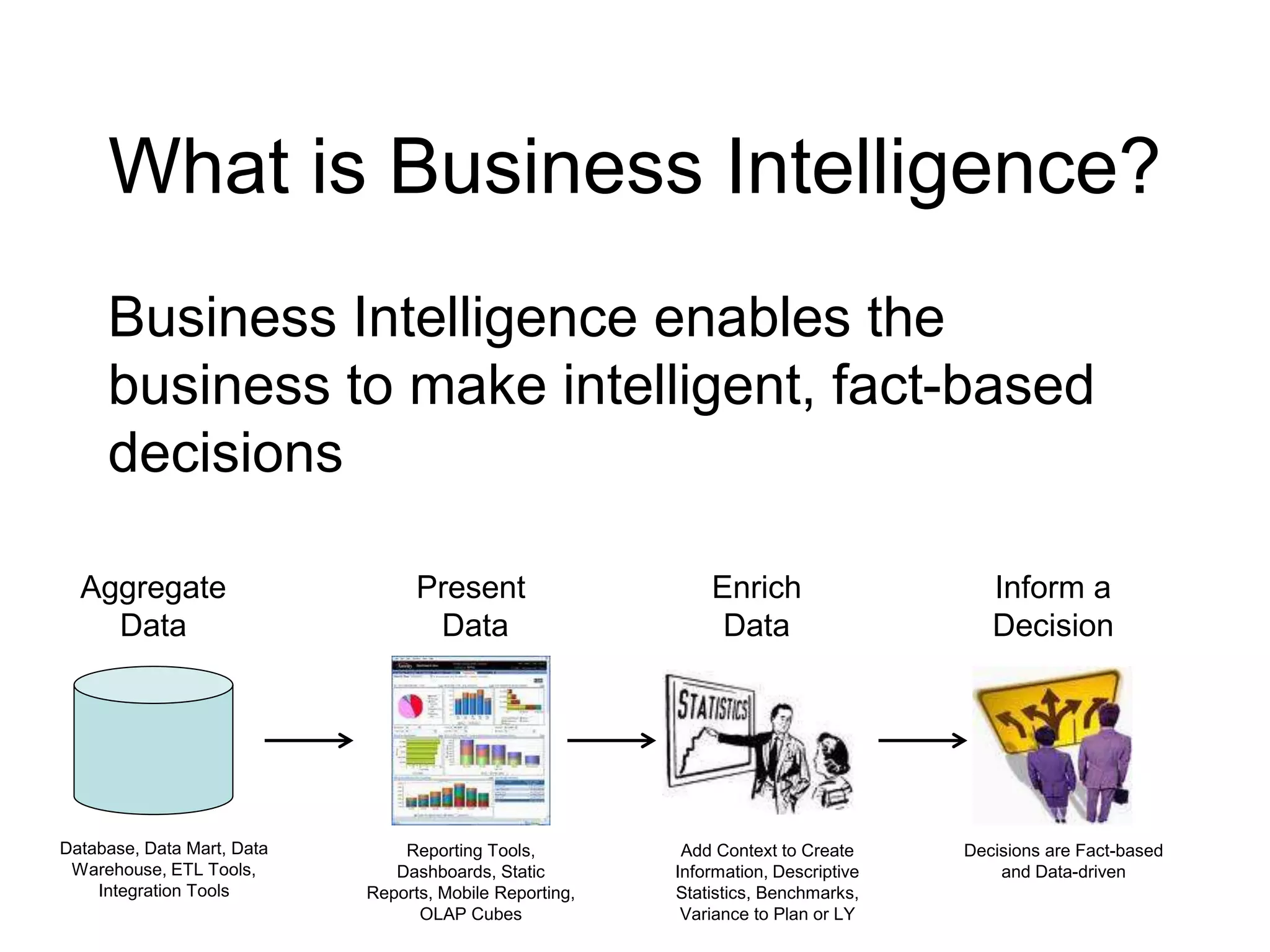
What is Business Intelligence?
Business Intelligence enables the
business to make intelligent, fact-based
decisions
Aggregate
Data
Database, Data Mart, Data
Warehouse, ETL Tools,
Integration Tools
Present
Data
Enrich
Data
Inform a
Decision
Reporting Tools,
Dashboards, Static
Reports, Mobile Reporting,
OLAP Cubes
Add Context to Create
Information, Descriptive
Statistics, Benchmarks,
Variance to Plan or LY
Decisions are Fact-based
and Data-driven
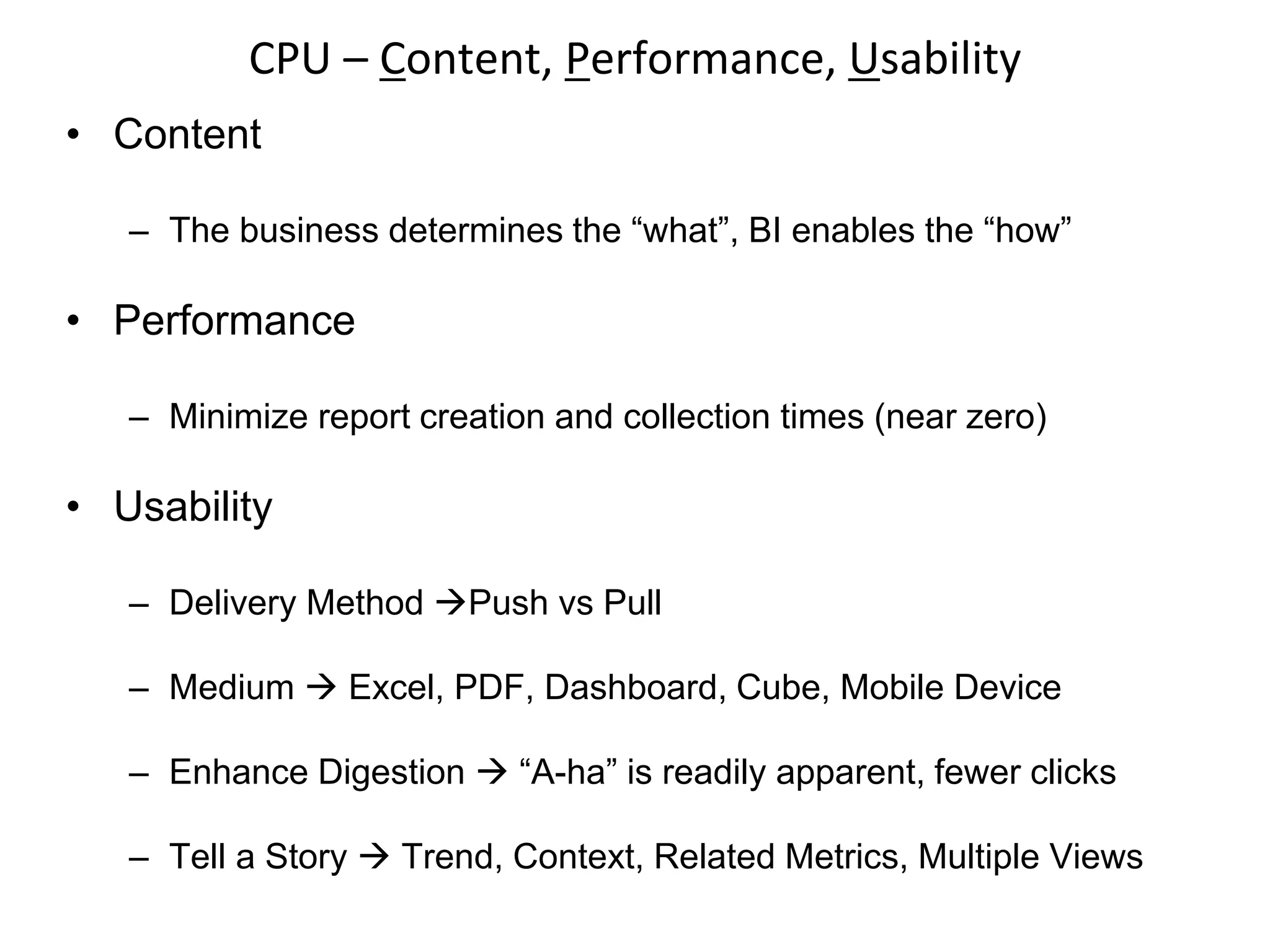
• Content
– The business determines the “what”, BI enables the “how”
• Performance
– Minimize report creation and collection times (near zero)
• Usability
– Delivery Method Push vs Pull
– Medium  Excel, PDF, Dashboard, Cube, Mobile Device
– Enhance Digestion  “A-ha” is readily apparent, fewer clicks
– Tell a Story  Trend, Context, Related Metrics, Multiple Views
CPU – Content, Performance, Usability
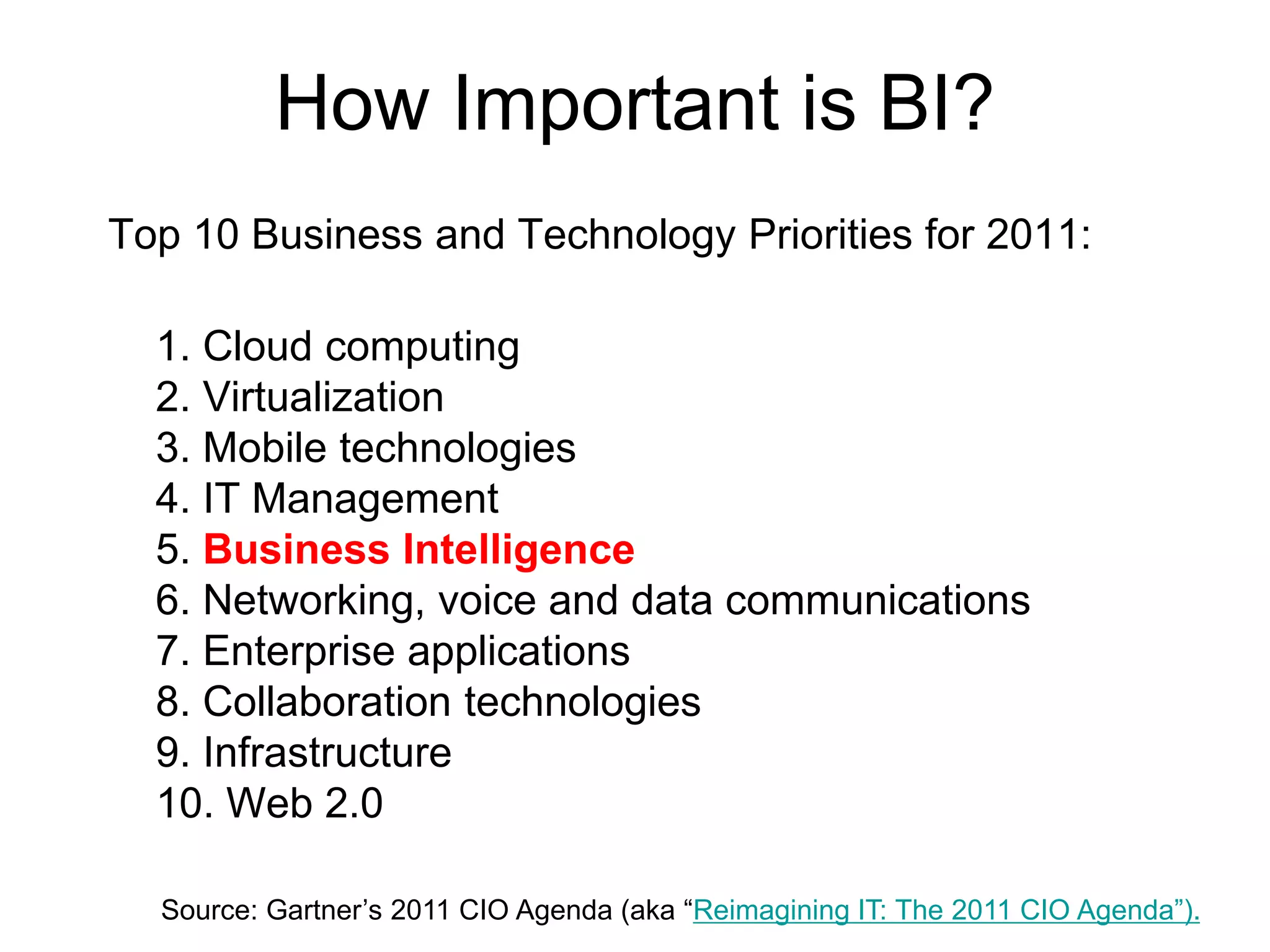
How Important is BI?
Top 10 Business and Technology Priorities for 2011:
1. Cloud computing
2. Virtualization
3. Mobile technologies
4. IT Management
5. Business Intelligence
6. Networking, voice and data communications
7. Enterprise applications
8. Collaboration technologies
9. Infrastructure
10. Web 2.0
Source: Gartner’s 2011 CIO Agenda (aka “Reimagining IT: The 2011 CIO Agenda”).
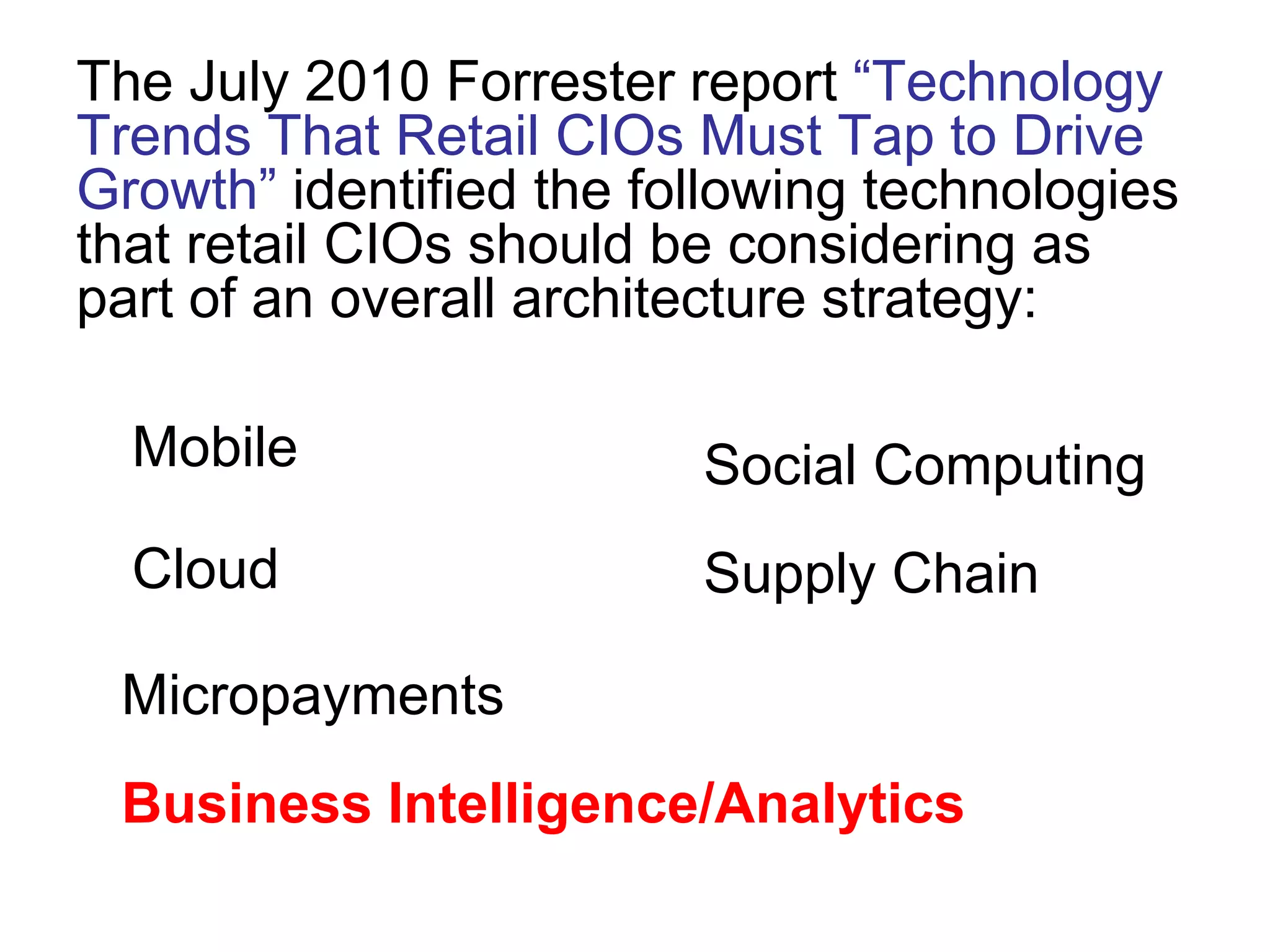
The July 2010 Forrester report “Technology
Trends That Retail CIOs Must Tap to Drive
Growth” identified the following technologies
that retail CIOs should be considering as
part of an overall architecture strategy:
Mobile
Cloud
Social Computing
Supply Chain
Micropayments
Business Intelligence/Analytics
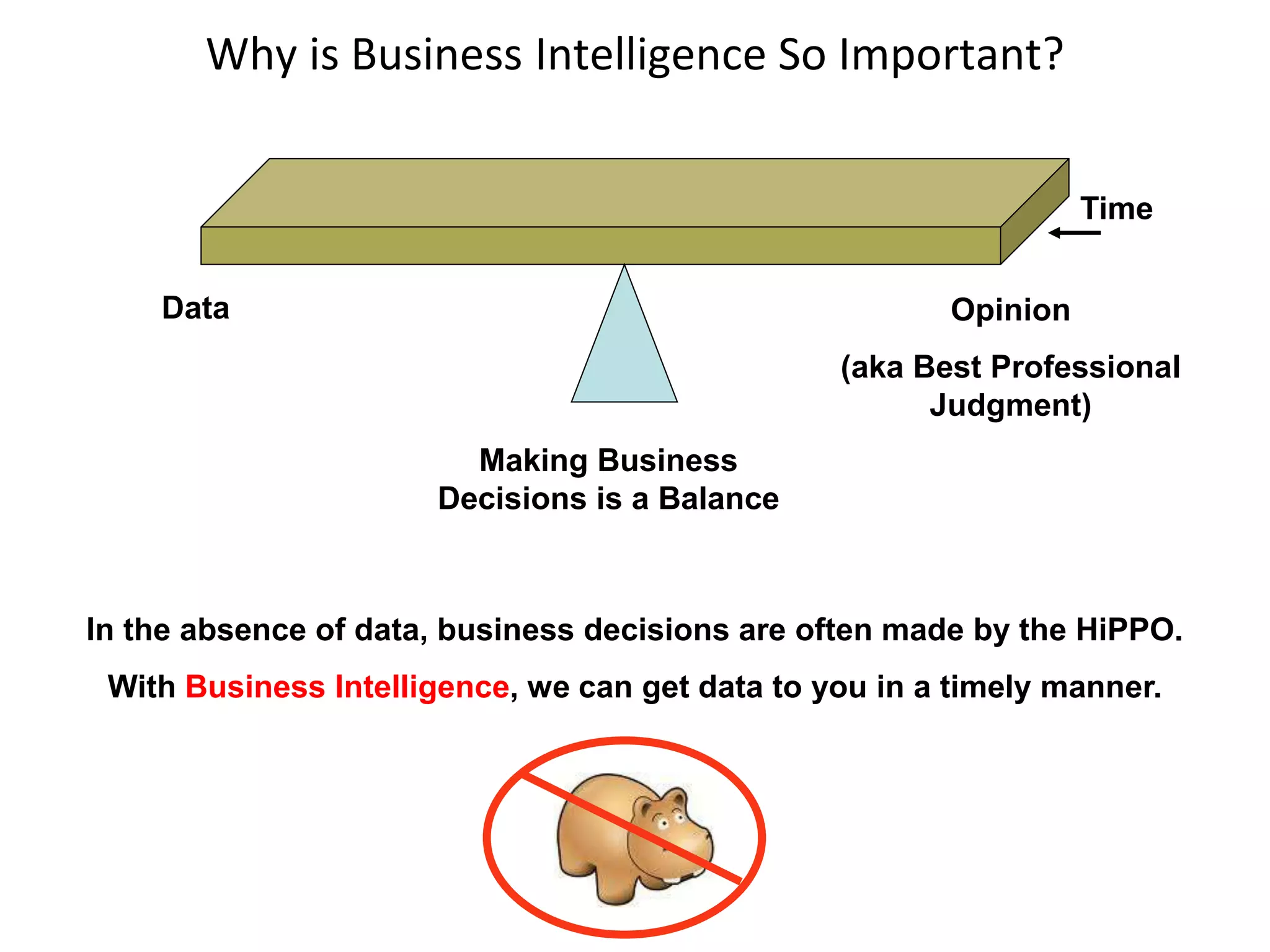
Why is Business Intelligence So Important?
Time
With Business Intelligence, we can get data to you in a timely manner.
Making Business
Decisions is a Balance
Data Opinion
(aka Best Professional
Judgment)
In the absence of data, business decisions are often made by the HiPPO.
Major BI Trends
• Mobile
• Cloud
• Social Media
• Advanced Analytics
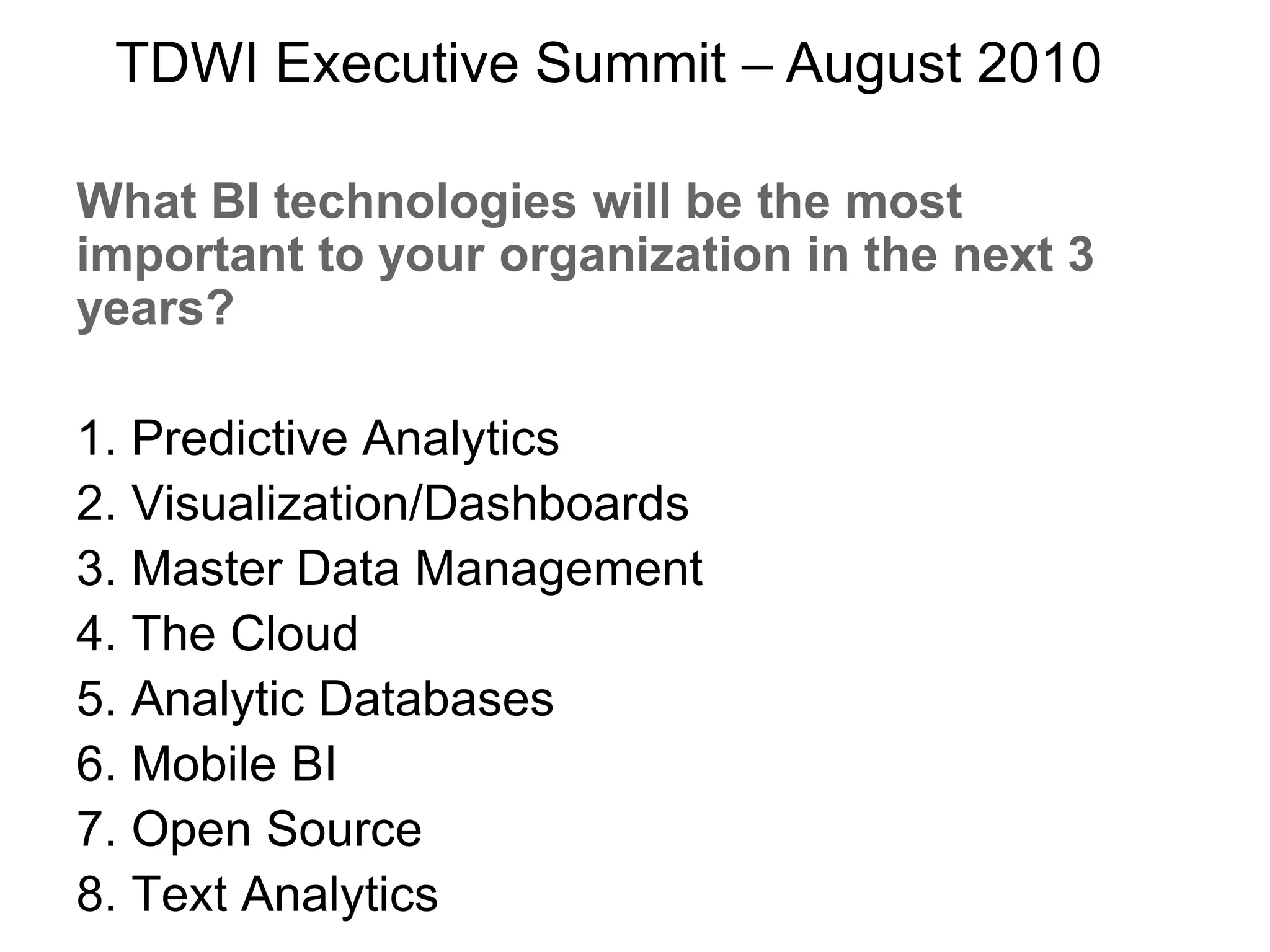
What BI technologies will be the most
important to your organization in the next 3
years?
1. Predictive Analytics
2. Visualization/Dashboards
3. Master Data Management
4. The Cloud
5. Analytic Databases
6. Mobile BI
7. Open Source
8. Text Analytics
TDWI Executive Summit – August 2010
Advanced Analytics / Predictive Analytics
• Data Mining
• Regression
• Monte Carlo Simulation
• “Statistically Significant”
• Predicting Customer Behavior
– Churn/Attrition
– Purchases
– Profiling
BI Today vs Tomorrow
• “BI today is like reading the newspaper”
– BI reporting tool on top of a data
warehouse that loads nightly and produces
historical reporting
• BI tomorrow will focus more on real-time
events and predicting tomorrow’s
headlines
Collegiate Admissions Criteria
• Test Scores: SAT, ACT, AP Exams
• Grade Point Average
• Class Rank
• High School “Strength”
• Extracurricular Activities: Band/Choir, Clubs, Sports
• Non-School Activities: Work, Volunteer, Community Groups
• Area of Focus – Intended Major
• Family legacy
• Home State or Country
Regression Outcome = Graduation (binary) + GPA (linear)
11
Retail Analytics
• Market Basket Analytics
• Text Analytics
• Customer Segmentation/Clustering
• Tailored Product Assortments
• Inventory Forecasting
13
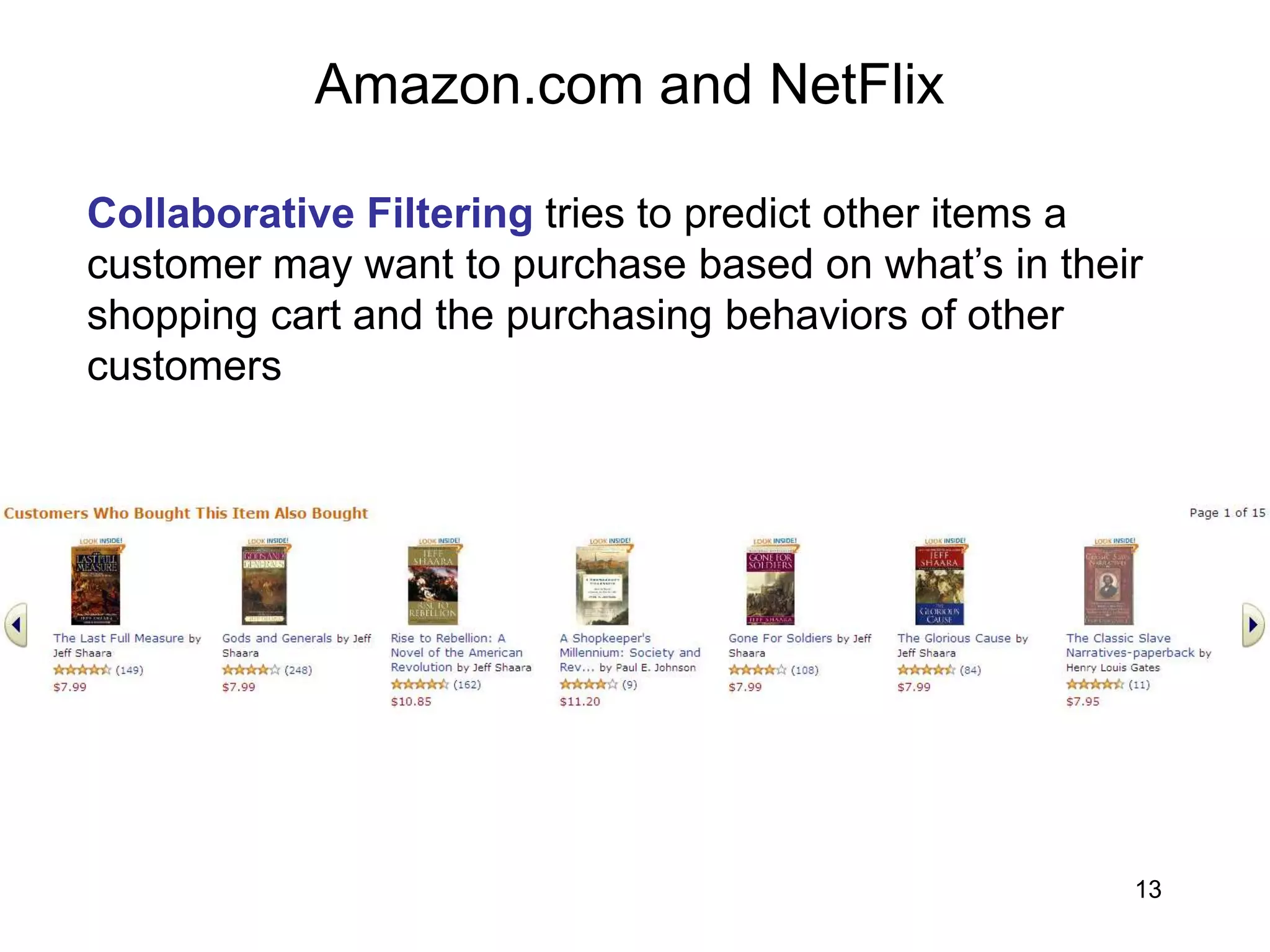
Amazon.com and NetFlix
Collaborative Filtering tries to predict other items a
customer may want to purchase based on what’s in their
shopping cart and the purchasing behaviors of other
customers
14
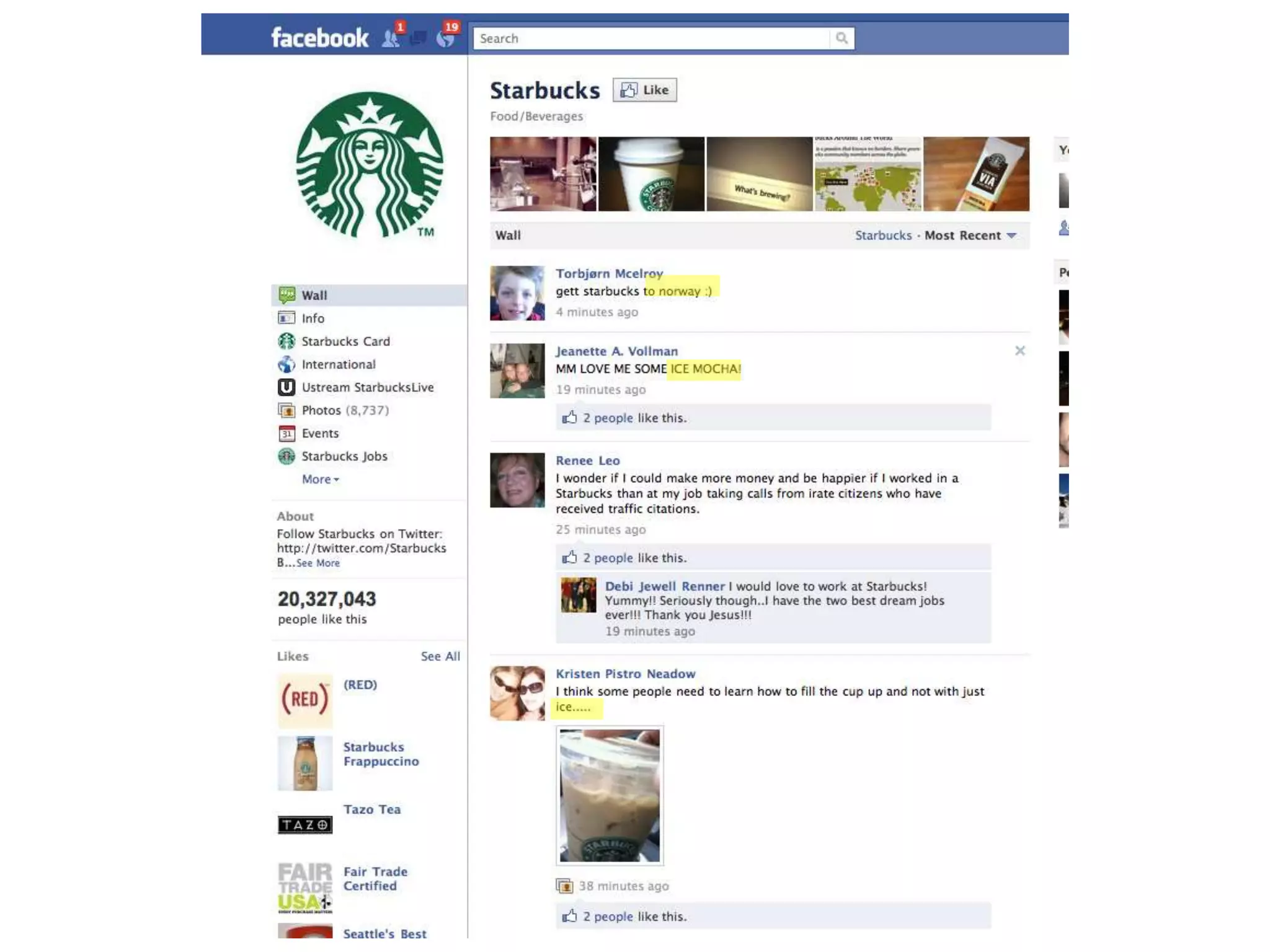
What Is Text Analytics?
…turning unstructured customer comments into
actionable insights
…finding nuggets of insight in text data that will
improve our business
From Wikipedia:
… a set of linguistic, statistical, and machine learning
techniques that model and structure the information
content of textual sources for business intelligence,
exploratory data analysis, research, or investigation
15
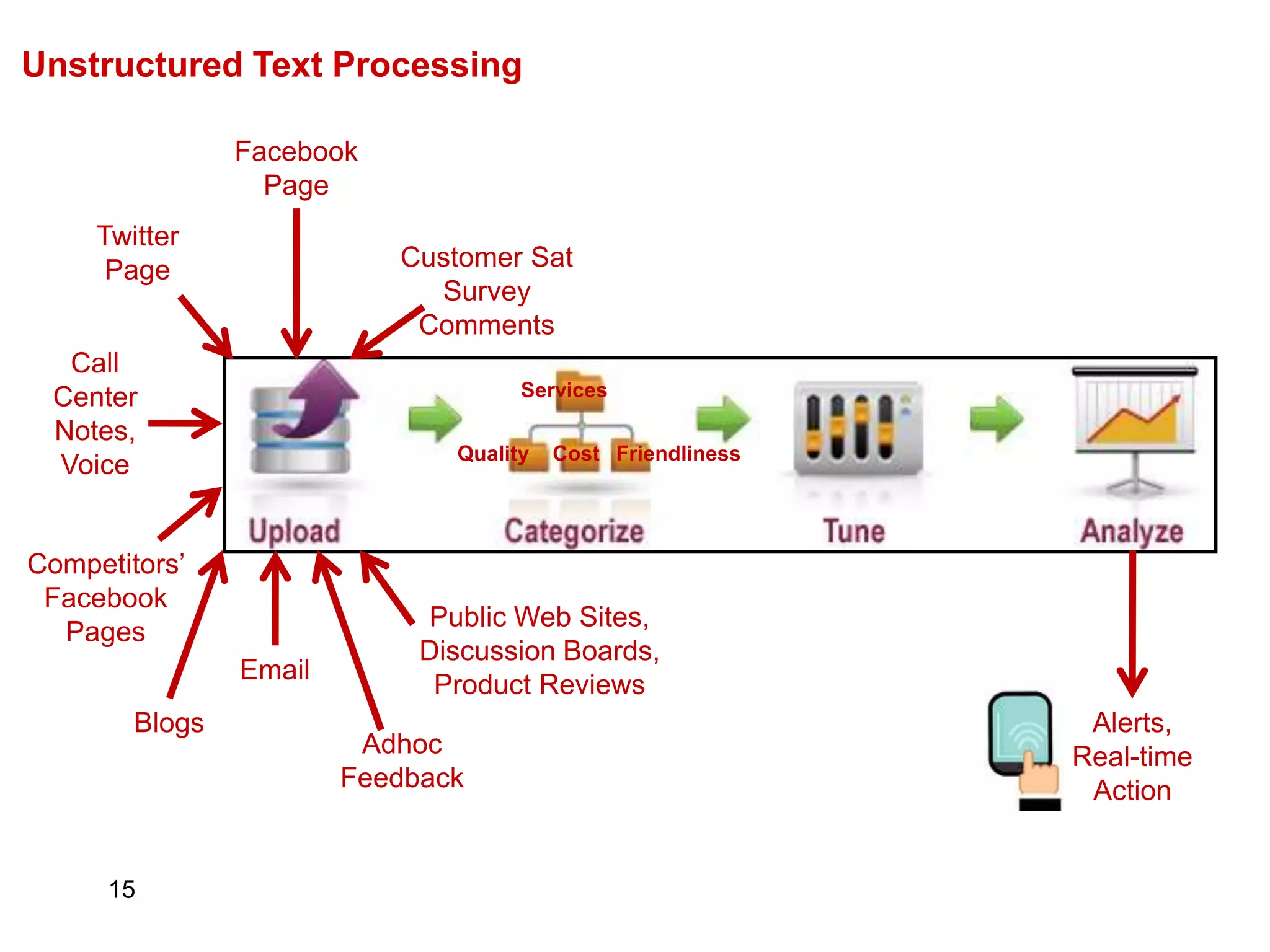
Customer Sat
Survey
Comments
Unstructured Text Processing
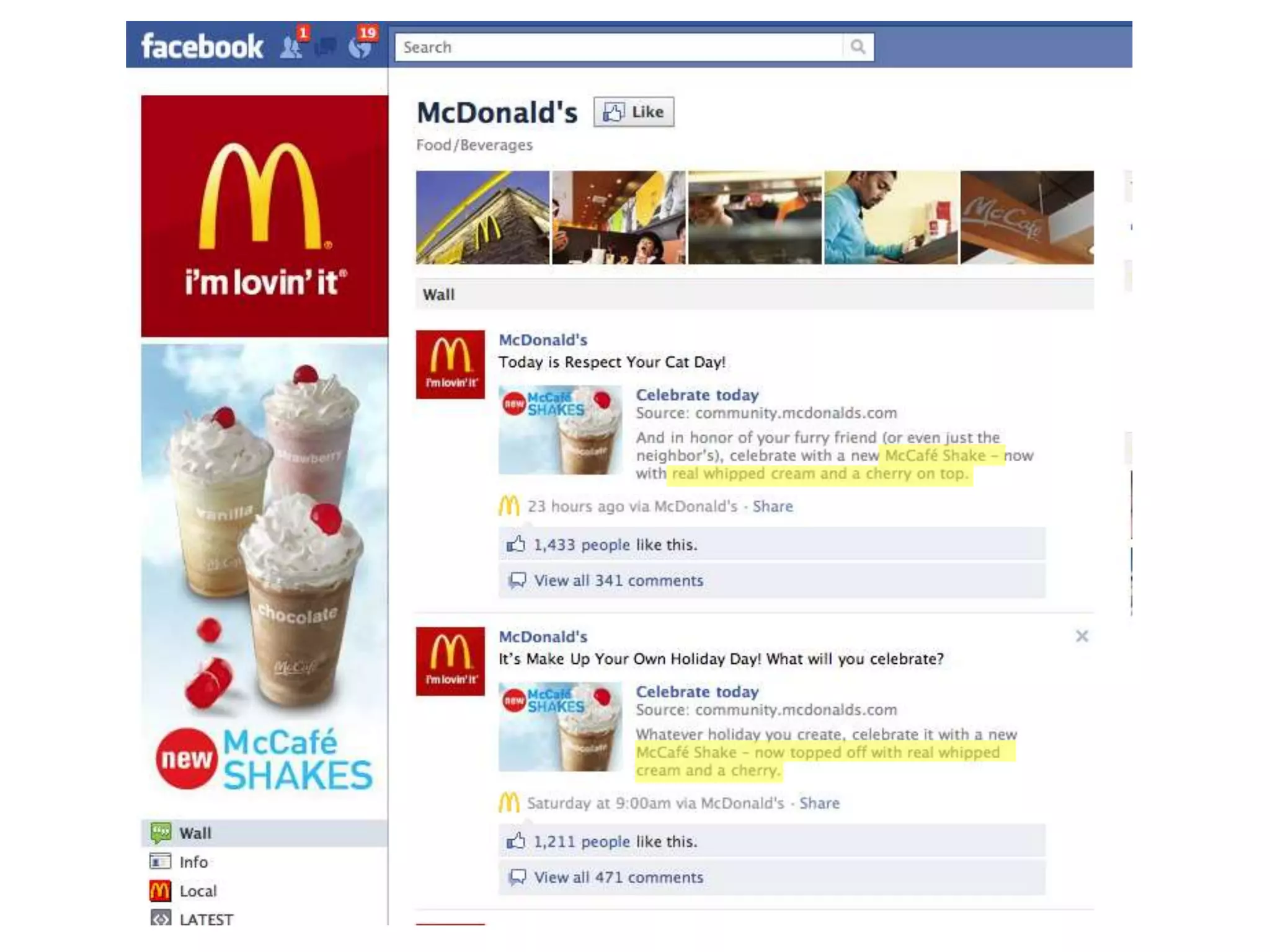
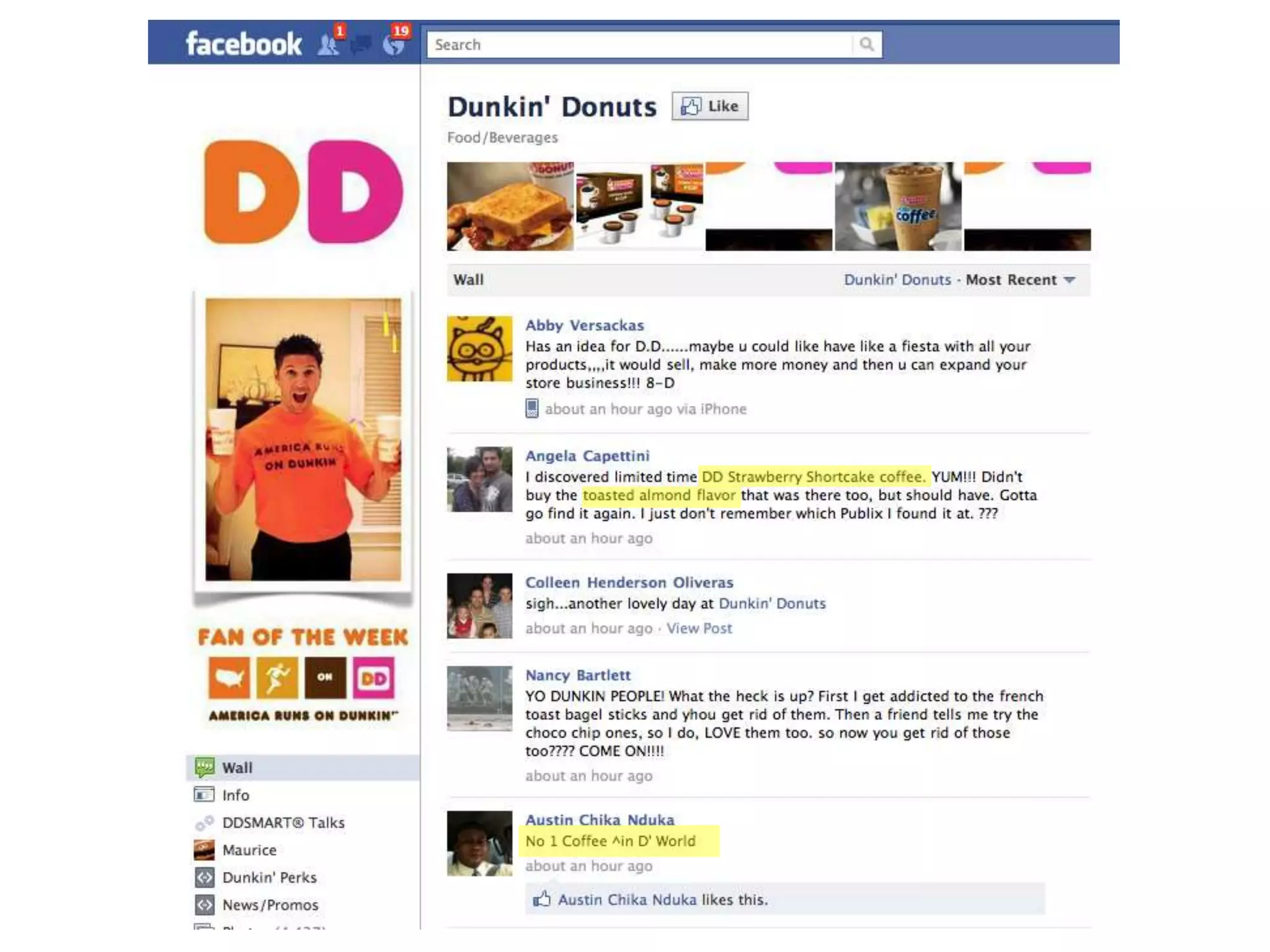
Facebook
Page
Blogs
Competitors’
Facebook
Pages
Public Web Sites,
Discussion Boards,
Product Reviews
Alerts,
Real-time
Action
Twitter
Page
Services
Quality Cost Friendliness
Email
Adhoc
Feedback
Call
Center
Notes,
Voice
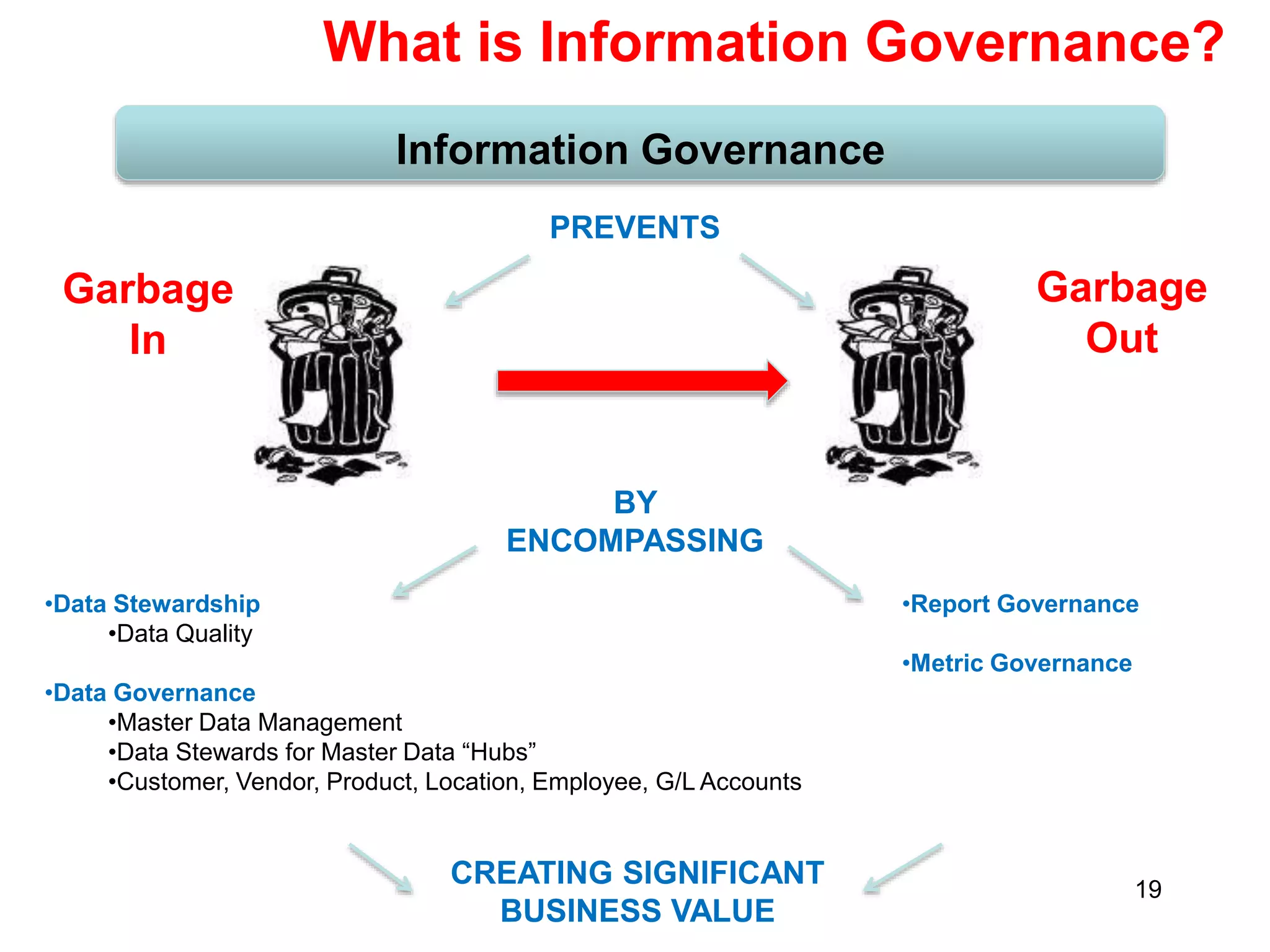
What is Information Governance?
Information Governance
•Data Stewardship
•Data Quality
•Data Governance
•Master Data Management
•Data Stewards for Master Data “Hubs”
•Customer, Vendor, Product, Location, Employee, G/L Accounts
PREVENTS
Garbage
In
Garbage
Out
BY
ENCOMPASSING
•Report Governance
•Metric Governance
19
CREATING SIGNIFICANT
BUSINESS VALUE
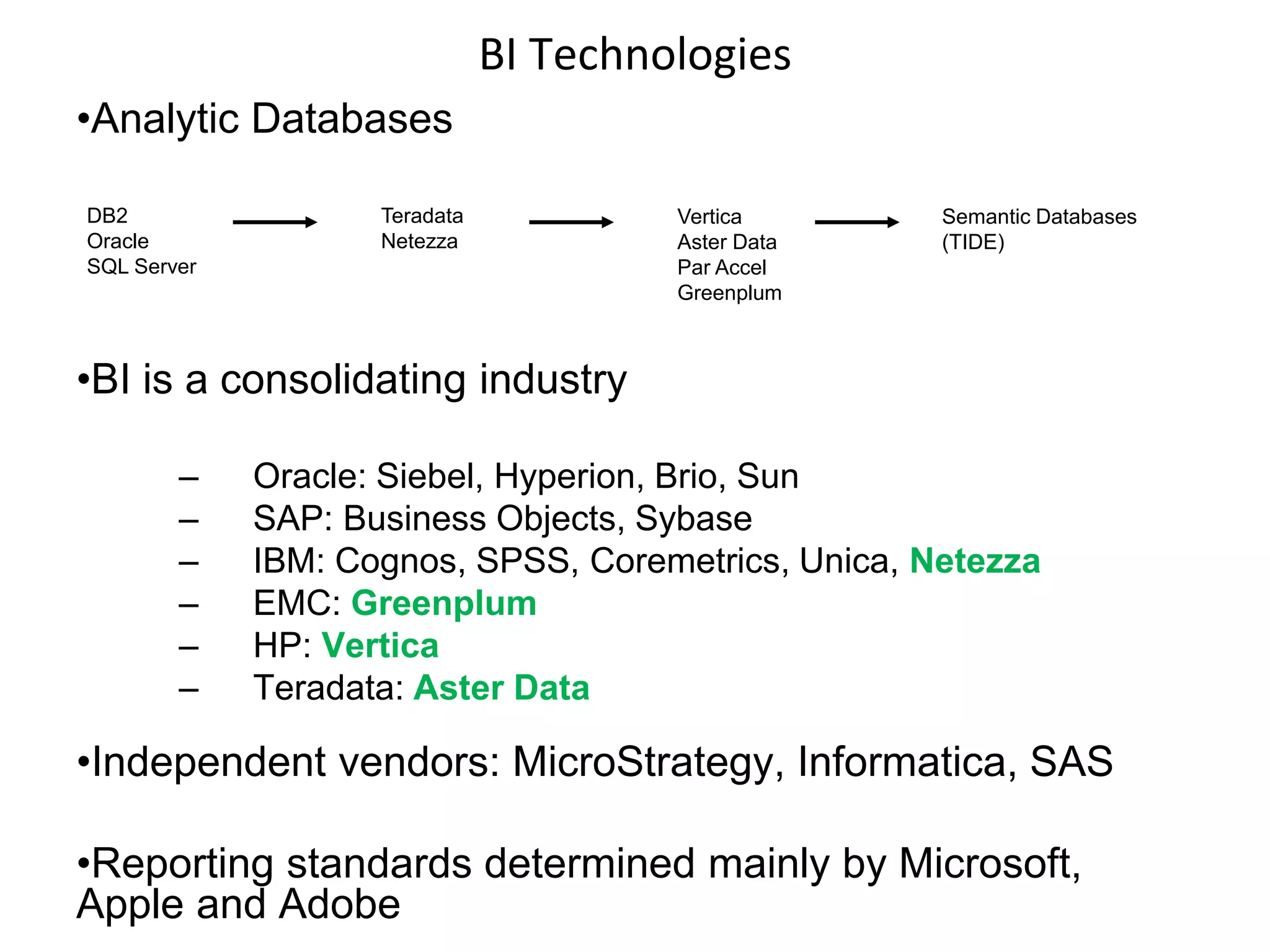
BI Technologies
•Analytic Databases
•BI is a consolidating industry
– Oracle: Siebel, Hyperion, Brio, Sun
– SAP: Business Objects, Sybase
– IBM: Cognos, SPSS, Coremetrics, Unica, Netezza
– EMC: Greenplum
– HP: Vertica
– Teradata: Aster Data
•Independent vendors: MicroStrategy, Informatica, SAS
•Reporting standards determined mainly by Microsoft,
Apple and Adobe
Teradata
Netezza
DB2
Oracle
SQL Server
Vertica
Aster Data
Par Accel
Greenplum
Semantic Databases
(TIDE)
BI Technologies (cont’d)
•If you want to learn more about Analytic Databases:
http://hosted.mediasite.com/mediasite/Viewer/?peid=120d6
b7ba227498b96a8c0cd01349a791d
•If you want to learn more about BI in the Cloud:
http://hosted.mediasite.com/mediasite/Viewer/?peid=e6d91
148a71a47969824c22b3b20d6221d
Recommended Reading List
1. Outliers -- Malcolm Caldwell
2. Moneyball -- Michael Lewis
3. The Black Swan -- Nassim Nicholas Taleb
4. Competing on Analytics -- Tom Davenport
5. How to Lie with Statistics -- Darrell Huff
6. Bringing Down the House -- Ben Mezrich
7. Super Crunchers -- Ian Ayres
8. Priceless -- William Poundstone
9. Drilling Down -- Jim Novo
10.The New Rules of Marketing -- Fred Newell
Thank You
Q&A

Business_intelligence_overview.ppt

  • 1.
    Business Intelligence (BI) Overviewand Trends Matt Schwartz March 31, 2011
  • 2.
    What is BusinessIntelligence? Business Intelligence enables the business to make intelligent, fact-based decisions Aggregate Data Database, Data Mart, Data Warehouse, ETL Tools, Integration Tools Present Data Enrich Data Inform a Decision Reporting Tools, Dashboards, Static Reports, Mobile Reporting, OLAP Cubes Add Context to Create Information, Descriptive Statistics, Benchmarks, Variance to Plan or LY Decisions are Fact-based and Data-driven
  • 3.
    • Content – Thebusiness determines the “what”, BI enables the “how” • Performance – Minimize report creation and collection times (near zero) • Usability – Delivery Method Push vs Pull – Medium  Excel, PDF, Dashboard, Cube, Mobile Device – Enhance Digestion  “A-ha” is readily apparent, fewer clicks – Tell a Story  Trend, Context, Related Metrics, Multiple Views CPU – Content, Performance, Usability
  • 4.
    How Important isBI? Top 10 Business and Technology Priorities for 2011: 1. Cloud computing 2. Virtualization 3. Mobile technologies 4. IT Management 5. Business Intelligence 6. Networking, voice and data communications 7. Enterprise applications 8. Collaboration technologies 9. Infrastructure 10. Web 2.0 Source: Gartner’s 2011 CIO Agenda (aka “Reimagining IT: The 2011 CIO Agenda”).
  • 5.
    The July 2010Forrester report “Technology Trends That Retail CIOs Must Tap to Drive Growth” identified the following technologies that retail CIOs should be considering as part of an overall architecture strategy: Mobile Cloud Social Computing Supply Chain Micropayments Business Intelligence/Analytics
  • 6.
    Why is BusinessIntelligence So Important? Time With Business Intelligence, we can get data to you in a timely manner. Making Business Decisions is a Balance Data Opinion (aka Best Professional Judgment) In the absence of data, business decisions are often made by the HiPPO.
  • 7.
    Major BI Trends •Mobile • Cloud • Social Media • Advanced Analytics
  • 8.
    What BI technologieswill be the most important to your organization in the next 3 years? 1. Predictive Analytics 2. Visualization/Dashboards 3. Master Data Management 4. The Cloud 5. Analytic Databases 6. Mobile BI 7. Open Source 8. Text Analytics TDWI Executive Summit – August 2010
  • 9.
    Advanced Analytics /Predictive Analytics • Data Mining • Regression • Monte Carlo Simulation • “Statistically Significant” • Predicting Customer Behavior – Churn/Attrition – Purchases – Profiling
  • 10.
    BI Today vsTomorrow • “BI today is like reading the newspaper” – BI reporting tool on top of a data warehouse that loads nightly and produces historical reporting • BI tomorrow will focus more on real-time events and predicting tomorrow’s headlines
  • 11.
    Collegiate Admissions Criteria •Test Scores: SAT, ACT, AP Exams • Grade Point Average • Class Rank • High School “Strength” • Extracurricular Activities: Band/Choir, Clubs, Sports • Non-School Activities: Work, Volunteer, Community Groups • Area of Focus – Intended Major • Family legacy • Home State or Country Regression Outcome = Graduation (binary) + GPA (linear) 11
  • 12.
    Retail Analytics • MarketBasket Analytics • Text Analytics • Customer Segmentation/Clustering • Tailored Product Assortments • Inventory Forecasting
  • 13.
    13 Amazon.com and NetFlix CollaborativeFiltering tries to predict other items a customer may want to purchase based on what’s in their shopping cart and the purchasing behaviors of other customers
  • 14.
    14 What Is TextAnalytics? …turning unstructured customer comments into actionable insights …finding nuggets of insight in text data that will improve our business From Wikipedia: … a set of linguistic, statistical, and machine learning techniques that model and structure the information content of textual sources for business intelligence, exploratory data analysis, research, or investigation
  • 15.
    15 Customer Sat Survey Comments Unstructured TextProcessing Facebook Page Blogs Competitors’ Facebook Pages Public Web Sites, Discussion Boards, Product Reviews Alerts, Real-time Action Twitter Page Services Quality Cost Friendliness Email Adhoc Feedback Call Center Notes, Voice
  • 19.
    What is InformationGovernance? Information Governance •Data Stewardship •Data Quality •Data Governance •Master Data Management •Data Stewards for Master Data “Hubs” •Customer, Vendor, Product, Location, Employee, G/L Accounts PREVENTS Garbage In Garbage Out BY ENCOMPASSING •Report Governance •Metric Governance 19 CREATING SIGNIFICANT BUSINESS VALUE
  • 20.
    BI Technologies •Analytic Databases •BIis a consolidating industry – Oracle: Siebel, Hyperion, Brio, Sun – SAP: Business Objects, Sybase – IBM: Cognos, SPSS, Coremetrics, Unica, Netezza – EMC: Greenplum – HP: Vertica – Teradata: Aster Data •Independent vendors: MicroStrategy, Informatica, SAS •Reporting standards determined mainly by Microsoft, Apple and Adobe Teradata Netezza DB2 Oracle SQL Server Vertica Aster Data Par Accel Greenplum Semantic Databases (TIDE)
  • 21.
    BI Technologies (cont’d) •Ifyou want to learn more about Analytic Databases: http://hosted.mediasite.com/mediasite/Viewer/?peid=120d6 b7ba227498b96a8c0cd01349a791d •If you want to learn more about BI in the Cloud: http://hosted.mediasite.com/mediasite/Viewer/?peid=e6d91 148a71a47969824c22b3b20d6221d
  • 22.
    Recommended Reading List 1.Outliers -- Malcolm Caldwell 2. Moneyball -- Michael Lewis 3. The Black Swan -- Nassim Nicholas Taleb 4. Competing on Analytics -- Tom Davenport 5. How to Lie with Statistics -- Darrell Huff 6. Bringing Down the House -- Ben Mezrich 7. Super Crunchers -- Ian Ayres 8. Priceless -- William Poundstone 9. Drilling Down -- Jim Novo 10.The New Rules of Marketing -- Fred Newell
  • 23.