What is Business
Intelligence?
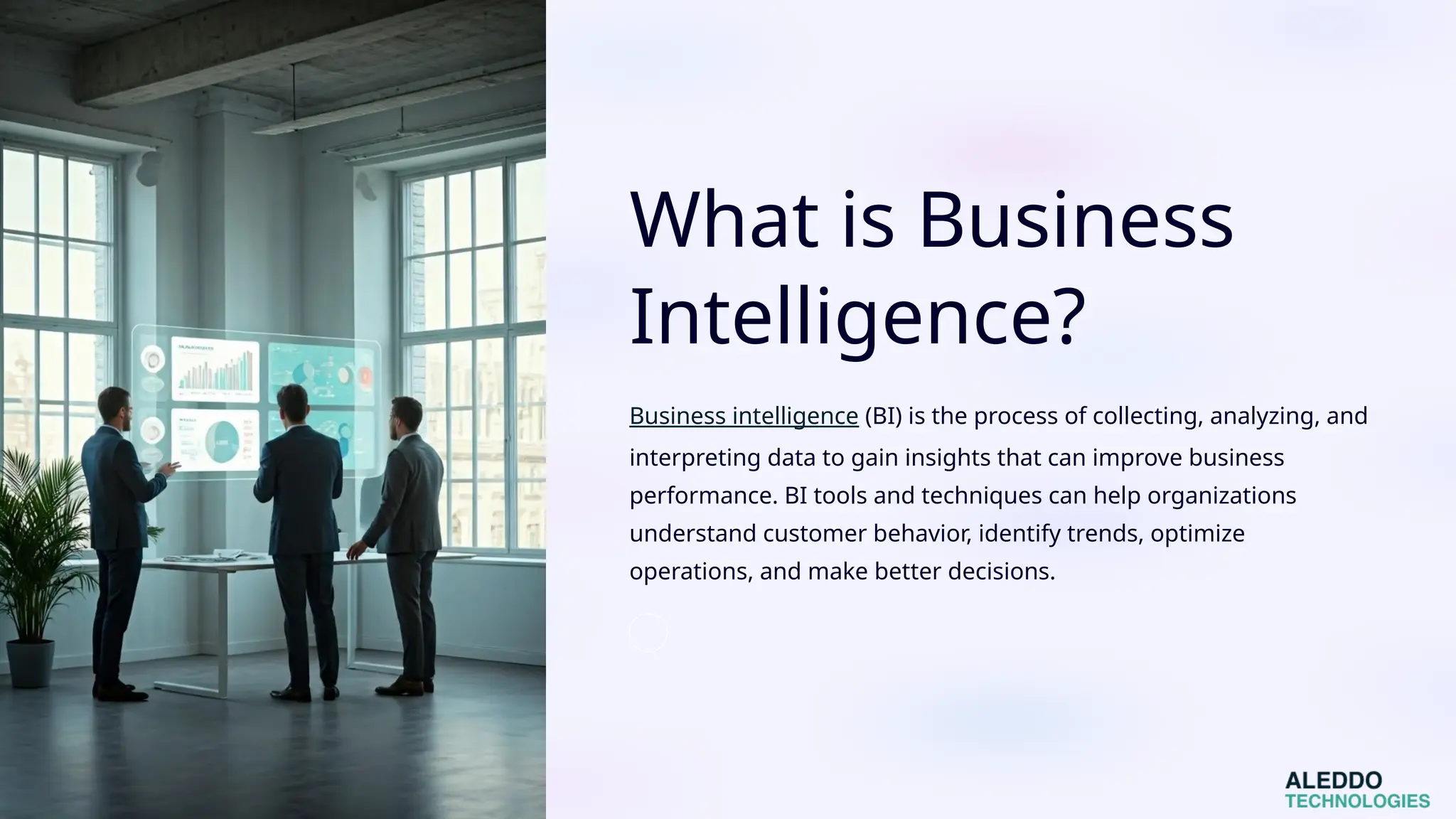
Business intelligence (BI) is the process of collecting, analyzing, and
interpreting data to gain insights that can improve business
performance. BI tools and techniques can help organizations
understand customer behavior, identify trends, optimize
operations, and make better decisions.
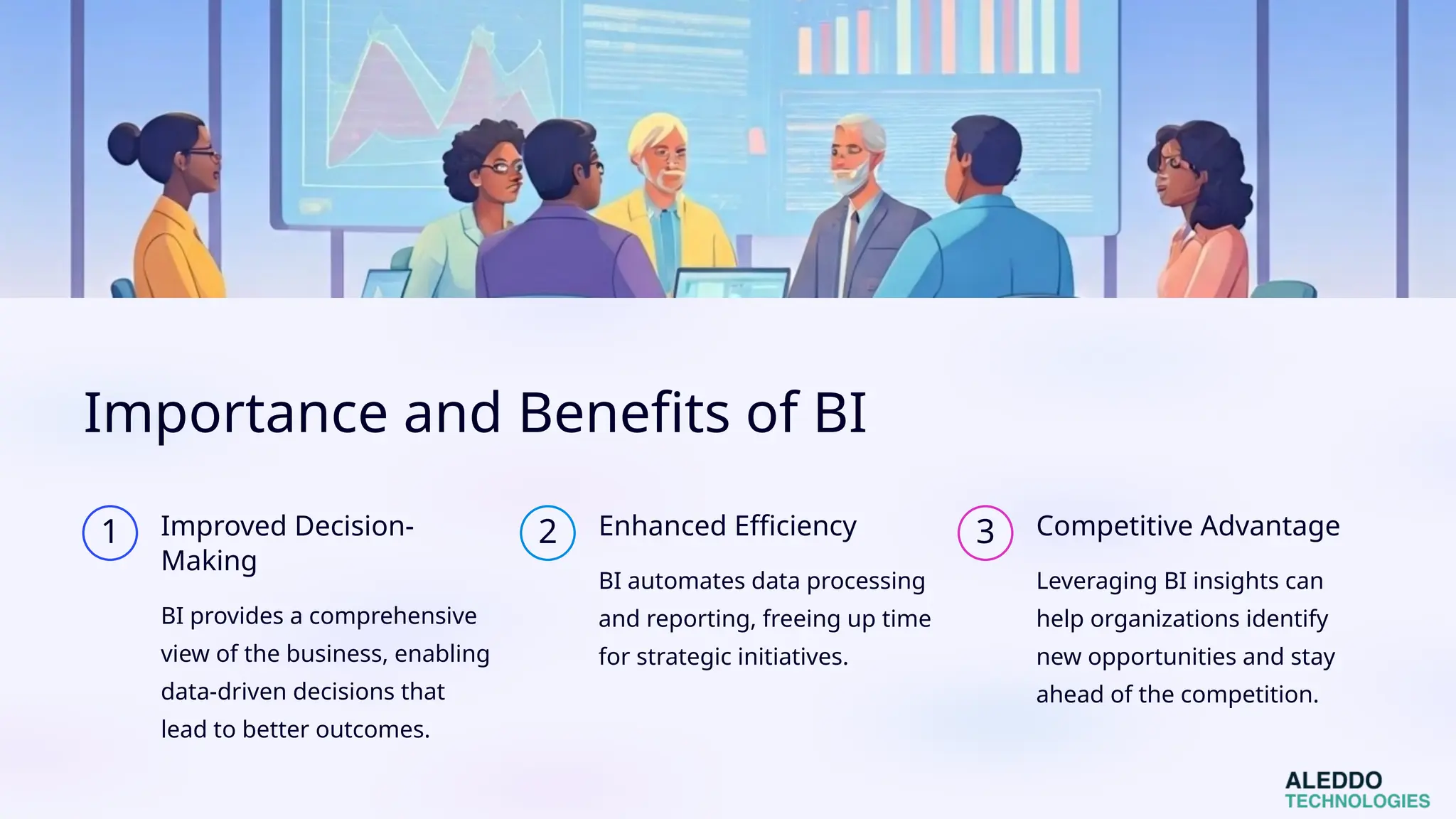
Importance and Benefits of BI
1 Improved Decision-
Making
BI provides a comprehensive
view of the business, enabling
data-driven decisions that
lead to better outcomes.
2 Enhanced Efficiency
BI automates data processing
and reporting, freeing up time
for strategic initiatives.
3 Competitive Advantage
Leveraging BI insights can
help organizations identify
new opportunities and stay
ahead of the competition.
Data Sources for BI
Internal Data
Operational systems, CRM, ERP,
and other internal data sources.
These systems capture essential
data about customer interactions,
financial transactions, inventory
levels, and more, providing a rich
source of insights into business
operations.
External Data
Market research, industry reports,
social media, and public data sets.
This data provides a broader
perspective, helping organizations
understand market trends,
competitor activities, customer
sentiment, and economic
conditions.
Real-Time Data
Sensor data, IoT devices, and live
data streams for immediate
insights. Real-time data allows
organizations to track and analyze
dynamic events, optimize
processes, and make informed
decisions in real-time.
To Find 13 Reasons Why Every Company
Should Business Intelligence
Click Her
e
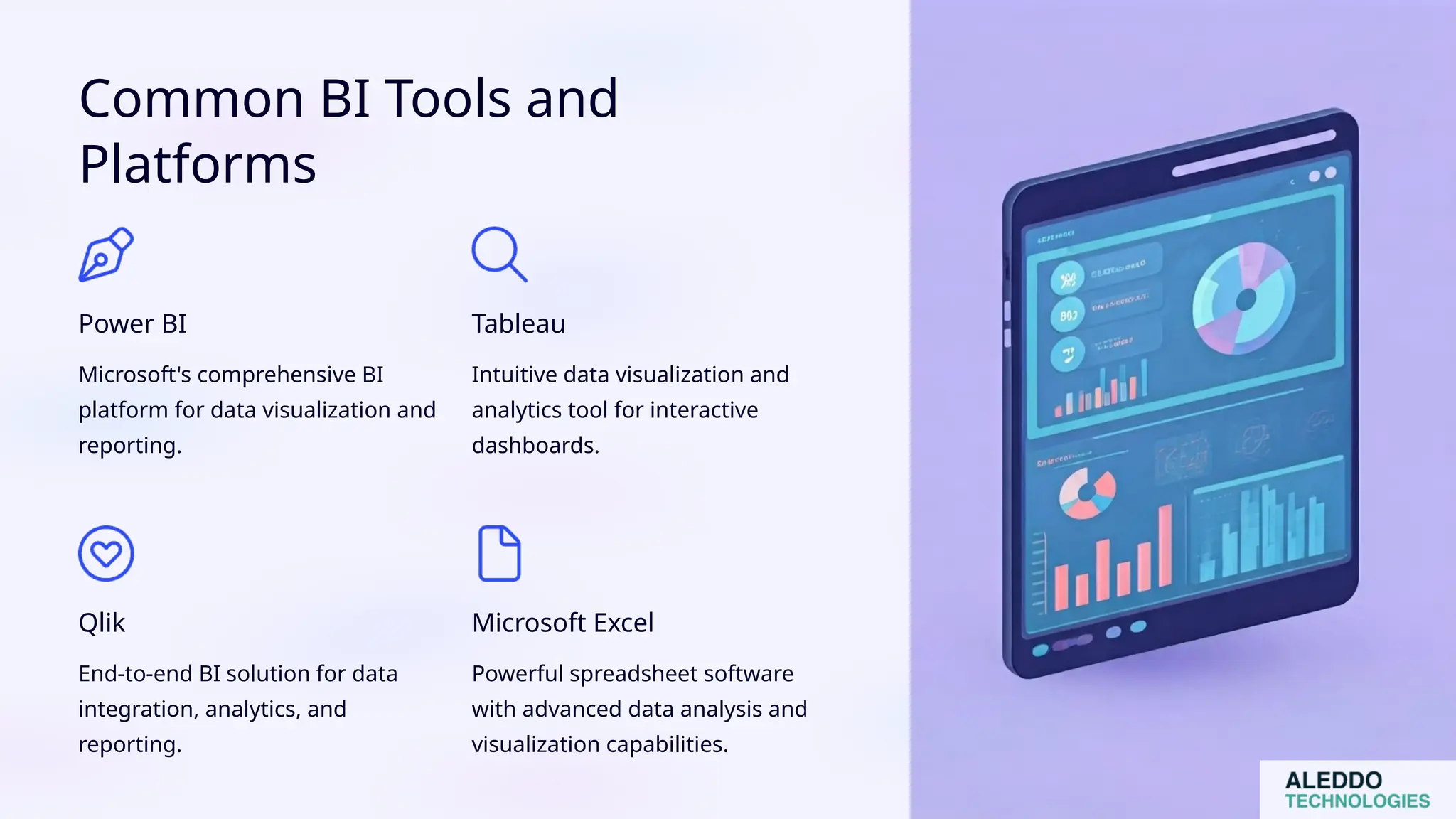
Common BI Tools and
Platforms
Power BI
Microsoft's comprehensive BI
platform for data visualization and
reporting.
Tableau
Intuitive data visualization and
analytics tool for interactive
dashboards.
Qlik
End-to-end BI solution for data
integration, analytics, and
reporting.
Microsoft Excel
Powerful spreadsheet software
with advanced data analysis and
visualization capabilities.
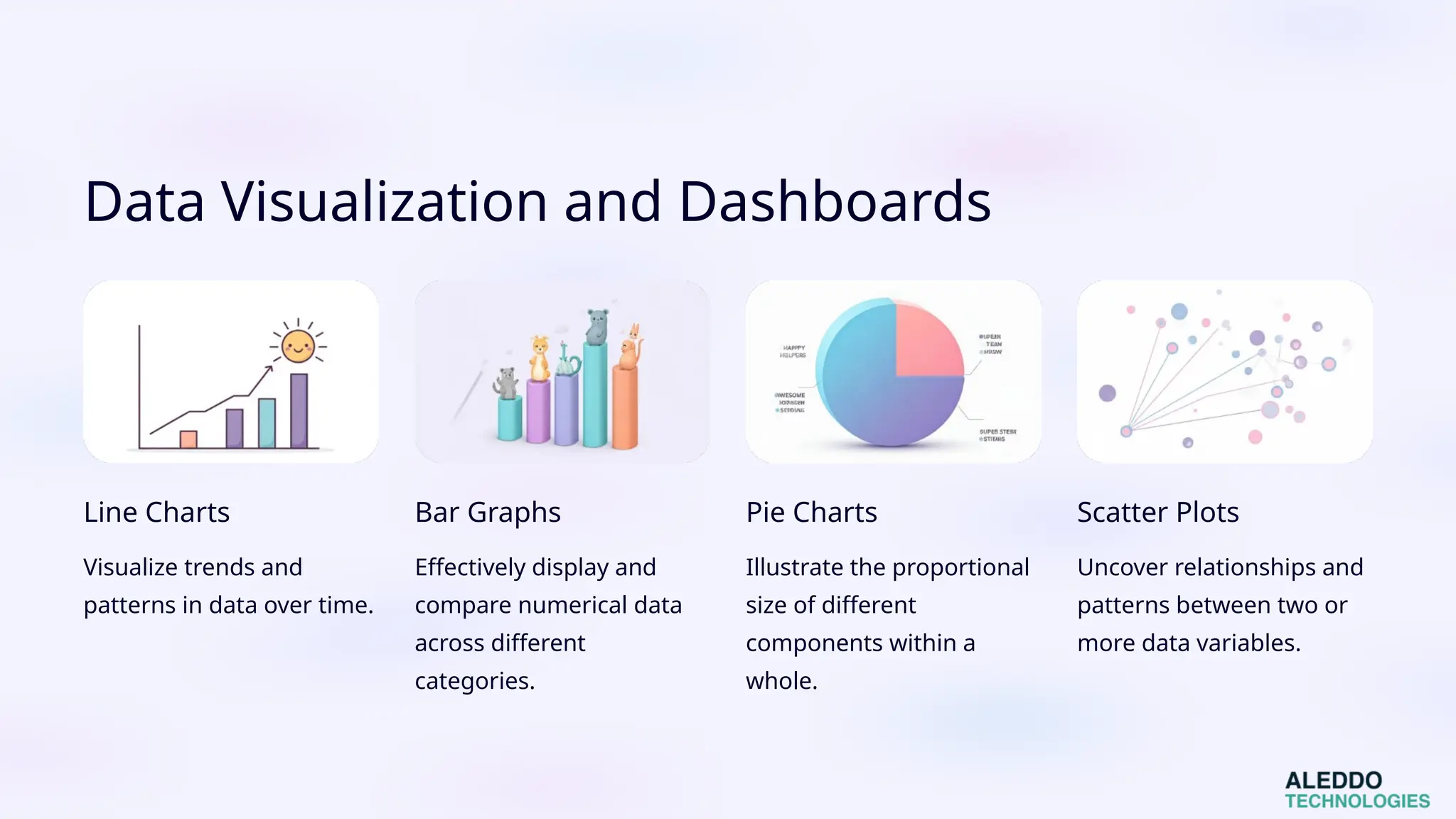
Data Visualization and Dashboards
Line Charts
Visualize trends and
patterns in data over time.
Bar Graphs
Effectively display and
compare numerical data
across different
categories.
Pie Charts
Illustrate the proportional
size of different
components within a
whole.
Scatter Plots
Uncover relationships and
patterns between two or
more data variables.
BI Strategies and Best
Practices
1 Align with Business Goals
Ensure BI initiatives are closely linked to the
organization's strategic objectives.
2 Foster a Data-Driven Culture
Encourage data literacy and empower employees to
make informed decisions.
3 Invest in the Right Tools
Select BI platforms that meet the organization's specific
requirements and user needs.
Challenges and Limitations
of BI
1 Data Quality
Ensuring data accuracy,
completeness, and
consistency is crucial for
reliable insights.
2 Integration
Complexity
Connecting diverse data
sources and formats can
be a significant
challenge.
3 Skill Gaps
Lack of data literacy and analytical expertise can hinder
effective BI implementation.
The Future of Business
Intelligence
Artificial Intelligence
AI-powered BI will enable
predictive analytics,
automated insights, and
intelligent decision-making.
Big Data and IoT
The exponential growth of
data from various sources
will drive more
comprehensive BI
solutions.
Democratization of BI
Intuitive BI tools and self-service analytics will empower more
users to access and analyze data.

What is Business Intelligence, Benefits, Challenges and everything to know about BI

  • 2.
    What is Business Intelligence? Businessintelligence (BI) is the process of collecting, analyzing, and interpreting data to gain insights that can improve business performance. BI tools and techniques can help organizations understand customer behavior, identify trends, optimize operations, and make better decisions.
  • 3.
    Importance and Benefitsof BI 1 Improved Decision- Making BI provides a comprehensive view of the business, enabling data-driven decisions that lead to better outcomes. 2 Enhanced Efficiency BI automates data processing and reporting, freeing up time for strategic initiatives. 3 Competitive Advantage Leveraging BI insights can help organizations identify new opportunities and stay ahead of the competition.
  • 4.
    Data Sources forBI Internal Data Operational systems, CRM, ERP, and other internal data sources. These systems capture essential data about customer interactions, financial transactions, inventory levels, and more, providing a rich source of insights into business operations. External Data Market research, industry reports, social media, and public data sets. This data provides a broader perspective, helping organizations understand market trends, competitor activities, customer sentiment, and economic conditions. Real-Time Data Sensor data, IoT devices, and live data streams for immediate insights. Real-time data allows organizations to track and analyze dynamic events, optimize processes, and make informed decisions in real-time. To Find 13 Reasons Why Every Company Should Business Intelligence Click Her e
  • 5.
    Common BI Toolsand Platforms Power BI Microsoft's comprehensive BI platform for data visualization and reporting. Tableau Intuitive data visualization and analytics tool for interactive dashboards. Qlik End-to-end BI solution for data integration, analytics, and reporting. Microsoft Excel Powerful spreadsheet software with advanced data analysis and visualization capabilities.
  • 6.
    Data Visualization andDashboards Line Charts Visualize trends and patterns in data over time. Bar Graphs Effectively display and compare numerical data across different categories. Pie Charts Illustrate the proportional size of different components within a whole. Scatter Plots Uncover relationships and patterns between two or more data variables.
  • 7.
    BI Strategies andBest Practices 1 Align with Business Goals Ensure BI initiatives are closely linked to the organization's strategic objectives. 2 Foster a Data-Driven Culture Encourage data literacy and empower employees to make informed decisions. 3 Invest in the Right Tools Select BI platforms that meet the organization's specific requirements and user needs.
  • 8.
    Challenges and Limitations ofBI 1 Data Quality Ensuring data accuracy, completeness, and consistency is crucial for reliable insights. 2 Integration Complexity Connecting diverse data sources and formats can be a significant challenge. 3 Skill Gaps Lack of data literacy and analytical expertise can hinder effective BI implementation.
  • 9.
    The Future ofBusiness Intelligence Artificial Intelligence AI-powered BI will enable predictive analytics, automated insights, and intelligent decision-making. Big Data and IoT The exponential growth of data from various sources will drive more comprehensive BI solutions. Democratization of BI Intuitive BI tools and self-service analytics will empower more users to access and analyze data.