
Business Process Management
www.humanikaconsulting.com
Seta A. Wicaksana
0811 19 53 43
wicaksana@humanikaconsulting.com
• Managing Director of Humanika Amanah Indonesia –
Humanika Consulting
• Managing Director of Humanika Bisnis Digital – hipotest.com
• Wakil Ketua Asosiasi Psikologi Forensik Indonesia wilayah DKI
• Business Psychologist
• Certified of Human Resources as a Business Partner
• Certified of Risk Professional
• Certified of HR Audit
• Certified of I/O Psychologist
• Dosen Tetap Fakultas Psikologi Universitas Pancasila
• Pembina Yayasan Humanika Edukasi Indonesia
• Penulis Buku : “SOBAT WAY: Mengubah Potensi menjadi
kompetensi” Elexmedia Gramedia 2016, Industri dan
Organisasi: Pendekatan Integratif menghadapi perubahan,
DD Publishing, 2020
• Organizational Development Expertise
• Sedang mengikuti tugas belajar Doktoral (S3) di Fakultas Ilmu
Ekonomi dan Bisnis Universitas Pancasila Bidang MSDM
• Fakultas Psikologi S1 dan S2 Universitas Indonesia
• sekolah ikatan dinas Akademi Sandi Negara
The Bottom Line Is…
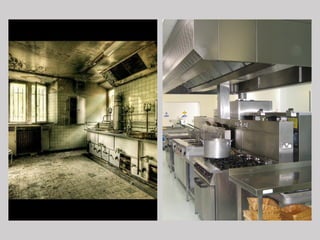
• Clean kitchen does not necessarily produce tasty food, but
• we’d rather eat a so-so tasty food from a clean kitchen.
• Good processes does not necessarily develop quality software,
but
• we’d rather fly in Airbus with a software from a well-known
company than a small software development house.
• So, there is a need for quality processes, since they decrease the
risk of companies producing low quality products.
• Process management ensure qualitative processes.
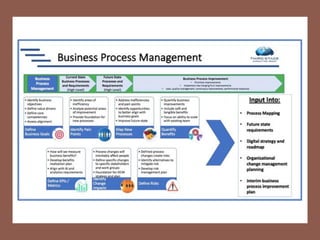
Definitions
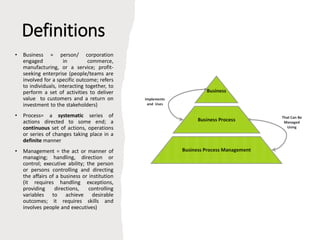
• Business = person/ corporation
engaged in commerce,
manufacturing, or a service; profit-
seeking enterprise (people/teams are
involved for a specific outcome; refers
to individuals, interacting together, to
perform a set of activities to deliver
value to customers and a return on
investment to the stakeholders)
• Process= a systematic series of
actions directed to some end; a
continuous set of actions, operations
or series of changes taking place in a
definite manner
• Management = the act or manner of
managing; handling, direction or
control; executive ability; the person
or persons controlling and directing
the affairs of a business or institution
(it requires handling exceptions,
providing directions, controlling
variables to achieve desirable
outcomes; it requires skills and
involves people and executives)
Business
process
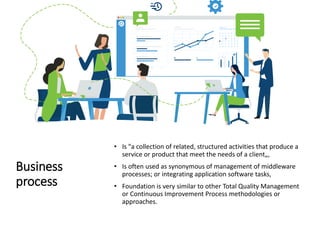
• Is "a collection of related, structured activities that produce a
service or product that meet the needs of a client„,
• Is often used as synonymous of management of middleware
processes; or integrating application software tasks,
• Foundation is very similar to other Total Quality Management
or Continuous Improvement Process methodologies or
approaches.
Business Process
Management
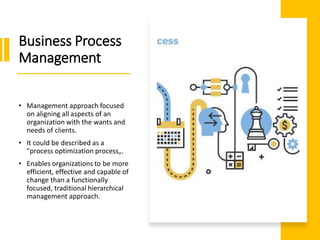
• Management approach focused
on aligning all aspects of an
organization with the wants and
needs of clients.
• It could be described as a
"process optimization process„.
• Enables organizations to be more
efficient, effective and capable of
change than a functionally
focused, traditional hierarchical
management approach.
BPM Life-Cycle
Business process
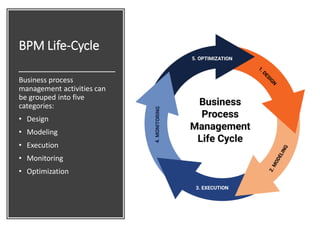
management activities can
be grouped into five
categories:
• Design
• Modeling
• Execution
• Monitoring
• Optimization
Design • Process Design
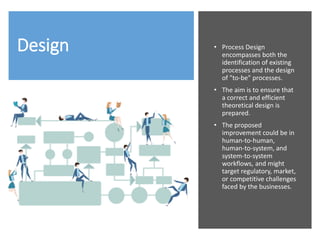
encompasses both the
identification of existing
processes and the design
of "to-be" processes.
• The aim is to ensure that
a correct and efficient
theoretical design is
prepared.
• The proposed
improvement could be in
human-to-human,
human-to-system, and
system-to-system
workflows, and might
target regulatory, market,
or competitive challenges
faced by the businesses.
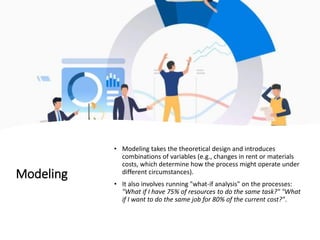
Modeling
• Modeling takes the theoretical design and introduces
combinations of variables (e.g., changes in rent or materials
costs, which determine how the process might operate under
different circumstances).
• It also involves running "what-if analysis" on the processes:
"What if I have 75% of resources to do the same task?" "What
if I want to do the same job for 80% of the current cost?".
Execution
• Process Automation is:
➢ to develop/purchase an application that
executes the required steps of the process,
➢ to use a combination of software and human
intervention - more complex => difficult
documentation proces.
• Developed software enables the full BP to be
defined in a computer language directly
executed by the computer. The system will use
services in connected applications to perform
business operations, or, when a step is too
complex to automate, will ask for human input.
• A business rule engine can be used to drive
process execution and resolution
Monitoring
• Tracking of individual processes, so, that
information on their state can be easily seen,
and statistics on the performance of one or
more processes can be provided.
• The degree of monitoring depends on what
information the business wants to evaluate and
analyze and how business wants it to be
monitored, in real-time, near real-time or ad-
hoc.
• Process mining is a collection of methods and
tools related to process monitoring. The aim of
this is to analyze event logs extracted through
process monitoring and to compare them with
an a priori process model. It allows to detect
discrepancies between the actual process
execution and the a priori model.
Optimization
• Process optimization includes
retrieving process performance
information from modeling or
monitoring phase; identifying the
potential or actual bottlenecks and
the potential opportunities for cost
savings or other improvements; and
then, applying those enhancements
in the design of the process.
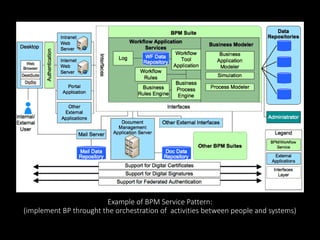
Example of BPM Service Pattern:
(implement BP throught the orchestration of activities between people and systems)
Basic Process Components
Participants
People or systems that
provide input to, or
perform work steps within
a process
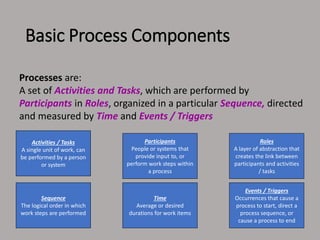
Processes are:
A set of Activities and Tasks, which are performed by
Participants in Roles, organized in a particular Sequence, directed
and measured by Time and Events / Triggers
Activities / Tasks
A single unit of work, can
be performed by a person
or system
Roles
A layer of abstraction that
creates the link between
participants and activities
/ tasks
Events / Triggers
Occurrences that cause a
process to start, direct a
process sequence, or
cause a process to end
Time
Average or desired
durations for work items
Sequence
The logical order in which
work steps are performed
Basic Process Components
• In order to prevent the
need for a VERY large
sheet of paper, we create
a process hierarchy that
allows us to
compartmentalize and
focus on specific process
segments
• Our process hierarchy will
be the following:
• Cycle
• Process
• Subprocess
• Activity
• Task
Basic
Process
Components
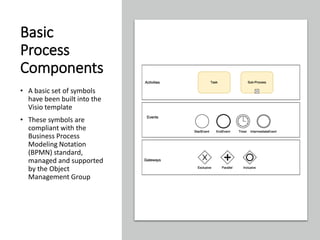
• A basic set of symbols
have been built into the
Visio template
• These symbols are
compliant with the
Business Process
Modeling Notation
(BPMN) standard,
managed and supported
by the Object
Management Group
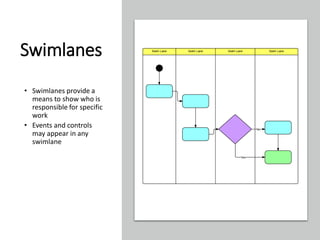
Swimlanes
• Swimlanes provide a
means to show who is
responsible for specific
work
• Events and controls
may appear in any
swimlane
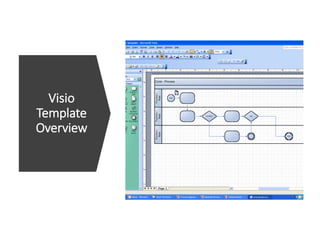
Visio
Template
Overview
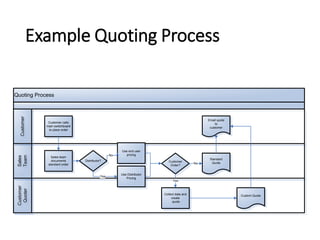
Example Quoting Process
Quoting Process
Customer
Quoter
Customer
Quoter
Sales
Team
Sales
Team
Customer
Customer
Customer calls
main switchboard
to place order
Sales team
documents
standard order
Distributor?
Use Distributor
Pricing
Yes
Use end user
pricing
No
Customer
Order?
Yes
Collect data and
create
quote
Custom Quote
Email quote
to
customer
Standard
Quote
No
Learning and Giving
for Better Indonesia
www.humanikaconsulting.com
www.hipotest.com

Business Process Management: An Understanding and Process

  • 1.
  • 2.
    Seta A. Wicaksana 081119 53 43 wicaksana@humanikaconsulting.com • Managing Director of Humanika Amanah Indonesia – Humanika Consulting • Managing Director of Humanika Bisnis Digital – hipotest.com • Wakil Ketua Asosiasi Psikologi Forensik Indonesia wilayah DKI • Business Psychologist • Certified of Human Resources as a Business Partner • Certified of Risk Professional • Certified of HR Audit • Certified of I/O Psychologist • Dosen Tetap Fakultas Psikologi Universitas Pancasila • Pembina Yayasan Humanika Edukasi Indonesia • Penulis Buku : “SOBAT WAY: Mengubah Potensi menjadi kompetensi” Elexmedia Gramedia 2016, Industri dan Organisasi: Pendekatan Integratif menghadapi perubahan, DD Publishing, 2020 • Organizational Development Expertise • Sedang mengikuti tugas belajar Doktoral (S3) di Fakultas Ilmu Ekonomi dan Bisnis Universitas Pancasila Bidang MSDM • Fakultas Psikologi S1 dan S2 Universitas Indonesia • sekolah ikatan dinas Akademi Sandi Negara
  • 5.
    The Bottom LineIs… • Clean kitchen does not necessarily produce tasty food, but • we’d rather eat a so-so tasty food from a clean kitchen. • Good processes does not necessarily develop quality software, but • we’d rather fly in Airbus with a software from a well-known company than a small software development house. • So, there is a need for quality processes, since they decrease the risk of companies producing low quality products. • Process management ensure qualitative processes.
  • 6.
    Definitions • Business =person/ corporation engaged in commerce, manufacturing, or a service; profit- seeking enterprise (people/teams are involved for a specific outcome; refers to individuals, interacting together, to perform a set of activities to deliver value to customers and a return on investment to the stakeholders) • Process= a systematic series of actions directed to some end; a continuous set of actions, operations or series of changes taking place in a definite manner • Management = the act or manner of managing; handling, direction or control; executive ability; the person or persons controlling and directing the affairs of a business or institution (it requires handling exceptions, providing directions, controlling variables to achieve desirable outcomes; it requires skills and involves people and executives)
  • 7.
    Business process • Is "acollection of related, structured activities that produce a service or product that meet the needs of a client„, • Is often used as synonymous of management of middleware processes; or integrating application software tasks, • Foundation is very similar to other Total Quality Management or Continuous Improvement Process methodologies or approaches.
  • 8.
    Business Process Management • Managementapproach focused on aligning all aspects of an organization with the wants and needs of clients. • It could be described as a "process optimization process„. • Enables organizations to be more efficient, effective and capable of change than a functionally focused, traditional hierarchical management approach.
  • 9.
    BPM Life-Cycle Business process managementactivities can be grouped into five categories: • Design • Modeling • Execution • Monitoring • Optimization
  • 10.
    Design • ProcessDesign encompasses both the identification of existing processes and the design of "to-be" processes. • The aim is to ensure that a correct and efficient theoretical design is prepared. • The proposed improvement could be in human-to-human, human-to-system, and system-to-system workflows, and might target regulatory, market, or competitive challenges faced by the businesses.
  • 11.
    Modeling • Modeling takesthe theoretical design and introduces combinations of variables (e.g., changes in rent or materials costs, which determine how the process might operate under different circumstances). • It also involves running "what-if analysis" on the processes: "What if I have 75% of resources to do the same task?" "What if I want to do the same job for 80% of the current cost?".
  • 12.
    Execution • Process Automationis: ➢ to develop/purchase an application that executes the required steps of the process, ➢ to use a combination of software and human intervention - more complex => difficult documentation proces. • Developed software enables the full BP to be defined in a computer language directly executed by the computer. The system will use services in connected applications to perform business operations, or, when a step is too complex to automate, will ask for human input. • A business rule engine can be used to drive process execution and resolution
  • 13.
    Monitoring • Tracking ofindividual processes, so, that information on their state can be easily seen, and statistics on the performance of one or more processes can be provided. • The degree of monitoring depends on what information the business wants to evaluate and analyze and how business wants it to be monitored, in real-time, near real-time or ad- hoc. • Process mining is a collection of methods and tools related to process monitoring. The aim of this is to analyze event logs extracted through process monitoring and to compare them with an a priori process model. It allows to detect discrepancies between the actual process execution and the a priori model.
  • 14.
    Optimization • Process optimizationincludes retrieving process performance information from modeling or monitoring phase; identifying the potential or actual bottlenecks and the potential opportunities for cost savings or other improvements; and then, applying those enhancements in the design of the process.
  • 15.
    Example of BPMService Pattern: (implement BP throught the orchestration of activities between people and systems)
  • 16.
    Basic Process Components Participants Peopleor systems that provide input to, or perform work steps within a process Processes are: A set of Activities and Tasks, which are performed by Participants in Roles, organized in a particular Sequence, directed and measured by Time and Events / Triggers Activities / Tasks A single unit of work, can be performed by a person or system Roles A layer of abstraction that creates the link between participants and activities / tasks Events / Triggers Occurrences that cause a process to start, direct a process sequence, or cause a process to end Time Average or desired durations for work items Sequence The logical order in which work steps are performed
  • 17.
    Basic Process Components •In order to prevent the need for a VERY large sheet of paper, we create a process hierarchy that allows us to compartmentalize and focus on specific process segments • Our process hierarchy will be the following: • Cycle • Process • Subprocess • Activity • Task
  • 18.
    Basic Process Components • A basicset of symbols have been built into the Visio template • These symbols are compliant with the Business Process Modeling Notation (BPMN) standard, managed and supported by the Object Management Group
  • 19.
    Swimlanes • Swimlanes providea means to show who is responsible for specific work • Events and controls may appear in any swimlane
  • 20.
  • 21.
    Example Quoting Process QuotingProcess Customer Quoter Customer Quoter Sales Team Sales Team Customer Customer Customer calls main switchboard to place order Sales team documents standard order Distributor? Use Distributor Pricing Yes Use end user pricing No Customer Order? Yes Collect data and create quote Custom Quote Email quote to customer Standard Quote No
  • 23.
    Learning and Giving forBetter Indonesia www.humanikaconsulting.com www.hipotest.com