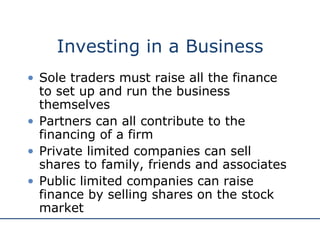
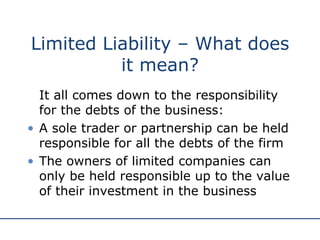
There are several types of business ownership structures with different implications for financing, liability, control, and legal responsibilities. Sole traders must finance the business themselves while partnerships can contribute jointly, but both carry unlimited liability for debts. Limited companies can sell shares to raise capital while protecting owners' personal assets, though control is reduced. They also have more legal requirements including producing documents, filing accounts, and holding meetings. Profits can be paid out as dividends, retained for reinvestment, or lost if the business fails.