Racheen S. Haji
Parwar I. Tahir
University of zakho
Faculty of medical sciences
School of medicine
Surgical department
The effects of the burn are influenced by:
Intensity of the energy
Duration of exposure
Type of tissue injured
Types
Thermal
● These are caused by exposure to or contact with flame, hot
liquids, semi liquids (steam), semi-solid (tar) or hot objects.
● Pre hospital care:
○ Lavage with water
○ Assist patient to drop and roll
○ Cover body to prevent hypothermia
Thermal
Chemical
● It is caused by contact of tissue to any strong acids, alkalis
or organic compounds.
● Pre hospital care:
○ Remove cloths
○ Use shower to lavage the involved area
● Treatment:
○ Late neutralization with antidote done by 0.2% acetic
acid in alkali burns, sodium bicarbonate or calcium
gluconate for acid burns.
Chemical
Electrical
● These are the injuries caused by heat that is generated by the electrical
energy as it passes through the body.
● It can result from contact with exposed or faulty electrical wiring or high
voltage power lines.
● People struck by lightening also sustain electrical injury.
● Pre hospital care:
○ Disconnect the source of electric current
○ Monitor cardio pulmonary arrest
○ Begin CPR if patient is unresponsive
○ Place patient on spinal board and apply cervical collar and
transport
● Treatment:
○ Assess Entrance & Exit wounds.
○ Remove clothing, jewelry, and leather items.
○ Treat any visible injuries.
Electrical
Radiation
● These are caused by exposure to radioactive source.
● Eg.
- Nuclear – radiation accidents
- Use of ionizing radiation in industries
- Therapeutic radiations
- Sunburns from prolonged exposure to ultraviolet rays
Radiation
Inhalation
● It may results from exposure to asphyxiants and smoke, if
the victim was trapped in closed, smoke – filled area.
● It results in pulmonary pathophysiologic changes.
Inhalation
Rule of 9
Rule of 9
Rule of 9
Rule of 9
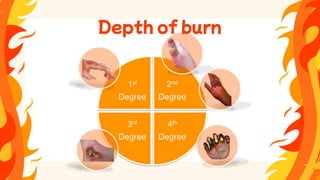
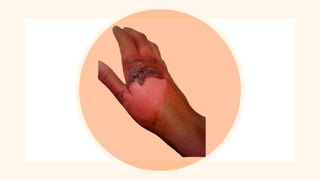
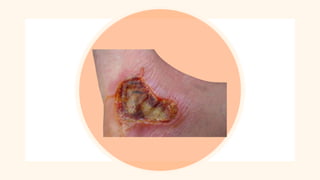
1st
Degree
2nd
Degree
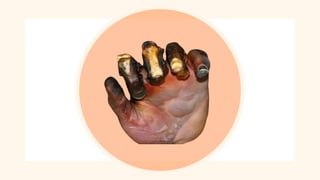
4th
Degree
3rd
Degree
Depth of burn
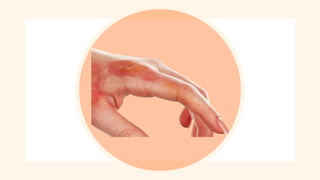
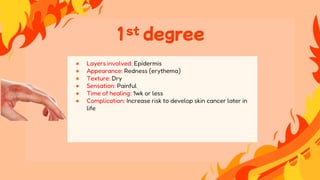
● Layers involved: Epidermis
● Appearance: Redness (erythema)
● Texture: Dry
● Sensation: Painful
● Time of healing: 1wk or less
● Complication: Increase risk to develop skin cancer later in
life
1st degree
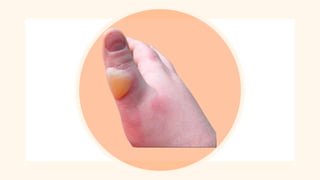
● Layers involved: Extends into superficial dermis
● Appearance: Red with clear blister. Bleaches with pressure
● Texture: Moist
● Sensation: Painful
● Time of healing: 2-3wk
● Complication: Local infection / Cellulitis
2nd degree (superficial
partial thickness)
● Layers involved: Extends into deep dermis
● Appearance: Red and white with blood blisters
● Texture: Moist
● Sensation: Painful
● Time of healing: Weeks - may progress to third degree
● Complication: Scarring, contractures (may require excision
and skin grafting)
2nd degree (deep partial
thickness)
● Layers involved: Extends through entire dermis
● Appearance: Stiff and white/brown
● Texture: Dry, leathery
● Sensation: Painless
● Time of healing: Requires excision
● Complication: Scarring, contractures, amputation
3rd degree (full
thickness)
● Layers involved: Extends through skin, subcutaneous tissue
and into underlying muscle and bone
● Appearance: Black; charred with eschar
● Texture: Dry
● Sensation: Painless
● Time of healing: Requires excision
● Complication: Amputation, significant functional
impairment, possible gangrene, and in some cases death
4th degree
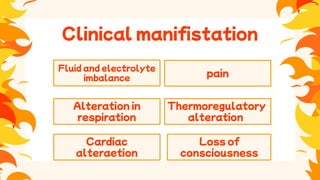
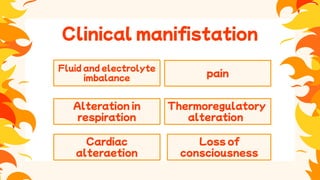
Clinical manifistation
Fluid and electrolyte
imbalance
Cardiac
alteraetion
pain
Alteration in
respiration
Loss of
consciousness
Thermoregulatory
alteration
that occurs immediately after burn like:
- hyperkaliemia
Hyponatraemia
Generalized body edema is seen in patients with greater than 25% burns.
• Increased hematocrit level
• After 18-36 hr capillary membrane integrity begins to be restored.
• The body beings to reabsorbed edema, fluid and excess fluid is excreted
Clinical manifistation
Fluid and electrolyte
imbalance
Clinical manifistation
Fluid and electrolyte
imbalance
Cardiac
alteraetion
pain
Alteration in
respiration
Loss of
consciousness
Thermoregulatory
alteration
• It depends upon types of burn
• Manifested by dyspnea, rapid breathing, cyanosis, stridor.
• Thermal burn to the upper airway (mouthe, nasopharynx, and
larynx) leads to mucosal edema, blisters, ulceration leading to
upper airway obstraction.
Clinical manifistation
Alteration in
respiration
Clinical manifistation
Fluid and electrolyte
imbalance
Cardiac
alteraetion
pain
Alteration in
respiration
Loss of
consciousness
Thermoregulatory
alteration
• Hypovlemia occurs immediately after the burn
• Cardiac output decreased
• Decreased in blood pressure
• Anemia may occur as a result of damage to RBCs
Clinical manifistation
Cardiac
alteraetion
Clinical manifistation
Fluid and electrolyte
imbalance
Cardiac
alteraetion
pain
Alteration in
respiration
Loss of
consciousness
Thermoregulatory
alteration
• Burn patients experiences two types of pain.
1. Background pain: is experienced when patient is at rest.
2. procedural pain: is experienced during the performance of
theraoutic procedures like dressing, cleaning, Etc.
Clinical manifistation
pain
Clinical manifistation
Fluid and electrolyte
imbalance
Cardiac
alteraetion
pain
Alteration in
respiration
Loss of
consciousness
Thermoregulatory
alteration
• Loss of skin results in an inability to regulate body temperature.
• Patients may exhibit low body temperatures in the early hours
after injury.
Clinical manifistation
Thermoregulatory
alteration
Clinical manifistation
Fluid and electrolyte
imbalance
Cardiac
alteraetion
pain
Alteration in
respiration
Loss of
consciousness
Thermoregulatory
alteration
• That occurs due to neurological trauma
Clinical manifistation
Loss of
consciousness
Indication of admition
Moderate and severe burns.
Airway burns of any type.
Burns in extremes of age.
All electrical or deep chemical burns.
Medical management
Emergent / resuscitative phase: this phase lasts for
36-48 hr from onset of injury, it ends when fluid
resuscitation is complete.
Acute phase: this phase begins with diuresis and
end with closures of the burn wound.
Rehabilitation phase: this phase begins with
wound closure and ends when client returns
to the highest level of health.
Emergent phase
The management of burn patient begins at the scene of accident
Remove the patient from the area of danger
Stop the burning process
Implement basic life support
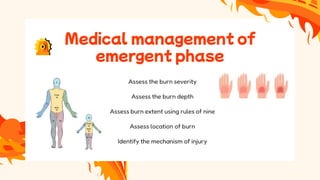
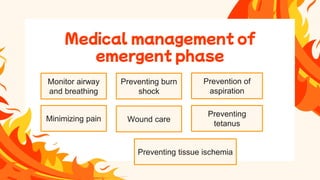
Medical management of
emergent phase
Assess the burn severity
Assess the burn depth
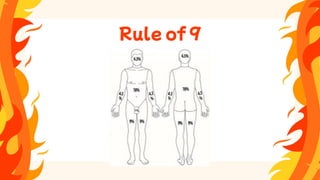
Assess burn extent using rules of nine
Assess location of burn
Identify the mechanism of injury
• One of the prime importance
• Inspect oropharynx for
erythema, blisters, ulcerations
and need for endotracheal
intubation.
• In inhalation injury administer
100% O2 via tight fitting mask.
Medical management of
emergent phase
Monitor airway
and breathing
Preventing tissue ischemia
Preventing burn
shock
Wound care
Minimizing pain
Preventing
tetanus
Prevention od
aspiration
1 2
5 6
7
4
3
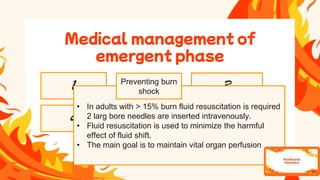
• In adults with > 15% burn fluid resuscitation is
required 2 larg bore needles are inserted
intravenously.
• Fluid resuscitation is used to minimize the harmful
effect of fluid shift.
• The main goal is to maintain vital organ perfusion
Medical management of
emergent phase
Preventing tissue ischemia
Preventing burn
shock
Wound care
Minimizing pain
Preventing
tetanus
Prevention od
aspiration
2
5 6
7
4
3
• One of the prime importance
• Inspect oropharynx for erythema, blisters, ulcerations
and need for endotracheal intubation.
• In inhalation injury administer 100% O2 via tight fitting
mask.
Monitor airway
and breathing
• Nasogastric tube is placed
to prevent vomiting and
reduce the risk of
aspiration which occur due
to GI dysfunction resulting
from the intestinal ileus or
paralytic ileus.
• One of the prime importance
• Inspect oropharynx for
erythema, blisters, ulcerations
and need for endotracheal
intubation.
• In inhalation injury administer
100% O2 via tight fitting mask.
Medical management of
emergent phase
Monitor airway
and breathing
Preventing tissue ischemia
Wound care
Minimizing pain
Preventing
tetanus
Prevention od
aspiration
1
5 6
7
4
3
• In adults with > 15% burn fluid resuscitation is required
2 larg bore needles are inserted intravenously.
• Fluid resuscitation is used to minimize the harmful
effect of fluid shift.
• The main goal is to maintain vital organ perfusion
Preventing burn
shock
Parkland
formula
RL 2-4 ml/kg/% TBSA
▪ In 1st 8hr:
first half of the amount
▪ In next 8 hr:
¼ of total amount
▪ In next 8 hr:
¼ of the total amount
Parkland formula
Example:
➢ 70 kg patient with 50% TBSA burn
RL to be administered is
2*70*50= 7000 ml in 24 hrs
In 1st 8 hr 3500ml
Next 8hr 1750ml
Next 8hr 1750ml
• Pain management in moderate or
major burns is achieved through IV
administrationof opiods likemorphine
sulphate.
• One of the prime importance
• Inspect oropharynx for
erythema, blisters, ulcerations
and need for endotracheal
intubation.
• In inhalation injury administer
100% O2 via tight fitting mask.
Medical management of
emergent phase
Monitor airway
and breathing
Preventing tissue ischemia
Wound care
Minimizing pain
Preventing
tetanus
1
5 6
7
4
• In adults with > 15% burn fluid resuscitationis required 2
larg bore needles are inserted intravenously.
• Fluid resuscitation is used to minimize the harmful effect of
fluid shift.
• The main goal is to maintain vital organ perfusion
Preventing burn
shock
2
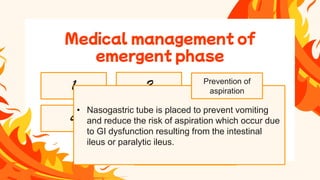
• Nasogastric tube is placed to prevent vomiting
and reduce the risk of aspiration which occur due
to GI dysfunction resulting from the intestinal
ileus or paralytic ileus.
Prevention of
aspiration
• Immediate care
• Cover the wound with
sterile towel and place
on clean dry sheet
• Debridement
• Application of topical
agents
• Dressing
• One of the prime importance
• Inspect oropharynx for
erythema, blisters, ulcerations
and need for endotracheal
intubation.
• In inhalation injury administer
100% O2 via tight fitting mask.
Medical management of
emergent phase
Monitor airway
and breathing
Preventing tissue ischemia
Wound care
Preventing
tetanus
1
5 6
7
• In adults with > 15% burn fluid resuscitationis required 2
larg bore needles are inserted intravenously.
• Fluid resuscitation is used to minimize the harmful effect of
fluid shift.
• The main goal is to maintain vital organ perfusion
Preventing burn
shock
2
• Nasogastric tube is
placed to prevent
vomiting and reduce
the risk of aspiration
which occur due to GI
dysfunction resulting
from the intestinal ileus
or paralytic ileus.
Prevention of
aspiration
3
• Pain management in moderate or major burns is
achieved through IV administration of opiods like
morphine sulphate.
Minimizing pain
• Immunization with tetanus toxoid
• One of the prime importance
• Inspect oropharynx for
erythema, blisters, ulcerations
and need for endotracheal
intubation.
• In inhalation injury administer
100% O2 via tight fitting mask.
Medical management of
emergent phase
Monitor airway
and breathing
Preventing tissue ischemia
Preventing
tetanus
1
6
7
• In adults with > 15% burn fluid resuscitationis required 2
larg bore needles are inserted intravenously.
• Fluid resuscitation is used to minimize the harmful effect of
fluid shift.
• The main goal is to maintain vital organ perfusion
Preventing burn
shock
2
• Nasogastric tube is
placed to prevent
vomiting and reduce
the risk of aspiration
which occur due to GI
dysfunction resulting
from the intestinal ileus
or paralytic ileus.
Prevention of
aspiration
3
• Pain management in
moderate or majorburns is
achieved through IV
administrationof opiods like
morphinesulphate.
Minimizing pain
4
• Immediate care
• Cover the wound with sterile towel and place on
clean dry sheet
• Debridement
• Application of topical agents
• Dressing
Wound care
• Elevate the injury extremity above the level
of the heart and perform active exercises to
reduce department edema formation
• Immediately assess the distal extremity
perfusion
• One of the prime importance
• Inspect oropharynx for
erythema, blisters, ulcerations
and need for endotracheal
intubation.
• In inhalation injury administer
100% O2 via tight fitting mask.
Medical management of
emergent phase
Monitor airway
and breathing
Preventing tissue ischemia
1
7
• In adults with > 15% burn fluid resuscitationis required 2
larg bore needles are inserted intravenously.
• Fluid resuscitation is used to minimize the harmful effect of
fluid shift.
• The main goal is to maintain vital organ perfusion
Preventing burn
shock
2
• Nasogastric tube is
placed to prevent
vomiting and reduce
the risk of aspiration
which occur due to GI
dysfunction resulting
from the intestinal ileus
or paralytic ileus.
Prevention of
aspiration
3
• Pain management in
moderate or majorburns is
achieved through IV
administrationof opiods like
morphinesulphate.
Minimizing pain
4
• Immediate care
• Cover the wound
with sterile towel
and place on
clean dry sheet
• Debridement
• Application of
topical agents
• Dressing
Wound care
5
• Immunization with tetanus toxoid
Preventing
tetanus
• One of the prime importance
• Inspect oropharynx for
erythema, blisters, ulcerations
and need for endotracheal
intubation.
• In inhalation injury administer
100% O2 via tight fitting mask.
Medical management of
emergent phase
Monitor airway
and breathing
1 • In adults with > 15% burn fluid resuscitationis required 2
larg bore needles are inserted intravenously.
• Fluid resuscitation is used to minimize the harmful effect of
fluid shift.
• The main goal is to maintain vital organ perfusion
Preventing burn
shock
2
• Nasogastric tube is
placed to prevent
vomiting and reduce
the risk of aspiration
which occur due to GI
dysfunction resulting
from the intestinal ileus
or paralytic ileus.
Prevention of
aspiration
3
• Pain management in
moderate or majorburns is
achieved through IV
administrationof opiods like
morphinesulphate.
Minimizing pain
4
• Immediate care
• Cover the wound
with sterile towel
and place on
clean dry sheet
• Debridement
• Application of
topical agents
• Dressing
Wound care
5 • Immunization with tetanus toxoid
Preventing
tetanus
6
• Elevate the injury extremity above the level of
the heart and perform active exercises to reduce
department edema formation
• Immediately assess the distal extremity
perfusion
Preventing tissue ischemia
• One of the prime importance
• Inspect oropharynx for
erythema, blisters, ulcerations
and need for endotracheal
intubation.
• In inhalation injury administer
100% O2 via tight fitting mask.
Medical management of
emergent phase
Monitor airway
and breathing
1 • In adults with > 15% burn fluid resuscitationis required 2
larg bore needles are inserted intravenously.
• Fluid resuscitation is used to minimize the harmful effect of
fluid shift.
• The main goal is to maintain vital organ perfusion
Preventing burn
shock
2
• Nasogastric tube is
placed to prevent
vomiting and reduce
the risk of aspiration
which occur due to GI
dysfunction resulting
from the intestinal ileus
or paralytic ileus.
Prevention of
aspiration
3
• Pain management in
moderate or majorburns is
achieved through IV
administrationof opiods like
morphinesulphate.
Minimizing pain
4
• Immediate care
• Cover the wound
with sterile towel
and place on
clean dry sheet
• Debridement
• Application of
topical agents
• Dressing
Wound care
5 • Immunization with tetanus toxoid
Preventing
tetanus
6
• Elevate the injury extremity above the
level of the heart and perform active
exercises to reduce department edema
formation
• Immediately assess the distal extremity
perfusion
Preventing tissue ischemia
7
• One of the prime importance
• Inspect oropharynx for
erythema, blisters, ulcerations
and need for endotracheal
intubation.
• In inhalation injury administer
100% O2 via tight fitting mask.
Medical management of
emergent phase
Monitor airway
and breathing
Preventing tissue ischemia
Preventing burn
shock
Wound care
Minimizing pain
Preventing
tetanus
Prevention of
aspiration
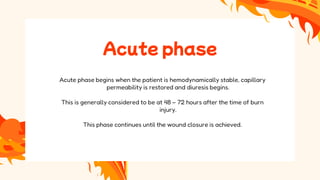
Acute phase
Acute phase begins when the patient is hemodynamically stable, capillary
permeability is restored and diuresis begins.
This is generally considered to be at 48 – 72 hours after the time of burn
injury.
This phase continues until the wound closure is achieved.
• It is done with the help of hydrotherapy
• Hydrotherapy is a form of shower carts
• Individual showers and bed baths can be used to clean the wounds.
• The temperature of the water is maintained at 37.8 C
• The temperature of the room should be maintained between 26.6C to 29.4 C
• Hydrotherapy should be limited 20-30 min period to prevent chilling of the patient
• Patient is encouraged to perform active exercises of extremities during hydrotherapy.
• Cross infection should be prevented by changing the plastic lining place inside the bathtub.
• Vital signs are monitored before and after hydrotherapy.
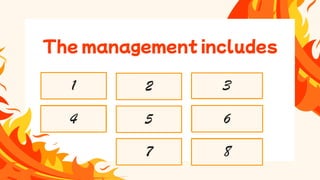
Wound cleaning
1
Nutrition therapy
8
Infection control
7
Pain
management
6
Grafting burn
wound
5
Wound
debridement
4
Wound dressing
3
Topical antimicrobial
therapy
2
The management includes
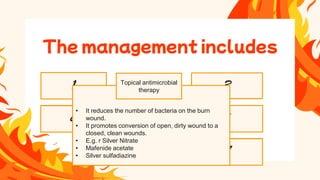
• It reduces the number of bacteria on the
burn wound.
• It promotes conversion of open, dirty
wound to a closed, clean wounds.
• E.g. r Silver Nitrate
• Mafenide acetate
• Silver sulfadiazine
Nutrition therapy
8
Infection control
7
Pain
management
6
Grafting burn
wound
5
Wound
debridement
4
Wound dressing
3
Topical antimicrobial
therapy
2
• It is done with the help of hydrotherapy
• Hydrotherapy is a form of shower carts
• Individual showers and bed baths can be used to clean the wounds.
• The temperature of the water is maintained at 37.8 C
• The temperature of the room should be maintained between 26.6C to 29.4 C
• Hydrotherapy should be limited 20-30 min period to prevent chilling of the patient
• Patient is encouraged to perform active exercises of extremities during hydrotherapy.
• Cross infection should be prevented by changing the plastic lining place inside the bathtub.
• Vital signs are monitored before and after hydrotherapy.
The management includes
Wound cleaning
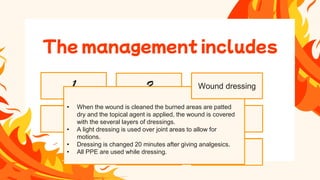
• When the wound is cleaned the burned areas are
patted dry and the topical agent is applied, the
wound is covered with the several layers of
dressings.
• A light dressing is used over joint areas to allow for
motions.
• Dressing is changed 20 minutes after giving
analgesics.
• All PPE are used while dressing.
• It is done with the help of hydrotherapy
• Hydrotherapy is a form of shower carts
• Individual showers and bed baths can be used to clean the wounds.
• The temperature of the water is maintained at 37.8 C
• The temperature of the room should be maintained between 26.6C to 29.4 C
• Hydrotherapy should be limited 20-30 min period to prevent chilling of the patient
• Patient is encouraged to perform active exercises of extremities during hydrotherapy.
• Cross infection should be prevented by changing the plastic lining place inside the bathtub.
• Vital signs are monitored before and after hydrotherapy.
Wound cleaning
1
Nutrition therapy
8
Infection control
7
Pain
management
6
Grafting burn
wound
5
Wound
debridement
4
Wound dressing
3
• It reduces the number of bacteria on the burn
wound.
• It promotes conversion of open, dirty wound to a
closed, clean wounds.
• E.g. r Silver Nitrate
• Mafenide acetate
• Silver sulfadiazine
The management includes
Topical antimicrobial
therapy
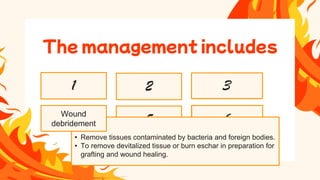
• Remove tissues contaminated by bacteria
and foreign bodies.
• To remove devitalized tissue or burn
eschar in preparation for grafting and
wound healing.
• Itreduces the number of bacteria on the
burn wound.
• Itpromotes conversion of open, dirty
wound to a closed, clean wounds.
• E.g. r Silver Nitrate
• Mafenide acetate
• Silver sulfadiazine
• It is done with the help of hydrotherapy
• Hydrotherapy is a form of shower carts
• Individual showers and bed baths can be used to clean the
wounds.
• The temperature of the water is maintained at 37.8 C
• The temperature of the room should be maintained
between 26.6C to 29.4 C
• Hydrotherapy should be limited 20-30 min period to prevent
chilling of the patient
Nutrition therapy
8
Infection control
7
Pain
management
6
Grafting burn
wound
5
Wound
debridement
4
Topical antimicrobial
therapy
2
Wound cleaning
1
• When the wound is cleaned the burned areas are patted
dry and the topical agent is applied, the wound is covered
with the several layers of dressings.
• A light dressing is used over joint areas to allow for
motions.
• Dressing is changed 20 minutes after giving analgesics.
• All PPE are used while dressing.
The management includes
Wound dressing
• Grafting is done when
wounds are deep or
extensive or re-
epithelialization is not
possible.
• Patient's own skin is
used for graft.
• When the wound is cleaned the burned areas are
patted dry and the topical agent is applied, the wound
is covered with the several layers of dressings.
• A light dressing is used over joint areas to allow for
motions.
• Dressing is changed 20 minutes after giving
analgesics.
• All PPE are used while dressing.
• It is done with the help of hydrotherapy
• Hydrotherapy is a form of shower carts
• Individual showers and bed baths can be used to clean the
wounds.
• The temperature of the water is maintained at 37.8 C
• The temperature of the room should be maintained
between 26.6C to 29.4 C
• Hydrotherapy should be limited 20-30 min period to prevent
chilling of the patient
Nutrition therapy
8
Infection control
7
Pain
management
6
Grafting burn
wound
5
Wound dressing
3
Topical antimicrobial
therapy
2
Wound cleaning
1
• Remove tissues contaminated by bacteria and foreign bodies.
• To remove devitalized tissue or burn eschar in preparation for
grafting and wound healing.
The management includes
Wound
debridement
• Burn patients experiences
severe pain.
• Morphine sulfate is
administered IV.
• Fentanyl may be used in
procedural pain.
• Remove tissues contaminated by
bacteria and foreign bodies.
• To remove devitalized tissue or burn
eschar in preparation for grafting and
wound healing.
• It is done with the help of hydrotherapy
• Hydrotherapy is a form of shower carts
• Individual showers and bed baths can be used to clean the
wounds.
• The temperature of the water is maintained at 37.8 C
• The temperature of the room should be maintained
between 26.6C to 29.4 C
• Hydrotherapy should be limited 20-30 min period to prevent
chilling of the patient
Nutrition therapy
8
Infection control
7
Pain
management
6
Wound
debridement
4
Wound dressing
3
Topical antimicrobial
therapy
2
Wound cleaning
1
• Grafting is done when wounds are deep or
extensive or re- epithelialization is not
possible.
• Patient's own skin is used for graft.
The management includes
Grafting burn
wound
• Strict sterile technique is used for
wound care procedures.
• Provide safe and clean environment
to the patient.
• Use of PPE.
• Invasive lines and tubing must be
routinely changed.
• Regular changing of linen.
• Grafting is done when wounds are deep or
extensive or re- epithelialization is not possible.
• Patient's own skin is used for graft.
• It is done with the help of hydrotherapy
• Hydrotherapy is a form of shower carts
• Individual showers and bed baths can be used to clean the
wounds.
• The temperature of the water is maintained at 37.8 C
• The temperature of the room should be maintained
between 26.6C to 29.4 C
• Hydrotherapy should be limited 20-30 min period to prevent
chilling of the patient
Nutrition therapy
8
Infection control
7
Grafting burn
wound
5
Wound
debridement
4
Wound dressing
3
Topical antimicrobial
therapy
2
Wound cleaning
1
• Burn patients experiences severe pain.
• Morphine sulfate is administered IV.
• Fentanyl may be used in procedural pain.
The management includes
Pain
management
• Burn injuries produce profound metabolic
abnormalities.
• Patient's metabolic demands vary with the
extent of burns.
• The goal of nutritional support is to promote a
state of positive nitrogen balance.
• High protein, lipid and carbohydrate diet should
be given to the patient.
• Curreri formula can be used to estimate energy
requirement.
• Energy requirement = (25 kcal * kg body
weight) + (40 kcal * %TBSA burn)
• Method for delivering nutritional support include
oral intake, enteral tube feeding, TPN and
Parenteral nutrition.
• These may be used alone or in combination.
• Burn patients experiences
severe pain.
• Morphine sulfate is
administered IV.
• Fentanyl may be used in
procedural pain.
• It is done with the help of hydrotherapy
• Hydrotherapy is a form of shower carts
• Individual showers and bed baths can be used to clean the
wounds.
• The temperature of the water is maintained at 37.8 C
• The temperature of the room should be maintained
between 26.6C to 29.4 C
• Hydrotherapy should be limited 20-30 min period to prevent
chilling of the patient
Nutrition therapy
8
Pain
management
6
Grafting burn
wound
5
Wound
debridement
4
Wound dressing
3
Topical antimicrobial
therapy
2
Wound cleaning
1
The management includes
• Strict sterile technique is used for wound care procedures.
• Provide safe and clean environment to the patient.
• Use of PPE.
• Invasive lines and tubing must be routinely changed.
• Regular changing of linen.
Infection control
• Strict sterile technique is used for wound care
procedures.
• Provide safe and clean environment to the
patient.
• Use of PPE.
• Invasive lines and tubing must be routinely
changed.
• Regular changing of linen.
• It is done with the help of hydrotherapy
• Hydrotherapy is a form of shower carts
• Individual showers and bed baths can be used to clean the
wounds.
• The temperature of the water is maintained at 37.8 C
• The temperature of the room should be maintained
between 26.6C to 29.4 C
• Hydrotherapy should be limited 20-30 min period to prevent
chilling of the patient
Infection control
7
Pain
management
6
Grafting burn
wound
5
Wound
debridement
4
Wound dressing
3
Topical antimicrobial
therapy
2
Wound cleaning
1
• Burn injuries produce profound metabolic abnormalities.
• Patient's metabolic demands vary with the extent of burns.
• The goal of nutritional support is to promote a state of positive nitrogen
balance.
• High protein, lipid and carbohydrate diet should be given to the patient.
• Curreri formula can be used to estimate energy requirement.
• Energy requirement = (25 kcal * kg body weight) + (40 kcal * %TBSA burn)
• Method for delivering nutritional support include oral intake, enteral tube
feeding, TPN and Parenteral nutrition.
• These may be used alone or in combination.
The management includes
Nutrition therapy
• Burn injuries produce profound metabolic
abnormalities.
• Patient's metabolic demands vary with the extent of
burns.
• The goal of nutritional support is to promote a state of
positive nitrogen balance.
• High protein, lipid and carbohydrate diet should be
given to the patient.
• Curreri formula can be used to estimate energy
requirement.
• Energy requirement = (25 kcal * kg body weight) + (40
kcal * %TBSA burn)
• Method for delivering nutritional support include oral
intake, enteral tube feeding, TPN and Parenteral
nutrition.
• These may be used alone or in combination.
Wound cleaning
1
Nutrition therapy
8
Infection control
7
Pain
management
6
Grafting burn
wound
5
Wound
debridement
4
Wound dressing
3
Topical antimicrobial
therapy
2
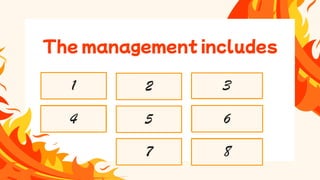
The management includes
Wound cleaning
Nutrition therapy
Infection control
Pain
management
Grafting burn
wound
Wound
debridement
Wound dressing
Topical antimicrobial
therapy
The management includes
Rehabilitation phase
Rehabilitation should begin immediately after the burn has occurred.
Wound healing, psychosocial support and restoration of maximal functional
activity remain priorities so that the patient can have the best quality of life
both personally and socially.
Reconstructive surgery may be done to improve body appearance and function.
Psychological counseling may be done to promote recovery and quality of life
CREDITS: This presentation template was created by Slidesgo, and
includes icons by Flaticon, and infographics & images by Freepik
Thanks!
Do you have any question?

Burn

  • 1.
    Racheen S. Haji ParwarI. Tahir University of zakho Faculty of medical sciences School of medicine Surgical department
  • 2.
    The effects ofthe burn are influenced by: Intensity of the energy Duration of exposure Type of tissue injured
  • 3.
  • 4.
  • 5.
    ● These arecaused by exposure to or contact with flame, hot liquids, semi liquids (steam), semi-solid (tar) or hot objects. ● Pre hospital care: ○ Lavage with water ○ Assist patient to drop and roll ○ Cover body to prevent hypothermia Thermal
  • 6.
  • 7.
    ● It iscaused by contact of tissue to any strong acids, alkalis or organic compounds. ● Pre hospital care: ○ Remove cloths ○ Use shower to lavage the involved area ● Treatment: ○ Late neutralization with antidote done by 0.2% acetic acid in alkali burns, sodium bicarbonate or calcium gluconate for acid burns. Chemical
  • 8.
  • 9.
    ● These arethe injuries caused by heat that is generated by the electrical energy as it passes through the body. ● It can result from contact with exposed or faulty electrical wiring or high voltage power lines. ● People struck by lightening also sustain electrical injury. ● Pre hospital care: ○ Disconnect the source of electric current ○ Monitor cardio pulmonary arrest ○ Begin CPR if patient is unresponsive ○ Place patient on spinal board and apply cervical collar and transport ● Treatment: ○ Assess Entrance & Exit wounds. ○ Remove clothing, jewelry, and leather items. ○ Treat any visible injuries. Electrical
  • 10.
  • 11.
    ● These arecaused by exposure to radioactive source. ● Eg. - Nuclear – radiation accidents - Use of ionizing radiation in industries - Therapeutic radiations - Sunburns from prolonged exposure to ultraviolet rays Radiation
  • 12.
  • 13.
    ● It mayresults from exposure to asphyxiants and smoke, if the victim was trapped in closed, smoke – filled area. ● It results in pulmonary pathophysiologic changes. Inhalation
  • 14.
  • 15.
  • 16.
  • 17.
  • 18.
  • 20.
    ● Layers involved:Epidermis ● Appearance: Redness (erythema) ● Texture: Dry ● Sensation: Painful ● Time of healing: 1wk or less ● Complication: Increase risk to develop skin cancer later in life 1st degree
  • 22.
    ● Layers involved:Extends into superficial dermis ● Appearance: Red with clear blister. Bleaches with pressure ● Texture: Moist ● Sensation: Painful ● Time of healing: 2-3wk ● Complication: Local infection / Cellulitis 2nd degree (superficial partial thickness)
  • 24.
    ● Layers involved:Extends into deep dermis ● Appearance: Red and white with blood blisters ● Texture: Moist ● Sensation: Painful ● Time of healing: Weeks - may progress to third degree ● Complication: Scarring, contractures (may require excision and skin grafting) 2nd degree (deep partial thickness)
  • 26.
    ● Layers involved:Extends through entire dermis ● Appearance: Stiff and white/brown ● Texture: Dry, leathery ● Sensation: Painless ● Time of healing: Requires excision ● Complication: Scarring, contractures, amputation 3rd degree (full thickness)
  • 28.
    ● Layers involved:Extends through skin, subcutaneous tissue and into underlying muscle and bone ● Appearance: Black; charred with eschar ● Texture: Dry ● Sensation: Painless ● Time of healing: Requires excision ● Complication: Amputation, significant functional impairment, possible gangrene, and in some cases death 4th degree
  • 29.
    Clinical manifistation Fluid andelectrolyte imbalance Cardiac alteraetion pain Alteration in respiration Loss of consciousness Thermoregulatory alteration
  • 30.
    that occurs immediatelyafter burn like: - hyperkaliemia Hyponatraemia Generalized body edema is seen in patients with greater than 25% burns. • Increased hematocrit level • After 18-36 hr capillary membrane integrity begins to be restored. • The body beings to reabsorbed edema, fluid and excess fluid is excreted Clinical manifistation Fluid and electrolyte imbalance
  • 31.
    Clinical manifistation Fluid andelectrolyte imbalance Cardiac alteraetion pain Alteration in respiration Loss of consciousness Thermoregulatory alteration
  • 32.
    • It dependsupon types of burn • Manifested by dyspnea, rapid breathing, cyanosis, stridor. • Thermal burn to the upper airway (mouthe, nasopharynx, and larynx) leads to mucosal edema, blisters, ulceration leading to upper airway obstraction. Clinical manifistation Alteration in respiration
  • 33.
    Clinical manifistation Fluid andelectrolyte imbalance Cardiac alteraetion pain Alteration in respiration Loss of consciousness Thermoregulatory alteration
  • 34.
    • Hypovlemia occursimmediately after the burn • Cardiac output decreased • Decreased in blood pressure • Anemia may occur as a result of damage to RBCs Clinical manifistation Cardiac alteraetion
  • 35.
    Clinical manifistation Fluid andelectrolyte imbalance Cardiac alteraetion pain Alteration in respiration Loss of consciousness Thermoregulatory alteration
  • 36.
    • Burn patientsexperiences two types of pain. 1. Background pain: is experienced when patient is at rest. 2. procedural pain: is experienced during the performance of theraoutic procedures like dressing, cleaning, Etc. Clinical manifistation pain
  • 37.
    Clinical manifistation Fluid andelectrolyte imbalance Cardiac alteraetion pain Alteration in respiration Loss of consciousness Thermoregulatory alteration
  • 38.
    • Loss ofskin results in an inability to regulate body temperature. • Patients may exhibit low body temperatures in the early hours after injury. Clinical manifistation Thermoregulatory alteration
  • 39.
    Clinical manifistation Fluid andelectrolyte imbalance Cardiac alteraetion pain Alteration in respiration Loss of consciousness Thermoregulatory alteration
  • 40.
    • That occursdue to neurological trauma Clinical manifistation Loss of consciousness
  • 41.
    Indication of admition Moderateand severe burns. Airway burns of any type. Burns in extremes of age. All electrical or deep chemical burns.
  • 42.
    Medical management Emergent /resuscitative phase: this phase lasts for 36-48 hr from onset of injury, it ends when fluid resuscitation is complete. Acute phase: this phase begins with diuresis and end with closures of the burn wound. Rehabilitation phase: this phase begins with wound closure and ends when client returns to the highest level of health.
  • 43.
    Emergent phase The managementof burn patient begins at the scene of accident Remove the patient from the area of danger Stop the burning process Implement basic life support
  • 44.
    Medical management of emergentphase Assess the burn severity Assess the burn depth Assess burn extent using rules of nine Assess location of burn Identify the mechanism of injury
  • 45.
    • One ofthe prime importance • Inspect oropharynx for erythema, blisters, ulcerations and need for endotracheal intubation. • In inhalation injury administer 100% O2 via tight fitting mask. Medical management of emergent phase Monitor airway and breathing Preventing tissue ischemia Preventing burn shock Wound care Minimizing pain Preventing tetanus Prevention od aspiration 1 2 5 6 7 4 3
  • 46.
    • In adultswith > 15% burn fluid resuscitation is required 2 larg bore needles are inserted intravenously. • Fluid resuscitation is used to minimize the harmful effect of fluid shift. • The main goal is to maintain vital organ perfusion Medical management of emergent phase Preventing tissue ischemia Preventing burn shock Wound care Minimizing pain Preventing tetanus Prevention od aspiration 2 5 6 7 4 3 • One of the prime importance • Inspect oropharynx for erythema, blisters, ulcerations and need for endotracheal intubation. • In inhalation injury administer 100% O2 via tight fitting mask. Monitor airway and breathing
  • 47.
    • Nasogastric tubeis placed to prevent vomiting and reduce the risk of aspiration which occur due to GI dysfunction resulting from the intestinal ileus or paralytic ileus. • One of the prime importance • Inspect oropharynx for erythema, blisters, ulcerations and need for endotracheal intubation. • In inhalation injury administer 100% O2 via tight fitting mask. Medical management of emergent phase Monitor airway and breathing Preventing tissue ischemia Wound care Minimizing pain Preventing tetanus Prevention od aspiration 1 5 6 7 4 3 • In adults with > 15% burn fluid resuscitation is required 2 larg bore needles are inserted intravenously. • Fluid resuscitation is used to minimize the harmful effect of fluid shift. • The main goal is to maintain vital organ perfusion Preventing burn shock
  • 48.
  • 49.
    RL 2-4 ml/kg/%TBSA ▪ In 1st 8hr: first half of the amount ▪ In next 8 hr: ¼ of total amount ▪ In next 8 hr: ¼ of the total amount Parkland formula Example: ➢ 70 kg patient with 50% TBSA burn RL to be administered is 2*70*50= 7000 ml in 24 hrs In 1st 8 hr 3500ml Next 8hr 1750ml Next 8hr 1750ml
  • 50.
    • Pain managementin moderate or major burns is achieved through IV administrationof opiods likemorphine sulphate. • One of the prime importance • Inspect oropharynx for erythema, blisters, ulcerations and need for endotracheal intubation. • In inhalation injury administer 100% O2 via tight fitting mask. Medical management of emergent phase Monitor airway and breathing Preventing tissue ischemia Wound care Minimizing pain Preventing tetanus 1 5 6 7 4 • In adults with > 15% burn fluid resuscitationis required 2 larg bore needles are inserted intravenously. • Fluid resuscitation is used to minimize the harmful effect of fluid shift. • The main goal is to maintain vital organ perfusion Preventing burn shock 2 • Nasogastric tube is placed to prevent vomiting and reduce the risk of aspiration which occur due to GI dysfunction resulting from the intestinal ileus or paralytic ileus. Prevention of aspiration
  • 51.
    • Immediate care •Cover the wound with sterile towel and place on clean dry sheet • Debridement • Application of topical agents • Dressing • One of the prime importance • Inspect oropharynx for erythema, blisters, ulcerations and need for endotracheal intubation. • In inhalation injury administer 100% O2 via tight fitting mask. Medical management of emergent phase Monitor airway and breathing Preventing tissue ischemia Wound care Preventing tetanus 1 5 6 7 • In adults with > 15% burn fluid resuscitationis required 2 larg bore needles are inserted intravenously. • Fluid resuscitation is used to minimize the harmful effect of fluid shift. • The main goal is to maintain vital organ perfusion Preventing burn shock 2 • Nasogastric tube is placed to prevent vomiting and reduce the risk of aspiration which occur due to GI dysfunction resulting from the intestinal ileus or paralytic ileus. Prevention of aspiration 3 • Pain management in moderate or major burns is achieved through IV administration of opiods like morphine sulphate. Minimizing pain
  • 52.
    • Immunization withtetanus toxoid • One of the prime importance • Inspect oropharynx for erythema, blisters, ulcerations and need for endotracheal intubation. • In inhalation injury administer 100% O2 via tight fitting mask. Medical management of emergent phase Monitor airway and breathing Preventing tissue ischemia Preventing tetanus 1 6 7 • In adults with > 15% burn fluid resuscitationis required 2 larg bore needles are inserted intravenously. • Fluid resuscitation is used to minimize the harmful effect of fluid shift. • The main goal is to maintain vital organ perfusion Preventing burn shock 2 • Nasogastric tube is placed to prevent vomiting and reduce the risk of aspiration which occur due to GI dysfunction resulting from the intestinal ileus or paralytic ileus. Prevention of aspiration 3 • Pain management in moderate or majorburns is achieved through IV administrationof opiods like morphinesulphate. Minimizing pain 4 • Immediate care • Cover the wound with sterile towel and place on clean dry sheet • Debridement • Application of topical agents • Dressing Wound care
  • 53.
    • Elevate theinjury extremity above the level of the heart and perform active exercises to reduce department edema formation • Immediately assess the distal extremity perfusion • One of the prime importance • Inspect oropharynx for erythema, blisters, ulcerations and need for endotracheal intubation. • In inhalation injury administer 100% O2 via tight fitting mask. Medical management of emergent phase Monitor airway and breathing Preventing tissue ischemia 1 7 • In adults with > 15% burn fluid resuscitationis required 2 larg bore needles are inserted intravenously. • Fluid resuscitation is used to minimize the harmful effect of fluid shift. • The main goal is to maintain vital organ perfusion Preventing burn shock 2 • Nasogastric tube is placed to prevent vomiting and reduce the risk of aspiration which occur due to GI dysfunction resulting from the intestinal ileus or paralytic ileus. Prevention of aspiration 3 • Pain management in moderate or majorburns is achieved through IV administrationof opiods like morphinesulphate. Minimizing pain 4 • Immediate care • Cover the wound with sterile towel and place on clean dry sheet • Debridement • Application of topical agents • Dressing Wound care 5 • Immunization with tetanus toxoid Preventing tetanus
  • 54.
    • One ofthe prime importance • Inspect oropharynx for erythema, blisters, ulcerations and need for endotracheal intubation. • In inhalation injury administer 100% O2 via tight fitting mask. Medical management of emergent phase Monitor airway and breathing 1 • In adults with > 15% burn fluid resuscitationis required 2 larg bore needles are inserted intravenously. • Fluid resuscitation is used to minimize the harmful effect of fluid shift. • The main goal is to maintain vital organ perfusion Preventing burn shock 2 • Nasogastric tube is placed to prevent vomiting and reduce the risk of aspiration which occur due to GI dysfunction resulting from the intestinal ileus or paralytic ileus. Prevention of aspiration 3 • Pain management in moderate or majorburns is achieved through IV administrationof opiods like morphinesulphate. Minimizing pain 4 • Immediate care • Cover the wound with sterile towel and place on clean dry sheet • Debridement • Application of topical agents • Dressing Wound care 5 • Immunization with tetanus toxoid Preventing tetanus 6 • Elevate the injury extremity above the level of the heart and perform active exercises to reduce department edema formation • Immediately assess the distal extremity perfusion Preventing tissue ischemia
  • 55.
    • One ofthe prime importance • Inspect oropharynx for erythema, blisters, ulcerations and need for endotracheal intubation. • In inhalation injury administer 100% O2 via tight fitting mask. Medical management of emergent phase Monitor airway and breathing 1 • In adults with > 15% burn fluid resuscitationis required 2 larg bore needles are inserted intravenously. • Fluid resuscitation is used to minimize the harmful effect of fluid shift. • The main goal is to maintain vital organ perfusion Preventing burn shock 2 • Nasogastric tube is placed to prevent vomiting and reduce the risk of aspiration which occur due to GI dysfunction resulting from the intestinal ileus or paralytic ileus. Prevention of aspiration 3 • Pain management in moderate or majorburns is achieved through IV administrationof opiods like morphinesulphate. Minimizing pain 4 • Immediate care • Cover the wound with sterile towel and place on clean dry sheet • Debridement • Application of topical agents • Dressing Wound care 5 • Immunization with tetanus toxoid Preventing tetanus 6 • Elevate the injury extremity above the level of the heart and perform active exercises to reduce department edema formation • Immediately assess the distal extremity perfusion Preventing tissue ischemia 7
  • 56.
    • One ofthe prime importance • Inspect oropharynx for erythema, blisters, ulcerations and need for endotracheal intubation. • In inhalation injury administer 100% O2 via tight fitting mask. Medical management of emergent phase Monitor airway and breathing Preventing tissue ischemia Preventing burn shock Wound care Minimizing pain Preventing tetanus Prevention of aspiration
  • 57.
    Acute phase Acute phasebegins when the patient is hemodynamically stable, capillary permeability is restored and diuresis begins. This is generally considered to be at 48 – 72 hours after the time of burn injury. This phase continues until the wound closure is achieved.
  • 58.
    • It isdone with the help of hydrotherapy • Hydrotherapy is a form of shower carts • Individual showers and bed baths can be used to clean the wounds. • The temperature of the water is maintained at 37.8 C • The temperature of the room should be maintained between 26.6C to 29.4 C • Hydrotherapy should be limited 20-30 min period to prevent chilling of the patient • Patient is encouraged to perform active exercises of extremities during hydrotherapy. • Cross infection should be prevented by changing the plastic lining place inside the bathtub. • Vital signs are monitored before and after hydrotherapy. Wound cleaning 1 Nutrition therapy 8 Infection control 7 Pain management 6 Grafting burn wound 5 Wound debridement 4 Wound dressing 3 Topical antimicrobial therapy 2 The management includes
  • 59.
    • It reducesthe number of bacteria on the burn wound. • It promotes conversion of open, dirty wound to a closed, clean wounds. • E.g. r Silver Nitrate • Mafenide acetate • Silver sulfadiazine Nutrition therapy 8 Infection control 7 Pain management 6 Grafting burn wound 5 Wound debridement 4 Wound dressing 3 Topical antimicrobial therapy 2 • It is done with the help of hydrotherapy • Hydrotherapy is a form of shower carts • Individual showers and bed baths can be used to clean the wounds. • The temperature of the water is maintained at 37.8 C • The temperature of the room should be maintained between 26.6C to 29.4 C • Hydrotherapy should be limited 20-30 min period to prevent chilling of the patient • Patient is encouraged to perform active exercises of extremities during hydrotherapy. • Cross infection should be prevented by changing the plastic lining place inside the bathtub. • Vital signs are monitored before and after hydrotherapy. The management includes Wound cleaning
  • 60.
    • When thewound is cleaned the burned areas are patted dry and the topical agent is applied, the wound is covered with the several layers of dressings. • A light dressing is used over joint areas to allow for motions. • Dressing is changed 20 minutes after giving analgesics. • All PPE are used while dressing. • It is done with the help of hydrotherapy • Hydrotherapy is a form of shower carts • Individual showers and bed baths can be used to clean the wounds. • The temperature of the water is maintained at 37.8 C • The temperature of the room should be maintained between 26.6C to 29.4 C • Hydrotherapy should be limited 20-30 min period to prevent chilling of the patient • Patient is encouraged to perform active exercises of extremities during hydrotherapy. • Cross infection should be prevented by changing the plastic lining place inside the bathtub. • Vital signs are monitored before and after hydrotherapy. Wound cleaning 1 Nutrition therapy 8 Infection control 7 Pain management 6 Grafting burn wound 5 Wound debridement 4 Wound dressing 3 • It reduces the number of bacteria on the burn wound. • It promotes conversion of open, dirty wound to a closed, clean wounds. • E.g. r Silver Nitrate • Mafenide acetate • Silver sulfadiazine The management includes Topical antimicrobial therapy
  • 61.
    • Remove tissuescontaminated by bacteria and foreign bodies. • To remove devitalized tissue or burn eschar in preparation for grafting and wound healing. • Itreduces the number of bacteria on the burn wound. • Itpromotes conversion of open, dirty wound to a closed, clean wounds. • E.g. r Silver Nitrate • Mafenide acetate • Silver sulfadiazine • It is done with the help of hydrotherapy • Hydrotherapy is a form of shower carts • Individual showers and bed baths can be used to clean the wounds. • The temperature of the water is maintained at 37.8 C • The temperature of the room should be maintained between 26.6C to 29.4 C • Hydrotherapy should be limited 20-30 min period to prevent chilling of the patient Nutrition therapy 8 Infection control 7 Pain management 6 Grafting burn wound 5 Wound debridement 4 Topical antimicrobial therapy 2 Wound cleaning 1 • When the wound is cleaned the burned areas are patted dry and the topical agent is applied, the wound is covered with the several layers of dressings. • A light dressing is used over joint areas to allow for motions. • Dressing is changed 20 minutes after giving analgesics. • All PPE are used while dressing. The management includes Wound dressing
  • 62.
    • Grafting isdone when wounds are deep or extensive or re- epithelialization is not possible. • Patient's own skin is used for graft. • When the wound is cleaned the burned areas are patted dry and the topical agent is applied, the wound is covered with the several layers of dressings. • A light dressing is used over joint areas to allow for motions. • Dressing is changed 20 minutes after giving analgesics. • All PPE are used while dressing. • It is done with the help of hydrotherapy • Hydrotherapy is a form of shower carts • Individual showers and bed baths can be used to clean the wounds. • The temperature of the water is maintained at 37.8 C • The temperature of the room should be maintained between 26.6C to 29.4 C • Hydrotherapy should be limited 20-30 min period to prevent chilling of the patient Nutrition therapy 8 Infection control 7 Pain management 6 Grafting burn wound 5 Wound dressing 3 Topical antimicrobial therapy 2 Wound cleaning 1 • Remove tissues contaminated by bacteria and foreign bodies. • To remove devitalized tissue or burn eschar in preparation for grafting and wound healing. The management includes Wound debridement
  • 63.
    • Burn patientsexperiences severe pain. • Morphine sulfate is administered IV. • Fentanyl may be used in procedural pain. • Remove tissues contaminated by bacteria and foreign bodies. • To remove devitalized tissue or burn eschar in preparation for grafting and wound healing. • It is done with the help of hydrotherapy • Hydrotherapy is a form of shower carts • Individual showers and bed baths can be used to clean the wounds. • The temperature of the water is maintained at 37.8 C • The temperature of the room should be maintained between 26.6C to 29.4 C • Hydrotherapy should be limited 20-30 min period to prevent chilling of the patient Nutrition therapy 8 Infection control 7 Pain management 6 Wound debridement 4 Wound dressing 3 Topical antimicrobial therapy 2 Wound cleaning 1 • Grafting is done when wounds are deep or extensive or re- epithelialization is not possible. • Patient's own skin is used for graft. The management includes Grafting burn wound
  • 64.
    • Strict steriletechnique is used for wound care procedures. • Provide safe and clean environment to the patient. • Use of PPE. • Invasive lines and tubing must be routinely changed. • Regular changing of linen. • Grafting is done when wounds are deep or extensive or re- epithelialization is not possible. • Patient's own skin is used for graft. • It is done with the help of hydrotherapy • Hydrotherapy is a form of shower carts • Individual showers and bed baths can be used to clean the wounds. • The temperature of the water is maintained at 37.8 C • The temperature of the room should be maintained between 26.6C to 29.4 C • Hydrotherapy should be limited 20-30 min period to prevent chilling of the patient Nutrition therapy 8 Infection control 7 Grafting burn wound 5 Wound debridement 4 Wound dressing 3 Topical antimicrobial therapy 2 Wound cleaning 1 • Burn patients experiences severe pain. • Morphine sulfate is administered IV. • Fentanyl may be used in procedural pain. The management includes Pain management
  • 65.
    • Burn injuriesproduce profound metabolic abnormalities. • Patient's metabolic demands vary with the extent of burns. • The goal of nutritional support is to promote a state of positive nitrogen balance. • High protein, lipid and carbohydrate diet should be given to the patient. • Curreri formula can be used to estimate energy requirement. • Energy requirement = (25 kcal * kg body weight) + (40 kcal * %TBSA burn) • Method for delivering nutritional support include oral intake, enteral tube feeding, TPN and Parenteral nutrition. • These may be used alone or in combination. • Burn patients experiences severe pain. • Morphine sulfate is administered IV. • Fentanyl may be used in procedural pain. • It is done with the help of hydrotherapy • Hydrotherapy is a form of shower carts • Individual showers and bed baths can be used to clean the wounds. • The temperature of the water is maintained at 37.8 C • The temperature of the room should be maintained between 26.6C to 29.4 C • Hydrotherapy should be limited 20-30 min period to prevent chilling of the patient Nutrition therapy 8 Pain management 6 Grafting burn wound 5 Wound debridement 4 Wound dressing 3 Topical antimicrobial therapy 2 Wound cleaning 1 The management includes • Strict sterile technique is used for wound care procedures. • Provide safe and clean environment to the patient. • Use of PPE. • Invasive lines and tubing must be routinely changed. • Regular changing of linen. Infection control
  • 66.
    • Strict steriletechnique is used for wound care procedures. • Provide safe and clean environment to the patient. • Use of PPE. • Invasive lines and tubing must be routinely changed. • Regular changing of linen. • It is done with the help of hydrotherapy • Hydrotherapy is a form of shower carts • Individual showers and bed baths can be used to clean the wounds. • The temperature of the water is maintained at 37.8 C • The temperature of the room should be maintained between 26.6C to 29.4 C • Hydrotherapy should be limited 20-30 min period to prevent chilling of the patient Infection control 7 Pain management 6 Grafting burn wound 5 Wound debridement 4 Wound dressing 3 Topical antimicrobial therapy 2 Wound cleaning 1 • Burn injuries produce profound metabolic abnormalities. • Patient's metabolic demands vary with the extent of burns. • The goal of nutritional support is to promote a state of positive nitrogen balance. • High protein, lipid and carbohydrate diet should be given to the patient. • Curreri formula can be used to estimate energy requirement. • Energy requirement = (25 kcal * kg body weight) + (40 kcal * %TBSA burn) • Method for delivering nutritional support include oral intake, enteral tube feeding, TPN and Parenteral nutrition. • These may be used alone or in combination. The management includes Nutrition therapy
  • 67.
    • Burn injuriesproduce profound metabolic abnormalities. • Patient's metabolic demands vary with the extent of burns. • The goal of nutritional support is to promote a state of positive nitrogen balance. • High protein, lipid and carbohydrate diet should be given to the patient. • Curreri formula can be used to estimate energy requirement. • Energy requirement = (25 kcal * kg body weight) + (40 kcal * %TBSA burn) • Method for delivering nutritional support include oral intake, enteral tube feeding, TPN and Parenteral nutrition. • These may be used alone or in combination. Wound cleaning 1 Nutrition therapy 8 Infection control 7 Pain management 6 Grafting burn wound 5 Wound debridement 4 Wound dressing 3 Topical antimicrobial therapy 2 The management includes
  • 68.
    Wound cleaning Nutrition therapy Infectioncontrol Pain management Grafting burn wound Wound debridement Wound dressing Topical antimicrobial therapy The management includes
  • 69.
    Rehabilitation phase Rehabilitation shouldbegin immediately after the burn has occurred. Wound healing, psychosocial support and restoration of maximal functional activity remain priorities so that the patient can have the best quality of life both personally and socially. Reconstructive surgery may be done to improve body appearance and function. Psychological counseling may be done to promote recovery and quality of life
  • 77.
    CREDITS: This presentationtemplate was created by Slidesgo, and includes icons by Flaticon, and infographics & images by Freepik Thanks! Do you have any question?