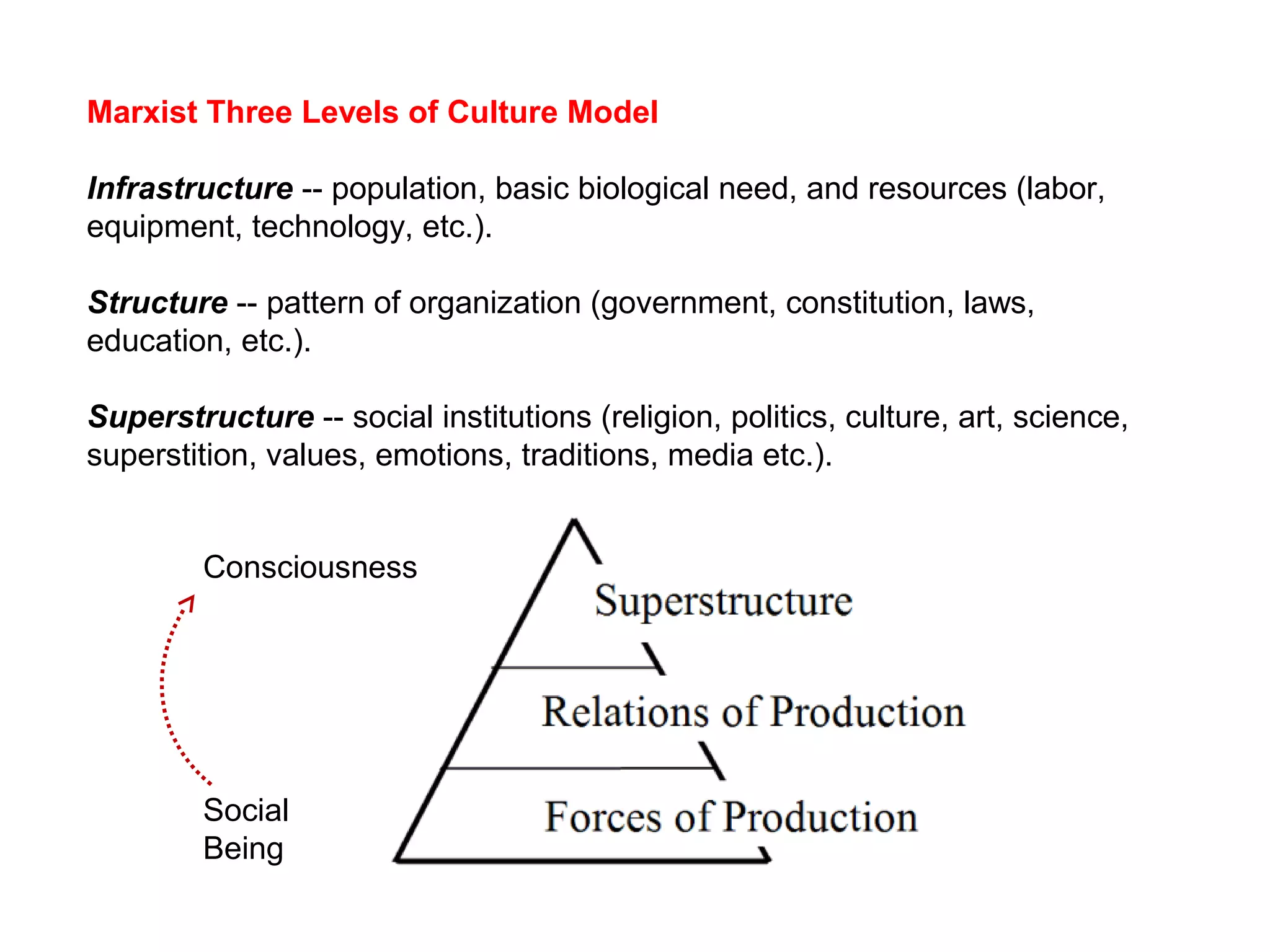
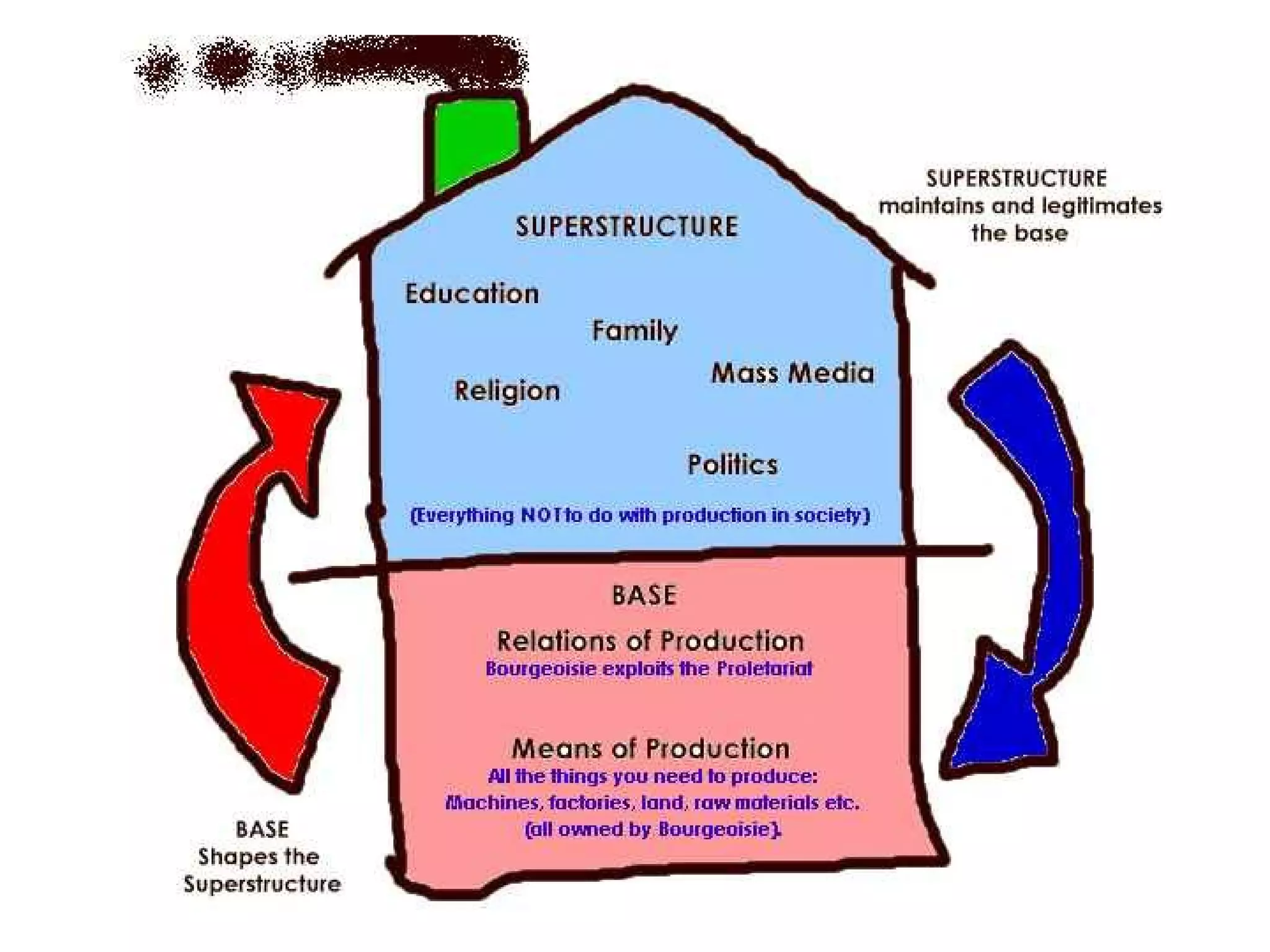
Marxist theory analyzes society through three main levels: the infrastructure, structure, and superstructure. The infrastructure involves the basic economic relationships and production of resources. The structure consists of organizations like government and laws that arise from economic relationships. The superstructure comprises institutions like religion, culture, and education that influence people's consciousness. According to Marxist structuralism, it is the underlying economic structure that determines the nature of society, state institutions, and social relationships, not individual interests. The state and its legal system function to reproduce and ensure the long-term viability of capitalism, rather than serving short-term ruling class interests.