


Building up
Responsibility in the
Workplace
Business Strategist
Roberto Lico
When team members don't take responsibility for their actions, some
managers may just hope that the problem goes away. Others may try
to remove these people from their teams completely.
Neither of these approaches is ideal – the situation is likely to get
worse if you just leave it alone; while laying people off should be a last
resort, especially if you're dealing with people who have the potential
to be effective team members.
Building up Responsibility in the Workplace
Introduction
People duck responsibility for reasons ranging from
simple laziness or a fear of failure.
Whatever the reason, if people fail to take
responsibility, they'll fail in their jobs, they'll fail their
teams, and they'll fail to grow as individuals.
Important!
What Causes a Lack of Responsibility?
You can’t escape the
responsibility of tomorrow by
evading it today.
Abraham Lincoln
 Lacking interest in their work, and in the well-being of
the team.
 Blaming others for mistakes and failures.
 Missing deadlines.
 Avoiding challenging tasks and projects, and not
taking risks.
Your Department and Team
Signs of Not Being Responsible I
 Regularly complaining about unfair treatment by team
leaders and team members.
 Engaging in Self-pity.
 Avoiding taking initiative, and being dependent on others
for work, advice, and instructions.
 Lacking trust in team members and leaders.
 Making excuses regularly.
Your Department and Team
Signs of Not Being Responsible II
The price of greatness is
responsibility.
Winston Churchill
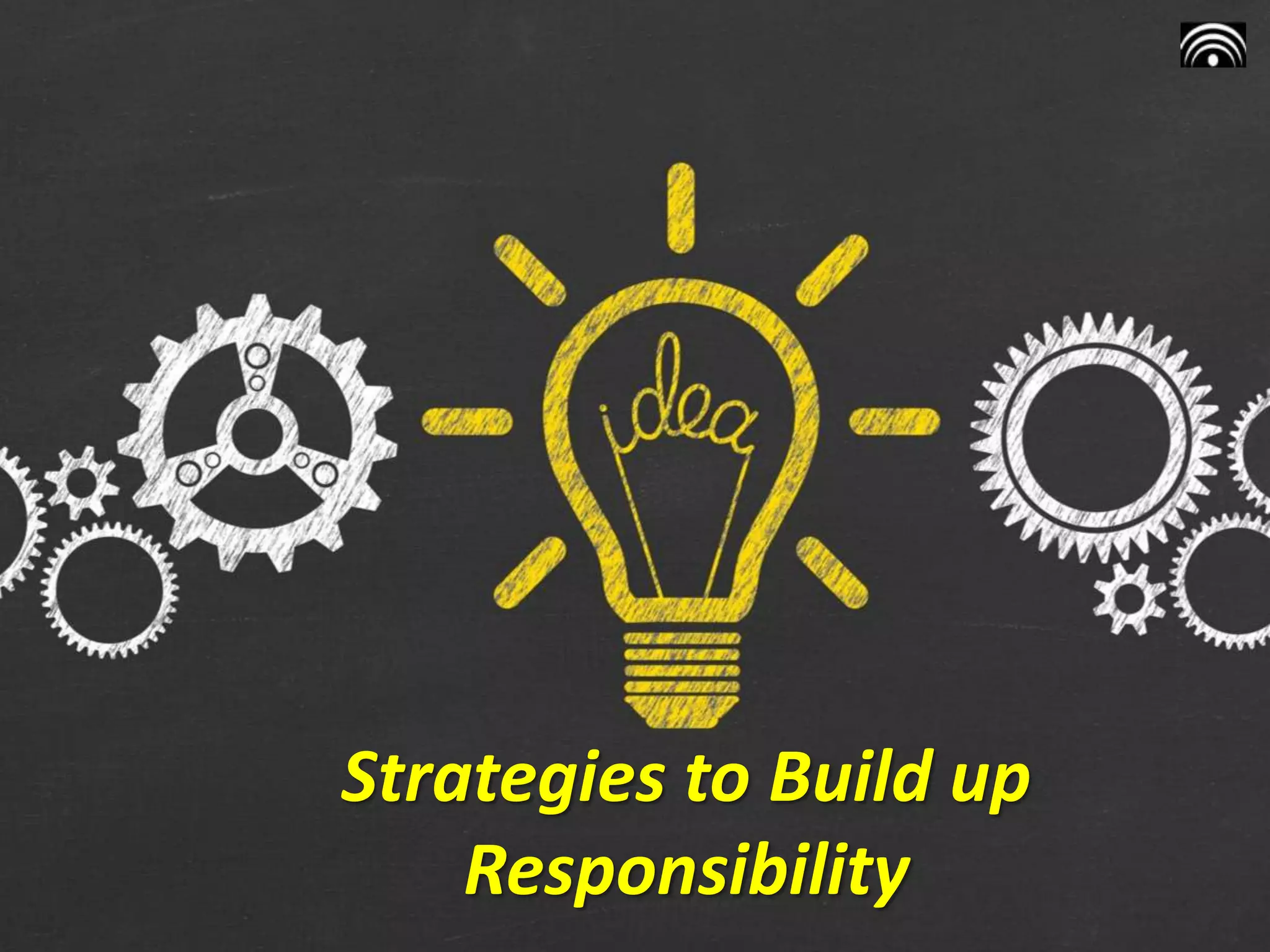
Strategies to Build up
Responsibility
Your first step is to talk to the individuals concerned.
Find out if there are circumstances that are contributing
to the situation, or if there are problems that you can
deal with. After all, bad things can happen in people's
lives, and this can clearly affect their behavior at work.
Then provide feedback , so that the individuals know
that their behavior needs to change.
Strategy I
Start by Talking
A sensible action is to ensure that your people have the resources
they need to do their job. This might include providing training,
equipment, access to mentors and coaches and suchlike.
This is a key step in helping people take responsibility for their
work, since if they don't have the "tools" needed to do their jobs,
it's easy to avoid responsibility!
Strategy II
Ensure Adequate Resources
No individual raindrop ever considers
itself responsible for the flood.
Anonymous
Your people also need to know clearly what their job
roles and responsibilities are.
Make sure that you have an up-to-date job description
for each team member, and be as detailed as possible
about every responsibility that they have.
Strategy III
Communicate Roles, Responsibilities, and
Objectives
You take responsibility for your actions, simply because you have
a deep sense of pride in what you're doing. The same will likely
hold true for your people.
Your people will be more engaged if their work aligns with their
values.
Meet with them to find out what these are. Then, illustrate how
their daily tasks and responsibilities align with those values.
Strategy IV
Re-Engage People
I believe that every right implies a responsibility;
every opportunity, an obligation; every
possession, a duty.
John D. Rockefeller
Sometimes, people feel that they have no control over their lives.
To them, it doesn't matter what they do or how hard they work,
nothing makes much of a difference.
People who don't take responsibility often play the blame game.
When you notice team members starting to point the finger of
blame, stop them immediately. Shift their focus away from
assigning blame, and, instead, direct it to what needs to be done
to fix the problem and move forward.
Strategy V
Help People To Take Control
If you're having problems with members of your team not taking
responsibility, it's also worth taking a fresh look at your own
management style.
Perhaps you aren't delegating clearly, or you're micromanaging
them. So, learn the art of delegation, and avoid
micromanagement. Give your people the freedom they need to
make their own decisions, but be ready to guide them in the right
direction if required.
Strategy VI
Don't Micromanage
Those who enjoy responsibility usually get it;
those who merely like exercising authority
usually lose it.
Malcolm Forbes
To help people take more responsibility for their work, provide
them with the skills and resources to actually do their job. Then,
set up an environment that makes it easy for them to change,
and help them to take responsibility for their decisions and
actions.
Conclusion
LRCL – Business Services Consulting
Roberto Lico – licoreis@licoreis.com.br
Whatsapp Brazil 55 12 9 9195 2474
Building a Collaborative Environment
Our Business Contacts
LRCL – Business Services Consulting
Information
We provide a range of Coaching, Business and Legal Online
Support about:
 Technical Translations – Brazilian Portuguese
 Lectures:
 Doing Business in Brazil
 Brazilian Tax Law and Accounting System
 Brazilian Legal System
 Immigration Law
 Management and HR Issues
Our E-mail:
licoreis@licoreis.com.br

Building up Responsibility in the Workplace

  • 1.
    Building up Responsibility inthe Workplace Business Strategist Roberto Lico
  • 2.
    When team membersdon't take responsibility for their actions, some managers may just hope that the problem goes away. Others may try to remove these people from their teams completely. Neither of these approaches is ideal – the situation is likely to get worse if you just leave it alone; while laying people off should be a last resort, especially if you're dealing with people who have the potential to be effective team members. Building up Responsibility in the Workplace Introduction
  • 3.
    People duck responsibilityfor reasons ranging from simple laziness or a fear of failure. Whatever the reason, if people fail to take responsibility, they'll fail in their jobs, they'll fail their teams, and they'll fail to grow as individuals. Important! What Causes a Lack of Responsibility?
  • 4.
    You can’t escapethe responsibility of tomorrow by evading it today. Abraham Lincoln
  • 5.
     Lacking interestin their work, and in the well-being of the team.  Blaming others for mistakes and failures.  Missing deadlines.  Avoiding challenging tasks and projects, and not taking risks. Your Department and Team Signs of Not Being Responsible I
  • 6.
     Regularly complainingabout unfair treatment by team leaders and team members.  Engaging in Self-pity.  Avoiding taking initiative, and being dependent on others for work, advice, and instructions.  Lacking trust in team members and leaders.  Making excuses regularly. Your Department and Team Signs of Not Being Responsible II
  • 7.
    The price ofgreatness is responsibility. Winston Churchill
  • 8.
    Strategies to Buildup Responsibility
  • 9.
    Your first stepis to talk to the individuals concerned. Find out if there are circumstances that are contributing to the situation, or if there are problems that you can deal with. After all, bad things can happen in people's lives, and this can clearly affect their behavior at work. Then provide feedback , so that the individuals know that their behavior needs to change. Strategy I Start by Talking
  • 10.
    A sensible actionis to ensure that your people have the resources they need to do their job. This might include providing training, equipment, access to mentors and coaches and suchlike. This is a key step in helping people take responsibility for their work, since if they don't have the "tools" needed to do their jobs, it's easy to avoid responsibility! Strategy II Ensure Adequate Resources
  • 11.
    No individual raindropever considers itself responsible for the flood. Anonymous
  • 12.
    Your people alsoneed to know clearly what their job roles and responsibilities are. Make sure that you have an up-to-date job description for each team member, and be as detailed as possible about every responsibility that they have. Strategy III Communicate Roles, Responsibilities, and Objectives
  • 13.
    You take responsibilityfor your actions, simply because you have a deep sense of pride in what you're doing. The same will likely hold true for your people. Your people will be more engaged if their work aligns with their values. Meet with them to find out what these are. Then, illustrate how their daily tasks and responsibilities align with those values. Strategy IV Re-Engage People
  • 14.
    I believe thatevery right implies a responsibility; every opportunity, an obligation; every possession, a duty. John D. Rockefeller
  • 15.
    Sometimes, people feelthat they have no control over their lives. To them, it doesn't matter what they do or how hard they work, nothing makes much of a difference. People who don't take responsibility often play the blame game. When you notice team members starting to point the finger of blame, stop them immediately. Shift their focus away from assigning blame, and, instead, direct it to what needs to be done to fix the problem and move forward. Strategy V Help People To Take Control
  • 16.
    If you're havingproblems with members of your team not taking responsibility, it's also worth taking a fresh look at your own management style. Perhaps you aren't delegating clearly, or you're micromanaging them. So, learn the art of delegation, and avoid micromanagement. Give your people the freedom they need to make their own decisions, but be ready to guide them in the right direction if required. Strategy VI Don't Micromanage
  • 17.
    Those who enjoyresponsibility usually get it; those who merely like exercising authority usually lose it. Malcolm Forbes
  • 18.
    To help peopletake more responsibility for their work, provide them with the skills and resources to actually do their job. Then, set up an environment that makes it easy for them to change, and help them to take responsibility for their decisions and actions. Conclusion
  • 20.
    LRCL – BusinessServices Consulting Roberto Lico – licoreis@licoreis.com.br Whatsapp Brazil 55 12 9 9195 2474
  • 21.
    Building a CollaborativeEnvironment Our Business Contacts LRCL – Business Services Consulting Information We provide a range of Coaching, Business and Legal Online Support about:  Technical Translations – Brazilian Portuguese  Lectures:  Doing Business in Brazil  Brazilian Tax Law and Accounting System  Brazilian Legal System  Immigration Law  Management and HR Issues Our E-mail: licoreis@licoreis.com.br