Building Talent Pipelines
The War for Talent=The 100 Year
War!
 The BCG Study has established that Human Capital is
    a MUST component for organizational success
   The old adage-cash is king-no longer holds true
   The Chief Talent Officer is now considered equivalent
    to the CEO in importance
   Our formal education system is no longer ‘fit for
    purpose”
   The skill gap is widening
   The war for talent continues relentlessly
POLL
 In the war for talent is the CTO equivalent to or more
  important than the CEO?
 -Yes he is more important than the CEO
 -He and the CEO are equally important
 The CEO is the most important person in the
  organization
Common to everything

 Identifying the right talent acquisition strategy
 Developing internal talent
 Striking the right balance between internal and
  external talent
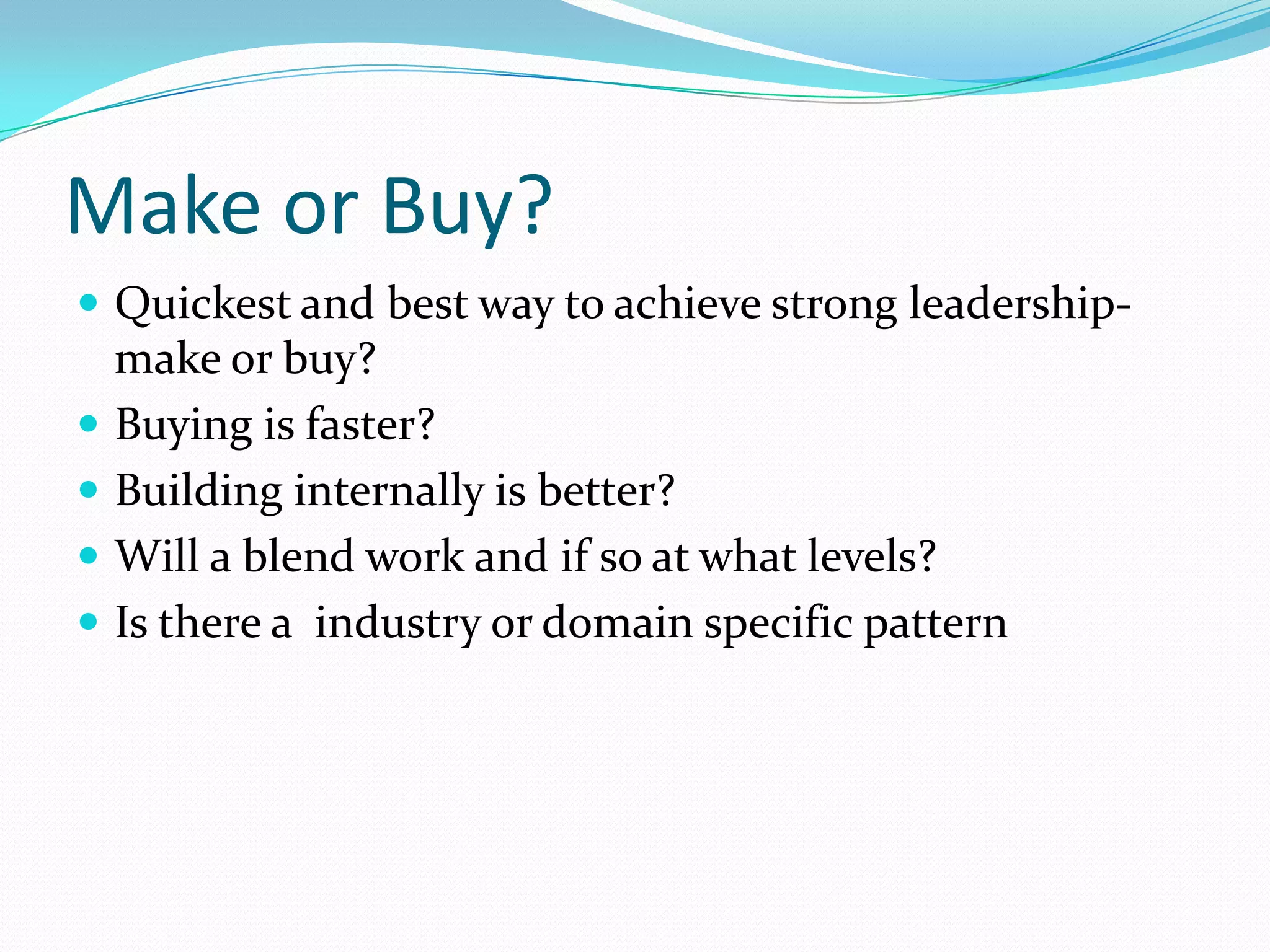
Make or Buy?
 Quickest and best way to achieve strong leadership-
    make or buy?
   Buying is faster?
   Building internally is better?
   Will a blend work and if so at what levels?
   Is there a industry or domain specific pattern
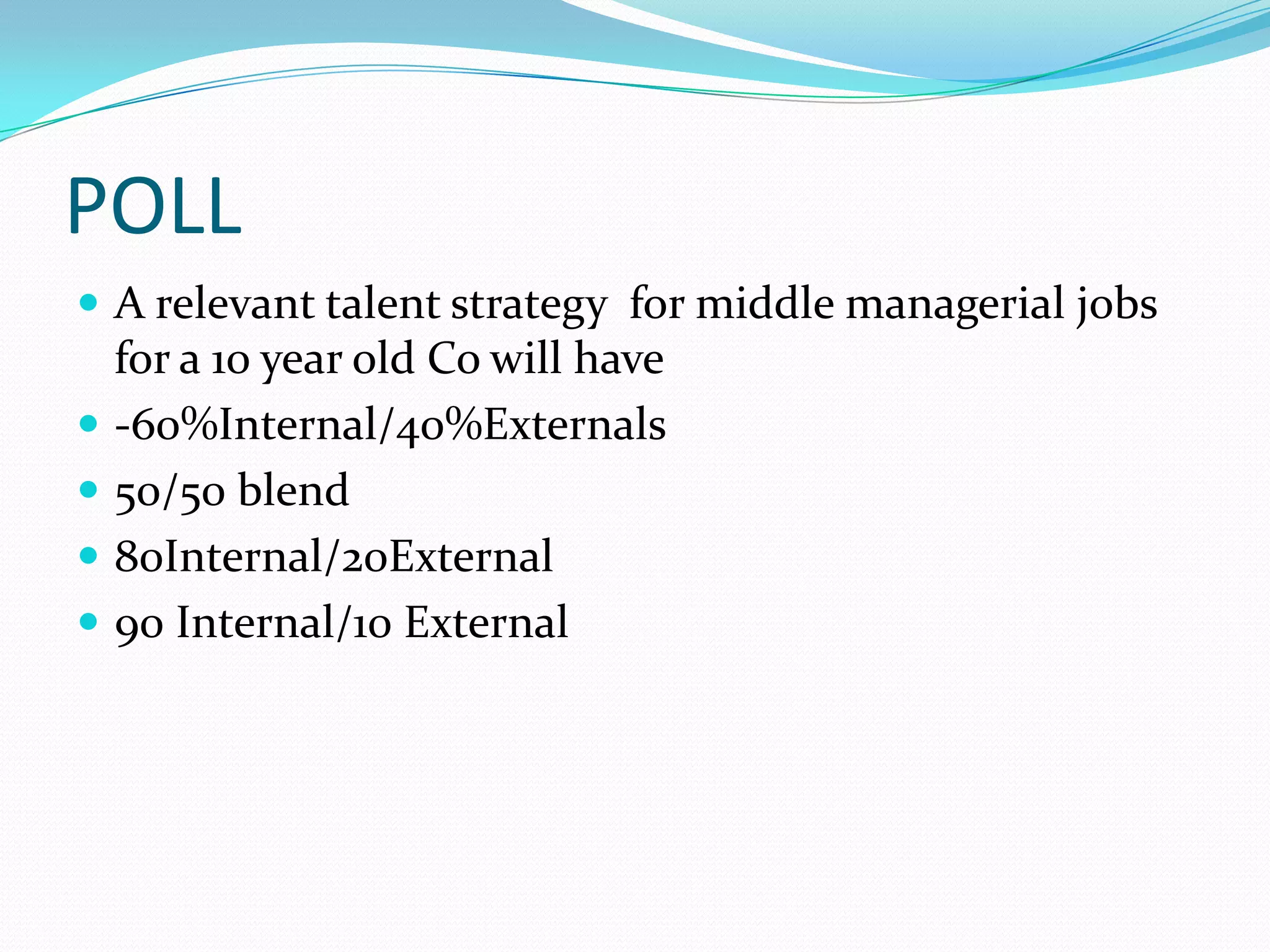
POLL
 A relevant talent strategy for middle managerial jobs
    for a 10 year old Co will have
   -60%Internal/40%Externals
   50/50 blend
   80Internal/20External
   90 Internal/10 External
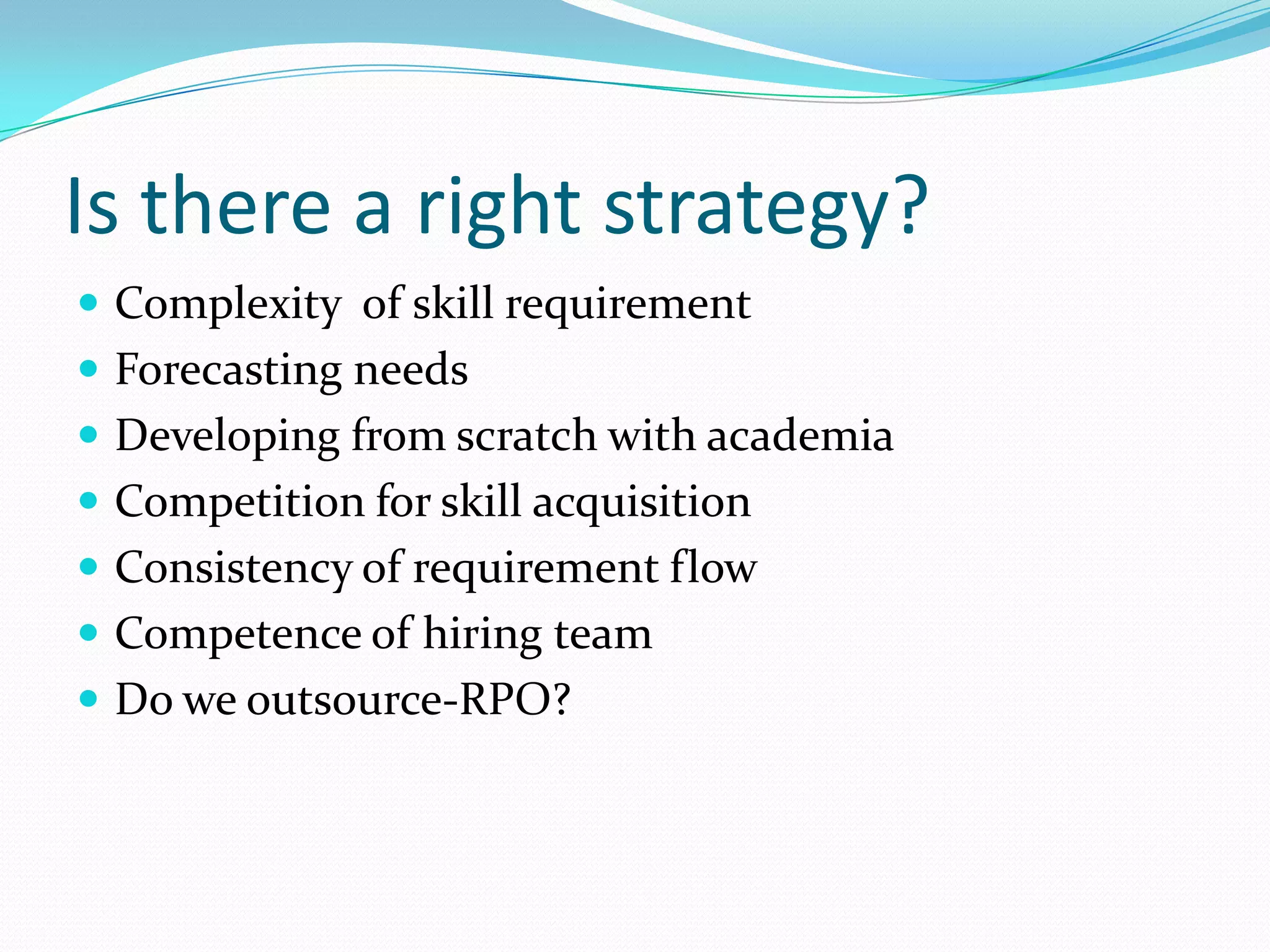
Is there a right strategy?
 Complexity of skill requirement
 Forecasting needs
 Developing from scratch with academia
 Competition for skill acquisition
 Consistency of requirement flow
 Competence of hiring team
 Do we outsource-RPO?
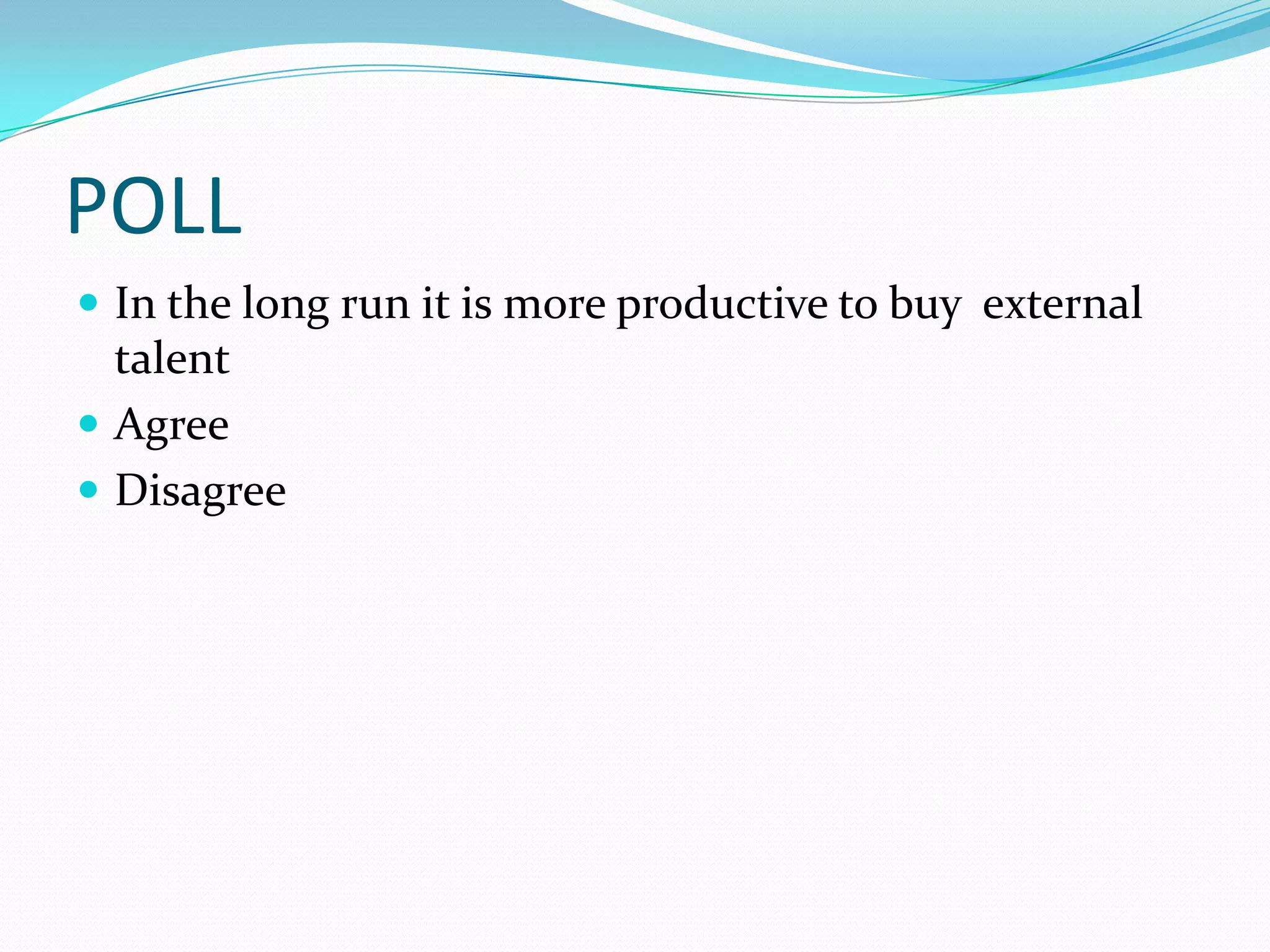
POLL
 In the long run it is more productive to buy external
  talent
 Agree
 Disagree
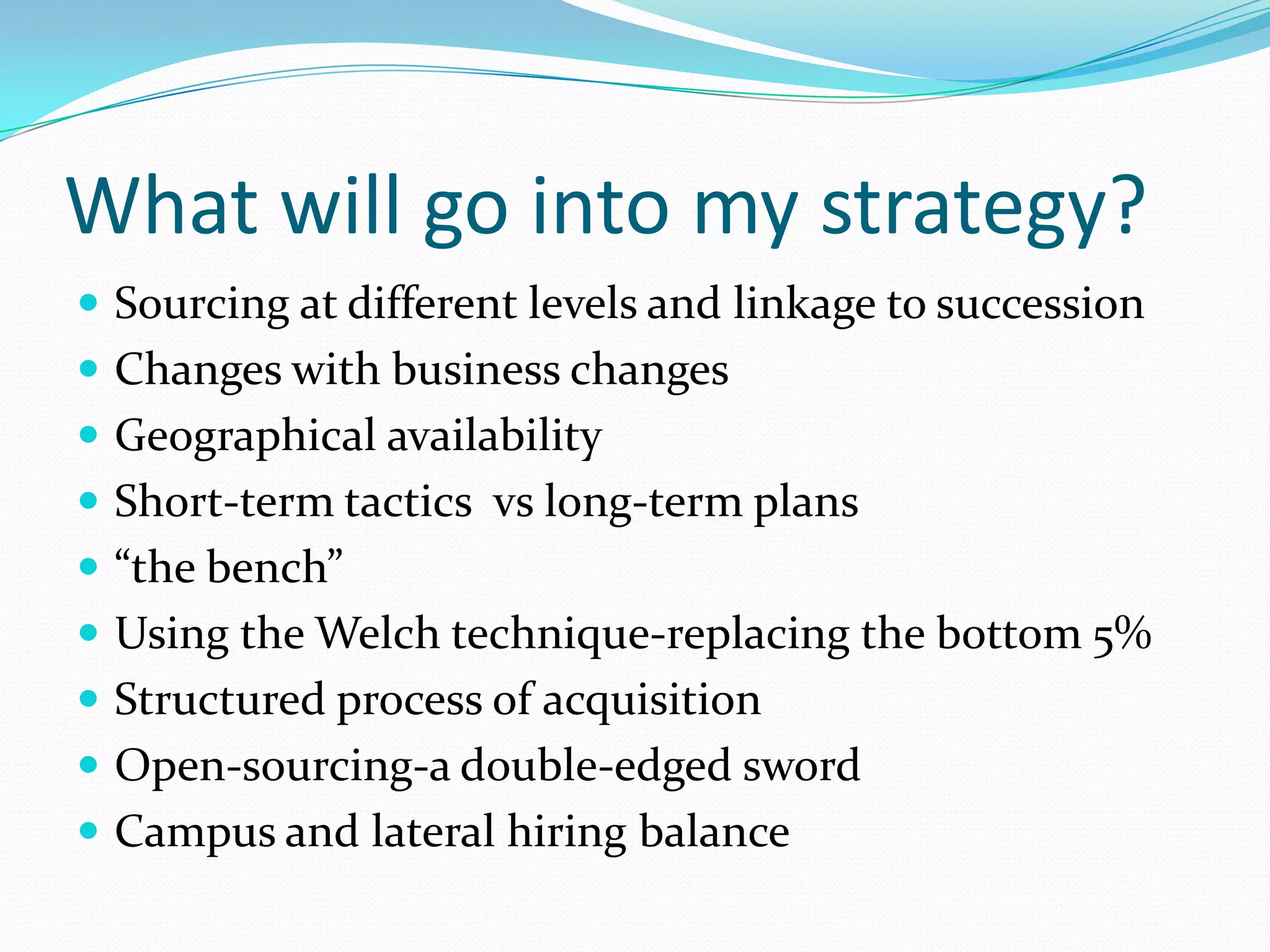
What will go into my strategy?
 Sourcing at different levels and linkage to succession
 Changes with business changes
 Geographical availability
 Short-term tactics vs long-term plans
 “the bench”
 Using the Welch technique-replacing the bottom 5%
 Structured process of acquisition
 Open-sourcing-a double-edged sword
 Campus and lateral hiring balance
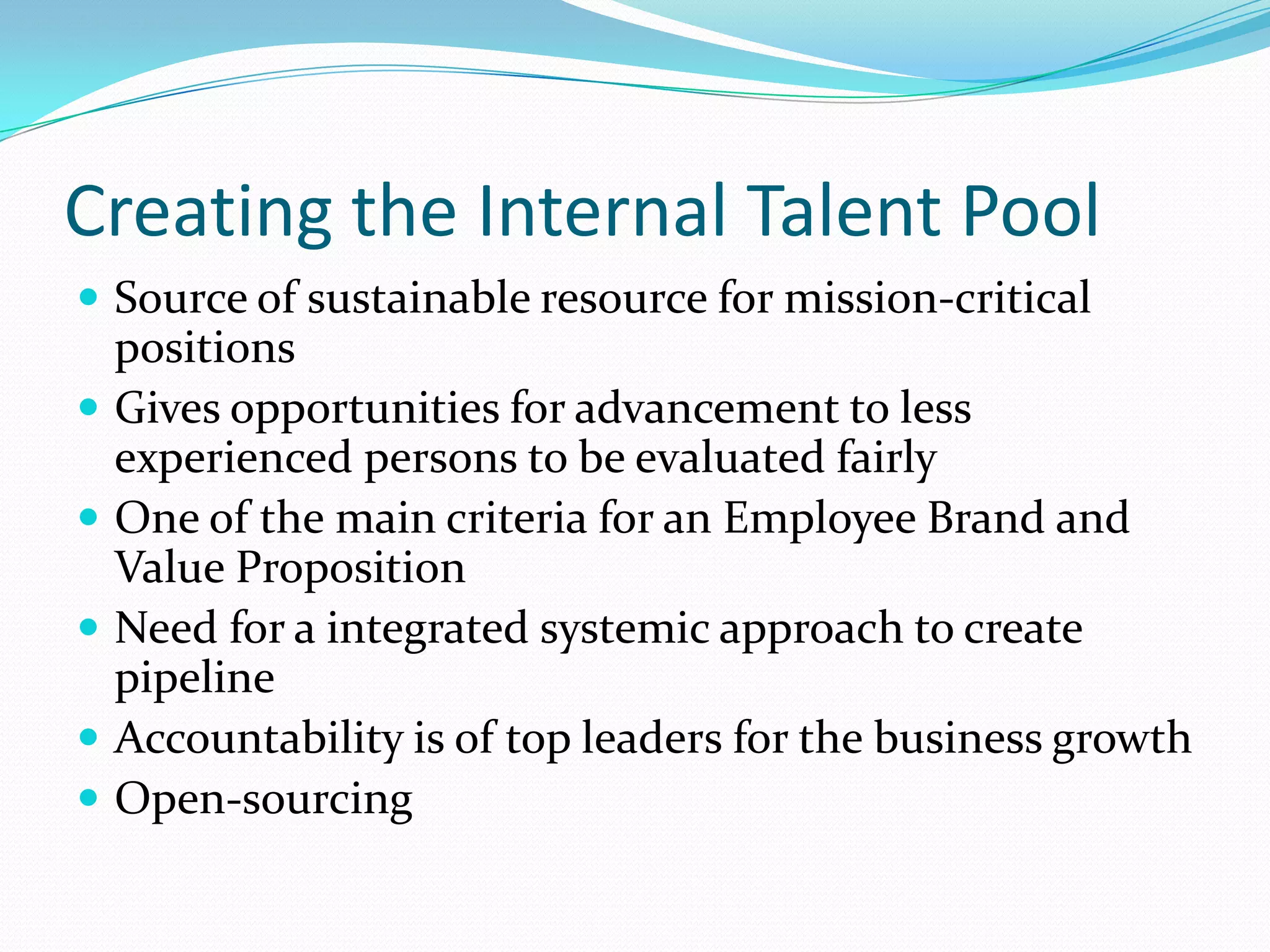
Creating the Internal Talent Pool
 Source of sustainable resource for mission-critical
    positions
   Gives opportunities for advancement to less
    experienced persons to be evaluated fairly
   One of the main criteria for an Employee Brand and
    Value Proposition
   Need for a integrated systemic approach to create
    pipeline
   Accountability is of top leaders for the business growth
   Open-sourcing
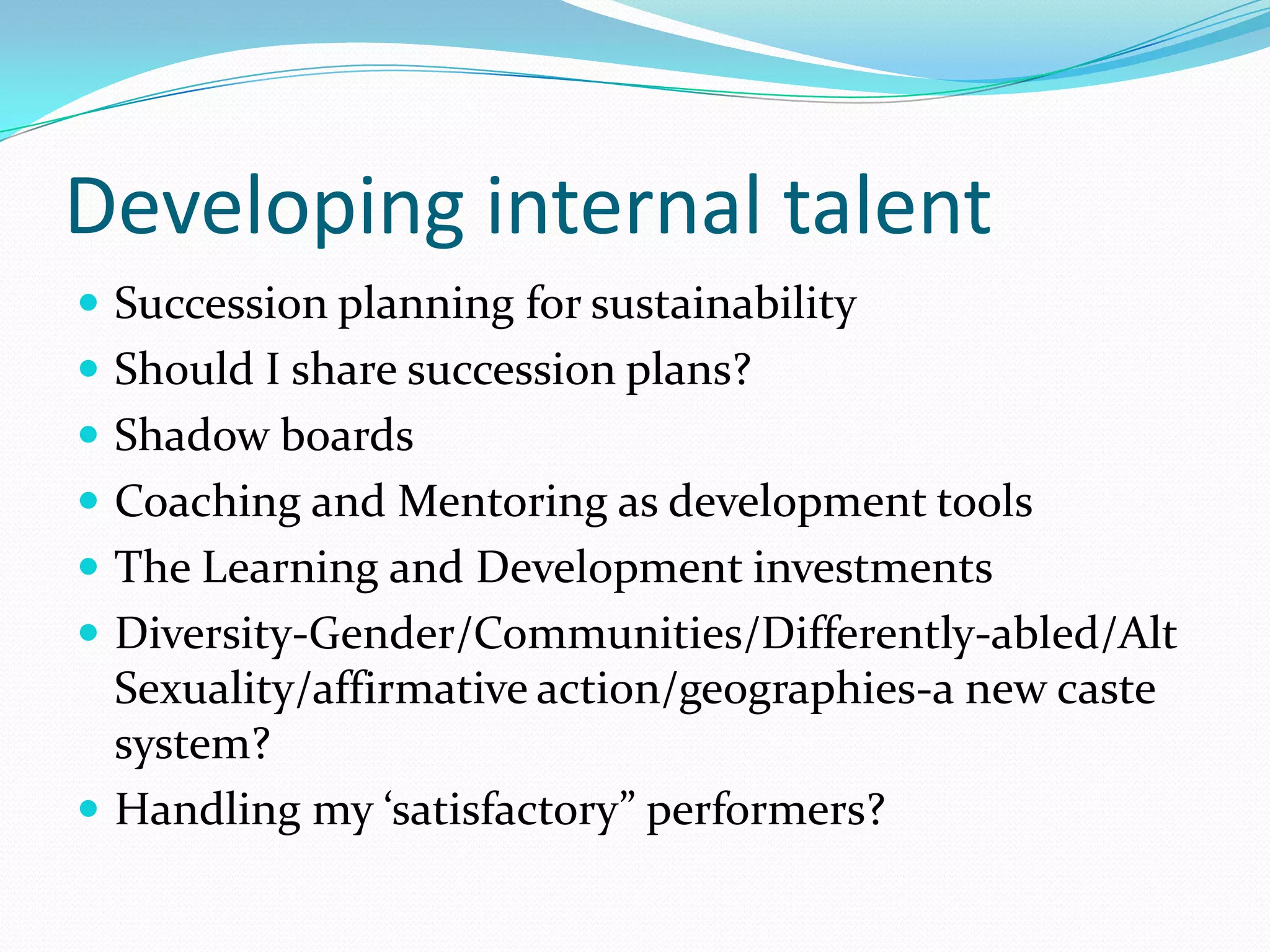
Developing internal talent
 Succession planning for sustainability
 Should I share succession plans?
 Shadow boards
 Coaching and Mentoring as development tools
 The Learning and Development investments
 Diversity-Gender/Communities/Differently-abled/Alt
  Sexuality/affirmative action/geographies-a new caste
  system?
 Handling my ‘satisfactory” performers?
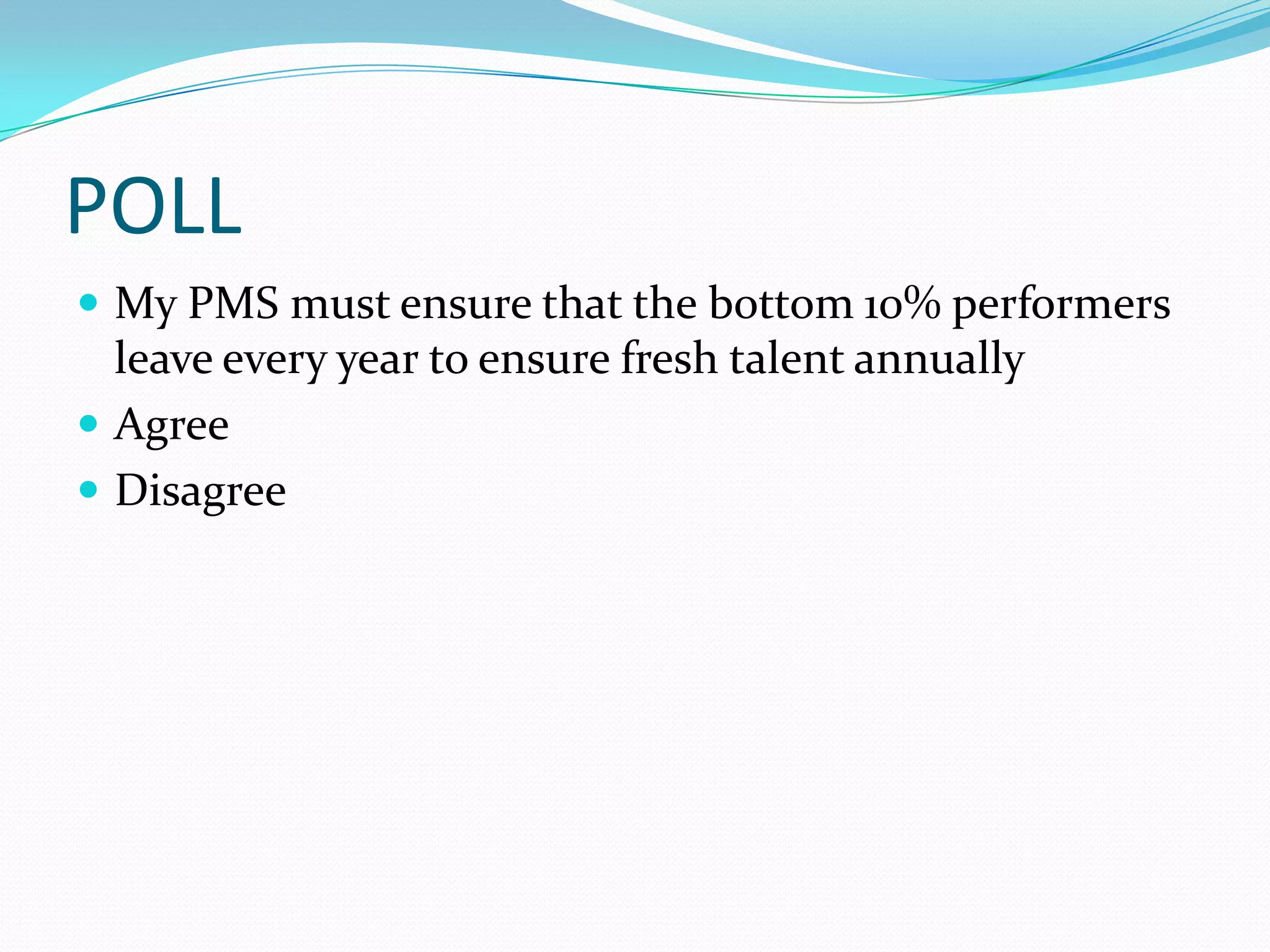
POLL
 My PMS must ensure that the bottom 10% performers
  leave every year to ensure fresh talent annually
 Agree
 Disagree
Using Talent Intelligence
 Determining factor between growth and stagnation
 Develop intelligence for sourcing strategy
 Market mapping
 Buying data bases
 Ensuring internal HRIS’s are being used properly-
  SAP/Oracle/PS?
 What is competition doing?
 Do we collaborate OR compete
 Getting the best out of your Search Partners-
  converting them from Vendors to Business Partners
Social Media usage
 Do we really understand how to make it work for us
 From FB and Linked-In to Blogging/Tweeting/web
  Enterprise 2
 Part of talent attraction /EB savviness
Employee REFERRALS
 Effectiveness
 The conscience-keepers
 Reward
 Building strong relationships with people you want to
  hire
 Encourage employees to go out and recruit for you
The Employee Brand / EVP/Engagement
 Are these necessary
 How effective are they
 What really attracts an employee to work for an
  organization?
 The ME factor –understanding Gen Y aspirations and
  managing 3 generations in the work place
  simultaneously
Some considerations in external
talent hiring
 Greater useage of psychometrics-who pays?
 Diversity and Affirmative Action-flavor of the month?
 Frequent job changers
 Mavericks-remember Ricardo Semmler?
 Internal vs external compensation parity
 Herd or Group Hiring-”Me and my team from my
 previous organization”
POLL
 Psychometrics should be the sole determinant of
  measuring a person’s abilities whilst hiring externally
  at middle and junior managerial levels
 Agree
 Disagree
Some considerations on internal
talent
 Creating back-up for every 5 top levels
 Incentivise leaders for talent nurturing-both reward
    and recognition
   Communicate-communicate communicate
   Stay interviews vs Exit Interviews
   Competence Development Programs
   Job Rotation by design-see the Public Sector
   Greater exposure to senior leaders of Gen Y
   Projects and Transformational work
Finally-is there a right balance?
 Benchmarking
 Special needs for business growth
 Scarce skills
 Attrition
 Culture and leadership displayed
 A forward-looking organization is always scouting for
  talent even if there are no immediate vacancies
 Is there a right balance????
Thank You

marcelrparker@gmail.com

Building Talent Pipelines

  • 1.
  • 2.
    The War forTalent=The 100 Year War!  The BCG Study has established that Human Capital is a MUST component for organizational success  The old adage-cash is king-no longer holds true  The Chief Talent Officer is now considered equivalent to the CEO in importance  Our formal education system is no longer ‘fit for purpose”  The skill gap is widening  The war for talent continues relentlessly
  • 3.
    POLL  In thewar for talent is the CTO equivalent to or more important than the CEO?  -Yes he is more important than the CEO  -He and the CEO are equally important  The CEO is the most important person in the organization
  • 4.
    Common to everything Identifying the right talent acquisition strategy  Developing internal talent  Striking the right balance between internal and external talent
  • 5.
    Make or Buy? Quickest and best way to achieve strong leadership- make or buy?  Buying is faster?  Building internally is better?  Will a blend work and if so at what levels?  Is there a industry or domain specific pattern
  • 6.
    POLL  A relevanttalent strategy for middle managerial jobs for a 10 year old Co will have  -60%Internal/40%Externals  50/50 blend  80Internal/20External  90 Internal/10 External
  • 7.
    Is there aright strategy?  Complexity of skill requirement  Forecasting needs  Developing from scratch with academia  Competition for skill acquisition  Consistency of requirement flow  Competence of hiring team  Do we outsource-RPO?
  • 8.
    POLL  In thelong run it is more productive to buy external talent  Agree  Disagree
  • 9.
    What will gointo my strategy?  Sourcing at different levels and linkage to succession  Changes with business changes  Geographical availability  Short-term tactics vs long-term plans  “the bench”  Using the Welch technique-replacing the bottom 5%  Structured process of acquisition  Open-sourcing-a double-edged sword  Campus and lateral hiring balance
  • 10.
    Creating the InternalTalent Pool  Source of sustainable resource for mission-critical positions  Gives opportunities for advancement to less experienced persons to be evaluated fairly  One of the main criteria for an Employee Brand and Value Proposition  Need for a integrated systemic approach to create pipeline  Accountability is of top leaders for the business growth  Open-sourcing
  • 11.
    Developing internal talent Succession planning for sustainability  Should I share succession plans?  Shadow boards  Coaching and Mentoring as development tools  The Learning and Development investments  Diversity-Gender/Communities/Differently-abled/Alt Sexuality/affirmative action/geographies-a new caste system?  Handling my ‘satisfactory” performers?
  • 12.
    POLL  My PMSmust ensure that the bottom 10% performers leave every year to ensure fresh talent annually  Agree  Disagree
  • 13.
    Using Talent Intelligence Determining factor between growth and stagnation  Develop intelligence for sourcing strategy  Market mapping  Buying data bases  Ensuring internal HRIS’s are being used properly- SAP/Oracle/PS?  What is competition doing?  Do we collaborate OR compete  Getting the best out of your Search Partners- converting them from Vendors to Business Partners
  • 14.
    Social Media usage Do we really understand how to make it work for us  From FB and Linked-In to Blogging/Tweeting/web Enterprise 2  Part of talent attraction /EB savviness
  • 15.
    Employee REFERRALS  Effectiveness The conscience-keepers  Reward  Building strong relationships with people you want to hire  Encourage employees to go out and recruit for you
  • 16.
    The Employee Brand/ EVP/Engagement  Are these necessary  How effective are they  What really attracts an employee to work for an organization?  The ME factor –understanding Gen Y aspirations and managing 3 generations in the work place simultaneously
  • 17.
    Some considerations inexternal talent hiring  Greater useage of psychometrics-who pays?  Diversity and Affirmative Action-flavor of the month?  Frequent job changers  Mavericks-remember Ricardo Semmler?  Internal vs external compensation parity  Herd or Group Hiring-”Me and my team from my previous organization”
  • 18.
    POLL  Psychometrics shouldbe the sole determinant of measuring a person’s abilities whilst hiring externally at middle and junior managerial levels  Agree  Disagree
  • 19.
    Some considerations oninternal talent  Creating back-up for every 5 top levels  Incentivise leaders for talent nurturing-both reward and recognition  Communicate-communicate communicate  Stay interviews vs Exit Interviews  Competence Development Programs  Job Rotation by design-see the Public Sector  Greater exposure to senior leaders of Gen Y  Projects and Transformational work
  • 20.
    Finally-is there aright balance?  Benchmarking  Special needs for business growth  Scarce skills  Attrition  Culture and leadership displayed  A forward-looking organization is always scouting for talent even if there are no immediate vacancies  Is there a right balance????
  • 21.