Safety	+	Emergency	Readiness	Virtual	Summit	
September	13,	2017	
	
1	
Building	Resilience	
with	the	Sendai	Framework		


Aris	Papadopoulos	
Resilience	AcFon	Fund	
FIU	Extreme	Events	InsFtute
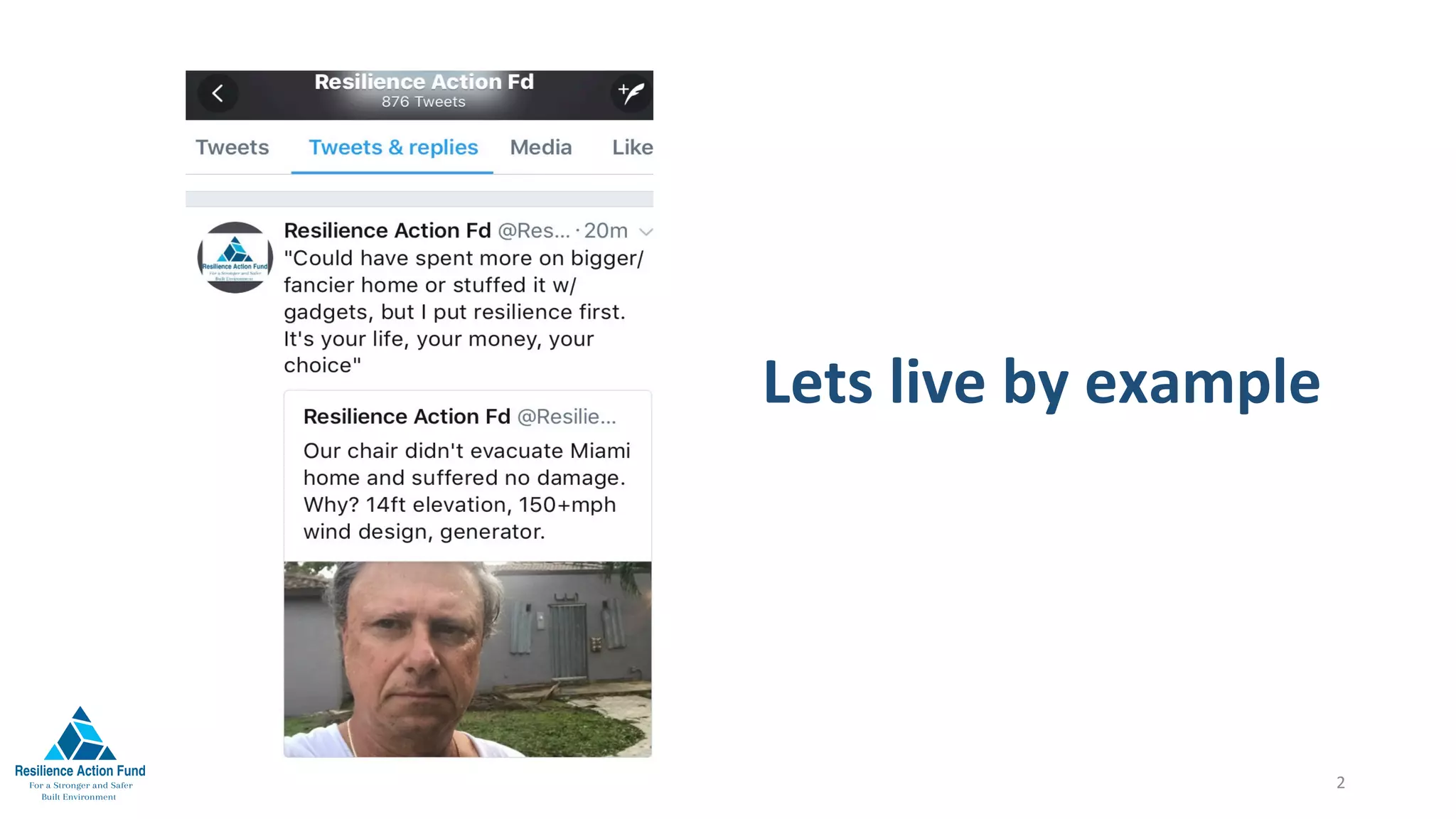
Lets	live	by	example	
	
	
2
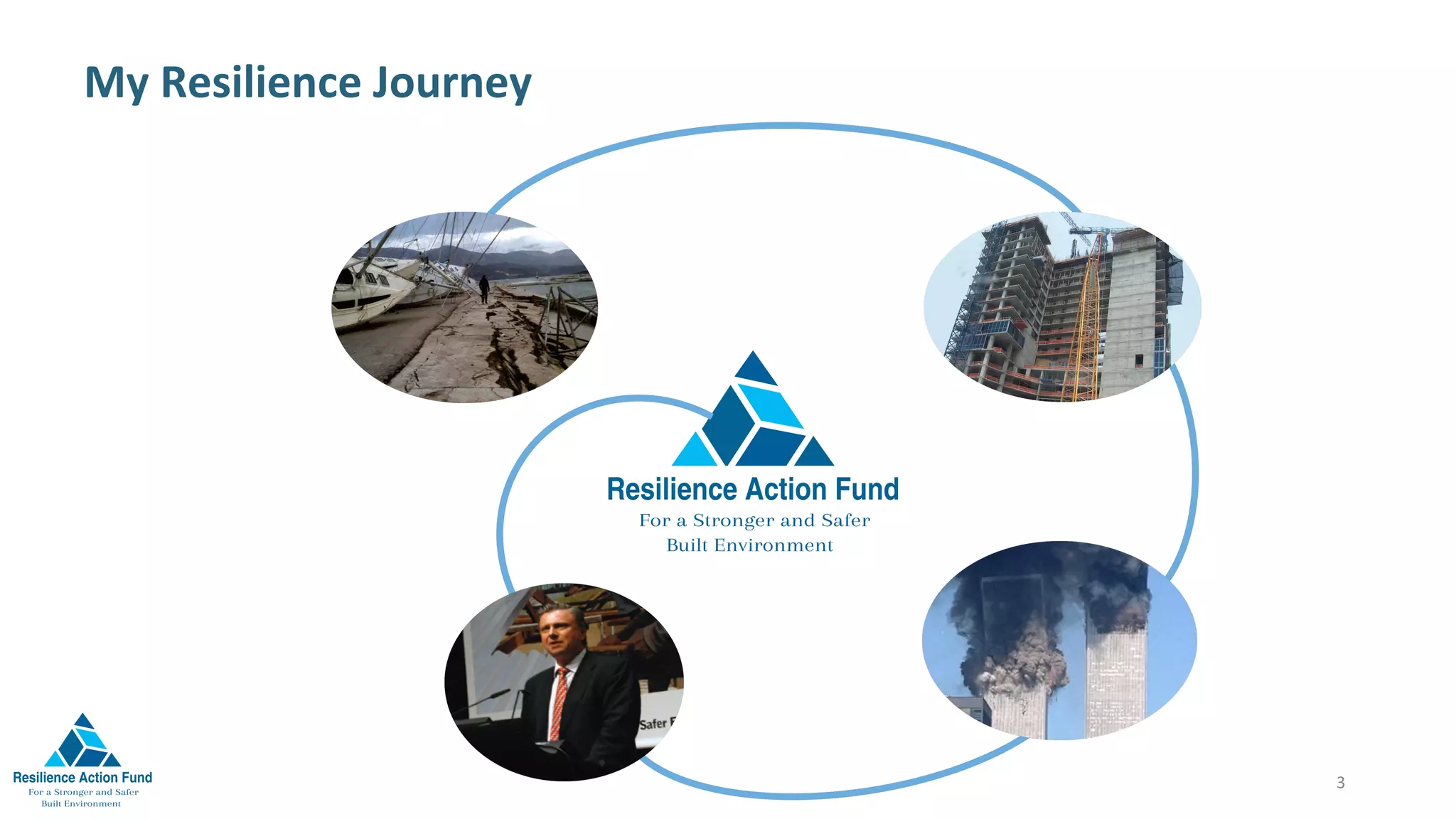
My	Resilience	Journey	
3
Resilience Action Fund (RAF)
501(c)3	with	mission	to	advance		
awareness,	transparency	&	educaFon		
for	greater	resilience	in	the	built	environment
Programs:		
communica1ons/publica1ons		
collabora1on	with	major	universi1es	
sponsoring	educa1onal/research	projects		
engagement	with	na1onal/interna1onal	organiza1ons	
4
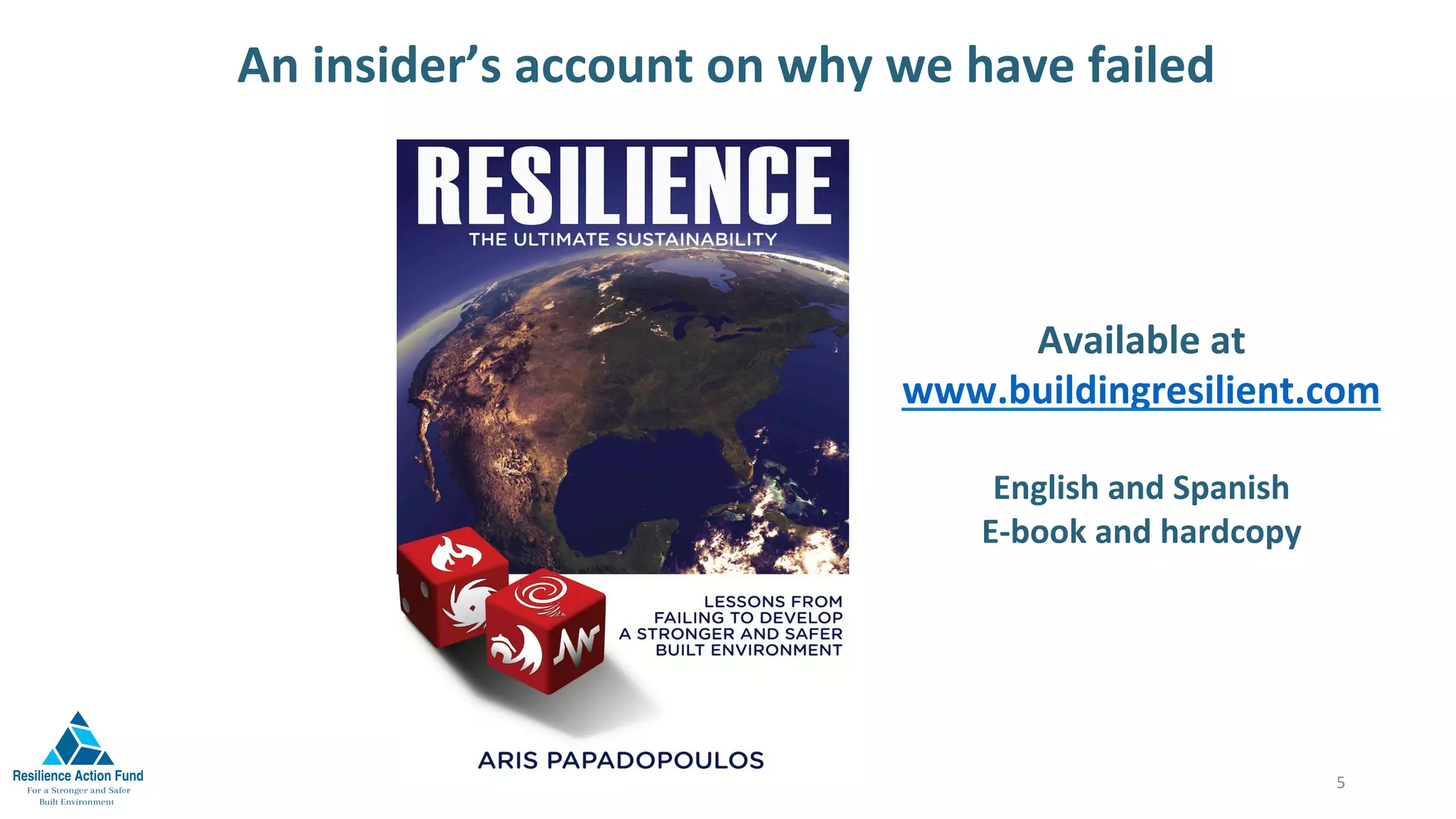
An	insider’s	account	on	why	we	have	failed	
5	
Available	at	
www.buildingresilient.com	
	
English	and	Spanish	
E-book	and	hardcopy
Sendai	Framework	for	
Disaster	Risk	ReducFon	2015-30
Signed by 187 Na/ons
March 18, 2015
Contains:
13 Principles
4 Priori/es
7 Targets
6
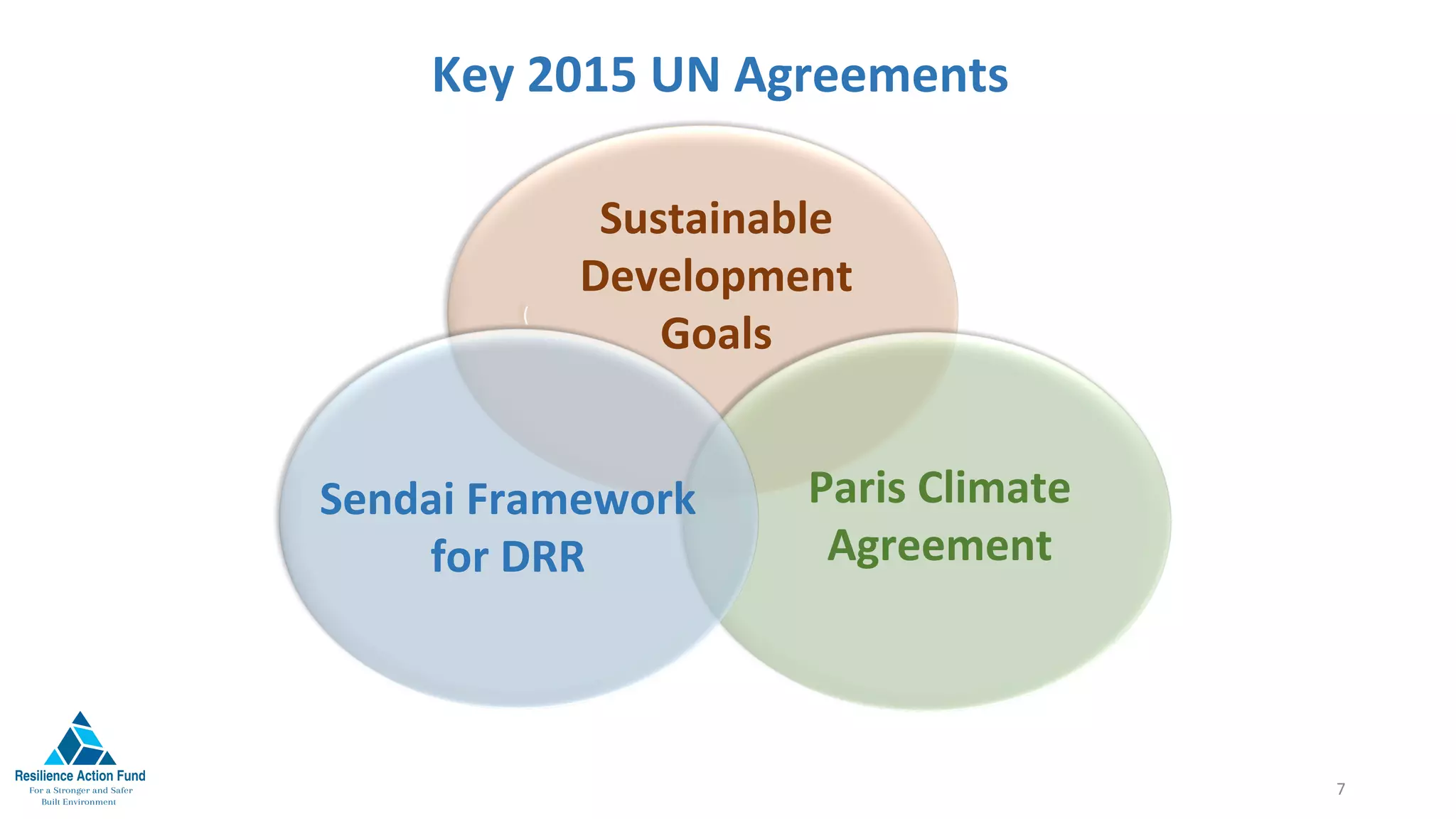
Key	2015	UN	Agreements	
7	
(	
Sustainable	
Development	
Goals	
Sendai	Framework	
for	DRR	
Paris	Climate	
Agreement
Sendai	Framework	is	equivalent		
in	importance	to	the		
1992	Rio	Climate	Agreement	
Similar	to	Rio’s	annual	COP	mee1ngs,	Sendai	calls	for		
bi-annual	Global	PlaMorm	mee1ngs	to	add	specific	metrics,	
targets,	commitments	and	accountability	to	its	framework.	
	
The	first	held	May	2017	in	Cancun,	Mexico.	
8
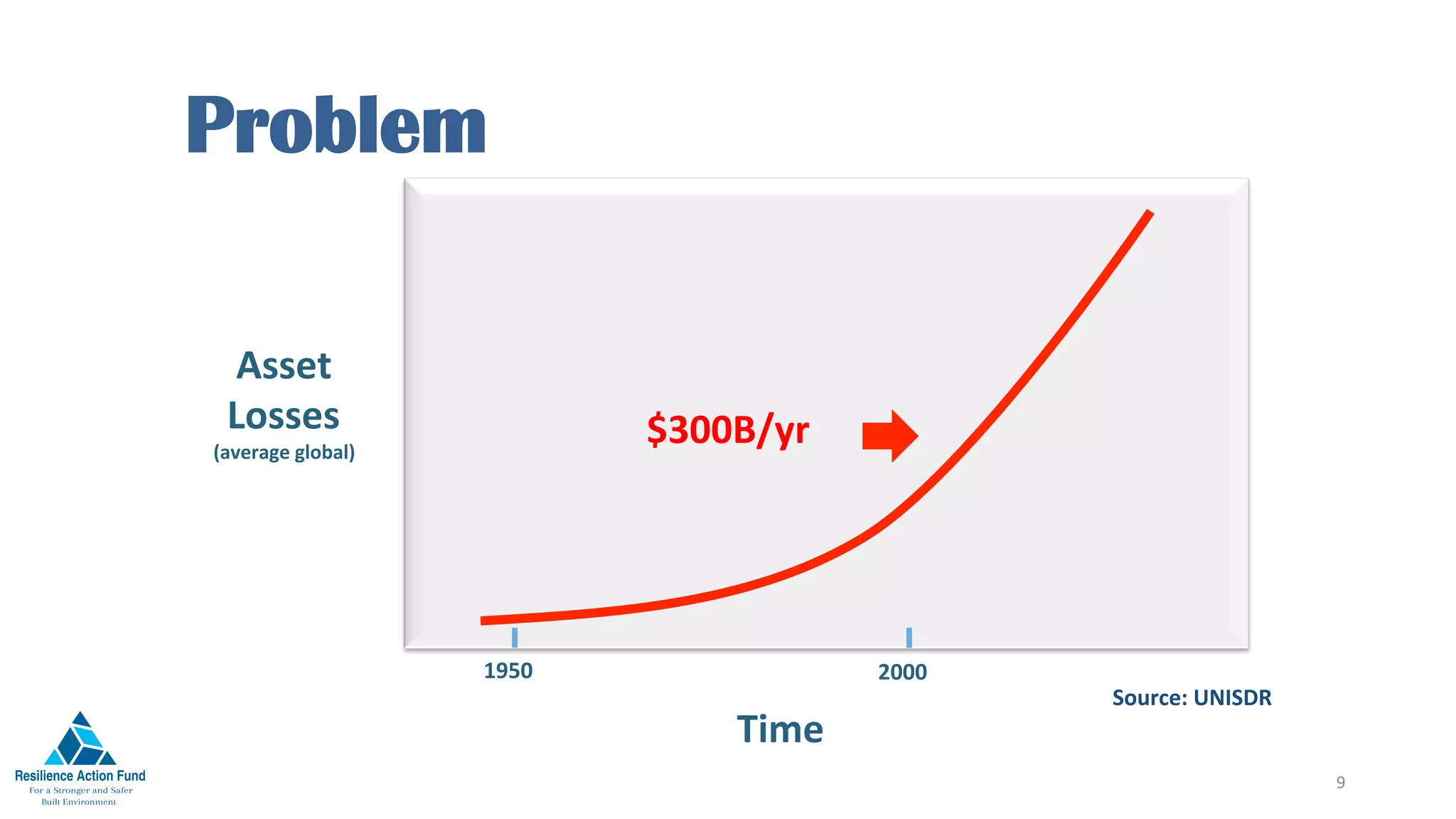
Problem
9	
Source:	UNISDR	
Time	
Asset	
Losses	
(average	global)	
$300B/yr	
1950	 2000
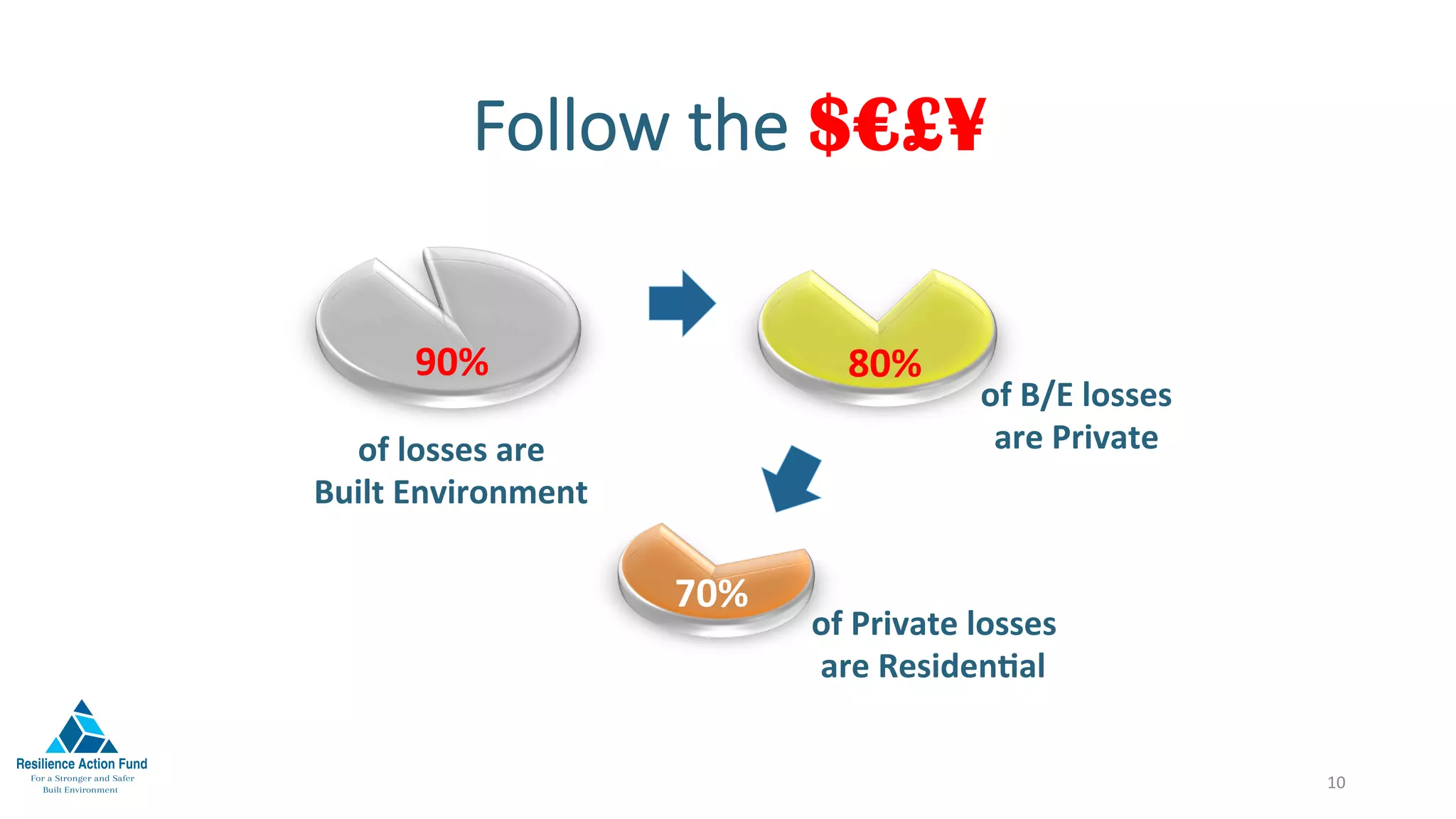
Follow the $€£¥
10	
of	losses	are	
Built	Environment	
of	B/E	losses	
are	Private	
of	Private	losses	
are	ResidenFal	
90%	 80%	
70%
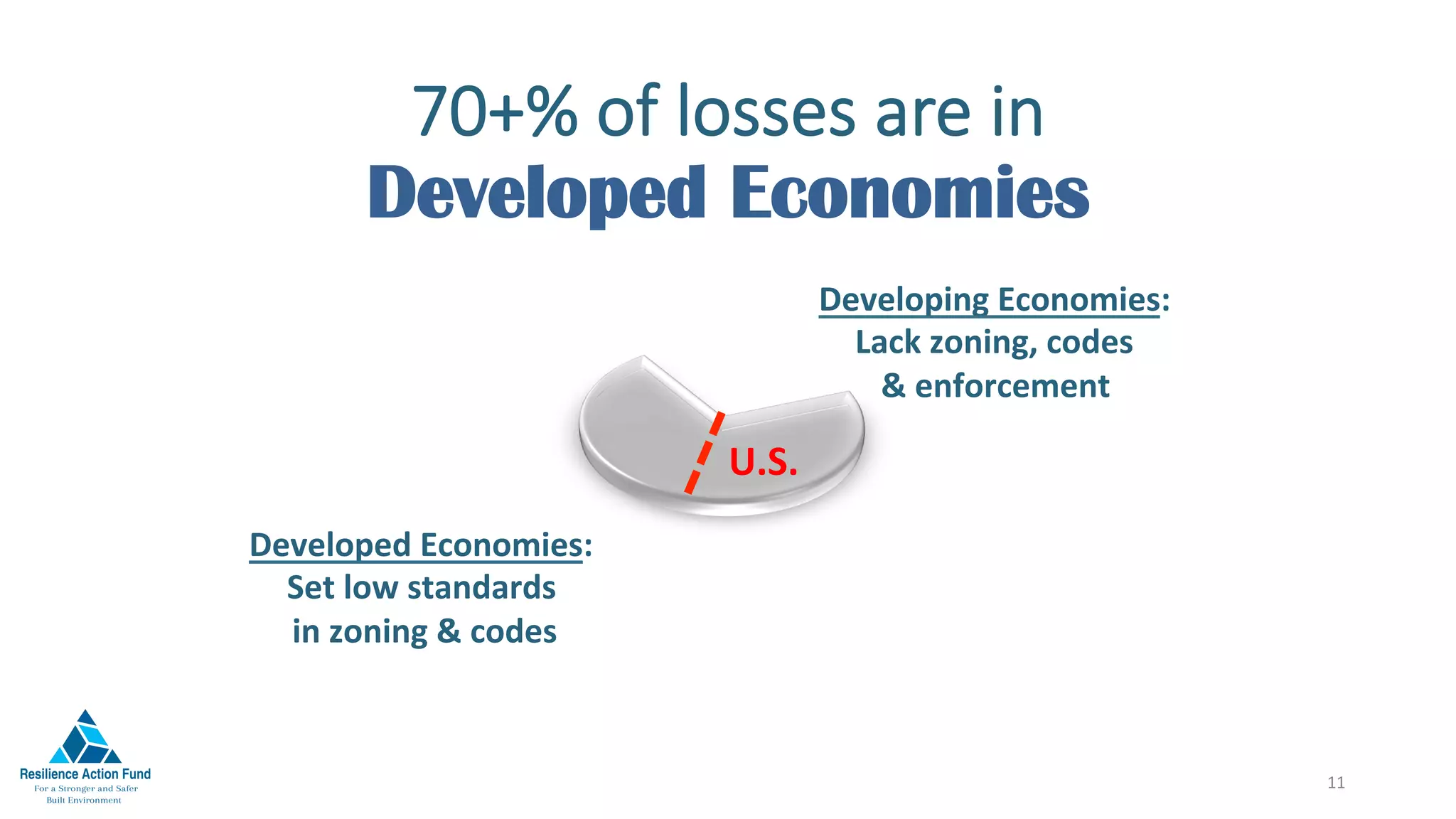
70+% of losses are in
Developed Economies
11	
U.S.	
Developing	Economies:	
Lack	zoning,	codes		
&	enforcement	
Developed	Economies:	
Set	low	standards	
	in	zoning	&	codes
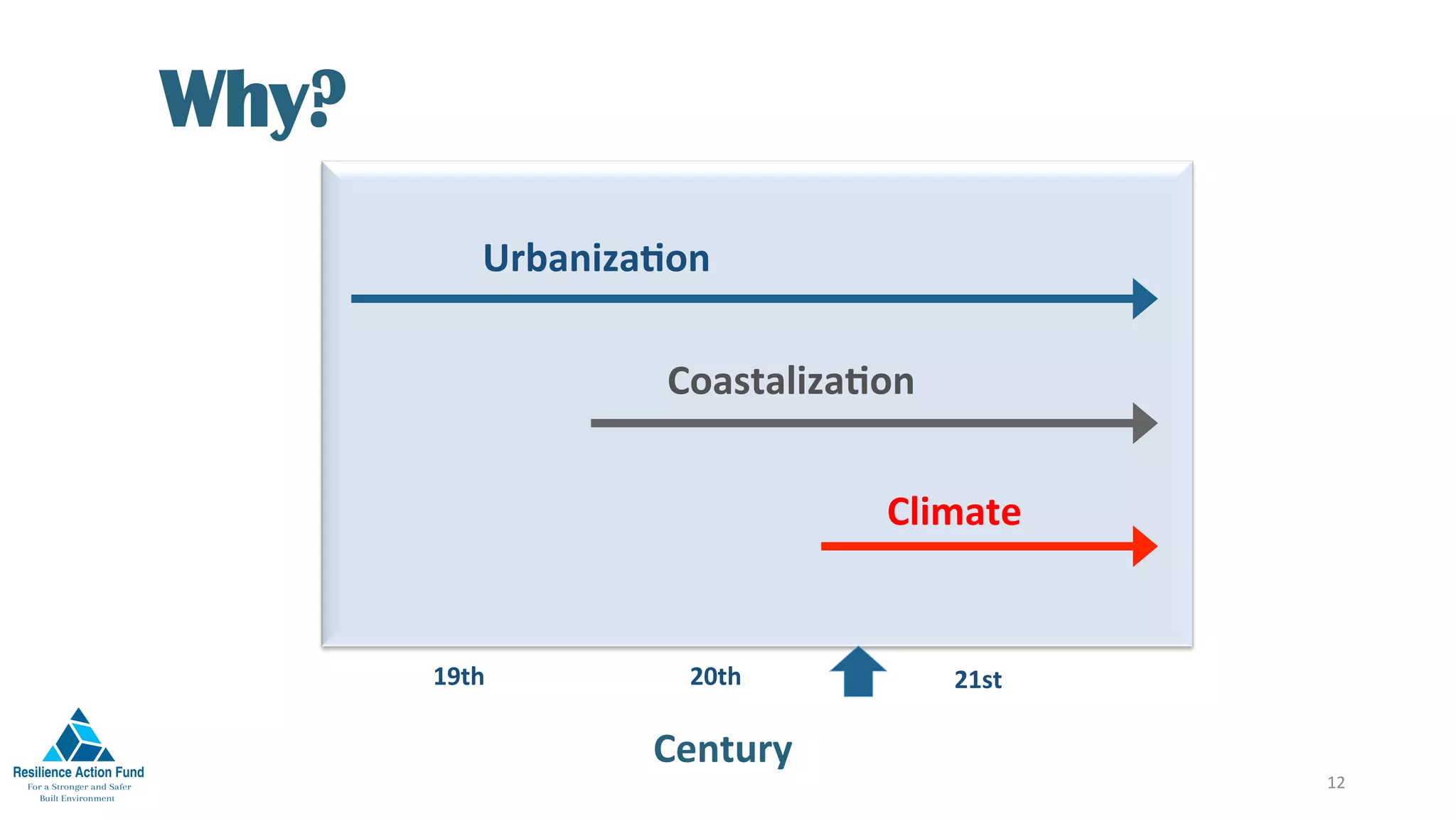
Why?
12	
UrbanizaFon	
CoastalizaFon	
Century	
Climate	
19th	 20th	 21st
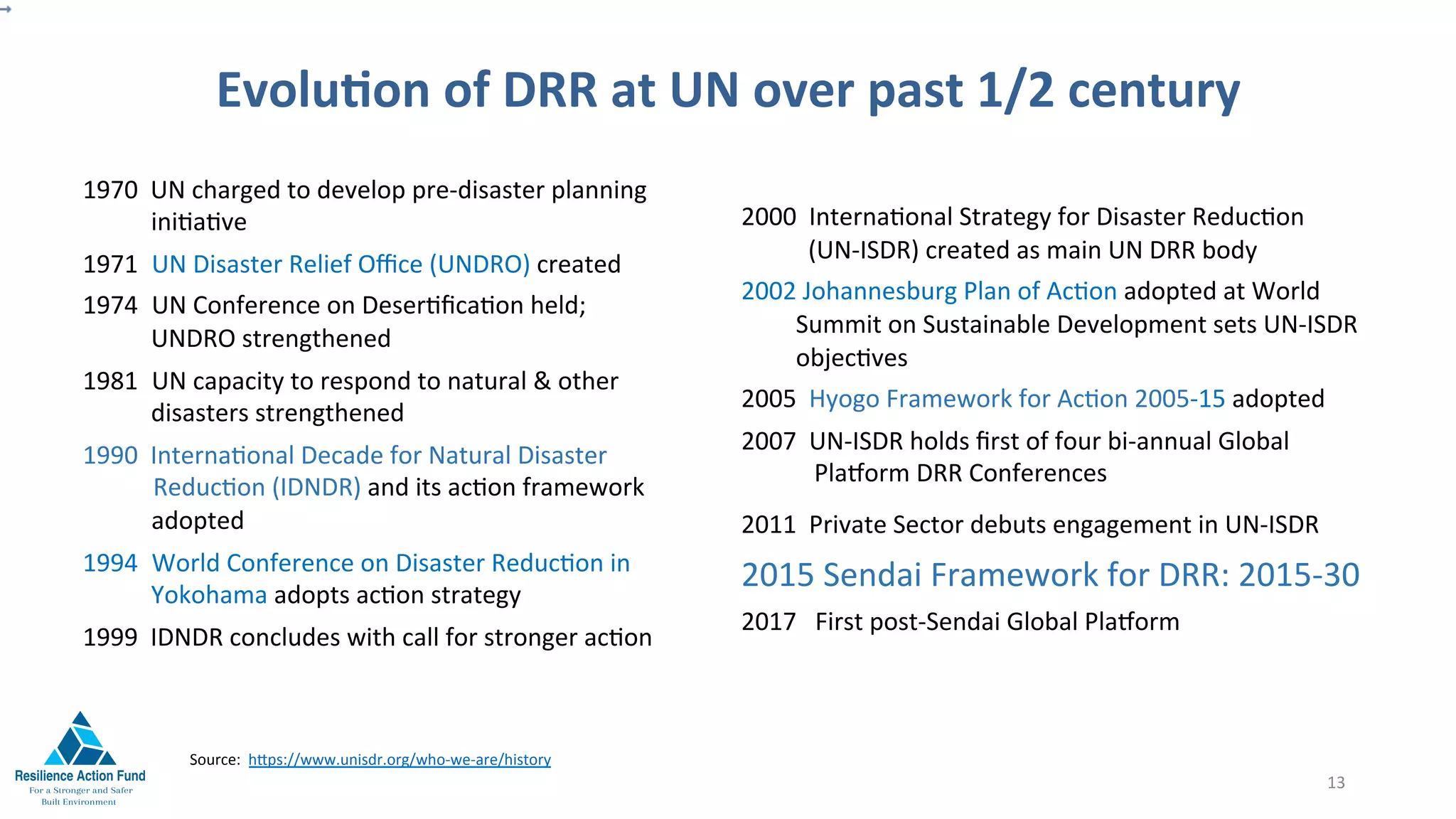
EvoluFon	of	DRR	at	UN	over	past	1/2	century		
	
2000		Interna1onal	Strategy	for	Disaster	Reduc1on															
			(UN-ISDR)	created	as	main	UN	DRR	body	
2002 	Johannesburg	Plan	of	Ac1on	adopted	at	World								
Summit	on	Sustainable	Development	sets	UN-ISDR	
objec1ves		
2005		Hyogo	Framework	for	Ac1on	2005-15	adopted	
2007 		UN-ISDR	holds	first	of	four	bi-annual	Global			 					
				PlaMorm	DRR	Conferences		
2011		Private	Sector	debuts	engagement	in	UN-ISDR	
2015	Sendai	Framework	for	DRR:	2015-30	
2017			First	post-Sendai	Global	PlaMorm	
			
		
Source:		h^ps://www.unisdr.org/who-we-are/history		
1970		UN	charged	to	develop	pre-disaster	planning	
ini1a1ve			
1971			UN	Disaster	Relief	Office	(UNDRO)	created	
1974  UN	Conference	on	Deser1fica1on	held;			
UNDRO	strengthened		
1981  UN	capacity	to	respond	to	natural	&	other	
disasters	strengthened		
1990		Interna1onal	Decade	for	Natural	Disaster																												
R									Reduc1on	(IDNDR)	and	its	ac1on	framework												
a									adopted	
1994  World	Conference	on	Disaster	Reduc1on	in	
Yokohama	adopts	ac1on	strategy		
1999		IDNDR	concludes	with	call	for	stronger	ac1on	
13
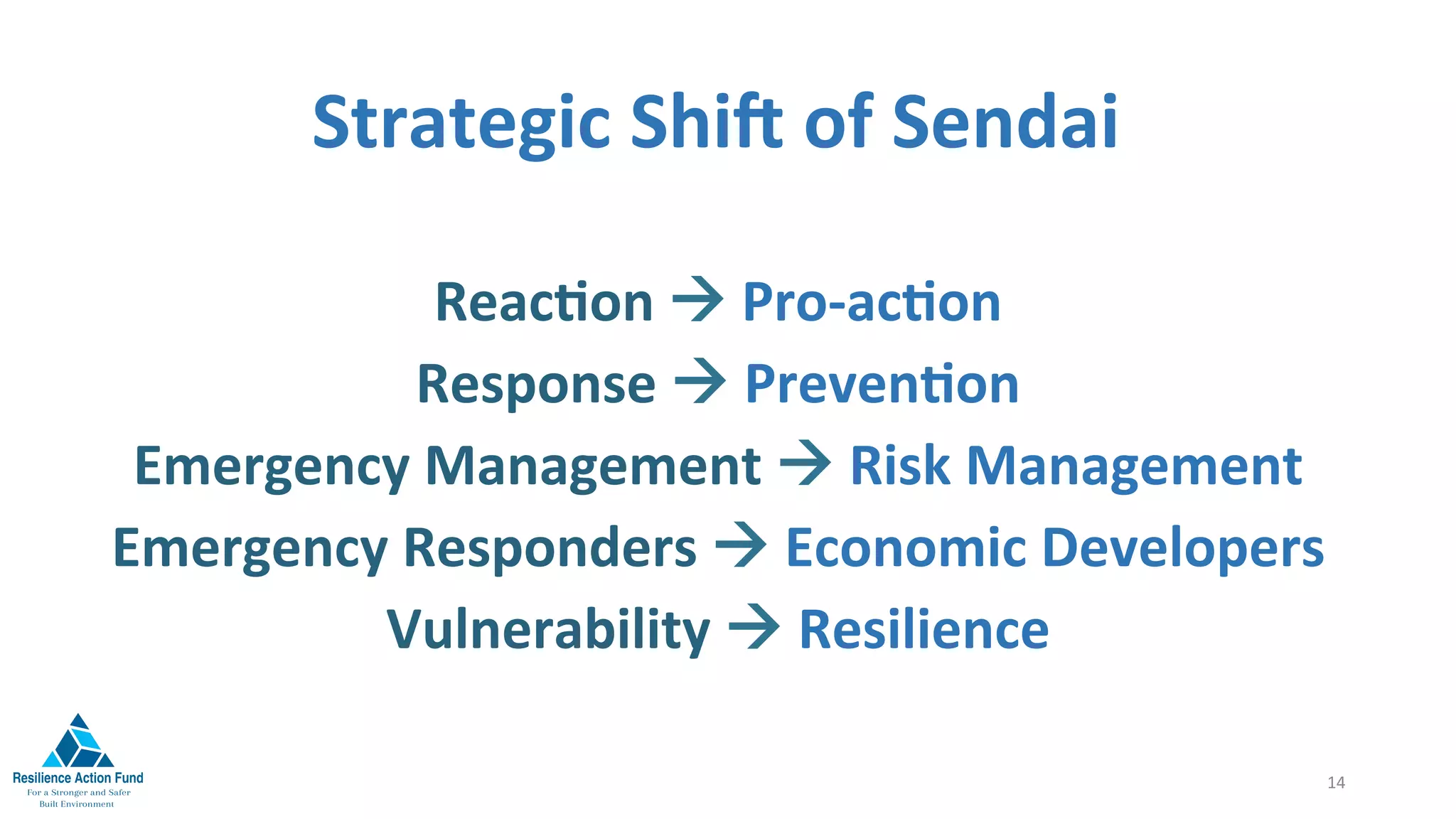
Strategic	Shic	of	Sendai
14	
ReacFon	!	Pro-acFon	
Response	!	PrevenFon	
Emergency	Management	!	Risk	Management	
Emergency	Responders	!	Economic	Developers	
Vulnerability	!	Resilience
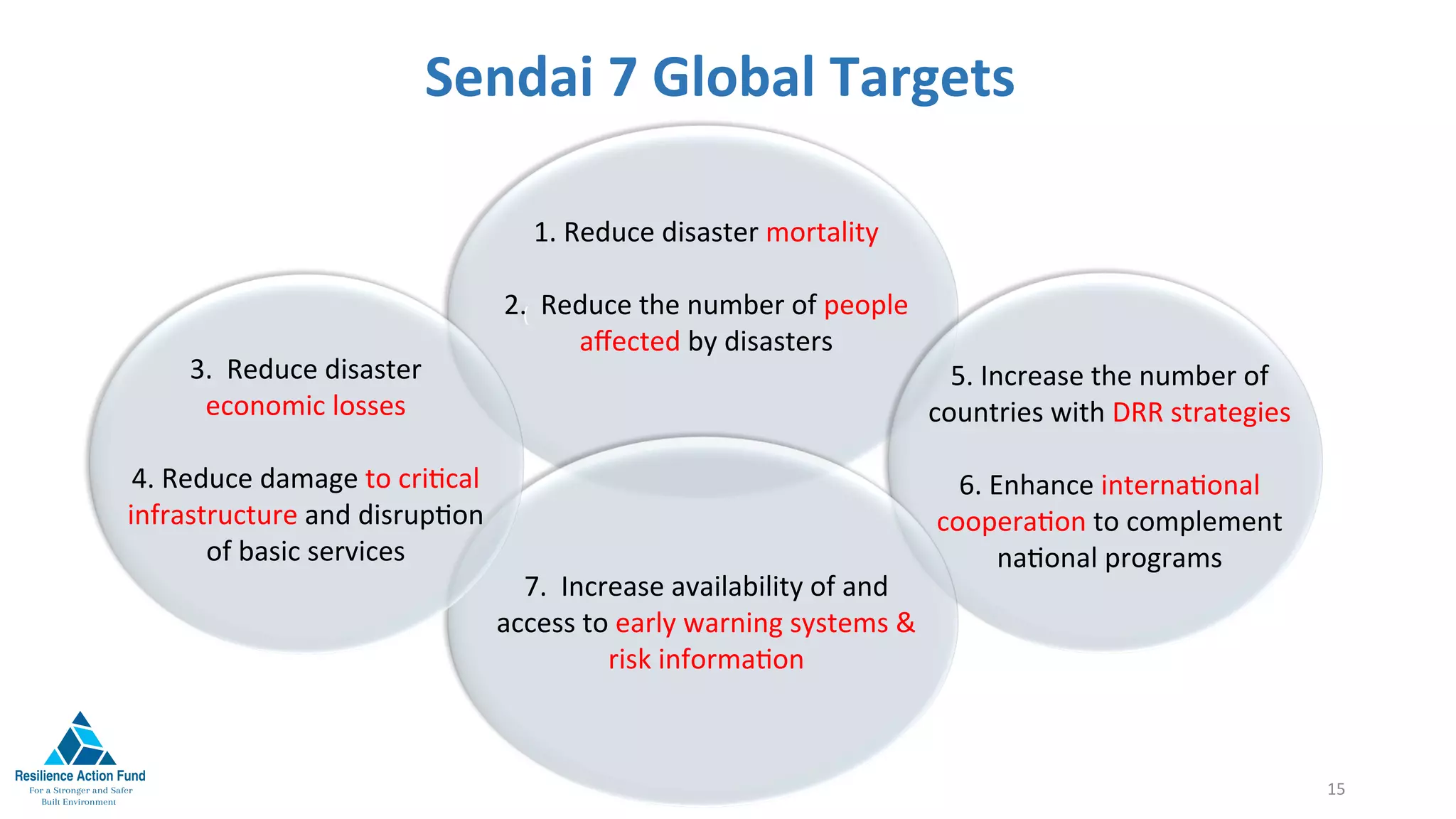
Sendai	7	Global	Targets	
15	
(	
1.	Reduce	disaster	mortality	
2.		Reduce	the	number	of	people	
affected	by	disasters	
3.		Reduce	disaster										
economic	losses	
	
4.	Reduce	damage	to	cri1cal	
infrastructure	and	disrup1on					
of	basic	services	
5.	Increase	the	number	of	
countries	with	DRR	strategies		
	
6.	Enhance	interna1onal	
coopera1on	to	complement																	
na1onal	programs	
7.		Increase	availability	of	and	
access	to	early	warning	systems	&	
risk	informa1on
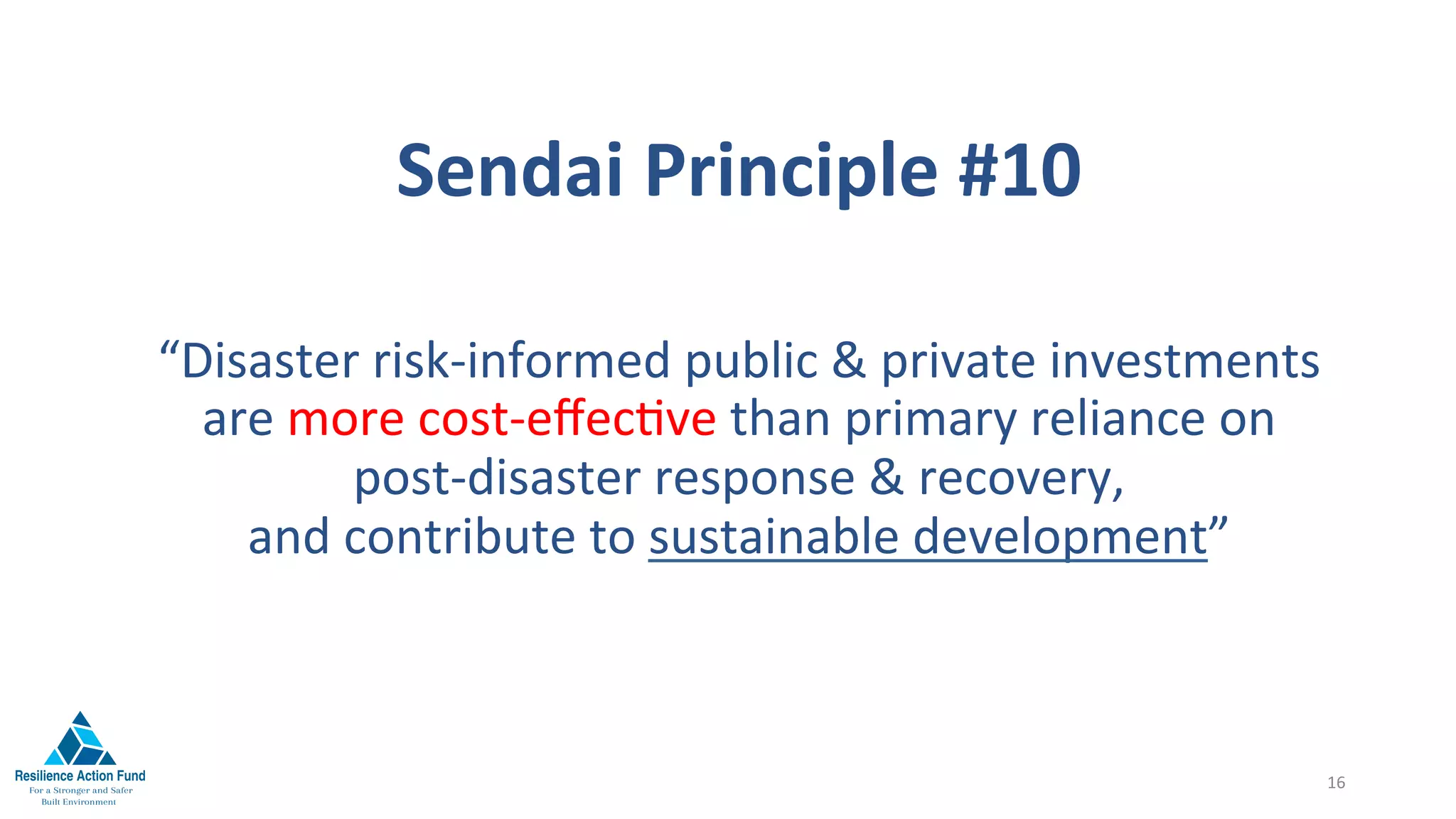
Sendai	Principle	#10	
“Disaster	risk-informed	public	&	private	investments							
are	more	cost-effec1ve	than	primary	reliance	on											
post-disaster	response	&	recovery,		
and	contribute	to	sustainable	development”	

16
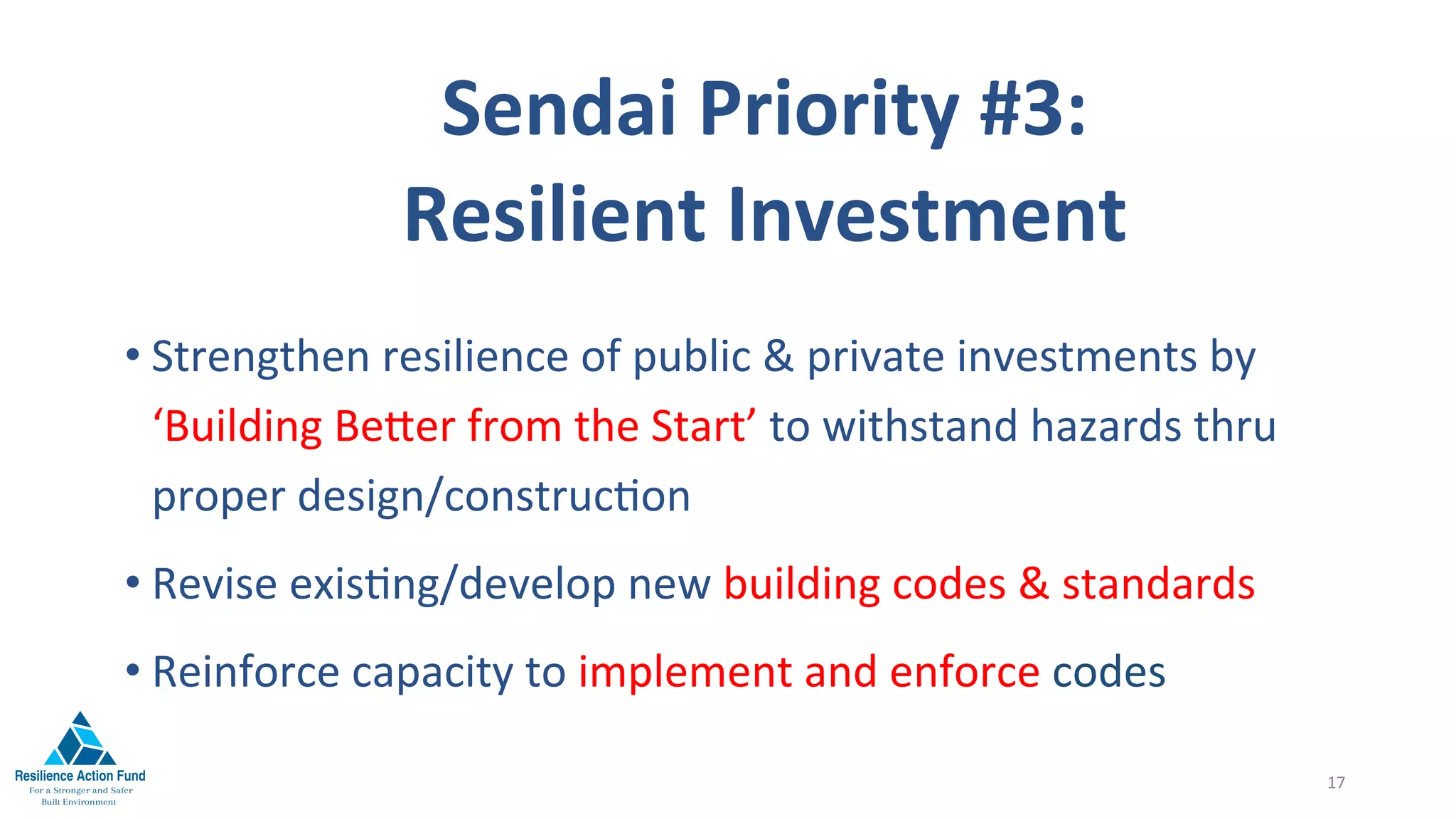
Sendai	Priority	#3:		
Resilient	Investment	
	
• Strengthen	resilience	of	public	&	private	investments	by					
‘Building	Be^er	from	the	Start’	to	withstand	hazards	thru	
proper	design/construc1on	
• Revise	exis1ng/develop	new	building	codes	&	standards	
• Reinforce	capacity	to	implement	and	enforce	codes	
17
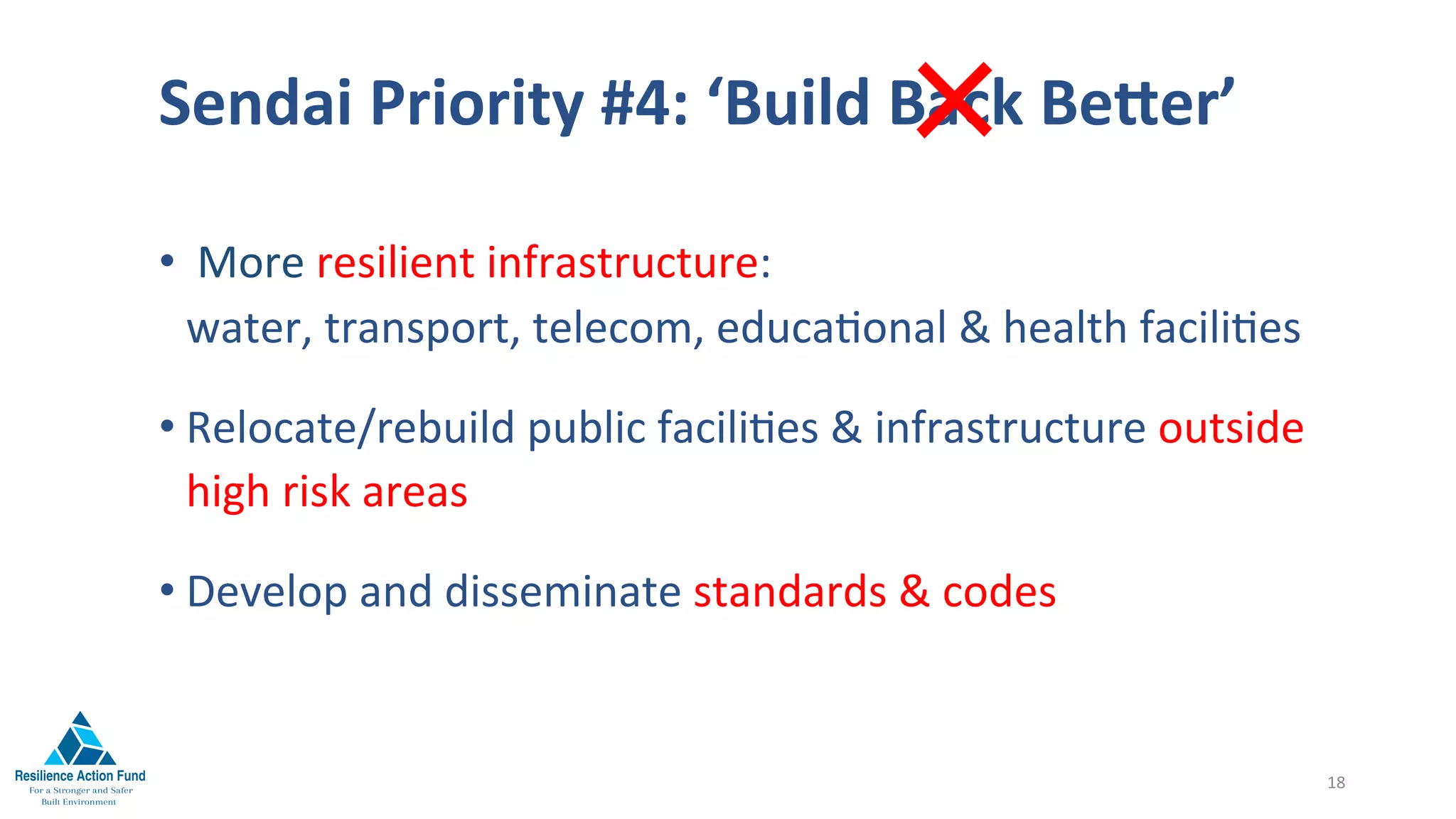
Sendai	Priority	#4:	‘Build	Back	Beger’	
	
• 	More	resilient	infrastructure:																																								
water,	transport,	telecom,	educa1onal	&	health	facili1es	
• Relocate/rebuild	public	facili1es	&	infrastructure	outside											
high	risk	areas	
• Develop	and	disseminate	standards	&	codes	
18	
×
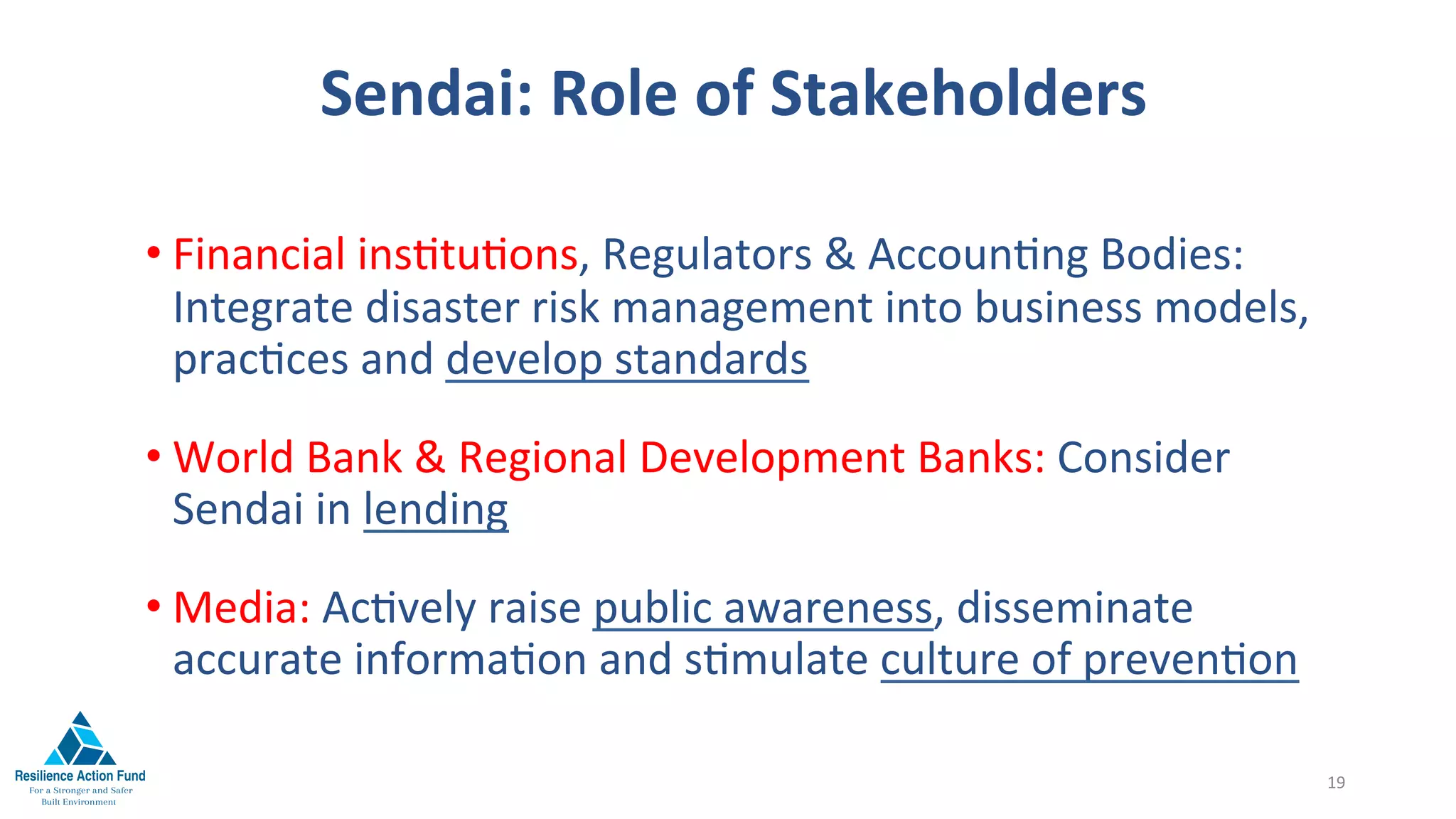
Sendai:	Role	of	Stakeholders	
	
• Financial	ins1tu1ons,	Regulators	&	Accoun1ng	Bodies:	
Integrate	disaster	risk	management	into	business	models,			
prac1ces	and	develop	standards	
• World	Bank	&	Regional	Development	Banks:	Consider	
Sendai	in	lending	
• Media:	Ac1vely	raise	public	awareness,	disseminate	
accurate	informa1on	and	s1mulate	culture	of	preven1on	
19
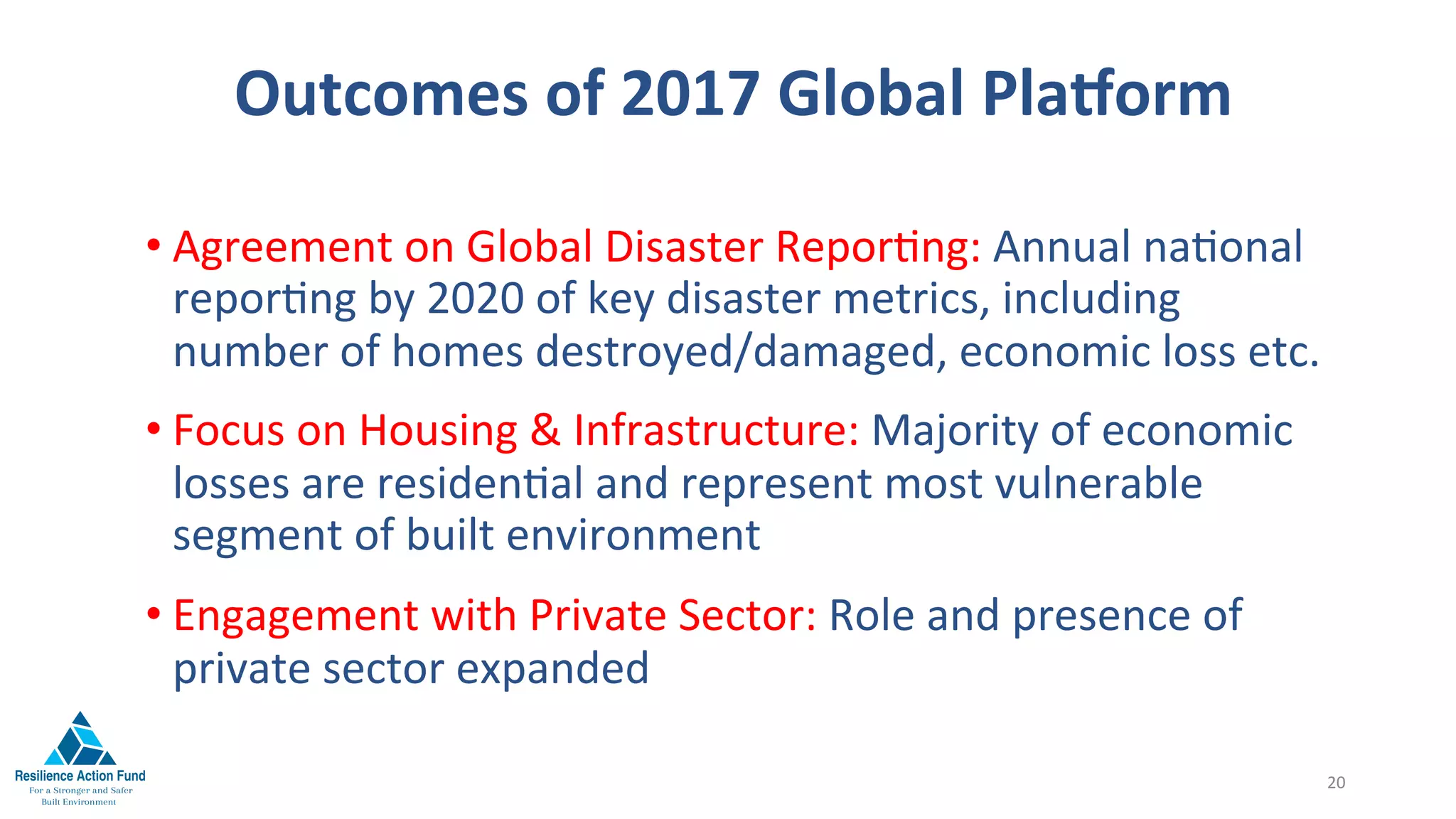
Outcomes	of	2017	Global	Plaiorm	
	
	
• Agreement	on	Global	Disaster	Repor1ng:	Annual	na1onal	
repor1ng	by	2020	of	key	disaster	metrics,	including	
number	of	homes	destroyed/damaged,	economic	loss	etc.		
• Focus	on	Housing	&	Infrastructure:	Majority	of	economic	
losses	are	residen1al	and	represent	most	vulnerable	
segment	of	built	environment		
• Engagement	with	Private	Sector:	Role	and	presence	of	
private	sector	expanded	
20
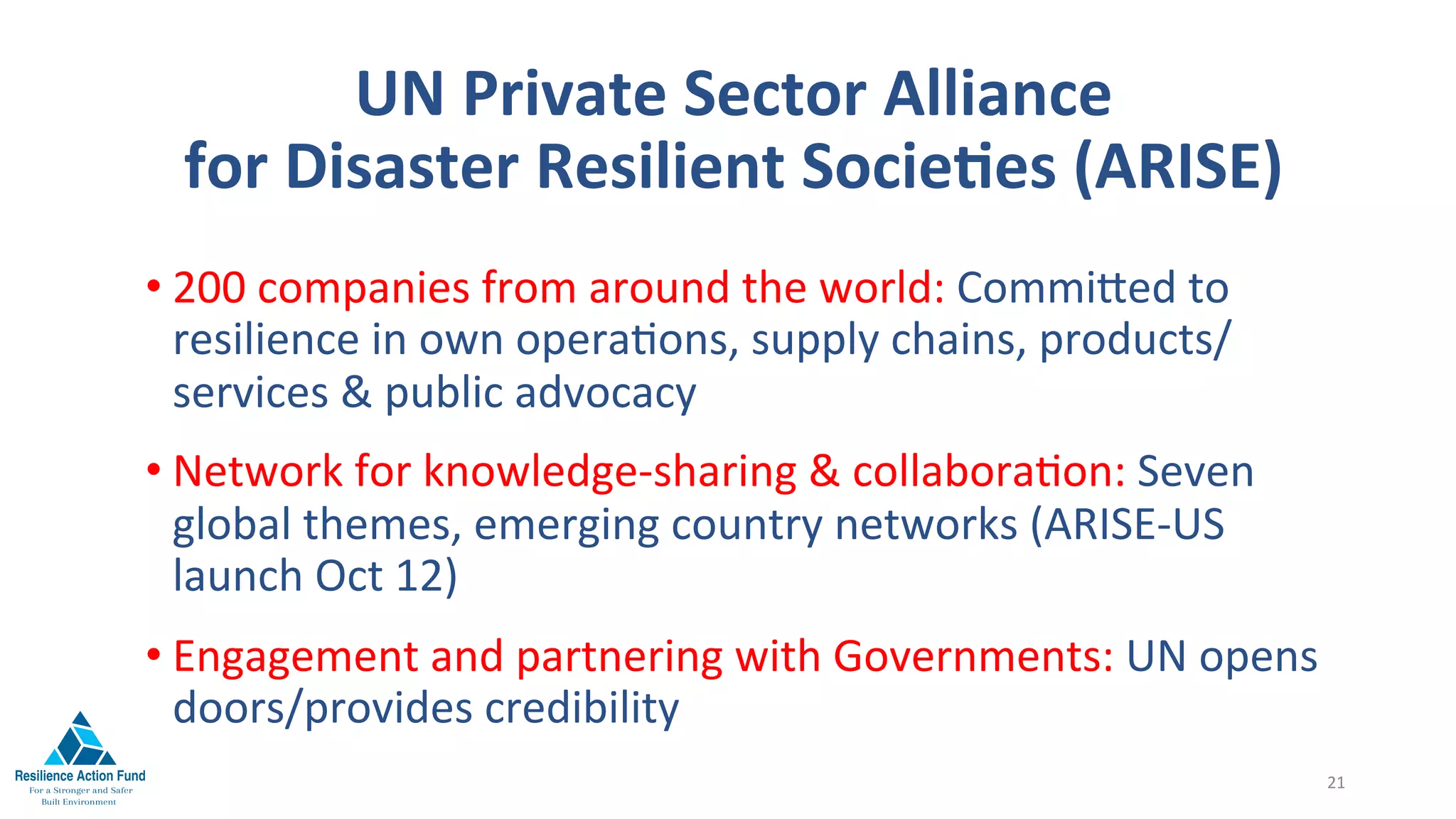
UN	Private	Sector	Alliance		
for	Disaster	Resilient	SocieFes	(ARISE)	
	
• 200	companies	from	around	the	world:	Commi^ed	to	
resilience	in	own	opera1ons,	supply	chains,	products/
services	&	public	advocacy		
• Network	for	knowledge-sharing	&	collabora1on:	Seven	
global	themes,	emerging	country	networks	(ARISE-US	
launch	Oct	12)		
• Engagement	and	partnering	with	Governments:	UN	opens	
doors/provides	credibility	
21
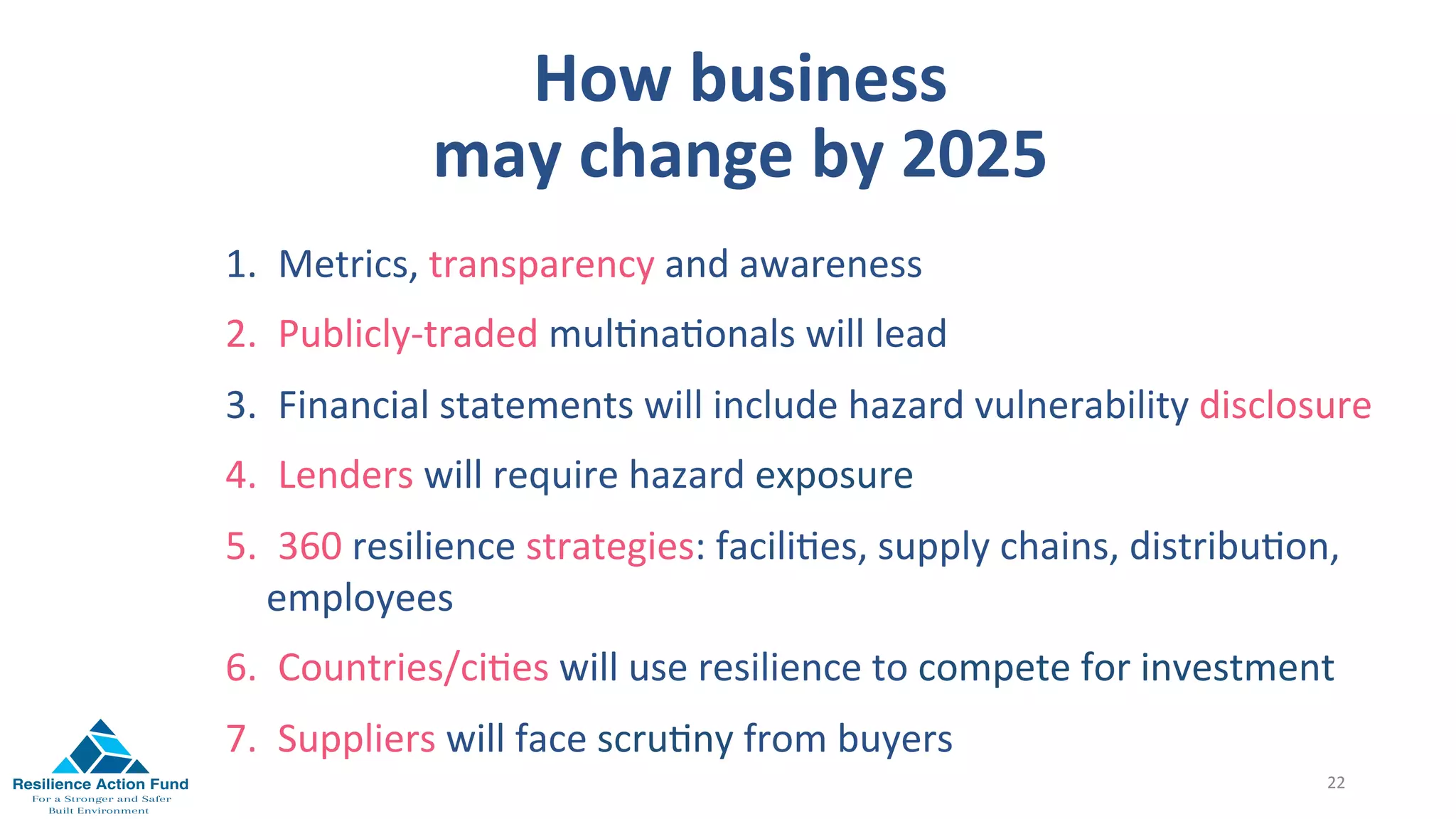
How	business		
may	change	by	2025	
	
	
22	
1.  Metrics,	transparency	and	awareness		
2.  Publicly-traded	mul1na1onals	will	lead	
3.  Financial	statements	will	include	hazard	vulnerability	disclosure	
4.  Lenders	will	require	hazard	exposure	
5.  360	resilience	strategies:	facili1es,	supply	chains,	distribu1on,	
employees	
6.  Countries/ci1es	will	use	resilience	to	compete	for	investment	
7.  Suppliers	will	face	scru1ny	from	buyers
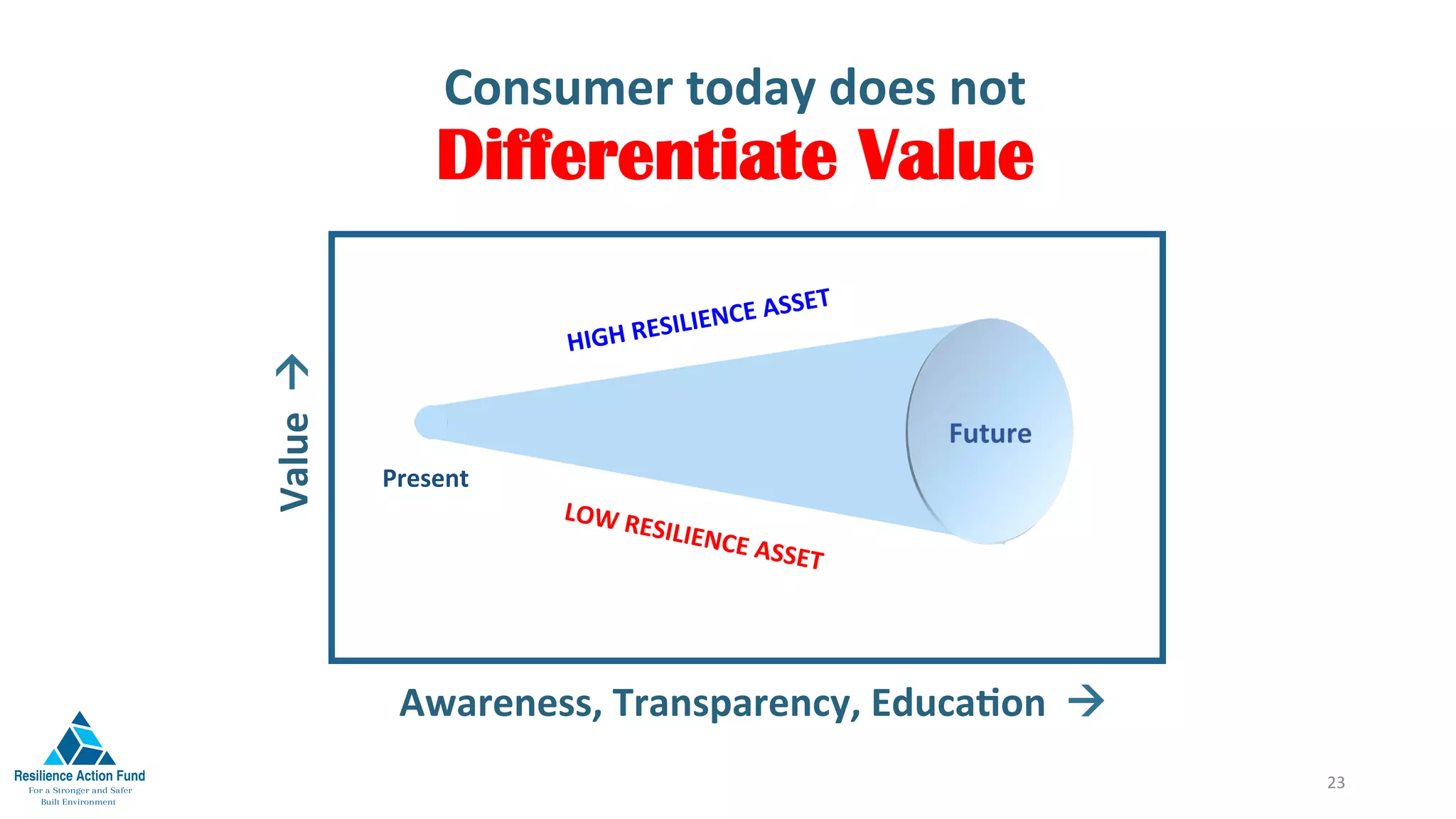
Consumer	today	does	not	
Differentiate Value
23	
Awareness,	Transparency,	EducaFon		!	
Value		!	
	
LOW	RESILIENCE	ASSET	
HIGH	RESILIENCE	ASSET	
Future	
Present
Resilience is	an		
Environmental Issue
- ReconstrucFon	resources	
-	DestrucFon	debris	
-	Building	on	sensiFve	lands
Resilience is a
Social Equity Issue
25	
1.  Vulnerability	disproporFonately	affects	poor	
2.  Low	Resilience	traps	poor	in	vicious	Disaster-Poverty	
Cycle	
3.  Making	Resilience	more	affordable	vs	lowering	
standards	to	gain	affordability	is	the	challenge
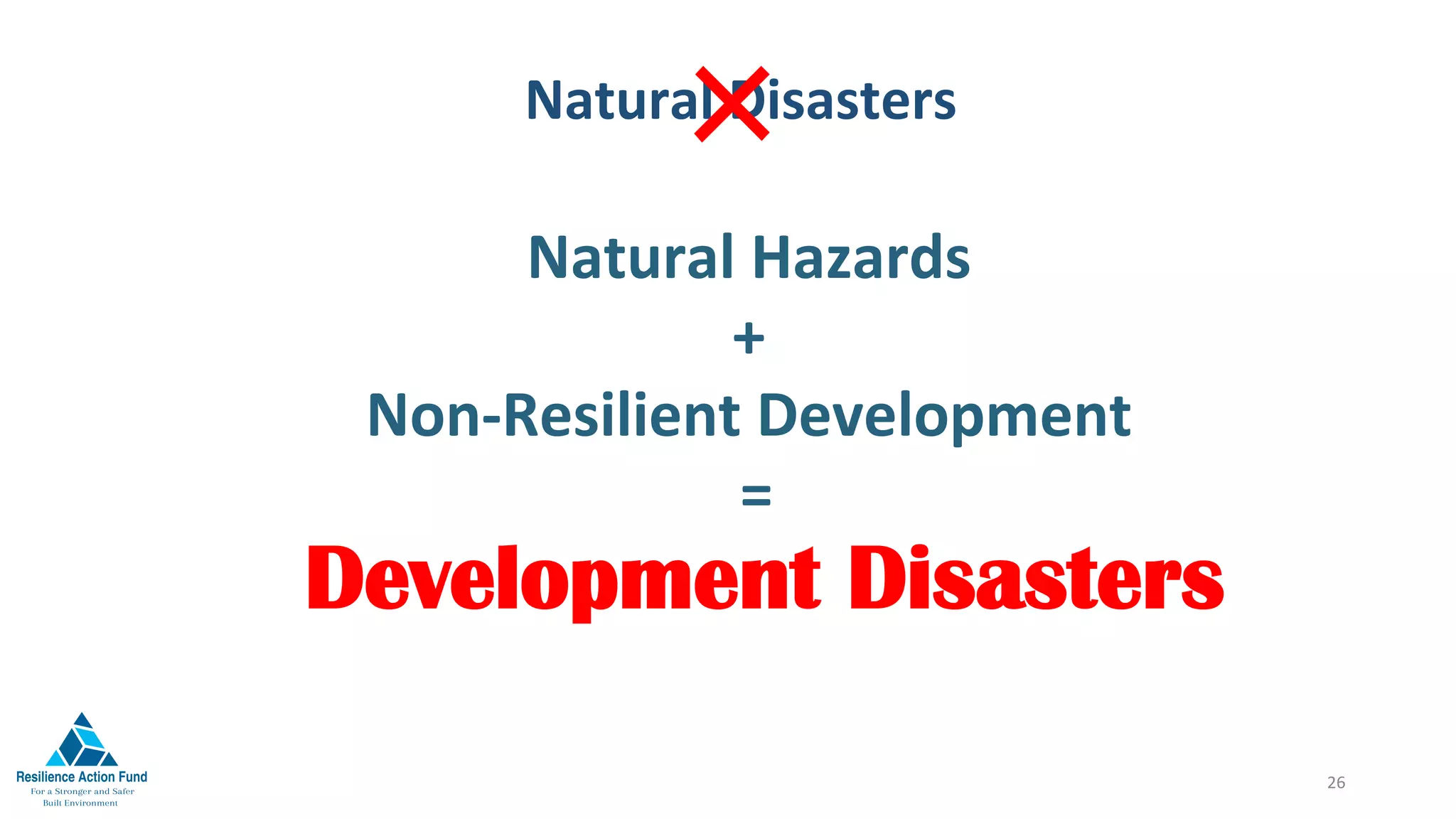
Natural	Hazards	
+	
Non-Resilient	Development	
	=		
26	
Development Disasters	
Natural	Disasters	
×
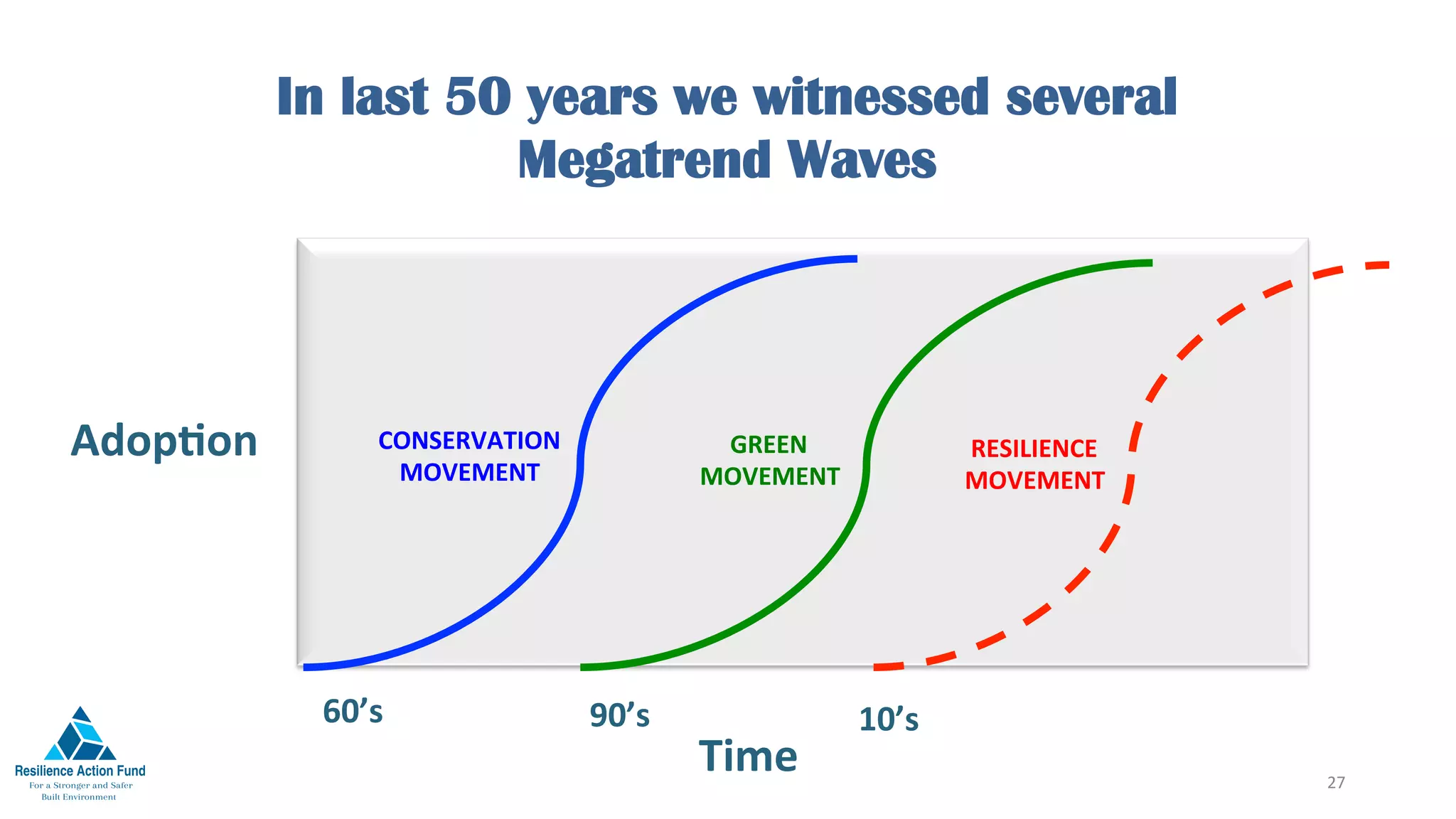
In last 50 years we witnessed several
Megatrend Waves
27	
Time	
AdopFon	 GREEN	
MOVEMENT	
CONSERVATION	
MOVEMENT	
60’s	 90’s	
RESILIENCE	
MOVEMENT	
10’s
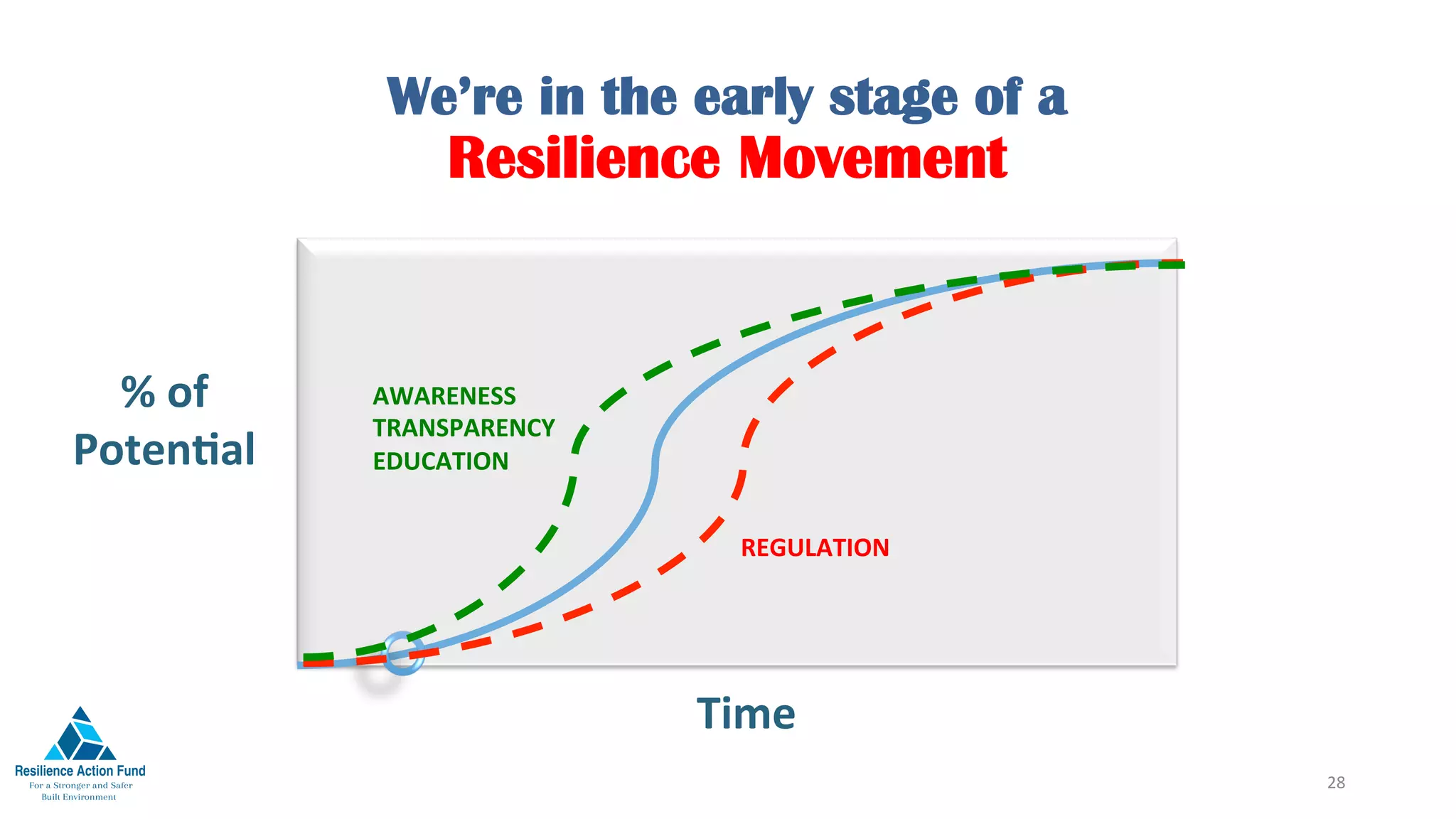
We’re in the early stage of a
Resilience Movement
28	
Time	
%	of	
PotenFal	
REGULATION	
AWARENESS	
TRANSPARENCY	
EDUCATION
Thank you!
29

Building resilience with the sendai framework (Aris Papadopoulos)