Program Background
•  Began in 2006
•  City- Regional Partners
•  National Awards & Recognition
– International Association of Emergency
Managers (Public Awareness)
– FEMA (Awareness to Action)
– CDC (Whole Community EM)
– FEMA (Preparing the Whole Community)
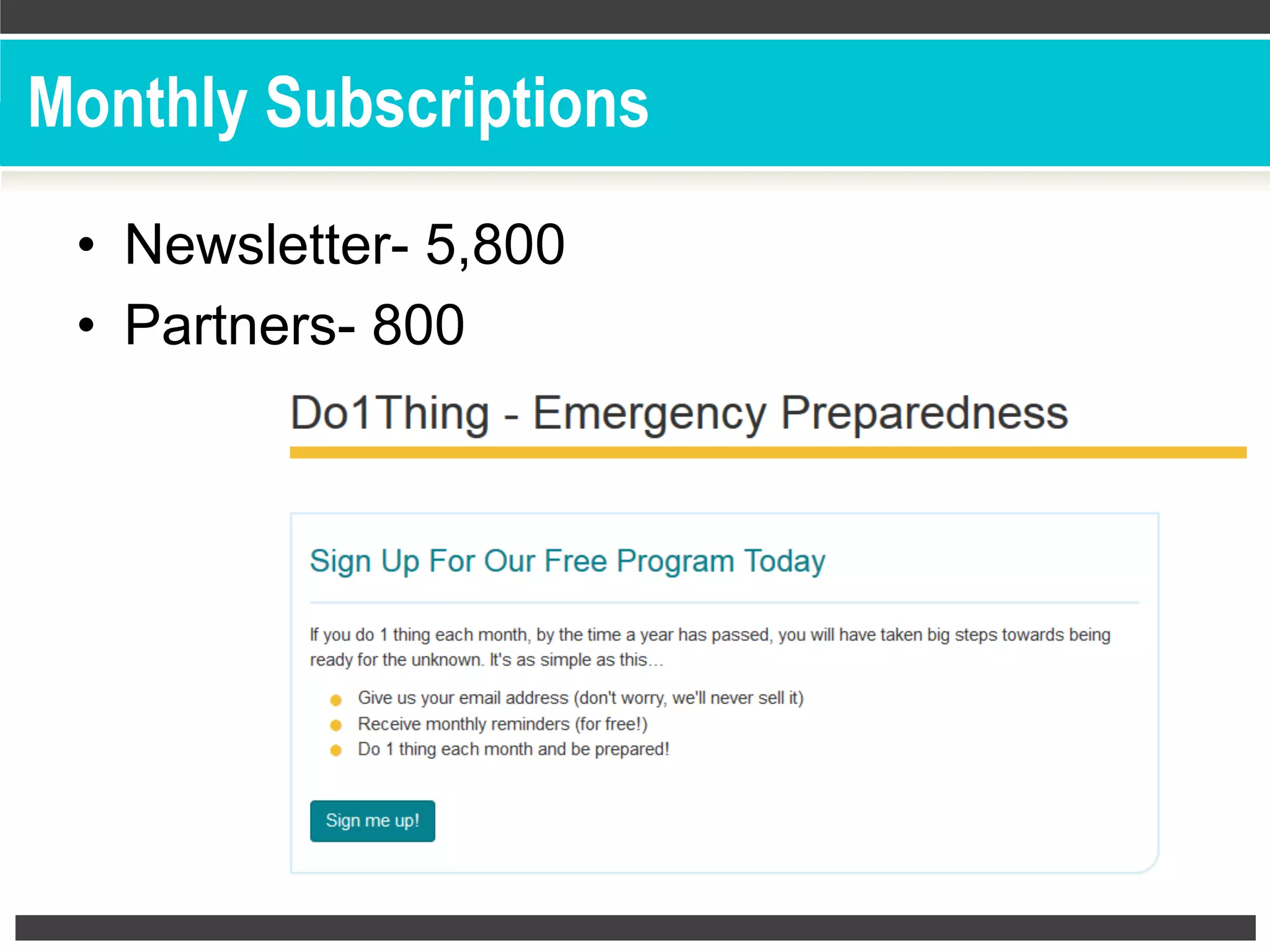
Monthly Subscriptions
•  Newsletter- 5,800
•  Partners- 800
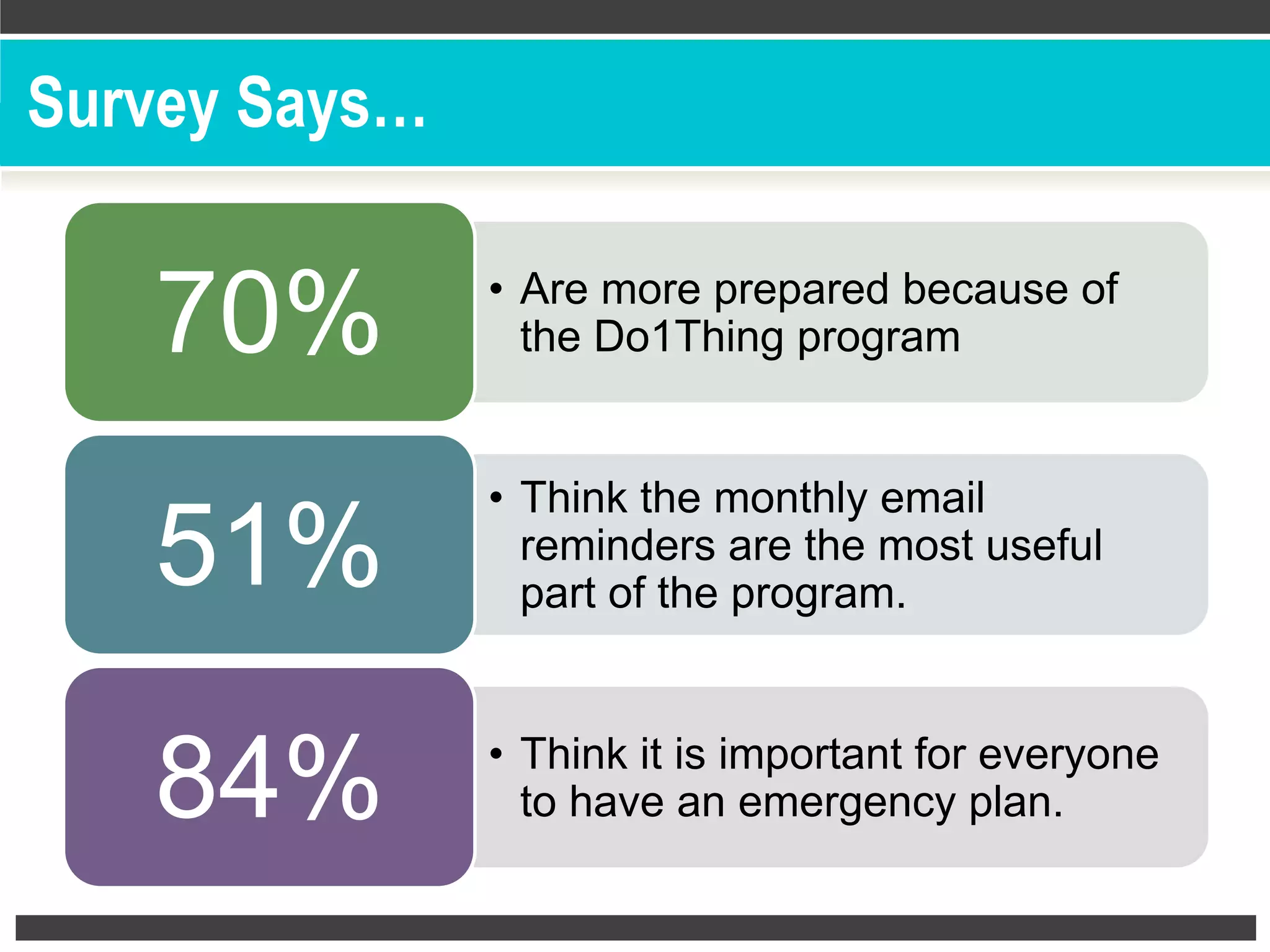
Survey Says…
•  Are more prepared because of
the Do1Thing program70%
•  Think the monthly email
reminders are the most useful
part of the program.
51%
•  Think it is important for everyone
to have an emergency plan.84%
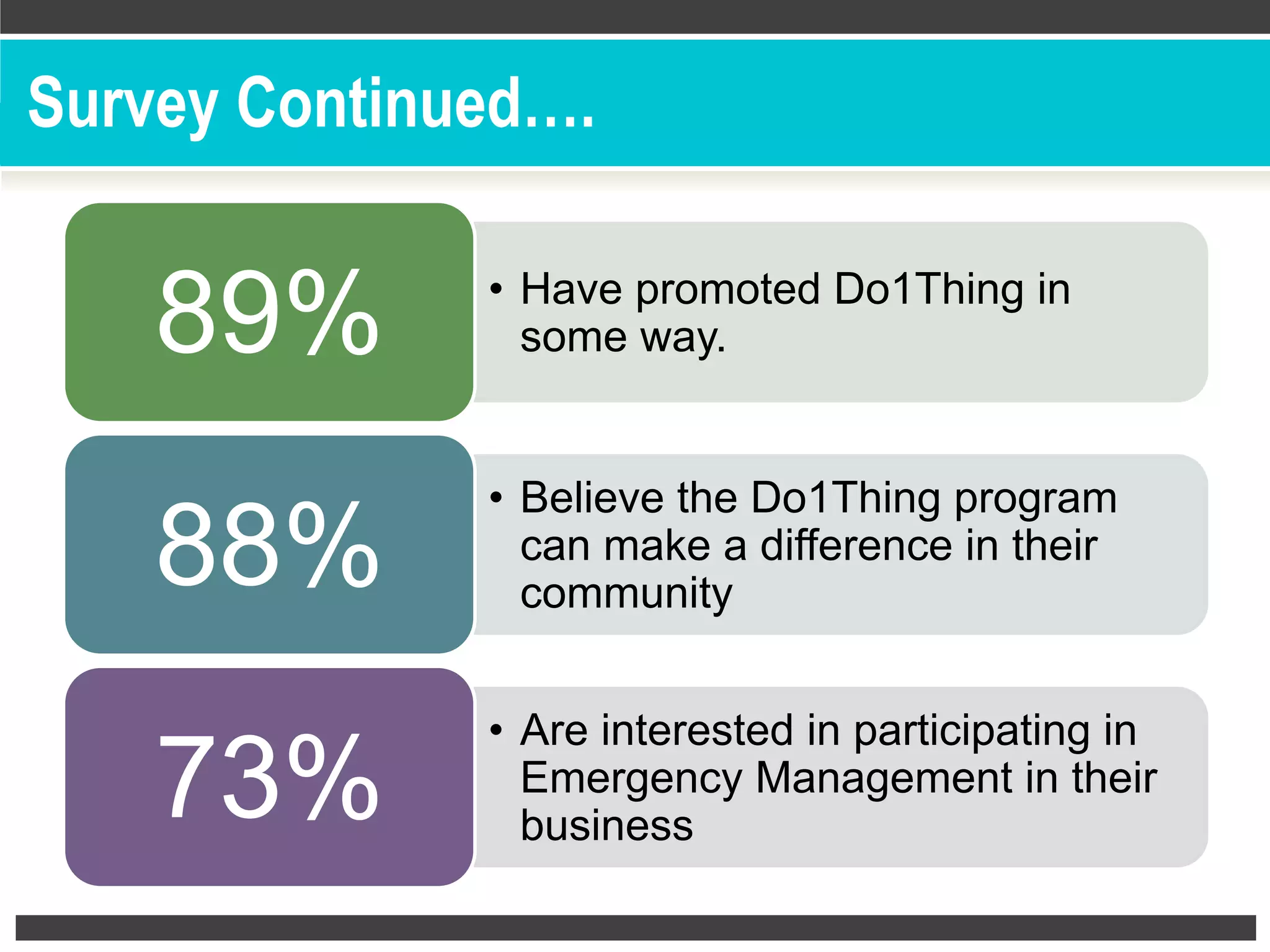
Survey Continued….
•  Have promoted Do1Thing in
some way.89%
•  Believe the Do1Thing program
can make a difference in their
community
88%
•  Are interested in participating in
Emergency Management in their
business
73%
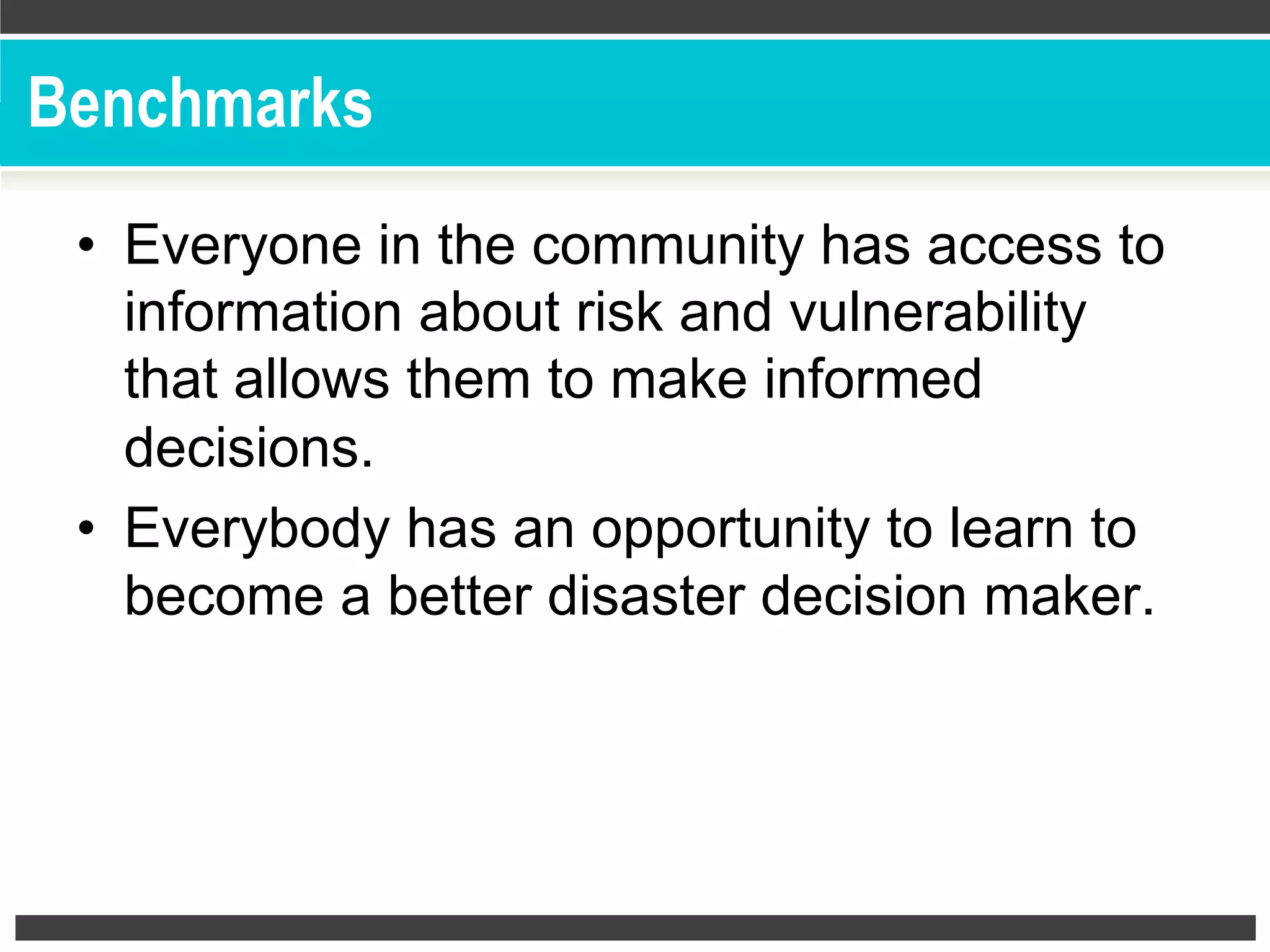
Benchmarks
•  Everyone in the community has access to
information about risk and vulnerability
that allows them to make informed
decisions.
•  Everybody has an opportunity to learn to
become a better disaster decision maker.
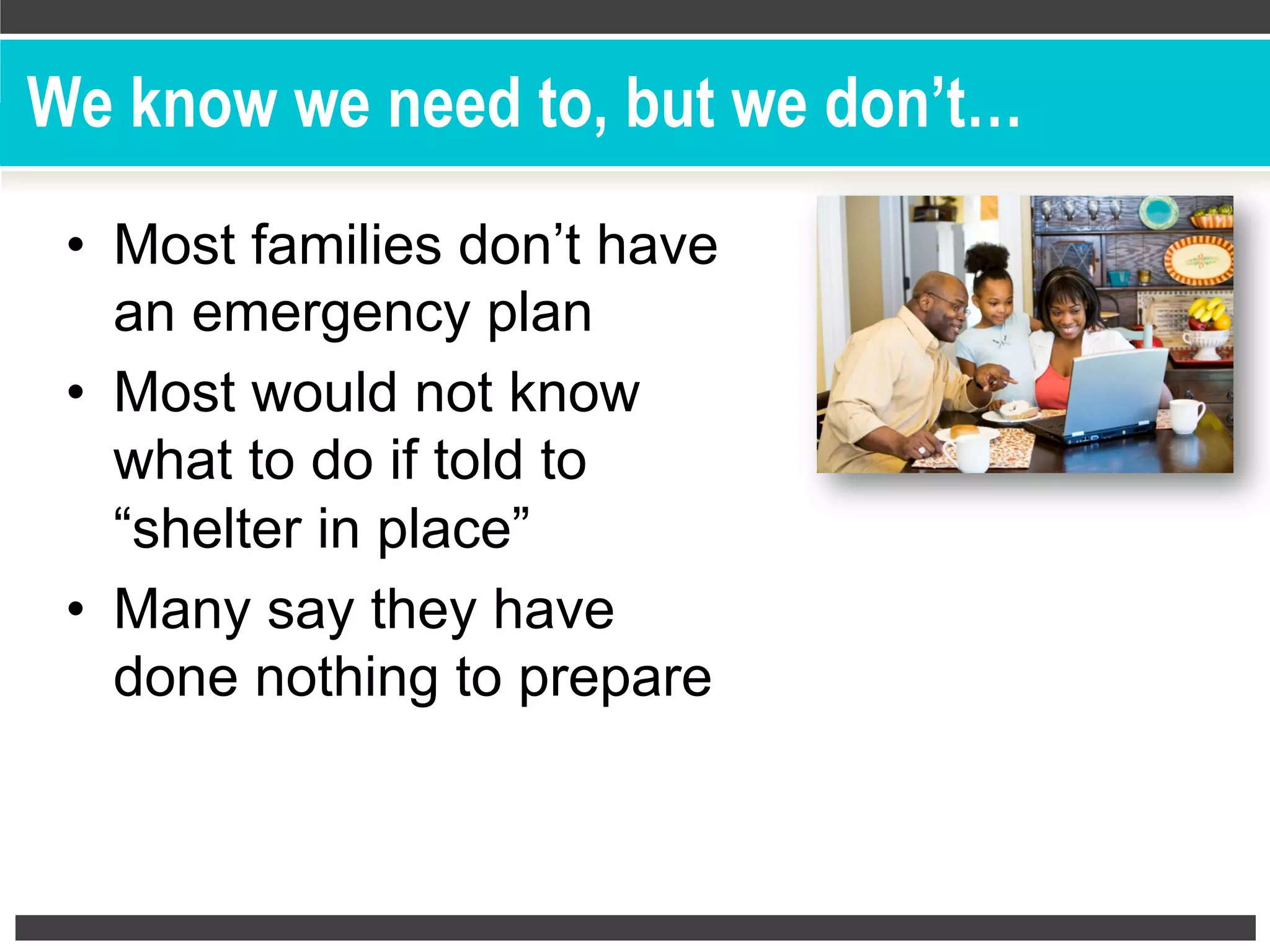
We know we need to, but we don’t…
•  Most families don’t have
an emergency plan
•  Most would not know
what to do if told to
“shelter in place”
•  Many say they have
done nothing to prepare
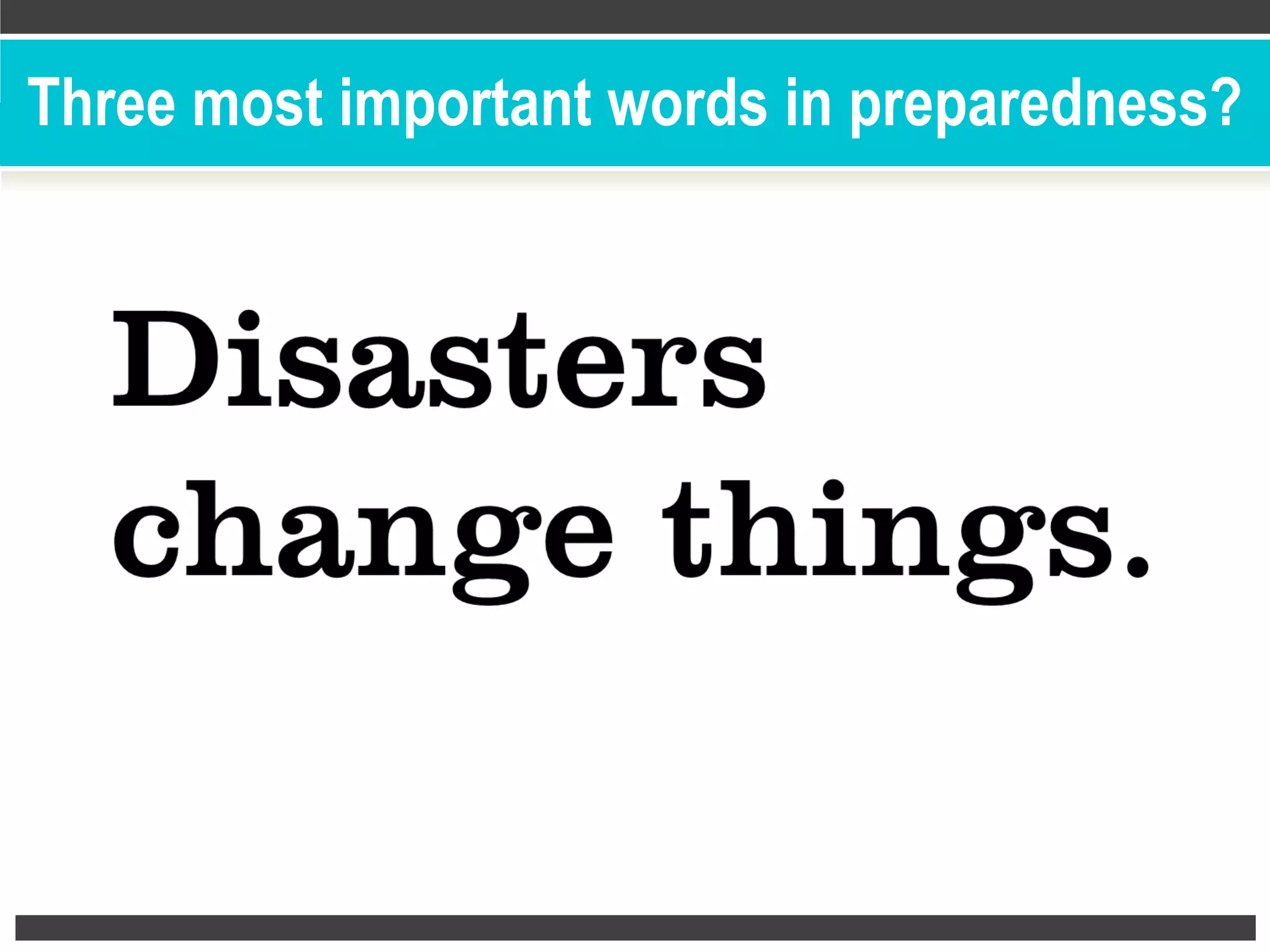
Three most important words in preparedness?
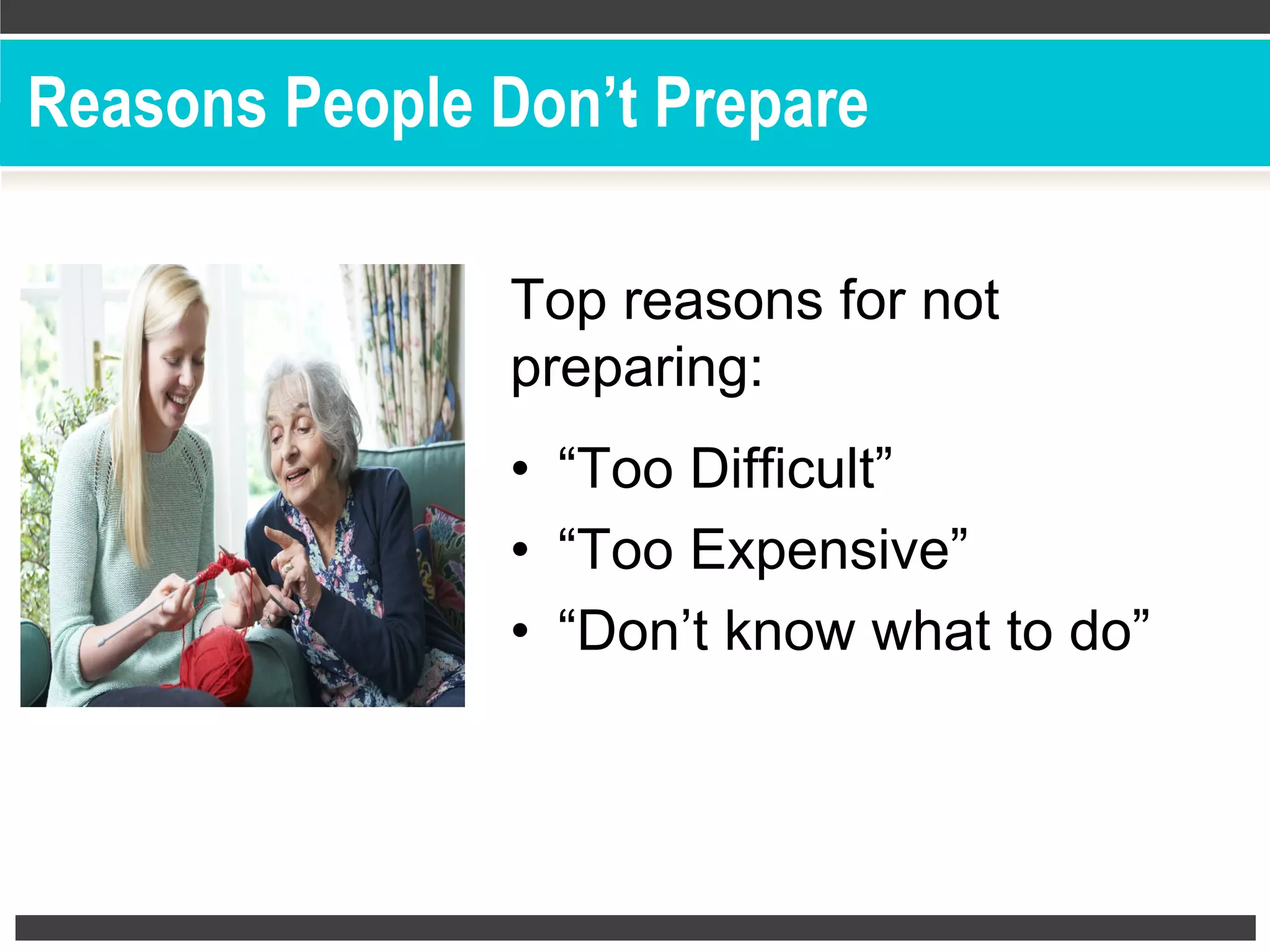
Reasons People Don’t Prepare
Top reasons for not
preparing:
•  “Too Difficult”
•  “Too Expensive”
•  “Don’t know what to do”
Disasters change things
“My first and greatest mistake, was not to
have thought about flooding – and what it
meant – before this… if you know what to
expect, you can be better prepared.”
Lisa Salinger from the VisionAware blog: “Emergency
preparedness with blindness and visual impairment: A first-
person account”
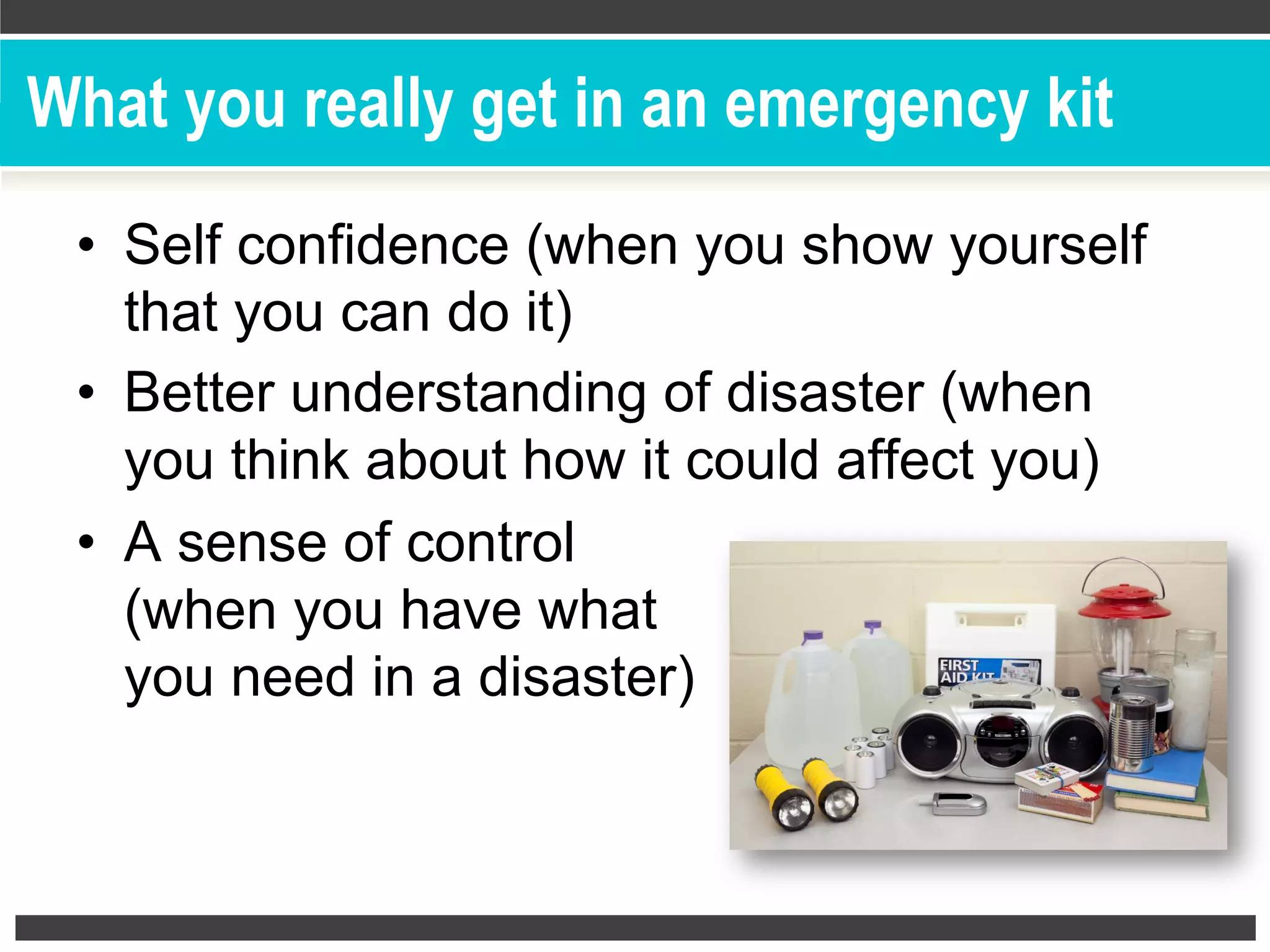
What you really get in an emergency kit
•  Self confidence (when you show yourself
that you can do it)
•  Better understanding of disaster (when
you think about how it could affect you)
•  A sense of control
(when you have what
you need in a disaster)
Making better disaster decision makers
•  Acknowledging that people have a choice
about preparing:
– Engages them as active participants in
disaster decision making process
– Promotes a sense of personal responsibility
– Empowers them
– Helps personalize risk
– Legitimizes their unique perspective
– Shows respect
Public Response
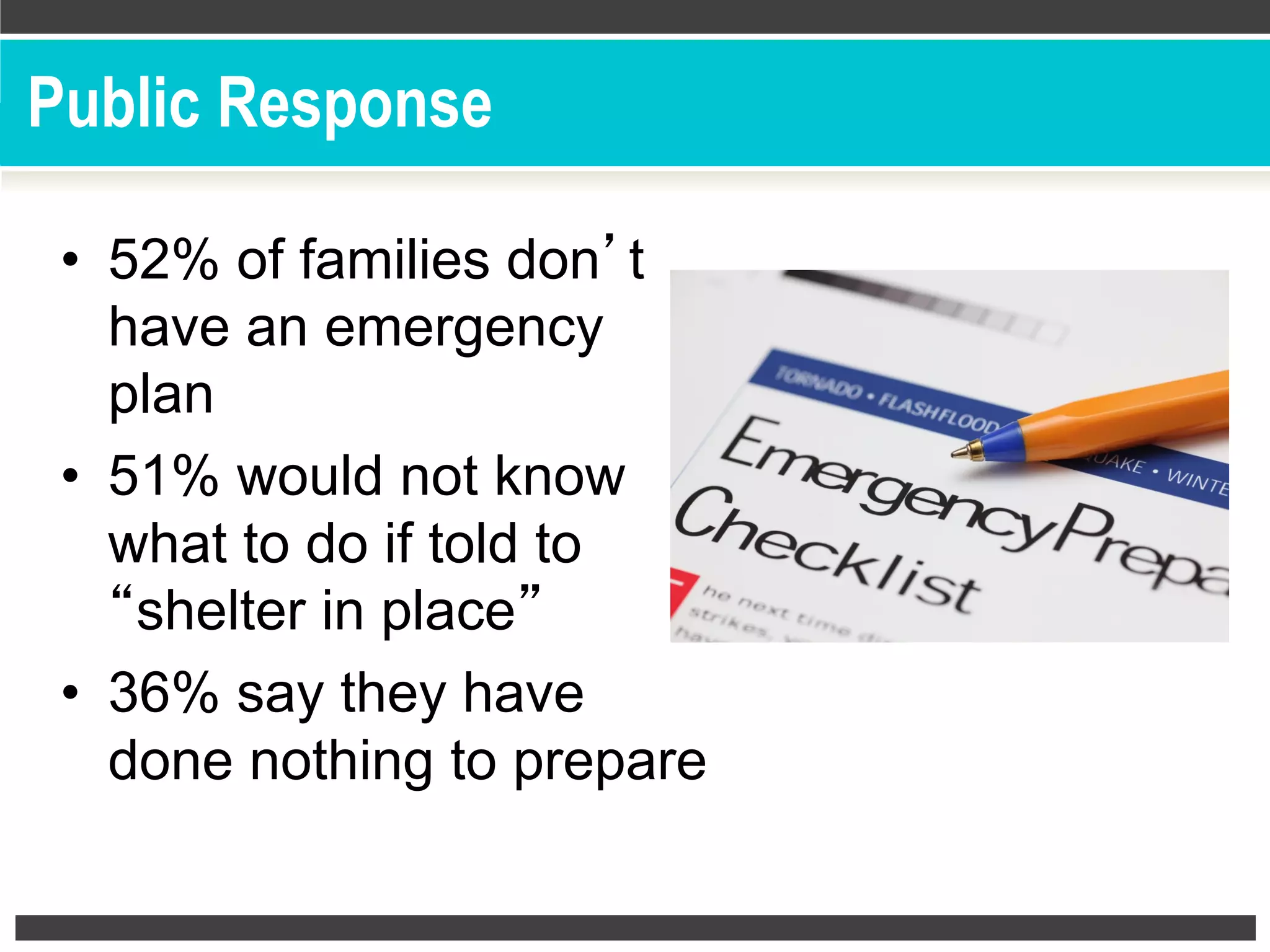
•  52% of families don’t
have an emergency
plan
•  51% would not know
what to do if told to
“shelter in place”
•  36% say they have
done nothing to prepare
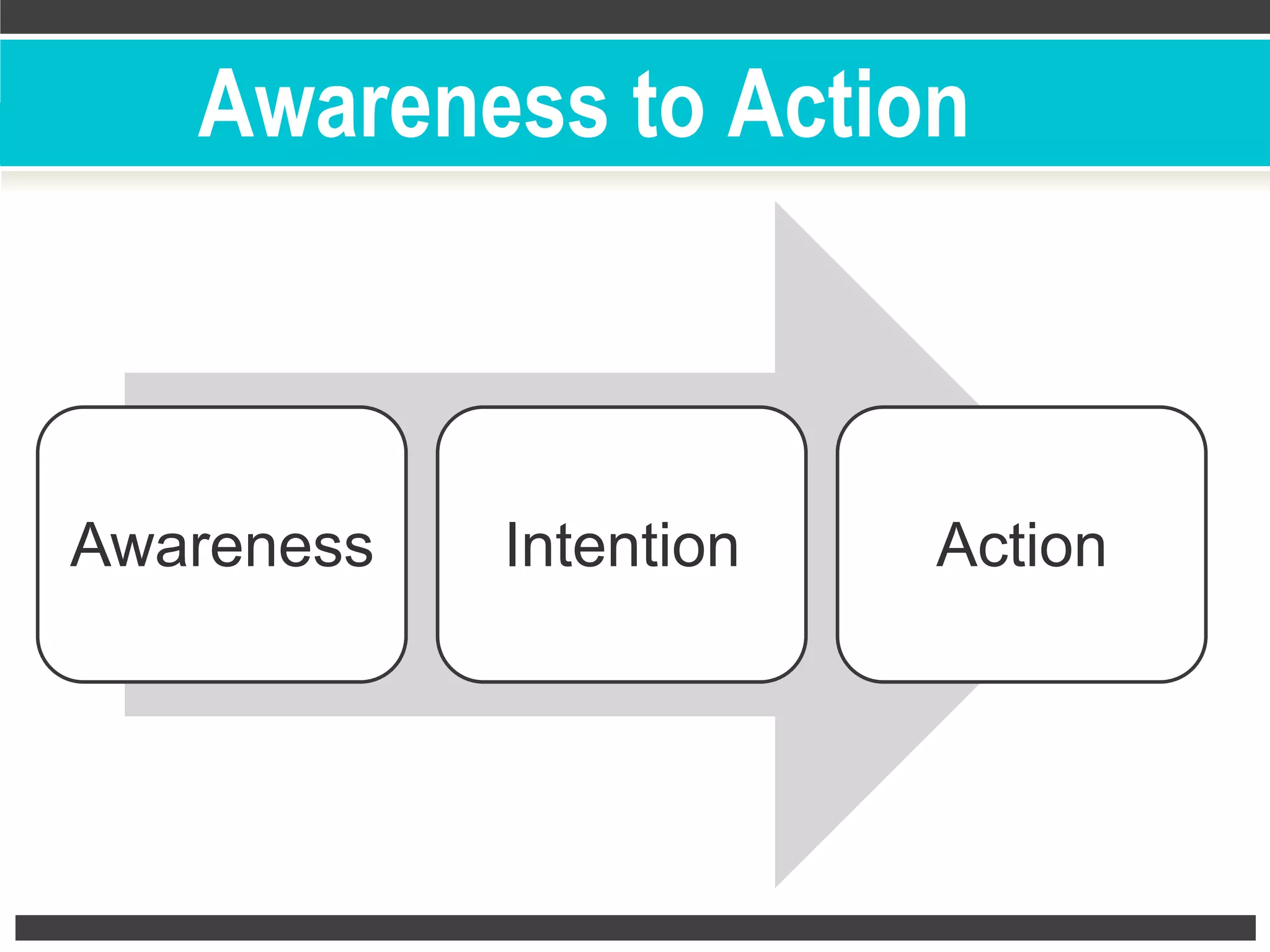
Awareness to Action
Awareness Intention Action
1
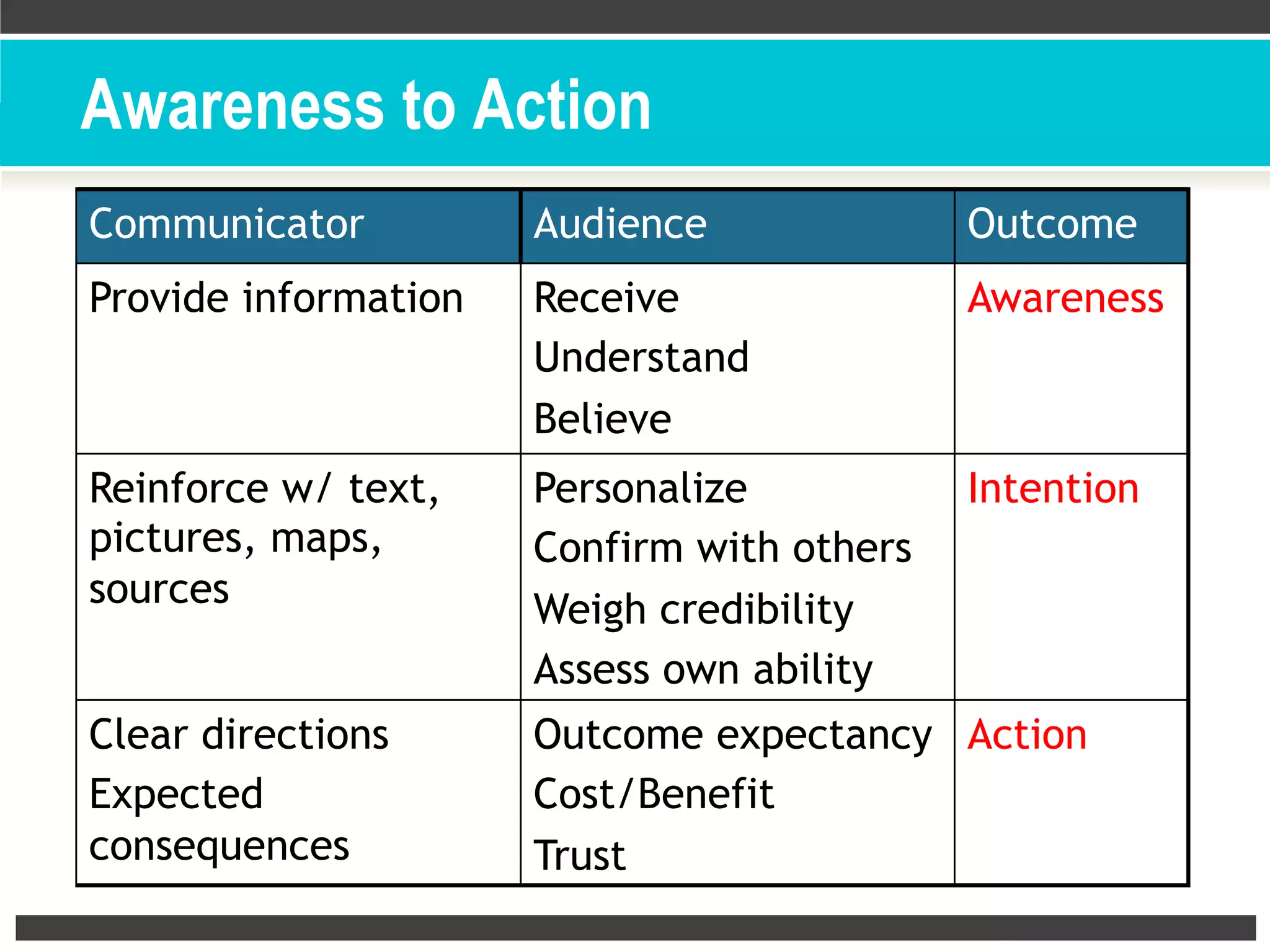
Awareness to Action
Communicator Audience Outcome
Provide information Receive
Understand
Believe
Awareness
Reinforce w/ text,
pictures, maps,
sources
Personalize
Confirm with others
Weigh credibility
Assess own ability
Intention
Clear directions
Expected
consequences
Outcome expectancy
Cost/Benefit
Trust
Action
Normalcy Bias
•  Overestimating our abilities
•  Underestimating the impact of disaster
– Availability of resources
– Environmental changes
– Physical changes
"When I got in the shower earlier
today the sky was blue. When I
got out, the sky was black.''
Alberta resident Sandra Hickey - Canadian Press
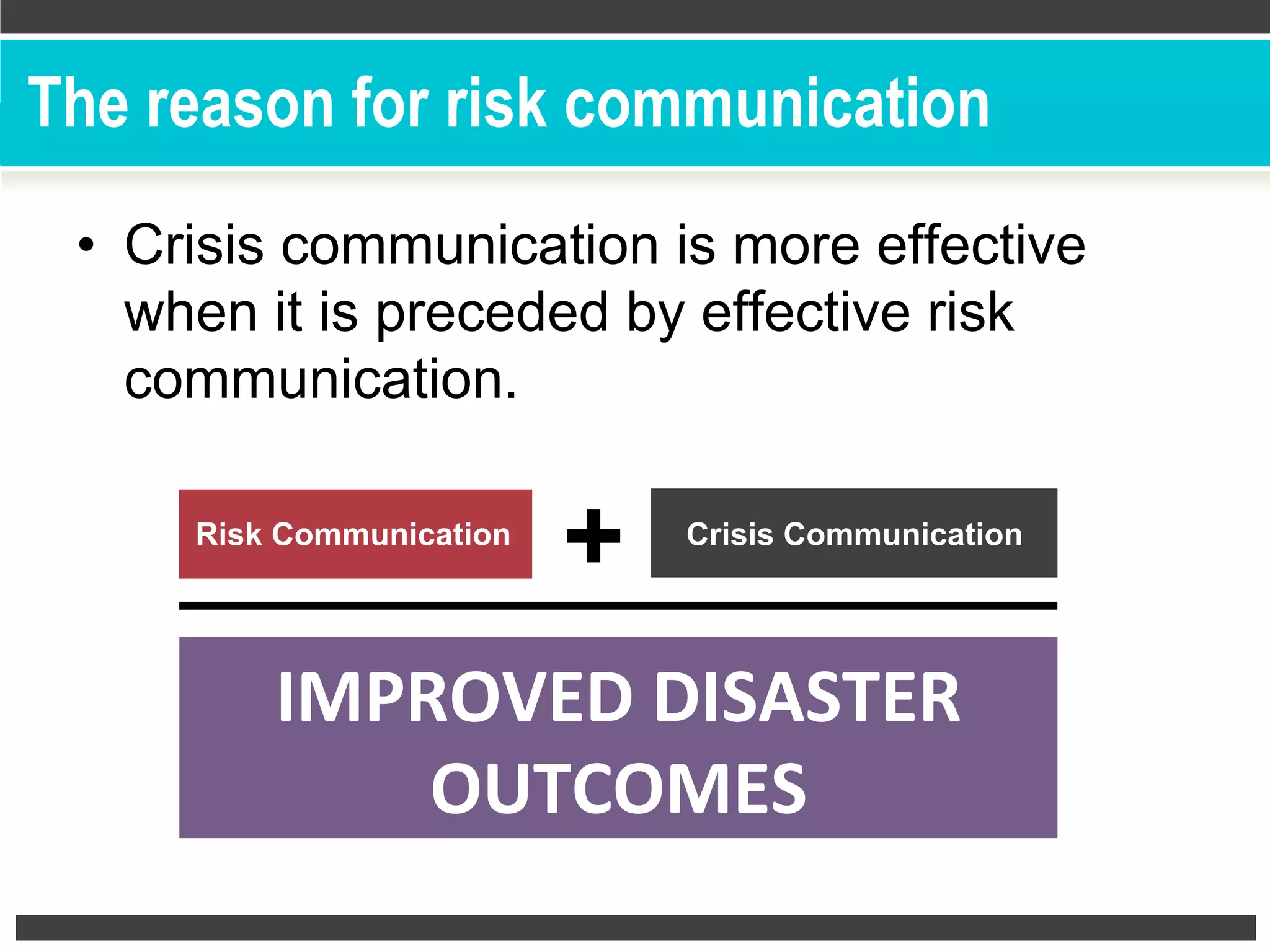
The reason for risk communication
•  Crisis communication is more effective
when it is preceded by effective risk
communication.
Risk Communication Crisis Communication
IMPROVED	DISASTER	
OUTCOMES	
+
Risk Communication Goals
•  Reduce information seeking
•  Reduce normalcy bias
•  Improve sense making
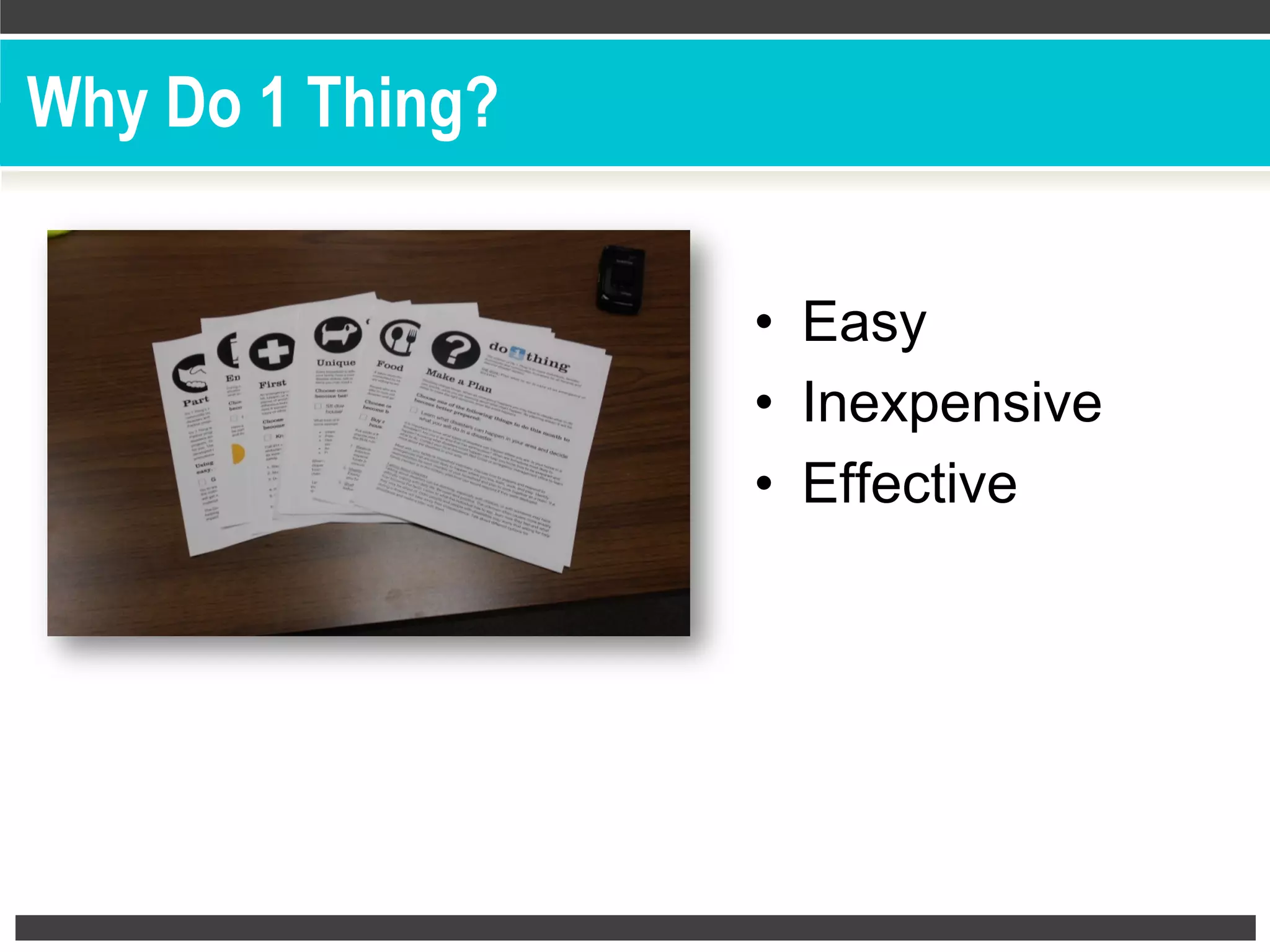
Why Do 1 Thing?
•  Easy
•  Inexpensive
•  Effective
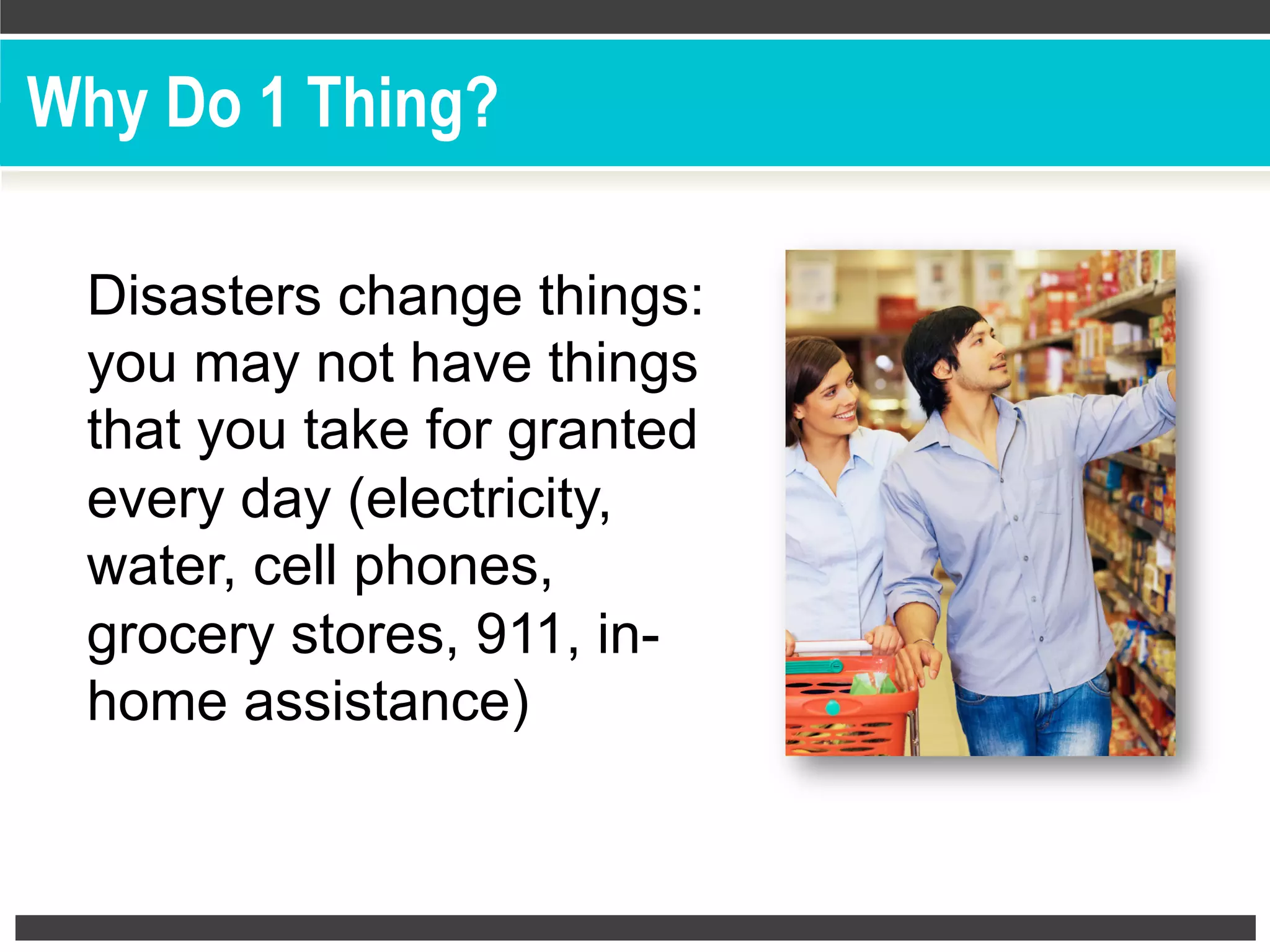
Disasters change things:
you may not have things
that you take for granted
every day (electricity,
water, cell phones,
grocery stores, 911, in-
home assistance)
Why Do 1 Thing?
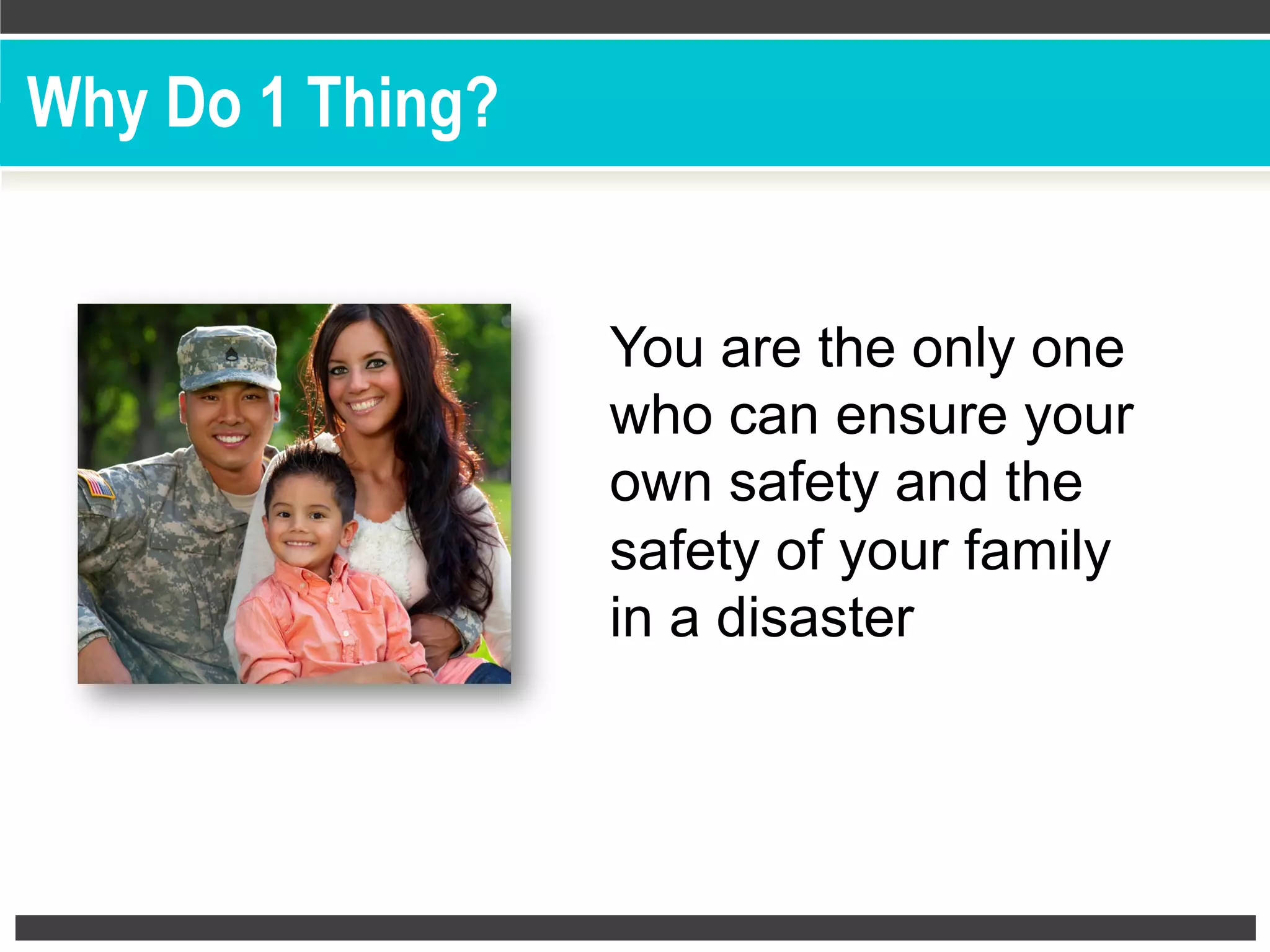
You are the only one
who can ensure your
own safety and the
safety of your family
in a disaster
Why Do 1 Thing?
Why Do 1 Thing?
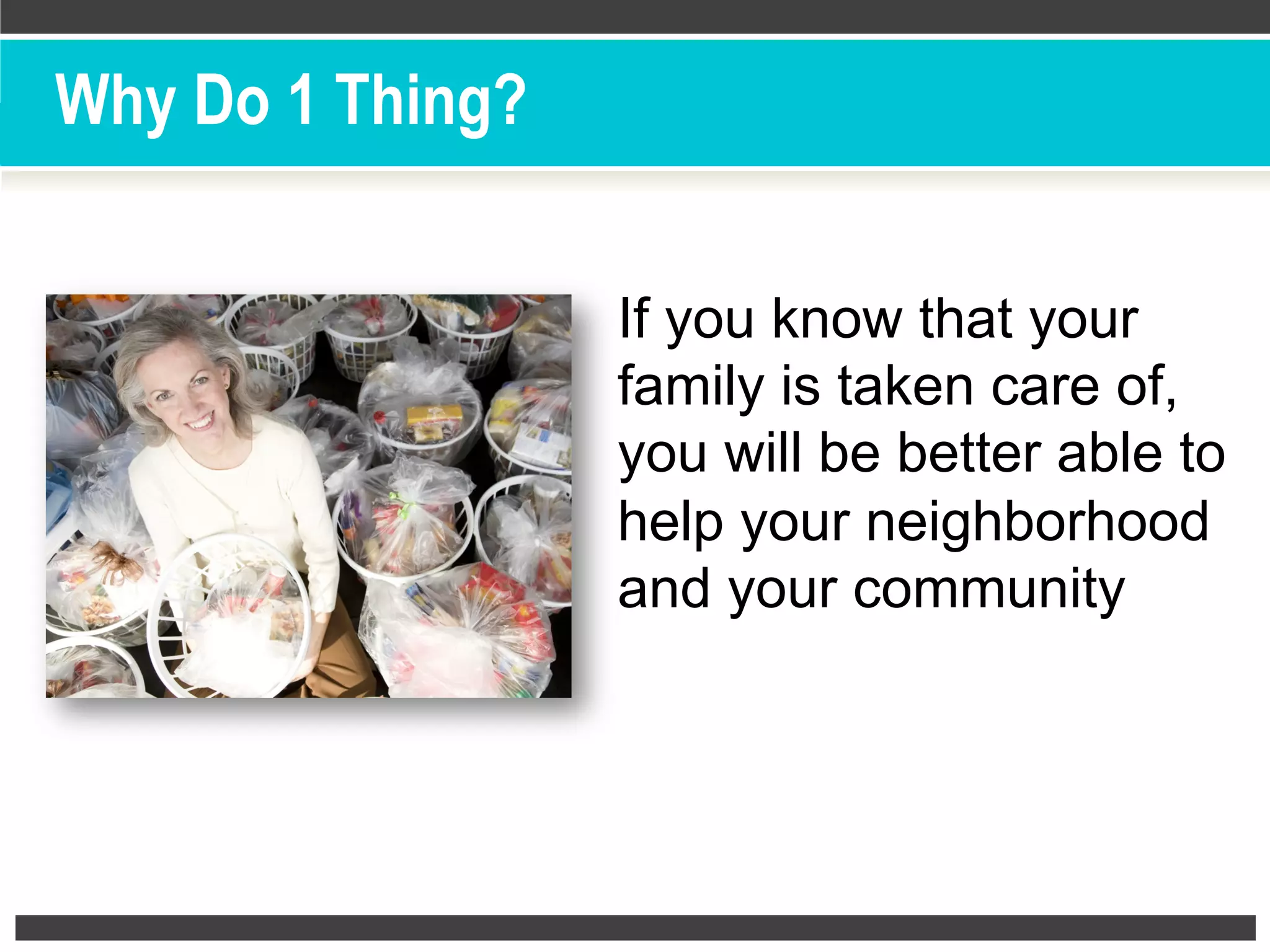
If you know that your
family is taken care of,
you will be better able to
help your neighborhood
and your community
Why Do 1 Thing?
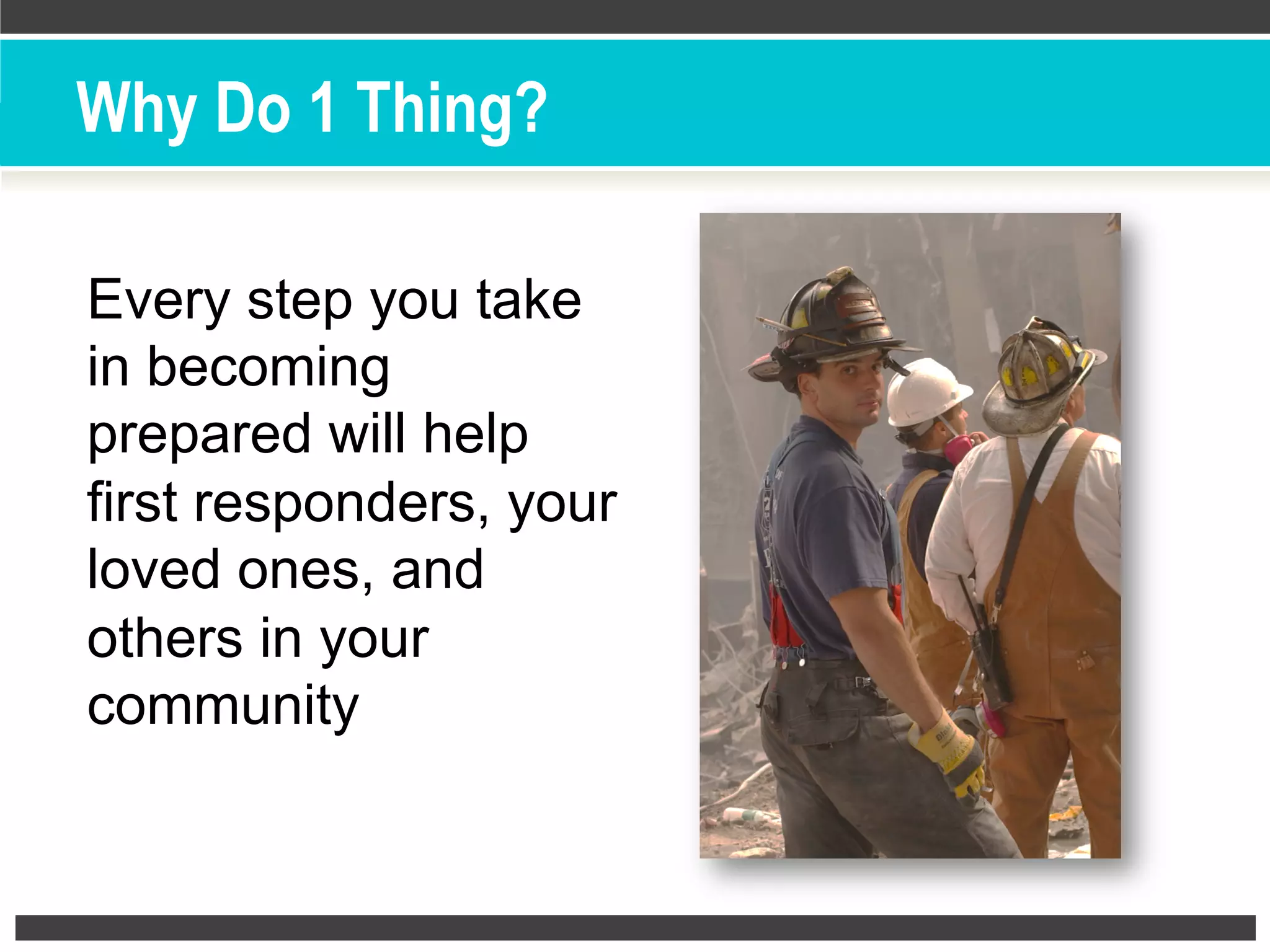
Every step you take
in becoming
prepared will help
first responders, your
loved ones, and
others in your
community
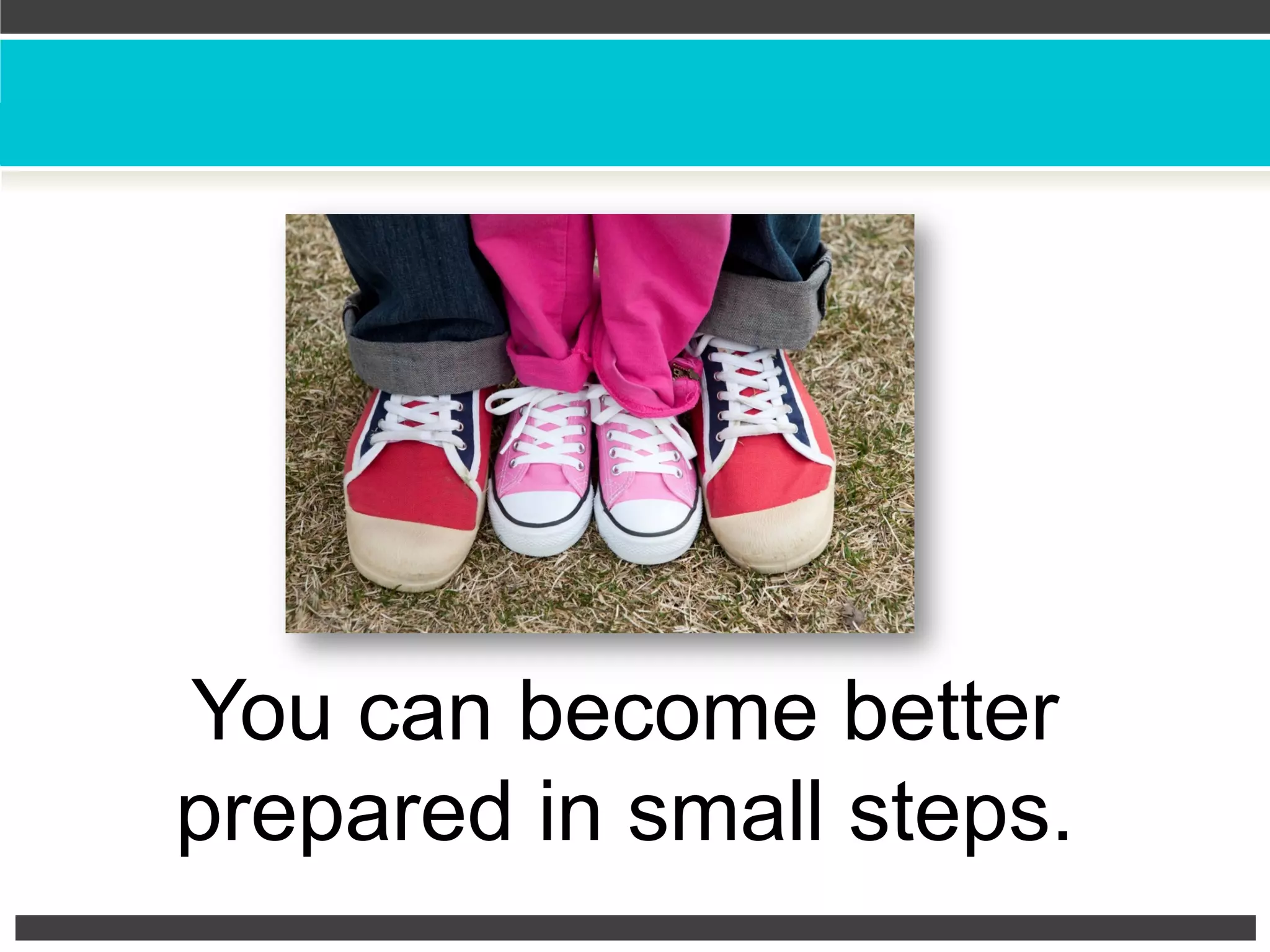
You can become better
prepared in small steps.
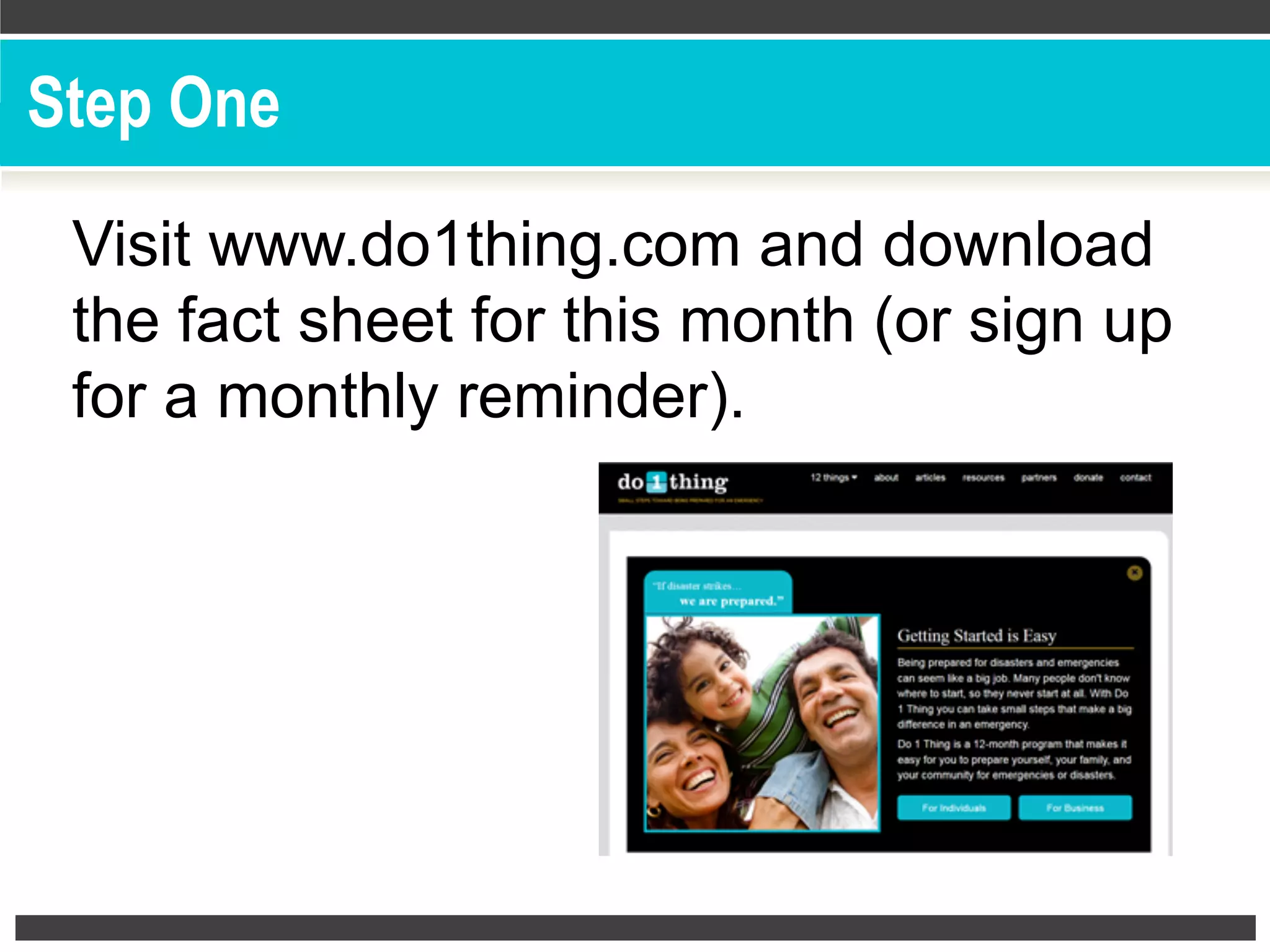
Visit www.do1thing.com and download
the fact sheet for this month (or sign up
for a monthly reminder).
Step One
Choose one thing from the list to do
for your family or community.
Step Two
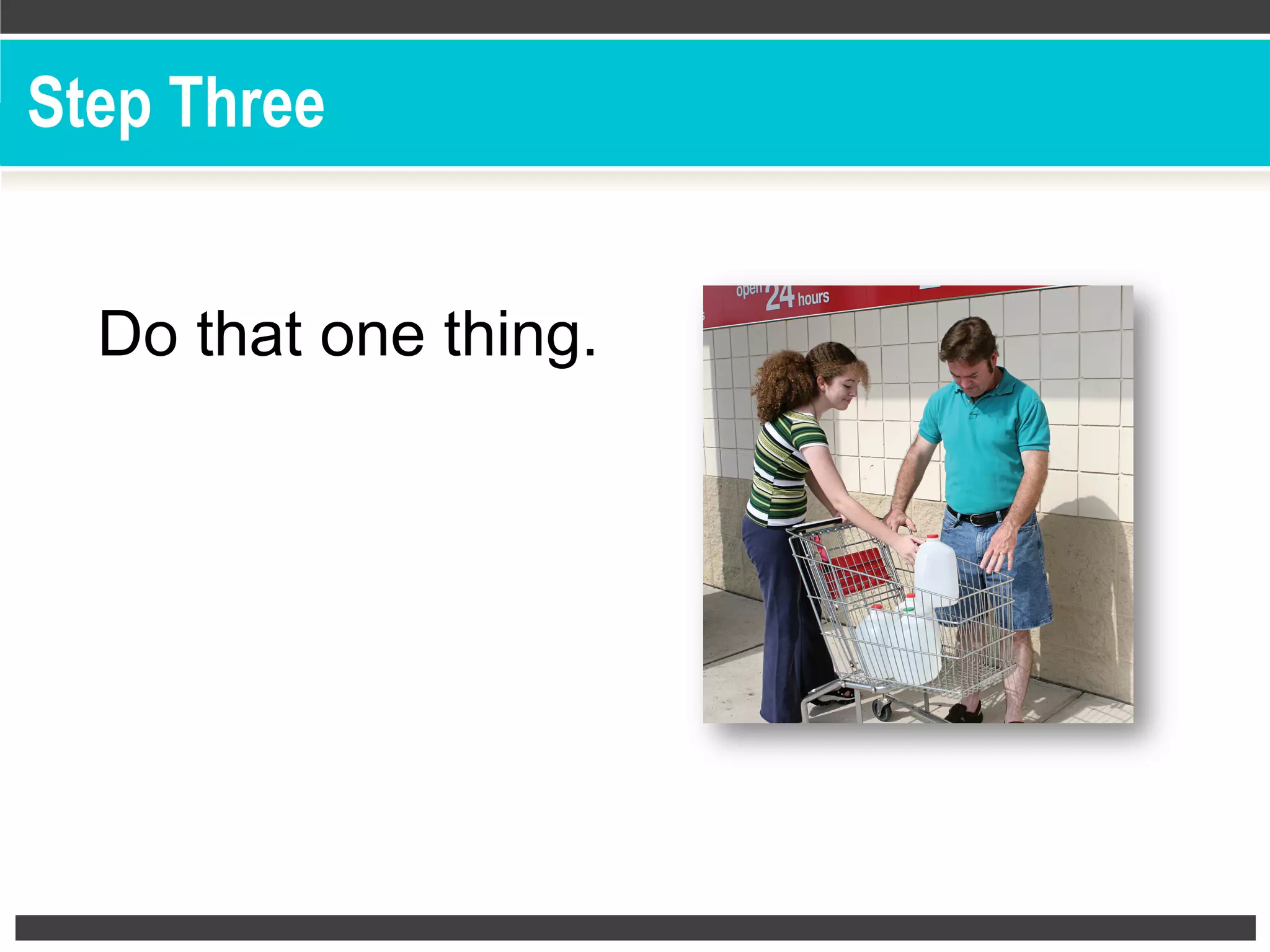
Do that one thing.
Step Three
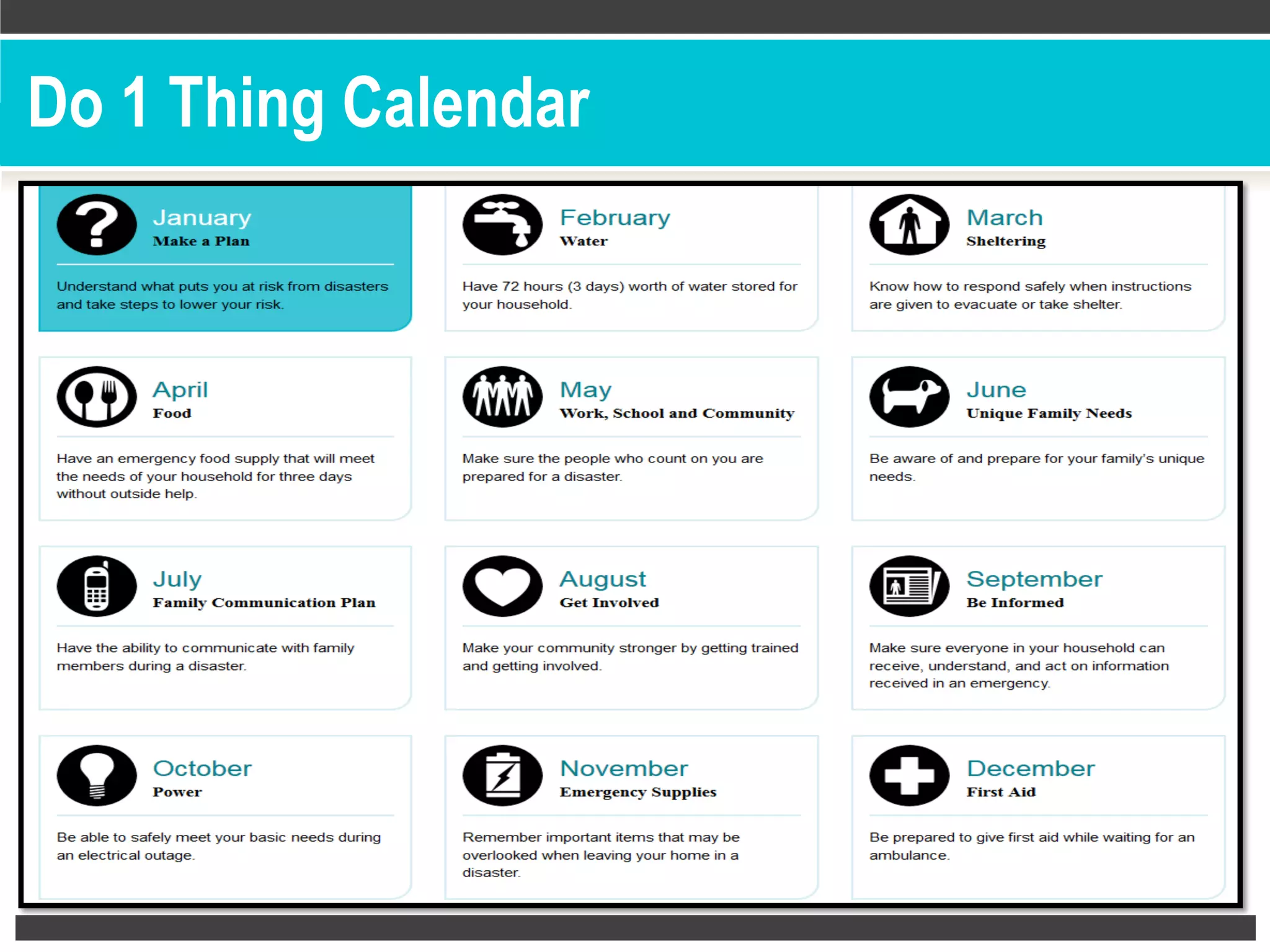
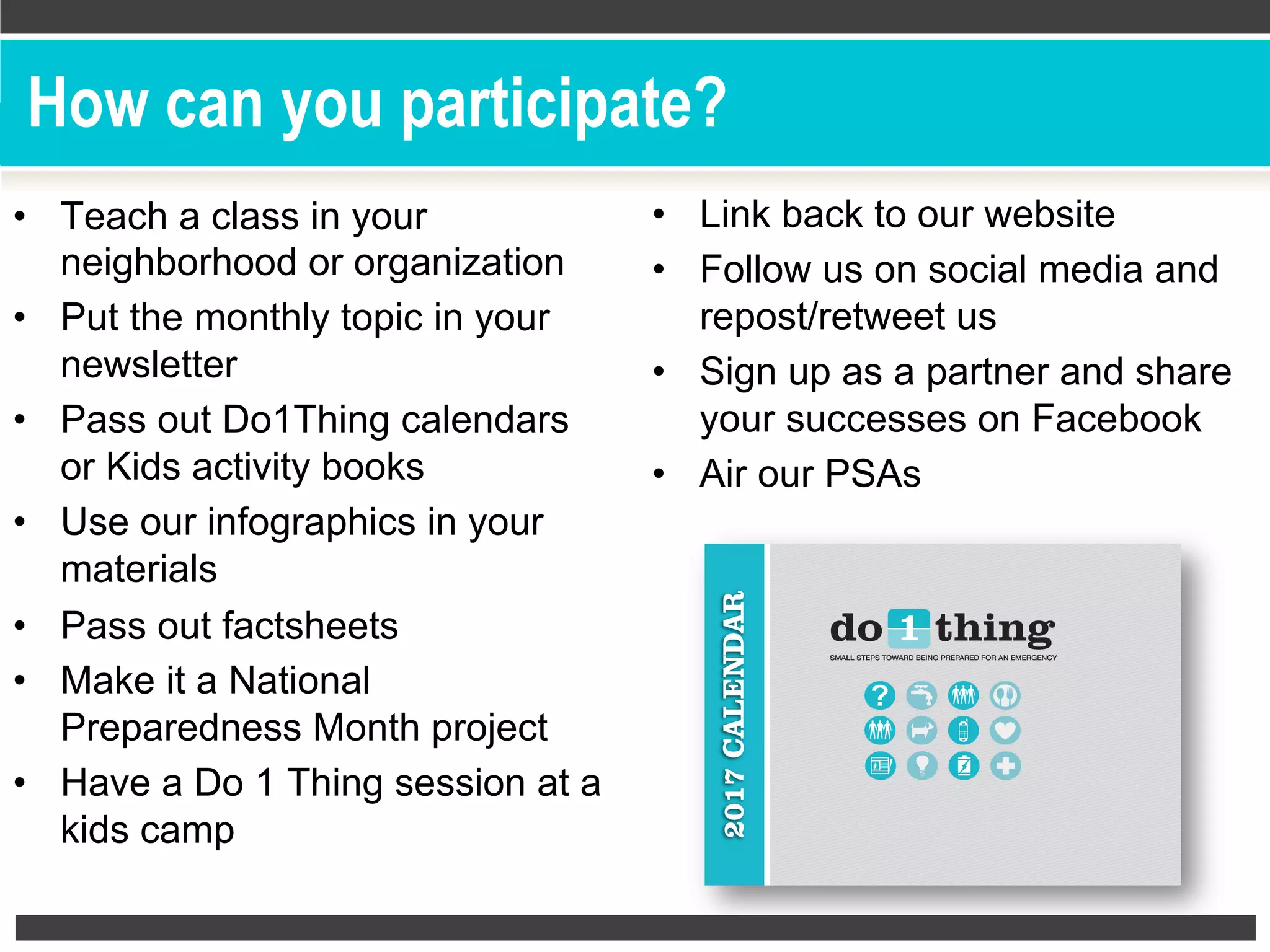
Do 1 Thing Calendar
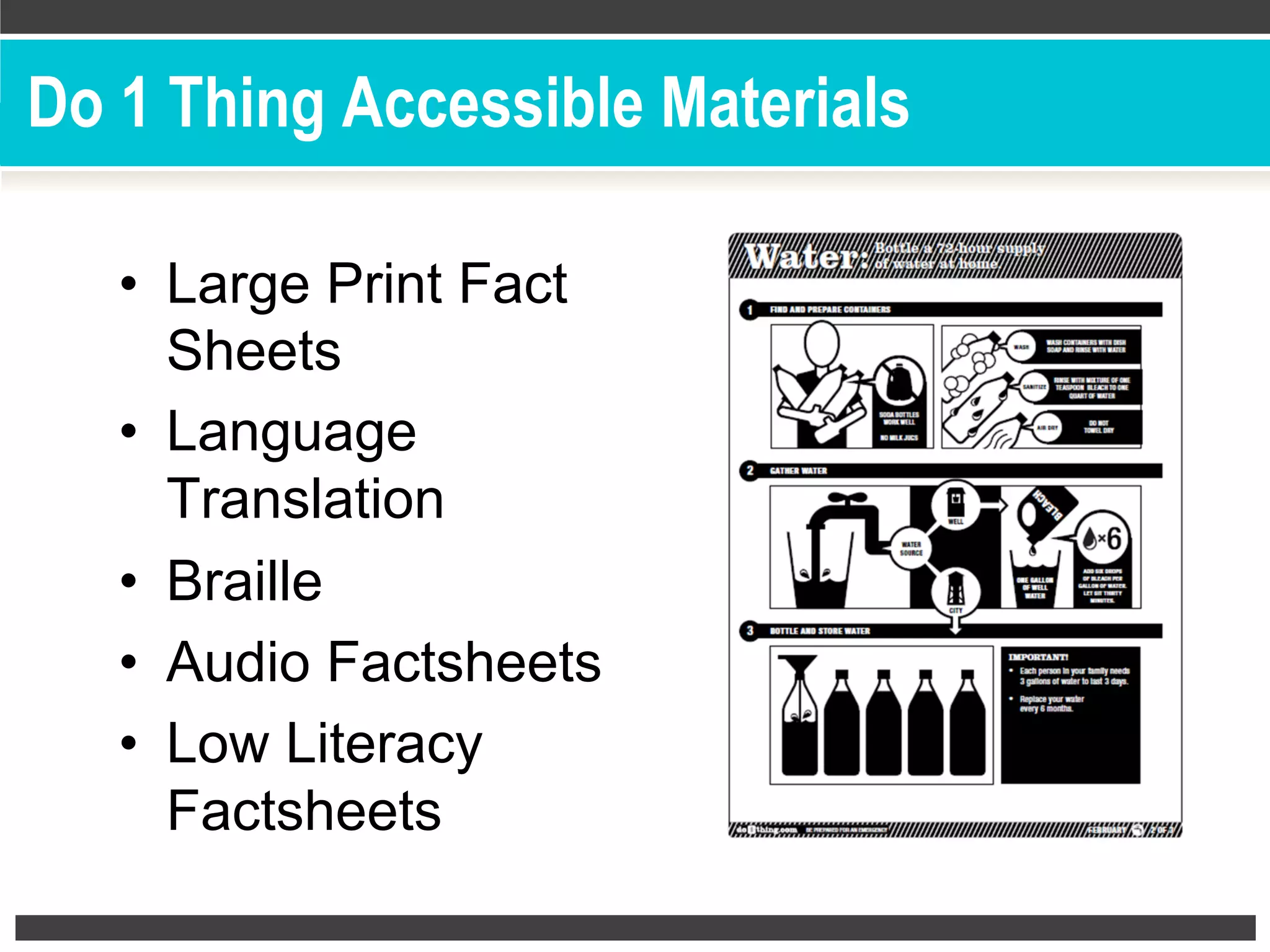
Do 1 Thing Accessible Materials
•  Large Print Fact
Sheets
•  Language
Translation
•  Braille
•  Audio Factsheets
•  Low Literacy
Factsheets
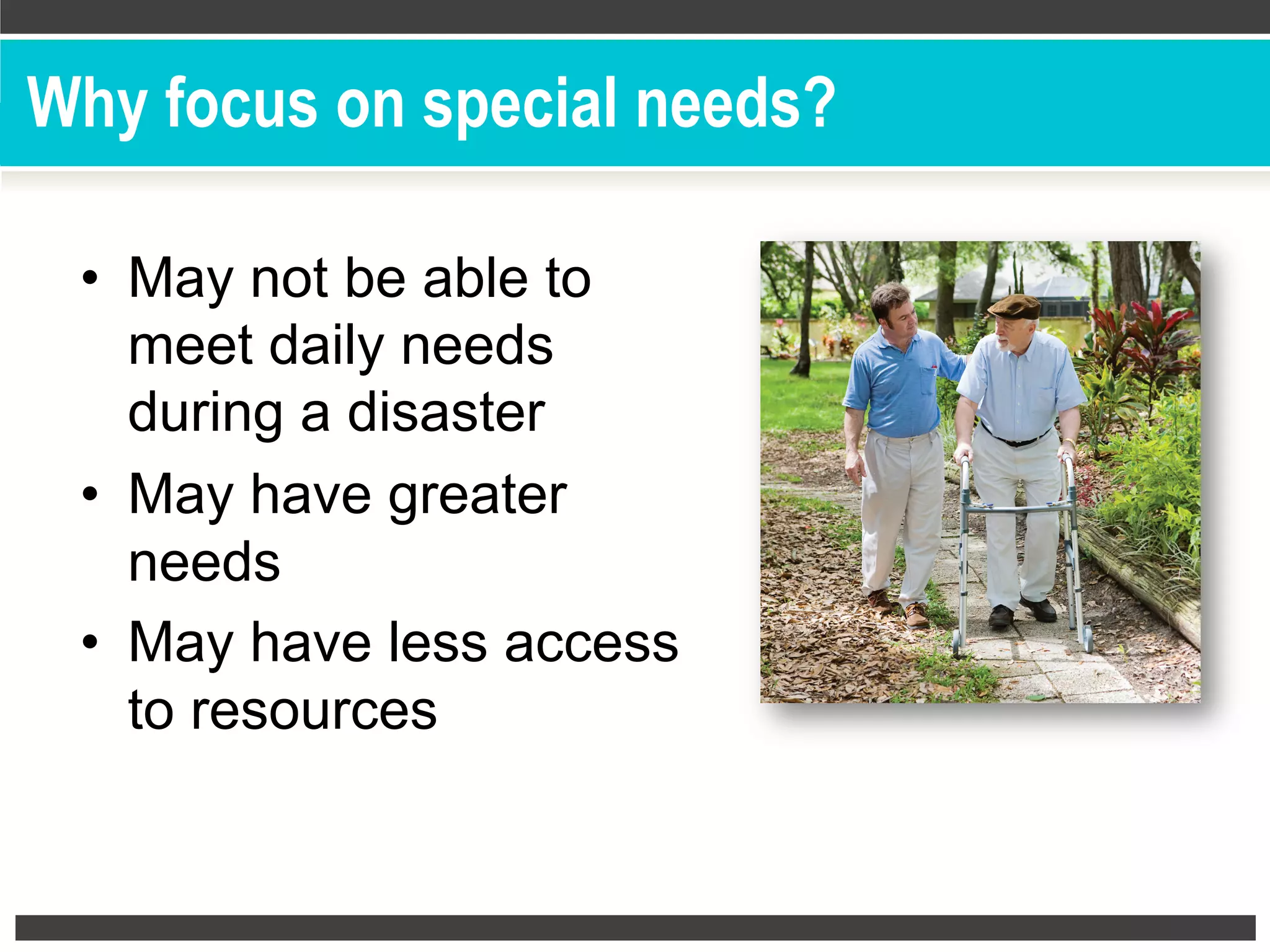
Why focus on special needs?
•  May not be able to
meet daily needs
during a disaster
•  May have greater
needs
•  May have less access
to resources
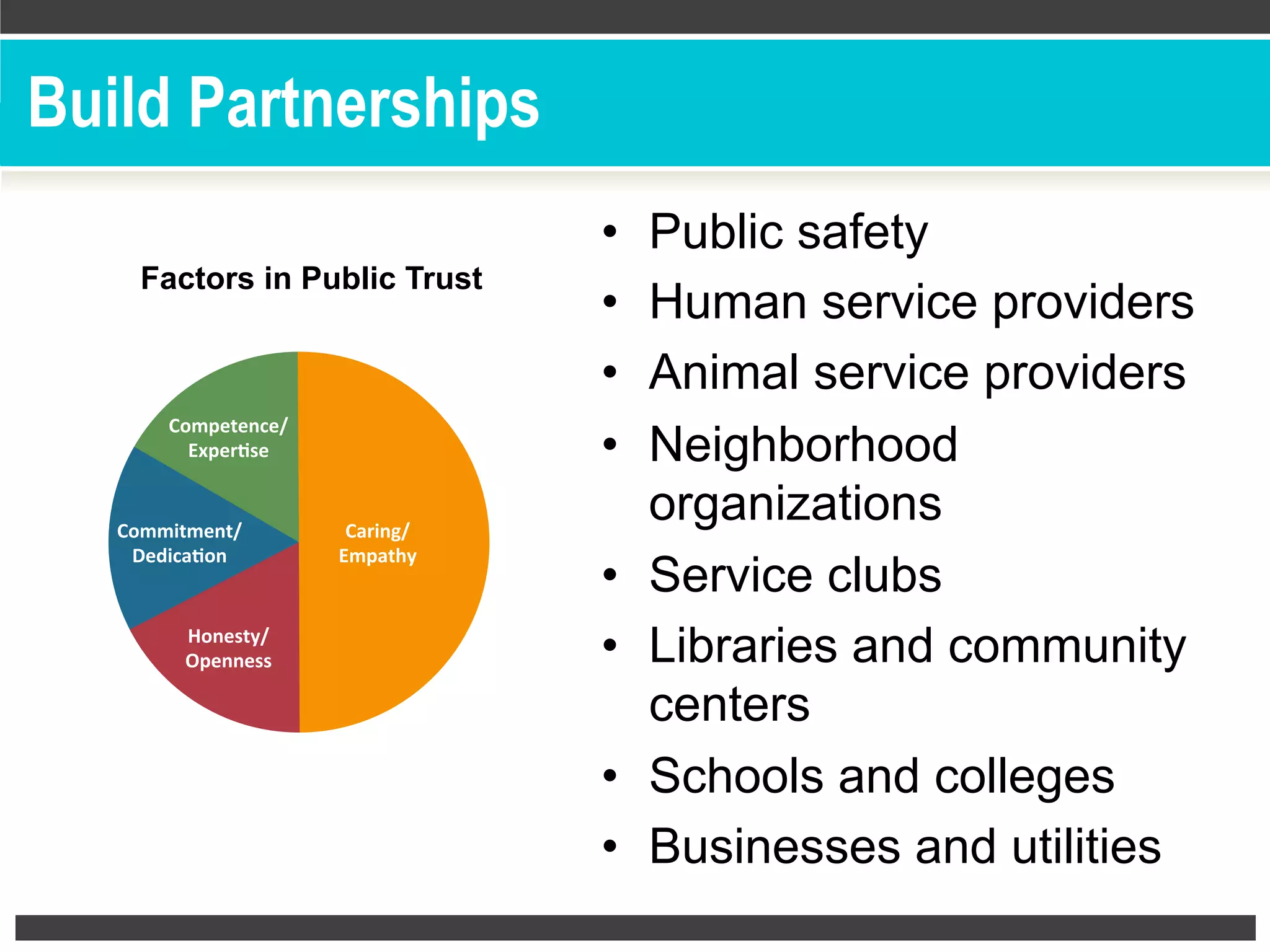
Build Partnerships
•  Public safety
•  Human service providers
•  Animal service providers
•  Neighborhood
organizations
•  Service clubs
•  Libraries and community
centers
•  Schools and colleges
•  Businesses and utilities
Competence/
Exper9se	
Commitment/
Dedica9on	
Honesty/
Openness	
Caring/	
Empathy	
Factors in Public Trust
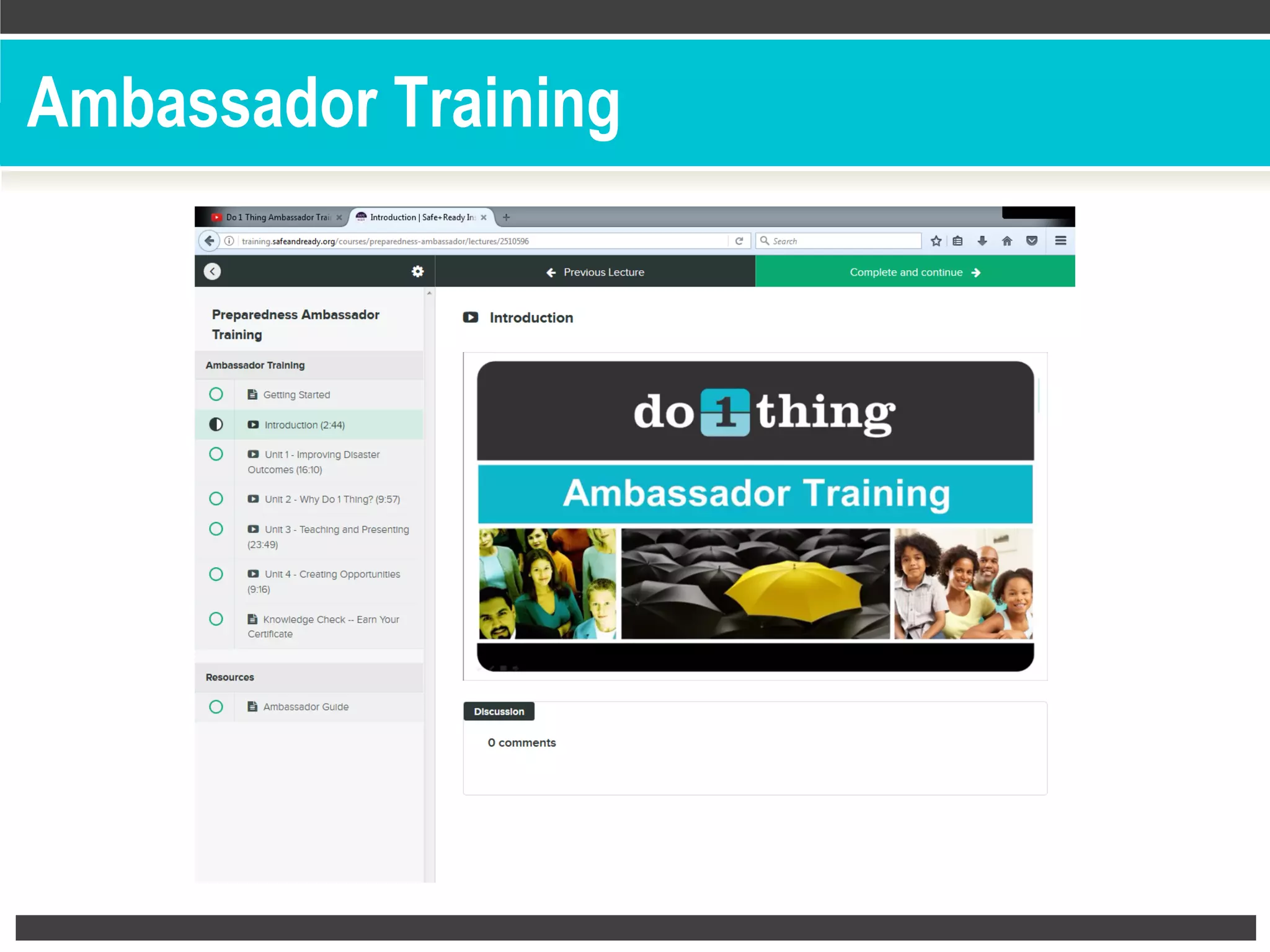
Ambassador Training
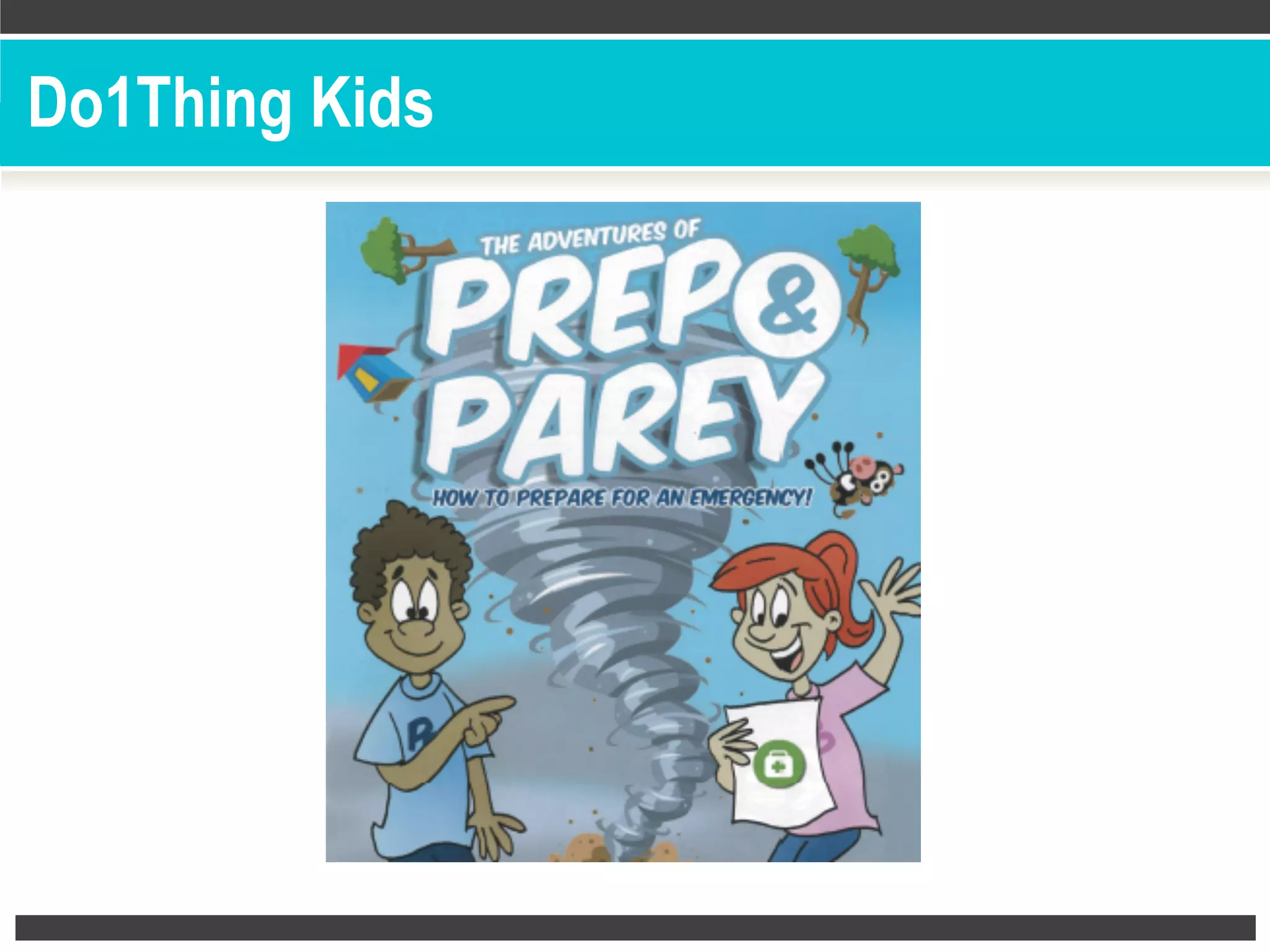
Do1Thing Kids
Do 1 Thing Partners
•  Public Agencies
•  Private Agencies
•  Non-Profits
•  Schools
•  Hospitals
•  Service Clubs
•  Organizations
•  Businesses
•  Families
•  Individuals
•  ANYONE who wants to get involved
How can you participate?
•  Teach a class in your
neighborhood or organization
•  Put the monthly topic in your
newsletter
•  Pass out Do1Thing calendars
or Kids activity books
•  Use our infographics in your
materials
•  Pass out factsheets
•  Make it a National
Preparedness Month project
•  Have a Do 1 Thing session at a
kids camp
•  Link back to our website
•  Follow us on social media and
repost/retweet us
•  Sign up as a partner and share
your successes on Facebook
•  Air our PSAs
Questions?
Contact:
Raynika Battle, MS
Executive Director
Do1Thing
City of Lansing
Office of Emergency Management
517-483-4561
raynika.battle@lansingmi.gov

Do 1 Thing program overview (Raynika Battle)

  • 2.
    Program Background •  Beganin 2006 •  City- Regional Partners •  National Awards & Recognition – International Association of Emergency Managers (Public Awareness) – FEMA (Awareness to Action) – CDC (Whole Community EM) – FEMA (Preparing the Whole Community)
  • 3.
    Monthly Subscriptions •  Newsletter-5,800 •  Partners- 800
  • 4.
    Survey Says… •  Aremore prepared because of the Do1Thing program70% •  Think the monthly email reminders are the most useful part of the program. 51% •  Think it is important for everyone to have an emergency plan.84%
  • 5.
    Survey Continued…. •  Havepromoted Do1Thing in some way.89% •  Believe the Do1Thing program can make a difference in their community 88% •  Are interested in participating in Emergency Management in their business 73%
  • 6.
    Benchmarks •  Everyone inthe community has access to information about risk and vulnerability that allows them to make informed decisions. •  Everybody has an opportunity to learn to become a better disaster decision maker.
  • 7.
    We know weneed to, but we don’t… •  Most families don’t have an emergency plan •  Most would not know what to do if told to “shelter in place” •  Many say they have done nothing to prepare
  • 8.
    Three most importantwords in preparedness?
  • 9.
    Reasons People Don’tPrepare Top reasons for not preparing: •  “Too Difficult” •  “Too Expensive” •  “Don’t know what to do”
  • 10.
    Disasters change things “Myfirst and greatest mistake, was not to have thought about flooding – and what it meant – before this… if you know what to expect, you can be better prepared.” Lisa Salinger from the VisionAware blog: “Emergency preparedness with blindness and visual impairment: A first- person account”
  • 11.
    What you reallyget in an emergency kit •  Self confidence (when you show yourself that you can do it) •  Better understanding of disaster (when you think about how it could affect you) •  A sense of control (when you have what you need in a disaster)
  • 12.
    Making better disasterdecision makers •  Acknowledging that people have a choice about preparing: – Engages them as active participants in disaster decision making process – Promotes a sense of personal responsibility – Empowers them – Helps personalize risk – Legitimizes their unique perspective – Shows respect
  • 13.
    Public Response •  52%of families don’t have an emergency plan •  51% would not know what to do if told to “shelter in place” •  36% say they have done nothing to prepare
  • 14.
  • 15.
    1 Awareness to Action CommunicatorAudience Outcome Provide information Receive Understand Believe Awareness Reinforce w/ text, pictures, maps, sources Personalize Confirm with others Weigh credibility Assess own ability Intention Clear directions Expected consequences Outcome expectancy Cost/Benefit Trust Action
  • 16.
    Normalcy Bias •  Overestimatingour abilities •  Underestimating the impact of disaster – Availability of resources – Environmental changes – Physical changes "When I got in the shower earlier today the sky was blue. When I got out, the sky was black.'' Alberta resident Sandra Hickey - Canadian Press
  • 18.
    The reason forrisk communication •  Crisis communication is more effective when it is preceded by effective risk communication. Risk Communication Crisis Communication IMPROVED DISASTER OUTCOMES +
  • 19.
    Risk Communication Goals • Reduce information seeking •  Reduce normalcy bias •  Improve sense making
  • 20.
    Why Do 1Thing? •  Easy •  Inexpensive •  Effective
  • 21.
    Disasters change things: youmay not have things that you take for granted every day (electricity, water, cell phones, grocery stores, 911, in- home assistance) Why Do 1 Thing?
  • 22.
    You are theonly one who can ensure your own safety and the safety of your family in a disaster Why Do 1 Thing?
  • 23.
    Why Do 1Thing? If you know that your family is taken care of, you will be better able to help your neighborhood and your community
  • 24.
    Why Do 1Thing? Every step you take in becoming prepared will help first responders, your loved ones, and others in your community
  • 26.
    You can becomebetter prepared in small steps.
  • 27.
    Visit www.do1thing.com anddownload the fact sheet for this month (or sign up for a monthly reminder). Step One
  • 28.
    Choose one thingfrom the list to do for your family or community. Step Two
  • 29.
    Do that onething. Step Three
  • 30.
    Do 1 ThingCalendar
  • 32.
    Do 1 ThingAccessible Materials •  Large Print Fact Sheets •  Language Translation •  Braille •  Audio Factsheets •  Low Literacy Factsheets
  • 33.
    Why focus onspecial needs? •  May not be able to meet daily needs during a disaster •  May have greater needs •  May have less access to resources
  • 35.
    Build Partnerships •  Publicsafety •  Human service providers •  Animal service providers •  Neighborhood organizations •  Service clubs •  Libraries and community centers •  Schools and colleges •  Businesses and utilities Competence/ Exper9se Commitment/ Dedica9on Honesty/ Openness Caring/ Empathy Factors in Public Trust
  • 36.
  • 37.
  • 38.
    Do 1 ThingPartners •  Public Agencies •  Private Agencies •  Non-Profits •  Schools •  Hospitals •  Service Clubs •  Organizations •  Businesses •  Families •  Individuals •  ANYONE who wants to get involved
  • 39.
    How can youparticipate? •  Teach a class in your neighborhood or organization •  Put the monthly topic in your newsletter •  Pass out Do1Thing calendars or Kids activity books •  Use our infographics in your materials •  Pass out factsheets •  Make it a National Preparedness Month project •  Have a Do 1 Thing session at a kids camp •  Link back to our website •  Follow us on social media and repost/retweet us •  Sign up as a partner and share your successes on Facebook •  Air our PSAs
  • 40.
    Questions? Contact: Raynika Battle, MS ExecutiveDirector Do1Thing City of Lansing Office of Emergency Management 517-483-4561 raynika.battle@lansingmi.gov