build resilience for
business and
personal success
Jeremy Canning
Business Coach
Pro-actions
agenda.
Resilience – what it is and why we need it
How to have more of it
Tools for the resilience kitbag
case studies – resilience in action
Making a plan
Q&A
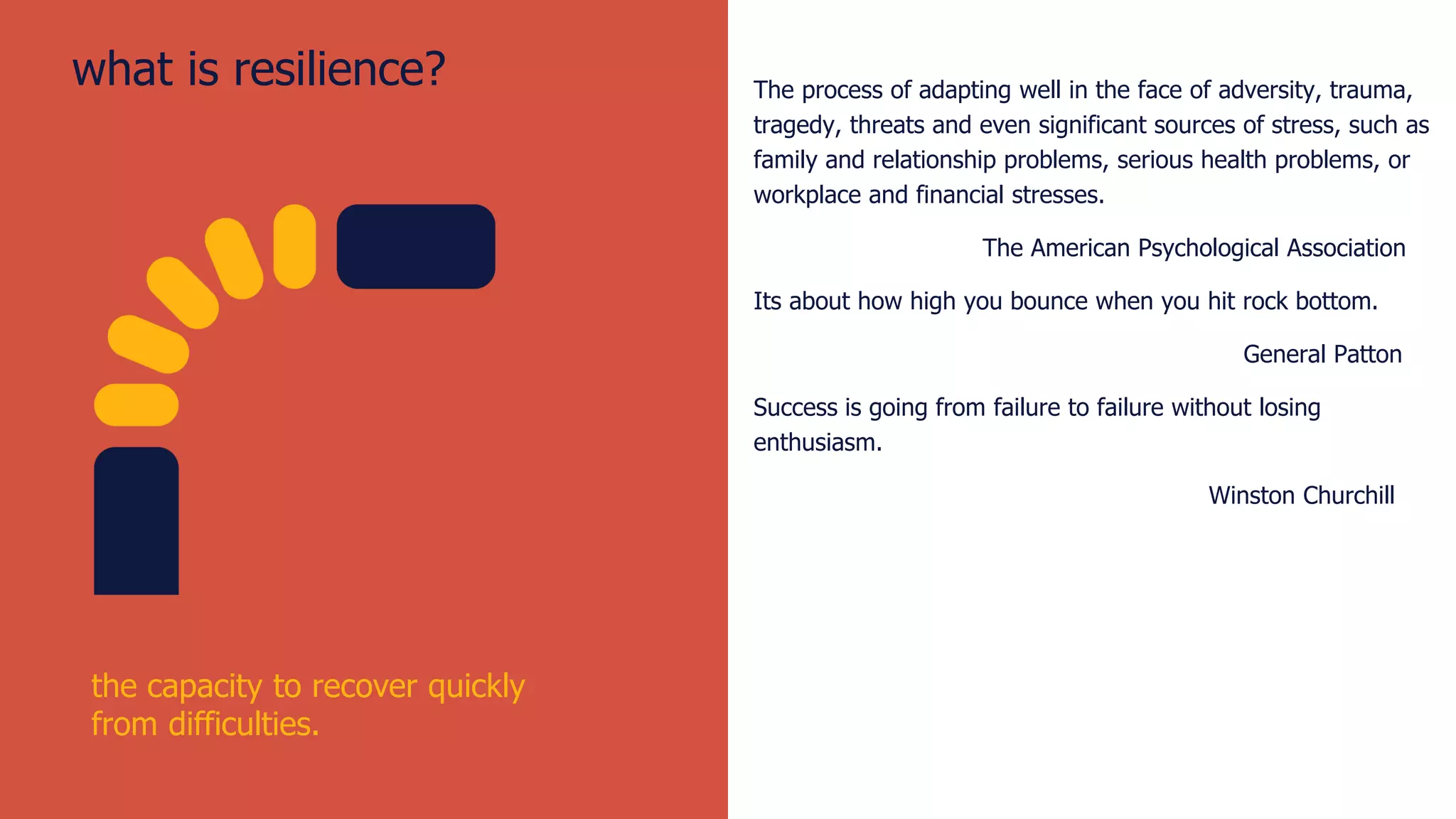
the capacity to recover quickly
from difficulties.
what is resilience? The process of adapting well in the face of adversity, trauma,
tragedy, threats and even significant sources of stress, such as
family and relationship problems, serious health problems, or
workplace and financial stresses.
The American Psychological Association
Its about how high you bounce when you hit rock bottom.
General Patton
Success is going from failure to failure without losing
enthusiasm.
Winston Churchill
Change is the
only constant in life.
- Heraclitus -
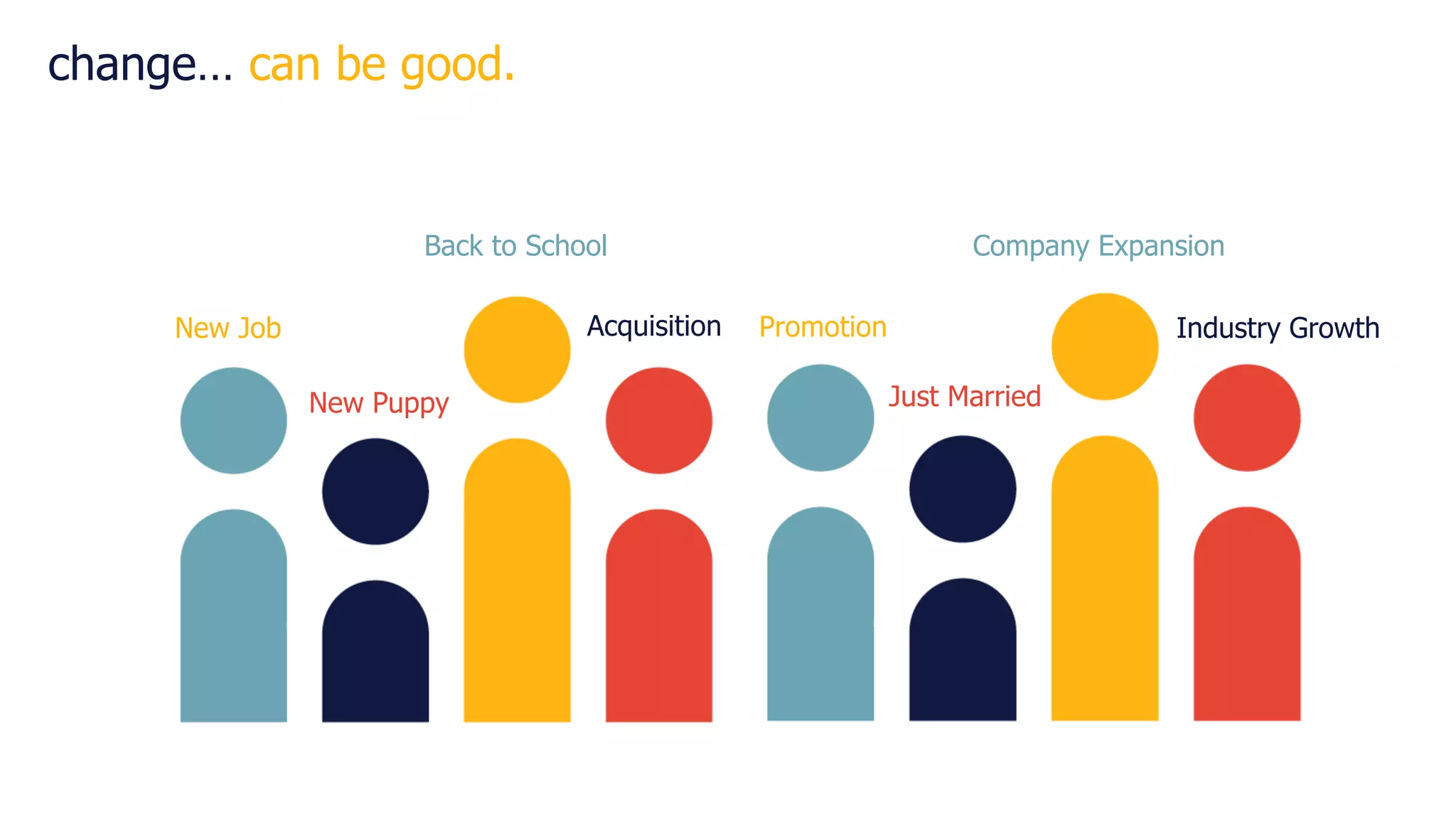
change… can be good.
Back to School
New Puppy Just Married
PromotionNew Job Acquisition
Company Expansion
Industry Growth
© Randstad RiseSmart | 6
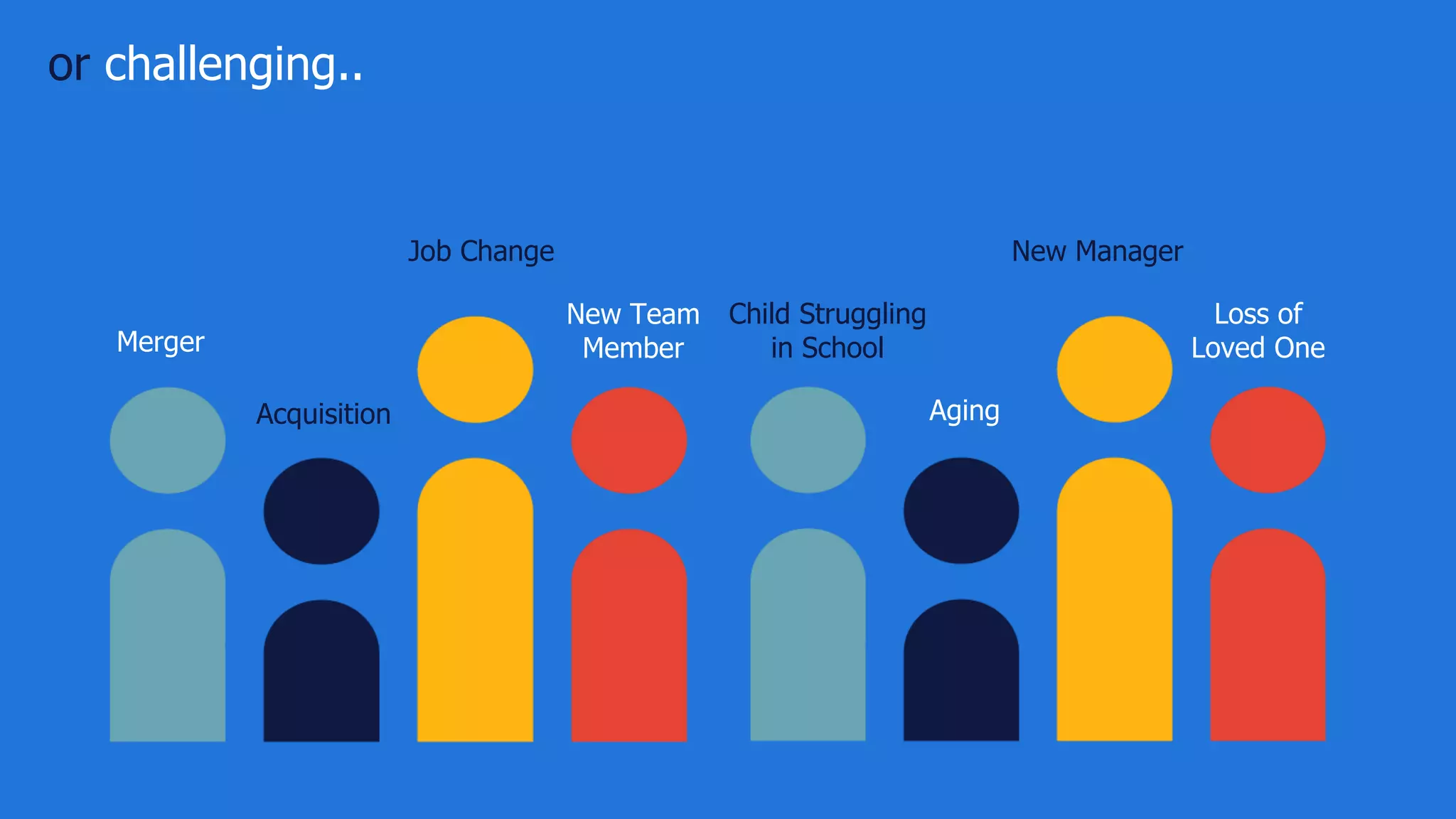
or challenging..
Job Change New Manager
Aging
New Team
MemberMerger
Acquisition
Child Struggling
in School
Loss of
Loved One
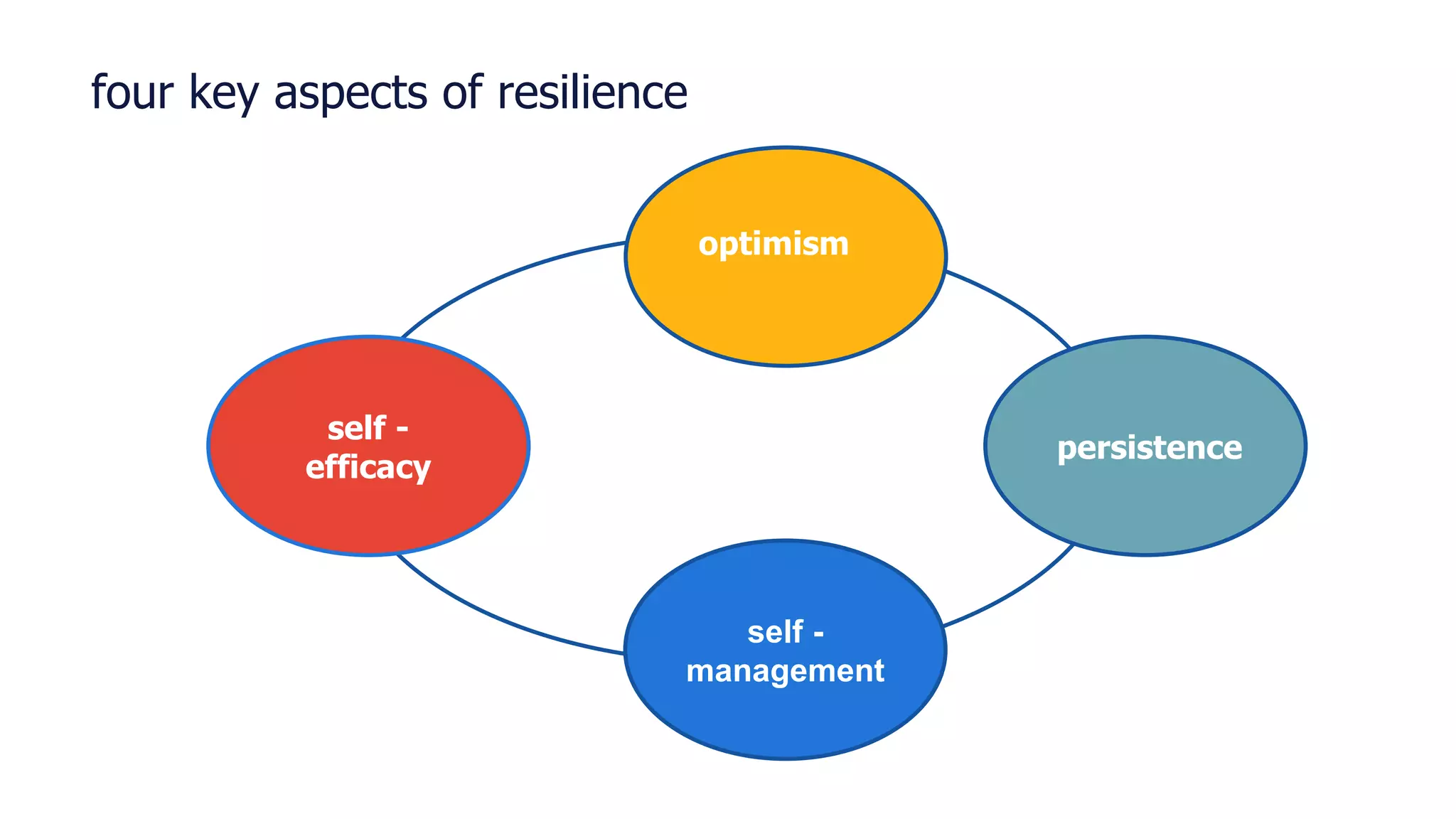
four key aspects of resilience
persistence
self -
management
self -
efficacy
optimism
optimism – how to boost it
1. Review your joys, achievements and successes
2. Think of three things you are looking forward to
today & tomorrow & next week. Take five
minutes to describe one in detail to yourself
3. Write down the best possible circumstances for
your future - include goals and dreams. Spend
five minutes vividly imagining it.
4. Brainstorm solutions with a friend/professional
persistence – how to raise it
1. Have a plan and manage your time
2. Focus on the things you can
control/influence
3. Establish helpful daily habits
4. Tick off completed tasks
5. Build rests and rewards into your plan
6. Identify potential obstacles and a
contingency plan
7. Establish and connect with your support
team
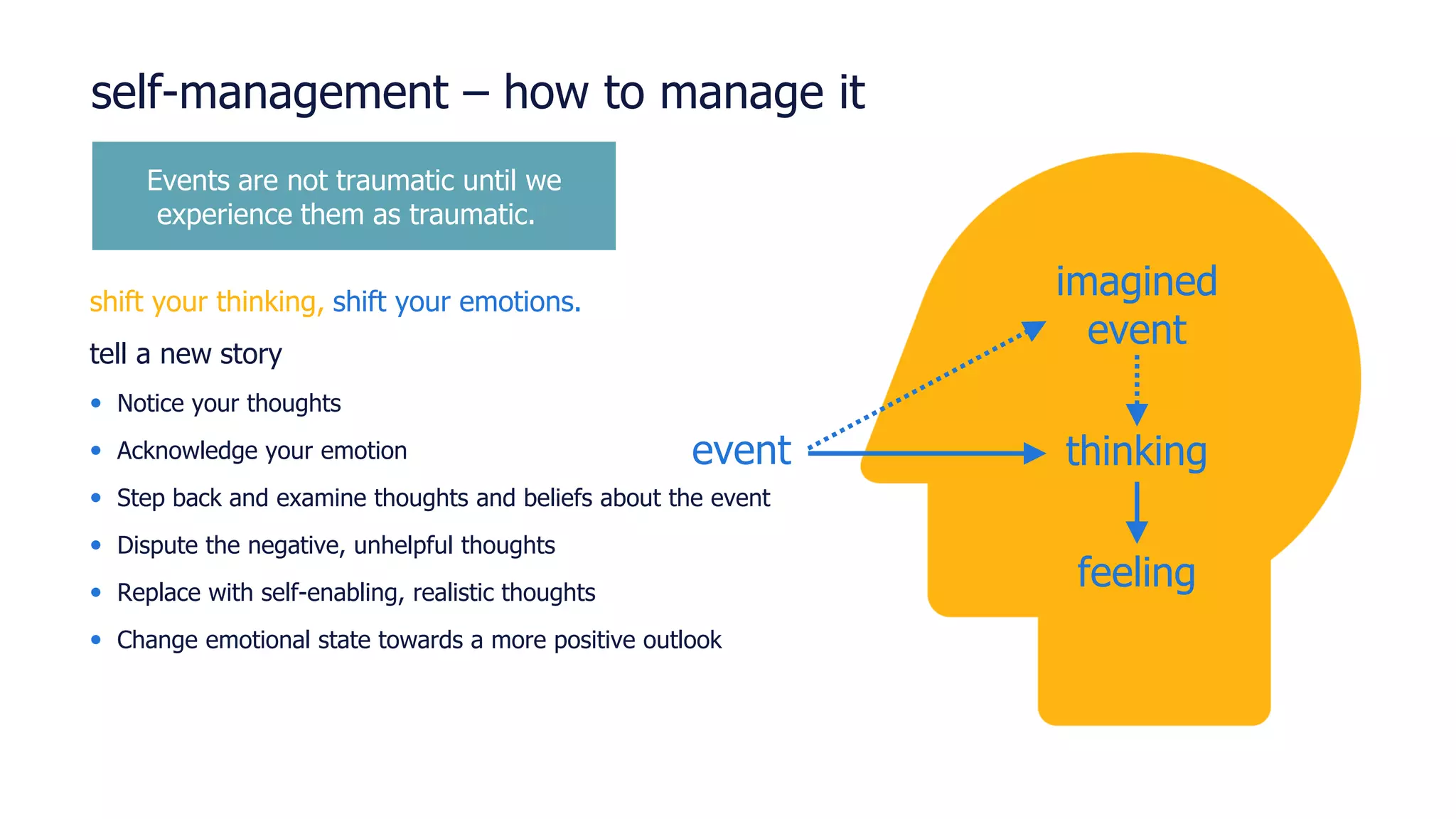
shift your thinking, shift your emotions.
tell a new story
• Notice your thoughts
• Acknowledge your emotion
• Step back and examine thoughts and beliefs about the event
• Dispute the negative, unhelpful thoughts
• Replace with self-enabling, realistic thoughts
• Change emotional state towards a more positive outlook
self-management – how to manage it
Events are not traumatic until we
experience them as traumatic.*
imagined
event
thinking
feeling
event
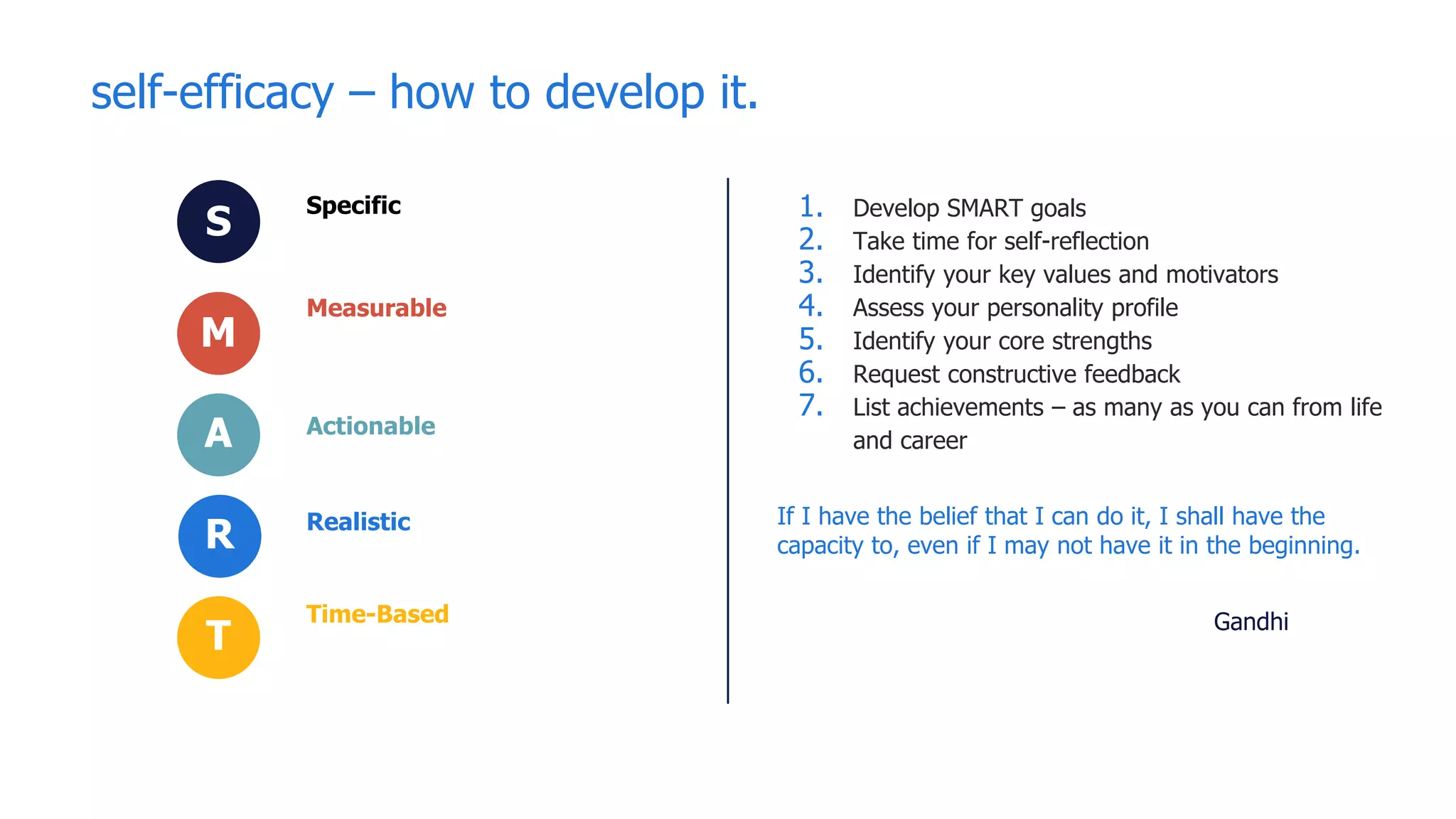
S
M
A
R
T
Specific
Measurable
Actionable
Realistic
Time-Based
self-efficacy – how to develop it.
1. Develop SMART goals
2. Take time for self-reflection
3. Identify your key values and motivators
4. Assess your personality profile
5. Identify your core strengths
6. Request constructive feedback
7. List achievements – as many as you can from life
and career
If I have the belief that I can do it, I shall have the
capacity to, even if I may not have it in the beginning.
Gandhi
what does a resilient person
look like?
❯ Bounces back from challenge/setbacks
❯ Engages actively in work and life
❯ Know their goals and purpose
❯ Understands their strengths
❯ Has a positive view of the future
❯ Focuses on what they can influence/control
❯ Collaborates with others, asks for support
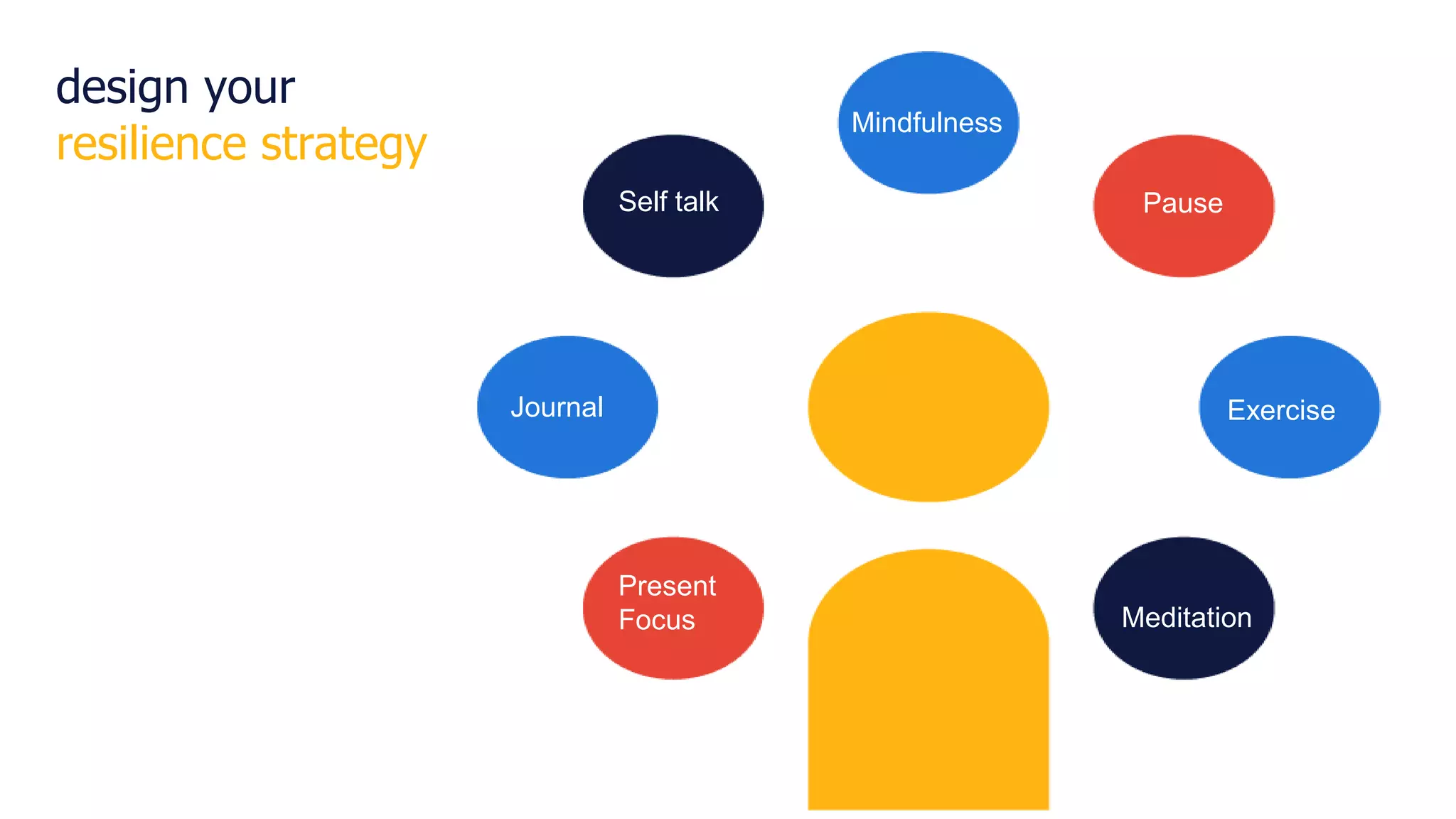
design your
resilience strategy
the object meditation.
mindfulness
self talk
Present
Focus
Journal
Mindfulness
Exercise
Self talk
Meditation
Pause
build resilience
power pose
design yourself
Claim your power with the Power Pose!
• Stand straight
• Feet shoulder width apart
• Fists on waist
• Chest puffed out
• I am …… !
© Randstad RiseSmart | 16
build resilience
applied mindfulness.
our minds Several studies show mindfulness increases positive
emotions while reducing negative emotions and stress
• Mindfulness changes our brains
Research has found that it increase density of gray matter in brain
regions linked to learning, memory, emotion regulation, and empathy.
• Mindfulness helps us focus
Studies suggest that mindfulness helps us tune out distractions and
improves our memory and attention skills.
• Mindfulness boost our immune system
One study found that just 8 weeks of mindfulness meditation can boost
our ability to fight off illness.
build resilience
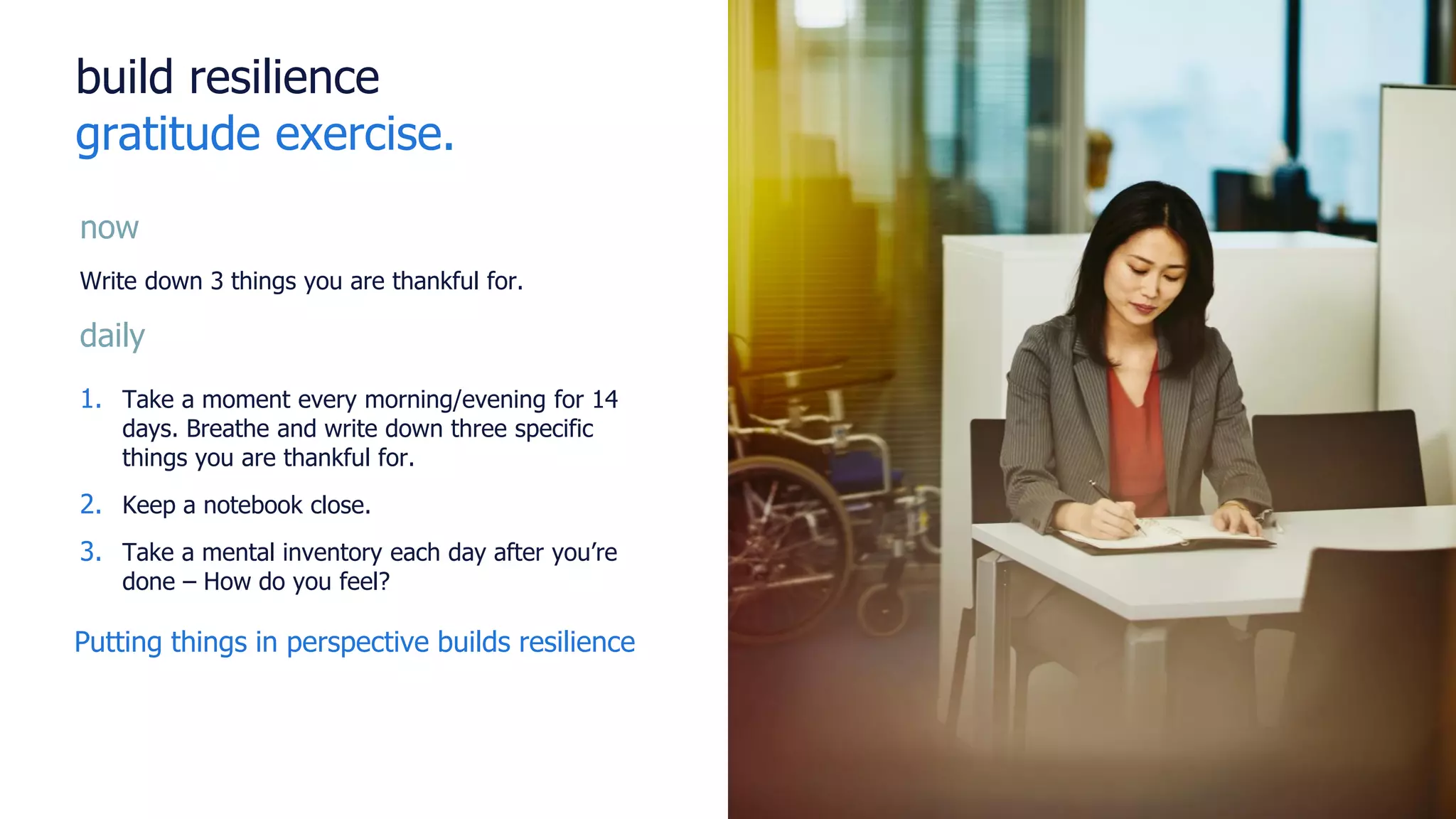
gratitude exercise.
now
Write down 3 things you are thankful for.
daily
1. Take a moment every morning/evening for 14
days. Breathe and write down three specific
things you are thankful for.
2. Keep a notebook close.
3. Take a mental inventory each day after you’re
done – How do you feel?
Putting things in perspective builds resilience
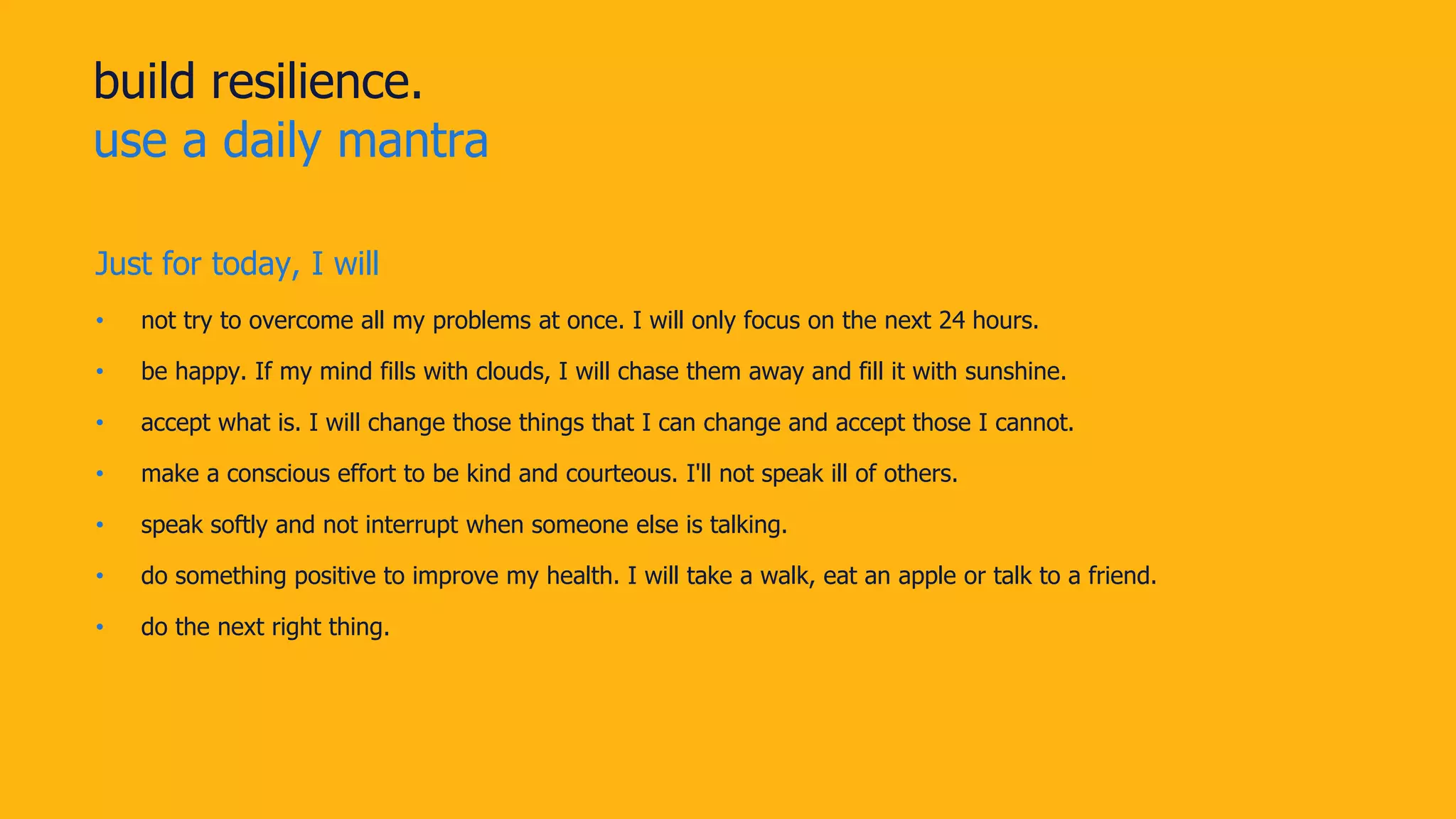
build resilience.
use a daily mantra
Just for today, I will
• not try to overcome all my problems at once. I will only focus on the next 24 hours.
• be happy. If my mind fills with clouds, I will chase them away and fill it with sunshine.
• accept what is. I will change those things that I can change and accept those I cannot.
• make a conscious effort to be kind and courteous. I'll not speak ill of others.
• speak softly and not interrupt when someone else is talking.
• do something positive to improve my health. I will take a walk, eat an apple or talk to a friend.
• do the next right thing.
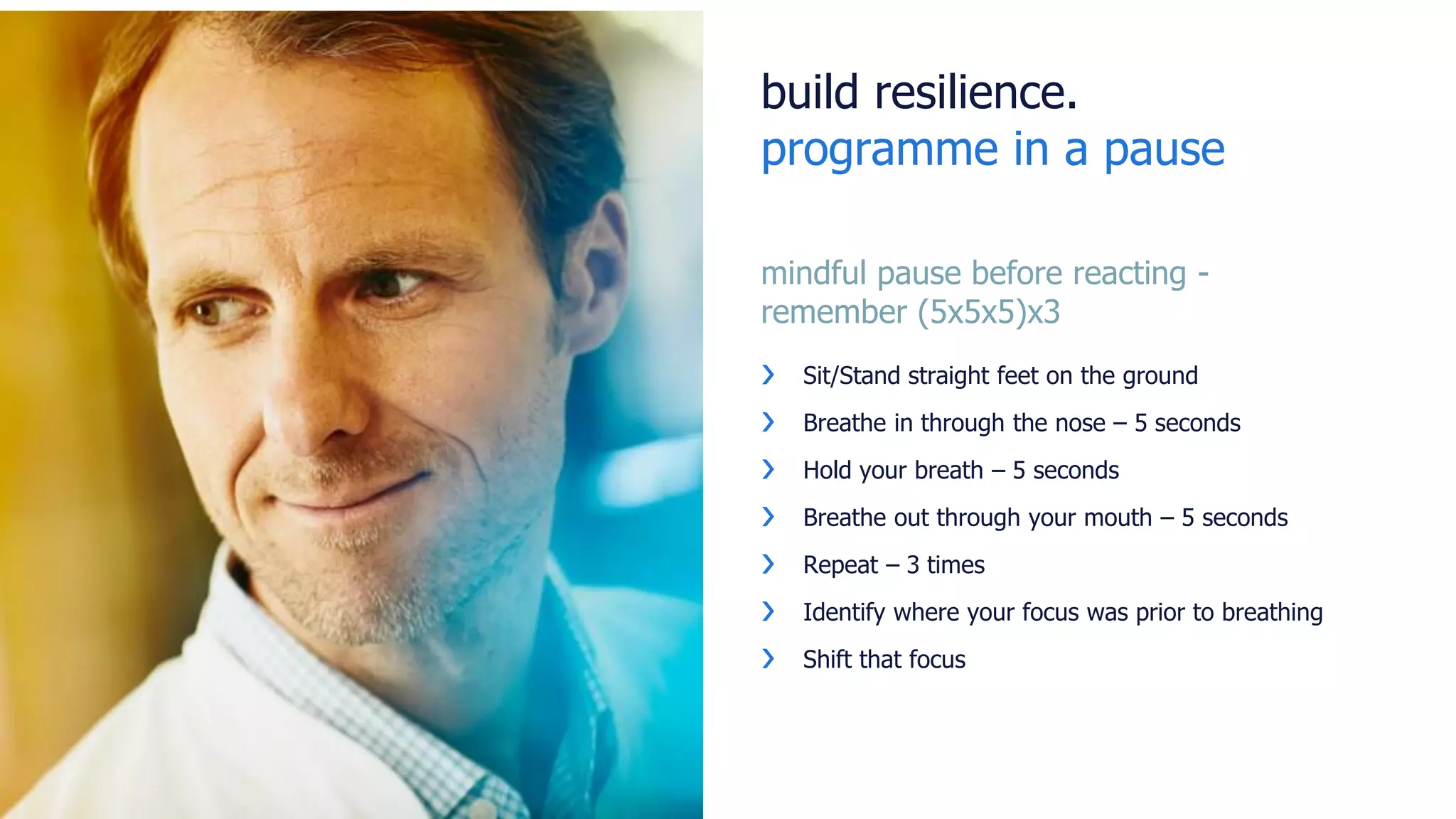
build resilience.
programme in a pause
mindful pause before reacting -
remember (5x5x5)x3
❯ Sit/Stand straight feet on the ground
❯ Breathe in through the nose – 5 seconds
❯ Hold your breath – 5 seconds
❯ Breathe out through your mouth – 5 seconds
❯ Repeat – 3 times
❯ Identify where your focus was prior to breathing
❯ Shift that focus
build resilience.
certainty anchors
a daily practice
e.g. a walk – in the garden, with the dog,
to music or a podcast, calling a friend
• centers
• recharges
• grounds
• Connects
space to problem-solve and create
© Randstad RiseSmart | 22
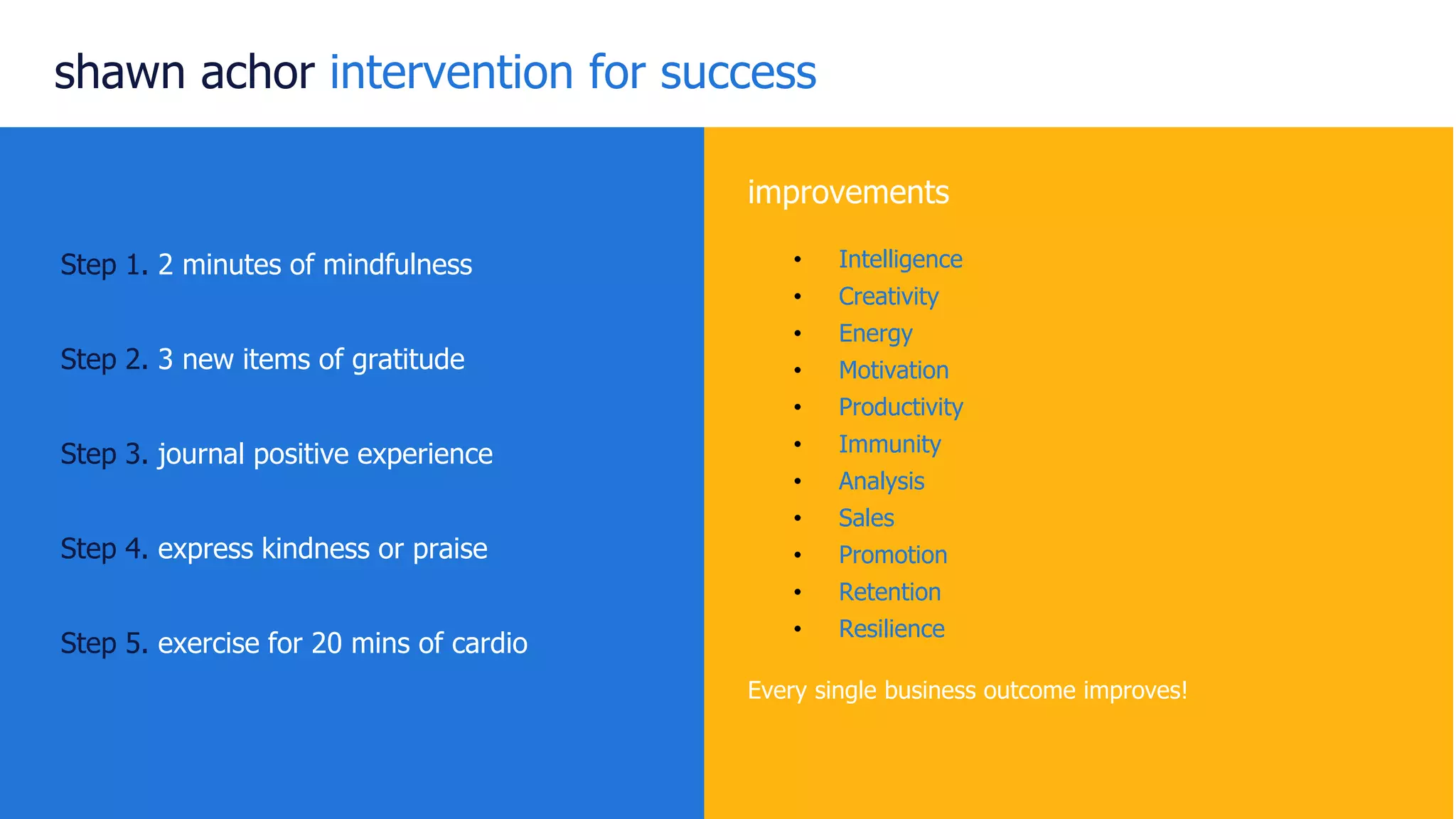
shawn achor intervention for success
Step 1. 2 minutes of mindfulness
Step 2. 3 new items of gratitude
Step 3. journal positive experience
Step 4. express kindness or praise
Step 5. exercise for 20 mins of cardio
improvements
• Intelligence
• Creativity
• Energy
• Motivation
• Productivity
• Immunity
• Analysis
• Sales
• Promotion
• Retention
• Resilience
Every single business outcome improves!
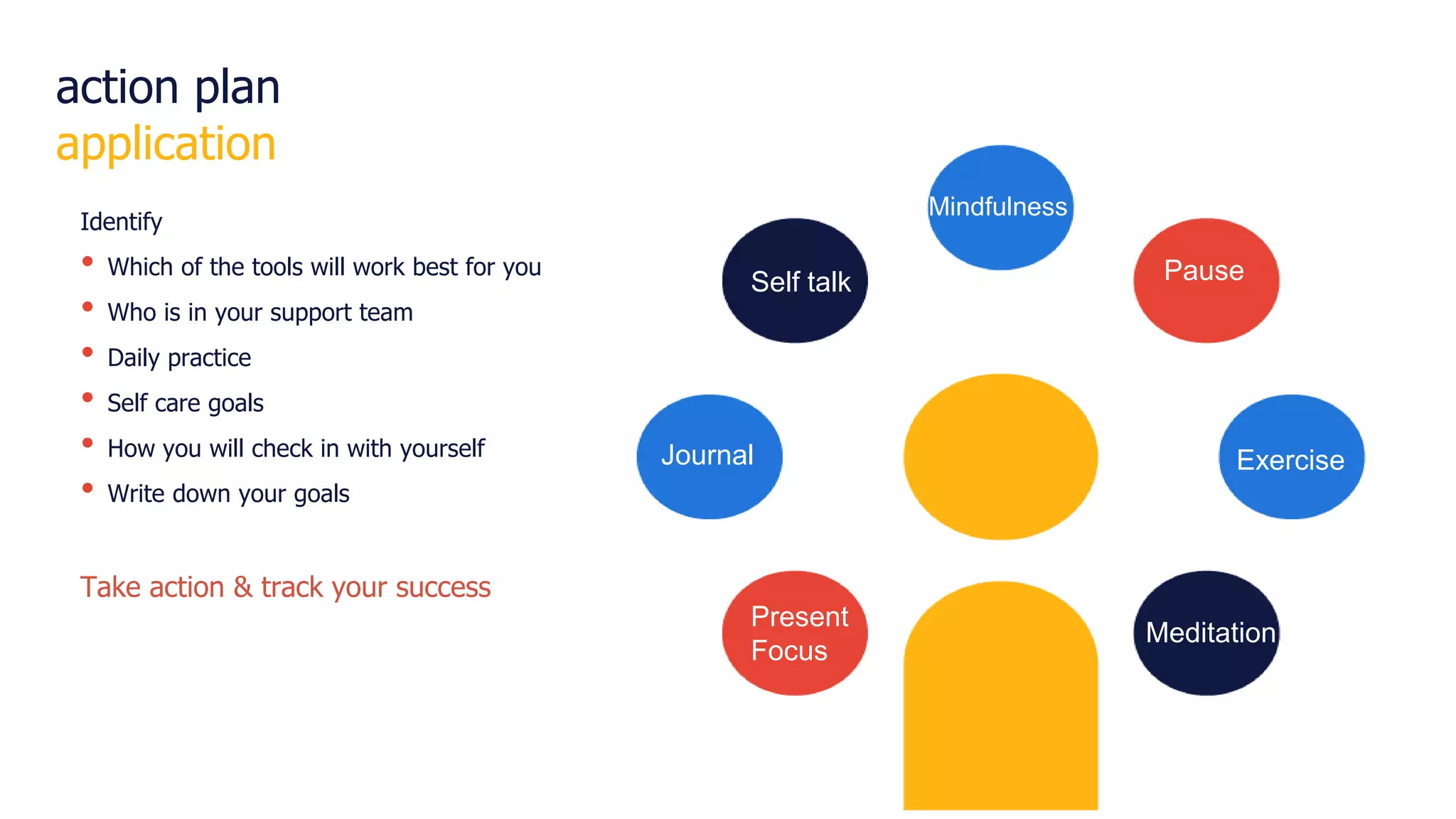
action plan
application
the object meditation.mindfulness
self talk
Present
Focus
Journal
Mindfulness
Exercise
Self talk
Meditation
Pause
Identify
• Which of the tools will work best for you
• Who is in your support team
• Daily practice
• Self care goals
• How you will check in with yourself
• Write down your goals
Take action & track your success
References and further reading
• Anchor, S. (2010), The happiness advantage: the seven principles of positive psychology that fuel success
and performance at work. Random House: New York
• Cuddy, A. (2016), Presence: Bringing your boldest self to your biggest challenges. Orion Publishing:
London
• Duckworth, A. (2016), Grit: the power of passion and perseverance. Scribner: New York.
• Rath, T. (2007). Strengths Finder 2.0, Gallup: New York
• Seligman, M. (2018). Learned Optimism: How to change your mind and your life. Nicholas Brealey
Publishing: London
• Seligman, M. (2017). Authentic happiness- using the new positive psychology to release your potential for
lasting fulfilment. (2017). Simon and Schuster: New York
• Williams, W. (2018). The effortless mind. Simon and Schuster: London
• Take the Big Five Personality Assessment in the portal
• www.viacharacter.org
• www.16personalities.com/free-personality
• www.gallup.com/cliftonstrengths/en/strengthsfinder.aspx
• www.authentichappiness.org
Jeremy Canning
07884 549 884
jeremy.canning@pro-actions.com

Building Resilience - 30th September 2020

  • 1.
    build resilience for businessand personal success Jeremy Canning Business Coach Pro-actions
  • 2.
    agenda. Resilience – whatit is and why we need it How to have more of it Tools for the resilience kitbag case studies – resilience in action Making a plan Q&A
  • 3.
    the capacity torecover quickly from difficulties. what is resilience? The process of adapting well in the face of adversity, trauma, tragedy, threats and even significant sources of stress, such as family and relationship problems, serious health problems, or workplace and financial stresses. The American Psychological Association Its about how high you bounce when you hit rock bottom. General Patton Success is going from failure to failure without losing enthusiasm. Winston Churchill
  • 4.
    Change is the onlyconstant in life. - Heraclitus -
  • 5.
    change… can begood. Back to School New Puppy Just Married PromotionNew Job Acquisition Company Expansion Industry Growth
  • 6.
    © Randstad RiseSmart| 6 or challenging.. Job Change New Manager Aging New Team MemberMerger Acquisition Child Struggling in School Loss of Loved One
  • 7.
    four key aspectsof resilience persistence self - management self - efficacy optimism
  • 8.
    optimism – howto boost it 1. Review your joys, achievements and successes 2. Think of three things you are looking forward to today & tomorrow & next week. Take five minutes to describe one in detail to yourself 3. Write down the best possible circumstances for your future - include goals and dreams. Spend five minutes vividly imagining it. 4. Brainstorm solutions with a friend/professional
  • 9.
    persistence – howto raise it 1. Have a plan and manage your time 2. Focus on the things you can control/influence 3. Establish helpful daily habits 4. Tick off completed tasks 5. Build rests and rewards into your plan 6. Identify potential obstacles and a contingency plan 7. Establish and connect with your support team
  • 10.
    shift your thinking,shift your emotions. tell a new story • Notice your thoughts • Acknowledge your emotion • Step back and examine thoughts and beliefs about the event • Dispute the negative, unhelpful thoughts • Replace with self-enabling, realistic thoughts • Change emotional state towards a more positive outlook self-management – how to manage it Events are not traumatic until we experience them as traumatic.* imagined event thinking feeling event
  • 11.
    S M A R T Specific Measurable Actionable Realistic Time-Based self-efficacy – howto develop it. 1. Develop SMART goals 2. Take time for self-reflection 3. Identify your key values and motivators 4. Assess your personality profile 5. Identify your core strengths 6. Request constructive feedback 7. List achievements – as many as you can from life and career If I have the belief that I can do it, I shall have the capacity to, even if I may not have it in the beginning. Gandhi
  • 12.
    what does aresilient person look like? ❯ Bounces back from challenge/setbacks ❯ Engages actively in work and life ❯ Know their goals and purpose ❯ Understands their strengths ❯ Has a positive view of the future ❯ Focuses on what they can influence/control ❯ Collaborates with others, asks for support
  • 13.
    design your resilience strategy theobject meditation. mindfulness self talk Present Focus Journal Mindfulness Exercise Self talk Meditation Pause
  • 14.
    build resilience power pose designyourself Claim your power with the Power Pose! • Stand straight • Feet shoulder width apart • Fists on waist • Chest puffed out • I am …… !
  • 15.
    © Randstad RiseSmart| 16 build resilience applied mindfulness. our minds Several studies show mindfulness increases positive emotions while reducing negative emotions and stress • Mindfulness changes our brains Research has found that it increase density of gray matter in brain regions linked to learning, memory, emotion regulation, and empathy. • Mindfulness helps us focus Studies suggest that mindfulness helps us tune out distractions and improves our memory and attention skills. • Mindfulness boost our immune system One study found that just 8 weeks of mindfulness meditation can boost our ability to fight off illness.
  • 16.
    build resilience gratitude exercise. now Writedown 3 things you are thankful for. daily 1. Take a moment every morning/evening for 14 days. Breathe and write down three specific things you are thankful for. 2. Keep a notebook close. 3. Take a mental inventory each day after you’re done – How do you feel? Putting things in perspective builds resilience
  • 17.
    build resilience. use adaily mantra Just for today, I will • not try to overcome all my problems at once. I will only focus on the next 24 hours. • be happy. If my mind fills with clouds, I will chase them away and fill it with sunshine. • accept what is. I will change those things that I can change and accept those I cannot. • make a conscious effort to be kind and courteous. I'll not speak ill of others. • speak softly and not interrupt when someone else is talking. • do something positive to improve my health. I will take a walk, eat an apple or talk to a friend. • do the next right thing.
  • 18.
    build resilience. programme ina pause mindful pause before reacting - remember (5x5x5)x3 ❯ Sit/Stand straight feet on the ground ❯ Breathe in through the nose – 5 seconds ❯ Hold your breath – 5 seconds ❯ Breathe out through your mouth – 5 seconds ❯ Repeat – 3 times ❯ Identify where your focus was prior to breathing ❯ Shift that focus
  • 19.
    build resilience. certainty anchors adaily practice e.g. a walk – in the garden, with the dog, to music or a podcast, calling a friend • centers • recharges • grounds • Connects space to problem-solve and create
  • 20.
    © Randstad RiseSmart| 22 shawn achor intervention for success Step 1. 2 minutes of mindfulness Step 2. 3 new items of gratitude Step 3. journal positive experience Step 4. express kindness or praise Step 5. exercise for 20 mins of cardio improvements • Intelligence • Creativity • Energy • Motivation • Productivity • Immunity • Analysis • Sales • Promotion • Retention • Resilience Every single business outcome improves!
  • 21.
    action plan application the objectmeditation.mindfulness self talk Present Focus Journal Mindfulness Exercise Self talk Meditation Pause Identify • Which of the tools will work best for you • Who is in your support team • Daily practice • Self care goals • How you will check in with yourself • Write down your goals Take action & track your success
  • 22.
    References and furtherreading • Anchor, S. (2010), The happiness advantage: the seven principles of positive psychology that fuel success and performance at work. Random House: New York • Cuddy, A. (2016), Presence: Bringing your boldest self to your biggest challenges. Orion Publishing: London • Duckworth, A. (2016), Grit: the power of passion and perseverance. Scribner: New York. • Rath, T. (2007). Strengths Finder 2.0, Gallup: New York • Seligman, M. (2018). Learned Optimism: How to change your mind and your life. Nicholas Brealey Publishing: London • Seligman, M. (2017). Authentic happiness- using the new positive psychology to release your potential for lasting fulfilment. (2017). Simon and Schuster: New York • Williams, W. (2018). The effortless mind. Simon and Schuster: London • Take the Big Five Personality Assessment in the portal • www.viacharacter.org • www.16personalities.com/free-personality • www.gallup.com/cliftonstrengths/en/strengthsfinder.aspx • www.authentichappiness.org
  • 23.
    Jeremy Canning 07884 549884 jeremy.canning@pro-actions.com