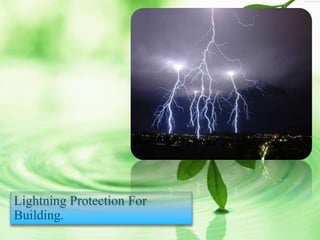
Lightning Protection For
Building.
CONTENTS
 Definition.
 Different Standards.
 Procedure.
 Case Study-JOKA
Station building.
DEFINITION
Protection from physical damage
of structure, equipments,
human life from step and
touch voltage due to external
lightning ; is termed as
lightning protection.
LIGHTNING CURRENT AS A SOURCE OF DAMAGE
 Flash to the structure.
 Flash near to the structure.
 Flash to service connection to the structure.
 Flash near a service connection to the structure
 R1=Risk of loss of a Human life .
 R2=Risk of loss of service to public.
 R3= Risk of loss of cultural heritage.
 R4=Risk of loss of economic value.
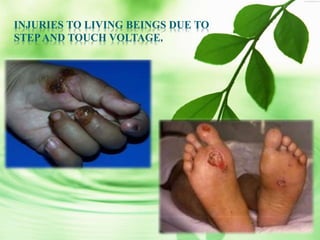
INJURIES TO LIVING BEINGS DUE TO
STEPAND TOUCH VOLTAGE.
DIFFERENT STANDARDS
 IS 2309:1989.
 BS 6651. (withdrawn August 2008)
 BS EN/IEC 62305.
 NFPA 780:2014.
DIFFERENCE BETWEEN BS 6651 AND BS EN/IEC 62305
BS 6651 Std (withdrawn Aug:2008) BS EN/IEC 62305
Focus on protection of the structure against lightning. Broader focus on protection against lightning including the
structure and service connected to the structure.
Specific tables relating to choice and dimension of LPS
components and conductors.
Specific tables relating to sizes to types of conductor and earth
electrodes. LPS components-specifically related to BS EN
50164. IEC 62561 testing regimes.
General advice(recommendation) for protection of electronic
equipment with separate risk assessment.
BS EN/IEC 62305-4 is devoted entirely to protection of electric
and electronic system within the structure and implemented
through a single separate risk assessment.
Risk level set at 1 in 100,000 based on comparable exposures. 3 primary risk levels defined.
R1:Loss of Human Life.
R2:Loss of service to the public. R3: Loss of Cultural Heritage.
Mesh arrangement is promoted as the company used means of
air termination network.
Mesh arrangement, protective angle method, catenary system,
extensive use of air finials, all form part of or all of air
termination network.
2 levels of lightning Protection mesh design:
(20MX 10 M , 10M X 5 M)
4 sizes of mesh defined according to structural class of lightning
protection system.
Class I 5 M X 5 M , Class II 10 M X 10 M , Class III 15 M X
15 M Class IV 20 M X 20 M .
2 levels of down conductor spacing. 20M and 10 M 4 levels of down conductor spacing.
Class I 10 M, Class II 10 M , Class III 15 M Class IV 20 M
DIFFERENCE BETWEEN IS 2309:1989 AND BS EN/IEC 62305
IS 2309 BS EN/IEC 62305
Is 2309 was first issued in 1963. Revised in
1969. Not a specification, gives
recommendation and guidance. IS
2309:1989(Second Revision) prepared based on
assistance derived from BS 6651:1985 and
reformed in 2010.
BS 6651: 1989 then 1999 supersedes BS
6651:1985. For a finite period BS/EN/IEC
62305 and BS 6651 ran in parallel. As of August
2008 BS 6651 was withdrawn. Now BS EN/IEC
62305 is the recognized standard for lightning.
Protection of structure have been considered.
No risk on living being has been considered.
Injuries of living being caused by electric shock
inside the structure are considered since 2010.
There is no classification of protection level
The current level calculated based on the
probability.
Four lightning protection level has been used.
For each LPL as set of maximum and minimum
lightning current parameter is fixed.
Collection Area Collection Area
22
2
2 (3 ) ( ) (3 )cA L W H L H H        
2
2 ( ) 2 ( )cA L W L W W H H        
IS 2309 BS EN/IEC 62305
Risk is estimated on the following factors
(a) Use of structure (purpose)
(b) Type construction
(c) Contents
(d) Degree of isolation
(e) Type of (hill/ etc)
The risk to be evaluated in a structure may be as
follow R1=Risk of loss of a Human life
R2=Risk of loss of service to public
R3= Risk of loss of cultural heritage
R4=Risk of loss of economic value.
Each risk has fail component.
(a) due to flash on to the structure
(b) flash on near the structure
(c) Flash on to a line connected to a structure
(d) Flash near a line connected to the structure
Protection needed if risk factor is more than
10-5
Tolerable risk RT
(a) loses of human life or permanent injuries 10-5
(b) loss of service to the 10-3
(c) loss of cultured heritage 10-4
IS 2309 BS EN/IEC 62305
poisoning of air termination system is based on
(a) Protective angle method
(b) Mesh method
(c) Wire air termination method
In IEC Rolling sphere method is added to three
method in IS
In protective angle method no relation of angle
vs height considered.
In this method there is relation between height
and protective angle with class of protection
shown in fig. below.
IS 2309 BS EN/IEC 62305
In mesh method, mesh size is not
mentioned above 20 m height.
Mesh size is mentioned for each class of
protection.
Down conductor requirement for less
than 20 m height is mentioned but above
20 m height is not mentioned.
Down conductor requirement is clearly
mentioned for each class of protection.
Mesh method is not applicable for sloped
structure.
PROCEDURE
Risk
Calculation
Selection of
Lightning
Protection Scheme.
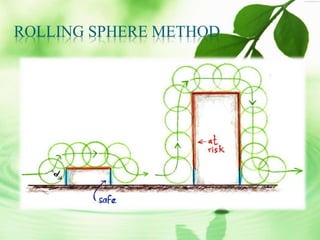
Rolling Sphere
Method.
Protective Angle
Method.
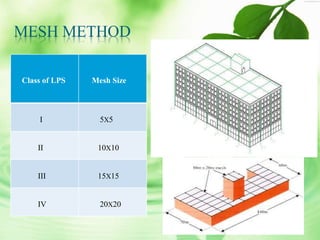
Mesh Method.
RISK CALCULATION
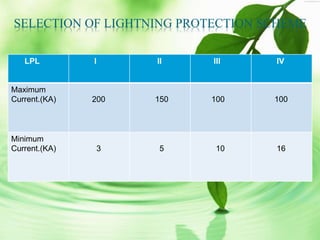
SELECTION OF LIGHTNING PROTECTION SCHEME
LPL I II III IV
Maximum
Current.(KA) 200 150 100 100
Minimum
Current.(KA) 3 5 10 16
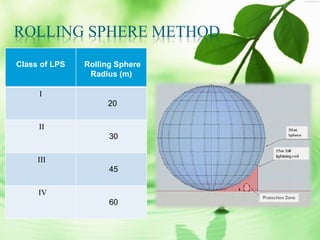
ROLLING SPHERE METHOD
Class of LPS Rolling Sphere
Radius (m)
I
20
II
30
III
45
IV
60
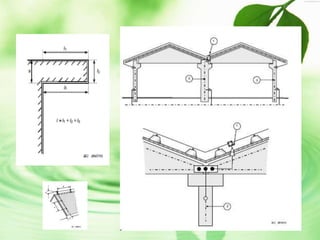
PROTECTIVE ANGLE METHOD
MESH METHOD
Class of LPS Mesh Size
I 5X5
II 10X10
III 15X15
IV 20X20
IRON STRUCTURE AS ELECTRODE
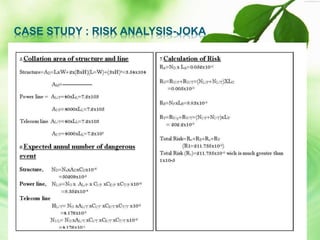
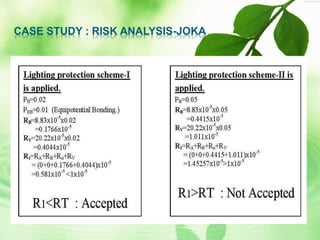
CASE STUDY : RISK ANALYSIS-JOKA
CASE STUDY : JOKA
Instant 1
DDC
Design
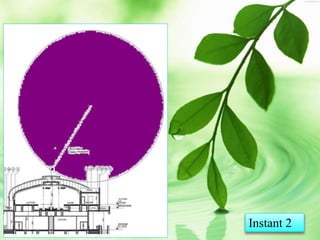
Instant 2
Instant 3
CHANGING POSITION OF AIR TERMINATION
Proposed
Design
CHANGING POSITION OF AIR TERMINATION
For All rolling sphere
position building is safe
Height of Air termination
rod used is 1.5 M.
THANK YOU

Building lightning protection for Metro Railway

  • 1.
  • 2.
    CONTENTS  Definition.  DifferentStandards.  Procedure.  Case Study-JOKA Station building.
  • 3.
    DEFINITION Protection from physicaldamage of structure, equipments, human life from step and touch voltage due to external lightning ; is termed as lightning protection.
  • 4.
    LIGHTNING CURRENT ASA SOURCE OF DAMAGE  Flash to the structure.  Flash near to the structure.  Flash to service connection to the structure.  Flash near a service connection to the structure
  • 5.
     R1=Risk ofloss of a Human life .  R2=Risk of loss of service to public.  R3= Risk of loss of cultural heritage.  R4=Risk of loss of economic value.
  • 7.
    INJURIES TO LIVINGBEINGS DUE TO STEPAND TOUCH VOLTAGE.
  • 8.
    DIFFERENT STANDARDS  IS2309:1989.  BS 6651. (withdrawn August 2008)  BS EN/IEC 62305.  NFPA 780:2014.
  • 9.
    DIFFERENCE BETWEEN BS6651 AND BS EN/IEC 62305 BS 6651 Std (withdrawn Aug:2008) BS EN/IEC 62305 Focus on protection of the structure against lightning. Broader focus on protection against lightning including the structure and service connected to the structure. Specific tables relating to choice and dimension of LPS components and conductors. Specific tables relating to sizes to types of conductor and earth electrodes. LPS components-specifically related to BS EN 50164. IEC 62561 testing regimes. General advice(recommendation) for protection of electronic equipment with separate risk assessment. BS EN/IEC 62305-4 is devoted entirely to protection of electric and electronic system within the structure and implemented through a single separate risk assessment. Risk level set at 1 in 100,000 based on comparable exposures. 3 primary risk levels defined. R1:Loss of Human Life. R2:Loss of service to the public. R3: Loss of Cultural Heritage. Mesh arrangement is promoted as the company used means of air termination network. Mesh arrangement, protective angle method, catenary system, extensive use of air finials, all form part of or all of air termination network. 2 levels of lightning Protection mesh design: (20MX 10 M , 10M X 5 M) 4 sizes of mesh defined according to structural class of lightning protection system. Class I 5 M X 5 M , Class II 10 M X 10 M , Class III 15 M X 15 M Class IV 20 M X 20 M . 2 levels of down conductor spacing. 20M and 10 M 4 levels of down conductor spacing. Class I 10 M, Class II 10 M , Class III 15 M Class IV 20 M
  • 10.
    DIFFERENCE BETWEEN IS2309:1989 AND BS EN/IEC 62305 IS 2309 BS EN/IEC 62305 Is 2309 was first issued in 1963. Revised in 1969. Not a specification, gives recommendation and guidance. IS 2309:1989(Second Revision) prepared based on assistance derived from BS 6651:1985 and reformed in 2010. BS 6651: 1989 then 1999 supersedes BS 6651:1985. For a finite period BS/EN/IEC 62305 and BS 6651 ran in parallel. As of August 2008 BS 6651 was withdrawn. Now BS EN/IEC 62305 is the recognized standard for lightning. Protection of structure have been considered. No risk on living being has been considered. Injuries of living being caused by electric shock inside the structure are considered since 2010. There is no classification of protection level The current level calculated based on the probability. Four lightning protection level has been used. For each LPL as set of maximum and minimum lightning current parameter is fixed. Collection Area Collection Area 22 2 2 (3 ) ( ) (3 )cA L W H L H H         2 2 ( ) 2 ( )cA L W L W W H H        
  • 11.
    IS 2309 BSEN/IEC 62305 Risk is estimated on the following factors (a) Use of structure (purpose) (b) Type construction (c) Contents (d) Degree of isolation (e) Type of (hill/ etc) The risk to be evaluated in a structure may be as follow R1=Risk of loss of a Human life R2=Risk of loss of service to public R3= Risk of loss of cultural heritage R4=Risk of loss of economic value. Each risk has fail component. (a) due to flash on to the structure (b) flash on near the structure (c) Flash on to a line connected to a structure (d) Flash near a line connected to the structure Protection needed if risk factor is more than 10-5 Tolerable risk RT (a) loses of human life or permanent injuries 10-5 (b) loss of service to the 10-3 (c) loss of cultured heritage 10-4
  • 12.
    IS 2309 BSEN/IEC 62305 poisoning of air termination system is based on (a) Protective angle method (b) Mesh method (c) Wire air termination method In IEC Rolling sphere method is added to three method in IS In protective angle method no relation of angle vs height considered. In this method there is relation between height and protective angle with class of protection shown in fig. below.
  • 13.
    IS 2309 BSEN/IEC 62305 In mesh method, mesh size is not mentioned above 20 m height. Mesh size is mentioned for each class of protection. Down conductor requirement for less than 20 m height is mentioned but above 20 m height is not mentioned. Down conductor requirement is clearly mentioned for each class of protection. Mesh method is not applicable for sloped structure.
  • 14.
    PROCEDURE Risk Calculation Selection of Lightning Protection Scheme. RollingSphere Method. Protective Angle Method. Mesh Method.
  • 15.
  • 16.
    SELECTION OF LIGHTNINGPROTECTION SCHEME LPL I II III IV Maximum Current.(KA) 200 150 100 100 Minimum Current.(KA) 3 5 10 16
  • 17.
  • 18.
    ROLLING SPHERE METHOD Classof LPS Rolling Sphere Radius (m) I 20 II 30 III 45 IV 60
  • 19.
  • 20.
    MESH METHOD Class ofLPS Mesh Size I 5X5 II 10X10 III 15X15 IV 20X20
  • 21.
  • 25.
    CASE STUDY :RISK ANALYSIS-JOKA
  • 26.
    CASE STUDY :RISK ANALYSIS-JOKA
  • 27.
    CASE STUDY :RISK ANALYSIS-JOKA
  • 28.
    CASE STUDY :JOKA Instant 1 DDC Design
  • 29.
  • 30.
  • 31.
    CHANGING POSITION OFAIR TERMINATION Proposed Design
  • 32.
    CHANGING POSITION OFAIR TERMINATION For All rolling sphere position building is safe Height of Air termination rod used is 1.5 M.
  • 33.