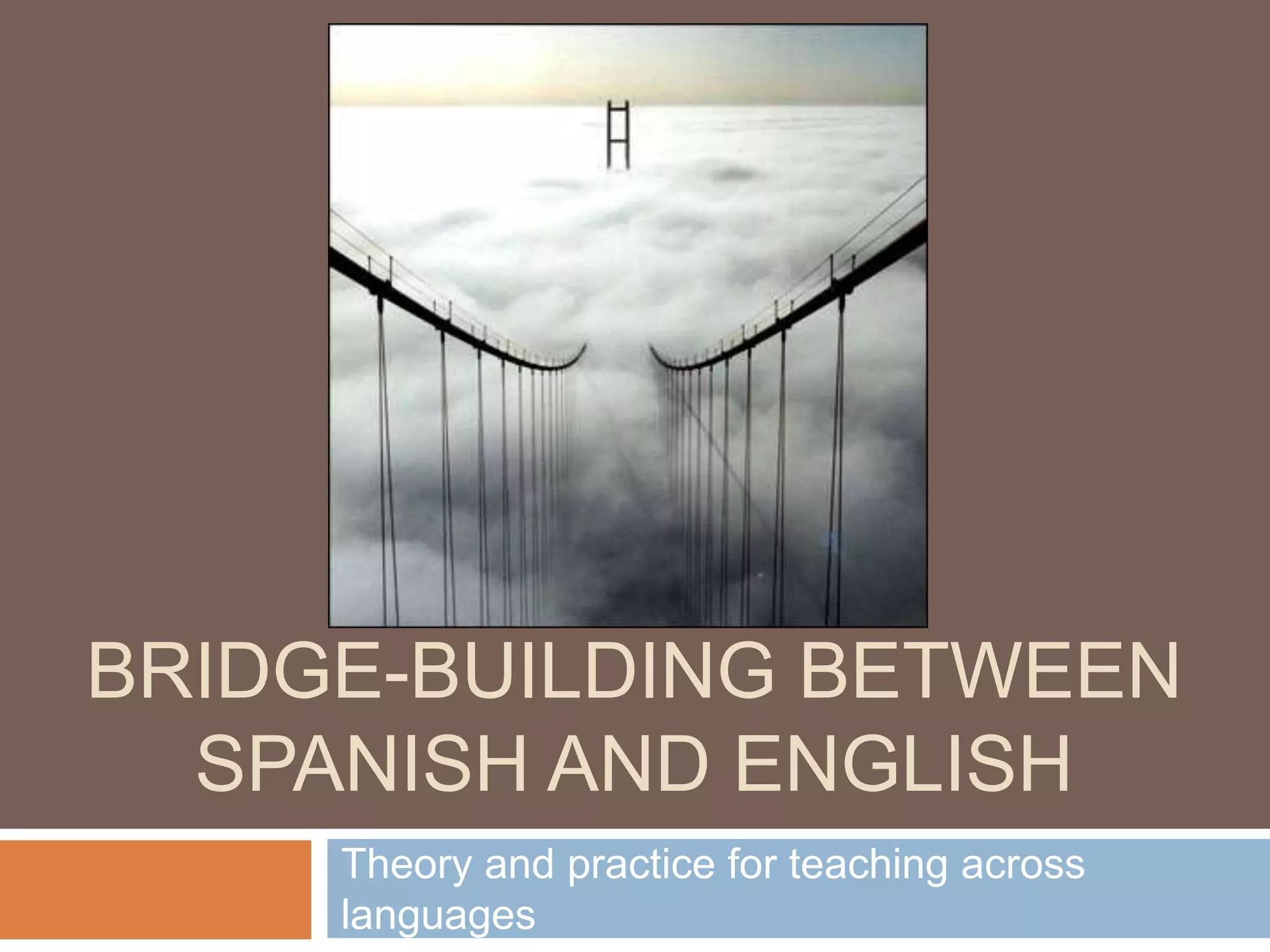
BRIDGE-BUILDING BETWEEN
SPANISH AND ENGLISH
Theory and practice for teaching across
languages
La Cosecha 2014
 This year, La Cosecha focused on
Emerging Bilingual Students. (THAT’S
OUR KIDS!)
 We usually think about immersion
happening in the Target Language, but we
are all bilingual teachers…yup, even if you
don’t speak a WORD of the other
language!
What was this conference really about? (apart from the
obvious)
We learned SO much…but
 T & T to someone at your table about one thing
that is ESPECIALLY challenging for you and
your partner classroom when planning literacy
units.
 And because we are second grade rock
stars…something that works really well when
you plan your literacy units 
Today we are going to focus on Literacy across languages.
Teaching for Biliteracy
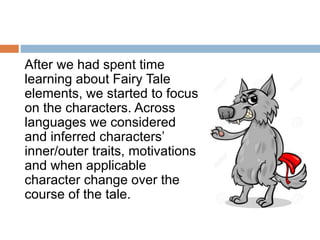
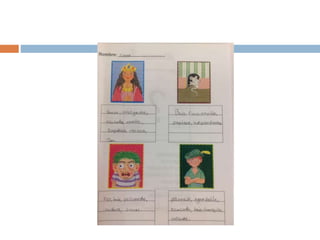
 The 2 (or more) languages that our
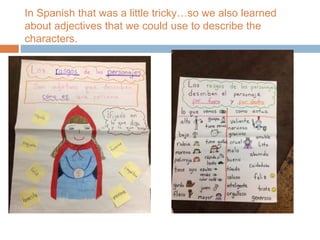
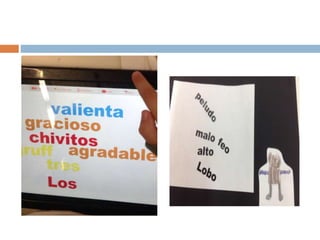
students speak should be seen as
complementary parts of their
learning repertoire.
 Even though YOU teach in one
language, your kids are building
skills across classrooms
Tender Puentes (Bridge
Building!)
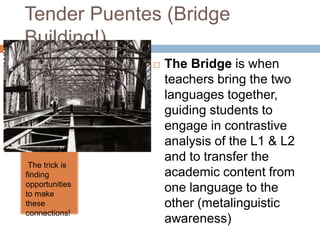
 The Bridge is when
teachers bring the two
languages together,
guiding students to
engage in contrastive
analysis of the L1 & L2
and to transfer the
academic content from
one language to the
other (metalinguistic
awareness)
The trick is
finding
opportunities
to make
these
connections!
Literacy Squared
 The idea is a fluid, flexible, interaction within the
language and across languages.
 *We need to help the kids see the similarities and
differences between the languages. We know
that there is a transfer.
Paradigm Shift
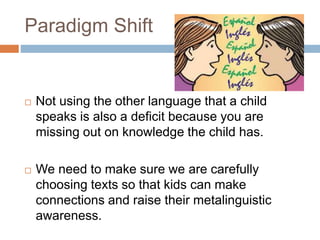
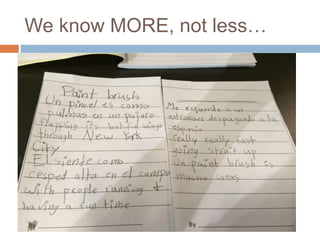
 Not using the other language that a child
speaks is also a deficit because you are
missing out on knowledge the child has.
 We need to make sure we are carefully
choosing texts so that kids can make
connections and raise their metalinguistic
awareness.
We know MORE, not less…
What does that mean for our literacy instruction
at Avenues?
 Thematic Units! (integrating Reading, Writing & World
Course)
 Literacy happens in both classroom – we are all
language learners
 Extending and building cross-linguistic lessons
purposefully (reinforcing is not the same reteaching)
 Building skills requires support from both language
teachers
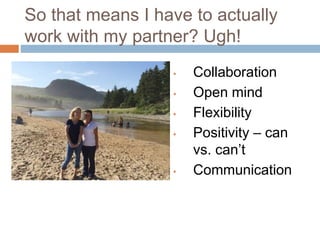
So that means I have to actually
work with my partner? Ugh!
• Collaboration
• Open mind
• Flexibility
• Positivity – can
vs. can’t
• Communication
Organization & Lesson
Planning
 Make time to communicate verbally or in written
form
 Sharing: graphic organizers, writing paper
 Use common language for skills/labels
 Support goes both ways (Introductory lessons
SHOULD take place in both languages)
 Pacing
 Color code
 Be flexible!
 Reflection – what worked/what didn’t
 Revision
Collaboration at Avenues
Check out some things
that our friends are
already doing in
Avenues.
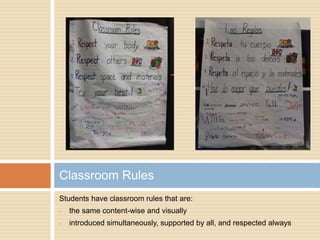
Students have classroom rules that are:
• the same content-wise and visually
• introduced simultaneously, supported by all, and respected always
Classroom Rules
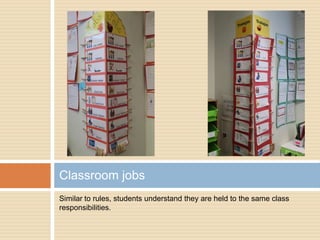
Similar to rules, students understand they are held to the same class
responsibilities.
Classroom jobs
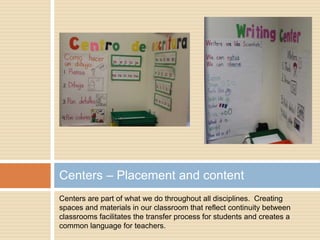
Centers are part of what we do throughout all disciplines. Creating
spaces and materials in our classroom that reflect continuity between
classrooms facilitates the transfer process for students and creates a
common language for teachers.
Centers – Placement and content
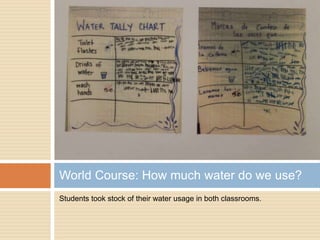
Students took stock of their water usage in both classrooms.
World Course: How much water do we use?
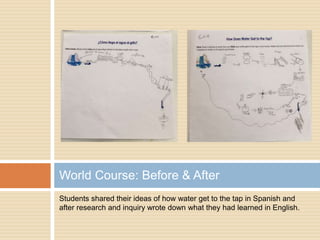
Students shared their ideas of how water get to the tap in Spanish and
after research and inquiry wrote down what they had learned in English.
World Course: Before & After
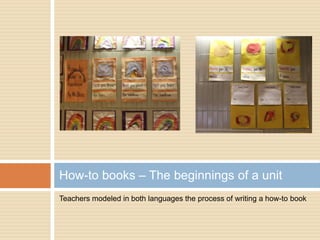
Teachers modeled in both languages the process of writing a how-to book
How-to books – The beginnings of a unit
THAT ALL LOOKS
REALLY GREAT, BUT
CAN YOU GIVE ME A
SPECIFIC EXAMPLE?
Unit Planning Across Languages
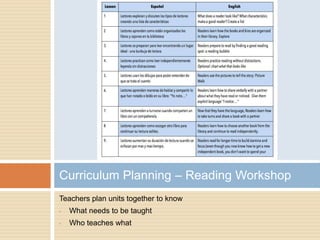
Teachers plan units together to know
• What needs to be taught
• Who teaches what
Curriculum Planning – Reading Workshop
Reading & Writing Unit:
Fairy Tales: Grade 2
Immersion in the Genre.
We wanted the kids to be able
to identify the elements of a
Fairy Tale (good & evil
characters, problem and
solution, magical elements,
timeless/placeless settings,
love, etc). In both languages!
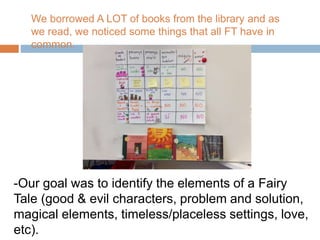
-Our goal was to identify the elements of a Fairy
Tale (good & evil characters, problem and solution,
magical elements, timeless/placeless settings, love,
etc).
We borrowed A LOT of books from the library and as
we read, we noticed some things that all FT have in
common.
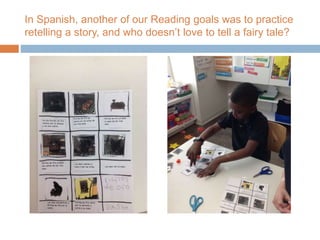
In Spanish, another of our Reading goals was to practice
retelling a story, and who doesn’t love to tell a fairy tale?
After we had spent time
learning about Fairy Tale
elements, we started to focus
on the characters. Across
languages we considered
and inferred characters’
inner/outer traits, motivations
and when applicable
character change over the
course of the tale.
In Spanish that was a little tricky…so we also learned
about adjectives that we could use to describe the
characters.
In English, we continued to really look closely at the Fairy
Tales we were reading.
 We talked about the plot
(problem/solution) and
identified what the
characters wanted, the
problem...as well as the
solution.
 And whenever we read
an adaptation, we
noticed what the author
changed and what
stayed the same.
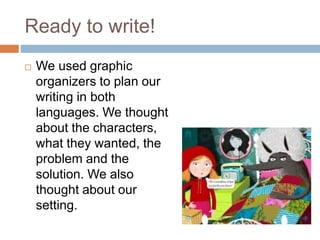
Ready to write!
 We used graphic
organizers to plan our
writing in both
languages. We thought
about the characters,
what they wanted, the
problem and the
solution. We also
thought about our
setting.
In Spanish…
We used what we knew about Fairy Tales
and our retelling skills, we wrote and
illustrated a retelling of a familiar Fairy Tale
(The Three Billy Goats Gruff) in Spanish
using the comic book format.
Sounds complicated? It was actually
REALLY FUN!
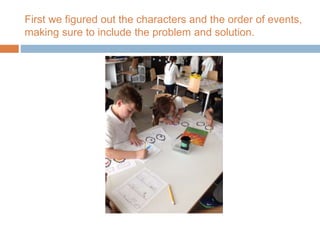
First we figured out the characters and the order of events,
making sure to include the problem and solution.
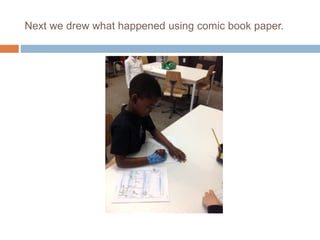
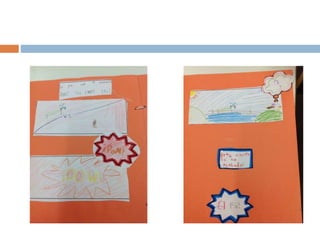
Next we drew what happened using comic book paper.
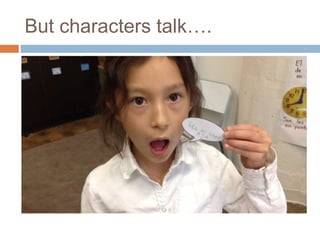
But characters talk….
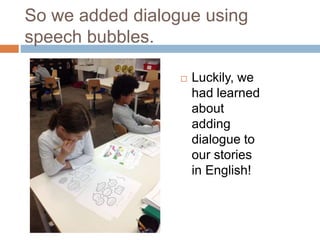
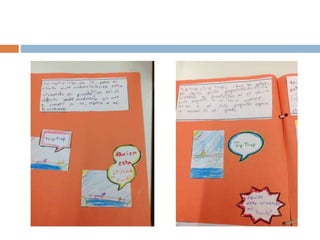
So we added dialogue using
speech bubbles.
 Luckily, we
had learned
about
adding
dialogue to
our stories
in English!
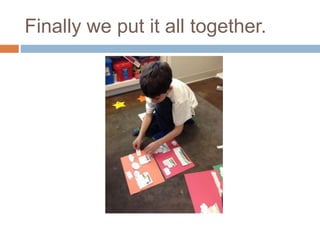
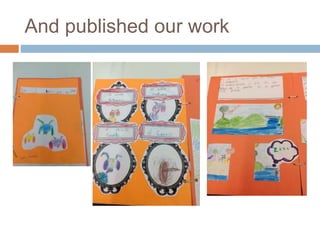
Finally we put it all together.
And published our work
Meanwhile in English…
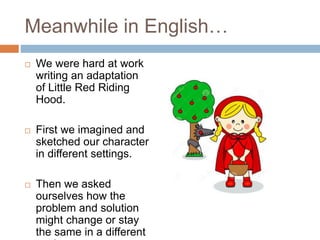
 We were hard at work
writing an adaptation
of Little Red Riding
Hood.
 First we imagined and
sketched our character
in different settings.
 Then we asked
ourselves how the
problem and solution
might change or stay
the same in a different
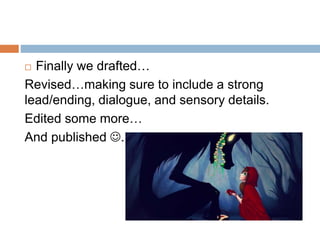
 Finally we drafted…
Revised…making sure to include a strong
lead/ending, dialogue, and sensory details.
Edited some more…
And published .
¡Muchas Gracias!

Building Bridges Between Languages in a Bilingual Setting

  • 1.
    BRIDGE-BUILDING BETWEEN SPANISH ANDENGLISH Theory and practice for teaching across languages
  • 3.
    La Cosecha 2014 This year, La Cosecha focused on Emerging Bilingual Students. (THAT’S OUR KIDS!)  We usually think about immersion happening in the Target Language, but we are all bilingual teachers…yup, even if you don’t speak a WORD of the other language! What was this conference really about? (apart from the obvious)
  • 4.
    We learned SOmuch…but  T & T to someone at your table about one thing that is ESPECIALLY challenging for you and your partner classroom when planning literacy units.  And because we are second grade rock stars…something that works really well when you plan your literacy units  Today we are going to focus on Literacy across languages.
  • 5.
    Teaching for Biliteracy The 2 (or more) languages that our students speak should be seen as complementary parts of their learning repertoire.  Even though YOU teach in one language, your kids are building skills across classrooms
  • 6.
    Tender Puentes (Bridge Building!) The Bridge is when teachers bring the two languages together, guiding students to engage in contrastive analysis of the L1 & L2 and to transfer the academic content from one language to the other (metalinguistic awareness) The trick is finding opportunities to make these connections!
  • 7.
    Literacy Squared  Theidea is a fluid, flexible, interaction within the language and across languages.  *We need to help the kids see the similarities and differences between the languages. We know that there is a transfer.
  • 8.
    Paradigm Shift  Notusing the other language that a child speaks is also a deficit because you are missing out on knowledge the child has.  We need to make sure we are carefully choosing texts so that kids can make connections and raise their metalinguistic awareness.
  • 9.
    We know MORE,not less…
  • 10.
    What does thatmean for our literacy instruction at Avenues?  Thematic Units! (integrating Reading, Writing & World Course)  Literacy happens in both classroom – we are all language learners  Extending and building cross-linguistic lessons purposefully (reinforcing is not the same reteaching)  Building skills requires support from both language teachers
  • 11.
    So that meansI have to actually work with my partner? Ugh! • Collaboration • Open mind • Flexibility • Positivity – can vs. can’t • Communication
  • 12.
    Organization & Lesson Planning Make time to communicate verbally or in written form  Sharing: graphic organizers, writing paper  Use common language for skills/labels  Support goes both ways (Introductory lessons SHOULD take place in both languages)  Pacing  Color code  Be flexible!  Reflection – what worked/what didn’t  Revision
  • 13.
    Collaboration at Avenues Checkout some things that our friends are already doing in Avenues.
  • 14.
    Students have classroomrules that are: • the same content-wise and visually • introduced simultaneously, supported by all, and respected always Classroom Rules
  • 15.
    Similar to rules,students understand they are held to the same class responsibilities. Classroom jobs
  • 16.
    Centers are partof what we do throughout all disciplines. Creating spaces and materials in our classroom that reflect continuity between classrooms facilitates the transfer process for students and creates a common language for teachers. Centers – Placement and content
  • 17.
    Students took stockof their water usage in both classrooms. World Course: How much water do we use?
  • 18.
    Students shared theirideas of how water get to the tap in Spanish and after research and inquiry wrote down what they had learned in English. World Course: Before & After
  • 19.
    Teachers modeled inboth languages the process of writing a how-to book How-to books – The beginnings of a unit
  • 20.
    THAT ALL LOOKS REALLYGREAT, BUT CAN YOU GIVE ME A SPECIFIC EXAMPLE? Unit Planning Across Languages
  • 21.
    Teachers plan unitstogether to know • What needs to be taught • Who teaches what Curriculum Planning – Reading Workshop
  • 22.
    Reading & WritingUnit: Fairy Tales: Grade 2 Immersion in the Genre. We wanted the kids to be able to identify the elements of a Fairy Tale (good & evil characters, problem and solution, magical elements, timeless/placeless settings, love, etc). In both languages!
  • 23.
    -Our goal wasto identify the elements of a Fairy Tale (good & evil characters, problem and solution, magical elements, timeless/placeless settings, love, etc). We borrowed A LOT of books from the library and as we read, we noticed some things that all FT have in common.
  • 24.
    In Spanish, anotherof our Reading goals was to practice retelling a story, and who doesn’t love to tell a fairy tale?
  • 25.
    After we hadspent time learning about Fairy Tale elements, we started to focus on the characters. Across languages we considered and inferred characters’ inner/outer traits, motivations and when applicable character change over the course of the tale.
  • 26.
    In Spanish thatwas a little tricky…so we also learned about adjectives that we could use to describe the characters.
  • 29.
    In English, wecontinued to really look closely at the Fairy Tales we were reading.  We talked about the plot (problem/solution) and identified what the characters wanted, the problem...as well as the solution.  And whenever we read an adaptation, we noticed what the author changed and what stayed the same.
  • 30.
    Ready to write! We used graphic organizers to plan our writing in both languages. We thought about the characters, what they wanted, the problem and the solution. We also thought about our setting.
  • 31.
    In Spanish… We usedwhat we knew about Fairy Tales and our retelling skills, we wrote and illustrated a retelling of a familiar Fairy Tale (The Three Billy Goats Gruff) in Spanish using the comic book format. Sounds complicated? It was actually REALLY FUN!
  • 32.
    First we figuredout the characters and the order of events, making sure to include the problem and solution.
  • 33.
    Next we drewwhat happened using comic book paper.
  • 34.
  • 35.
    So we addeddialogue using speech bubbles.  Luckily, we had learned about adding dialogue to our stories in English!
  • 36.
    Finally we putit all together.
  • 37.
  • 40.
    Meanwhile in English… We were hard at work writing an adaptation of Little Red Riding Hood.  First we imagined and sketched our character in different settings.  Then we asked ourselves how the problem and solution might change or stay the same in a different
  • 41.
     Finally wedrafted… Revised…making sure to include a strong lead/ending, dialogue, and sensory details. Edited some more… And published .
  • 42.