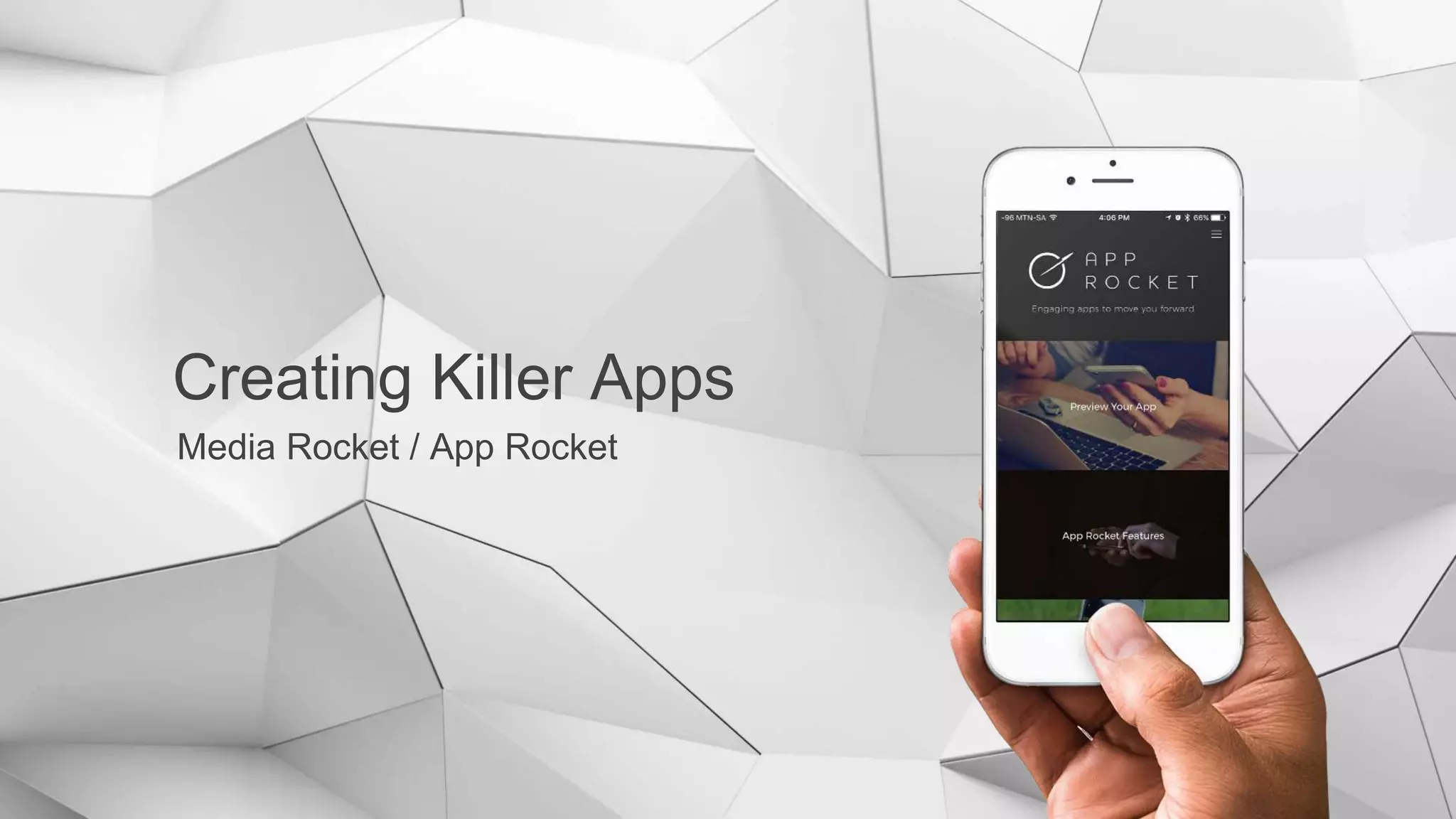
Creating Killer Apps
Media Rocket / App Rocket
What we’ll cover today
• Introduction
• Why a business should consider an app
• Mobile - Digital vs Online experiences
• What is the mobile economy
• Mobile use in South Africa’s mobile economy
• Defining a mobile app
• Types of apps
• Use cases
• what to consider in this process
• Creating a killer business app
• Is your business an app or does your business use an app?
the difference
• Business goals vs Users goals
• The technical stuff
• You have an app. now what?
• Use of existing platforms to promote your app
• Did it work? measuring for success
• Adapt and grow
• Thank you
• Questions and Answers
Why a business Should
consider an app
Mobile economy, its components and South Africa’s context
Digital vs Online experiences
First. What is “Mobile”?
• Connecting with digital media via a handheld
device
• “Mobile” is digital but not necessarily online
• 92% of South African adults own a mobile
phone - DIGITAL
• 55% of these owned mobile phones are smart
phones - ONLINE
Examples of digital experiences
• Text messaging (SMS)
• Phone calls
• Phone camera
Examples of online experiences
• Whatsapp
• Skype calls
• Instagram
SO THEN, WHAT IS THE MOBILE ECONOMY?
Mobile use and consumption in SA
A mobile-first economy
• South Africa is a mobile-first economy meaning that most people’s
first point of contact with the internet is via their mobile phones
• 80% of South African Facebook users access Facebook via their
mobile phones
• Smartphone usage doubled in Africa between 2015 and 2016
largely due to entry of low cost Smartphone devices
• This opens up many opportunities to businesses to engage users
using mobile technologies
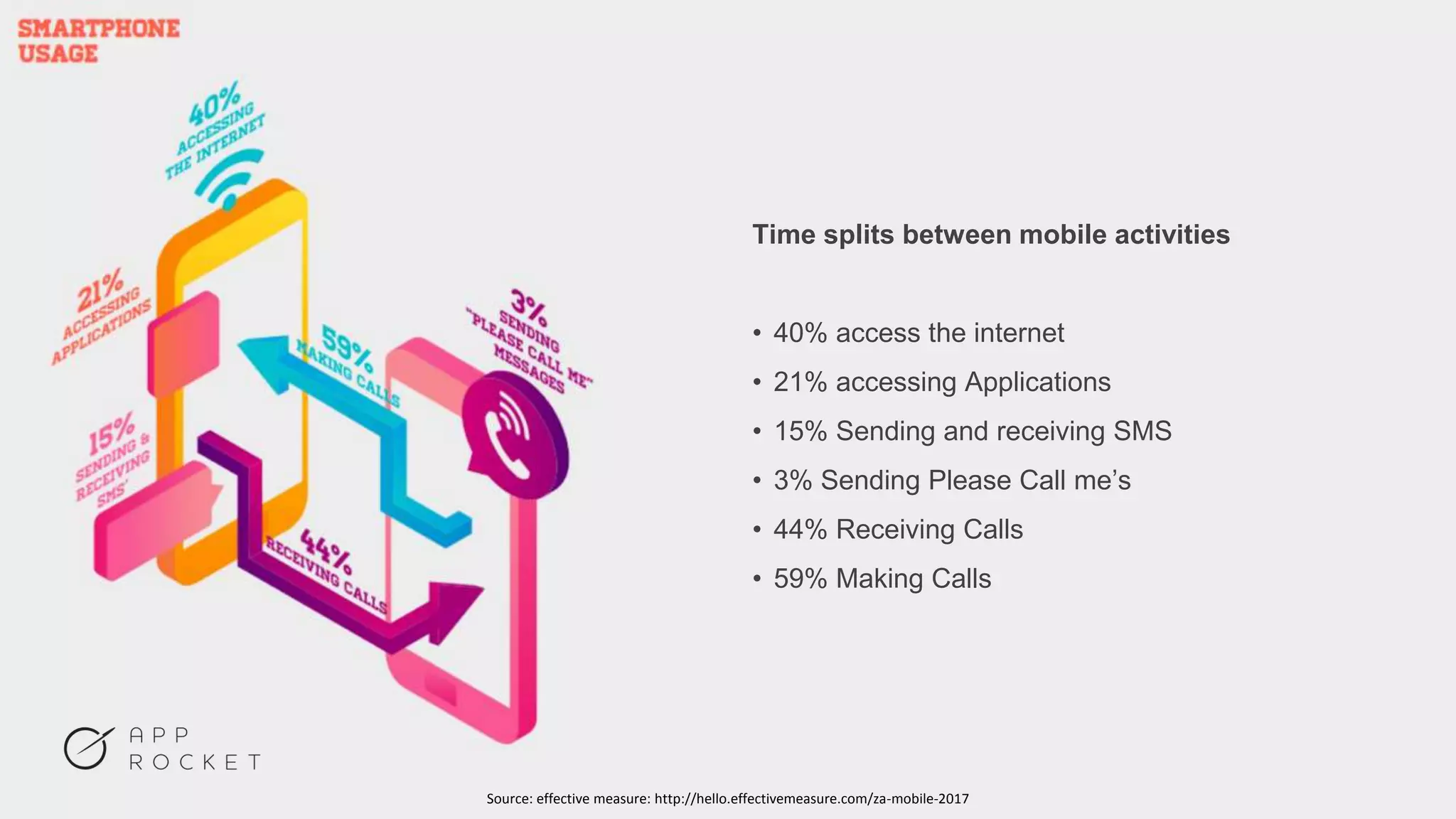
Time splits between mobile activities
• 40% access the internet
• 21% accessing Applications
• 15% Sending and receiving SMS
• 3% Sending Please Call me’s
• 44% Receiving Calls
• 59% Making Calls
Source: effective measure: http://hello.effectivemeasure.com/za-mobile-2017
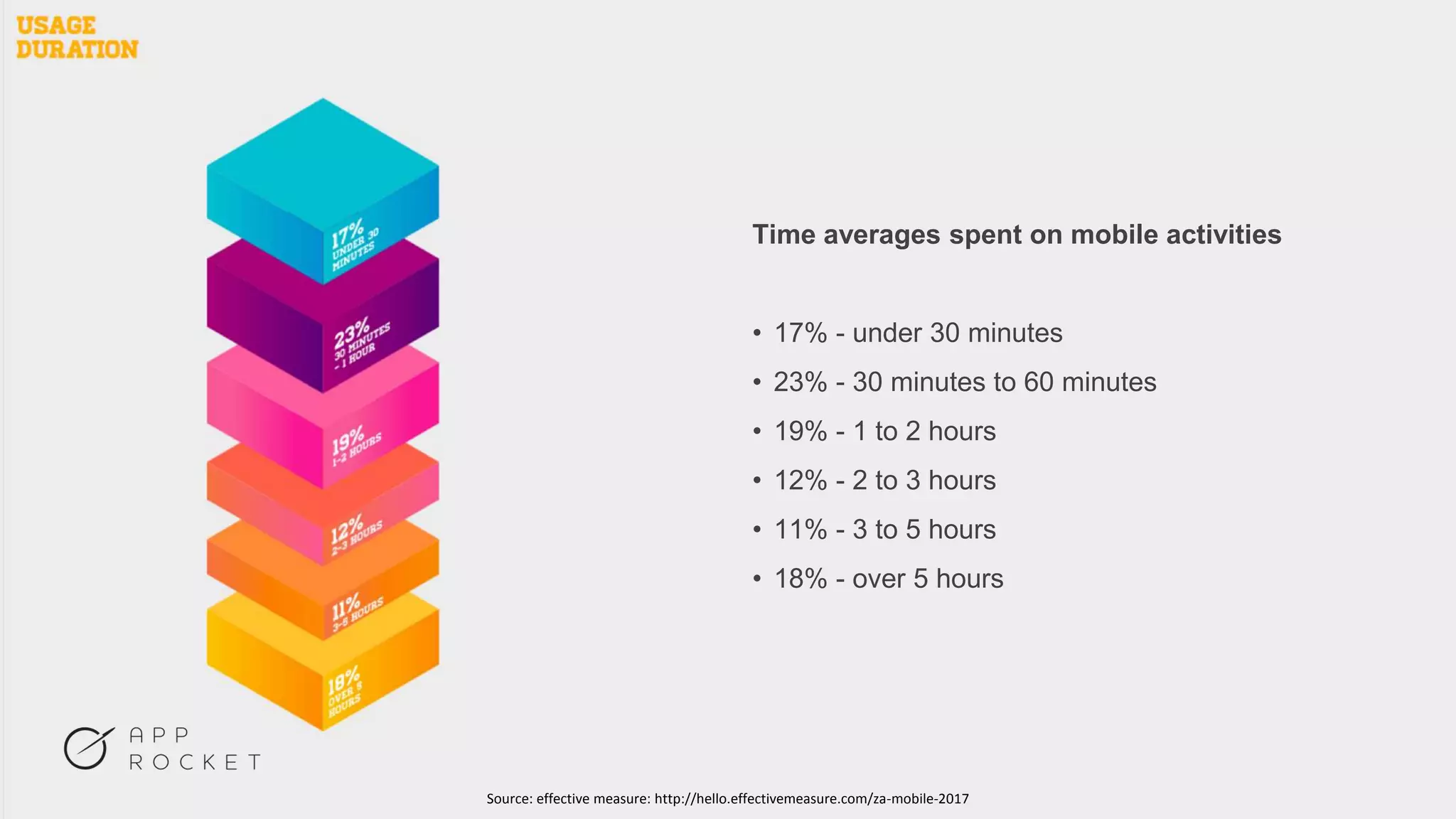
Time averages spent on mobile activities
• 17% - under 30 minutes
• 23% - 30 minutes to 60 minutes
• 19% - 1 to 2 hours
• 12% - 2 to 3 hours
• 11% - 3 to 5 hours
• 18% - over 5 hours
Source: effective measure: http://hello.effectivemeasure.com/za-mobile-2017
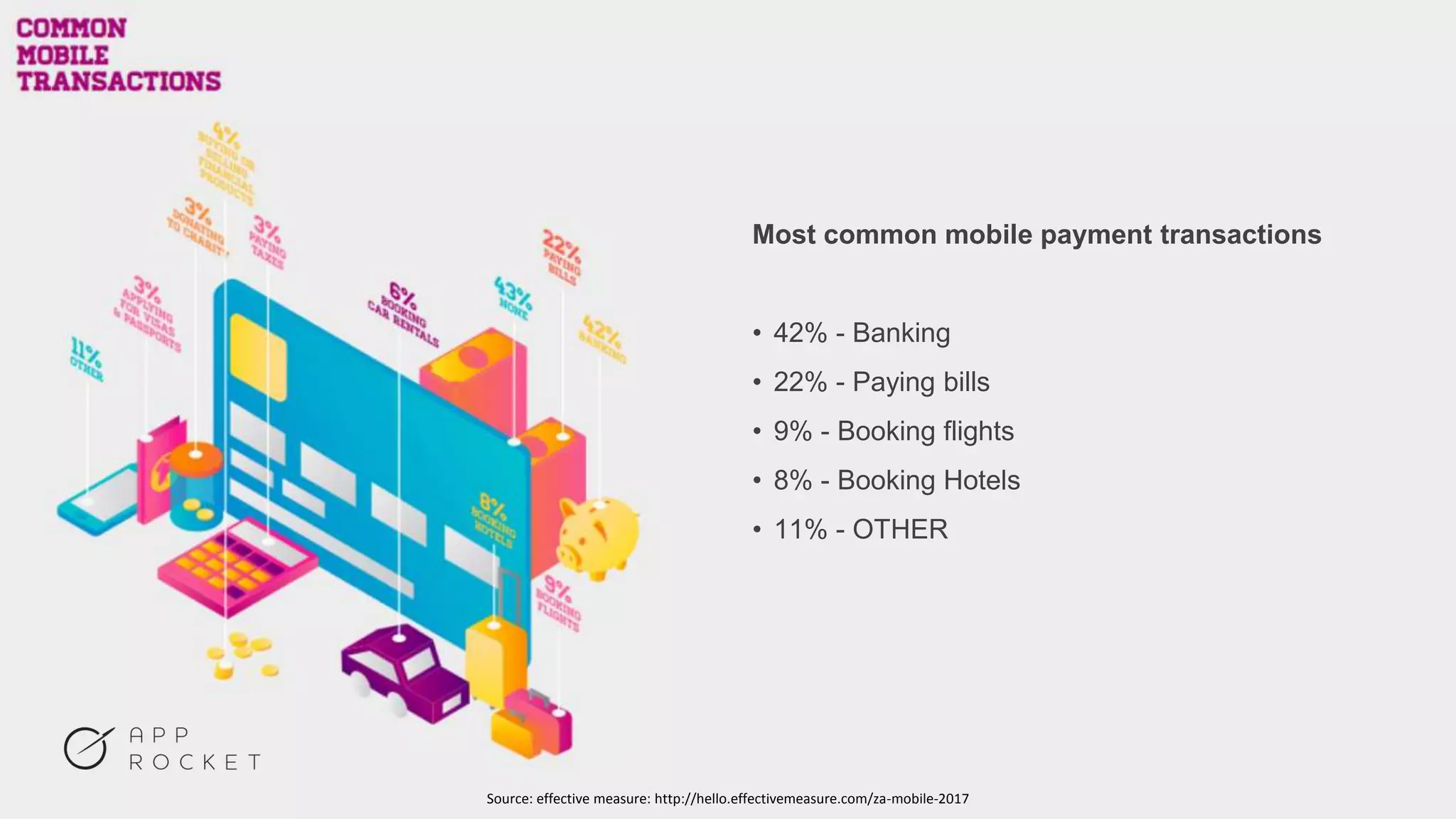
Most common mobile payment transactions
• 42% - Banking
• 22% - Paying bills
• 9% - Booking flights
• 8% - Booking Hotels
• 11% - OTHER
Source: effective measure: http://hello.effectivemeasure.com/za-mobile-2017
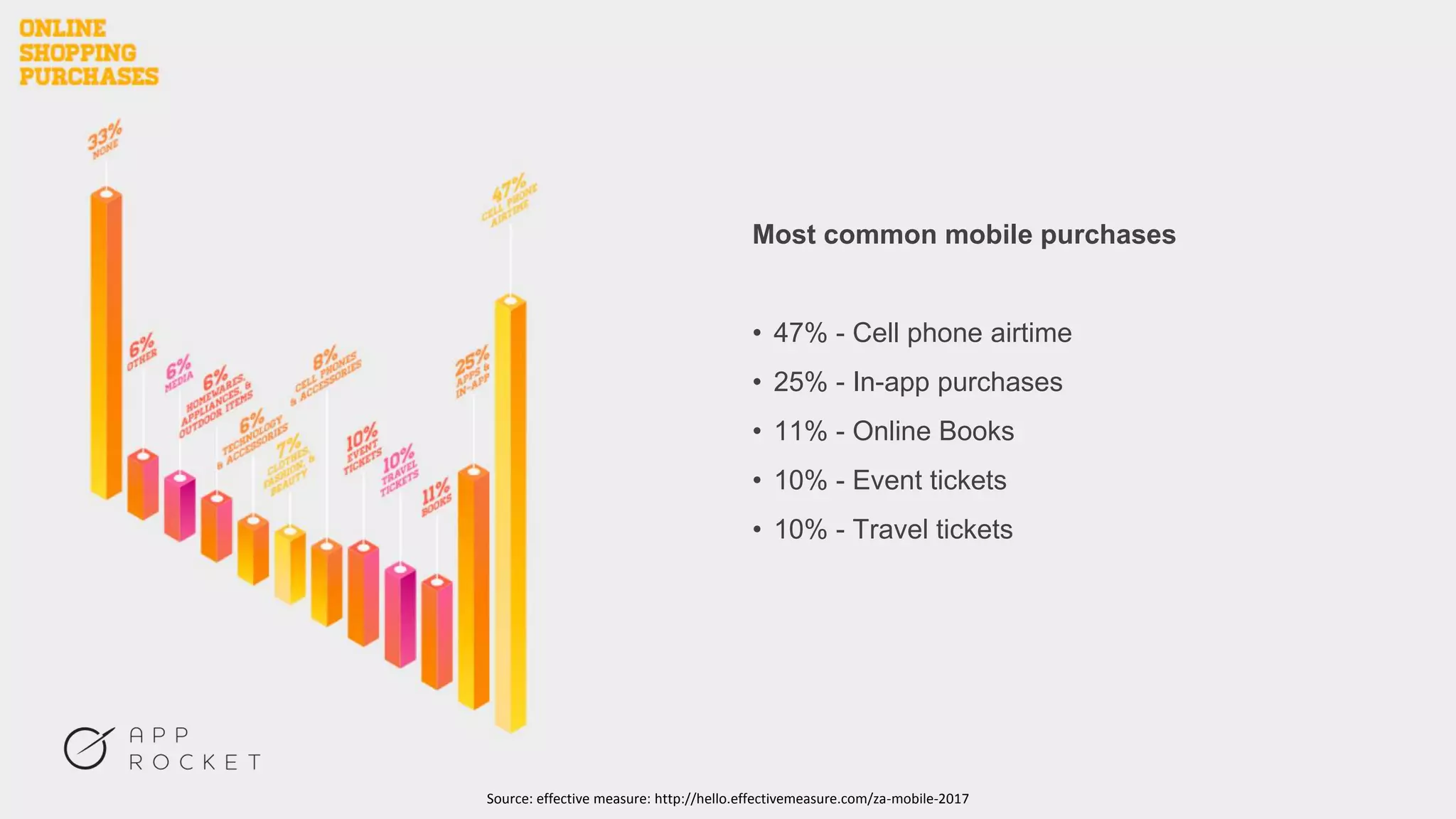
Most common mobile purchases
• 47% - Cell phone airtime
• 25% - In-app purchases
• 11% - Online Books
• 10% - Event tickets
• 10% - Travel tickets
Source: effective measure: http://hello.effectivemeasure.com/za-mobile-2017
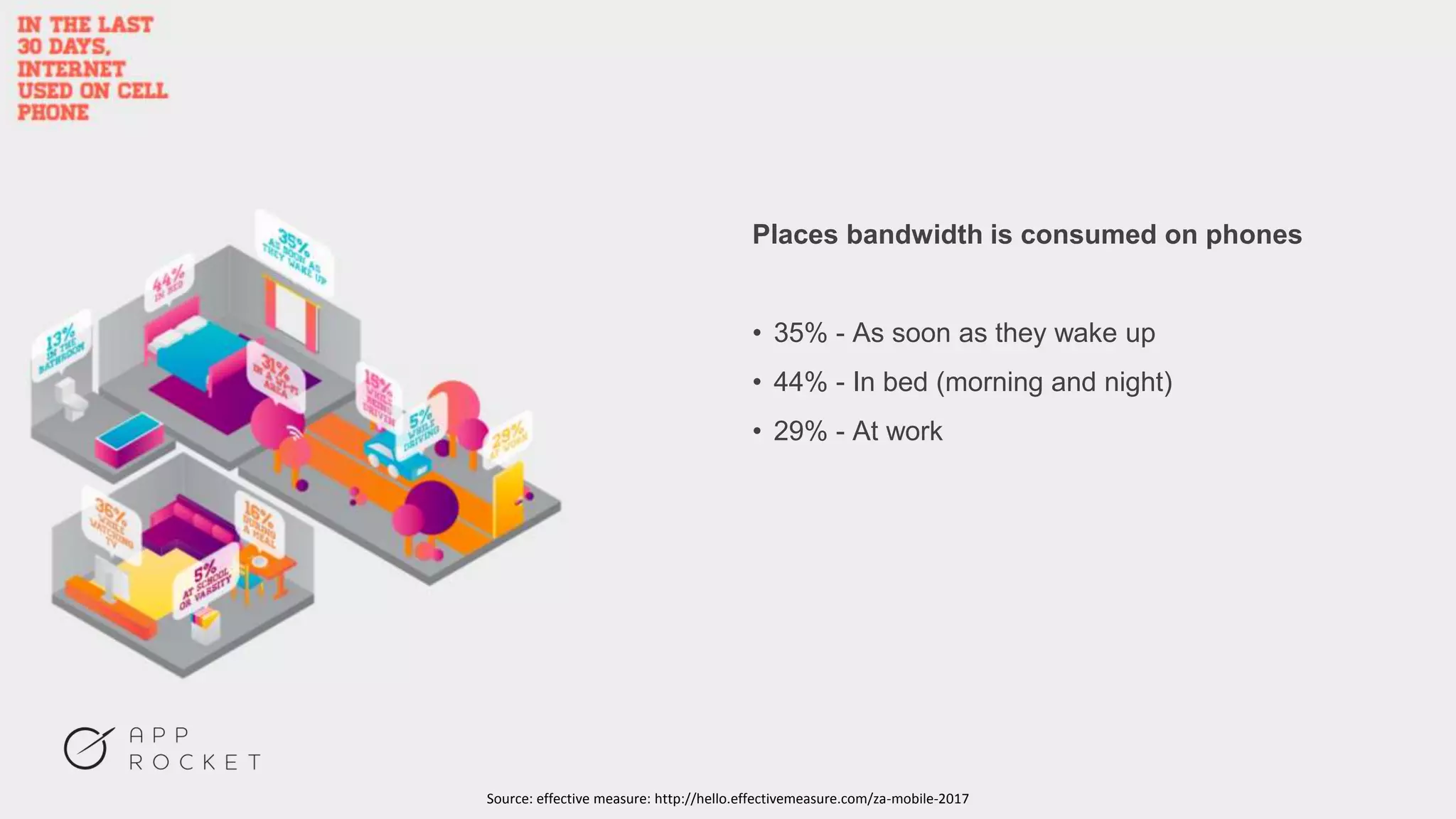
Places bandwidth is consumed on phones
• 35% - As soon as they wake up
• 44% - In bed (morning and night)
• 29% - At work
Source: effective measure: http://hello.effectivemeasure.com/za-mobile-2017
Defining a mobile app
Types of apps, use cases and what to consider for your app
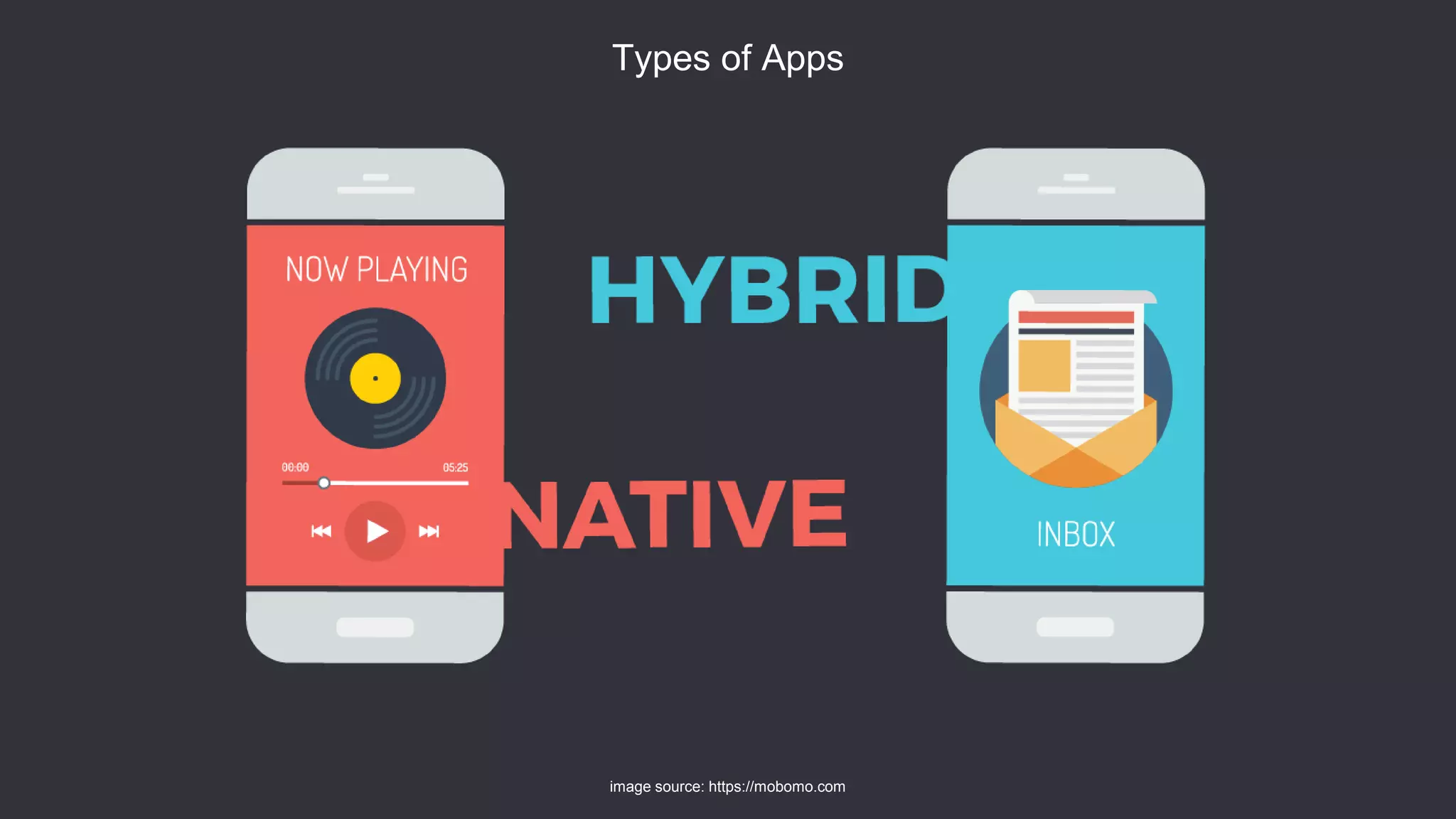
Types of Apps
image source: https://mobomo.com
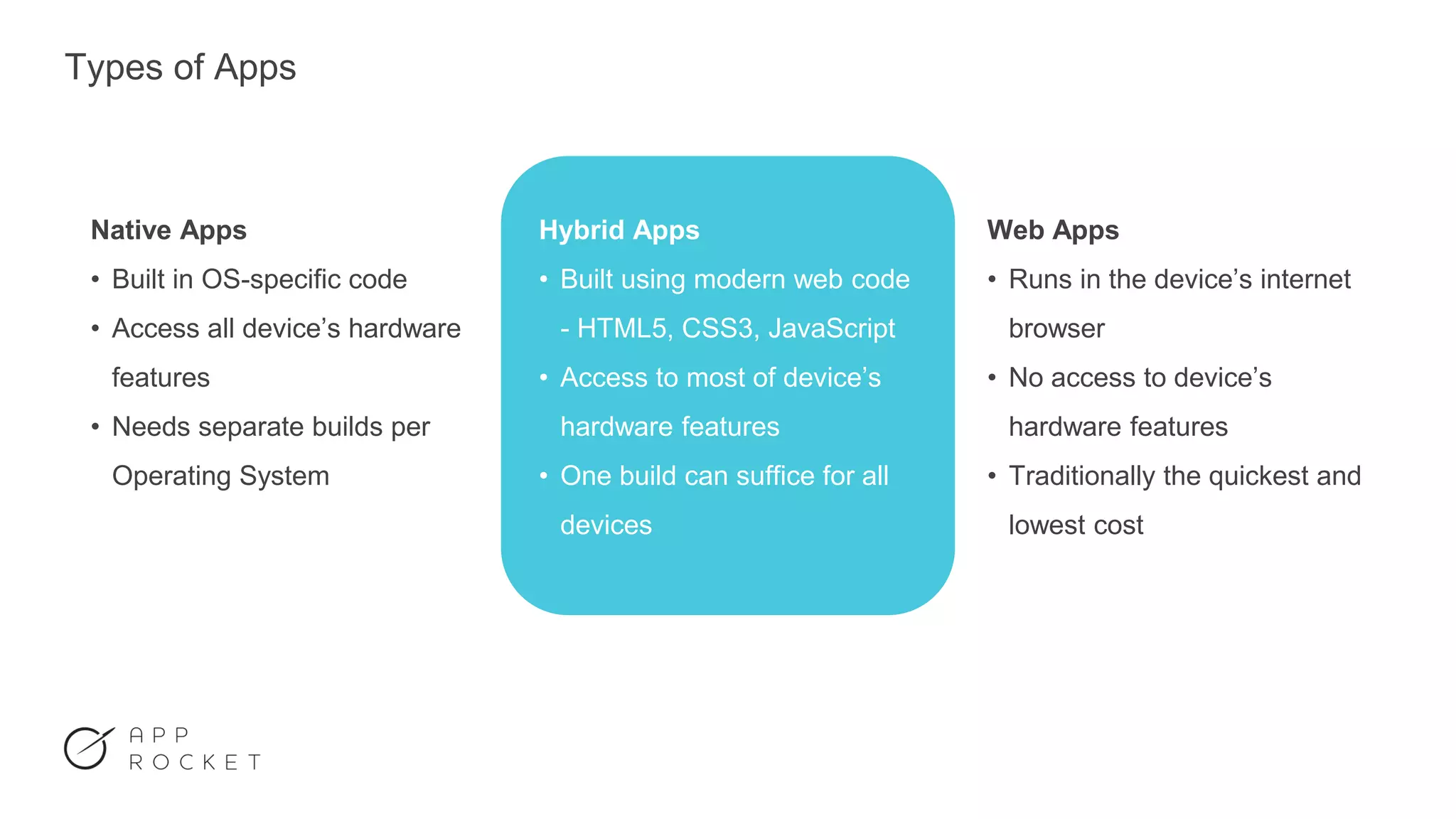
Types of Apps
Native Apps
• Built in OS-specific code
• Access all device’s hardware
features
• Needs separate builds per
Operating System
Hybrid Apps
• Built using modern web code
- HTML5, CSS3, JavaScript
• Access to most of device’s
hardware features
• One build can suffice for all
devices
Web Apps
• Runs in the device’s internet
browser
• No access to device’s
hardware features
• Traditionally the quickest and
lowest cost
Use cases: Native Apps
Pros
• Highly specific and customisable
• Can access all device hardware features
• Can generally work without internet connection
• Fast performance
Cons
• Expensive to develop
• Expensive maintenance
• Long development cycle
(BAD) EXAMPLE OF A BUSINESS THAT SHOULD USE NATIVE
Use Cases: Hybrid Apps
Pros
• Lower development cost
• One build for multiple devices
• Quick development cycle
• Can access most device hardware features
Cons
• Certain device hardware features not available
• Most features require internet connection
EXAMPLE OF A BUSINESS THAT SHOULD USE HYBRID
Considerations: Native Apps
When to go for a native build
• When your business IS the app
• When you expect extraordinarily high volumes of usage
and traffic
• Once you’ve thoroughly fleshed out and vetted the
business case
Considerations: Hybrid Apps
When to go for a hybrid build
• When an app will support your business
• When the app acts solely to add value to your customers
• When there is an online system that can not be easily
integrated in to a native app
• When time and money is a consideration
• When you need to roll out on multiple devices with little
to no maintenance
Creating a killer business
app
App first or business first, user experience and technical stuff
Is your business an app or does your business use an app
Your business IS an app
• The app-first approach
• When the business can not exist without an app
• Usually the most expensive companies to start
due to upfront investment needs
• High risk business to start
• Native development recommended
Is your business an app or does your business use an app
Your business USES an app
• The business-first approach
• Business already exists
• Lower risk to enter the app market
• Hybrid app development is recommended to
add value to existing business efforts
• Company has existing channels and would like
to use an app to expand its channels
Business goals vs Users goals
USER GOALS
Useful
Usable
Desirable
Valuable
Finable
Credible
Accessible
BUSINESS GOALS
Brand awareness
Sell product
Establish market authority
Sell Services
+ workforce efficiency
Obtain user data
Understand usage and adapt
The technical stuff - not really…
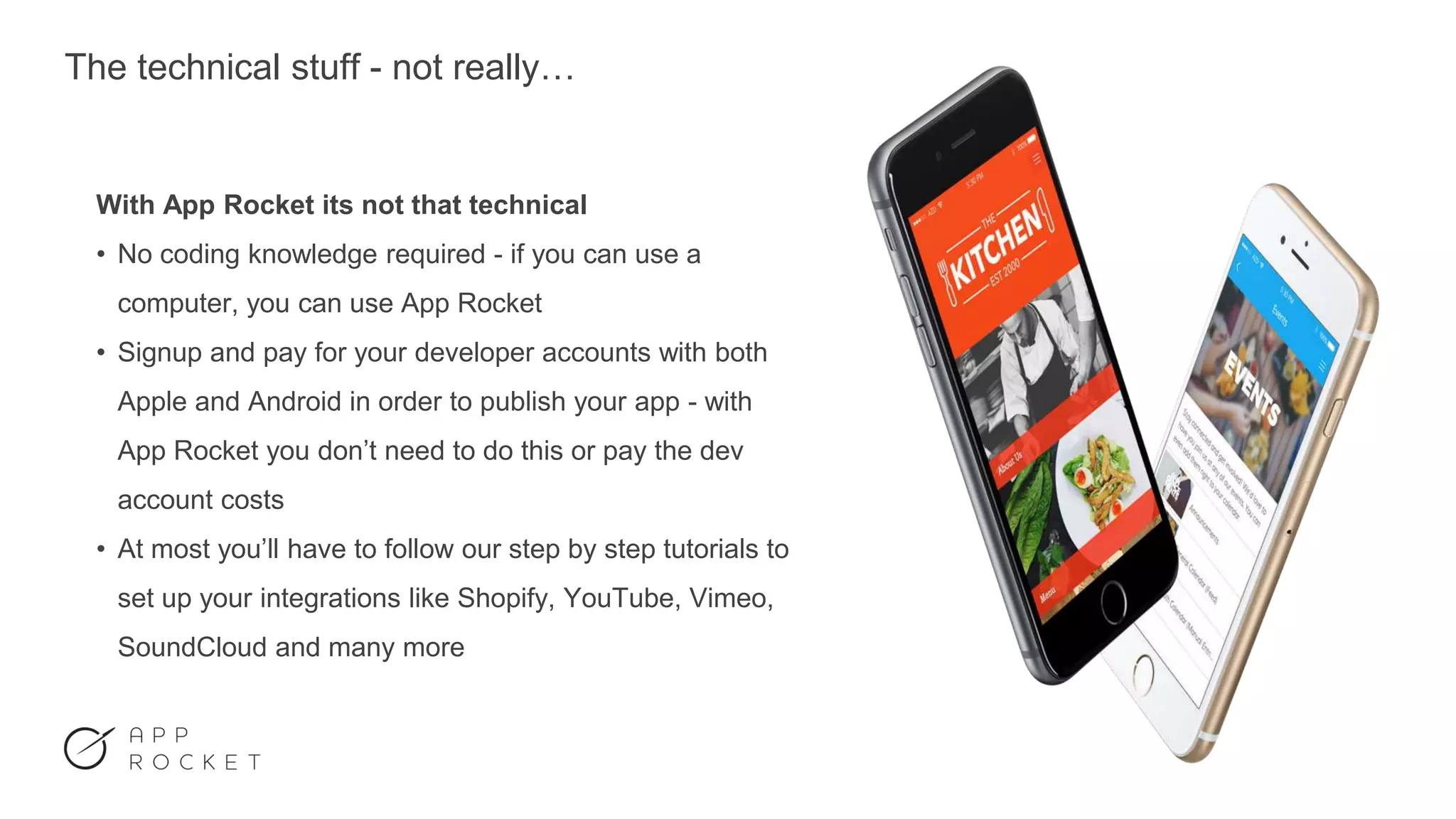
With App Rocket its not that technical
• No coding knowledge required - if you can use a
computer, you can use App Rocket
• Signup and pay for your developer accounts with both
Apple and Android in order to publish your app - with
App Rocket you don’t need to do this or pay the dev
account costs
• At most you’ll have to follow our step by step tutorials to
set up your integrations like Shopify, YouTube, Vimeo,
SoundCloud and many more
You have an app.
Now what?
Platforms to promote, measuring success, adapt and grow
Use of existing platforms to promote your app
Get your app in front of existing clients
• Leverage off your existing platforms like Facebook,
LinkedIn, Instagram, Website, MailChimp & anything
else you may use
Ideas to promote your new app
• Add app-download buttons to your social media
• Use paid advertising methods to promote new
downloads
• Promote as Facebook suggested apps
Measuring for success
What to use to measure your app’s success
• App Rocket has its own downloads and registered users
tracker but further drill downs into the data can be done
by plugging in Segment, Google analytics or Mixpanel
What Can you track?
• Number of downloads
• Frequency of use
• Page loads and visited areas within the app
• Conversions from the app and more
Adapt and grow
Create actionable intel based on data
• Successful apps constantly evolve and change based on
usage data
• Track areas of most interest and prioritise these areas
when revising your design
• Include a feedback portal either within your app or on
your website
• Embrace criticism from your users and encourage them
to be part of the solution
• Reward your users for loyalty
Thank you!
Let’s get building
signup.approcket.co.za

Building awesome business apps

  • 1.
    Creating Killer Apps MediaRocket / App Rocket
  • 2.
    What we’ll covertoday • Introduction • Why a business should consider an app • Mobile - Digital vs Online experiences • What is the mobile economy • Mobile use in South Africa’s mobile economy • Defining a mobile app • Types of apps • Use cases • what to consider in this process • Creating a killer business app • Is your business an app or does your business use an app? the difference • Business goals vs Users goals • The technical stuff • You have an app. now what? • Use of existing platforms to promote your app • Did it work? measuring for success • Adapt and grow • Thank you • Questions and Answers
  • 3.
    Why a businessShould consider an app Mobile economy, its components and South Africa’s context
  • 4.
    Digital vs Onlineexperiences First. What is “Mobile”? • Connecting with digital media via a handheld device • “Mobile” is digital but not necessarily online • 92% of South African adults own a mobile phone - DIGITAL • 55% of these owned mobile phones are smart phones - ONLINE Examples of digital experiences • Text messaging (SMS) • Phone calls • Phone camera Examples of online experiences • Whatsapp • Skype calls • Instagram SO THEN, WHAT IS THE MOBILE ECONOMY?
  • 6.
    Mobile use andconsumption in SA A mobile-first economy • South Africa is a mobile-first economy meaning that most people’s first point of contact with the internet is via their mobile phones • 80% of South African Facebook users access Facebook via their mobile phones • Smartphone usage doubled in Africa between 2015 and 2016 largely due to entry of low cost Smartphone devices • This opens up many opportunities to businesses to engage users using mobile technologies
  • 7.
    Time splits betweenmobile activities • 40% access the internet • 21% accessing Applications • 15% Sending and receiving SMS • 3% Sending Please Call me’s • 44% Receiving Calls • 59% Making Calls Source: effective measure: http://hello.effectivemeasure.com/za-mobile-2017
  • 8.
    Time averages spenton mobile activities • 17% - under 30 minutes • 23% - 30 minutes to 60 minutes • 19% - 1 to 2 hours • 12% - 2 to 3 hours • 11% - 3 to 5 hours • 18% - over 5 hours Source: effective measure: http://hello.effectivemeasure.com/za-mobile-2017
  • 9.
    Most common mobilepayment transactions • 42% - Banking • 22% - Paying bills • 9% - Booking flights • 8% - Booking Hotels • 11% - OTHER Source: effective measure: http://hello.effectivemeasure.com/za-mobile-2017
  • 10.
    Most common mobilepurchases • 47% - Cell phone airtime • 25% - In-app purchases • 11% - Online Books • 10% - Event tickets • 10% - Travel tickets Source: effective measure: http://hello.effectivemeasure.com/za-mobile-2017
  • 11.
    Places bandwidth isconsumed on phones • 35% - As soon as they wake up • 44% - In bed (morning and night) • 29% - At work Source: effective measure: http://hello.effectivemeasure.com/za-mobile-2017
  • 12.
    Defining a mobileapp Types of apps, use cases and what to consider for your app
  • 13.
    Types of Apps imagesource: https://mobomo.com
  • 14.
    Types of Apps NativeApps • Built in OS-specific code • Access all device’s hardware features • Needs separate builds per Operating System Hybrid Apps • Built using modern web code - HTML5, CSS3, JavaScript • Access to most of device’s hardware features • One build can suffice for all devices Web Apps • Runs in the device’s internet browser • No access to device’s hardware features • Traditionally the quickest and lowest cost
  • 15.
    Use cases: NativeApps Pros • Highly specific and customisable • Can access all device hardware features • Can generally work without internet connection • Fast performance Cons • Expensive to develop • Expensive maintenance • Long development cycle (BAD) EXAMPLE OF A BUSINESS THAT SHOULD USE NATIVE
  • 17.
    Use Cases: HybridApps Pros • Lower development cost • One build for multiple devices • Quick development cycle • Can access most device hardware features Cons • Certain device hardware features not available • Most features require internet connection EXAMPLE OF A BUSINESS THAT SHOULD USE HYBRID
  • 19.
    Considerations: Native Apps Whento go for a native build • When your business IS the app • When you expect extraordinarily high volumes of usage and traffic • Once you’ve thoroughly fleshed out and vetted the business case
  • 20.
    Considerations: Hybrid Apps Whento go for a hybrid build • When an app will support your business • When the app acts solely to add value to your customers • When there is an online system that can not be easily integrated in to a native app • When time and money is a consideration • When you need to roll out on multiple devices with little to no maintenance
  • 21.
    Creating a killerbusiness app App first or business first, user experience and technical stuff
  • 22.
    Is your businessan app or does your business use an app Your business IS an app • The app-first approach • When the business can not exist without an app • Usually the most expensive companies to start due to upfront investment needs • High risk business to start • Native development recommended
  • 23.
    Is your businessan app or does your business use an app Your business USES an app • The business-first approach • Business already exists • Lower risk to enter the app market • Hybrid app development is recommended to add value to existing business efforts • Company has existing channels and would like to use an app to expand its channels
  • 24.
    Business goals vsUsers goals USER GOALS Useful Usable Desirable Valuable Finable Credible Accessible BUSINESS GOALS Brand awareness Sell product Establish market authority Sell Services + workforce efficiency Obtain user data Understand usage and adapt
  • 25.
    The technical stuff- not really… With App Rocket its not that technical • No coding knowledge required - if you can use a computer, you can use App Rocket • Signup and pay for your developer accounts with both Apple and Android in order to publish your app - with App Rocket you don’t need to do this or pay the dev account costs • At most you’ll have to follow our step by step tutorials to set up your integrations like Shopify, YouTube, Vimeo, SoundCloud and many more
  • 26.
    You have anapp. Now what? Platforms to promote, measuring success, adapt and grow
  • 27.
    Use of existingplatforms to promote your app Get your app in front of existing clients • Leverage off your existing platforms like Facebook, LinkedIn, Instagram, Website, MailChimp & anything else you may use Ideas to promote your new app • Add app-download buttons to your social media • Use paid advertising methods to promote new downloads • Promote as Facebook suggested apps
  • 28.
    Measuring for success Whatto use to measure your app’s success • App Rocket has its own downloads and registered users tracker but further drill downs into the data can be done by plugging in Segment, Google analytics or Mixpanel What Can you track? • Number of downloads • Frequency of use • Page loads and visited areas within the app • Conversions from the app and more
  • 29.
    Adapt and grow Createactionable intel based on data • Successful apps constantly evolve and change based on usage data • Track areas of most interest and prioritise these areas when revising your design • Include a feedback portal either within your app or on your website • Embrace criticism from your users and encourage them to be part of the solution • Reward your users for loyalty
  • 30.
    Thank you! Let’s getbuilding signup.approcket.co.za