Know all about
|Mobile App Development|
What is a Mobile App ?
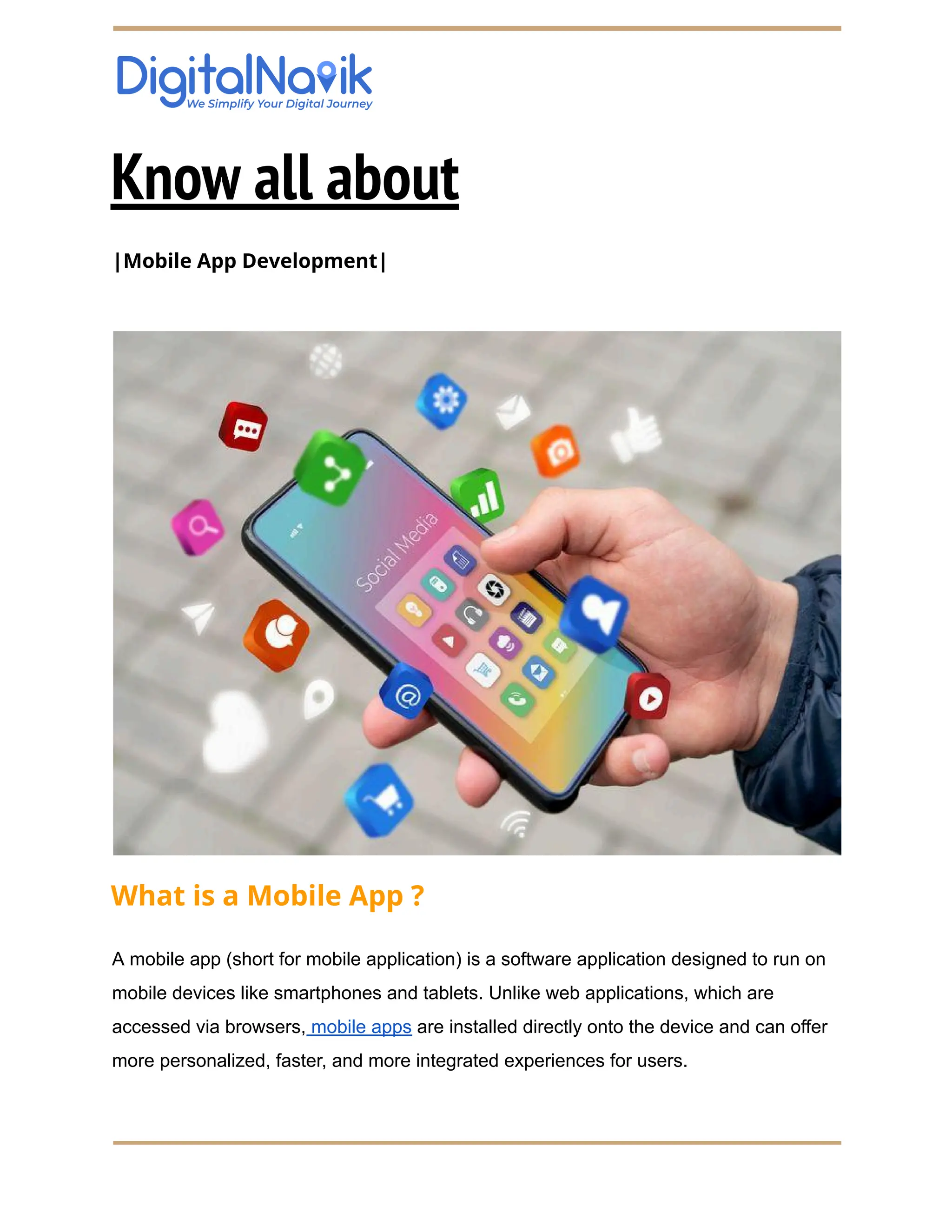
A mobile app (short for mobile application) is a software application designed to run on
mobile devices like smartphones and tablets. Unlike web applications, which are
accessed via browsers, mobile apps are installed directly onto the device and can offer
more personalized, faster, and more integrated experiences for users.
Types of Mobile Apps :
Three primary categories of mobile applications exist:
Native Apps:
● Native apps are developed for a specific mobile platform (e.g., iOS or Android)
using the platform’s programming language and development tools.
● Examples:
○ iOS apps: Built with Swift or Objective-C using Xcode.
○ Android apps: Built with Java or Kotlin using Android Studio.
● Advantages:
○ High performance.
○ Full access to device features (camera, GPS, sensors, etc.).
○ More reliable and responsive because they’re built specifically for the
platform.
● Examples: Instagram, WhatsApp, Apple Maps, Spotify.
Hybrid Apps:
● Hybrid apps are a combination of native and web apps. They’re built using web
technologies like HTML, CSS, and JavaScript, but they are wrapped in a native
container to allow them to be installed on a mobile device.
● Tools for hybrid development include frameworks like React Native, Ionic,
Xamarin, and Flutter.
● Advantages:
○ One codebase can run on both iOS and Android.
○ Faster development time and cost-effective for cross-platform solutions.
● Examples: Uber, Airbnb, Twitter.
2
Web Apps:
● Web apps are essentially mobile-optimized websites that run on the browser and
can behave like apps. They don’t need to be installed on the device.
● Built using HTML, CSS, JavaScript, and can be accessed via a web browser on
any device.
● Advantages:
○ Accessible via any device with a web browser.
○ No installation required.
● Examples: Facebook, Twitter (web versions), Gmail (browser version).
Key Features of Mobile Apps :
● User Interface (UI): Mobile apps are designed to have user-friendly interfaces
optimized for small screens, providing a smooth and engaging user experience.
● Device Integration: Mobile apps can interact with various features of the device
like the camera, GPS, sensors, and storage. This integration enhances
functionality and allows the app to offer a more personalized experience.
● Offline Functionality: Some mobile apps offer offline features, allowing users to
access certain content or use functionalities without an internet connection.
● Push Notifications: Mobile apps can send notifications to users, helping with
user engagement by providing updates, reminders, or promotional content.
Why Are Mobile Apps Important ?
● Accessibility: With the increasing reliance on smartphones, mobile apps provide
users with access to services and content anytime, anywhere.
● Engagement: Apps allow businesses to engage directly with their customers
through personalized features, push notifications, and real-time updates.
● Branding: A mobile app helps reinforce a brand’s presence, offering a direct
channel to communicate with users and providing brand-centric experiences.
3
● Efficiency: Many mobile apps streamline tasks and processes, whether it’s
managing schedules, ordering products, or accessing services quickly.
Examples of Mobile Apps in Different Industries :
● E-commerce: Amazon, eBay, Etsy – Allow users to browse, purchase products,
and manage their accounts.
● Social Media: Facebook, Instagram, Twitter – Enable users to interact, share
content, and communicate with others.
● Healthcare: MyFitnessPal, Fitbit, and health-related apps help users track
exercise, diet, and overall wellness.
● Finance: PayPal, Venmo, and banking apps provide secure payment methods,
transaction tracking, and account management.
● Entertainment: YouTube, Netflix, Spotify – Let users stream content, music, or
video on the go.
Mobile Apps vs. Mobile Websites :
● Mobile Apps: Installed on the device and offer better performance, deeper
integration with the device, and offline functionality.
● Mobile Websites: Accessible via a browser, require an internet connection, and
typically have fewer interactive features.
About our Company :
Best Mobile App Development Company in Lucknow - Digital Navik
If you are looking for the Best mobile app development company in Lucknow, then
you can contact us. We provide app development services at affordable prices.
If you want these services then you can contact us : 91- 81788 53077 | 91407 79702
4

Best Mobile App Development Company in Lucknow

  • 1.
    Know all about |MobileApp Development| What is a Mobile App ? A mobile app (short for mobile application) is a software application designed to run on mobile devices like smartphones and tablets. Unlike web applications, which are accessed via browsers, mobile apps are installed directly onto the device and can offer more personalized, faster, and more integrated experiences for users.
  • 2.
    Types of MobileApps : Three primary categories of mobile applications exist: Native Apps: ● Native apps are developed for a specific mobile platform (e.g., iOS or Android) using the platform’s programming language and development tools. ● Examples: ○ iOS apps: Built with Swift or Objective-C using Xcode. ○ Android apps: Built with Java or Kotlin using Android Studio. ● Advantages: ○ High performance. ○ Full access to device features (camera, GPS, sensors, etc.). ○ More reliable and responsive because they’re built specifically for the platform. ● Examples: Instagram, WhatsApp, Apple Maps, Spotify. Hybrid Apps: ● Hybrid apps are a combination of native and web apps. They’re built using web technologies like HTML, CSS, and JavaScript, but they are wrapped in a native container to allow them to be installed on a mobile device. ● Tools for hybrid development include frameworks like React Native, Ionic, Xamarin, and Flutter. ● Advantages: ○ One codebase can run on both iOS and Android. ○ Faster development time and cost-effective for cross-platform solutions. ● Examples: Uber, Airbnb, Twitter. 2
  • 3.
    Web Apps: ● Webapps are essentially mobile-optimized websites that run on the browser and can behave like apps. They don’t need to be installed on the device. ● Built using HTML, CSS, JavaScript, and can be accessed via a web browser on any device. ● Advantages: ○ Accessible via any device with a web browser. ○ No installation required. ● Examples: Facebook, Twitter (web versions), Gmail (browser version). Key Features of Mobile Apps : ● User Interface (UI): Mobile apps are designed to have user-friendly interfaces optimized for small screens, providing a smooth and engaging user experience. ● Device Integration: Mobile apps can interact with various features of the device like the camera, GPS, sensors, and storage. This integration enhances functionality and allows the app to offer a more personalized experience. ● Offline Functionality: Some mobile apps offer offline features, allowing users to access certain content or use functionalities without an internet connection. ● Push Notifications: Mobile apps can send notifications to users, helping with user engagement by providing updates, reminders, or promotional content. Why Are Mobile Apps Important ? ● Accessibility: With the increasing reliance on smartphones, mobile apps provide users with access to services and content anytime, anywhere. ● Engagement: Apps allow businesses to engage directly with their customers through personalized features, push notifications, and real-time updates. ● Branding: A mobile app helps reinforce a brand’s presence, offering a direct channel to communicate with users and providing brand-centric experiences. 3
  • 4.
    ● Efficiency: Manymobile apps streamline tasks and processes, whether it’s managing schedules, ordering products, or accessing services quickly. Examples of Mobile Apps in Different Industries : ● E-commerce: Amazon, eBay, Etsy – Allow users to browse, purchase products, and manage their accounts. ● Social Media: Facebook, Instagram, Twitter – Enable users to interact, share content, and communicate with others. ● Healthcare: MyFitnessPal, Fitbit, and health-related apps help users track exercise, diet, and overall wellness. ● Finance: PayPal, Venmo, and banking apps provide secure payment methods, transaction tracking, and account management. ● Entertainment: YouTube, Netflix, Spotify – Let users stream content, music, or video on the go. Mobile Apps vs. Mobile Websites : ● Mobile Apps: Installed on the device and offer better performance, deeper integration with the device, and offline functionality. ● Mobile Websites: Accessible via a browser, require an internet connection, and typically have fewer interactive features. About our Company : Best Mobile App Development Company in Lucknow - Digital Navik If you are looking for the Best mobile app development company in Lucknow, then you can contact us. We provide app development services at affordable prices. If you want these services then you can contact us : 91- 81788 53077 | 91407 79702 4