Life Between
Systems
Martin Brynskov
AU Smart Cities
@brynskov
AU
AARHUS
UNIVERSITY
pit.au.dk
smartcities.au.dk
GOTO 2013
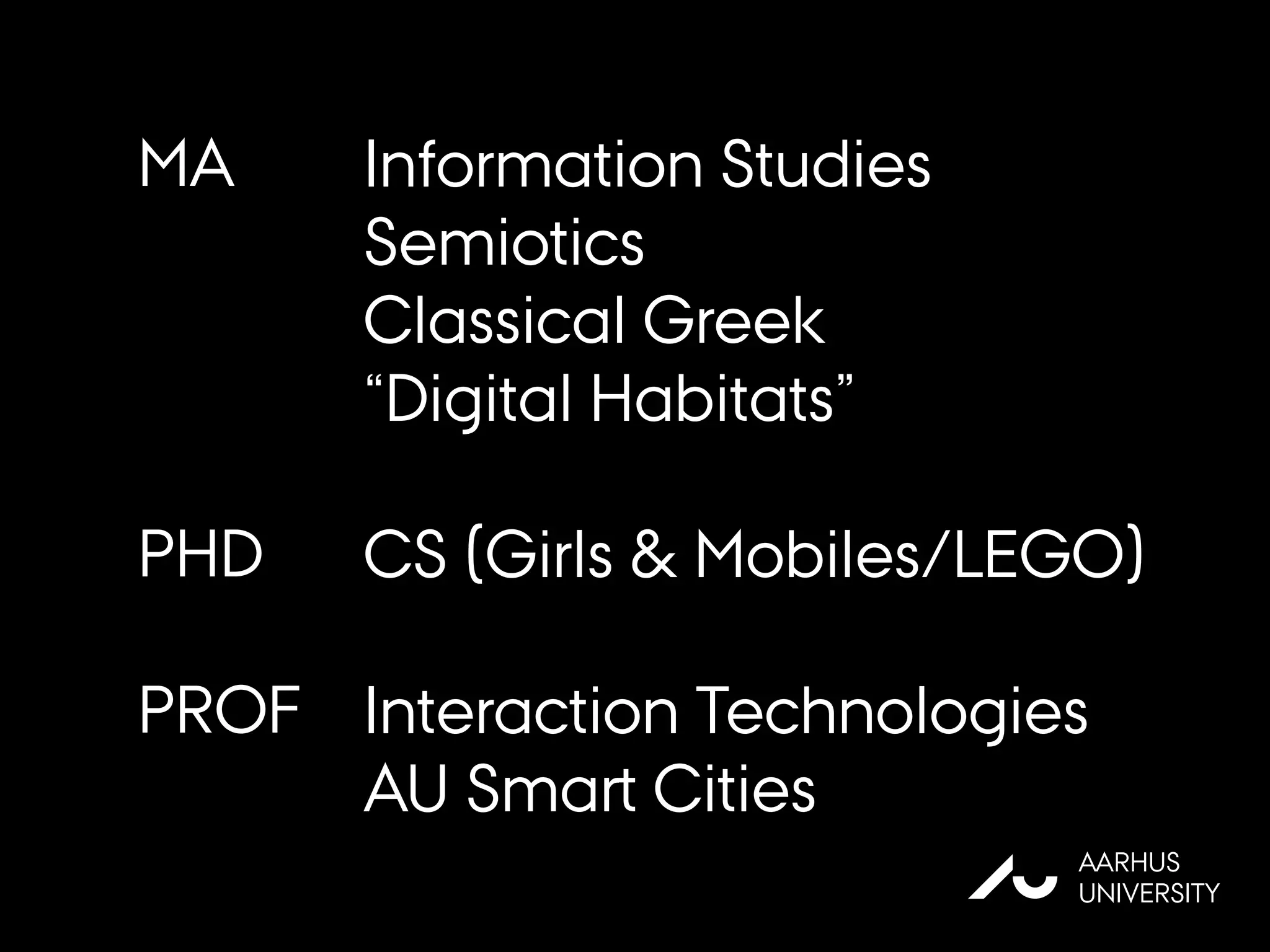
MA
PHD
PROF
Information Studies
Semiotics
Classical Greek
“Digital Habitats”
CS (Girls & Mobiles/LEGO)
Interaction Technologies
AU Smart Cities
AU
AARHUS
UNIVERSITY
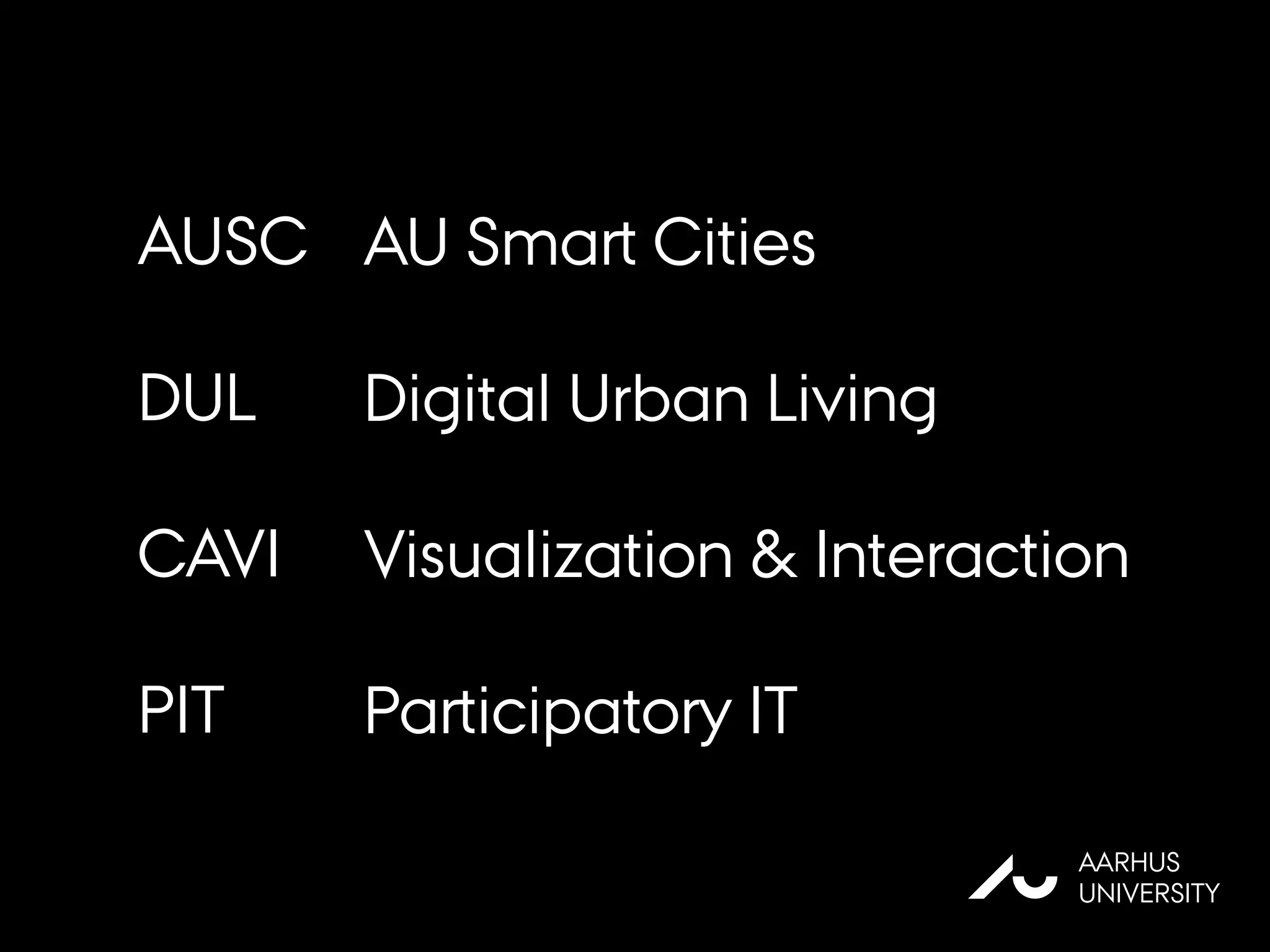
AUSC
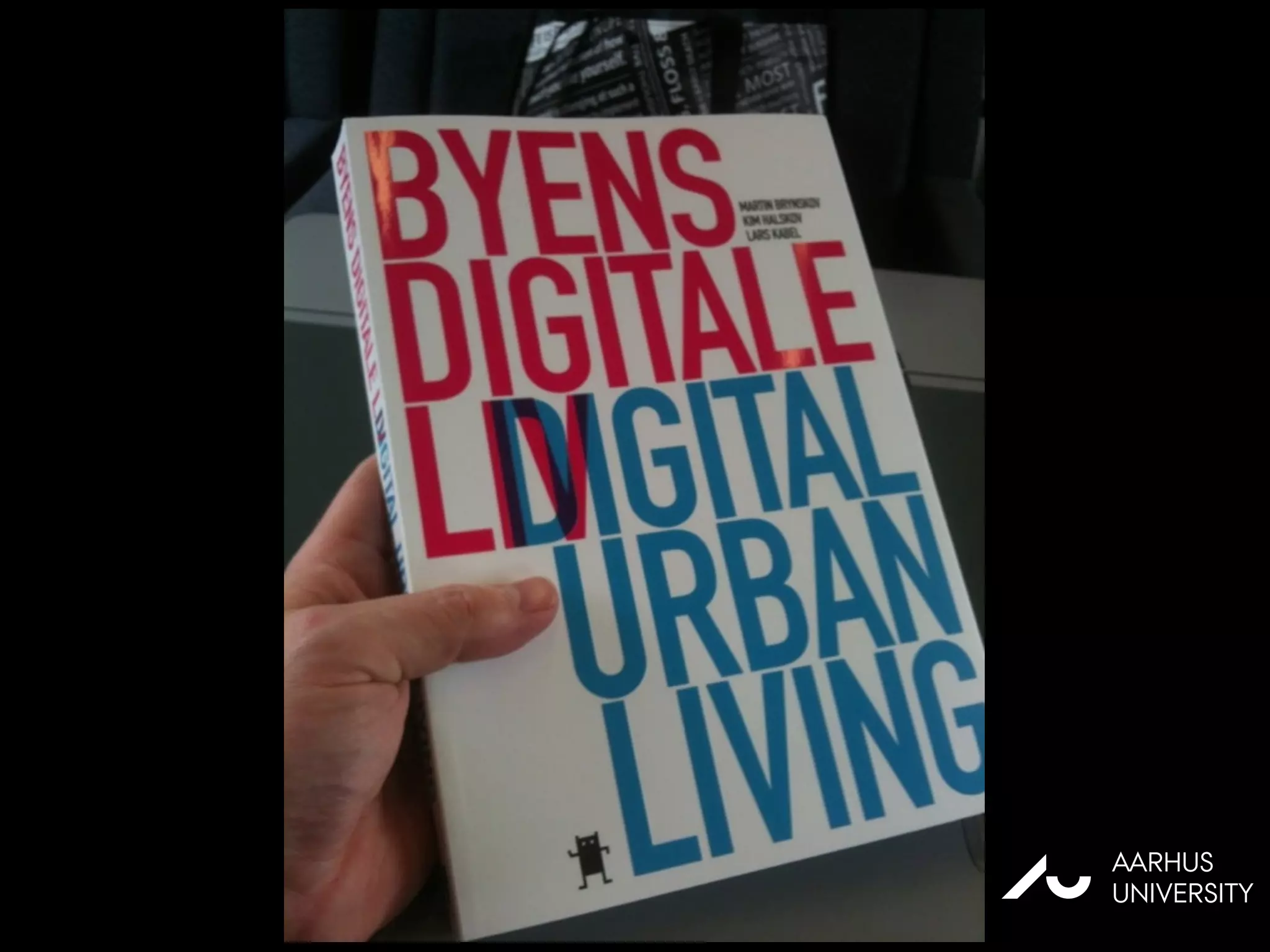
DUL
CAVI
PIT
AU Smart Cities
Digital Urban Living
Visualization & Interaction
Participatory IT
AU
AARHUS
UNIVERSITY
AU
AARHUS
UNIVERSITY
AU
AARHUS
UNIVERSITY
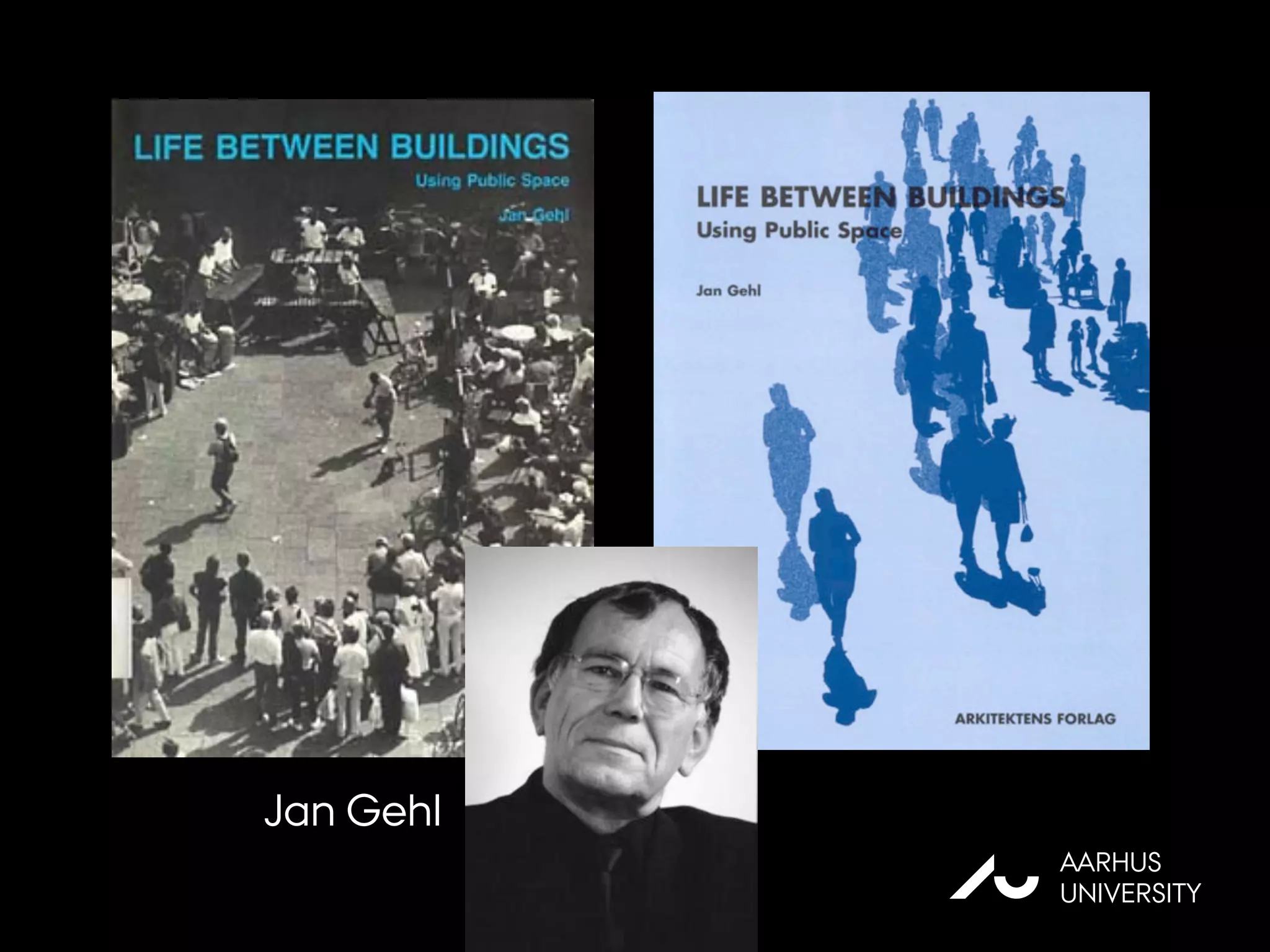
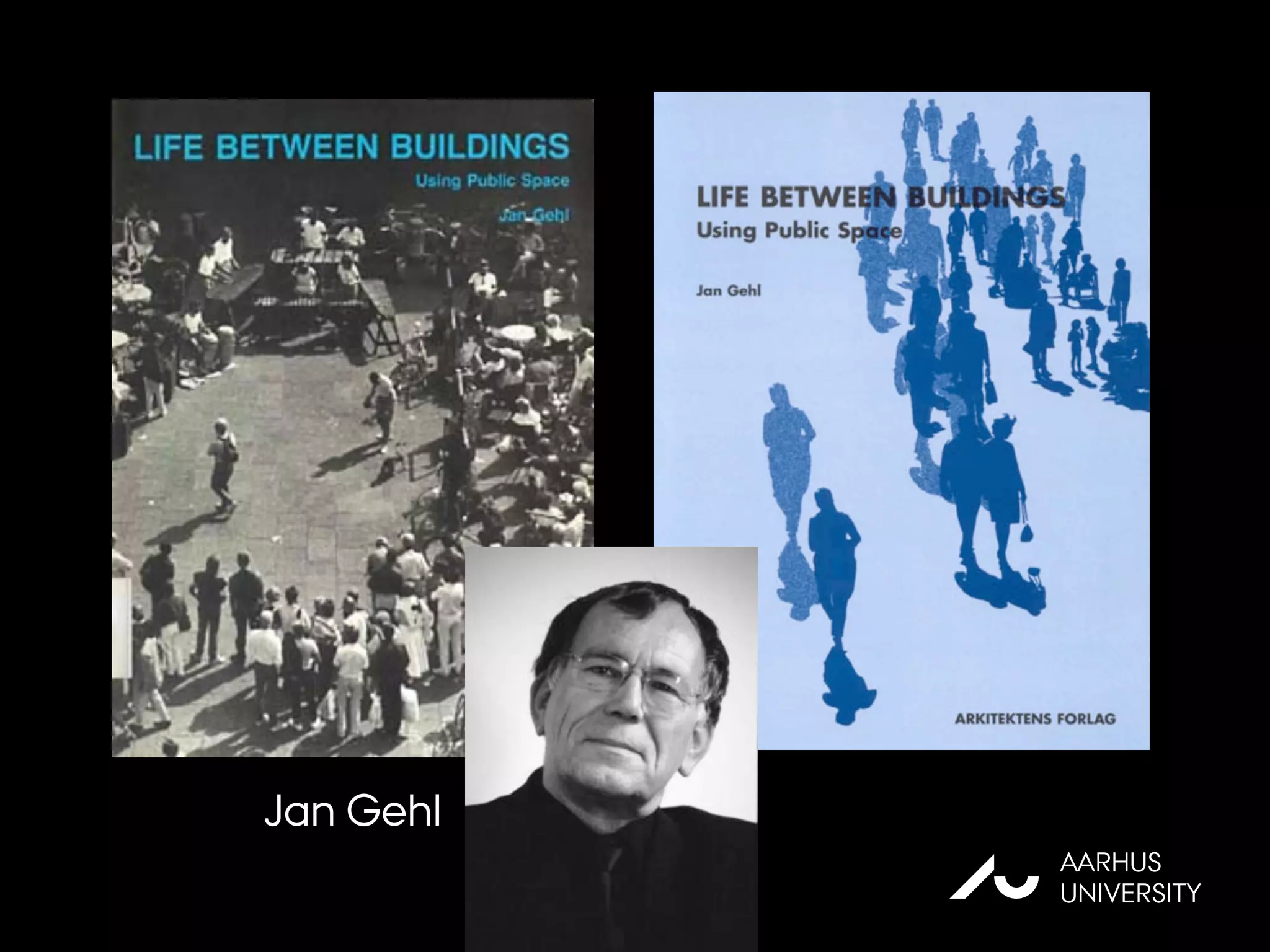
Jan Gehl
open data
AU
AARHUS
UNIVERSITY
smart cities
AU
AARHUS
UNIVERSITY
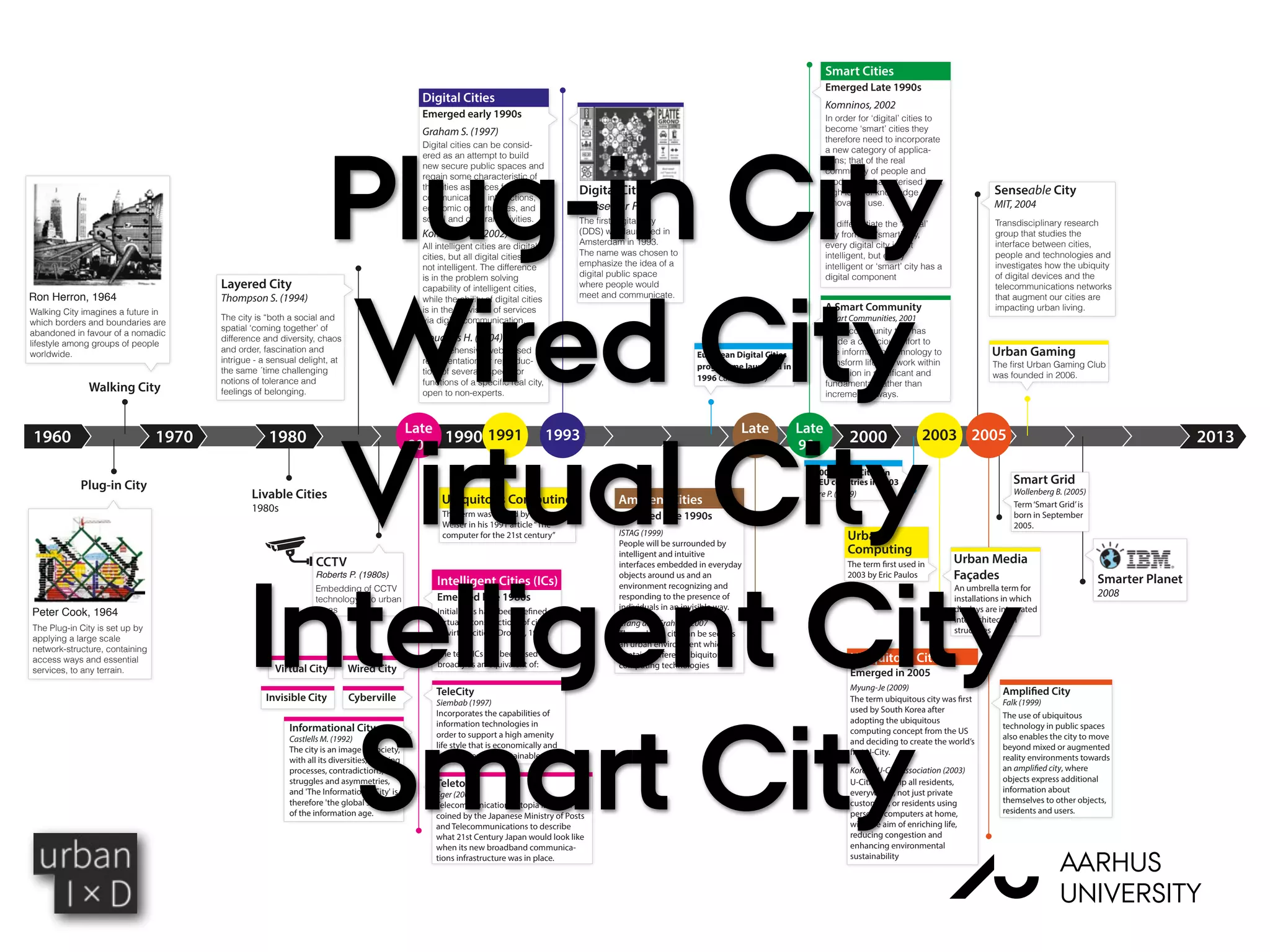
2013 20132000
Senseable City
MIT, 2004
Transdisciplinary research
group that studies the
interface between cities,
people and technologies and
investigates how the ubiquity
of digital devices and the
telecommunications networks
that augment our cities are
impacting urban living.
Smarter Planet
2008
Wollenberg B. (2005)
Term‘Smart Grid’is
born in September
2005.
Smart Grid
Urban Media
Façades
It is a community that has
made a conscious effort to
use information technology to
transform life and work within
fundamental, rather than
incremental, ways.
1960 1970 1980 1990
Livable Cities
1980s
The Plug-in City is set up by
applying a large scale
network-structure, containing
access ways and essential
services, to any terrain.
Peter Cook, 1964
Walking City imagines a future in
which borders and boundaries are
abandoned in favour of a nomadic
lifestyle among groups of people
worldwide.
Ron Herron, 1964
Initially ICs have been defined as
virtual reconstructions of cities,
as virtual cities. (Droege, 1997)
The term ICs has been used
broadly as an equivalent of:
TeleCity
Siembab (1997)
Incorporates the capabilities of
information technologies in
order to support a high amenity
life style that is economically and
environmentally sustainable
Teletopia
Eger (2005)
Telecommunications Utopia is a term first
coined by the Japanese Ministry of Posts
and Telecommunications to describe
what 21st Century Japan would look like
when its new broadband communica-
tions infrastructure was in place.
Informational City
Castlells M. (1992)
The city is an image of society,
with all its diversities, ongoing
processes, contradictions,
struggles and asymmetries,
and 'The Informational City' is
therefore 'the global society'
of the information age.
Plug-in City
Walking City
The city is “both a social and
spatial ‘coming together’ of
difference and diversity, chaos
and order, fascination and
intrigue - a sensual delight, at
the same ´time challenging
notions of tolerance and
feelings of belonging.
Layered City
Thompson S. (1994)
Komninos N. (2002)
Digital cities can be consid-
ered as an attempt to build
new secure public spaces and
regain some characteristic of
the cities as places for
communication, interactions,
economic opportunities, and
social and cultural activities.
All intelligent cities are digital
cities, but all digital cities are
not intelligent. The difference
is in the problem solving
capability of intelligent cities,
while the ability of digital cities
is in the provision of services
via digital communication.
Besselaar P.
(DDS) was launched in
Amsterdam in 1993.
The name was chosen to
emphasize the idea of a
digital public space
where people would
meet and communicate.
Couclelis H. (2004)
Comprehensive web‐based
representation, or reproduc-
tion, of several aspects or
open to non‐experts.
Intelligent Cities (ICs)
Emerged late 1980s
Ambient Cities
Emerged late 1990s
Digital Cities
Emerged early 1990s
Graham S. (1997)
Smart Cities
Emerged Late 1990s
Komninos, 2002
CCTV
Roberts P. (1980s)
Embedding of CCTV
technology into urban
areas
Invisible City
Digital City
1993Late
80s
Late
90s
Late
90s
In order for ‘digital’ cities to
become ‘smart’ cities they
therefore need to incorporate
a new category of applica-
tions; that of the real
community of people and
producers characterised by a
high level of knowledge and
innovation use.
To differentiate the ‘digital’
city from the ‘smart’ city,
every digital city is not
intelligent, but every
intelligent or ‘smart’ city has a
digital component
A Smart Community
Smart Communities, 2001
ISTAG (1999)
People will be surrounded by
intelligent and intuitive
interfaces embedded in everyday
objects around us and an
environment recognizing and
responding to the presence of
individuals in an invisible way.
The term was coined by Mark
Weiser in his 1991 article“The
computer for the 21st century”
Crang and Graham, 2007
The ambient city can be seen as
an urban environment which
contains different ubiquitous
computing technologies
> 100 Digital Cities in
20 EU countries in 2003
Caire P. (2009)
European Digital Cities
programme launched in
1996 Caire P. (2009)
Cyberville
Wired City
200520031991
Ubiquitous Cities
Emerged in 2005
Myung‐Je (2009)
The term ubiquitous city was first
used by South Korea after
adopting the ubiquitous
computing concept from the US
and deciding to create the world’s
first U‐City.
The term first used in
2003 by Eric Paulos
An umbrella term for
installations in which
displays are integrated
into architectural
structures
Korean U‐City Association (2003)
U‐Cities to help all residents,
everywhere, not just private
customers, or residents using
personal computers at home,
with the aim of enriching life,
reducing congestion and
enhancing environmental
sustainability
Amplified City
Falk (1999)
The use of ubiquitous
technology in public spaces
also enables the city to move
beyond mixed or augmented
reality environments towards
an amplified city, where
objects express additional
information about
themselves to other objects,
residents and users.
Ubiquitous Computing
Urban
Computing
Virtual City
Urban Gaming
was founded in 2006.
AU
AARHUS
UNIVERSITY
Plug-in City
Wired City
Virtual City
Intelligent City
Smart City
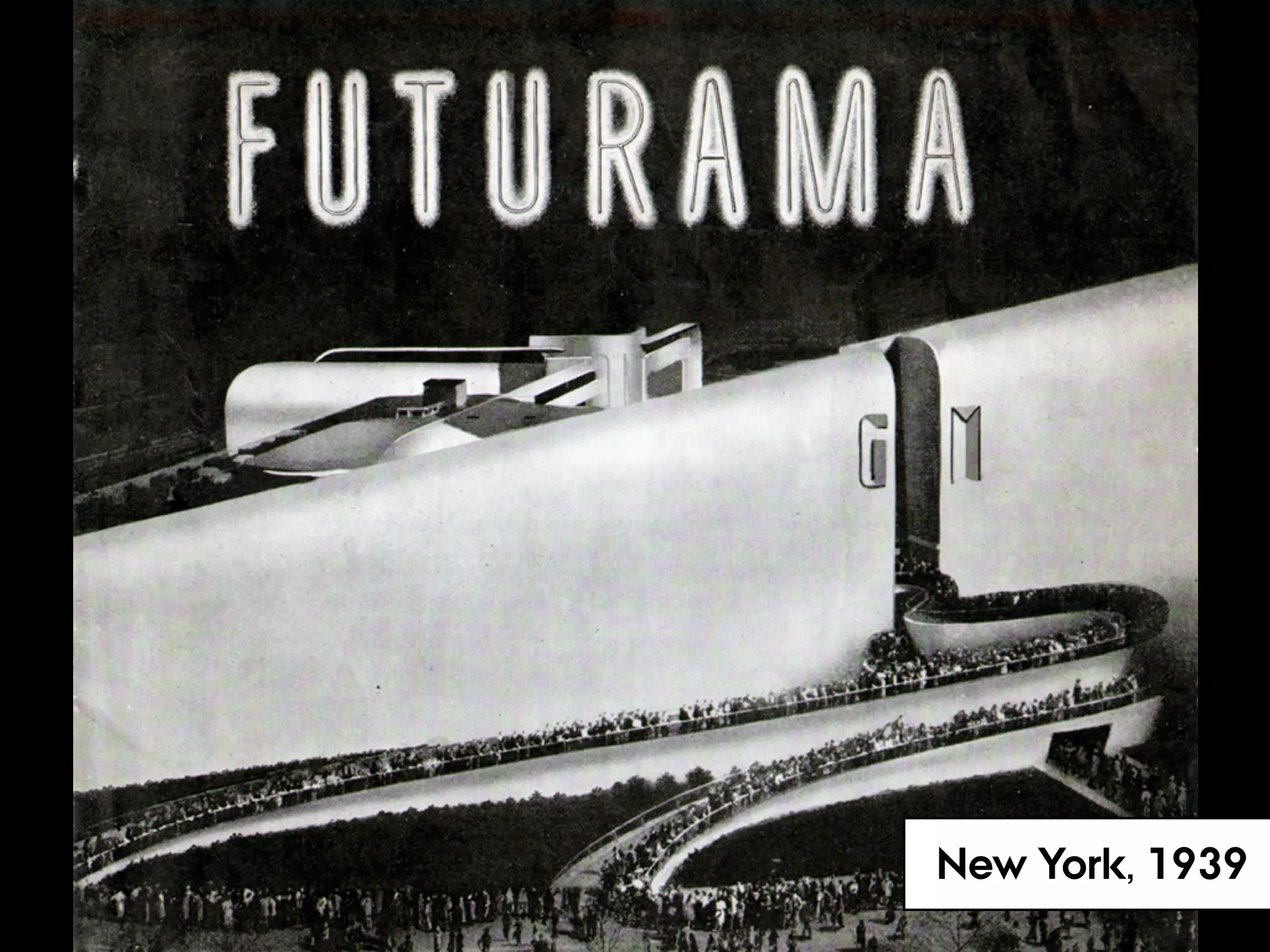
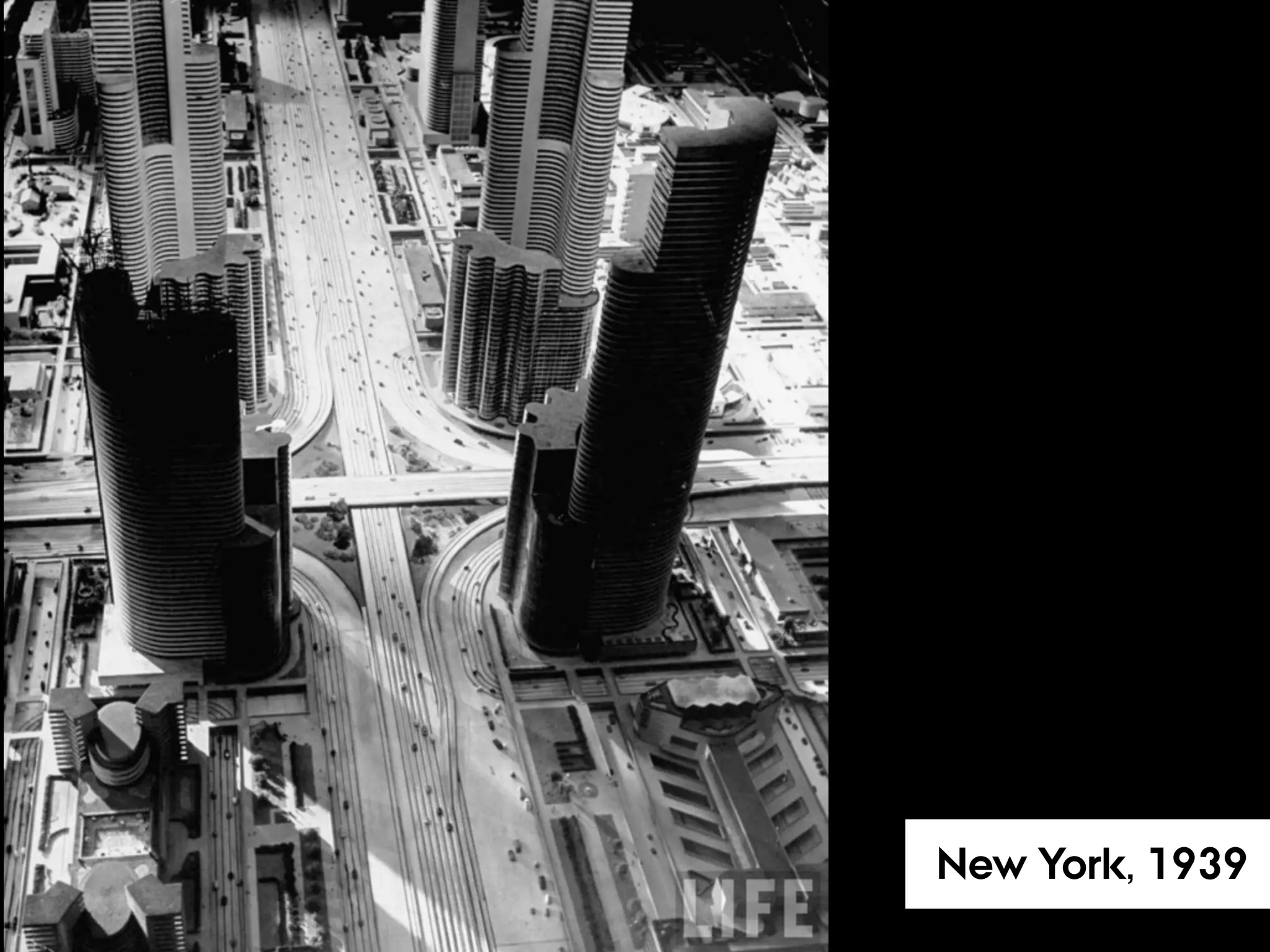
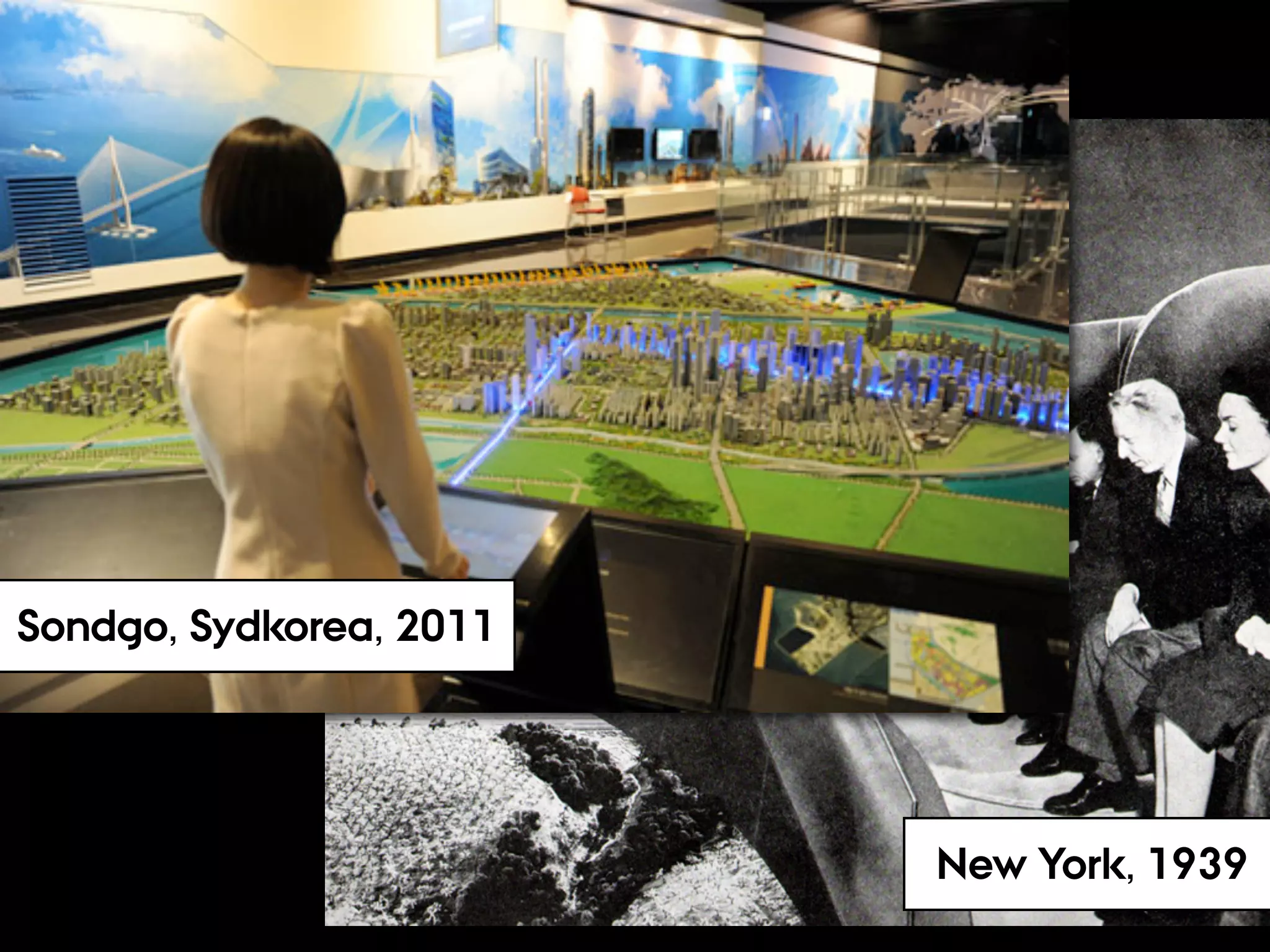
New York, 1939
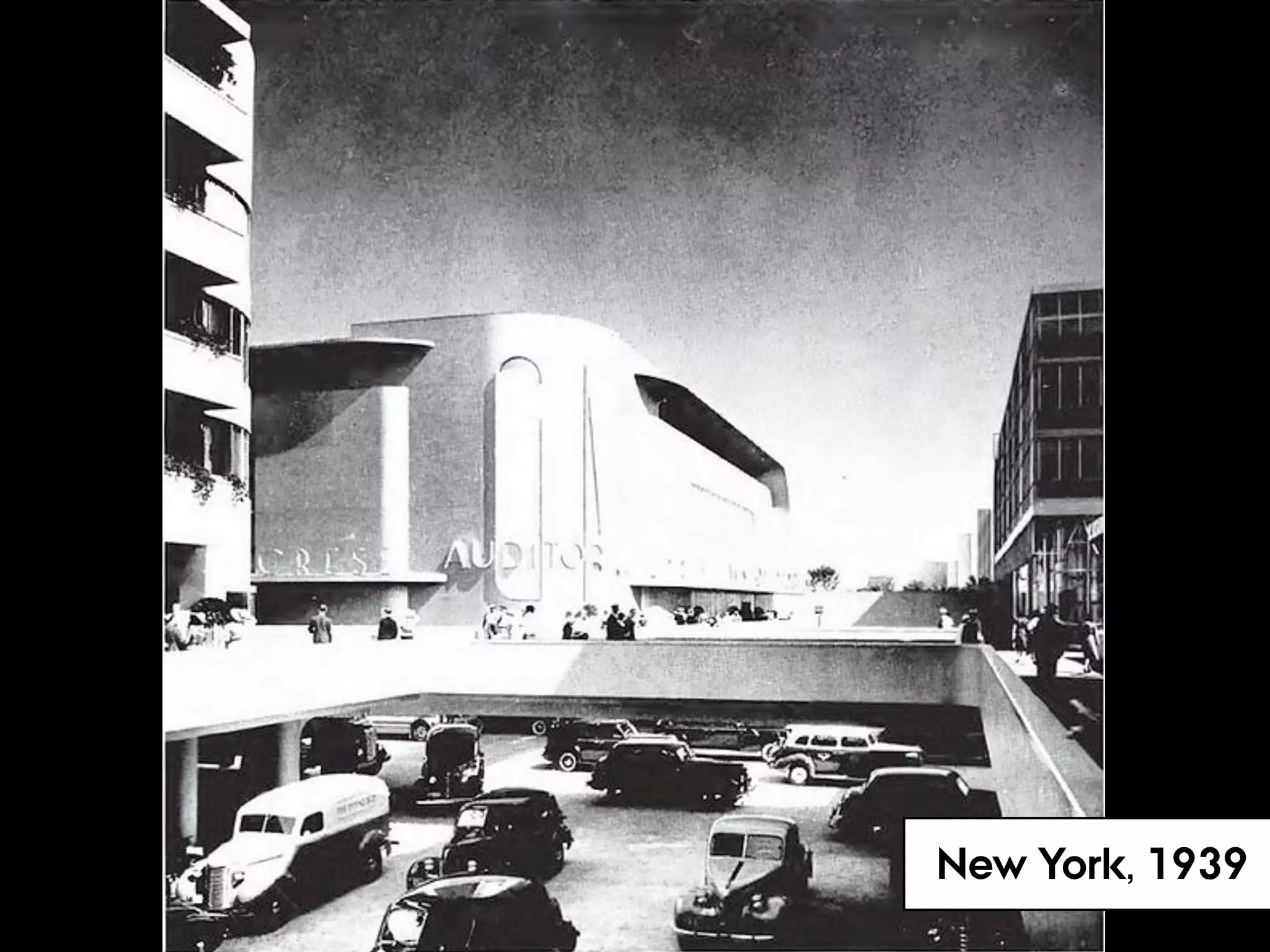
New York, 1939
New York, 1939
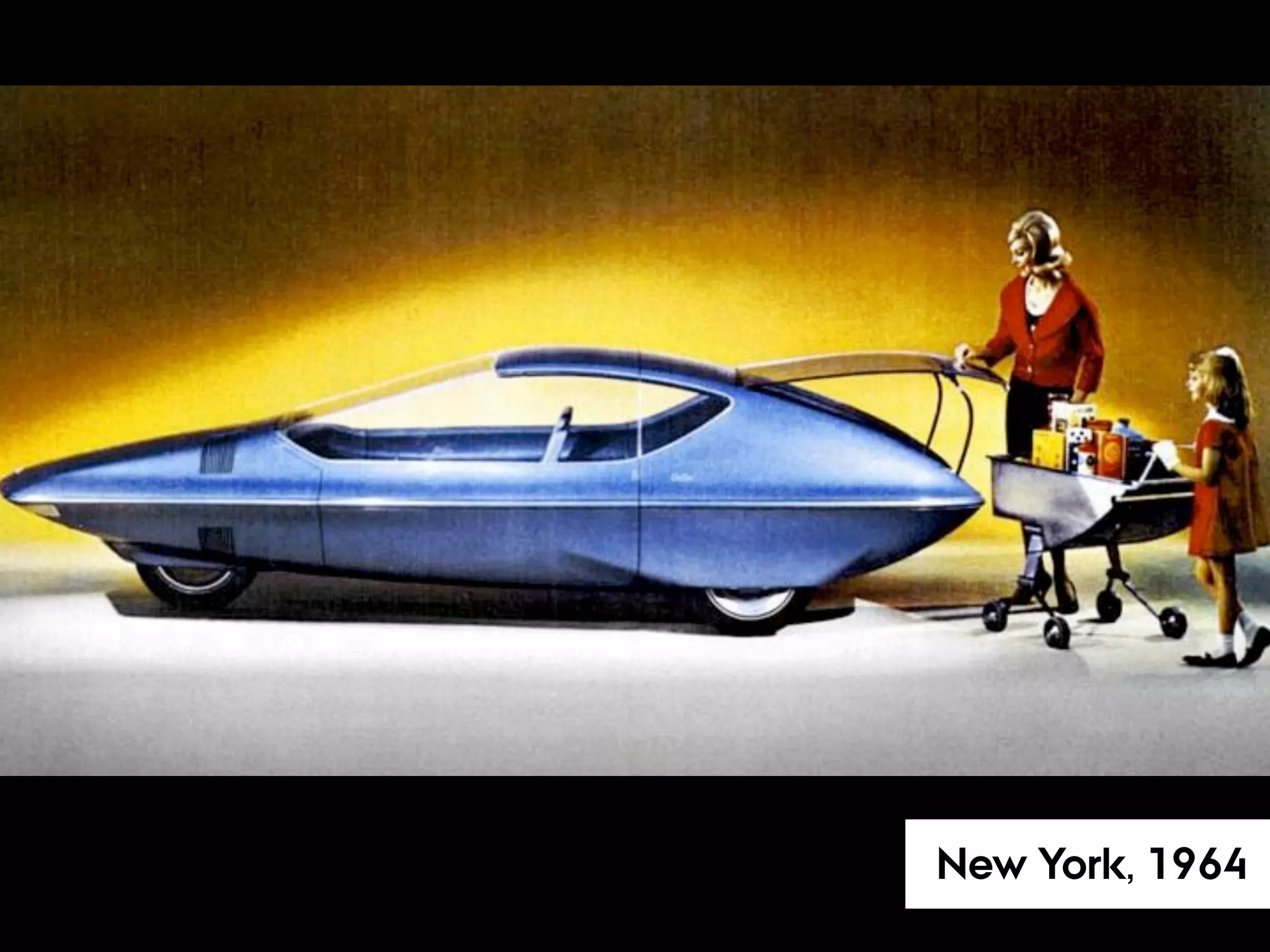
New York, 1964
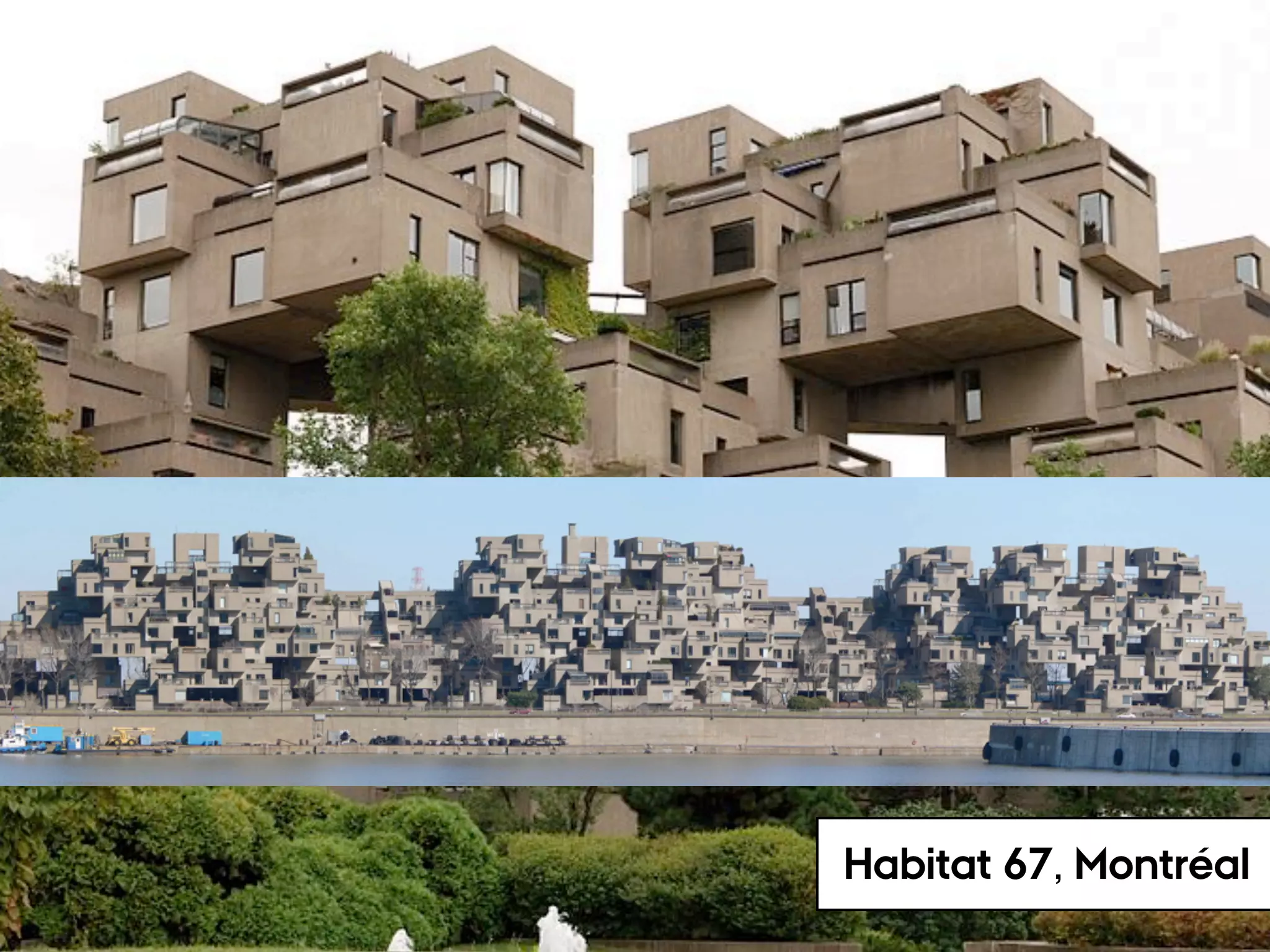
Habitat 67, Montréal
New York, 1939
Sondgo, Sydkorea, 2011
AU
AARHUS
UNIVERSITY
– Frederik Pohl
“A good science
fiction story should be
able to predict not
the automobile but
the traffic jam.”
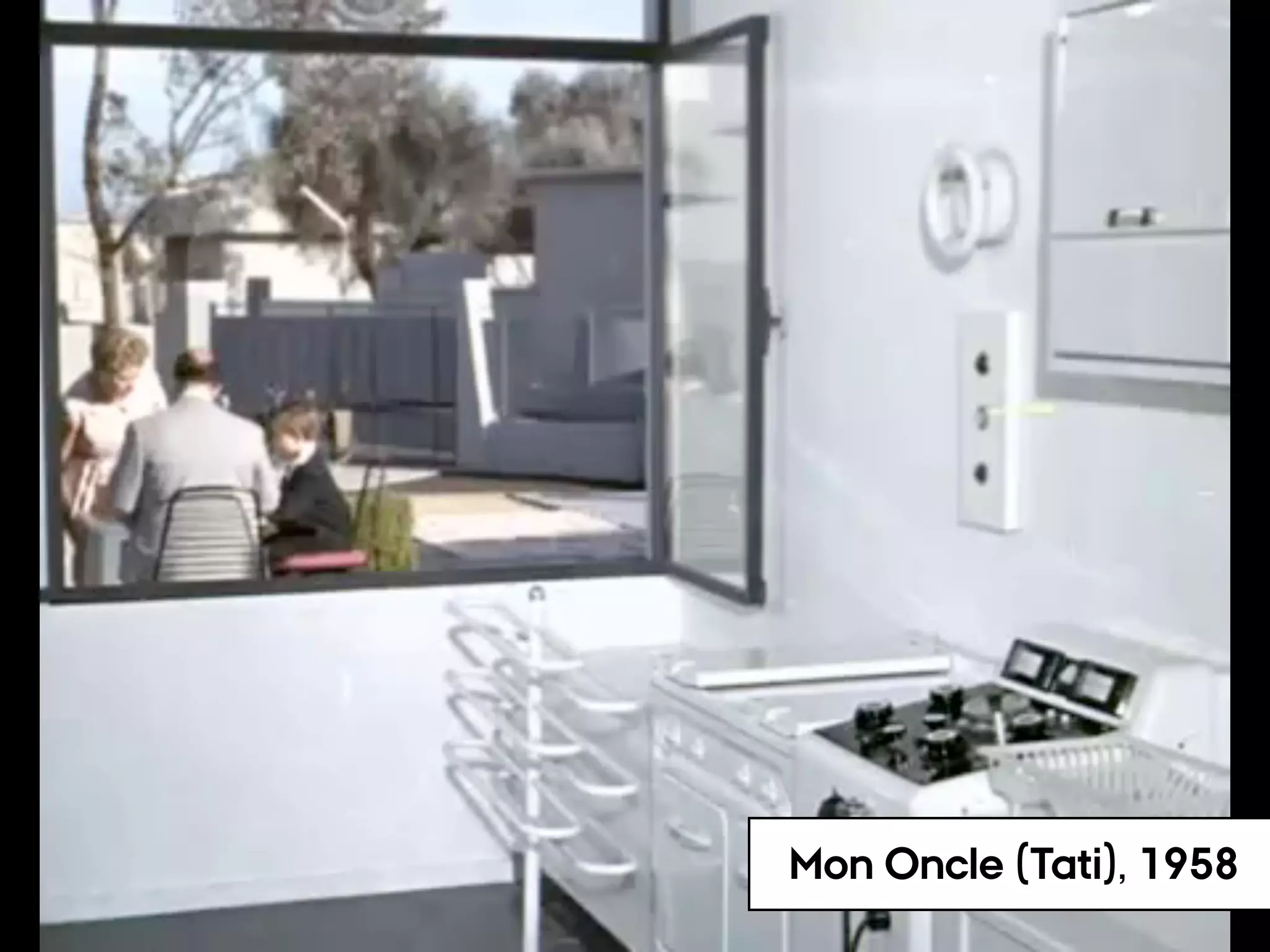
Mon Oncle (Tati), 1958
AU
AARHUS
UNIVERSITY
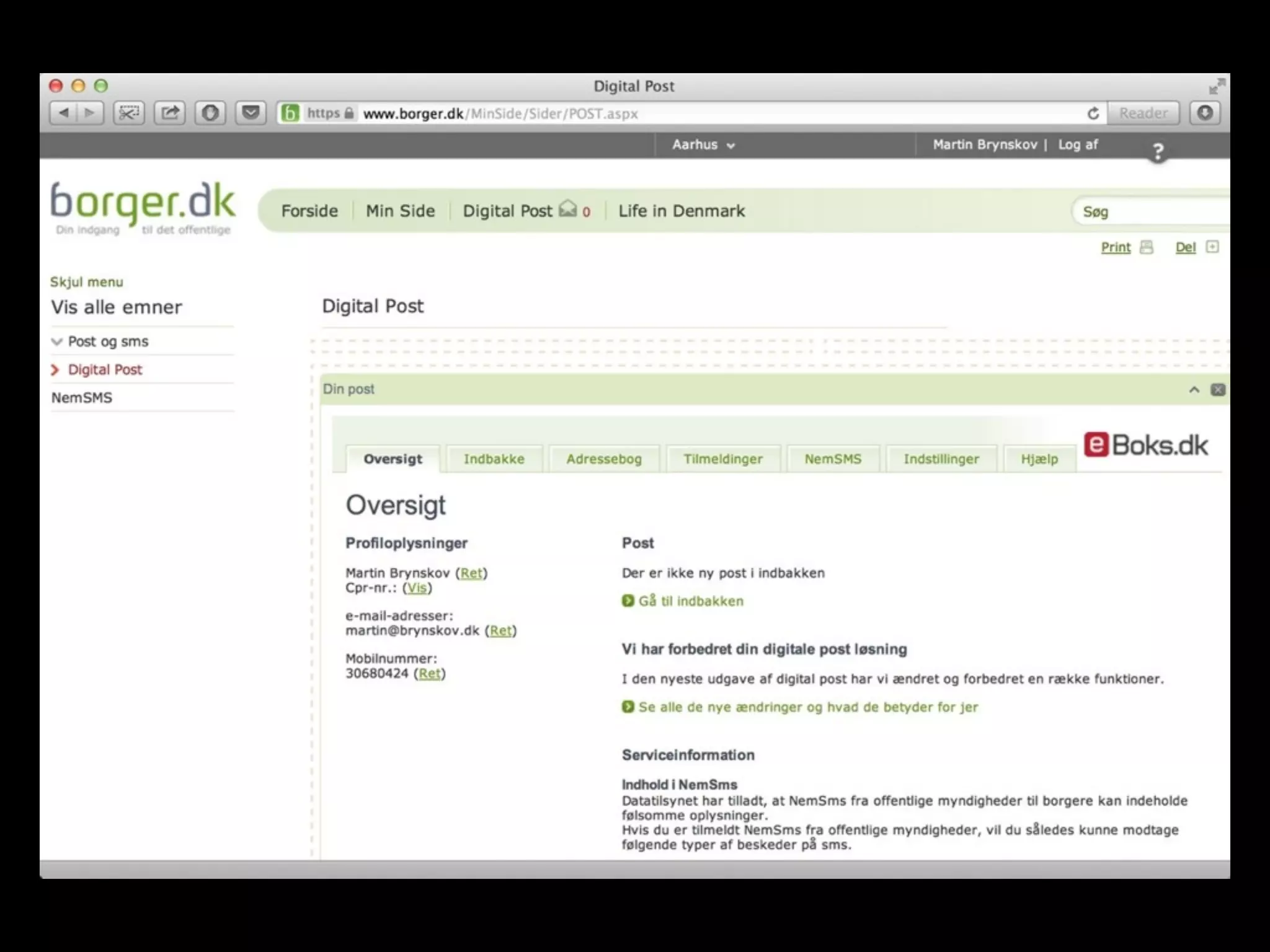
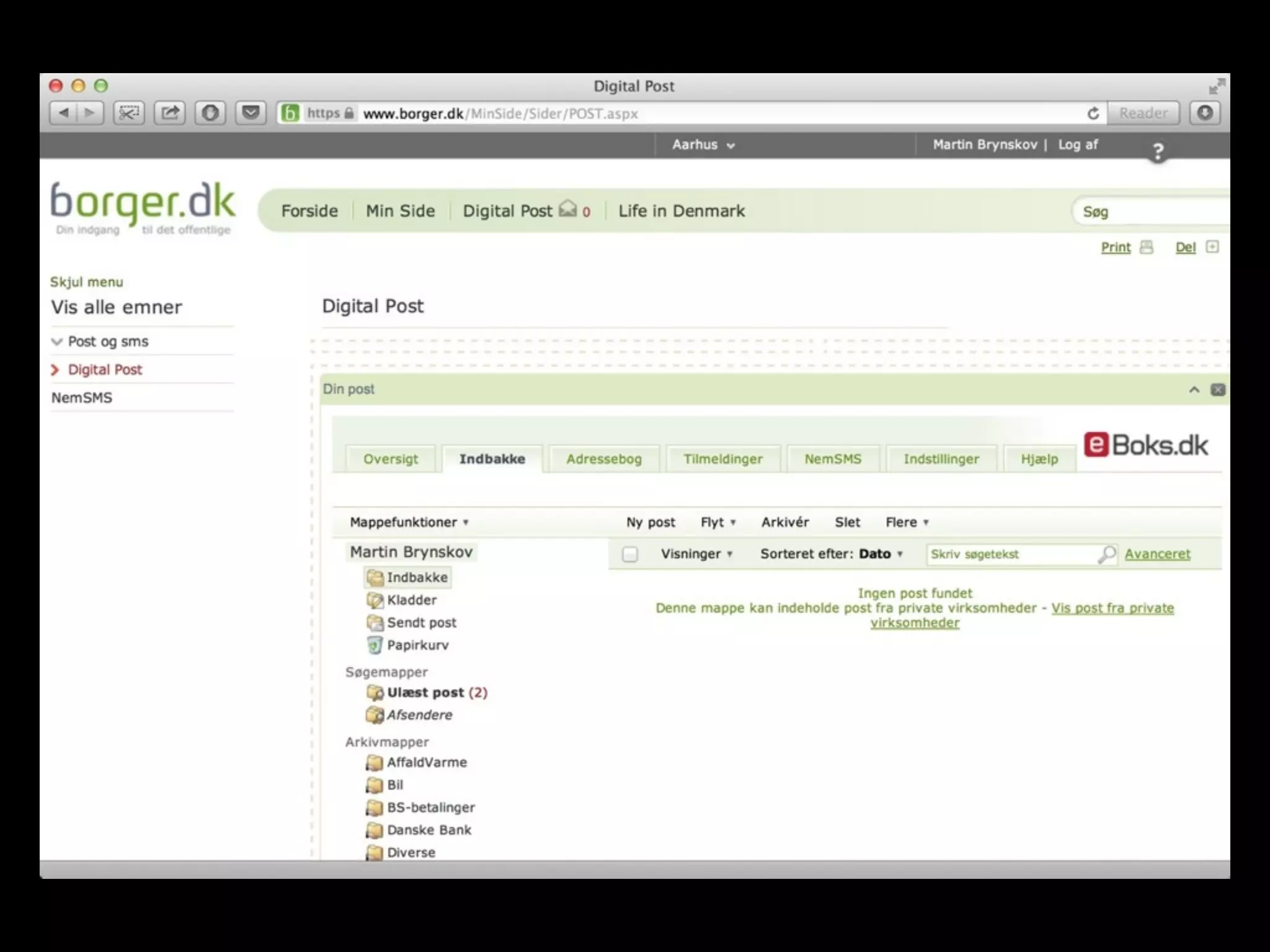
Digital Post
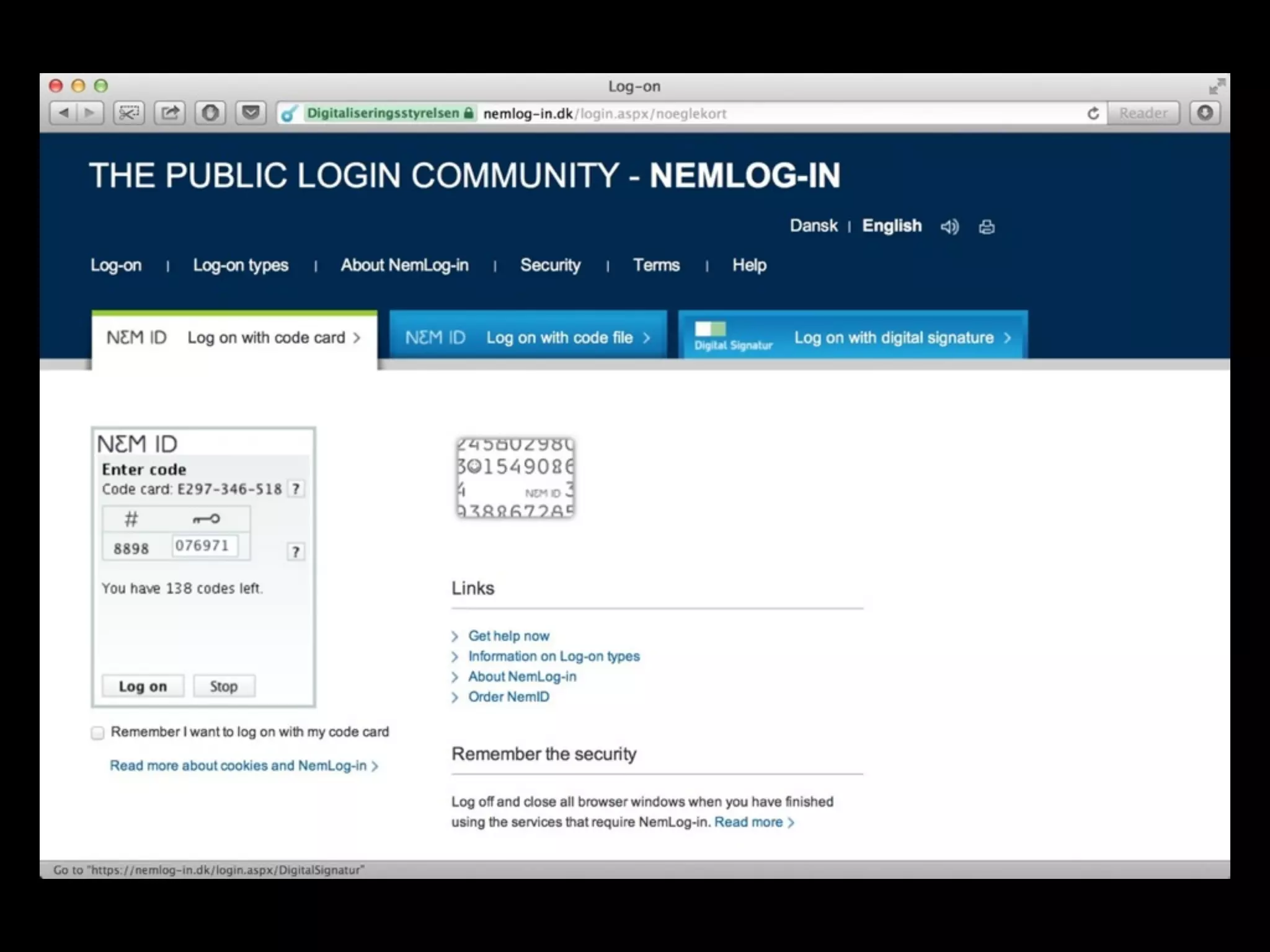
NemID
Rejsekortet
IC4
...
“New” is easy.
“Right” is hard.
AU
AARHUS
UNIVERSITY
– Craig Federighi
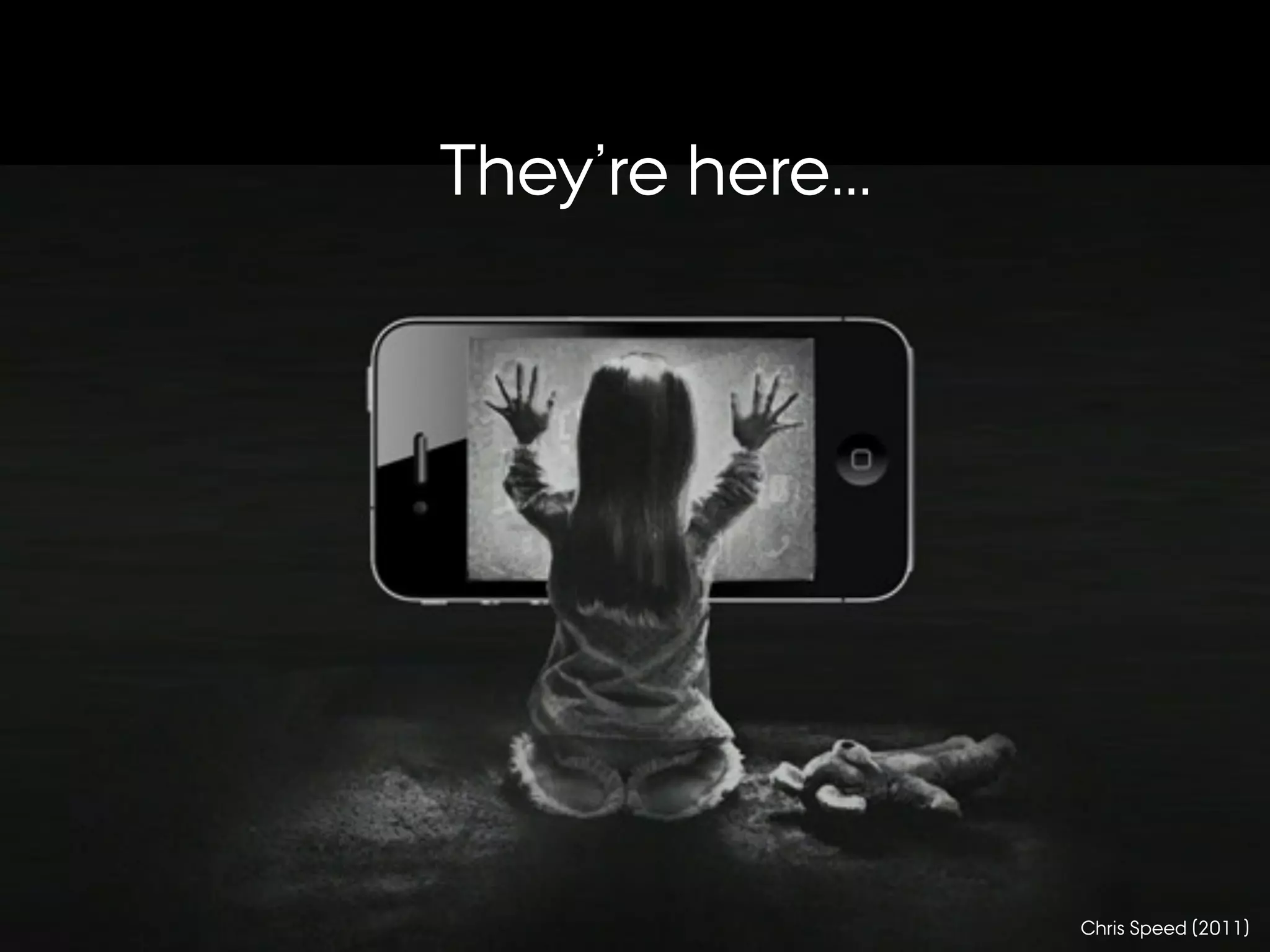
Chris Speed (2011)
They’re here...
AU
AARHUS
UNIVERSITY
AU
AARHUS
UNIVERSITY
The smart city
AU
AARHUS
UNIVERSITY
The ? city
AU
AARHUS
UNIVERSITY
The good city
AU
AARHUS
UNIVERSITY
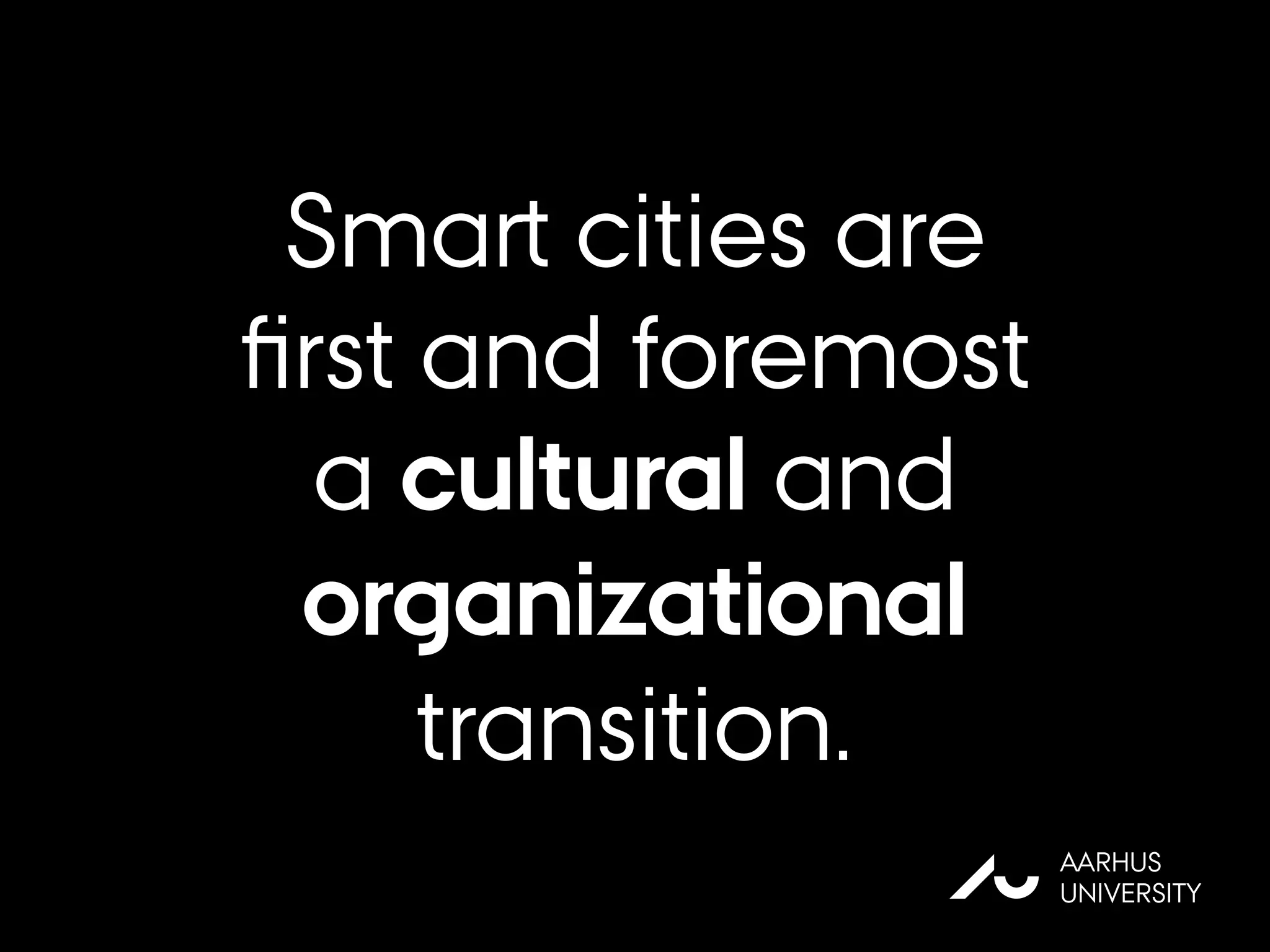
Smart cities are
first and foremost
a cultural and
organizational
transition.

AU
AARHUS
UNIVERSITY
2013 20132000
Senseable City
MIT, 2004
Transdisciplinary research
group that studies the
interface between cities,
people and technologies and
investigates how the ubiquity
of digital devices and the
telecommunications networks
that augment our cities are
impacting urban living.
Smarter Planet
2008
Wollenberg B. (2005)
Term‘Smart Grid’is
born in September
2005.
Smart Grid
Urban Media
Façades
It is a community that has
made a conscious effort to
use information technology to
transform life and work within
fundamental, rather than
incremental, ways.
1960 1970 1980 1990
Livable Cities
1980s
The Plug-in City is set up by
applying a large scale
network-structure, containing
access ways and essential
services, to any terrain.
Peter Cook, 1964
Walking City imagines a future in
which borders and boundaries are
abandoned in favour of a nomadic
lifestyle among groups of people
worldwide.
Ron Herron, 1964
Initially ICs have been defined as
virtual reconstructions of cities,
as virtual cities. (Droege, 1997)
The term ICs has been used
broadly as an equivalent of:
TeleCity
Siembab (1997)
Incorporates the capabilities of
information technologies in
order to support a high amenity
life style that is economically and
environmentally sustainable
Teletopia
Eger (2005)
Telecommunications Utopia is a term first
coined by the Japanese Ministry of Posts
and Telecommunications to describe
what 21st Century Japan would look like
when its new broadband communica-
tions infrastructure was in place.
Informational City
Castlells M. (1992)
The city is an image of society,
with all its diversities, ongoing
processes, contradictions,
struggles and asymmetries,
and 'The Informational City' is
therefore 'the global society'
of the information age.
Plug-in City
Walking City
The city is “both a social and
spatial ‘coming together’ of
difference and diversity, chaos
and order, fascination and
intrigue - a sensual delight, at
the same ´time challenging
notions of tolerance and
feelings of belonging.
Layered City
Thompson S. (1994)
Komninos N. (2002)
Digital cities can be consid-
ered as an attempt to build
new secure public spaces and
regain some characteristic of
the cities as places for
communication, interactions,
economic opportunities, and
social and cultural activities.
All intelligent cities are digital
cities, but all digital cities are
not intelligent. The difference
is in the problem solving
capability of intelligent cities,
while the ability of digital cities
is in the provision of services
via digital communication.
Besselaar P.
(DDS) was launched in
Amsterdam in 1993.
The name was chosen to
emphasize the idea of a
digital public space
where people would
meet and communicate.
Couclelis H. (2004)
Comprehensive web‐based
representation, or reproduc-
tion, of several aspects or
open to non‐experts.
Intelligent Cities (ICs)
Emerged late 1980s
Ambient Cities
Emerged late 1990s
Digital Cities
Emerged early 1990s
Graham S. (1997)
Smart Cities
Emerged Late 1990s
Komninos, 2002
CCTV
Roberts P. (1980s)
Embedding of CCTV
technology into urban
areas
Invisible City
Digital City
1993Late
80s
Late
90s
Late
90s
In order for ‘digital’ cities to
become ‘smart’ cities they
therefore need to incorporate
a new category of applica-
tions; that of the real
community of people and
producers characterised by a
high level of knowledge and
innovation use.
To differentiate the ‘digital’
city from the ‘smart’ city,
every digital city is not
intelligent, but every
intelligent or ‘smart’ city has a
digital component
A Smart Community
Smart Communities, 2001
ISTAG (1999)
People will be surrounded by
intelligent and intuitive
interfaces embedded in everyday
objects around us and an
environment recognizing and
responding to the presence of
individuals in an invisible way.
The term was coined by Mark
Weiser in his 1991 article“The
computer for the 21st century”
Crang and Graham, 2007
The ambient city can be seen as
an urban environment which
contains different ubiquitous
computing technologies
> 100 Digital Cities in
20 EU countries in 2003
Caire P. (2009)
European Digital Cities
programme launched in
1996 Caire P. (2009)
Cyberville
Wired City
200520031991
Ubiquitous Cities
Emerged in 2005
Myung‐Je (2009)
The term ubiquitous city was first
used by South Korea after
adopting the ubiquitous
computing concept from the US
and deciding to create the world’s
first U‐City.
The term first used in
2003 by Eric Paulos
An umbrella term for
installations in which
displays are integrated
into architectural
structures
Korean U‐City Association (2003)
U‐Cities to help all residents,
everywhere, not just private
customers, or residents using
personal computers at home,
with the aim of enriching life,
reducing congestion and
enhancing environmental
sustainability
Amplified City
Falk (1999)
The use of ubiquitous
technology in public spaces
also enables the city to move
beyond mixed or augmented
reality environments towards
an amplified city, where
objects express additional
information about
themselves to other objects,
residents and users.
Ubiquitous Computing
Urban
Computing
Virtual City
Urban Gaming
was founded in 2006.
AU
AARHUS
UNIVERSITY
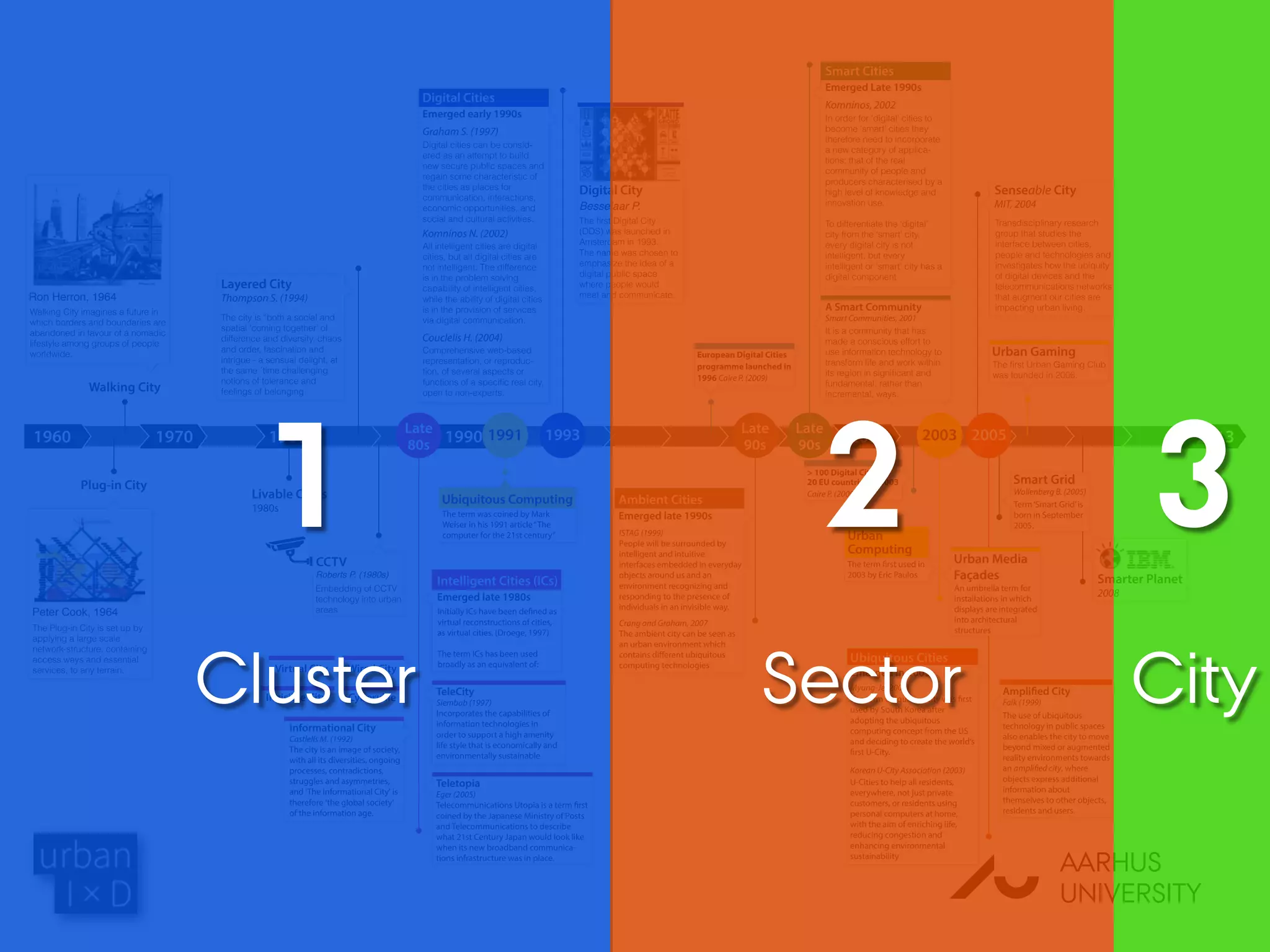
1
Cluster
2
Sector
3
City
The participatory city
AU
AARHUS
UNIVERSITY
Polis
AU
AARHUS
UNIVERSITY
Political.
AU
AARHUS
UNIVERSITY
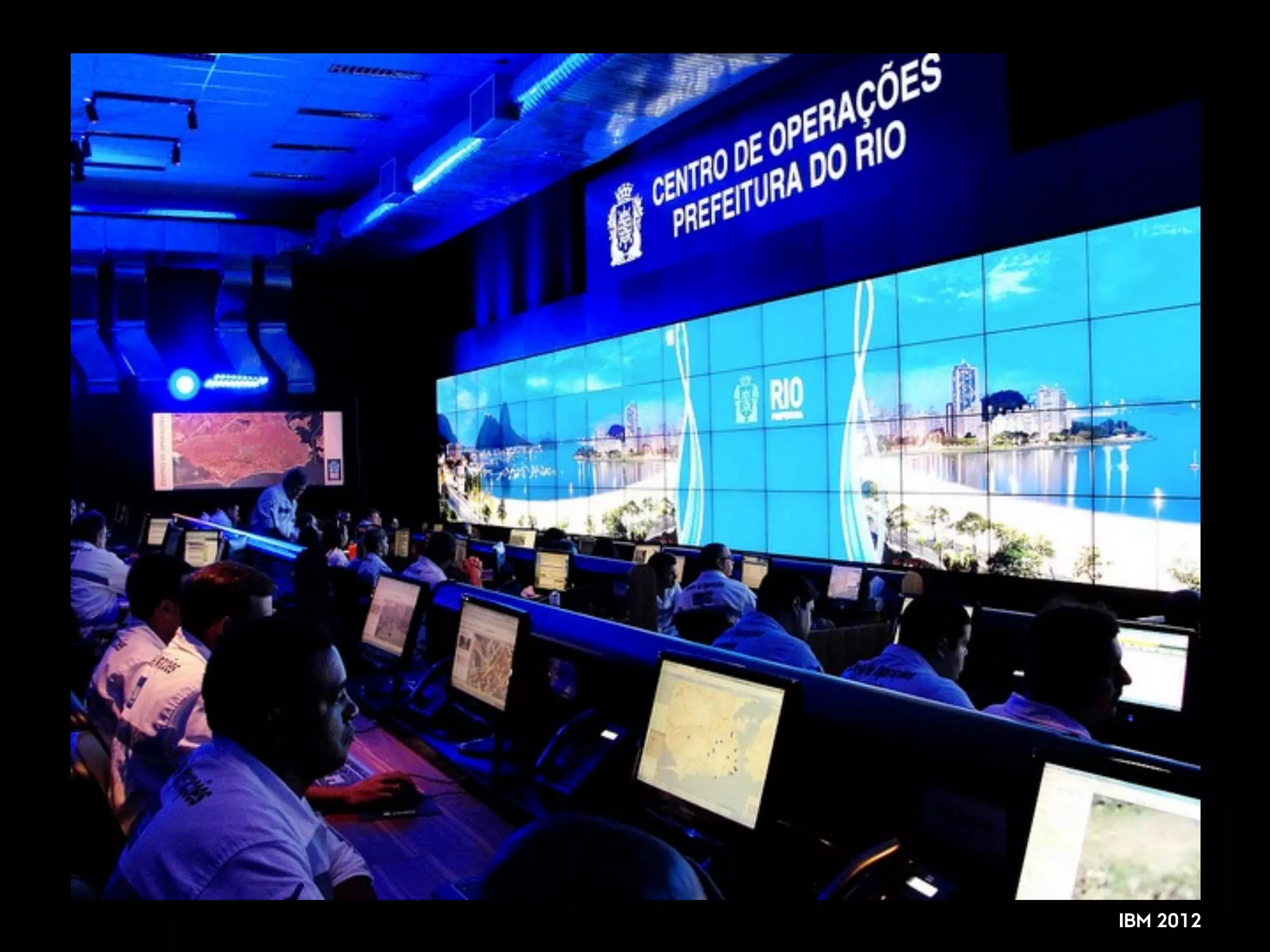
IBM 2012
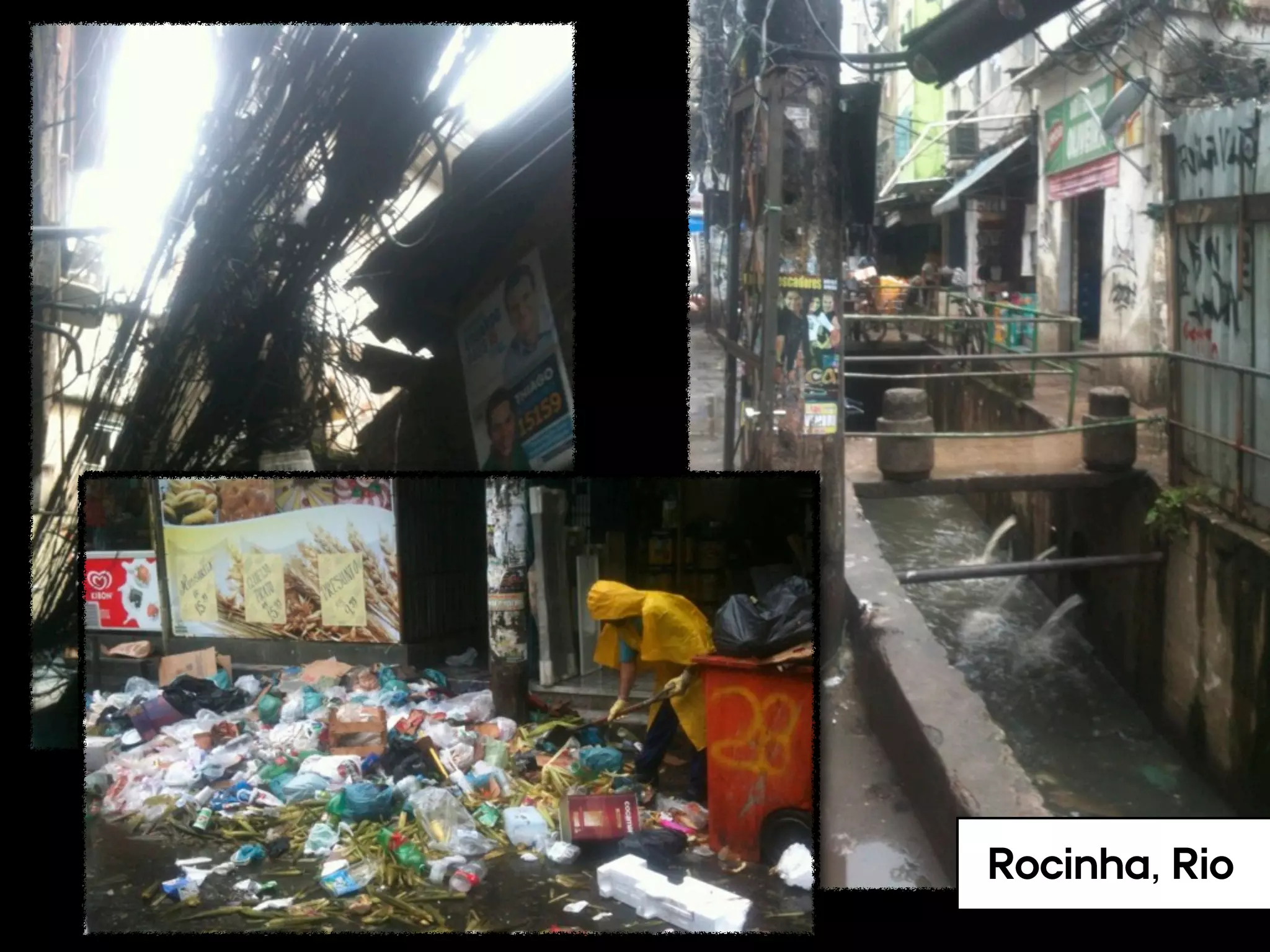
Rocinha, Rio
“Digital” is easy.
“Open” is easy.
“Right” is hard.
AU
AARHUS
UNIVERSITY
– Who Cares
Apple-style
vs.
Favela-style
Denmark-style?
AU
AARHUS
UNIVERSITY
AU
AARHUS
UNIVERSITY
Question
What is the primary motivation?
(a) Tech solutions
(b) Environment
(c) Ownership
(d) Economy
(e) Quality of Life
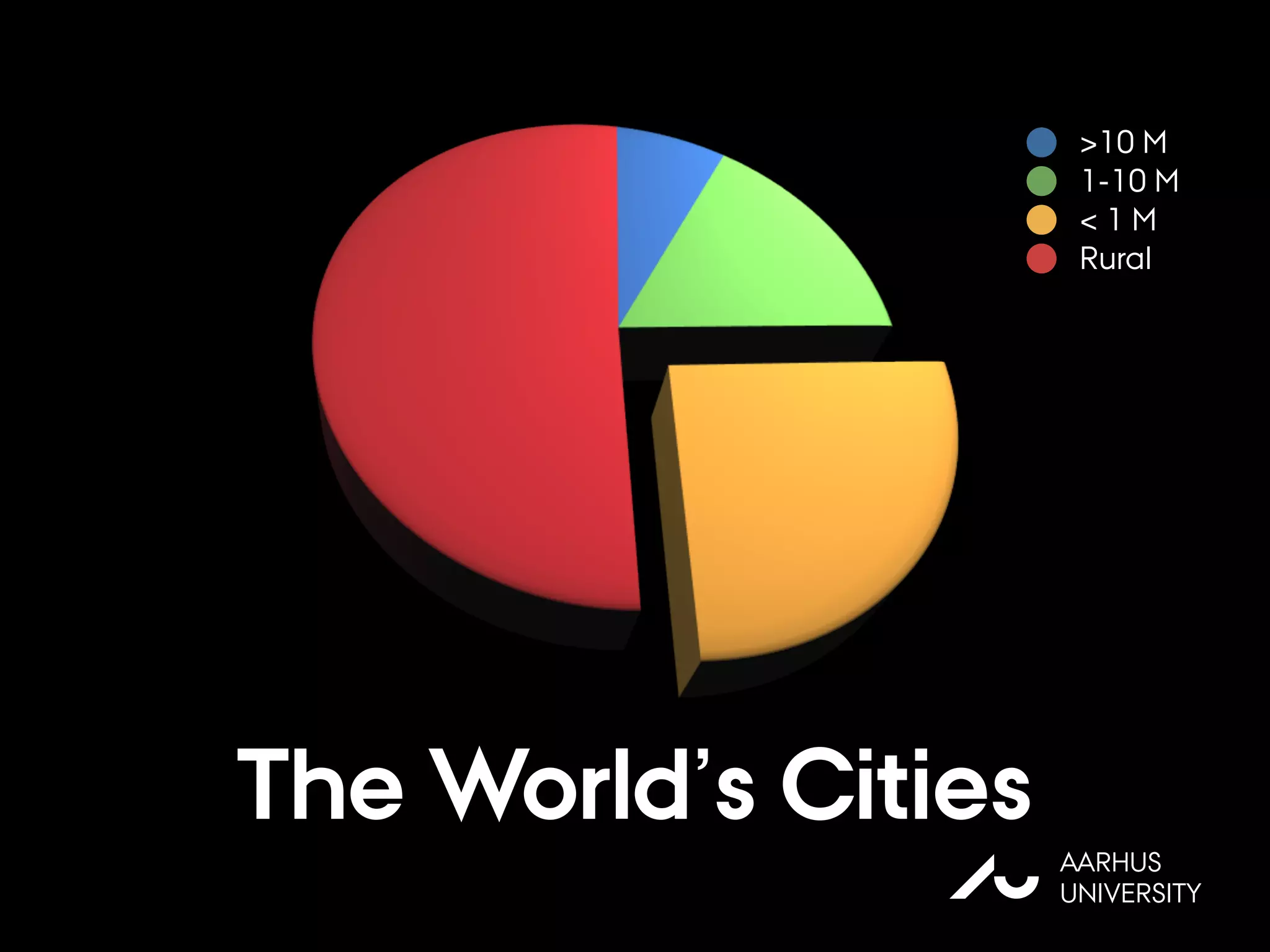
>10 M
1-10 M
< 1 M
Rural
The World’s Cities
AU
AARHUS
UNIVERSITY
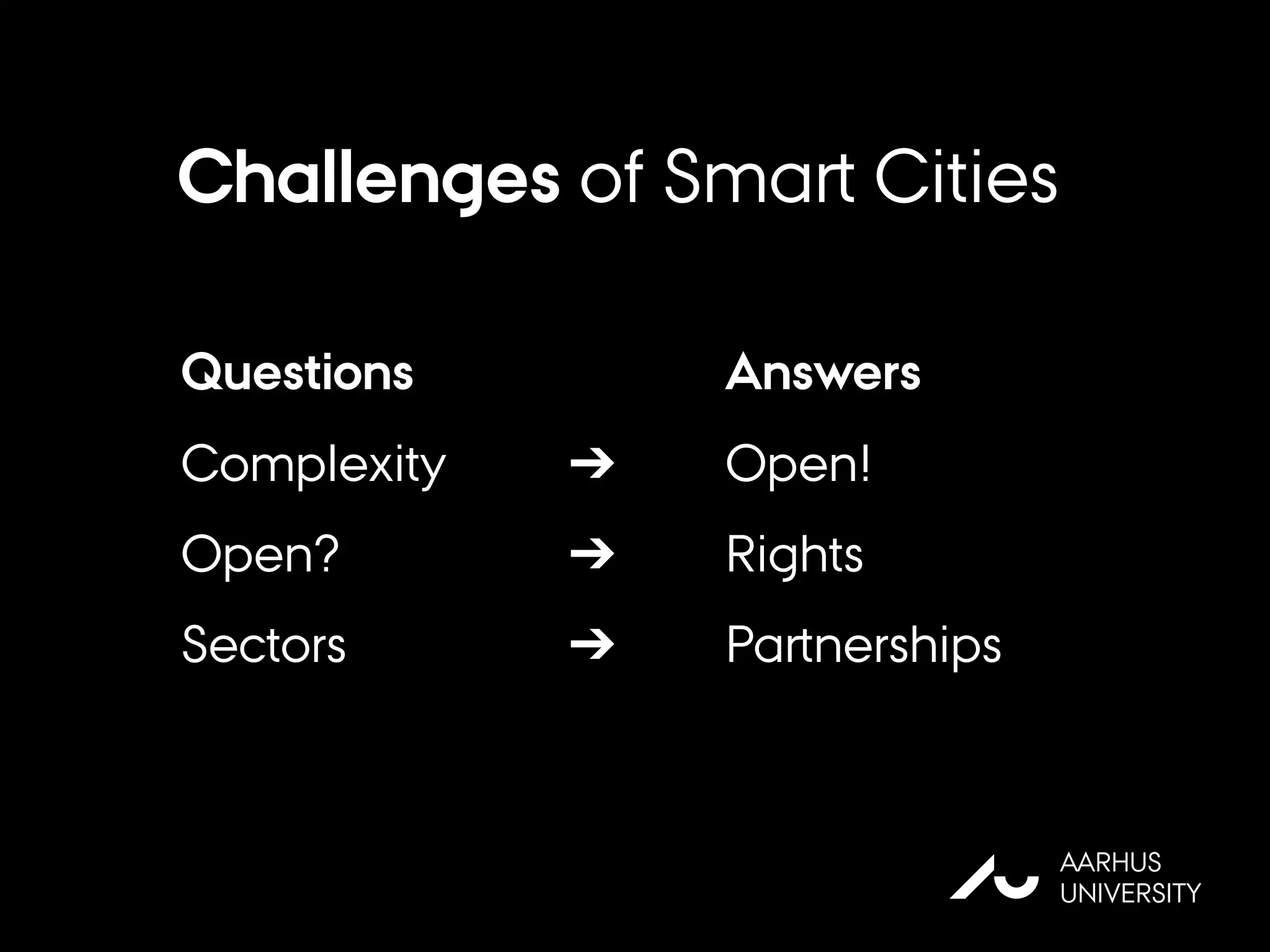
Challenges of Smart Cities
Questions
Complexity
Open?
Sectors
➔
➔
➔
Answers
Open!
Rights
Partnerships
AU
AARHUS
UNIVERSITY
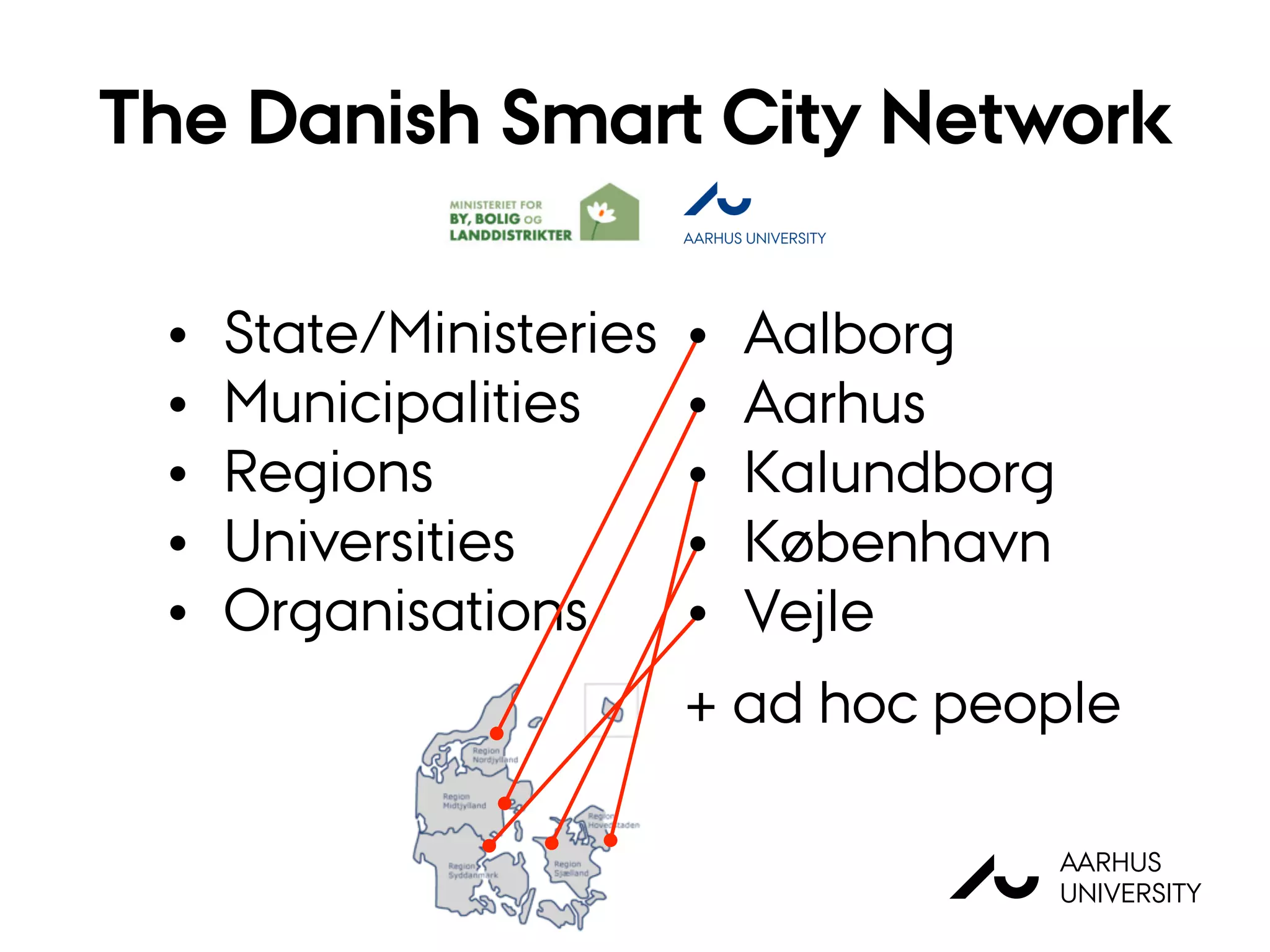
• State/Ministeries
• Municipalities
• Regions
• Universities
• Organisations
The Danish Smart City Network
AU
AARHUS
UNIVERSITY
• Aalborg
• Aarhus
• Kalundborg
• København
• Vejle
+ ad hoc people
AU
AARHUS
UNIVERSITY
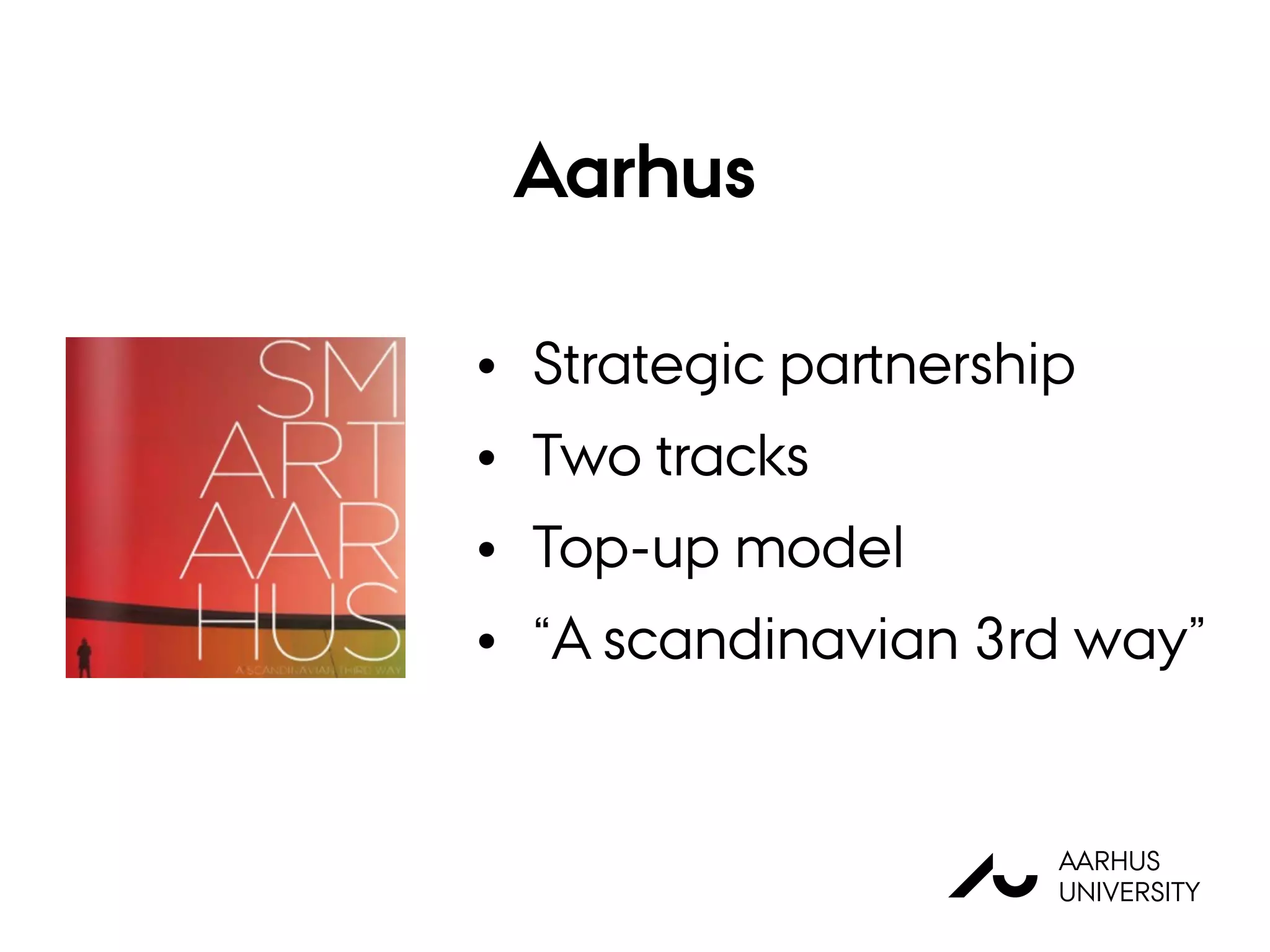
Aarhus
• Strategic partnership
• Two tracks
• Top-up model
• “A scandinavian 3rd way”
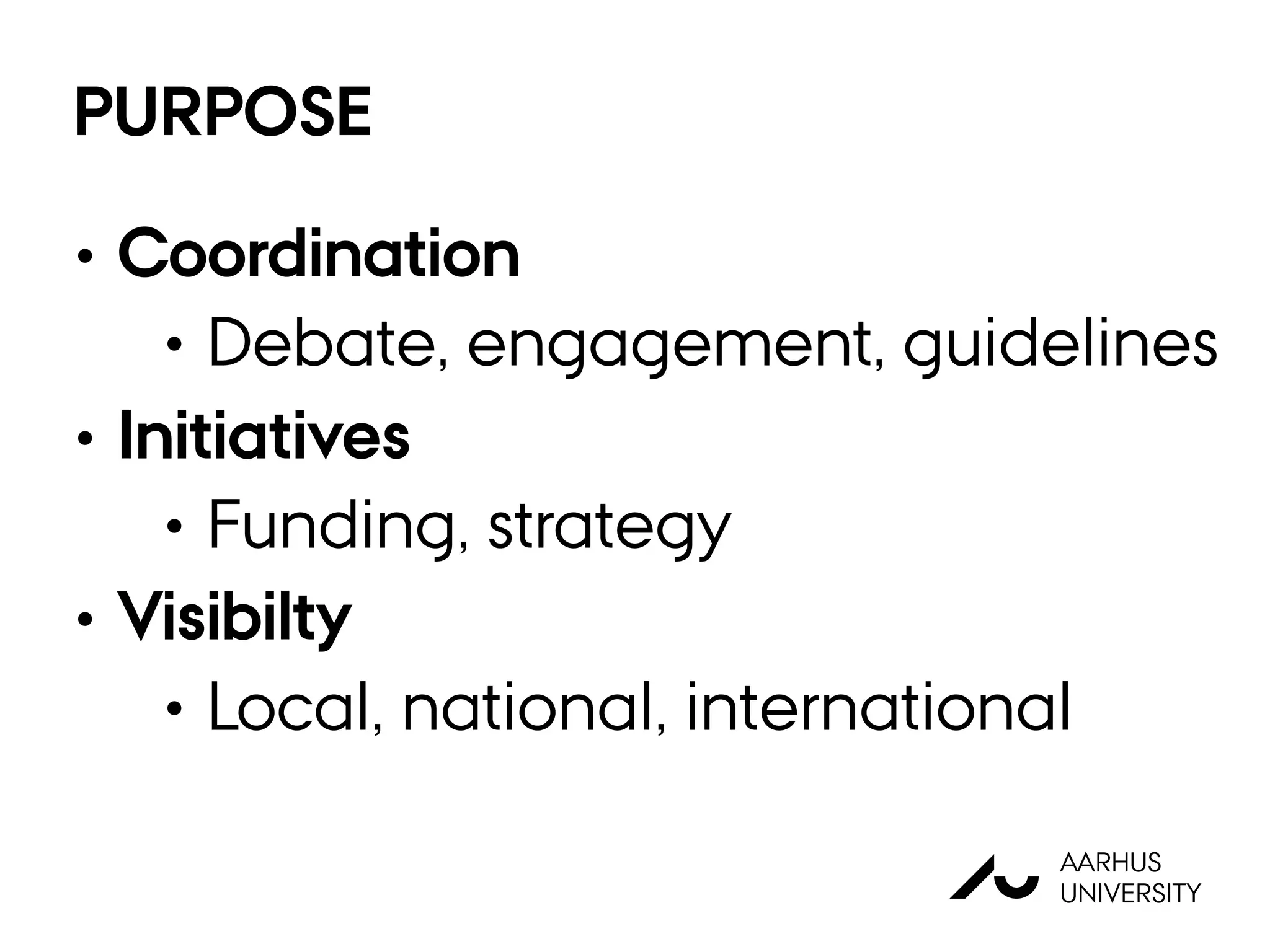
PURPOSE
• Coordination
• Debate, engagement, guidelines
• Initiatives
• Funding, strategy
• Visibilty
• Local, national, international
AU
AARHUS
UNIVERSITY
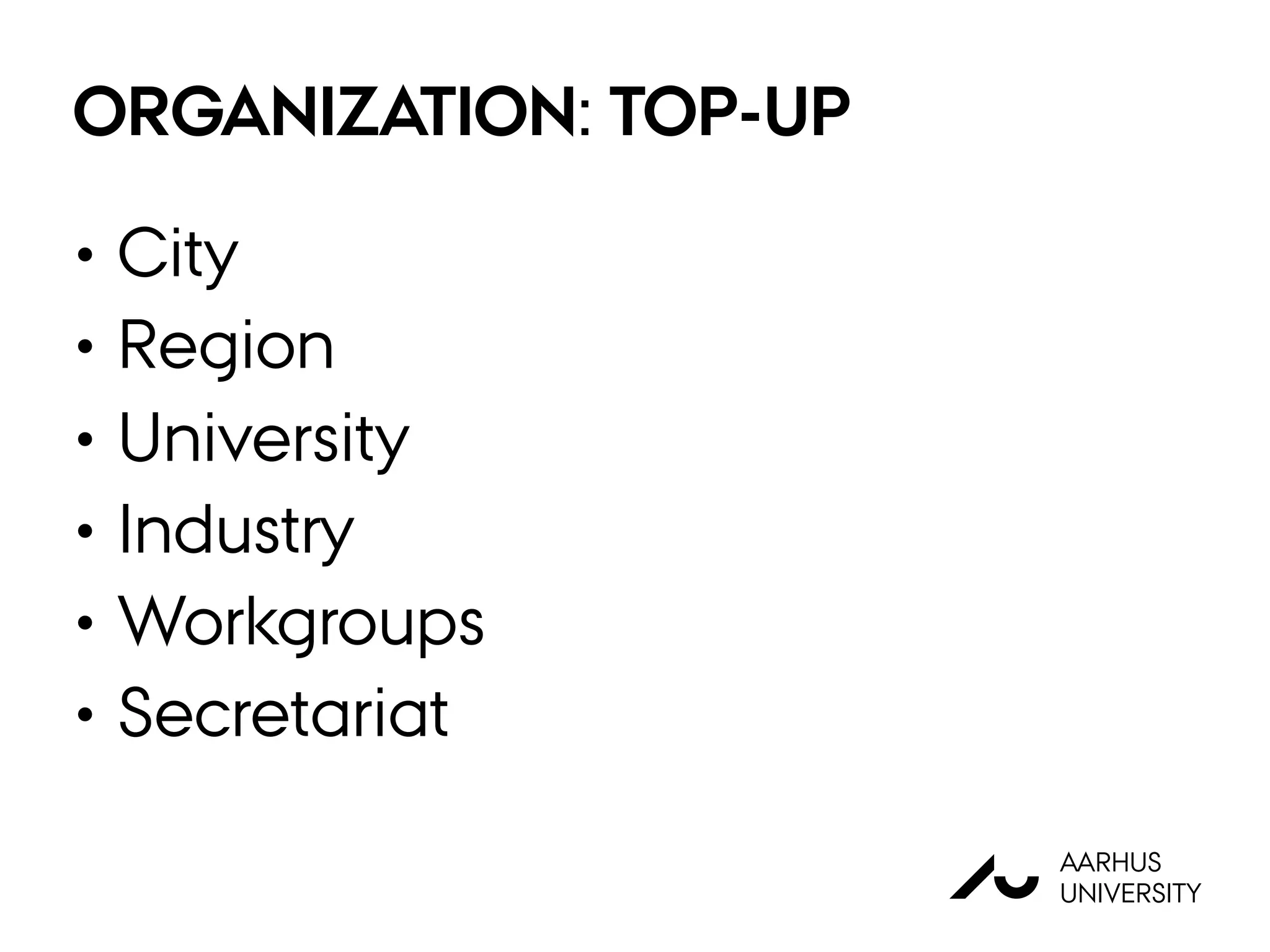
ORGANIZATION: TOP-UP
• City
• Region
• University
• Industry
• Workgroups
• Secretariat
AU
AARHUS
UNIVERSITY
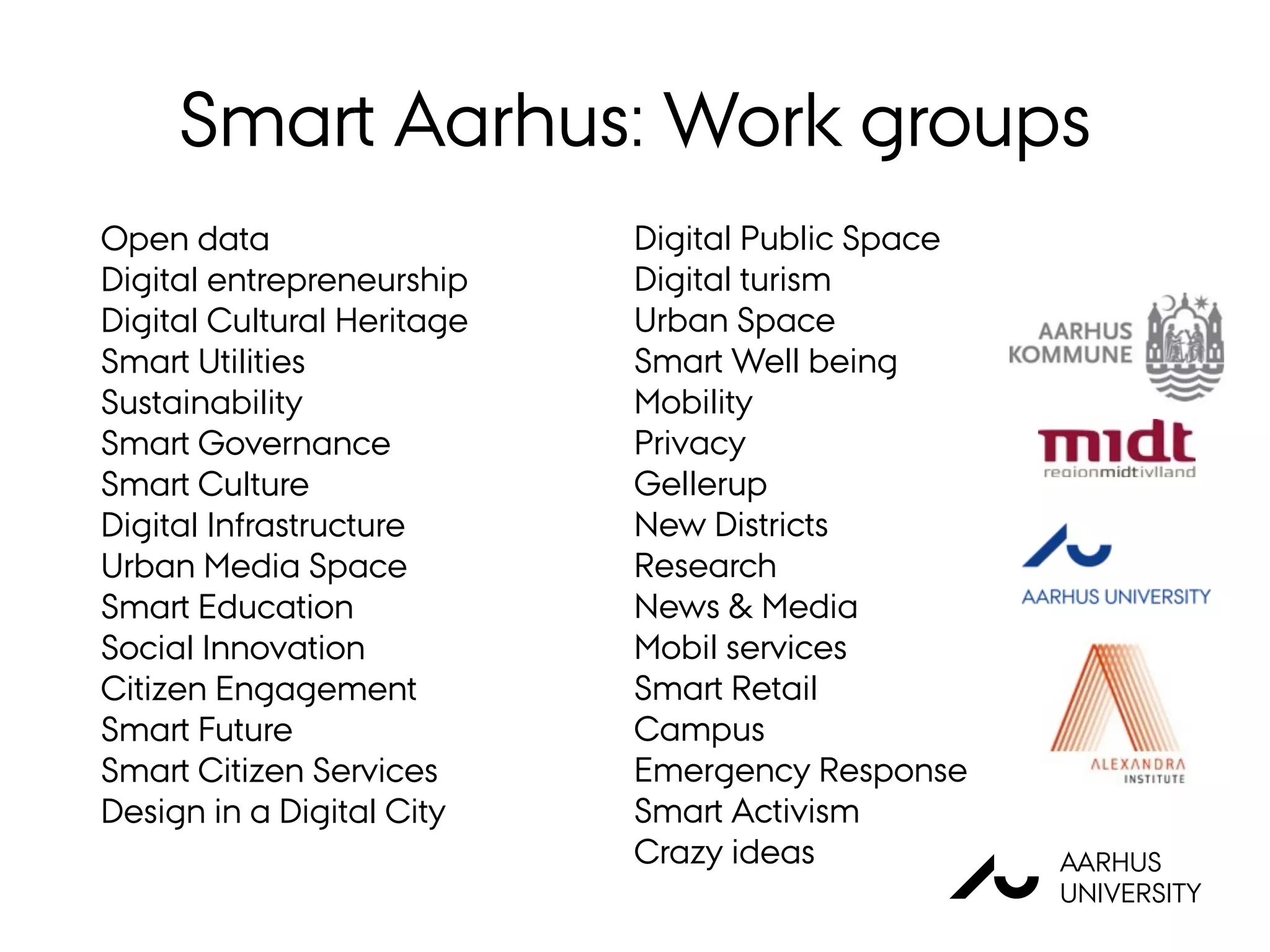
Open data
Digital entrepreneurship
Digital Cultural Heritage
Smart Utilities
Sustainability
Smart Governance
Smart Culture
Digital Infrastructure
Urban Media Space
Smart Education
Social Innovation
Citizen Engagement
Smart Future
Smart Citizen Services
Design in a Digital City
Digital Public Space
Digital turism
Urban Space
Smart Well being
Mobility
Privacy
Gellerup
New Districts
Research
News & Media
Mobil services
Smart Retail
Campus
Emergency Response
Smart Activism
Crazy ideas
Smart Aarhus: Work groups
AU
AARHUS
UNIVERSITY
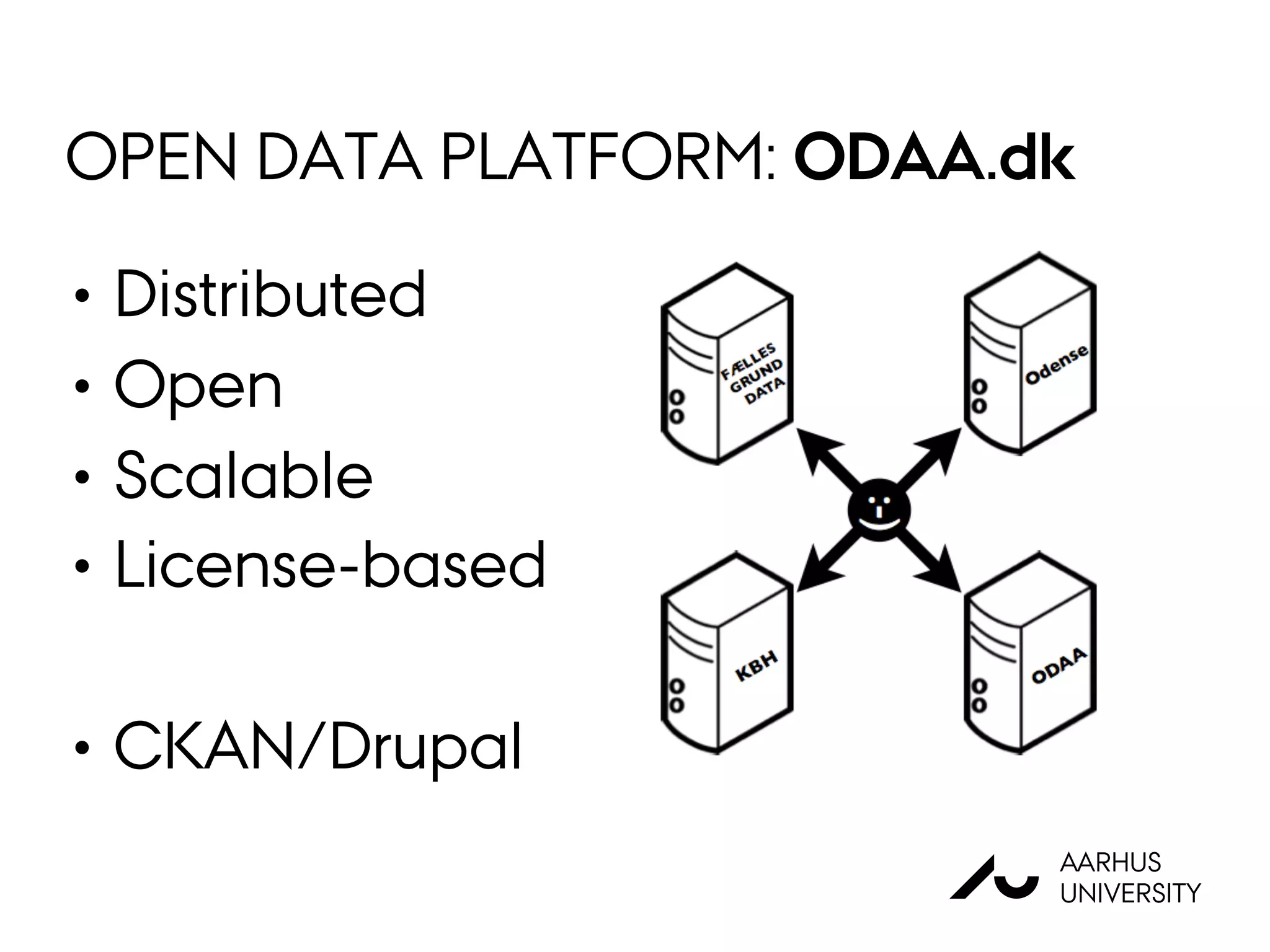
OPEN DATA PLATFORM: ODAA.dk
• Distributed
• Open
• Scalable
• License-based
• CKAN/Drupal
AU
AARHUS
UNIVERSITY
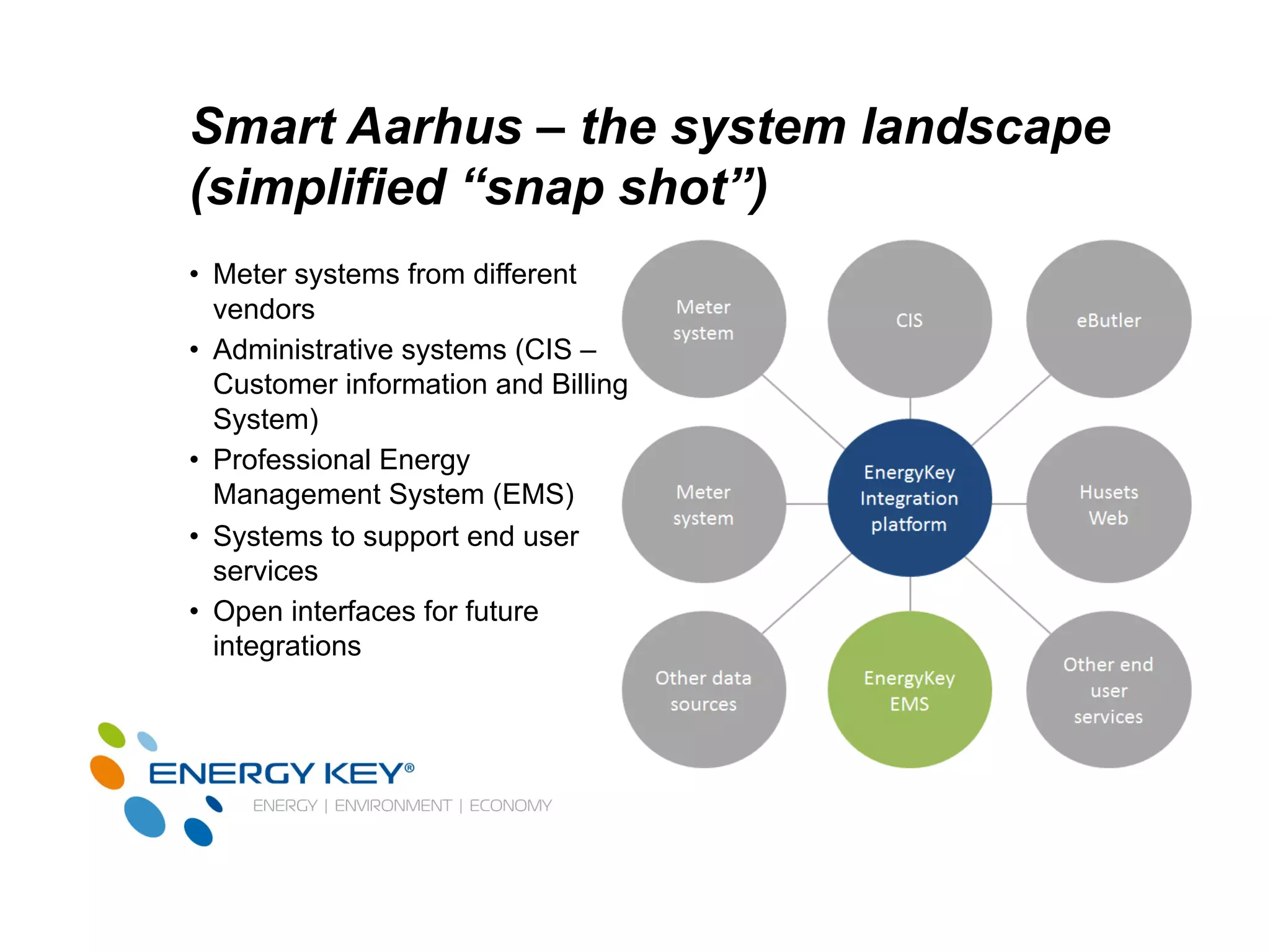
Smart Aarhus – the system landscape
(simplified “snap shot”)
•  Meter systems from different
vendors
•  Administrative systems (CIS –
Customer information and Billing
System)
•  Professional Energy
Management System (EMS)
•  Systems to support end user
services
•  Open interfaces for future
integrations
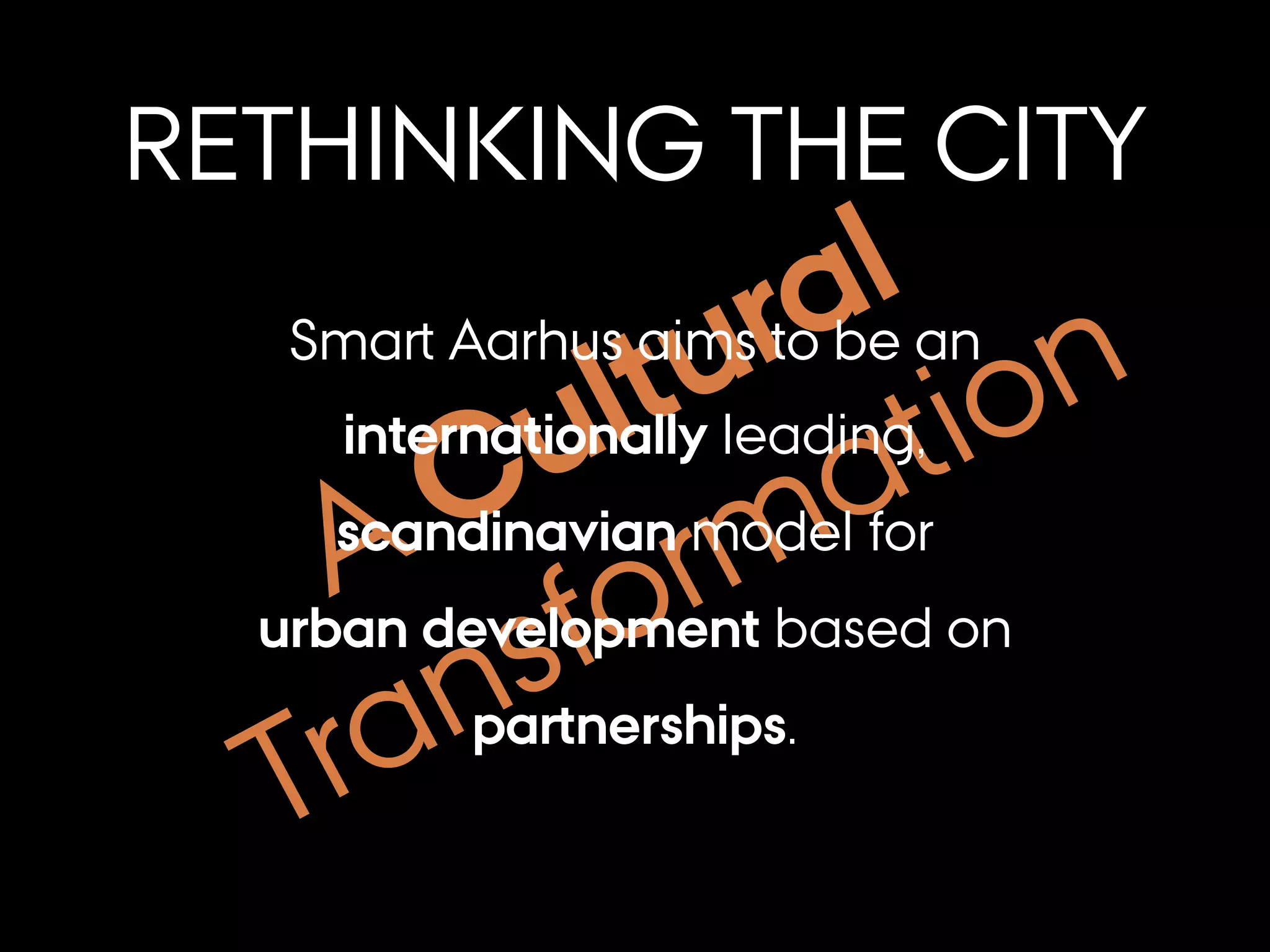
A Cultural
Transformation
RETHINKING THE CITY
Smart Aarhus aims to be an
internationally leading,
scandinavian model for
urban development based on
partnerships.
AU
AARHUS
UNIVERSITY
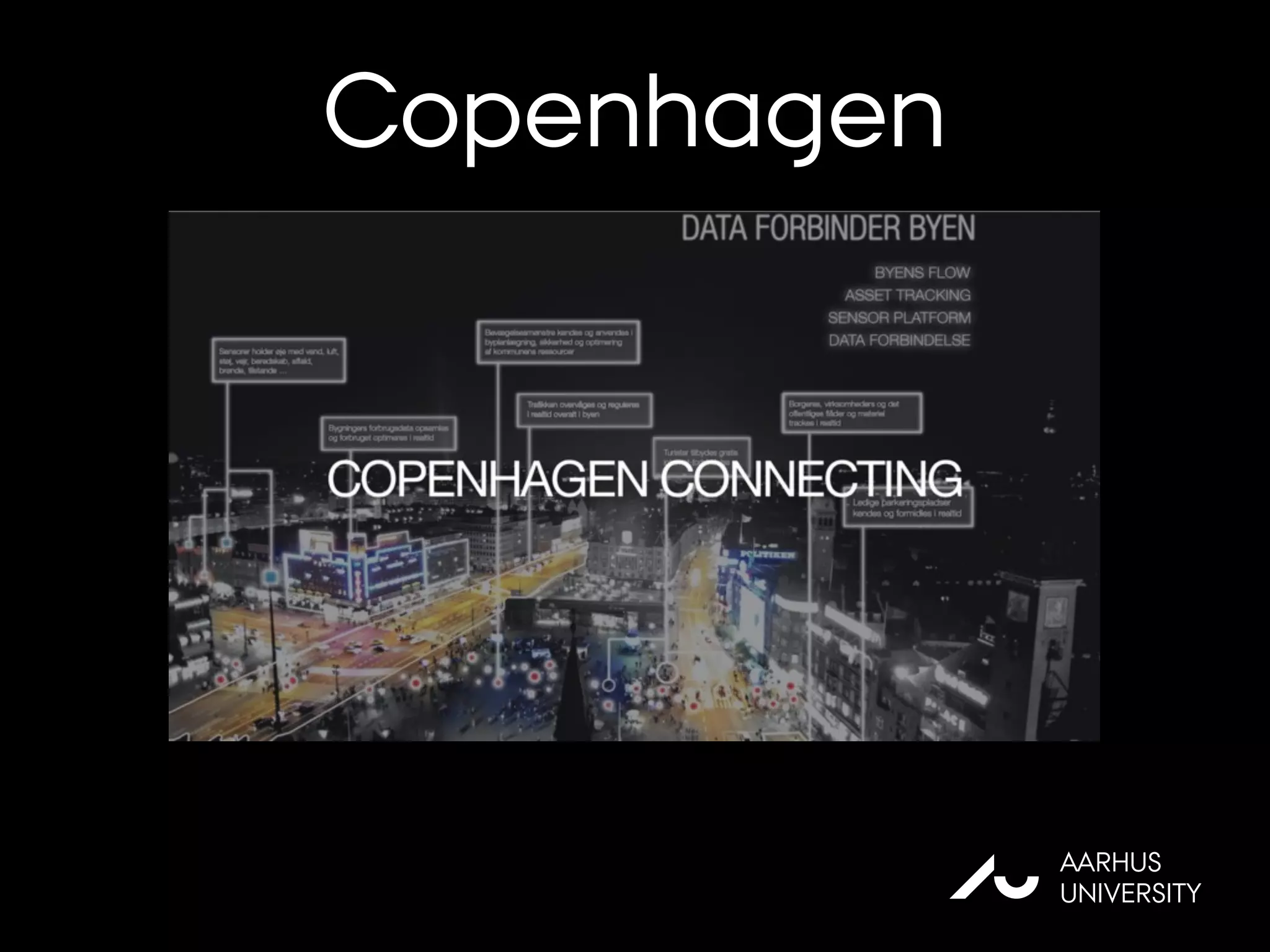
Copenhagen
AU
AARHUS
UNIVERSITY
AU
AARHUS
UNIVERSITY
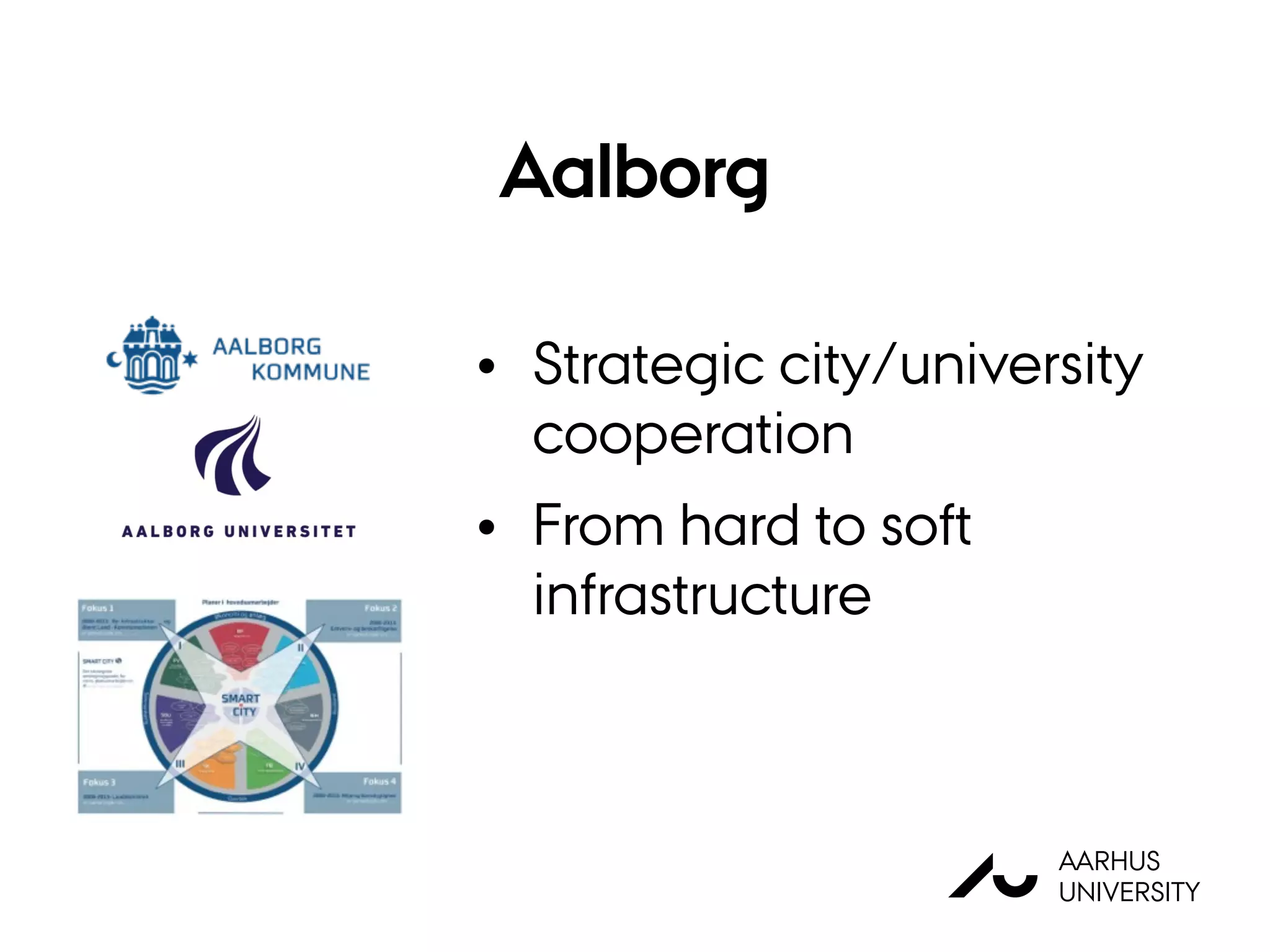
Aalborg
• Strategic city/university
cooperation
• From hard to soft
infrastructure
AU
AARHUS
UNIVERSITY
Kalundborg
54
• Cleantech
• Demonstrator
• Eco-system
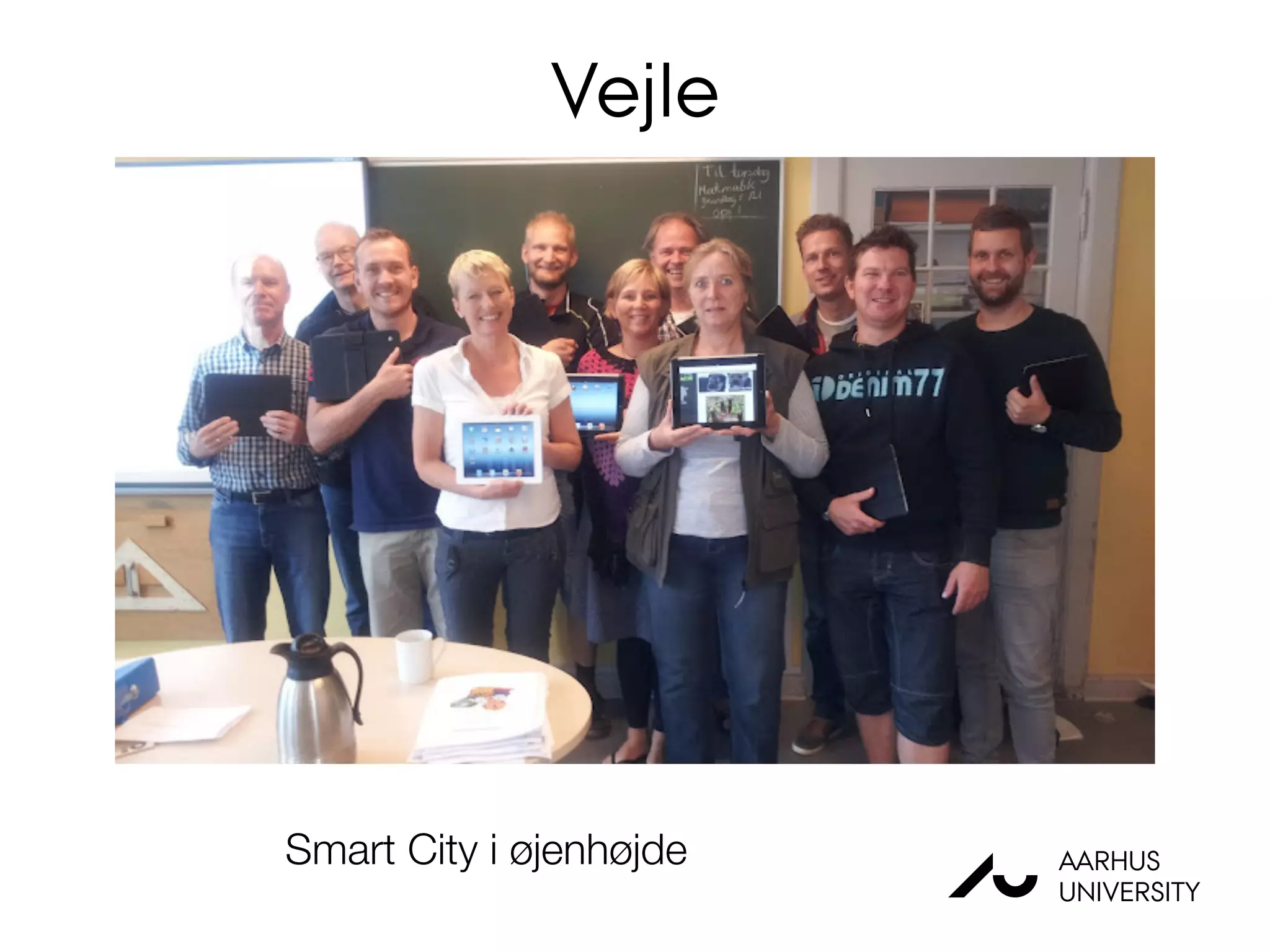
Vejle
Smart City i øjenhøjde! Netværksbaseret Smart City
AU
AARHUS
UNIVERSITY
Focus on
AU
AARHUS
UNIVERSITY
•Informal organization
•Strategic urban development
•Partnerships
•Instruments and technologies are
backgrounded (but still important)
Cleantech
Open data
Big data
Internet of Things
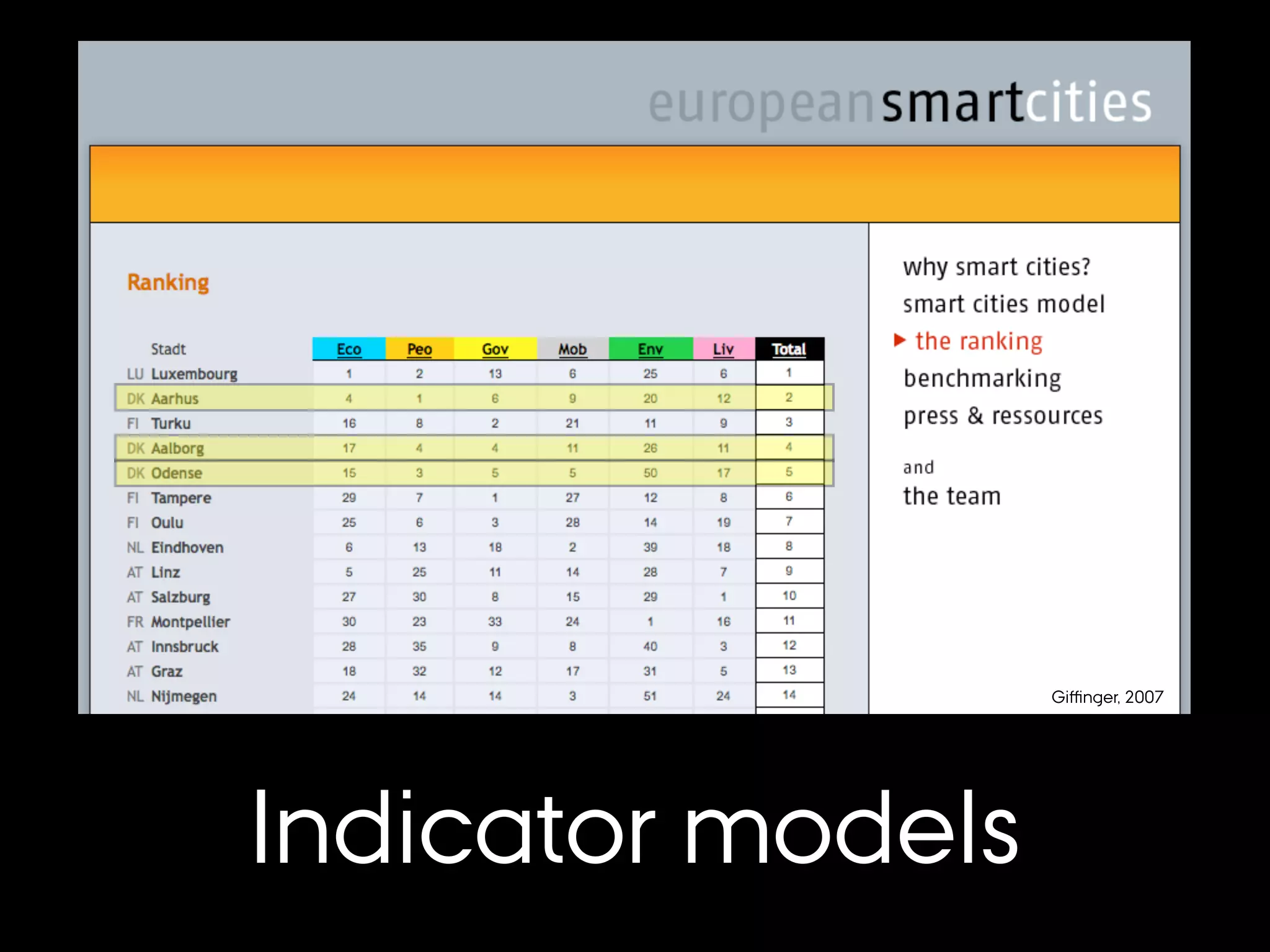
Indicator models
Giffinger, 2007
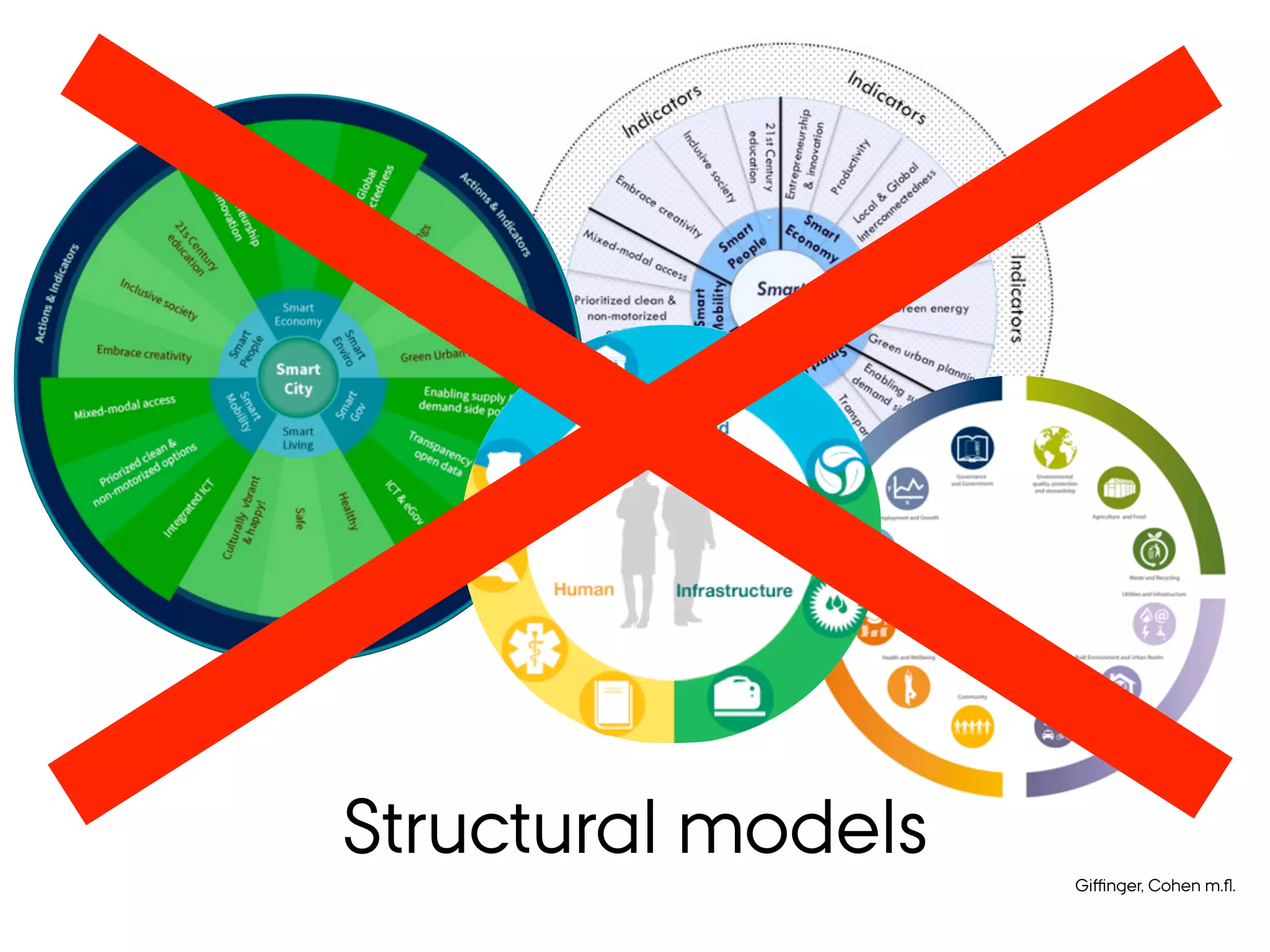
Structural models
Giffinger, Cohen m.fl.
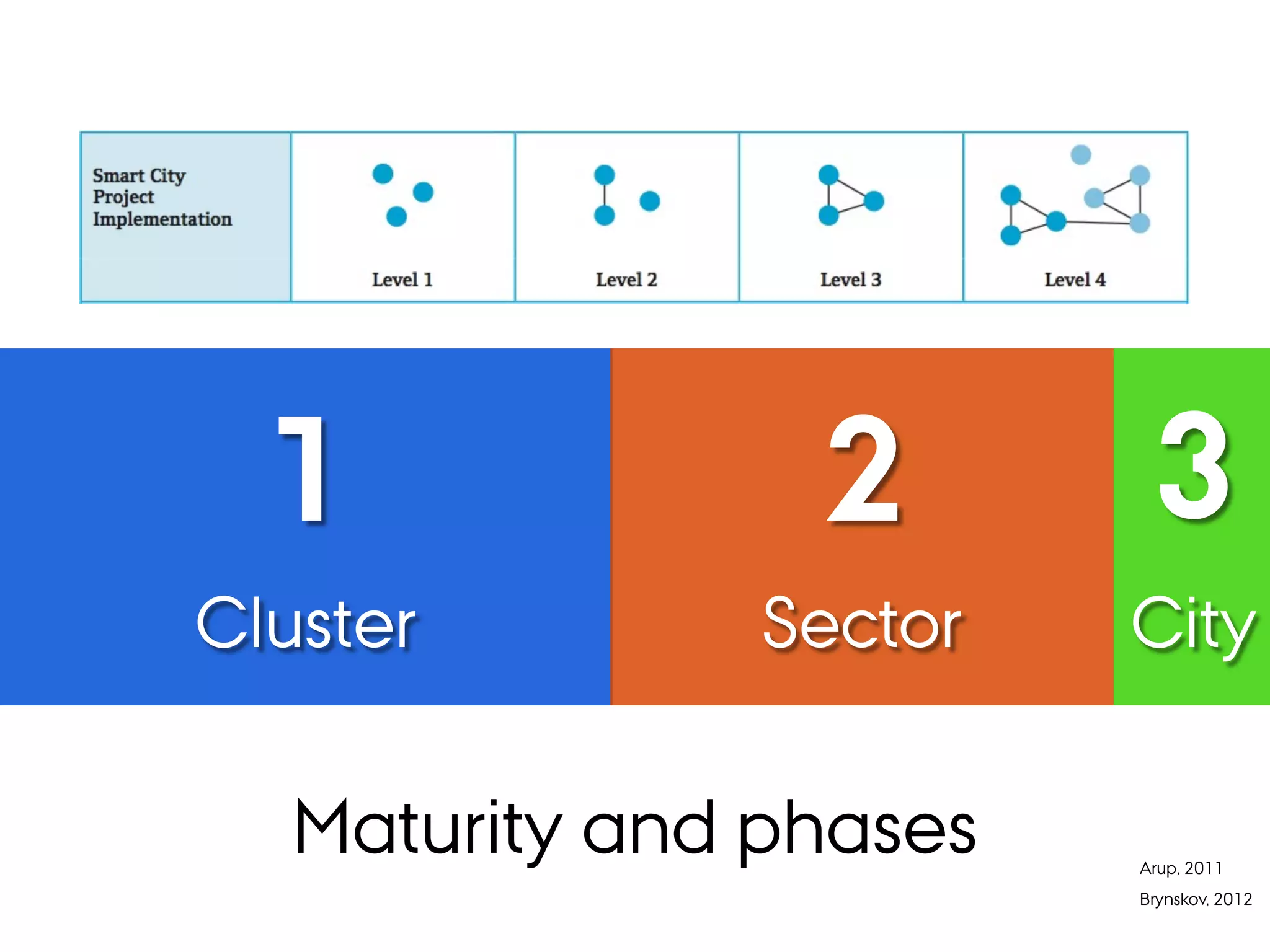
Maturity and phases
1
Cluster
2
Sector
3
City
Arup, 2011
Brynskov, 2012
AU
AARHUS
UNIVERSITY
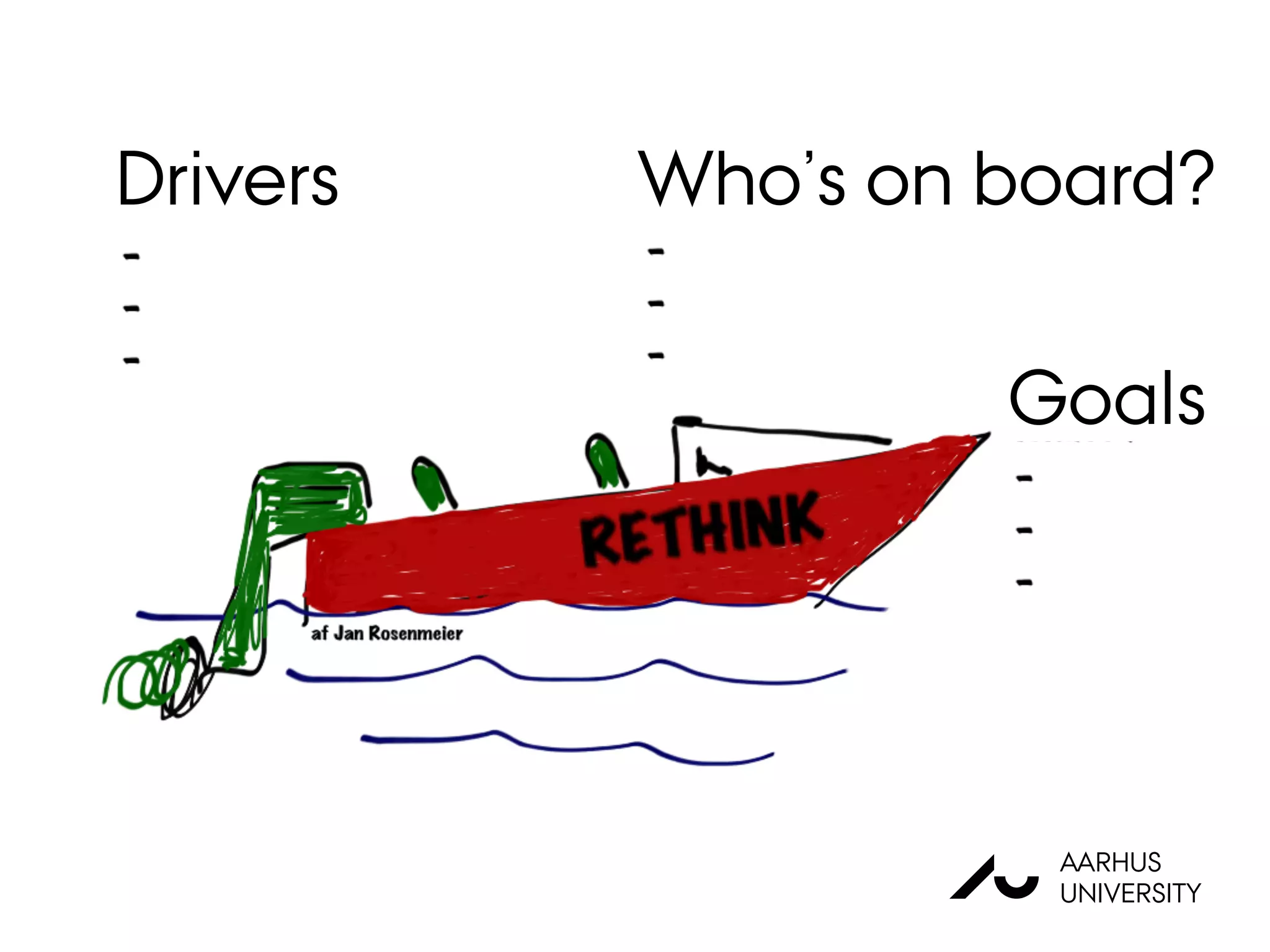
Drivers Who’s on board?
Goals
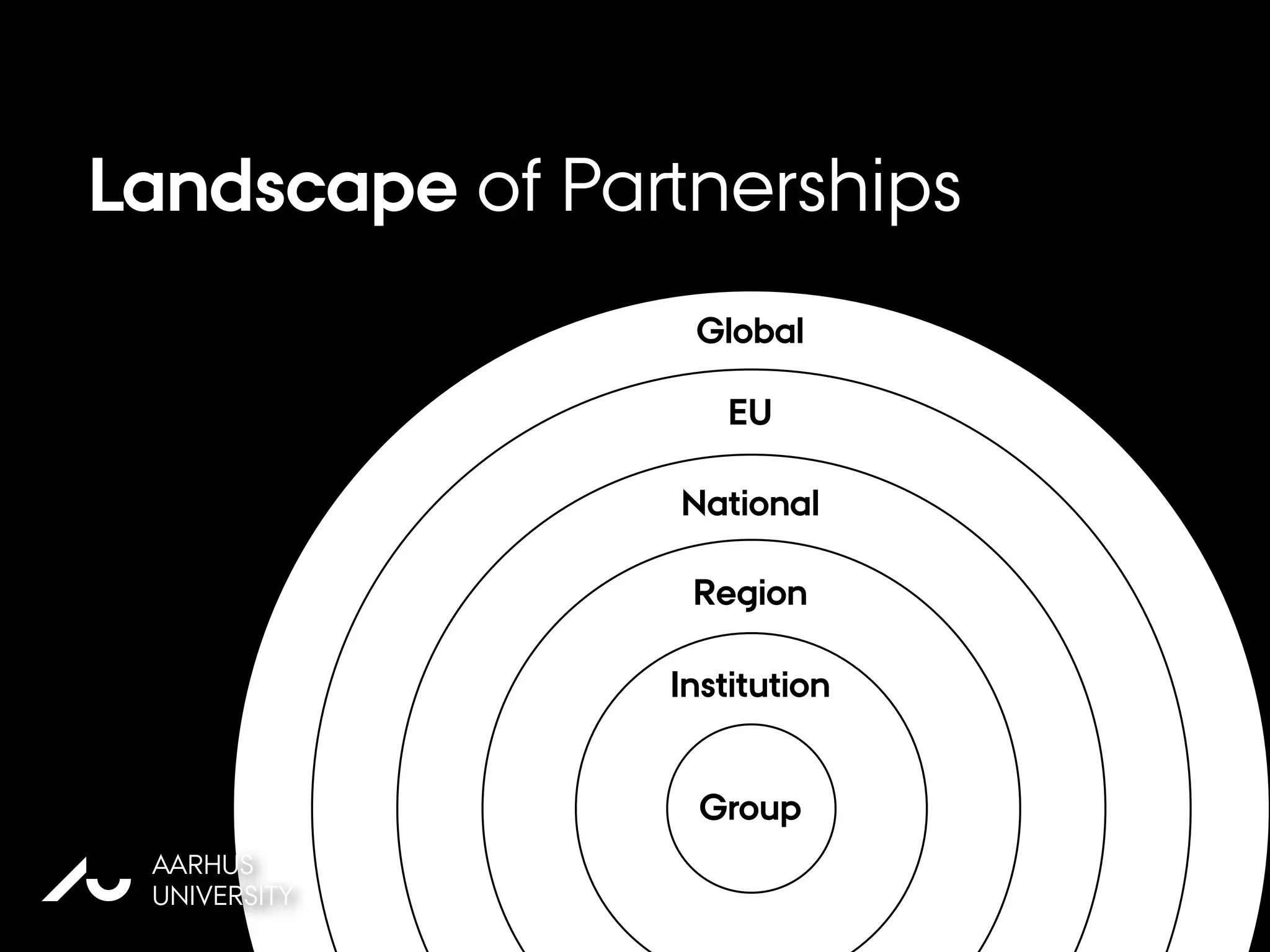
Global
EU
National
Region
Institution
Group
AU
AARHUS
UNIVERSITY
Landscape of Partnerships
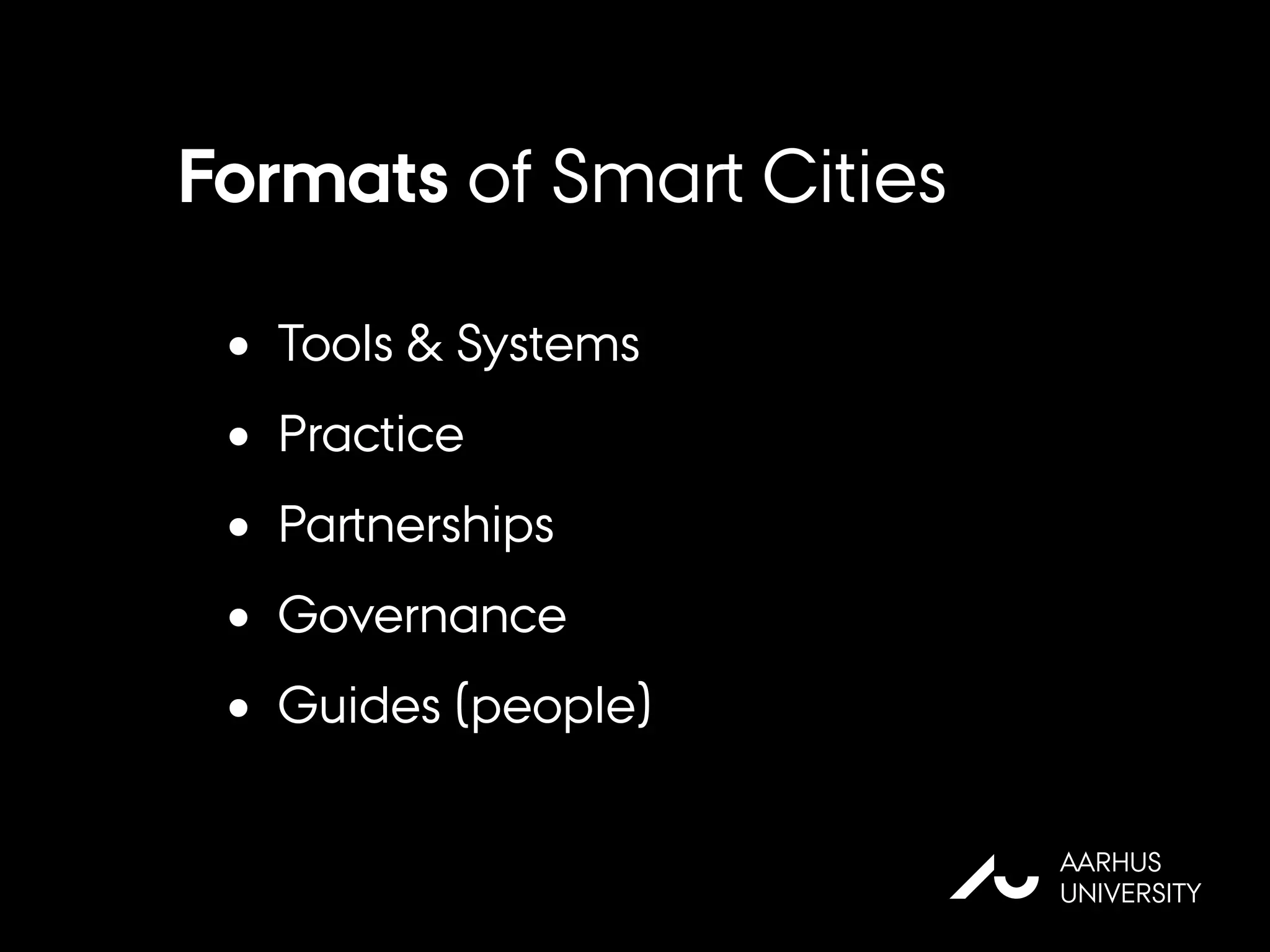
Formats of Smart Cities
• Tools & Systems
• Practice
• Partnerships
• Governance
• Guides (people)
AU
AARHUS
UNIVERSITY
open data
AU
AARHUS
UNIVERSITY
AU
AARHUS
UNIVERSITY
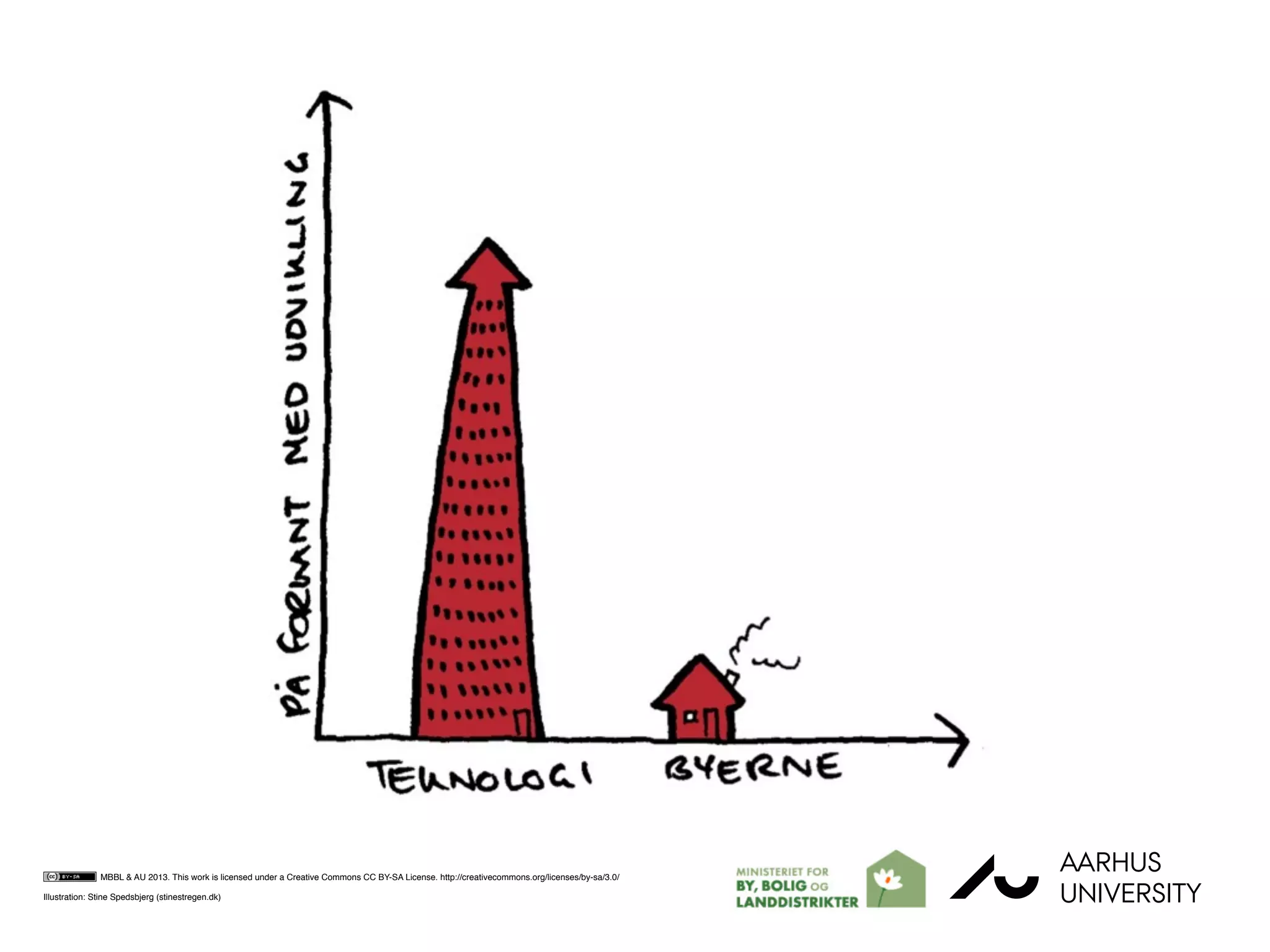
MBBL & AU 2013. This work is licensed under a Creative Commons CC BY-SA License. http://creativecommons.org/licenses/by-sa/3.0/
Illustration: Stine Spedsbjerg (stinestregen.dk)
AU
AARHUS
UNIVERSITY
MBBL & AU 2013. This work is licensed under a Creative Commons CC BY-SA License. http://creativecommons.org/licenses/by-sa/3.0/
Illustration: Stine Spedsbjerg (stinestregen.dk)
AU
AARHUS
UNIVERSITY
MBBL & AU 2013. This work is licensed under a Creative Commons CC BY-SA License. http://creativecommons.org/licenses/by-sa/3.0/
Illustration: Stine Spedsbjerg (stinestregen.dk)
AU
AARHUS
UNIVERSITY
MBBL & AU 2013. This work is licensed under a Creative Commons CC BY-SA License. http://creativecommons.org/licenses/by-sa/3.0/
Illustration: Stine Spedsbjerg (stinestregen.dk)
AU
AARHUS
UNIVERSITY
MBBL & AU 2013. This work is licensed under a Creative Commons CC BY-SA License. http://creativecommons.org/licenses/by-sa/3.0/
Illustration: Stine Spedsbjerg (stinestregen.dk)
No Economy Yet
“It’s too early to say just what kinds of products
might result for Intel, [Ken] Anderson says.
“When you talk about the data economy, it’s
really something that doesn’t yet exist,” he
says. “There are people who [are] trying to
control a lot of your personal data. But that’s
not an economy—that’s just profit for one
company.”
AU
AARHUS
UNIVERSITY
http://www.technologyreview.com/news/
514386/intel-fuels-a-rebellion-around-your-data
AU
AARHUS
UNIVERSITY
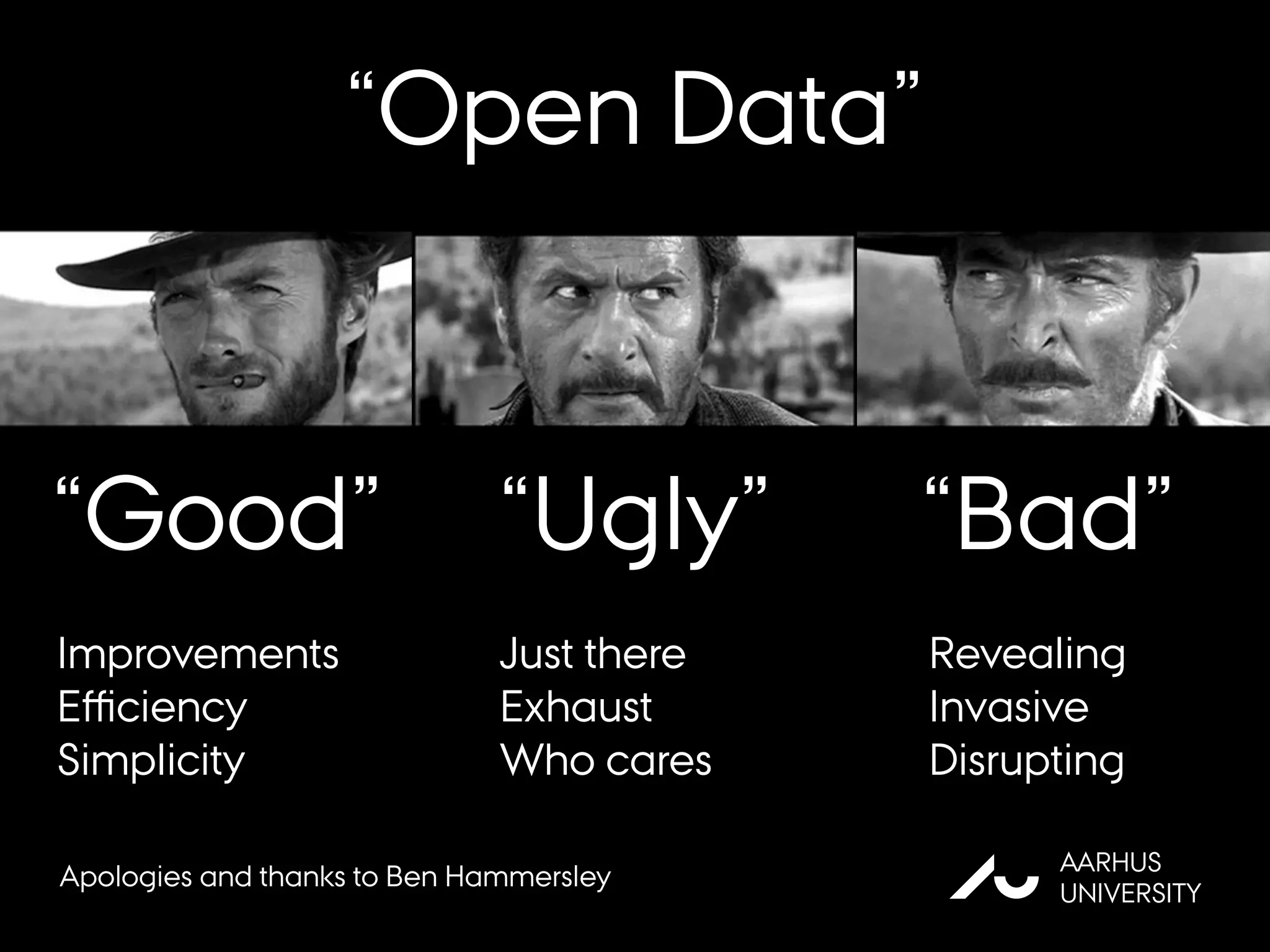
“Open Data”
“Good” “Ugly” “Bad”
Improvements
Efficiency
Simplicity
Just there
Exhaust
Who cares
Revealing
Invasive
Disrupting
Apologies and thanks to Ben Hammersley
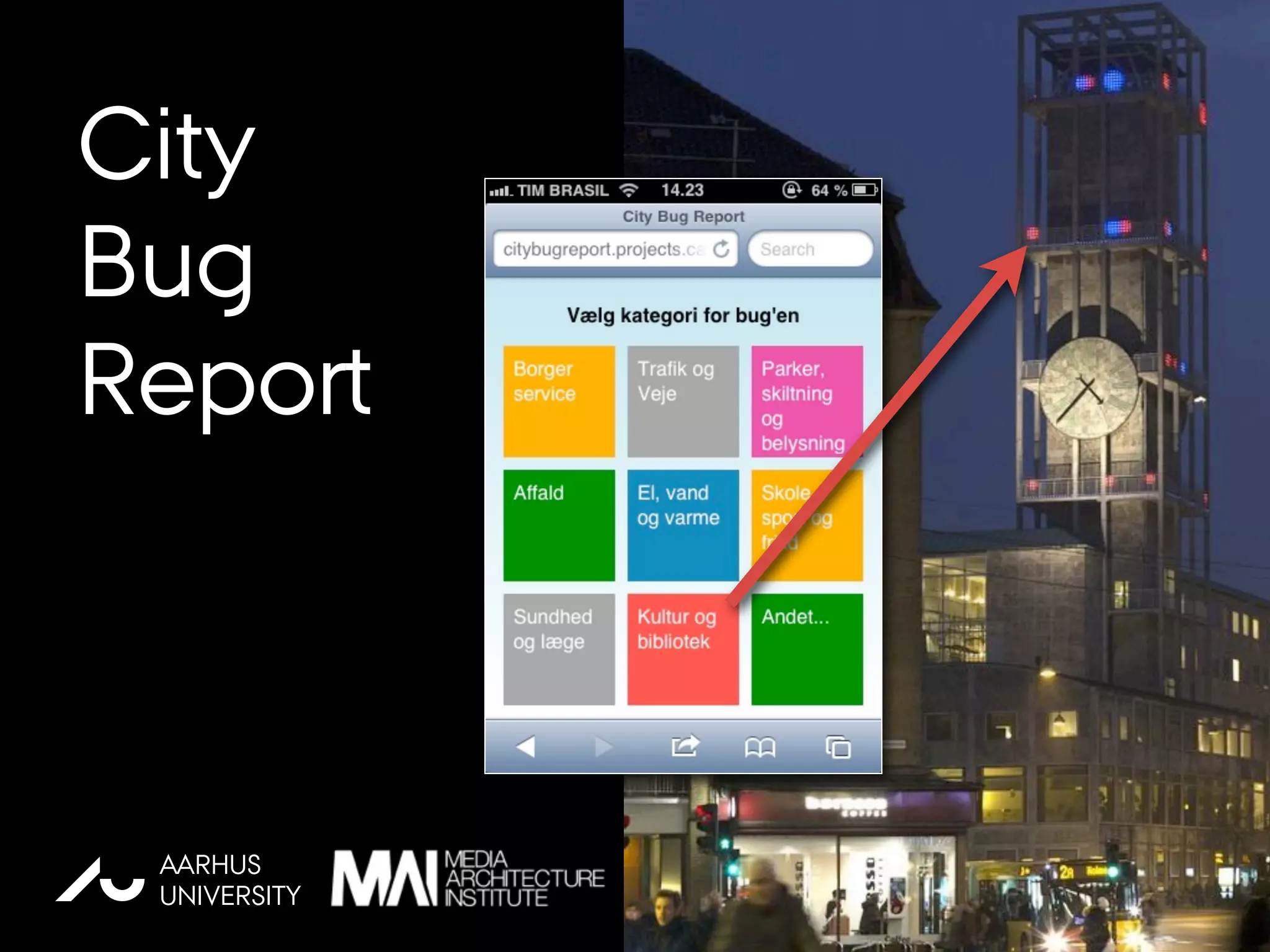
City
Bug
Report
AU
AARHUS
UNIVERSITY
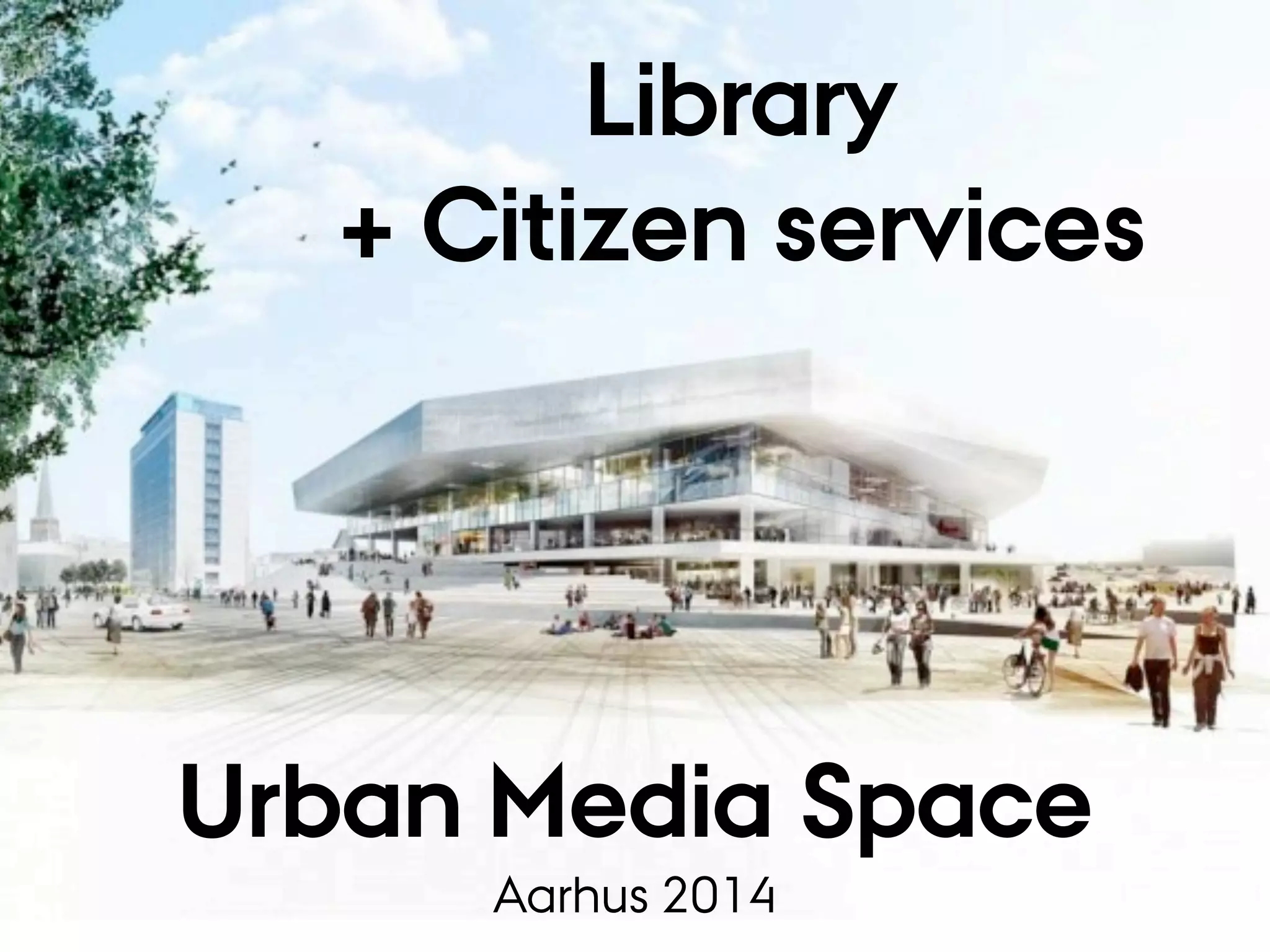
Urban Media Space
Aarhus 2014
Library
+ Citizen services
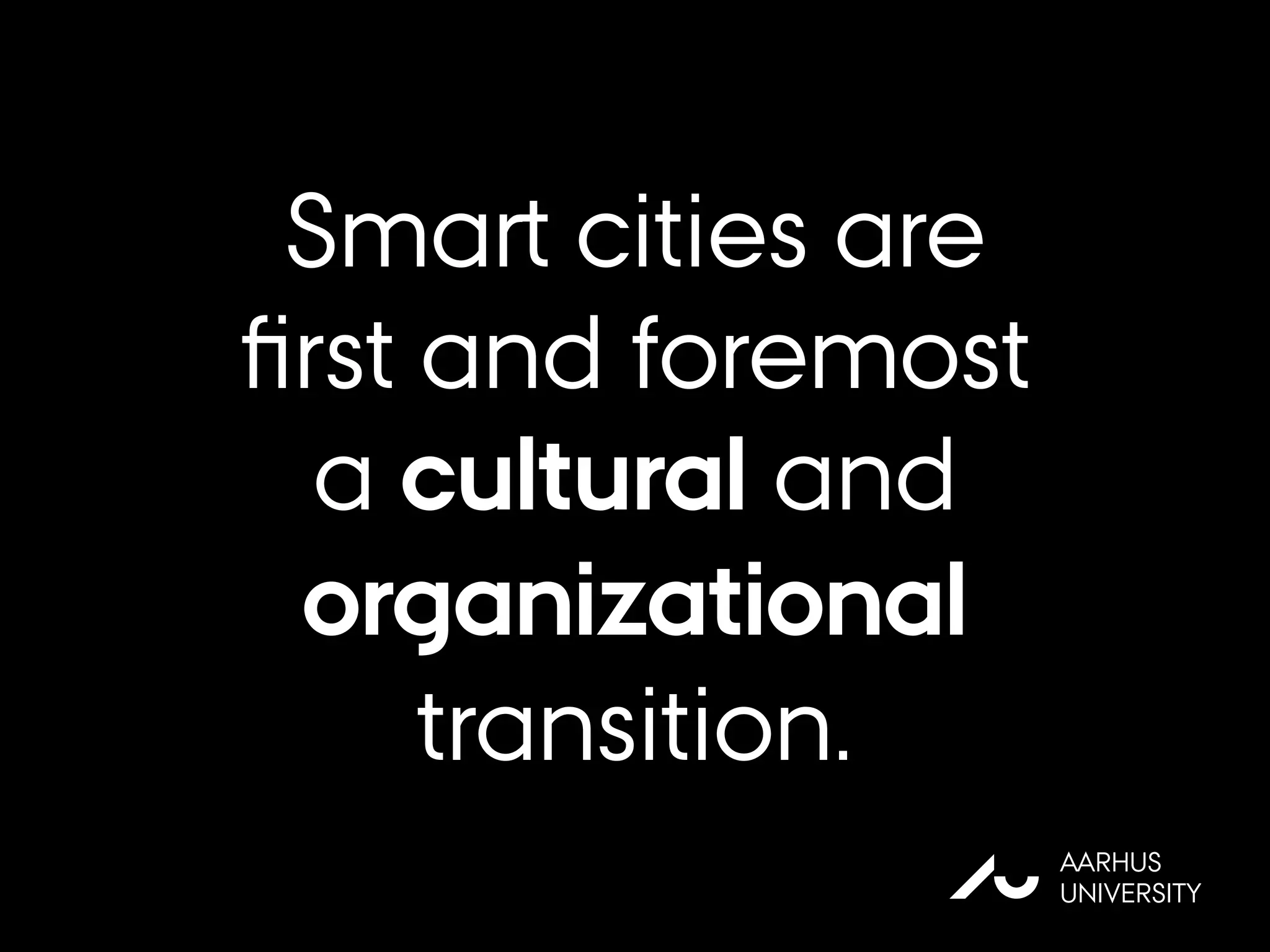
Smart cities are
first and foremost
a cultural and
organizational
transition.
AU
AARHUS
UNIVERSITY
Some advice
AU
AARHUS
UNIVERSITY
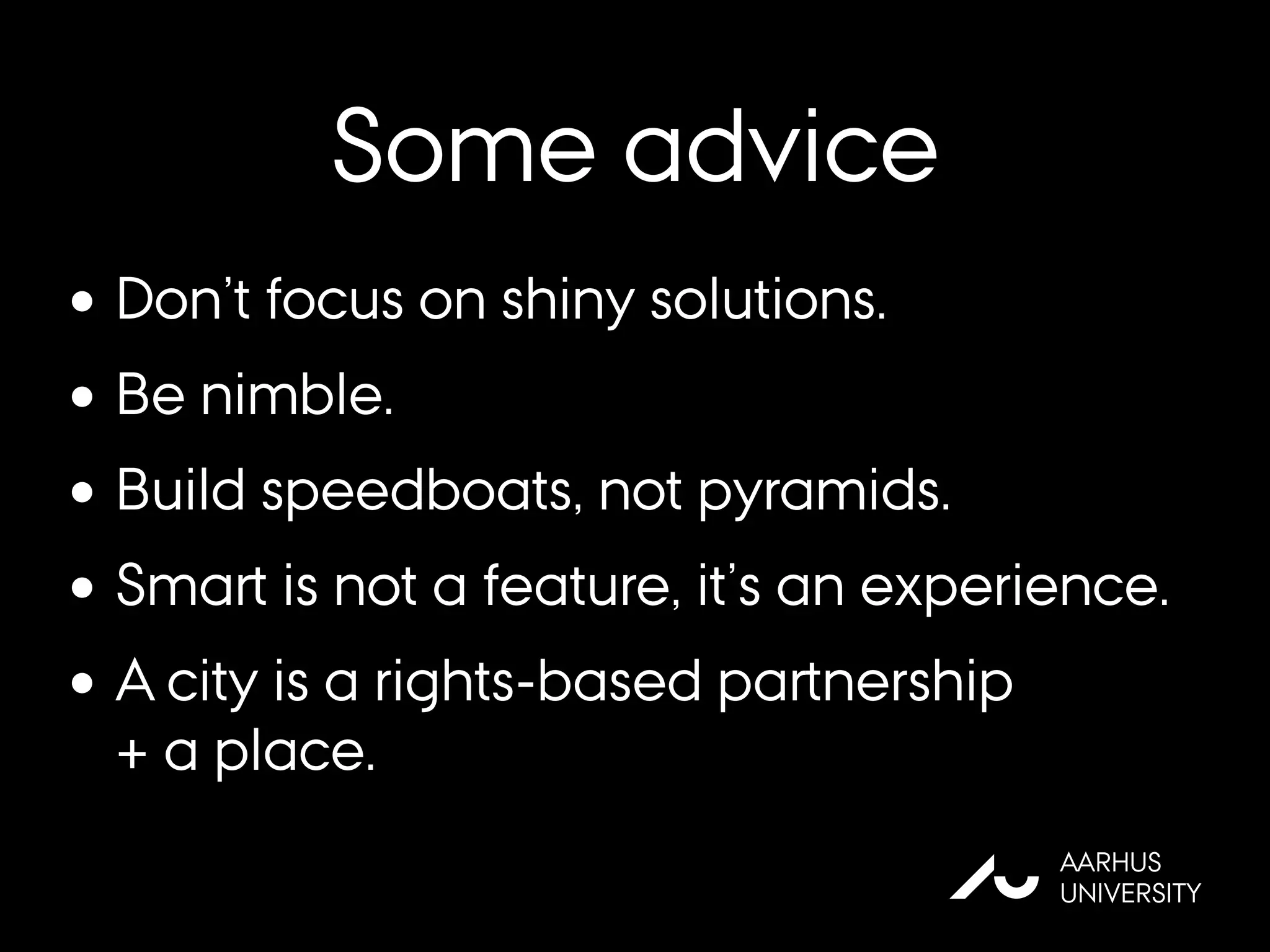
•Don’t focus on shiny solutions.
•Be nimble.
•Build speedboats, not pyramids.
•Smart is not a feature, it’s an experience.
•A city is a rights-based partnership
+ a place.
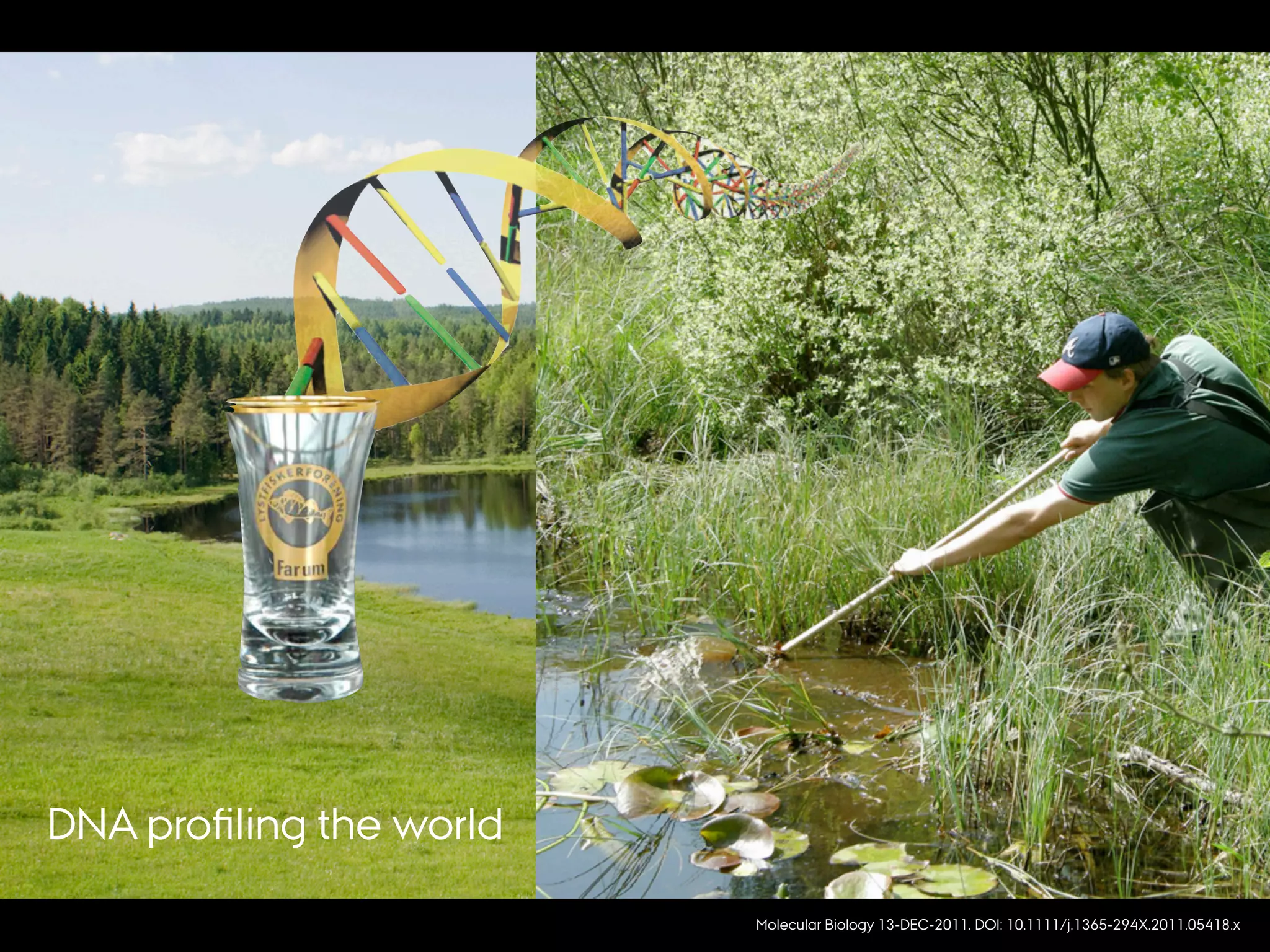
Molecular Biology 13-DEC-2011. DOI: 10.1111/j.1365-294X.2011.05418.x
DNA profiling the world
AU
AARHUS
UNIVERSITY
Jan Gehl

Life Between Systems – From Open Data to Great Cities (cue: It's not simple)

  • 1.
    Life Between Systems Martin Brynskov AUSmart Cities @brynskov AU AARHUS UNIVERSITY pit.au.dk smartcities.au.dk GOTO 2013
  • 2.
    MA PHD PROF Information Studies Semiotics Classical Greek “DigitalHabitats” CS (Girls & Mobiles/LEGO) Interaction Technologies AU Smart Cities AU AARHUS UNIVERSITY
  • 3.
    AUSC DUL CAVI PIT AU Smart Cities DigitalUrban Living Visualization & Interaction Participatory IT AU AARHUS UNIVERSITY
  • 4.
  • 5.
  • 6.
  • 7.
  • 8.
    2013 20132000 Senseable City MIT,2004 Transdisciplinary research group that studies the interface between cities, people and technologies and investigates how the ubiquity of digital devices and the telecommunications networks that augment our cities are impacting urban living. Smarter Planet 2008 Wollenberg B. (2005) Term‘Smart Grid’is born in September 2005. Smart Grid Urban Media Façades It is a community that has made a conscious effort to use information technology to transform life and work within fundamental, rather than incremental, ways. 1960 1970 1980 1990 Livable Cities 1980s The Plug-in City is set up by applying a large scale network-structure, containing access ways and essential services, to any terrain. Peter Cook, 1964 Walking City imagines a future in which borders and boundaries are abandoned in favour of a nomadic lifestyle among groups of people worldwide. Ron Herron, 1964 Initially ICs have been defined as virtual reconstructions of cities, as virtual cities. (Droege, 1997) The term ICs has been used broadly as an equivalent of: TeleCity Siembab (1997) Incorporates the capabilities of information technologies in order to support a high amenity life style that is economically and environmentally sustainable Teletopia Eger (2005) Telecommunications Utopia is a term first coined by the Japanese Ministry of Posts and Telecommunications to describe what 21st Century Japan would look like when its new broadband communica- tions infrastructure was in place. Informational City Castlells M. (1992) The city is an image of society, with all its diversities, ongoing processes, contradictions, struggles and asymmetries, and 'The Informational City' is therefore 'the global society' of the information age. Plug-in City Walking City The city is “both a social and spatial ‘coming together’ of difference and diversity, chaos and order, fascination and intrigue - a sensual delight, at the same ´time challenging notions of tolerance and feelings of belonging. Layered City Thompson S. (1994) Komninos N. (2002) Digital cities can be consid- ered as an attempt to build new secure public spaces and regain some characteristic of the cities as places for communication, interactions, economic opportunities, and social and cultural activities. All intelligent cities are digital cities, but all digital cities are not intelligent. The difference is in the problem solving capability of intelligent cities, while the ability of digital cities is in the provision of services via digital communication. Besselaar P. (DDS) was launched in Amsterdam in 1993. The name was chosen to emphasize the idea of a digital public space where people would meet and communicate. Couclelis H. (2004) Comprehensive web‐based representation, or reproduc- tion, of several aspects or open to non‐experts. Intelligent Cities (ICs) Emerged late 1980s Ambient Cities Emerged late 1990s Digital Cities Emerged early 1990s Graham S. (1997) Smart Cities Emerged Late 1990s Komninos, 2002 CCTV Roberts P. (1980s) Embedding of CCTV technology into urban areas Invisible City Digital City 1993Late 80s Late 90s Late 90s In order for ‘digital’ cities to become ‘smart’ cities they therefore need to incorporate a new category of applica- tions; that of the real community of people and producers characterised by a high level of knowledge and innovation use. To differentiate the ‘digital’ city from the ‘smart’ city, every digital city is not intelligent, but every intelligent or ‘smart’ city has a digital component A Smart Community Smart Communities, 2001 ISTAG (1999) People will be surrounded by intelligent and intuitive interfaces embedded in everyday objects around us and an environment recognizing and responding to the presence of individuals in an invisible way. The term was coined by Mark Weiser in his 1991 article“The computer for the 21st century” Crang and Graham, 2007 The ambient city can be seen as an urban environment which contains different ubiquitous computing technologies > 100 Digital Cities in 20 EU countries in 2003 Caire P. (2009) European Digital Cities programme launched in 1996 Caire P. (2009) Cyberville Wired City 200520031991 Ubiquitous Cities Emerged in 2005 Myung‐Je (2009) The term ubiquitous city was first used by South Korea after adopting the ubiquitous computing concept from the US and deciding to create the world’s first U‐City. The term first used in 2003 by Eric Paulos An umbrella term for installations in which displays are integrated into architectural structures Korean U‐City Association (2003) U‐Cities to help all residents, everywhere, not just private customers, or residents using personal computers at home, with the aim of enriching life, reducing congestion and enhancing environmental sustainability Amplified City Falk (1999) The use of ubiquitous technology in public spaces also enables the city to move beyond mixed or augmented reality environments towards an amplified city, where objects express additional information about themselves to other objects, residents and users. Ubiquitous Computing Urban Computing Virtual City Urban Gaming was founded in 2006. AU AARHUS UNIVERSITY Plug-in City Wired City Virtual City Intelligent City Smart City
  • 9.
  • 10.
  • 11.
  • 12.
  • 13.
  • 14.
    New York, 1939 Sondgo,Sydkorea, 2011
  • 15.
    AU AARHUS UNIVERSITY – Frederik Pohl “Agood science fiction story should be able to predict not the automobile but the traffic jam.”
  • 16.
  • 17.
  • 21.
    “New” is easy. “Right”is hard. AU AARHUS UNIVERSITY – Craig Federighi
  • 22.
  • 23.
  • 24.
  • 25.
  • 26.
  • 27.
  • 28.
    Smart cities are firstand foremost a cultural and organizational transition. AU AARHUS UNIVERSITY
  • 29.
    2013 20132000 Senseable City MIT,2004 Transdisciplinary research group that studies the interface between cities, people and technologies and investigates how the ubiquity of digital devices and the telecommunications networks that augment our cities are impacting urban living. Smarter Planet 2008 Wollenberg B. (2005) Term‘Smart Grid’is born in September 2005. Smart Grid Urban Media Façades It is a community that has made a conscious effort to use information technology to transform life and work within fundamental, rather than incremental, ways. 1960 1970 1980 1990 Livable Cities 1980s The Plug-in City is set up by applying a large scale network-structure, containing access ways and essential services, to any terrain. Peter Cook, 1964 Walking City imagines a future in which borders and boundaries are abandoned in favour of a nomadic lifestyle among groups of people worldwide. Ron Herron, 1964 Initially ICs have been defined as virtual reconstructions of cities, as virtual cities. (Droege, 1997) The term ICs has been used broadly as an equivalent of: TeleCity Siembab (1997) Incorporates the capabilities of information technologies in order to support a high amenity life style that is economically and environmentally sustainable Teletopia Eger (2005) Telecommunications Utopia is a term first coined by the Japanese Ministry of Posts and Telecommunications to describe what 21st Century Japan would look like when its new broadband communica- tions infrastructure was in place. Informational City Castlells M. (1992) The city is an image of society, with all its diversities, ongoing processes, contradictions, struggles and asymmetries, and 'The Informational City' is therefore 'the global society' of the information age. Plug-in City Walking City The city is “both a social and spatial ‘coming together’ of difference and diversity, chaos and order, fascination and intrigue - a sensual delight, at the same ´time challenging notions of tolerance and feelings of belonging. Layered City Thompson S. (1994) Komninos N. (2002) Digital cities can be consid- ered as an attempt to build new secure public spaces and regain some characteristic of the cities as places for communication, interactions, economic opportunities, and social and cultural activities. All intelligent cities are digital cities, but all digital cities are not intelligent. The difference is in the problem solving capability of intelligent cities, while the ability of digital cities is in the provision of services via digital communication. Besselaar P. (DDS) was launched in Amsterdam in 1993. The name was chosen to emphasize the idea of a digital public space where people would meet and communicate. Couclelis H. (2004) Comprehensive web‐based representation, or reproduc- tion, of several aspects or open to non‐experts. Intelligent Cities (ICs) Emerged late 1980s Ambient Cities Emerged late 1990s Digital Cities Emerged early 1990s Graham S. (1997) Smart Cities Emerged Late 1990s Komninos, 2002 CCTV Roberts P. (1980s) Embedding of CCTV technology into urban areas Invisible City Digital City 1993Late 80s Late 90s Late 90s In order for ‘digital’ cities to become ‘smart’ cities they therefore need to incorporate a new category of applica- tions; that of the real community of people and producers characterised by a high level of knowledge and innovation use. To differentiate the ‘digital’ city from the ‘smart’ city, every digital city is not intelligent, but every intelligent or ‘smart’ city has a digital component A Smart Community Smart Communities, 2001 ISTAG (1999) People will be surrounded by intelligent and intuitive interfaces embedded in everyday objects around us and an environment recognizing and responding to the presence of individuals in an invisible way. The term was coined by Mark Weiser in his 1991 article“The computer for the 21st century” Crang and Graham, 2007 The ambient city can be seen as an urban environment which contains different ubiquitous computing technologies > 100 Digital Cities in 20 EU countries in 2003 Caire P. (2009) European Digital Cities programme launched in 1996 Caire P. (2009) Cyberville Wired City 200520031991 Ubiquitous Cities Emerged in 2005 Myung‐Je (2009) The term ubiquitous city was first used by South Korea after adopting the ubiquitous computing concept from the US and deciding to create the world’s first U‐City. The term first used in 2003 by Eric Paulos An umbrella term for installations in which displays are integrated into architectural structures Korean U‐City Association (2003) U‐Cities to help all residents, everywhere, not just private customers, or residents using personal computers at home, with the aim of enriching life, reducing congestion and enhancing environmental sustainability Amplified City Falk (1999) The use of ubiquitous technology in public spaces also enables the city to move beyond mixed or augmented reality environments towards an amplified city, where objects express additional information about themselves to other objects, residents and users. Ubiquitous Computing Urban Computing Virtual City Urban Gaming was founded in 2006. AU AARHUS UNIVERSITY 1 Cluster 2 Sector 3 City
  • 30.
  • 31.
  • 32.
  • 33.
  • 34.
  • 36.
    “Digital” is easy. “Open”is easy. “Right” is hard. AU AARHUS UNIVERSITY – Who Cares
  • 37.
  • 38.
    AU AARHUS UNIVERSITY Question What is theprimary motivation? (a) Tech solutions (b) Environment (c) Ownership (d) Economy (e) Quality of Life
  • 39.
    >10 M 1-10 M <1 M Rural The World’s Cities AU AARHUS UNIVERSITY
  • 40.
    Challenges of SmartCities Questions Complexity Open? Sectors ➔ ➔ ➔ Answers Open! Rights Partnerships AU AARHUS UNIVERSITY
  • 41.
    • State/Ministeries • Municipalities •Regions • Universities • Organisations The Danish Smart City Network AU AARHUS UNIVERSITY • Aalborg • Aarhus • Kalundborg • København • Vejle + ad hoc people
  • 42.
    AU AARHUS UNIVERSITY Aarhus • Strategic partnership •Two tracks • Top-up model • “A scandinavian 3rd way”
  • 44.
    PURPOSE • Coordination • Debate,engagement, guidelines • Initiatives • Funding, strategy • Visibilty • Local, national, international AU AARHUS UNIVERSITY
  • 45.
    ORGANIZATION: TOP-UP • City •Region • University • Industry • Workgroups • Secretariat AU AARHUS UNIVERSITY
  • 46.
    Open data Digital entrepreneurship DigitalCultural Heritage Smart Utilities Sustainability Smart Governance Smart Culture Digital Infrastructure Urban Media Space Smart Education Social Innovation Citizen Engagement Smart Future Smart Citizen Services Design in a Digital City Digital Public Space Digital turism Urban Space Smart Well being Mobility Privacy Gellerup New Districts Research News & Media Mobil services Smart Retail Campus Emergency Response Smart Activism Crazy ideas Smart Aarhus: Work groups AU AARHUS UNIVERSITY
  • 47.
    OPEN DATA PLATFORM:ODAA.dk • Distributed • Open • Scalable • License-based • CKAN/Drupal AU AARHUS UNIVERSITY
  • 49.
    Smart Aarhus –the system landscape (simplified “snap shot”) •  Meter systems from different vendors •  Administrative systems (CIS – Customer information and Billing System) •  Professional Energy Management System (EMS) •  Systems to support end user services •  Open interfaces for future integrations
  • 50.
    A Cultural Transformation RETHINKING THECITY Smart Aarhus aims to be an internationally leading, scandinavian model for urban development based on partnerships.
  • 51.
  • 52.
  • 53.
  • 54.
  • 55.
    Vejle Smart City iøjenhøjde! Netværksbaseret Smart City AU AARHUS UNIVERSITY
  • 56.
    Focus on AU AARHUS UNIVERSITY •Informal organization •Strategicurban development •Partnerships •Instruments and technologies are backgrounded (but still important)
  • 57.
  • 58.
  • 59.
  • 60.
  • 61.
  • 62.
  • 63.
    Formats of SmartCities • Tools & Systems • Practice • Partnerships • Governance • Guides (people) AU AARHUS UNIVERSITY
  • 64.
  • 65.
    AU AARHUS UNIVERSITY MBBL & AU2013. This work is licensed under a Creative Commons CC BY-SA License. http://creativecommons.org/licenses/by-sa/3.0/ Illustration: Stine Spedsbjerg (stinestregen.dk)
  • 66.
    AU AARHUS UNIVERSITY MBBL & AU2013. This work is licensed under a Creative Commons CC BY-SA License. http://creativecommons.org/licenses/by-sa/3.0/ Illustration: Stine Spedsbjerg (stinestregen.dk)
  • 67.
    AU AARHUS UNIVERSITY MBBL & AU2013. This work is licensed under a Creative Commons CC BY-SA License. http://creativecommons.org/licenses/by-sa/3.0/ Illustration: Stine Spedsbjerg (stinestregen.dk)
  • 68.
    AU AARHUS UNIVERSITY MBBL & AU2013. This work is licensed under a Creative Commons CC BY-SA License. http://creativecommons.org/licenses/by-sa/3.0/ Illustration: Stine Spedsbjerg (stinestregen.dk)
  • 69.
    AU AARHUS UNIVERSITY MBBL & AU2013. This work is licensed under a Creative Commons CC BY-SA License. http://creativecommons.org/licenses/by-sa/3.0/ Illustration: Stine Spedsbjerg (stinestregen.dk)
  • 70.
    No Economy Yet “It’stoo early to say just what kinds of products might result for Intel, [Ken] Anderson says. “When you talk about the data economy, it’s really something that doesn’t yet exist,” he says. “There are people who [are] trying to control a lot of your personal data. But that’s not an economy—that’s just profit for one company.” AU AARHUS UNIVERSITY http://www.technologyreview.com/news/ 514386/intel-fuels-a-rebellion-around-your-data
  • 71.
    AU AARHUS UNIVERSITY “Open Data” “Good” “Ugly”“Bad” Improvements Efficiency Simplicity Just there Exhaust Who cares Revealing Invasive Disrupting Apologies and thanks to Ben Hammersley
  • 72.
  • 73.
    Urban Media Space Aarhus2014 Library + Citizen services
  • 74.
    Smart cities are firstand foremost a cultural and organizational transition. AU AARHUS UNIVERSITY
  • 75.
    Some advice AU AARHUS UNIVERSITY •Don’t focuson shiny solutions. •Be nimble. •Build speedboats, not pyramids. •Smart is not a feature, it’s an experience. •A city is a rights-based partnership + a place.
  • 76.
    Molecular Biology 13-DEC-2011.DOI: 10.1111/j.1365-294X.2011.05418.x DNA profiling the world
  • 77.