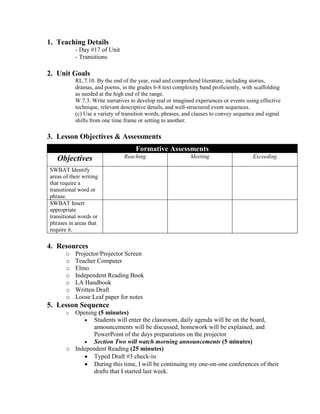
1. Teaching Details
           - Day #17 of Unit
           - Transitions

2. Unit Goals
           RL.7.10. By the end of the year, read and comprehend literature, including stories,
           dramas, and poems, in the grades 6-8 text complexity band proficiently, with scaffolding
           as needed at the high end of the range.
           W.7.3. Write narratives to develop real or imagined experiences or events using effective
           technique, relevant descriptive details, and well-structured event sequences.
           (c) Use a variety of transition words, phrases, and clauses to convey sequence and signal
           shifts from one time frame or setting to another.

3. Lesson Objectives & Assessments
                                     Formative Assessments
   Objectives                   Reaching                    Meeting                    Exceeding

SWBAT Identify
areas of their writing
that require a
transitional word or
phrase.
SWBAT Insert
appropriate
transitional words or
phrases in areas that
require it.

4. Resources
       o   Projector/Projector Screen
       o   Teacher Computer
       o   Elmo
       o   Independent Reading Book
       o   LA Handbook
       o   Written Draft
       o   Loose Leaf paper for notes
5. Lesson Sequence
       o Opening (5 minutes)
                Students will enter the classroom, daily agenda will be on the board,
                announcements will be discussed, homework will be explained, and
                PowerPoint of the days preparations on the projector
                Section Two will watch morning announcements (5 minutes)
       o Independent Reading (25 minutes)
                Typed Draft #3 check-in
                During this time, I will be continuing my one-on-one conferences of their
                drafts that I started last week.
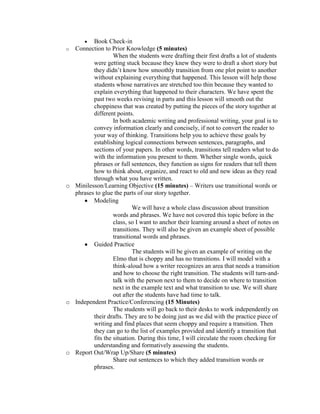
Book Check-in
o Connection to Prior Knowledge (5 minutes)
                  When the students were drafting their first drafts a lot of students
         were getting stuck because they knew they were to draft a short story but
         they didn’t know how smoothly transition from one plot point to another
         without explaining everything that happened. This lesson will help those
         students whose narratives are stretched too thin because they wanted to
         explain everything that happened to their characters. We have spent the
         past two weeks revising in parts and this lesson will smooth out the
         choppiness that was created by putting the pieces of the story together at
         different points.
                  In both academic writing and professional writing, your goal is to
         convey information clearly and concisely, if not to convert the reader to
         your way of thinking. Transitions help you to achieve these goals by
         establishing logical connections between sentences, paragraphs, and
         sections of your papers. In other words, transitions tell readers what to do
         with the information you present to them. Whether single words, quick
         phrases or full sentences, they function as signs for readers that tell them
         how to think about, organize, and react to old and new ideas as they read
         through what you have written.
o Minilesson/Learning Objective (15 minutes) – Writers use transitional words or
  phrases to glue the parts of our story together.
         Modeling
                          We will have a whole class discussion about transition
                  words and phrases. We have not covered this topic before in the
                  class, so I want to anchor their learning around a sheet of notes on
                  transitions. They will also be given an example sheet of possible
                  transitional words and phrases.
         Guided Practice
                          The students will be given an example of writing on the
                  Elmo that is choppy and has no transitions. I will model with a
                  think-aloud how a writer recognizes an area that needs a transition
                  and how to choose the right transition. The students will turn-and-
                  talk with the person next to them to decide on where to transition
                  next in the example text and what transition to use. We will share
                  out after the students have had time to talk.
o Independent Practice/Conferencing (15 Minutes)
                  The students will go back to their desks to work independently on
         their drafts. They are to be doing just as we did with the practice piece of
         writing and find places that seem choppy and require a transition. Then
         they can go to the list of examples provided and identify a transition that
         fits the situation. During this time, I will circulate the room checking for
         understanding and formatively assessing the students.
o Report Out/Wrap Up/Share (5 minutes)
                  Share out sentences to which they added transition words or
         phrases.

Bruck kassandra observation#3_lesson_plan

  • 1.
    1. Teaching Details - Day #17 of Unit - Transitions 2. Unit Goals RL.7.10. By the end of the year, read and comprehend literature, including stories, dramas, and poems, in the grades 6-8 text complexity band proficiently, with scaffolding as needed at the high end of the range. W.7.3. Write narratives to develop real or imagined experiences or events using effective technique, relevant descriptive details, and well-structured event sequences. (c) Use a variety of transition words, phrases, and clauses to convey sequence and signal shifts from one time frame or setting to another. 3. Lesson Objectives & Assessments Formative Assessments Objectives Reaching Meeting Exceeding SWBAT Identify areas of their writing that require a transitional word or phrase. SWBAT Insert appropriate transitional words or phrases in areas that require it. 4. Resources o Projector/Projector Screen o Teacher Computer o Elmo o Independent Reading Book o LA Handbook o Written Draft o Loose Leaf paper for notes 5. Lesson Sequence o Opening (5 minutes) Students will enter the classroom, daily agenda will be on the board, announcements will be discussed, homework will be explained, and PowerPoint of the days preparations on the projector Section Two will watch morning announcements (5 minutes) o Independent Reading (25 minutes) Typed Draft #3 check-in During this time, I will be continuing my one-on-one conferences of their drafts that I started last week.
  • 2.
    Book Check-in o Connectionto Prior Knowledge (5 minutes) When the students were drafting their first drafts a lot of students were getting stuck because they knew they were to draft a short story but they didn’t know how smoothly transition from one plot point to another without explaining everything that happened. This lesson will help those students whose narratives are stretched too thin because they wanted to explain everything that happened to their characters. We have spent the past two weeks revising in parts and this lesson will smooth out the choppiness that was created by putting the pieces of the story together at different points. In both academic writing and professional writing, your goal is to convey information clearly and concisely, if not to convert the reader to your way of thinking. Transitions help you to achieve these goals by establishing logical connections between sentences, paragraphs, and sections of your papers. In other words, transitions tell readers what to do with the information you present to them. Whether single words, quick phrases or full sentences, they function as signs for readers that tell them how to think about, organize, and react to old and new ideas as they read through what you have written. o Minilesson/Learning Objective (15 minutes) – Writers use transitional words or phrases to glue the parts of our story together. Modeling We will have a whole class discussion about transition words and phrases. We have not covered this topic before in the class, so I want to anchor their learning around a sheet of notes on transitions. They will also be given an example sheet of possible transitional words and phrases. Guided Practice The students will be given an example of writing on the Elmo that is choppy and has no transitions. I will model with a think-aloud how a writer recognizes an area that needs a transition and how to choose the right transition. The students will turn-and- talk with the person next to them to decide on where to transition next in the example text and what transition to use. We will share out after the students have had time to talk. o Independent Practice/Conferencing (15 Minutes) The students will go back to their desks to work independently on their drafts. They are to be doing just as we did with the practice piece of writing and find places that seem choppy and require a transition. Then they can go to the list of examples provided and identify a transition that fits the situation. During this time, I will circulate the room checking for understanding and formatively assessing the students. o Report Out/Wrap Up/Share (5 minutes) Share out sentences to which they added transition words or phrases.