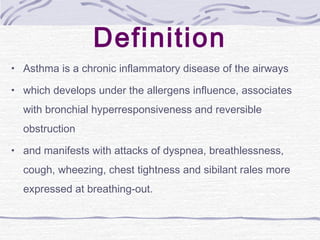
BRONCHIAL
ASTHMA
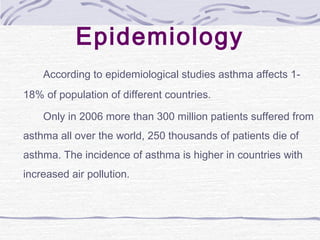
Definition
• Asthma is a chronic inflammatory disease of the airways
• which develops under the allergens influence, associates
with bronchial hyperresponsiveness and reversible
obstruction
• and manifests with attacks of dyspnea, breathlessness,
cough, wheezing, chest tightness and sibilant rales more
expressed at breathing-out.
Epidemiology
According to epidemiological studies asthma affects 1-
18% of population of different countries.
Only in 2006 more than 300 million patients suffered from
asthma all over the world, 250 thousands of patients die of
asthma. The incidence of asthma is higher in countries with
increased air pollution.
2008
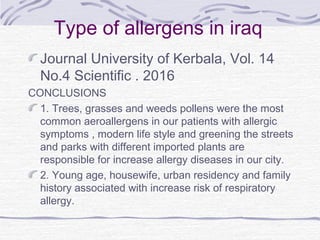
Type of allergens in iraq
Journal University of Kerbala, Vol. 14
No.4 Scientific . 2016
CONCLUSIONS
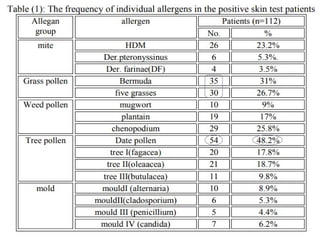
1. Trees, grasses and weeds pollens were the most
common aeroallergens in our patients with allergic
symptoms , modern life style and greening the streets
and parks with different imported plants are
responsible for increase allergy diseases in our city.
2. Young age, housewife, urban residency and family
history associated with increase risk of respiratory
allergy.
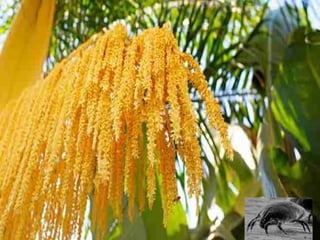
5
Five grass bermuda
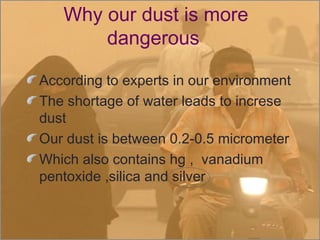
Why our dust is more
dangerous
According to experts in our environment
The shortage of water leads to increse
dust
Our dust is between 0.2-0.5 micrometer
Which also contains hg ,  vanadium
pentoxide ,silica and silver
In summer of 2017
2850 patient has admitted to hospital
suffering from acute asthmatic
attackcaused by dust wend in 5 region
of iraq (Samaria news,ministry of
health)
The Relationship between Asthma and
Allergic Rhinitis in the Iraqi Population
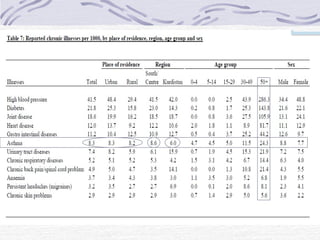
Allergic rhinitis is very common in patients with Asthma
Information for 1704 (1140 adults and 564 children)
subjects with asthma and 15032 non-asthmatic (control)
subjects were analyzed concerning the presence
of allergic rhinitis in asthmatic patients (Table 2). The
frequency of allergic rhinitis (AR) was 61.6% among
individuals with asthma versus 6% among nonasthmatic
(control) subjects
https://www.researchgate.net/publication/26761272
Thanks

Bronchial asthma statistic in iraq مرض الربو في العراق

  • 1.
  • 2.
    Definition • Asthma isa chronic inflammatory disease of the airways • which develops under the allergens influence, associates with bronchial hyperresponsiveness and reversible obstruction • and manifests with attacks of dyspnea, breathlessness, cough, wheezing, chest tightness and sibilant rales more expressed at breathing-out.
  • 3.
    Epidemiology According to epidemiologicalstudies asthma affects 1- 18% of population of different countries. Only in 2006 more than 300 million patients suffered from asthma all over the world, 250 thousands of patients die of asthma. The incidence of asthma is higher in countries with increased air pollution.
  • 4.
  • 6.
    Type of allergensin iraq Journal University of Kerbala, Vol. 14 No.4 Scientific . 2016 CONCLUSIONS 1. Trees, grasses and weeds pollens were the most common aeroallergens in our patients with allergic symptoms , modern life style and greening the streets and parks with different imported plants are responsible for increase allergy diseases in our city. 2. Young age, housewife, urban residency and family history associated with increase risk of respiratory allergy.
  • 7.
  • 8.
  • 11.
    Why our dustis more dangerous According to experts in our environment The shortage of water leads to increse dust Our dust is between 0.2-0.5 micrometer Which also contains hg ,  vanadium pentoxide ,silica and silver
  • 12.
    In summer of2017 2850 patient has admitted to hospital suffering from acute asthmatic attackcaused by dust wend in 5 region of iraq (Samaria news,ministry of health)
  • 13.
    The Relationship betweenAsthma and Allergic Rhinitis in the Iraqi Population Allergic rhinitis is very common in patients with Asthma Information for 1704 (1140 adults and 564 children) subjects with asthma and 15032 non-asthmatic (control) subjects were analyzed concerning the presence of allergic rhinitis in asthmatic patients (Table 2). The frequency of allergic rhinitis (AR) was 61.6% among individuals with asthma versus 6% among nonasthmatic (control) subjects https://www.researchgate.net/publication/26761272
  • 14.