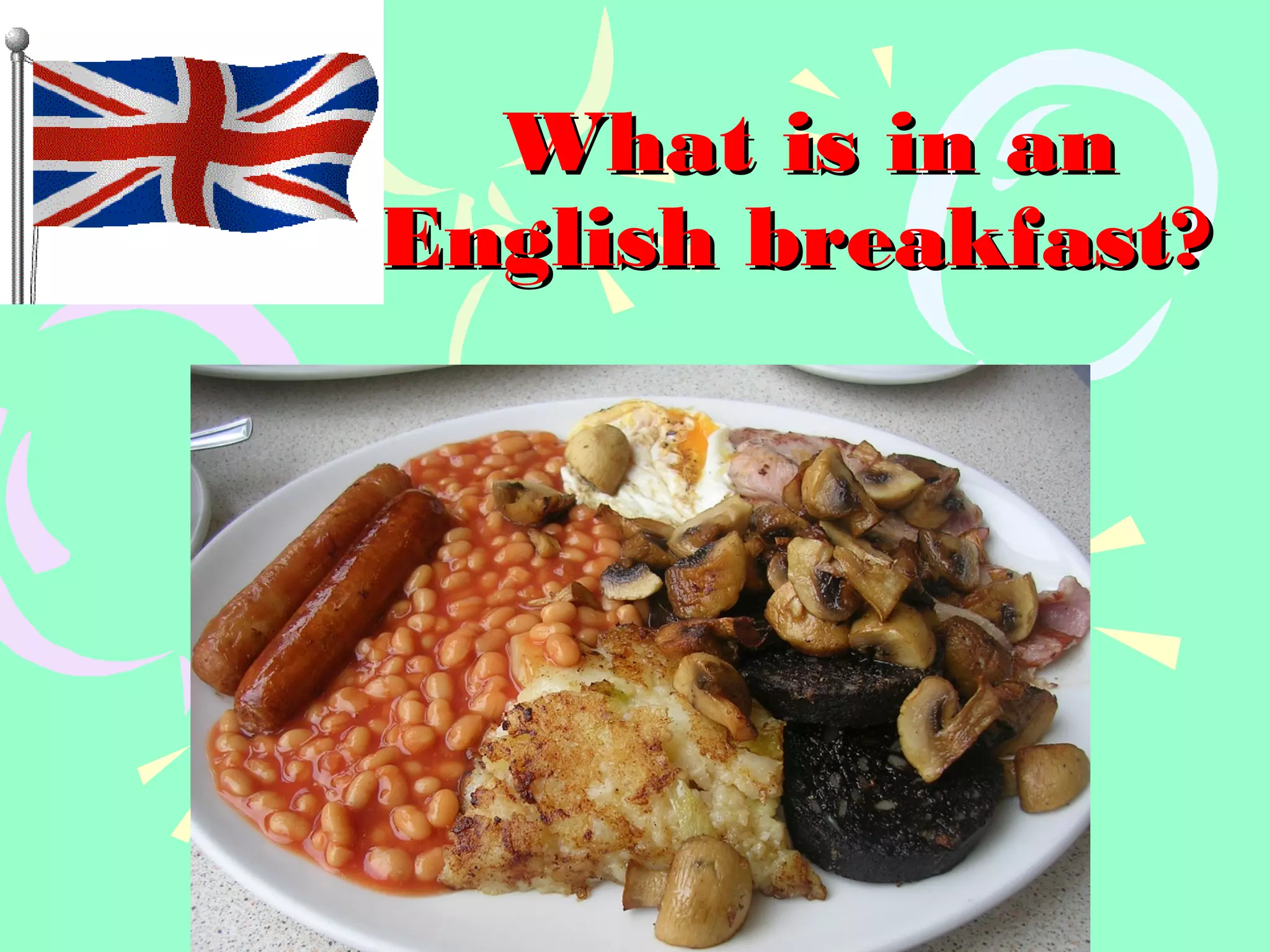
What is in anWhat is in an
English breakfast?English breakfast?
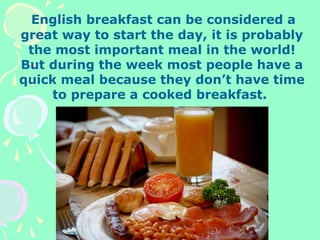
English breakfast can be considered a
great way to start the day, it is probably
the most important meal in the world!
But during the week most people have a
quick meal because they don’t have time
to prepare a cooked breakfast.
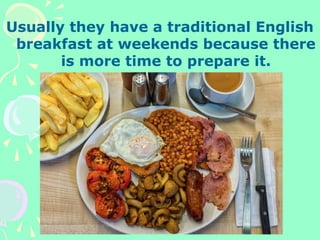
Usually they have a traditional English
breakfast at weekends because there
is more time to prepare it.
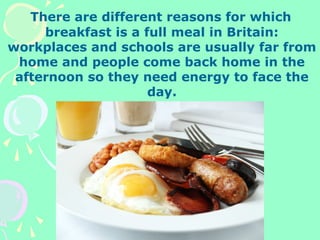
There are different reasons for which
breakfast is a full meal in Britain:
workplaces and schools are usually far from
home and people come back home in the
afternoon so they need energy to face the
day.
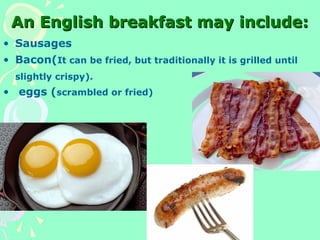
An English breakfast may include:An English breakfast may include:
• Sausages
• Bacon(It can be fried, but traditionally it is grilled until
slightly crispy).
• eggs (scrambled or fried)
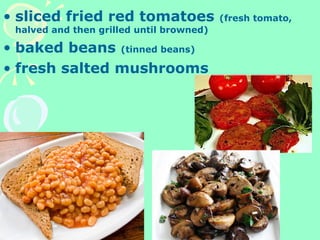
• sliced fried red tomatoes (fresh tomato,
halved and then grilled until browned)
• baked beans (tinned beans)
• fresh salted mushrooms
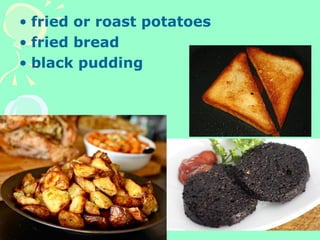
• fried or roast potatoes
• fried bread
• black pudding
An English breakfast mayAn English breakfast may
also include:also include:
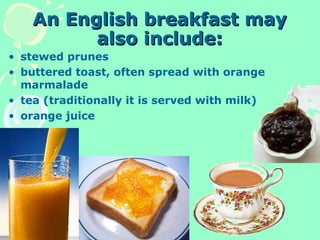
• stewed prunes
• buttered toast, often spread with orange
marmalade
• tea (traditionally it is served with milk)
• orange juice
The History of ToastThe History of Toast
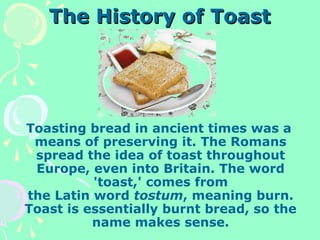
Toasting bread in ancient times was a
means of preserving it. The Romans
spread the idea of toast throughout
Europe, even into Britain. The word
'toast,' comes from
the Latin word tostum, meaning burn.
Toast is essentially burnt bread, so the
name makes sense.
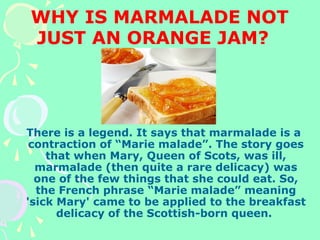
WHY IS MARMALADE NOT
JUST AN ORANGE JAM?
There is a legend. It says that marmalade is a
contraction of “Marie malade”. The story goes
that when Mary, Queen of Scots, was ill,
marmalade (then quite a rare delicacy) was
one of the few things that she could eat. So,
the French phrase “Marie malade” meaning
'sick Mary' came to be applied to the breakfast
delicacy of the Scottish-born queen.
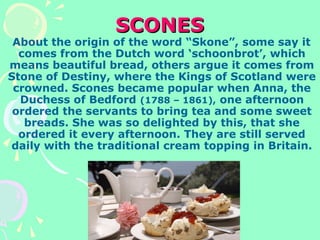
SCONESSCONES
About the origin of the word “Skone”, some say it
comes from the Dutch word ‘schoonbrot’, which
means beautiful bread, others argue it comes from
Stone of Destiny, where the Kings of Scotland were
crowned. Scones became popular when Anna, the
Duchess of Bedford (1788 – 1861), one afternoon
ordered the servants to bring tea and some sweet
breads. She was so delighted by this, that she
ordered it every afternoon. They are still served
daily with the traditional cream topping in Britain.
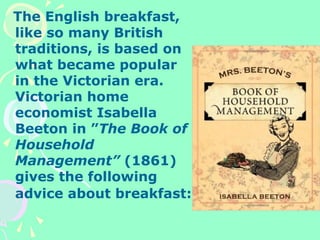
The English breakfast,
like so many British
traditions, is based on
what became popular
in the Victorian era.
Victorian home
economist Isabella
Beeton in ”The Book of
Household
Management” (1861)
gives the following
advice about breakfast:
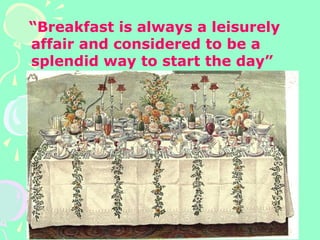
“Breakfast is always a leisurely
affair and considered to be a
splendid way to start the day”
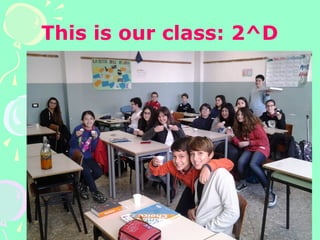
This is our class: 2^D
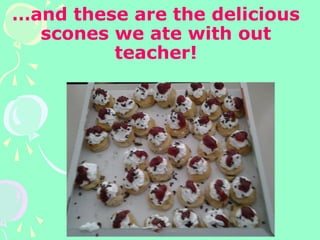
…and these are the delicious
scones we ate with out
teacher!
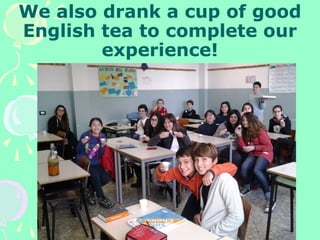
We also drank a cup of good
English tea to complete our
experience!
ISTITUTO COMPRENSIVOISTITUTO COMPRENSIVO
MASSARI-GALILEIMASSARI-GALILEI
BARIBARI
CLASSE 2DCLASSE 2D
ANNO SCOLASTICO 2014/15ANNO SCOLASTICO 2014/15
INSEGNANTE ELISA LIPPOLISINSEGNANTE ELISA LIPPOLIS

British breakfast(2 d) lippolis

  • 1.
    What is inanWhat is in an English breakfast?English breakfast?
  • 2.
    English breakfast canbe considered a great way to start the day, it is probably the most important meal in the world! But during the week most people have a quick meal because they don’t have time to prepare a cooked breakfast.
  • 3.
    Usually they havea traditional English breakfast at weekends because there is more time to prepare it.
  • 4.
    There are differentreasons for which breakfast is a full meal in Britain: workplaces and schools are usually far from home and people come back home in the afternoon so they need energy to face the day.
  • 5.
    An English breakfastmay include:An English breakfast may include: • Sausages • Bacon(It can be fried, but traditionally it is grilled until slightly crispy). • eggs (scrambled or fried)
  • 6.
    • sliced friedred tomatoes (fresh tomato, halved and then grilled until browned) • baked beans (tinned beans) • fresh salted mushrooms
  • 7.
    • fried orroast potatoes • fried bread • black pudding
  • 8.
    An English breakfastmayAn English breakfast may also include:also include: • stewed prunes • buttered toast, often spread with orange marmalade • tea (traditionally it is served with milk) • orange juice
  • 9.
    The History ofToastThe History of Toast Toasting bread in ancient times was a means of preserving it. The Romans spread the idea of toast throughout Europe, even into Britain. The word 'toast,' comes from the Latin word tostum, meaning burn. Toast is essentially burnt bread, so the name makes sense.
  • 10.
    WHY IS MARMALADENOT JUST AN ORANGE JAM? There is a legend. It says that marmalade is a contraction of “Marie malade”. The story goes that when Mary, Queen of Scots, was ill, marmalade (then quite a rare delicacy) was one of the few things that she could eat. So, the French phrase “Marie malade” meaning 'sick Mary' came to be applied to the breakfast delicacy of the Scottish-born queen.
  • 11.
    SCONESSCONES About the originof the word “Skone”, some say it comes from the Dutch word ‘schoonbrot’, which means beautiful bread, others argue it comes from Stone of Destiny, where the Kings of Scotland were crowned. Scones became popular when Anna, the Duchess of Bedford (1788 – 1861), one afternoon ordered the servants to bring tea and some sweet breads. She was so delighted by this, that she ordered it every afternoon. They are still served daily with the traditional cream topping in Britain.
  • 12.
    The English breakfast, likeso many British traditions, is based on what became popular in the Victorian era. Victorian home economist Isabella Beeton in ”The Book of Household Management” (1861) gives the following advice about breakfast:
  • 13.
    “Breakfast is alwaysa leisurely affair and considered to be a splendid way to start the day”
  • 14.
    This is ourclass: 2^D
  • 15.
    …and these arethe delicious scones we ate with out teacher!
  • 16.
    We also dranka cup of good English tea to complete our experience!
  • 17.
    ISTITUTO COMPRENSIVOISTITUTO COMPRENSIVO MASSARI-GALILEIMASSARI-GALILEI BARIBARI CLASSE2DCLASSE 2D ANNO SCOLASTICO 2014/15ANNO SCOLASTICO 2014/15 INSEGNANTE ELISA LIPPOLISINSEGNANTE ELISA LIPPOLIS