Briefs
Contractual Briefs are between the client and the and the employer, and it explains duties which will
be required of the client and how the company does its work. This is very important for the client so
that he knows exactly what he is expected to do and how the company does things so that he can do
the job properly. In the contractual brief it shows every part of the company and all the rights that
the client has when he agrees to the document by signing it, this is important for people who want
to find out everything that they are signing up for in case there is something they don’t like. Within
the contractual brief it includes all the information about what the client is asked to do, and where
and when they want it to be done. Without a contractual brief the employer sometimes needs to
grant the client the rights to do what needs to do, which can be a problem for some clients if they
don’t know what they are looking for. Contractual Briefs are an agreement between the client and
employer so that they don’t have any misunderstandings and to protect them both from any
problems they have while the client is working for the employer.
A negotiated brief is where two companies come together with a different idea than each other but
they eventually come to a decision which they are both happy with. During the negotiation period
they both put forward their ideas and what they want doing, and then after they spend some time
talking over which parts they want the most, they try combine the ideas together or come up with
something completely different. But when they finally come to their decision they usually stick to it
as it is hard for the two groups to put their idea together and for them to actually like it. Negotiated
briefs are very useful for most companies that make deals together because once they make an
agreement they want to stick to it, and they can refer back to the brief whenever they disagree on
something that was said. This is very useful for business to keep deals as there is no way of making
new parts of the agreement up as it is all in writing.
A formal brief is very different to all the other styles of briefing, as it is aimed at large groups or
businesses rather than individual clients. The document usually only contains the most important
details and tries to get straight to the point instead of adding in all the small and pointless parts.
Even though it is a formal brief it is not always a legal document that can set the agreement
completely.
A commission brief is a document containing all the reasons why you have decided to create your
video and what you hope to achieve by doing so. In the commission brief you would usually start out
with what you hope to achieve with the film, which includes your target audience, the length, what
format it is going to be in and all the other information like that. After you have the basics down on
paper you would then look to letting them know your budget and deadlines so the product can
reach the final stage of production and they know it is achievable to create the product that you
want. After you have added in all the information about your video that they will need to know, you
then send it off to a minimum of 3 production companies that you think will be interested in your
video and is similar to other videos that they have produced in the past. If you send them to
companies that have never made a video like the one you hope to make, then you are much more
likely to get denied and then you won’t have anyone to produce your video. If you think that your
budget is too high for the companies you are approaching then you could set up charities to try and
raise money for your project. Once the production company accepts your application you will have
to set up an initial meeting with them to discuss everything in person where it is much easier to tell
them exactly what you are going for. This is where you will make or break the deal with company so
it is important that you try and make the company interested with your product. If they then agree
to fund your product then you will have to sign a contract to bind you both together, and most of
the time the producer owns the rights to the video so you have to change that within the contract.
After that all you have to do is send them the script and the location of each of the different shoots,
but the producer has the right to disagree with either of them so you will again have to come to an
agreement. After all the shoots have been done you have to send the raw unedited footage of to the
producer so that he can look through it and choose which scenes he likes the best. Once all the
footage has been edited and the final product has been created the only thing left to do is raise
awareness of your video and upload it to all the social media websites possible. If you can make
enough people watch your video then there is a much higher chance of it getting onto bigger shows.
A tender brief is where several contractors gather together and discuss how a particular product
could be produced and they all put forward ideas of how to make it achieve the best as it possibly
could. This is useful when the contractors don’t have an exact idea of what they want to do with the
product and they don’t know how they are going to sell it either. This way they can all share their
ideas on what they think is best for the product, and when they have all put their ideas forward then
they can decide which is best for them. The only problem with this type of brief is that most people
have different ideas on how they wish to present the product, therefore this can lead to
disagreements and delay the process.
A cooperative brief is done for everyone and can be done by everyone, this is helpful for people who
want to create their own brief and aren’t in the professional scene.
A competition brief is the most simple and the most commonly used brief out of the lot, people see
competition briefs almost every single day. Whether they are posted in your mail, you see them on
your computer and even sometimes on the television. A competition brief can vary with the details
from one to the next; some may just require your name date of birth and signature. Whereas others
may need more personal details like your address gender, race and stuff like that. A competition
brief changes depending on the format that you receive the competition in, if you were to see the
competition brief on the television you would only have to send in a word and the rest is done by
the competition holder, they can all your details from your number but what clients don’t know is
that when you text the competition holder you agree to all sorts of information which is written in
small print under the main competition.
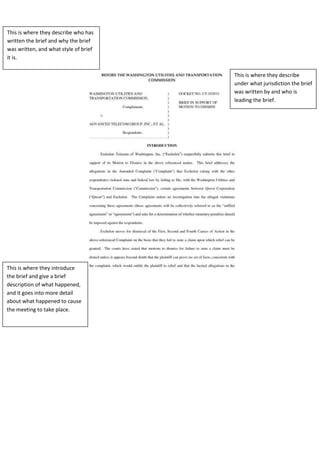
This is where they describe who has
written the brief and why the brief
was written, and what style of brief
it is.
This is where they describe
under what jurisdiction the brief
was written by and who is
leading the brief.
This is where they introduce
the brief and give a brief
description of what happened,
and it goes into more detail
about what happened to cause
the meeting to take place.
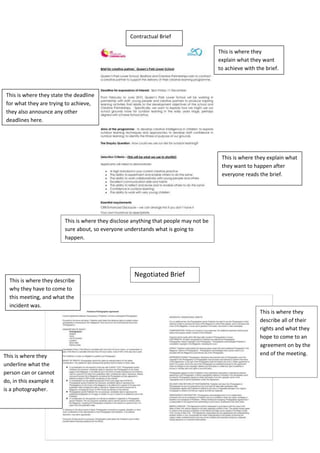
This is where they
explain what they want
to achieve with the brief.
This is where they state the deadline
for what they are trying to achieve,
they also announce any other
deadlines here.
This is where they explain what
they want to happen after
everyone reads the brief.
This is where they disclose anything that people may not be
sure about, so everyone understands what is going to
happen.
This is where they describe
why they have to come to
this meeting, and what the
incident was.
This is where they
underline what the
person can or cannot
do, in this example it
is a photographer.
This is where they
describe all of their
rights and what they
hope to come to an
agreement on by the
end of the meeting.
Negotiated Brief
Contractual Brief

Briefs for merge

  • 1.
    Briefs Contractual Briefs arebetween the client and the and the employer, and it explains duties which will be required of the client and how the company does its work. This is very important for the client so that he knows exactly what he is expected to do and how the company does things so that he can do the job properly. In the contractual brief it shows every part of the company and all the rights that the client has when he agrees to the document by signing it, this is important for people who want to find out everything that they are signing up for in case there is something they don’t like. Within the contractual brief it includes all the information about what the client is asked to do, and where and when they want it to be done. Without a contractual brief the employer sometimes needs to grant the client the rights to do what needs to do, which can be a problem for some clients if they don’t know what they are looking for. Contractual Briefs are an agreement between the client and employer so that they don’t have any misunderstandings and to protect them both from any problems they have while the client is working for the employer. A negotiated brief is where two companies come together with a different idea than each other but they eventually come to a decision which they are both happy with. During the negotiation period they both put forward their ideas and what they want doing, and then after they spend some time talking over which parts they want the most, they try combine the ideas together or come up with something completely different. But when they finally come to their decision they usually stick to it as it is hard for the two groups to put their idea together and for them to actually like it. Negotiated briefs are very useful for most companies that make deals together because once they make an agreement they want to stick to it, and they can refer back to the brief whenever they disagree on something that was said. This is very useful for business to keep deals as there is no way of making new parts of the agreement up as it is all in writing. A formal brief is very different to all the other styles of briefing, as it is aimed at large groups or businesses rather than individual clients. The document usually only contains the most important details and tries to get straight to the point instead of adding in all the small and pointless parts. Even though it is a formal brief it is not always a legal document that can set the agreement completely. A commission brief is a document containing all the reasons why you have decided to create your video and what you hope to achieve by doing so. In the commission brief you would usually start out with what you hope to achieve with the film, which includes your target audience, the length, what format it is going to be in and all the other information like that. After you have the basics down on paper you would then look to letting them know your budget and deadlines so the product can reach the final stage of production and they know it is achievable to create the product that you want. After you have added in all the information about your video that they will need to know, you then send it off to a minimum of 3 production companies that you think will be interested in your video and is similar to other videos that they have produced in the past. If you send them to companies that have never made a video like the one you hope to make, then you are much more likely to get denied and then you won’t have anyone to produce your video. If you think that your budget is too high for the companies you are approaching then you could set up charities to try and raise money for your project. Once the production company accepts your application you will have to set up an initial meeting with them to discuss everything in person where it is much easier to tell
  • 2.
    them exactly whatyou are going for. This is where you will make or break the deal with company so it is important that you try and make the company interested with your product. If they then agree to fund your product then you will have to sign a contract to bind you both together, and most of the time the producer owns the rights to the video so you have to change that within the contract. After that all you have to do is send them the script and the location of each of the different shoots, but the producer has the right to disagree with either of them so you will again have to come to an agreement. After all the shoots have been done you have to send the raw unedited footage of to the producer so that he can look through it and choose which scenes he likes the best. Once all the footage has been edited and the final product has been created the only thing left to do is raise awareness of your video and upload it to all the social media websites possible. If you can make enough people watch your video then there is a much higher chance of it getting onto bigger shows. A tender brief is where several contractors gather together and discuss how a particular product could be produced and they all put forward ideas of how to make it achieve the best as it possibly could. This is useful when the contractors don’t have an exact idea of what they want to do with the product and they don’t know how they are going to sell it either. This way they can all share their ideas on what they think is best for the product, and when they have all put their ideas forward then they can decide which is best for them. The only problem with this type of brief is that most people have different ideas on how they wish to present the product, therefore this can lead to disagreements and delay the process. A cooperative brief is done for everyone and can be done by everyone, this is helpful for people who want to create their own brief and aren’t in the professional scene. A competition brief is the most simple and the most commonly used brief out of the lot, people see competition briefs almost every single day. Whether they are posted in your mail, you see them on your computer and even sometimes on the television. A competition brief can vary with the details from one to the next; some may just require your name date of birth and signature. Whereas others may need more personal details like your address gender, race and stuff like that. A competition brief changes depending on the format that you receive the competition in, if you were to see the competition brief on the television you would only have to send in a word and the rest is done by the competition holder, they can all your details from your number but what clients don’t know is that when you text the competition holder you agree to all sorts of information which is written in small print under the main competition.
  • 3.
    This is wherethey describe who has written the brief and why the brief was written, and what style of brief it is. This is where they describe under what jurisdiction the brief was written by and who is leading the brief. This is where they introduce the brief and give a brief description of what happened, and it goes into more detail about what happened to cause the meeting to take place.
  • 4.
    This is wherethey explain what they want to achieve with the brief. This is where they state the deadline for what they are trying to achieve, they also announce any other deadlines here. This is where they explain what they want to happen after everyone reads the brief. This is where they disclose anything that people may not be sure about, so everyone understands what is going to happen. This is where they describe why they have to come to this meeting, and what the incident was. This is where they underline what the person can or cannot do, in this example it is a photographer. This is where they describe all of their rights and what they hope to come to an agreement on by the end of the meeting. Negotiated Brief Contractual Brief