Download to read offline


![Meta data
@Component({
selector: ‘my-app',
templateUrl: 'app/app.component.html',
directives: [HeroDetailComponent],
providers: [HeroService]
})
export class AppComponent { ... }](https://image.slidesharecdn.com/brief-intro-2-to-angular-2-160219161653/85/Brief-intro-2-to-angular-2-6-320.jpg)
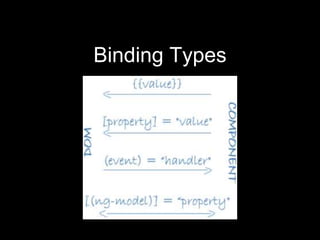
![Data Binding
• <div>{{hero.name}}</div>
• <hero-detail [hero]="selectedHero"></hero-
detail>
• <div (click)=“selectHero(hero)"></div>
• <input [(ngModel)]="hero.name">](https://image.slidesharecdn.com/brief-intro-2-to-angular-2-160219161653/85/Brief-intro-2-to-angular-2-7-320.jpg)
![Directives
• <div *ngFor="#hero of heroes"></div>
• <hero-detail *ngIf=“selectedHero"></hero-detail>
• <input [(ngModel)]="hero.name">](https://image.slidesharecdn.com/brief-intro-2-to-angular-2-160219161653/85/Brief-intro-2-to-angular-2-8-320.jpg)

![Dependency Injection
@Component({
providers: [HeroService]
})
constructor(private _service: HeroService){ }
• bootstrap(AppComponent, [BackendService,
HeroService, Logger]);](https://image.slidesharecdn.com/brief-intro-2-to-angular-2-160219161653/85/Brief-intro-2-to-angular-2-10-320.jpg)
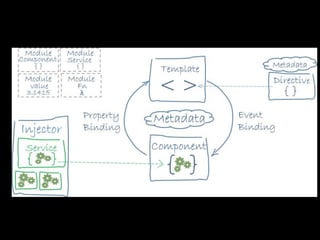


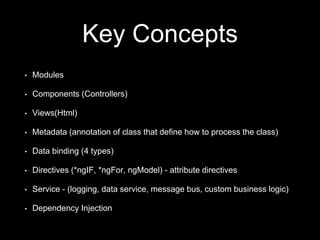
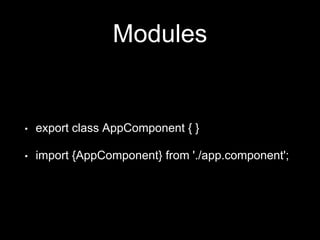
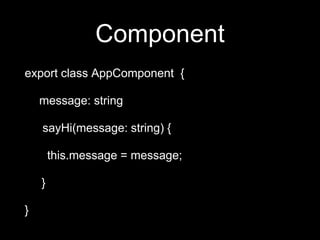
This document provides an introduction to key concepts in Angular2 including modules, components, views, metadata, data binding types, directives, services, and dependency injection. Modules define an application structure. Components define classes with metadata for templates and directives. Views are HTML templates. Data binding syncs data and displays. Directives add behavior to views. Services provide reusable business logic. Dependency injection provides services to components.


![Getting Started with Apache Spark: Big Data Made Simple [Free Meetup]](https://cdn.slidesharecdn.com/ss_thumbnails/apachesparkgettingstarted-260203175547-8361bcc3-thumbnail.jpg?width=640&height=640&fit=bounds)