Anne Faulkner
Director of Strategy
Online Centres Foundation
Section Divider: Heading intro here.


Assisted Digital: Local
community infrastructure to
support channel shift

Anne Faulkner
Director of Strategy, OCF
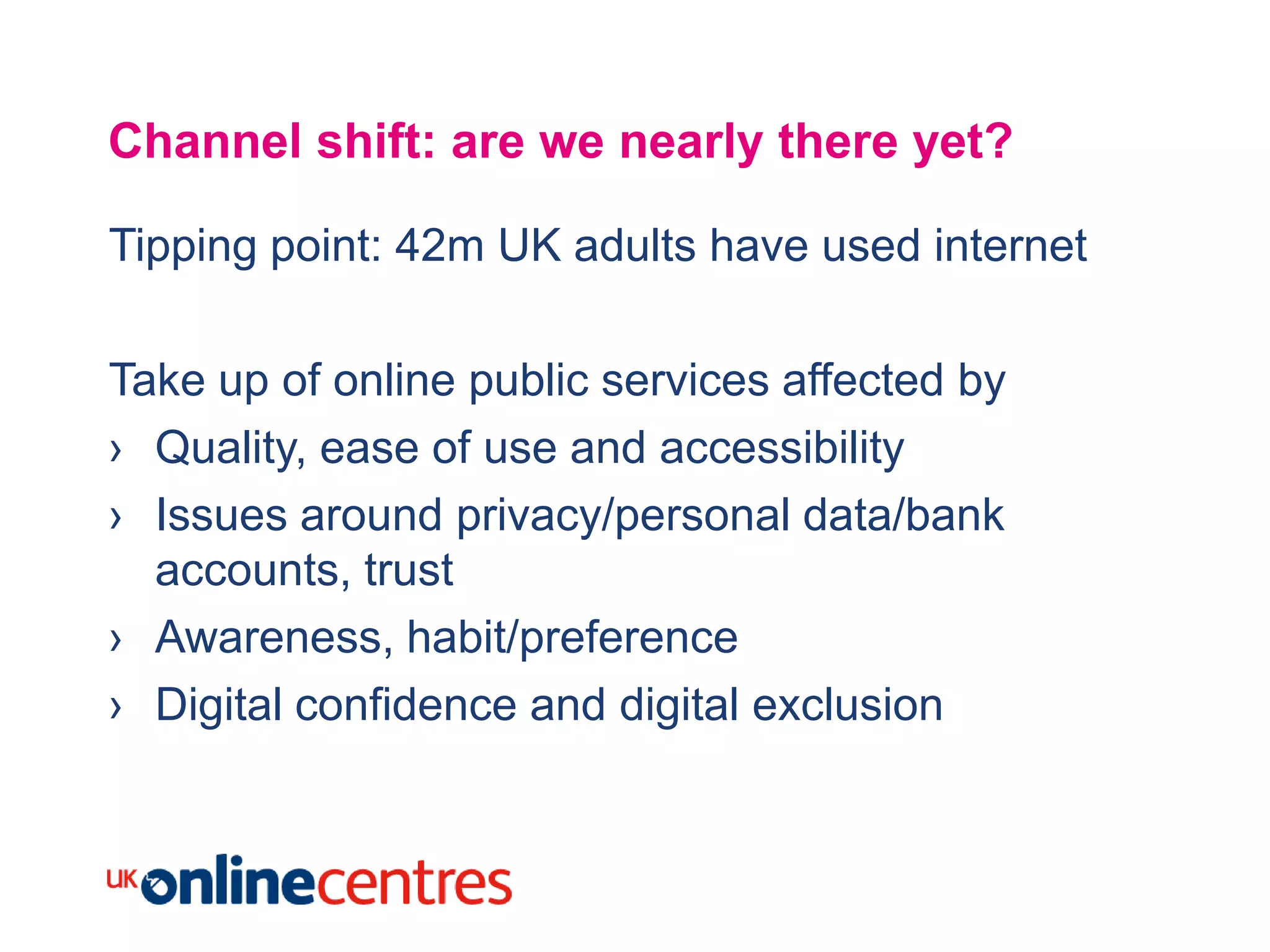
Channel shift: are we nearly there yet?

Tipping point: 42m UK adults have used internet

Take up of online public services affected by
› Quality, ease of use and accessibility
› Issues around privacy/personal data/bank
  accounts, trust
› Awareness, habit/preference
› Digital confidence and digital exclusion
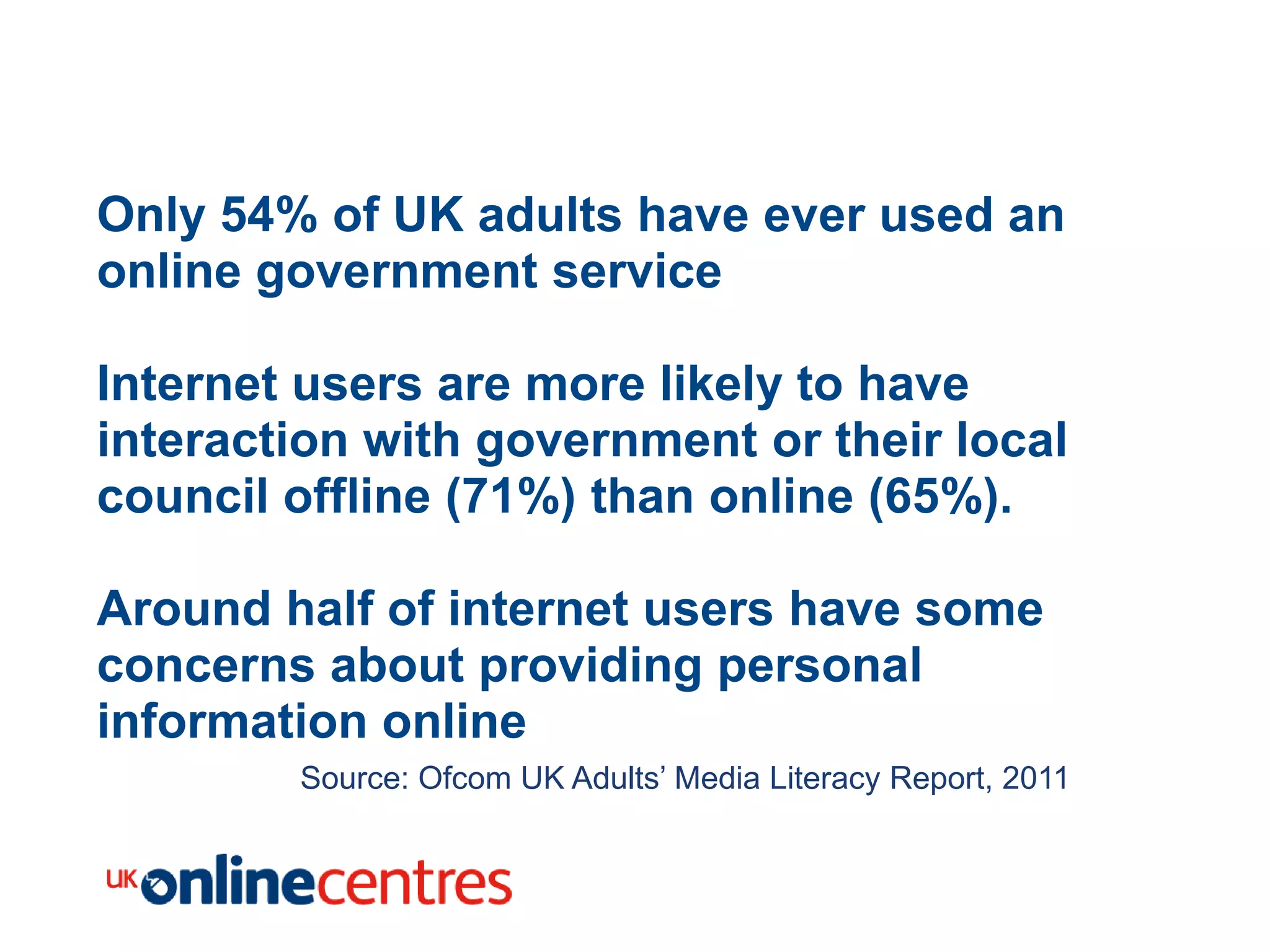
Only 54% of UK adults have ever used an
online government service

Internet users are more likely to have
interaction with government or their local
council offline (71%) than online (65%).

Around half of internet users have some
concerns about providing personal
information online
        Source: Ofcom UK Adults’ Media Literacy Report, 2011
Digital exclusion should not be a
reason to delay online channel shift
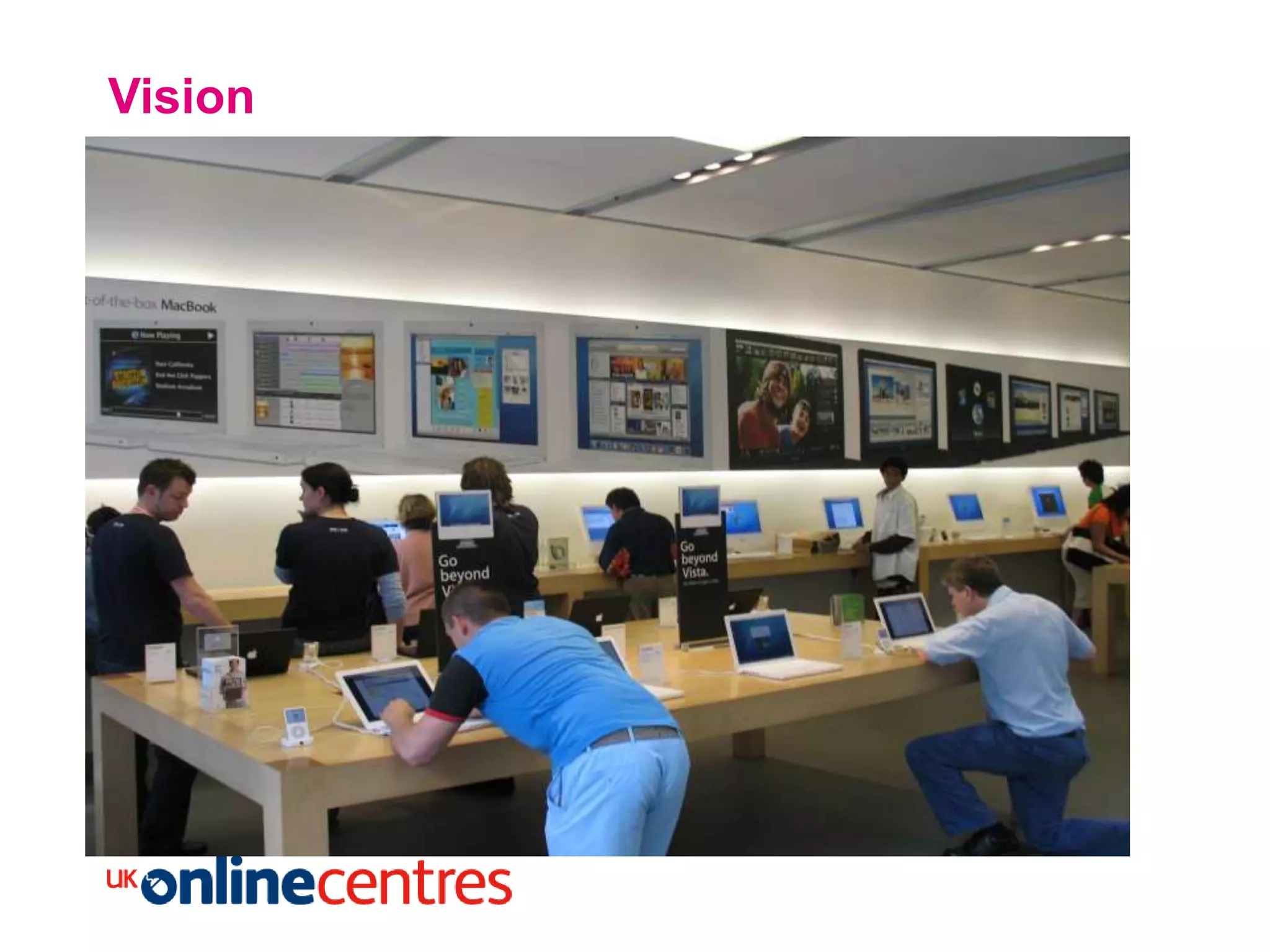
Vision
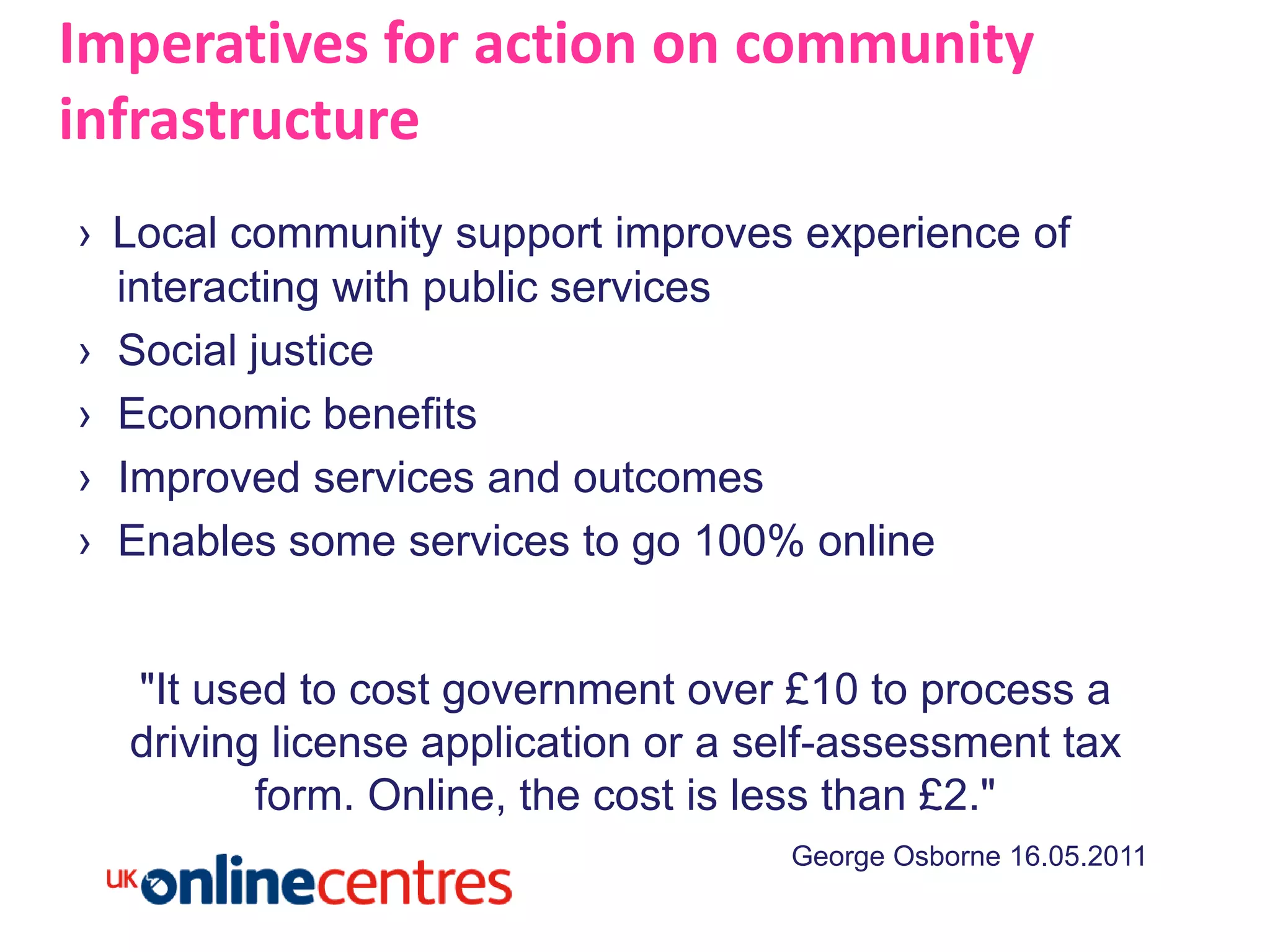
Imperatives for action on community
infrastructure
› Local community support improves experience of
  interacting with public services
› Social justice
› Economic benefits
› Improved services and outcomes
› Enables some services to go 100% online


  "It used to cost government over £10 to process a
  driving license application or a self-assessment tax
         form. Online, the cost is less than £2."
                                    George Osborne 16.05.2011
Principles

• Designed around needs of people, not
those of government
• Bottom-up, locally developed
• Partnership approach, at both local and
national levels
• Low-cost
What can we build on?

› Post Offices
› UK online centres
› Public libraries
› Other organisations supporting digital
  inclusion in communities (eg Age UK, Citizens
  Online, Digital Unite)
› Citizens Advice Bureaux
› Local Authority One Stop Shops
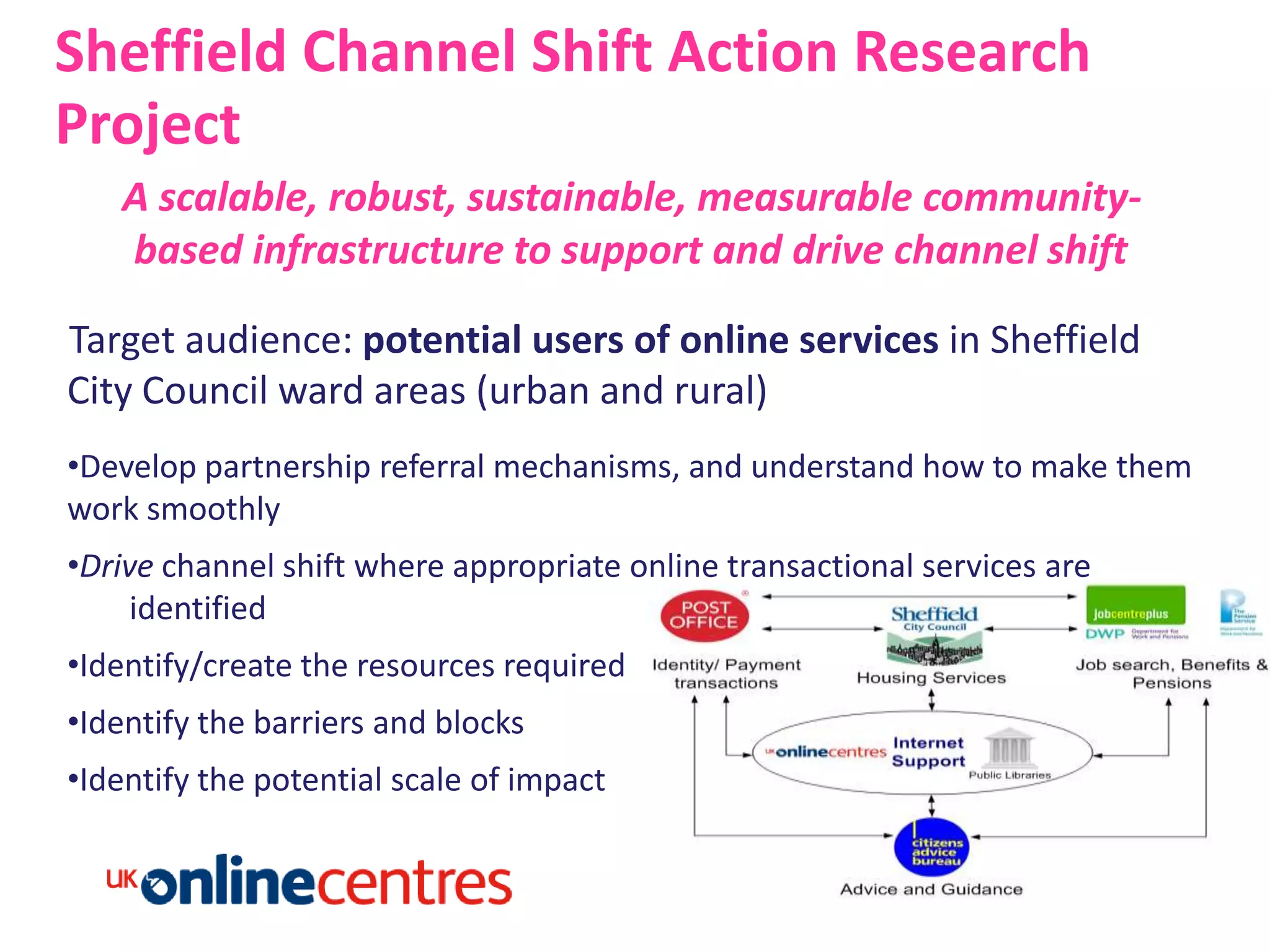
Sheffield Channel Shift Action Research
Project
   A scalable, robust, sustainable, measurable community-
   based infrastructure to support and drive channel shift

Target audience: potential users of online services in Sheffield
City Council ward areas (urban and rural)
•Develop partnership referral mechanisms, and understand how to make them
work smoothly
•Drive channel shift where appropriate online transactional services are
     identified
•Identify/create the resources required
•Identify the barriers and blocks
•Identify the potential scale of impact
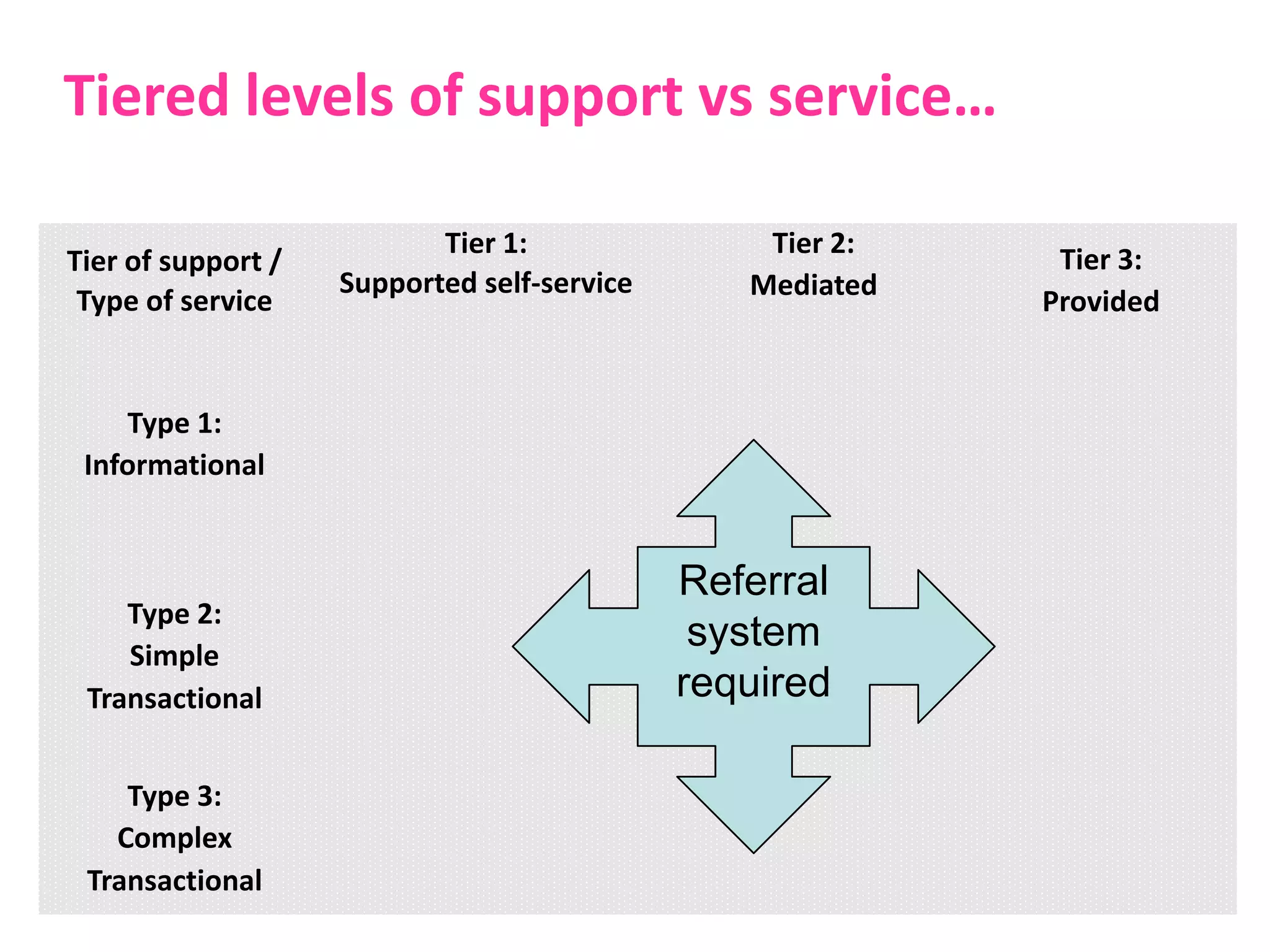
Tiered levels of support vs service…

                           Tier 1:               Tier 2:
Tier of support /                                           Tier 3:
                    Supported self-service      Mediated
 Type of service                                           Provided


    Type 1:
 Informational


                                             Referral
    Type 2:
    Simple
                                              system
 Transactional                               required

    Type 3:
   Complex
 Transactional
Lessons for Channel Shift models
• Community support to use online public services is
  paramount (not one model)
• Tiered offer works best
• Co-location works
• Triage creates efficiency – learn lessons from private
  sector
• Using a government service not same as using
  internet confidently – need long term support as well
  as quick fix
• Collaboration/partnership at local/strategic levels vital
• Consider wider benefits outside government (e.g.
  social housing)
Further information

Anne Faulkner

anne.faulkner@ukonlinecentres.com

Breakout 2 assisted digital services - anne faulkner

  • 1.
    Anne Faulkner Director ofStrategy Online Centres Foundation
  • 2.
    Section Divider: Headingintro here. Assisted Digital: Local community infrastructure to support channel shift Anne Faulkner Director of Strategy, OCF
  • 3.
    Channel shift: arewe nearly there yet? Tipping point: 42m UK adults have used internet Take up of online public services affected by › Quality, ease of use and accessibility › Issues around privacy/personal data/bank accounts, trust › Awareness, habit/preference › Digital confidence and digital exclusion
  • 4.
    Only 54% ofUK adults have ever used an online government service Internet users are more likely to have interaction with government or their local council offline (71%) than online (65%). Around half of internet users have some concerns about providing personal information online Source: Ofcom UK Adults’ Media Literacy Report, 2011
  • 5.
    Digital exclusion shouldnot be a reason to delay online channel shift
  • 6.
  • 7.
    Imperatives for actionon community infrastructure › Local community support improves experience of interacting with public services › Social justice › Economic benefits › Improved services and outcomes › Enables some services to go 100% online "It used to cost government over £10 to process a driving license application or a self-assessment tax form. Online, the cost is less than £2." George Osborne 16.05.2011
  • 8.
    Principles • Designed aroundneeds of people, not those of government • Bottom-up, locally developed • Partnership approach, at both local and national levels • Low-cost
  • 9.
    What can webuild on? › Post Offices › UK online centres › Public libraries › Other organisations supporting digital inclusion in communities (eg Age UK, Citizens Online, Digital Unite) › Citizens Advice Bureaux › Local Authority One Stop Shops
  • 10.
    Sheffield Channel ShiftAction Research Project A scalable, robust, sustainable, measurable community- based infrastructure to support and drive channel shift Target audience: potential users of online services in Sheffield City Council ward areas (urban and rural) •Develop partnership referral mechanisms, and understand how to make them work smoothly •Drive channel shift where appropriate online transactional services are identified •Identify/create the resources required •Identify the barriers and blocks •Identify the potential scale of impact
  • 11.
    Tiered levels ofsupport vs service… Tier 1: Tier 2: Tier of support / Tier 3: Supported self-service Mediated Type of service Provided Type 1: Informational Referral Type 2: Simple system Transactional required Type 3: Complex Transactional
  • 12.
    Lessons for ChannelShift models • Community support to use online public services is paramount (not one model) • Tiered offer works best • Co-location works • Triage creates efficiency – learn lessons from private sector • Using a government service not same as using internet confidently – need long term support as well as quick fix • Collaboration/partnership at local/strategic levels vital • Consider wider benefits outside government (e.g. social housing)
  • 13.