The Kuh-Ke-Nah Network Enabling Indigenous People to choose how they want to be included in the Information Society of the 21st Century
 
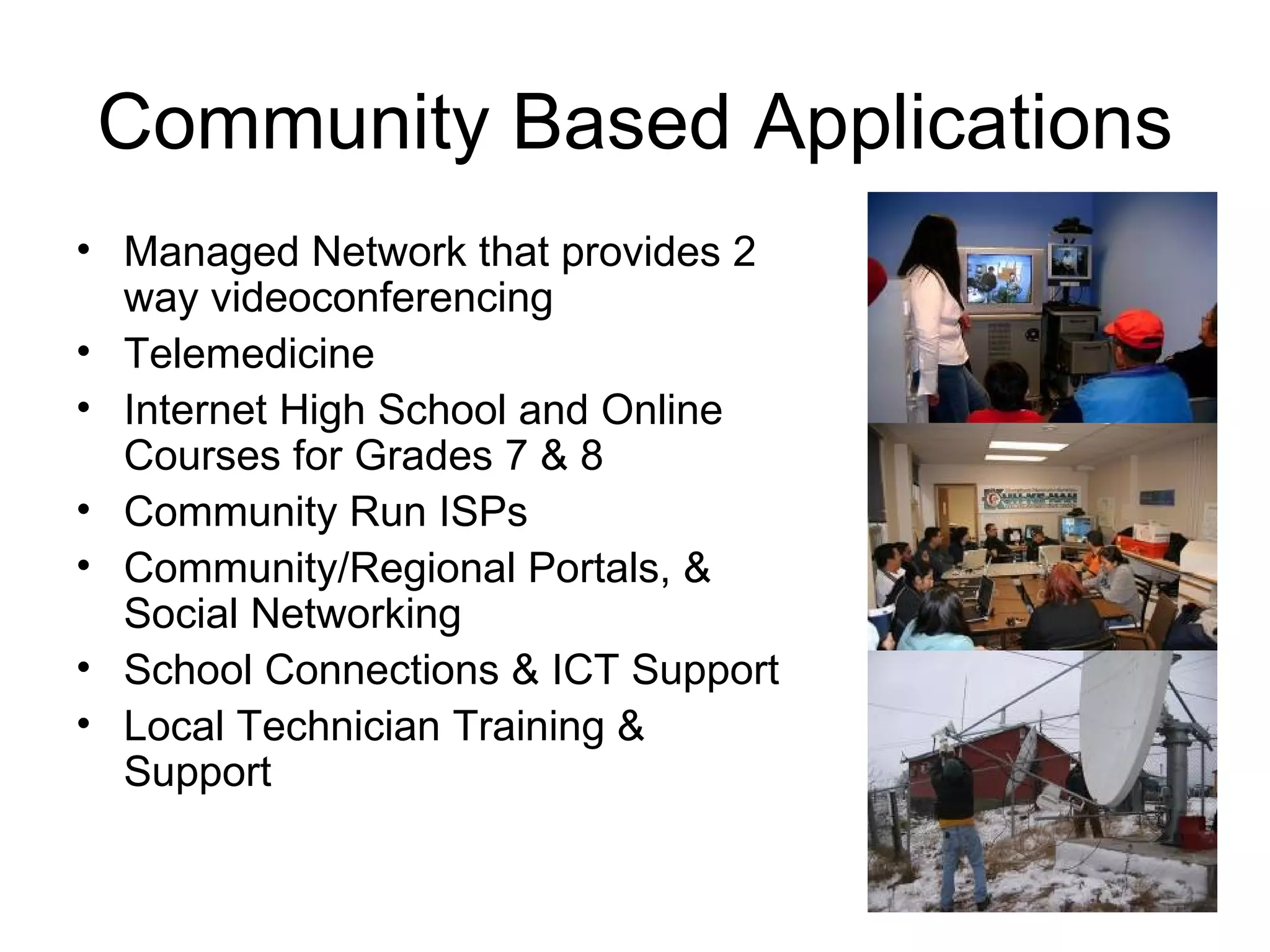
Community Based Applications Managed Network that provides 2 way videoconferencing Telemedicine Internet High School and Online Courses for Grades 7 & 8 Community Run ISPs Community/Regional Portals, & Social Networking School Connections & ICT Support Local Technician Training & Support
Challenges Urban-centric Services & Opportunities Educating everyone involved including Local Leaders, Champions, Communities, government Partners, and  Technology Providers Getting Government Support and buy-in Redefining “Access” to include broadband Always pushing for better Connections Overcoming the Stereotypes concerning indigenous owned and managed initiatives Creating new solutions in unique circumstances Adopting and then Owning the solutions
Lessons Learned Communities need to drive the applications. We Need to “Walk the Talk”. Common Vision and Partnerships on all levels required for it to work. It helps to invite the decision-makers, government, academics, corporate leaders, etc to visit the communities. Much of the work involves demanding access and demonstrating the effective use of these communication tools. Other communities see this and the “Me Too” effect drives cooperation. It takes a lot of innovation to include Everyone in the communication processes using these tools. Supporting our languages helps ensuring our people control and make user of these tools. Community building is an ongoing and evolutionary process.  The tools and technology change and we always adapt.
E-Inclusion for  Indigenous Communities The “Kuh-Ke-Nah” model is based on Indigenous values of community, cooperation, openness, and inter-dependability. Indigenous communities are often remote and close to the land.  Technology can  build and bring services in the community while keeping our connection to the Land alive. Lands are our Life.  We need to demand fair compensation from colonial governments for the use of our lands and resources. We need to establish international reporting bodies and processes that document and publish finding about “fair market return” from the use of our lands by governments and corporations We need to ensure that there are public programs in place to support the inclusion of Indigenous people in the ownership and maintenance of the communication infrastructure that delivers quality 2-way communication We are not building networks, We are building Communities using networks.

Jesse Fiddler The Kuh Ke Nah Network

  • 1.
    The Kuh-Ke-Nah NetworkEnabling Indigenous People to choose how they want to be included in the Information Society of the 21st Century
  • 2.
  • 3.
    Community Based ApplicationsManaged Network that provides 2 way videoconferencing Telemedicine Internet High School and Online Courses for Grades 7 & 8 Community Run ISPs Community/Regional Portals, & Social Networking School Connections & ICT Support Local Technician Training & Support
  • 4.
    Challenges Urban-centric Services& Opportunities Educating everyone involved including Local Leaders, Champions, Communities, government Partners, and Technology Providers Getting Government Support and buy-in Redefining “Access” to include broadband Always pushing for better Connections Overcoming the Stereotypes concerning indigenous owned and managed initiatives Creating new solutions in unique circumstances Adopting and then Owning the solutions
  • 5.
    Lessons Learned Communitiesneed to drive the applications. We Need to “Walk the Talk”. Common Vision and Partnerships on all levels required for it to work. It helps to invite the decision-makers, government, academics, corporate leaders, etc to visit the communities. Much of the work involves demanding access and demonstrating the effective use of these communication tools. Other communities see this and the “Me Too” effect drives cooperation. It takes a lot of innovation to include Everyone in the communication processes using these tools. Supporting our languages helps ensuring our people control and make user of these tools. Community building is an ongoing and evolutionary process. The tools and technology change and we always adapt.
  • 6.
    E-Inclusion for Indigenous Communities The “Kuh-Ke-Nah” model is based on Indigenous values of community, cooperation, openness, and inter-dependability. Indigenous communities are often remote and close to the land. Technology can build and bring services in the community while keeping our connection to the Land alive. Lands are our Life. We need to demand fair compensation from colonial governments for the use of our lands and resources. We need to establish international reporting bodies and processes that document and publish finding about “fair market return” from the use of our lands by governments and corporations We need to ensure that there are public programs in place to support the inclusion of Indigenous people in the ownership and maintenance of the communication infrastructure that delivers quality 2-way communication We are not building networks, We are building Communities using networks.