Breaking the Code:
Getting Elementary Students Started in Programming
Tech Expo 2015
April 17, 2015
Linda Brandon, Manager of Instructional Technology
Chris Ruggiero, Director of Curriculum, Mathematics
Kathleen Costello, Fifth Grade Teacher
Lakeland Central School District
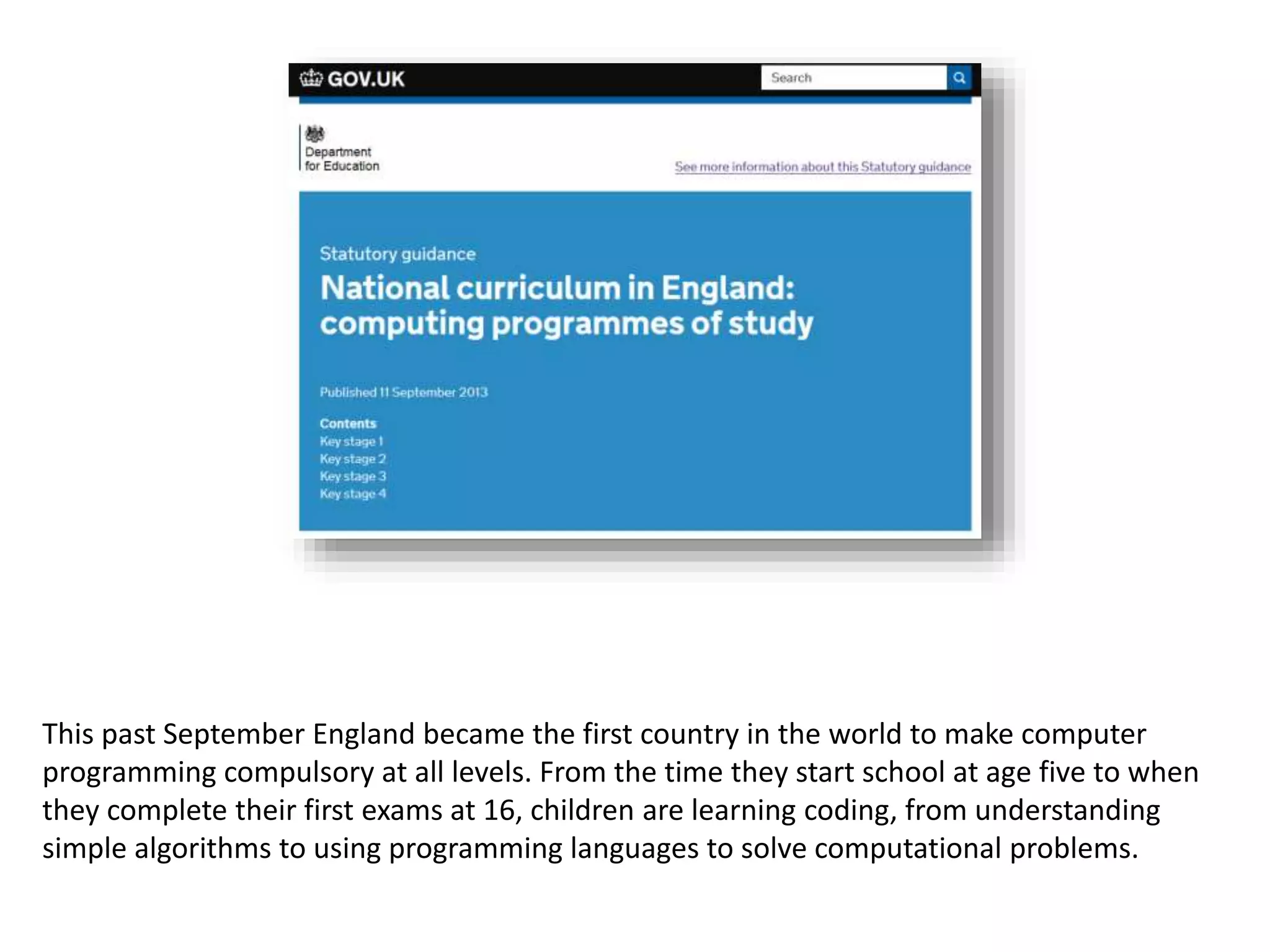
This past September England became the first country in the world to make computer
programming compulsory at all levels. From the time they start school at age five to when
they complete their first exams at 16, children are learning coding, from understanding
simple algorithms to using programming languages to solve computational problems.
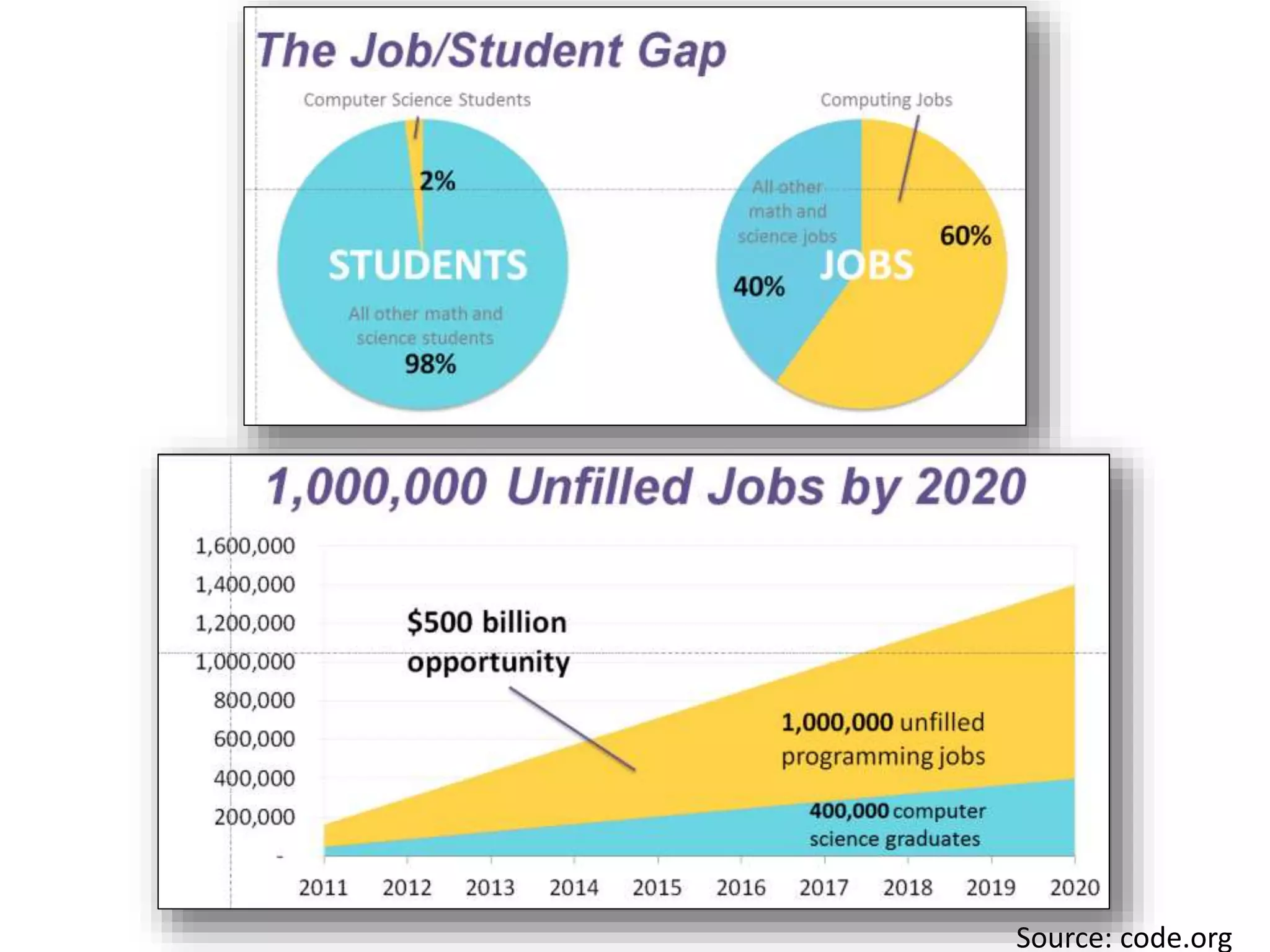
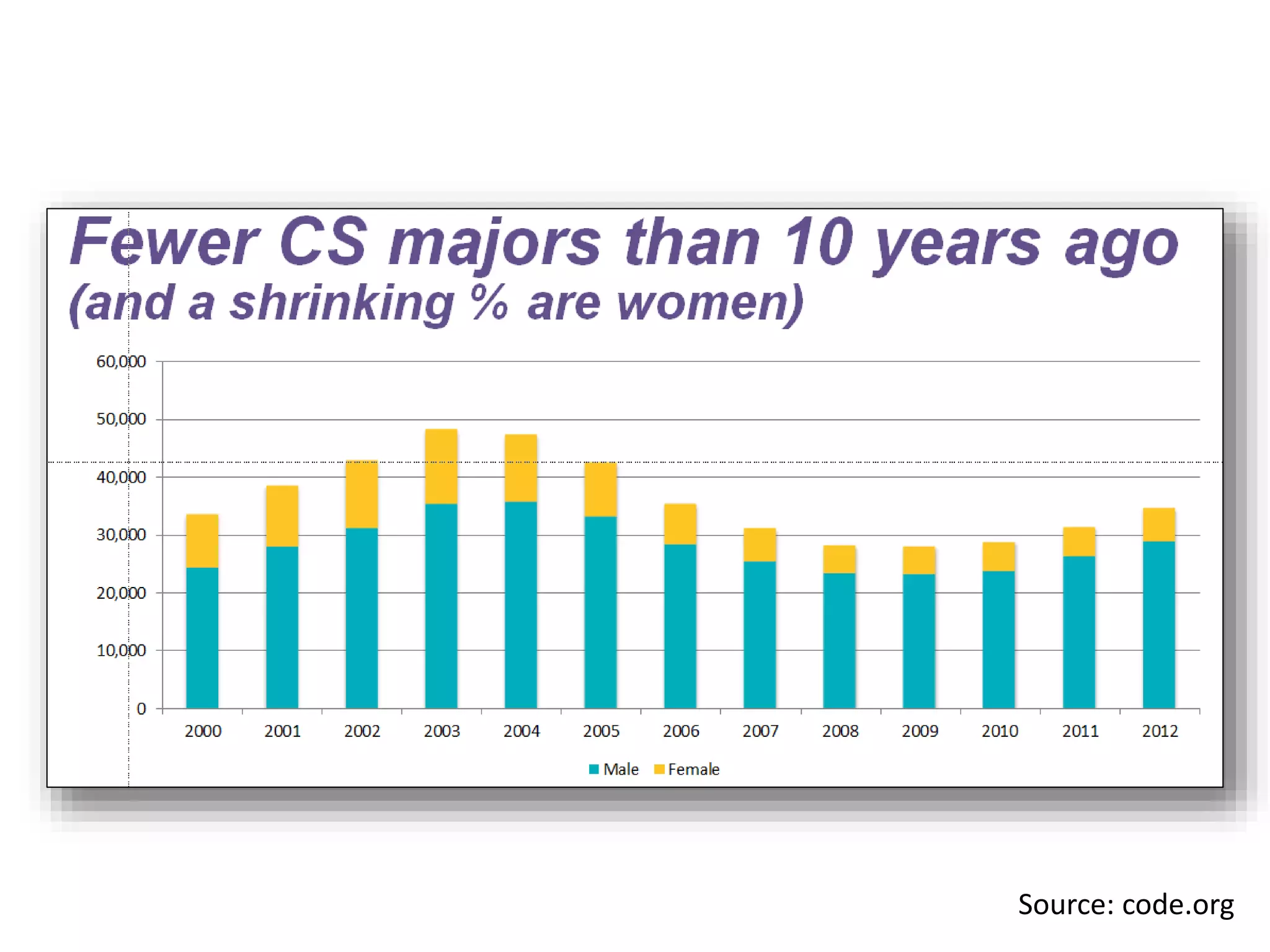
According to Code.org, only one in 10 U.S. schools teach children to code, despite
forecasts that computer-related employment will rise by 22 per cent by 2020, with the
strongest demand for software developers.
Source: code.org
Source: code.org
Lakeland’s Story: 2013-14
How the Coding Initiative Took Shape
• Tech Expo 2013, 2014: Two sessions
• Wrestling with the CCSS for Mathematics
• Spring 2014: One club at one elementary
school
• Reading up on coding in schools
• “Running parallel”
Lakeland’s Story: 2014-15
• Not exactly aggressive out of the gate
• Fall 2014: plan emerges
• Where do we find the time?
• Where do we find the funding for stipends?
• Staff selection
• Training
• How did we select students?
Our Philosophy of Student Selection
• Presentation to all fifth graders
• Limited size of group…to begin with
• Selection by lottery
• Gender-based “affirmative action”
• Be flexible; students on autism spectrum tend
to excel at coding
Curriculum
• Join Scratch (scratch.mit.edu)
• Do the tutorials
• Join the Education Group and download
Curriculum Guide (http://scratched.gse.harvard.edu/)
• Be prepared with a discrete project each week
with many permutations for those students who
need more challenge
• Have skills build upon each other week by week
• Provide activities that are ELA based as well as
math and science based
These are “givens”
• Students will discover on their own
• Teacher does not need to have all of the
answers
• Students work well in teams
• Be flexible!
• Allow students to showcase their work (within
parameters) by setting up a Scratch Studio
Suggestions
• Set up accounts for students with generic log-
ins (no personal information shared)
• Show students scripts and have them predict
what will happen
• Provide debugging activities
• Provide vocabulary or word wall
• Get parents involved!
What are the benefits?
• Common Core
• When children go home, what do you want
them to do?
• Fun
• Public relations
• Staff morale
Why Coding?
• Students are producers, not consumers of
technology
• Teach students to think logically and sequentially
• Students begin to understand the technologies
we use every day
• Encourage interest in careers in technology
• Start young when they are ready to learn these
skills (like foreign language)
• It’s a 21st century literacy
• It’s fun!
Other Tools to Explore
• Code.org
• Made with Code (by Google)
• Khan Academy
Contact us!
• Linda Brandon lbrandon@lakelandschools.org
• Chris Ruggiero cruggiero@lakelandschools.org
• Kathy Costello kcostello@lakelandschools.org
Join Linda’s Scratch wiki:
http://scratchcoding.wikispaces.com/
Send Linda an email if you request membership

Breaking the Code Handout from Tech Expo 2015

  • 1.
    Breaking the Code: GettingElementary Students Started in Programming Tech Expo 2015 April 17, 2015 Linda Brandon, Manager of Instructional Technology Chris Ruggiero, Director of Curriculum, Mathematics Kathleen Costello, Fifth Grade Teacher Lakeland Central School District
  • 2.
    This past SeptemberEngland became the first country in the world to make computer programming compulsory at all levels. From the time they start school at age five to when they complete their first exams at 16, children are learning coding, from understanding simple algorithms to using programming languages to solve computational problems.
  • 3.
    According to Code.org,only one in 10 U.S. schools teach children to code, despite forecasts that computer-related employment will rise by 22 per cent by 2020, with the strongest demand for software developers.
  • 4.
  • 5.
  • 6.
    Lakeland’s Story: 2013-14 Howthe Coding Initiative Took Shape • Tech Expo 2013, 2014: Two sessions • Wrestling with the CCSS for Mathematics • Spring 2014: One club at one elementary school • Reading up on coding in schools • “Running parallel”
  • 7.
    Lakeland’s Story: 2014-15 •Not exactly aggressive out of the gate • Fall 2014: plan emerges • Where do we find the time? • Where do we find the funding for stipends? • Staff selection • Training • How did we select students?
  • 8.
    Our Philosophy ofStudent Selection • Presentation to all fifth graders • Limited size of group…to begin with • Selection by lottery • Gender-based “affirmative action” • Be flexible; students on autism spectrum tend to excel at coding
  • 9.
    Curriculum • Join Scratch(scratch.mit.edu) • Do the tutorials • Join the Education Group and download Curriculum Guide (http://scratched.gse.harvard.edu/) • Be prepared with a discrete project each week with many permutations for those students who need more challenge • Have skills build upon each other week by week • Provide activities that are ELA based as well as math and science based
  • 10.
    These are “givens” •Students will discover on their own • Teacher does not need to have all of the answers • Students work well in teams • Be flexible! • Allow students to showcase their work (within parameters) by setting up a Scratch Studio
  • 11.
    Suggestions • Set upaccounts for students with generic log- ins (no personal information shared) • Show students scripts and have them predict what will happen • Provide debugging activities • Provide vocabulary or word wall • Get parents involved!
  • 12.
    What are thebenefits? • Common Core • When children go home, what do you want them to do? • Fun • Public relations • Staff morale
  • 13.
    Why Coding? • Studentsare producers, not consumers of technology • Teach students to think logically and sequentially • Students begin to understand the technologies we use every day • Encourage interest in careers in technology • Start young when they are ready to learn these skills (like foreign language) • It’s a 21st century literacy • It’s fun!
  • 14.
    Other Tools toExplore • Code.org • Made with Code (by Google) • Khan Academy
  • 15.
    Contact us! • LindaBrandon lbrandon@lakelandschools.org • Chris Ruggiero cruggiero@lakelandschools.org • Kathy Costello kcostello@lakelandschools.org Join Linda’s Scratch wiki: http://scratchcoding.wikispaces.com/ Send Linda an email if you request membership

Editor's Notes

  • #2 Introduce ourselves. Who we are
  • #3 We thought we’d give you some background about how we came about getting involved. This past September England became the first country in the world to make computer programming compulsory at all levels. From the moment they start school at age five to when they complete their first public exams at 16, children will be learning coding, from understanding simple algorithms to using programming languages to solve computational problems. Why?
  • #4 According to programming advocate Code.org only one in 10 U.S. schools teach children to code, despite forecasts that computer-related employment will rise by 22 per cent by 2020, with the strongest demand for software developers.
  • #7 Chris does this slide I may tag in
  • #10 Projects described