October 18, 2012
In this webinar we’ll cover…
Definition of a brand
Building a brand and creating brand awareness
How are brands 'really' different
What a brand means to customers - does it matter?
Brand as a living, breathing component of a business
The digital world's effect on a brand
The importance of personal branding in today's competitive
environment
The future of branding - what do tomorrow's customers
expect?
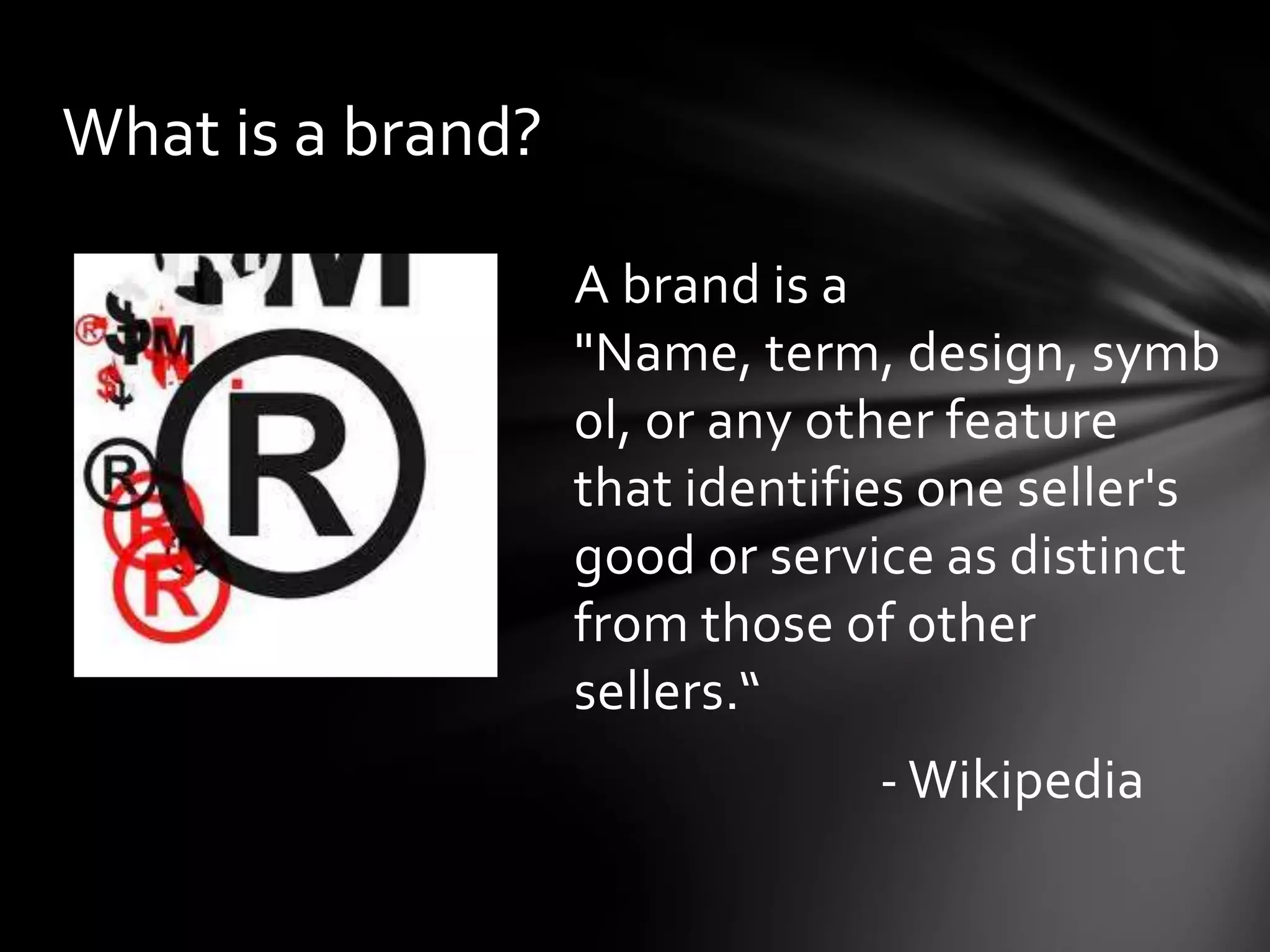
What is a brand?

                   A brand is a
                   "Name, term, design, symb
                   ol, or any other feature
                   that identifies one seller's
                   good or service as distinct
                   from those of other
                   sellers.“
                                - Wikipedia
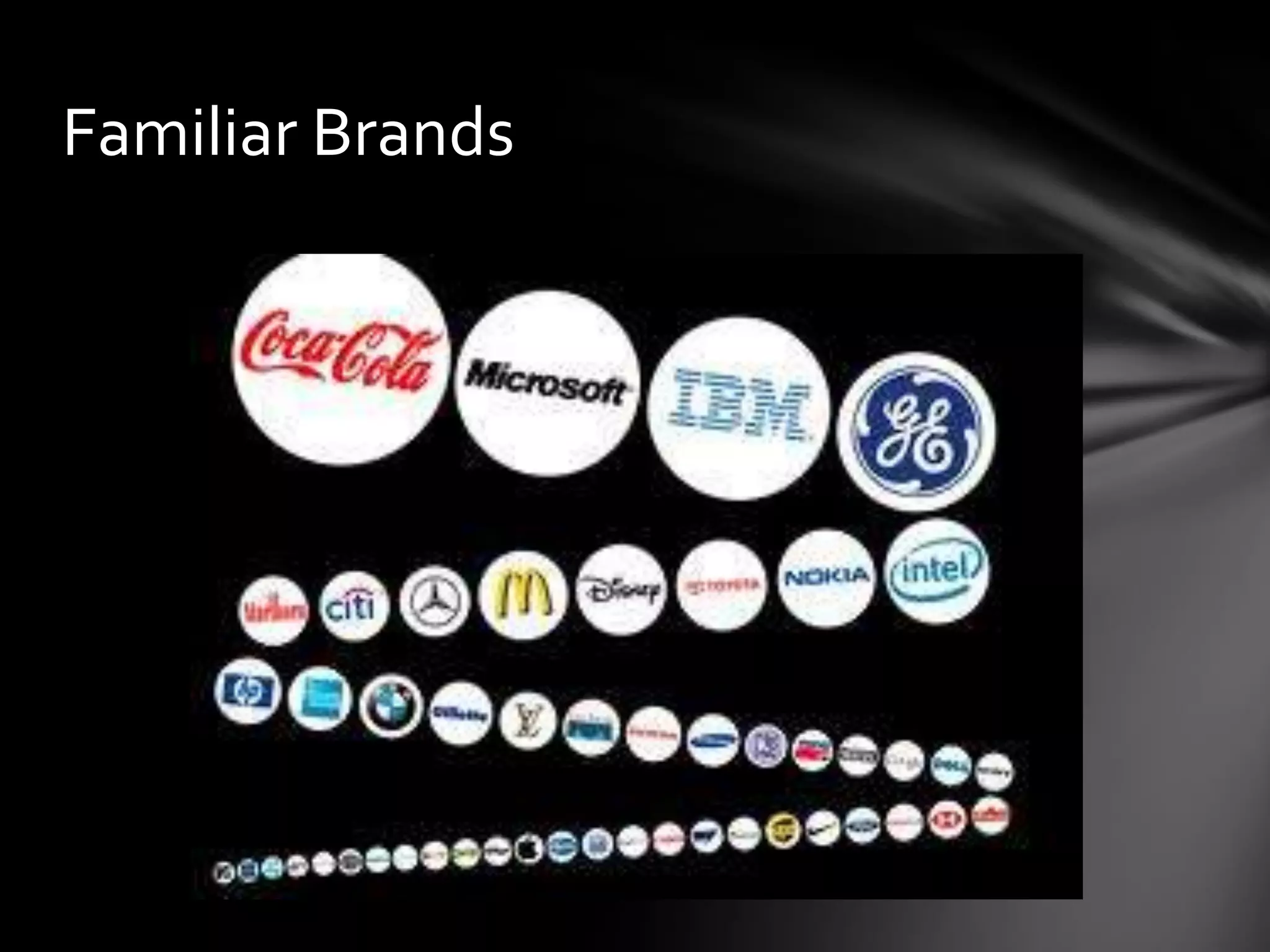
Familiar Brands
How is a brand built?
Brand development must be approached similar
to a standalone business.
Brand awareness must be job one at all levels of
an organization.
Brand must be at forefront of all consumer
interaction.
Brand integrity is paramount to the future of the
organization.
What makes a brand, and how are brands
really different?
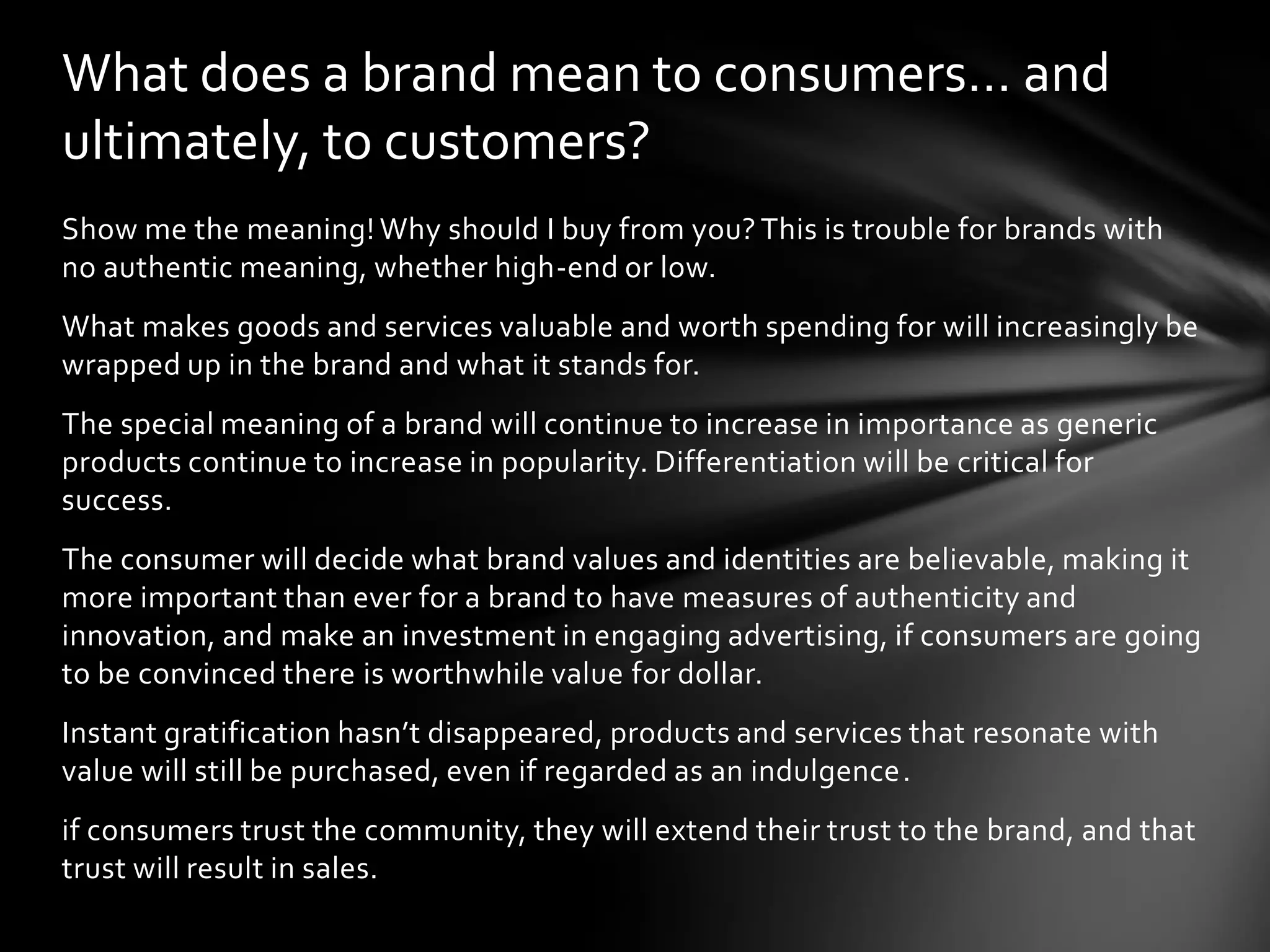
What makes a brand, and how are brands
really different?
What does a brand mean to consumers… and
ultimately, to customers?
Show me the meaning! Why should I buy from you? This is trouble for brands with
no authentic meaning, whether high-end or low.
What makes goods and services valuable and worth spending for will increasingly be
wrapped up in the brand and what it stands for.
The special meaning of a brand will continue to increase in importance as generic
products continue to increase in popularity. Differentiation will be critical for
success.
The consumer will decide what brand values and identities are believable, making it
more important than ever for a brand to have measures of authenticity and
innovation, and make an investment in engaging advertising, if consumers are going
to be convinced there is worthwhile value for dollar.
Instant gratification hasn’t disappeared, products and services that resonate with
value will still be purchased, even if regarded as an indulgence.
if consumers trust the community, they will extend their trust to the brand, and that
trust will result in sales.
A brand lives and breathes…
A brand must be planned.
A brand must be nurtured.
A brand must be allowed to grow.
A brand must be invested in.
A brand must be protected.
A brand must be promoted.
A brand must be cherished.
A brand must be the center of the
universe.
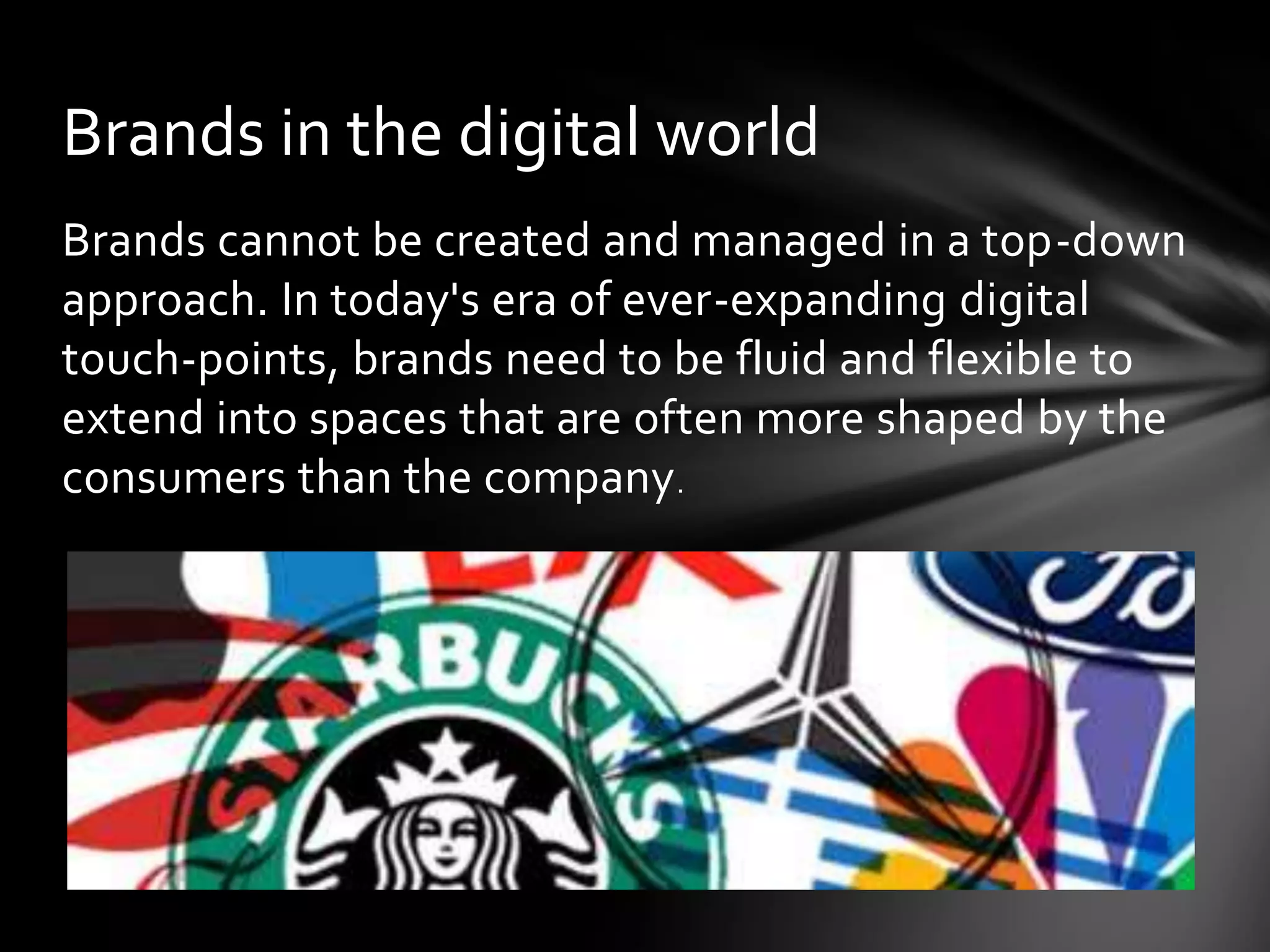
Brands in the digital world
Brands cannot be created and managed in a top-down
approach. In today's era of ever-expanding digital
touch-points, brands need to be fluid and flexible to
extend into spaces that are often more shaped by the
consumers than the company .
Point of entry… the first impression!
Though consumers may be adept at tuning out
traditional, top-down marketing messages, they're proactively
using technology to conduct their own brand research to
decide whether or not to pursue a relationship. Like flipping
through profiles on Match.com, consumers are searching for
brands that are right for them. In addition, whether spurred by
a user review, a Google search, a brand site or a mobile
application, technology has created multiple entry points to
engage with a brand. And although it may be hard for
marketers to predict that entry point, it's a safe bet the
interaction will be digital. In fact, consumers' first interactions
with brands are commonly through digital technology.
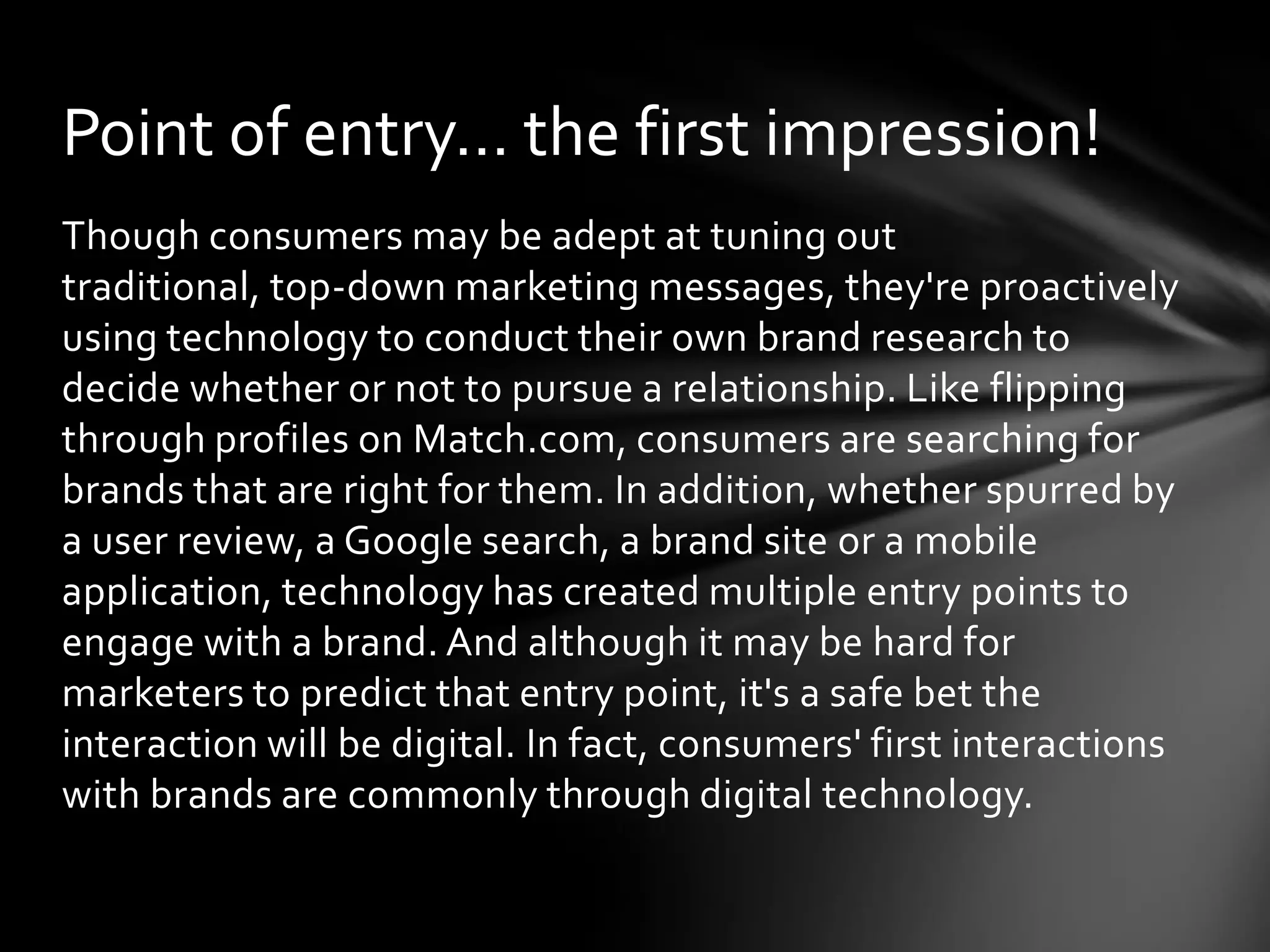
Many overlapping components…
A Convergence
In a Web 2.0 world, branding has converged with
design and advertising. While both design and
advertising bring their respective skills and tactics to
the branding table, the disciplines have become so
intertwined that they are best used when working
together.
So, what resonates with today’s consumer?
Listening and responding to consumer feedback is pone
of the biggest building blocks to cultivating a brand
that resonates in the digital space. In a cluttered
world, creating integrated marketing strategies built on
providing a valuable service and listening to consumers
goes a long to establishing a brand that resonates.
Personal Branding
Despite technology, people still buy from people, and people
still do business with people!
Personal Branding is about identifying and then
communicating what makes you unique and relevant and
differentiated for your target audience, so that you can reach
your business goals. If you understand your
strengths, skills, passions, and values, you can use this
information to separate yourself from your competitors and
really stand out.
Personal branding is very powerful because it sends a
clear, consistent message about who you are and what you
have to offer. A strong, authentic personal brand helps you
become known for what you’re good at, sets you apart from
everyone else, and can position you as a niche expert.
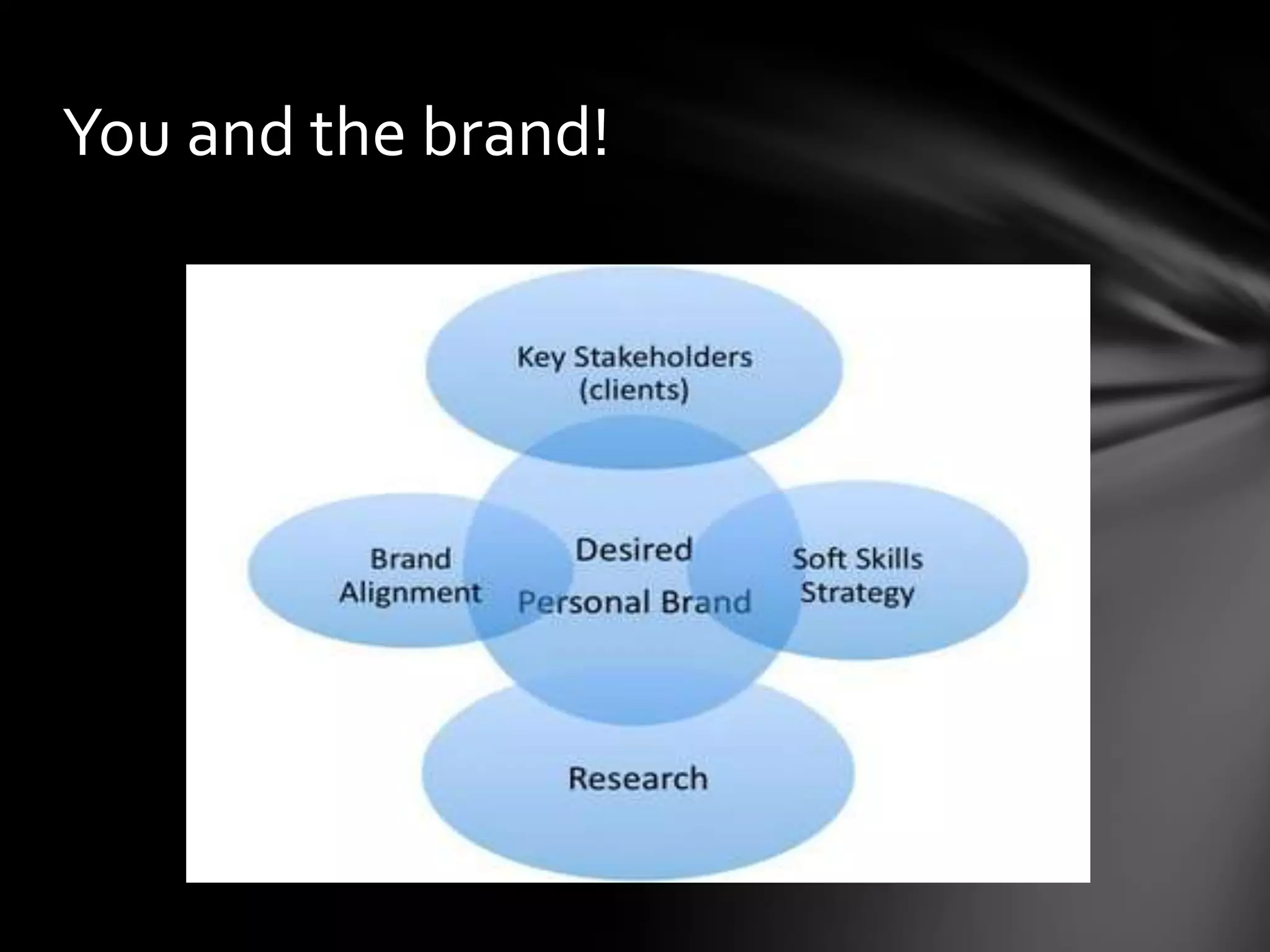
You and the brand!
Tomorrow’s Customers
Tomorrow’s customers are today’s
influencers.
Tomorrow’s customers are very
sophisticated and technologically
advanced.
Tomorrow’s customers are
information sponges.
Tomorrow’s customers are brand
loyal.
Tomorrow’s customers are
demanding and commanding.
What does brand mean to a business
owner?
Increased awareness by consumers.
Increased awareness by suppliers.
Increased awareness by lenders.
Increased awareness by the media.
What does brand mean to a business
owner?
Increased awareness by consumers.
Increased awareness by suppliers.
Increased awareness by lenders.
Increased awareness by the media.
Increased awareness by business buyers.
Increased value in the business.
What must be done moving forward…
Thoughts, comments, etc…

What is a brand? And, what is the real value to business owners?

  • 1.
  • 2.
    In this webinarwe’ll cover… Definition of a brand Building a brand and creating brand awareness How are brands 'really' different What a brand means to customers - does it matter? Brand as a living, breathing component of a business The digital world's effect on a brand The importance of personal branding in today's competitive environment The future of branding - what do tomorrow's customers expect?
  • 3.
    What is abrand? A brand is a "Name, term, design, symb ol, or any other feature that identifies one seller's good or service as distinct from those of other sellers.“ - Wikipedia
  • 4.
  • 5.
    How is abrand built? Brand development must be approached similar to a standalone business. Brand awareness must be job one at all levels of an organization. Brand must be at forefront of all consumer interaction. Brand integrity is paramount to the future of the organization.
  • 6.
    What makes abrand, and how are brands really different?
  • 7.
    What makes abrand, and how are brands really different?
  • 8.
    What does abrand mean to consumers… and ultimately, to customers? Show me the meaning! Why should I buy from you? This is trouble for brands with no authentic meaning, whether high-end or low. What makes goods and services valuable and worth spending for will increasingly be wrapped up in the brand and what it stands for. The special meaning of a brand will continue to increase in importance as generic products continue to increase in popularity. Differentiation will be critical for success. The consumer will decide what brand values and identities are believable, making it more important than ever for a brand to have measures of authenticity and innovation, and make an investment in engaging advertising, if consumers are going to be convinced there is worthwhile value for dollar. Instant gratification hasn’t disappeared, products and services that resonate with value will still be purchased, even if regarded as an indulgence. if consumers trust the community, they will extend their trust to the brand, and that trust will result in sales.
  • 9.
    A brand livesand breathes… A brand must be planned. A brand must be nurtured. A brand must be allowed to grow. A brand must be invested in. A brand must be protected. A brand must be promoted. A brand must be cherished. A brand must be the center of the universe.
  • 10.
    Brands in thedigital world Brands cannot be created and managed in a top-down approach. In today's era of ever-expanding digital touch-points, brands need to be fluid and flexible to extend into spaces that are often more shaped by the consumers than the company .
  • 11.
    Point of entry…the first impression! Though consumers may be adept at tuning out traditional, top-down marketing messages, they're proactively using technology to conduct their own brand research to decide whether or not to pursue a relationship. Like flipping through profiles on Match.com, consumers are searching for brands that are right for them. In addition, whether spurred by a user review, a Google search, a brand site or a mobile application, technology has created multiple entry points to engage with a brand. And although it may be hard for marketers to predict that entry point, it's a safe bet the interaction will be digital. In fact, consumers' first interactions with brands are commonly through digital technology.
  • 12.
  • 13.
    A Convergence In aWeb 2.0 world, branding has converged with design and advertising. While both design and advertising bring their respective skills and tactics to the branding table, the disciplines have become so intertwined that they are best used when working together.
  • 14.
    So, what resonateswith today’s consumer? Listening and responding to consumer feedback is pone of the biggest building blocks to cultivating a brand that resonates in the digital space. In a cluttered world, creating integrated marketing strategies built on providing a valuable service and listening to consumers goes a long to establishing a brand that resonates.
  • 15.
    Personal Branding Despite technology,people still buy from people, and people still do business with people! Personal Branding is about identifying and then communicating what makes you unique and relevant and differentiated for your target audience, so that you can reach your business goals. If you understand your strengths, skills, passions, and values, you can use this information to separate yourself from your competitors and really stand out. Personal branding is very powerful because it sends a clear, consistent message about who you are and what you have to offer. A strong, authentic personal brand helps you become known for what you’re good at, sets you apart from everyone else, and can position you as a niche expert.
  • 16.
  • 17.
    Tomorrow’s Customers Tomorrow’s customersare today’s influencers. Tomorrow’s customers are very sophisticated and technologically advanced. Tomorrow’s customers are information sponges. Tomorrow’s customers are brand loyal. Tomorrow’s customers are demanding and commanding.
  • 18.
    What does brandmean to a business owner? Increased awareness by consumers. Increased awareness by suppliers. Increased awareness by lenders. Increased awareness by the media.
  • 19.
    What does brandmean to a business owner? Increased awareness by consumers. Increased awareness by suppliers. Increased awareness by lenders. Increased awareness by the media. Increased awareness by business buyers. Increased value in the business.
  • 20.
    What must bedone moving forward…
  • 21.