
Making your brand future-proof
A Bharat Bambawale & Associates Perspective
Organic growth may ill-prepare a brand for the
future in a rapidly disruptive world
Not just brands but entire categories
can become irrelevant in a matter of months
Present day relevance is not enough.
Brands need to meaningfully innovate and evolve
for tomorrow’s consumers to be future-proof
Brands who do this successfully
remain consistently profitable and unique
and inspire loyalty and advocacy
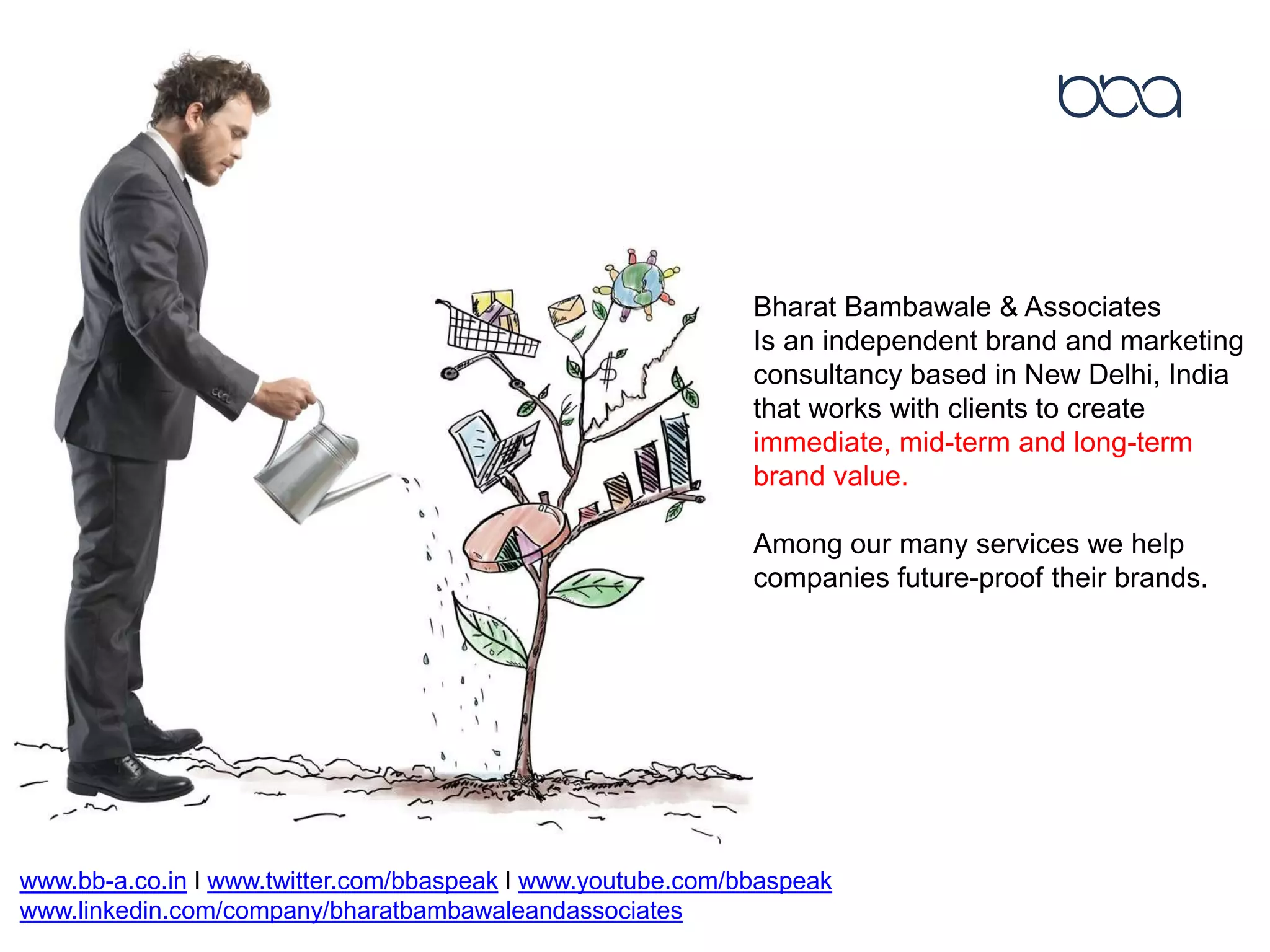
Bharat Bambawale & Associates
Is an independent brand and marketing
consultancy based in New Delhi, India
that works with clients to create
immediate, mid-term and long-term
brand value.
Among our many services we help
companies future-proof their brands.
www.bb-a.co.in I www.twitter.com/bbaspeak I www.youtube.com/bbaspeak
www.linkedin.com/company/bharatbambawaleandassociates
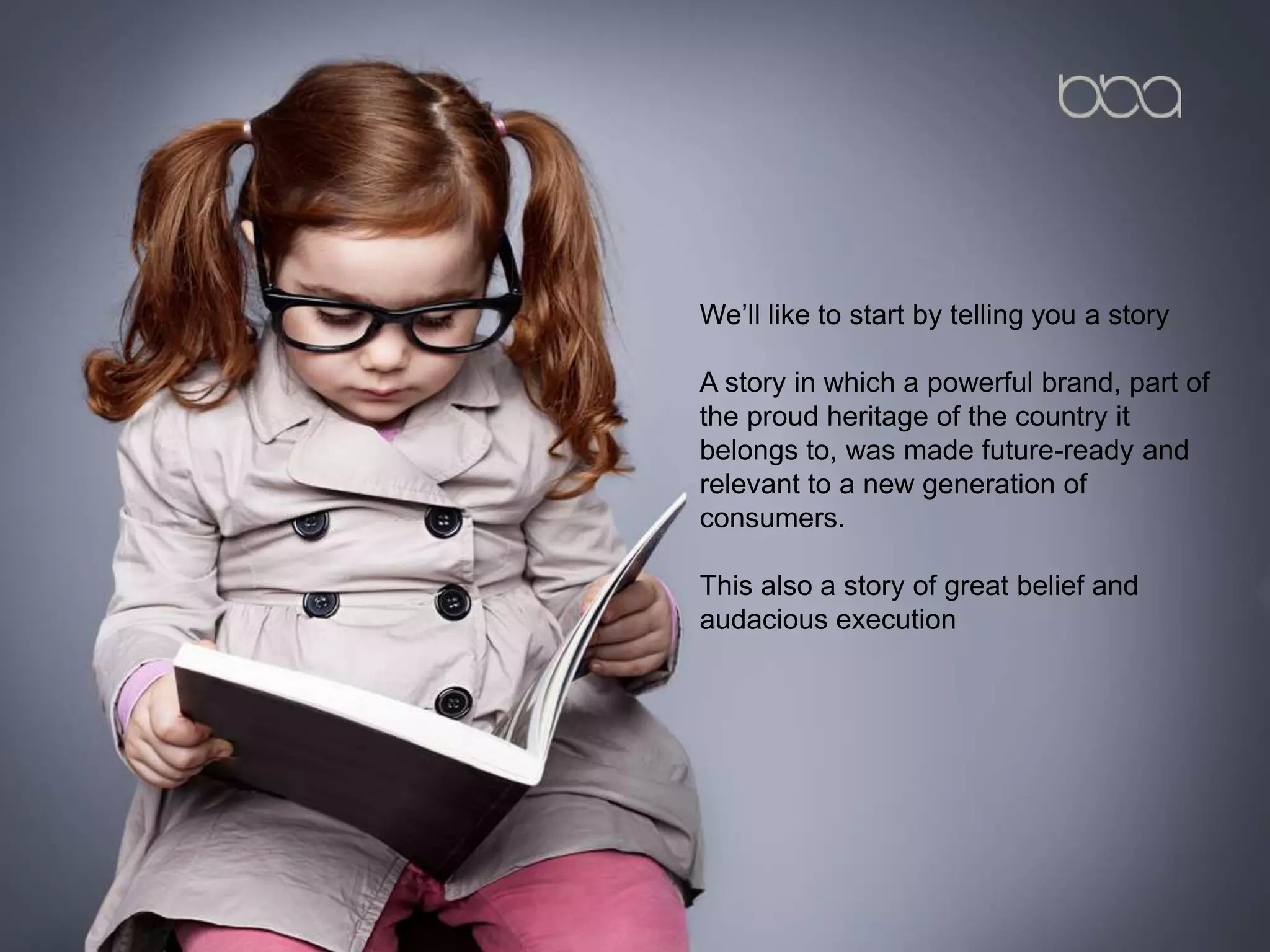
We’ll like to start by telling you a story
A story in which a powerful brand, part of
the proud heritage of the country it
belongs to, was made future-ready and
relevant to a new generation of
consumers.
This also a story of great belief and
audacious execution
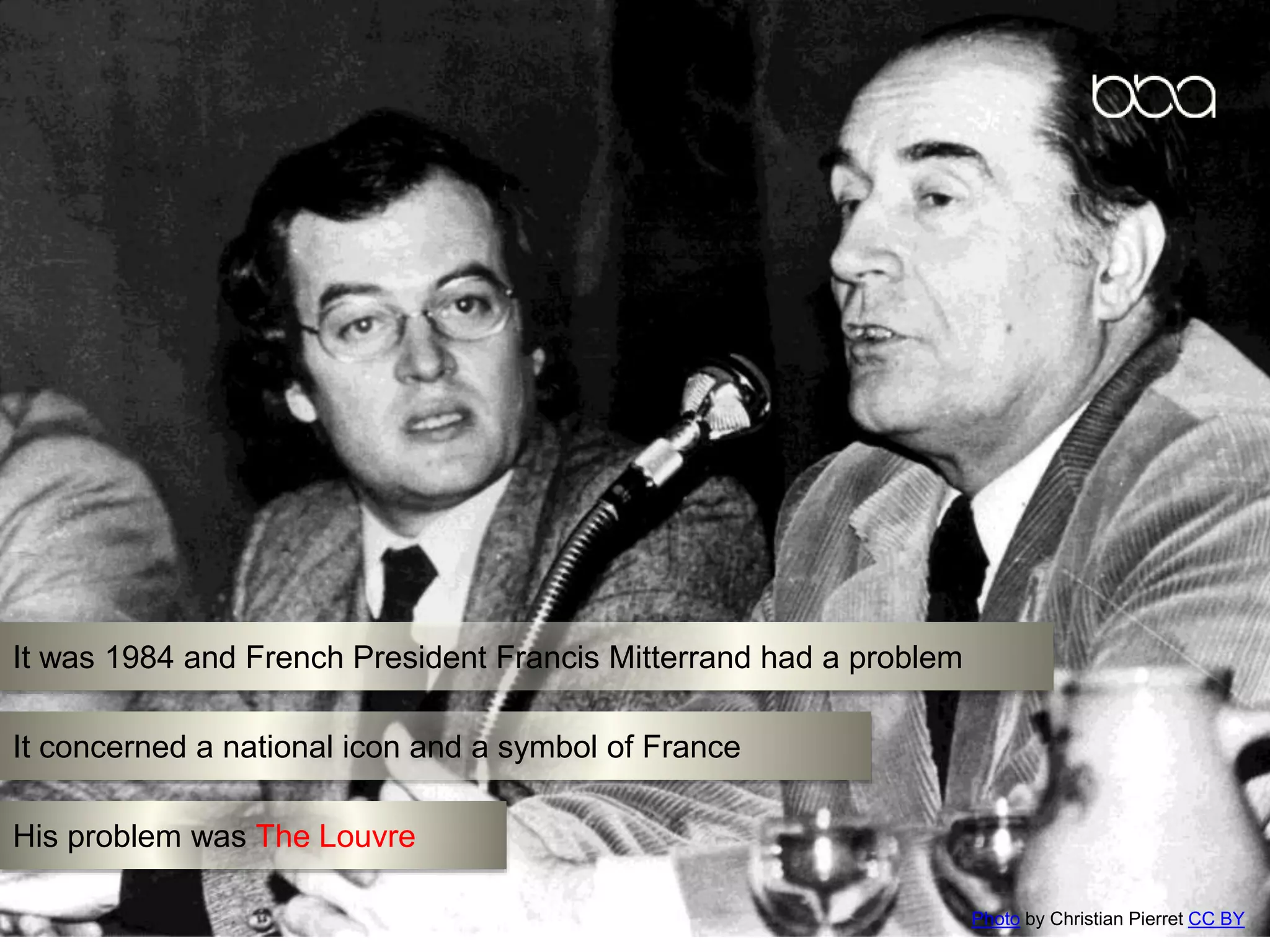
It was 1984 and French President Francis Mitterrand had a problem
It concerned a national icon and a symbol of France
His problem was The Louvre
Photo by Christian Pierret CC BY
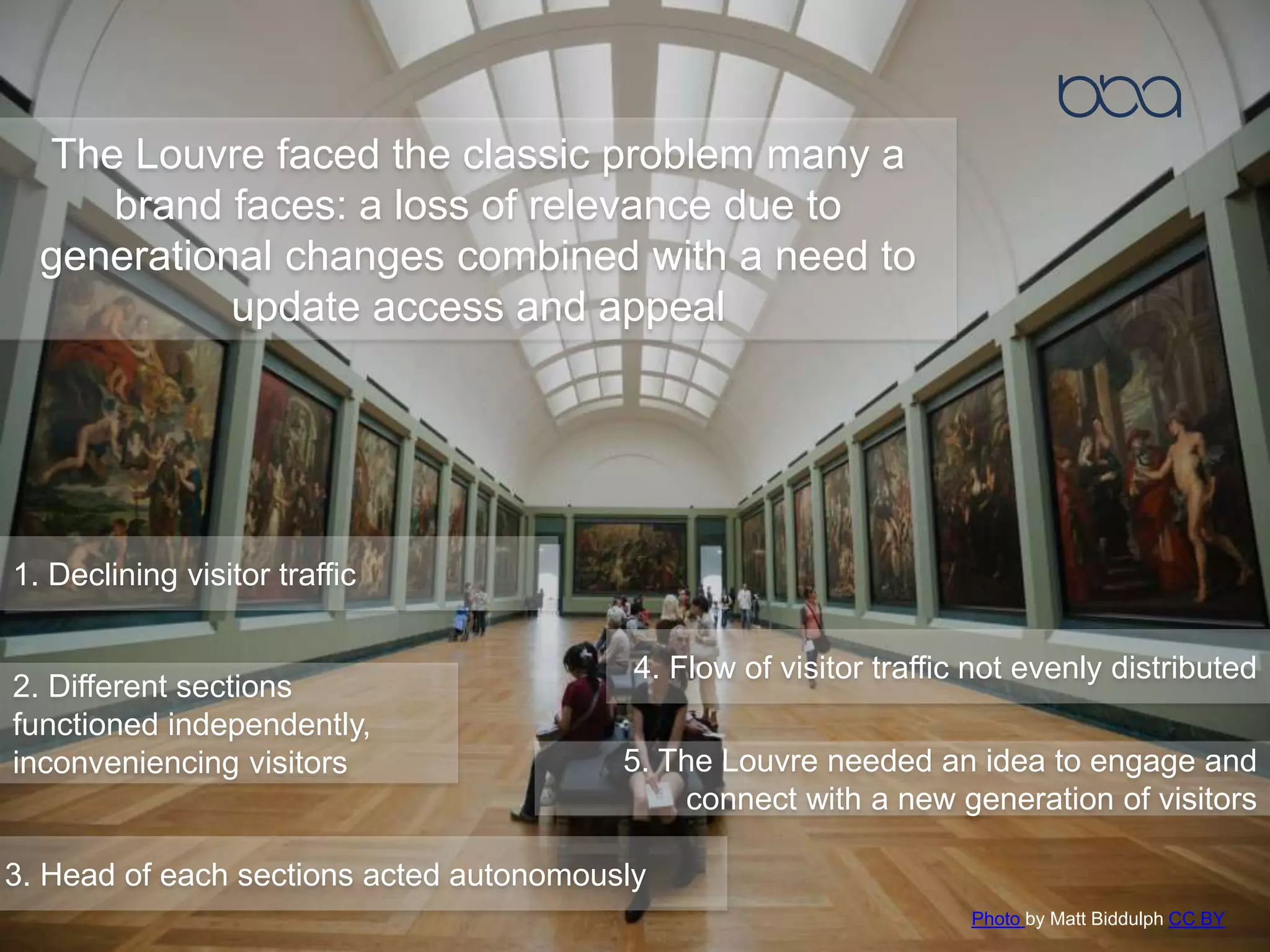
The Louvre faced the classic problem many a
brand faces: a loss of relevance due to
generational changes combined with a need to
update access and appeal
1. Declining visitor traffic
2. Different sections
functioned independently,
inconveniencing visitors
3. Head of each sections acted autonomously
4. Flow of visitor traffic not evenly distributed
5. The Louvre needed an idea to engage and
connect with a new generation of visitors
Photo by Matt Biddulph CC BY
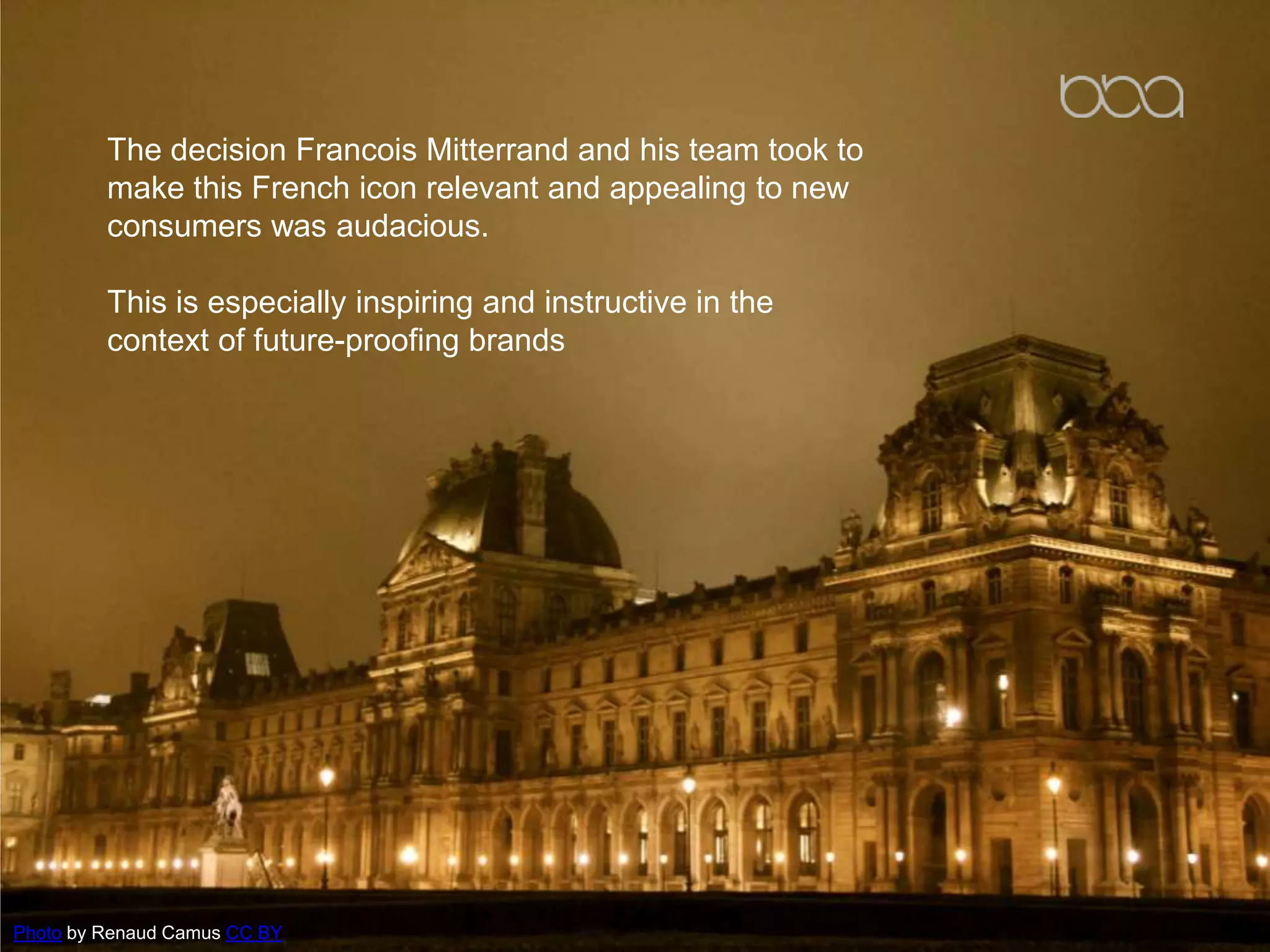
The decision Francois Mitterrand and his team took to
make this French icon relevant and appealing to new
consumers was audacious.
This is especially inspiring and instructive in the
context of future-proofing brands
Photo by Renaud Camus CC BY
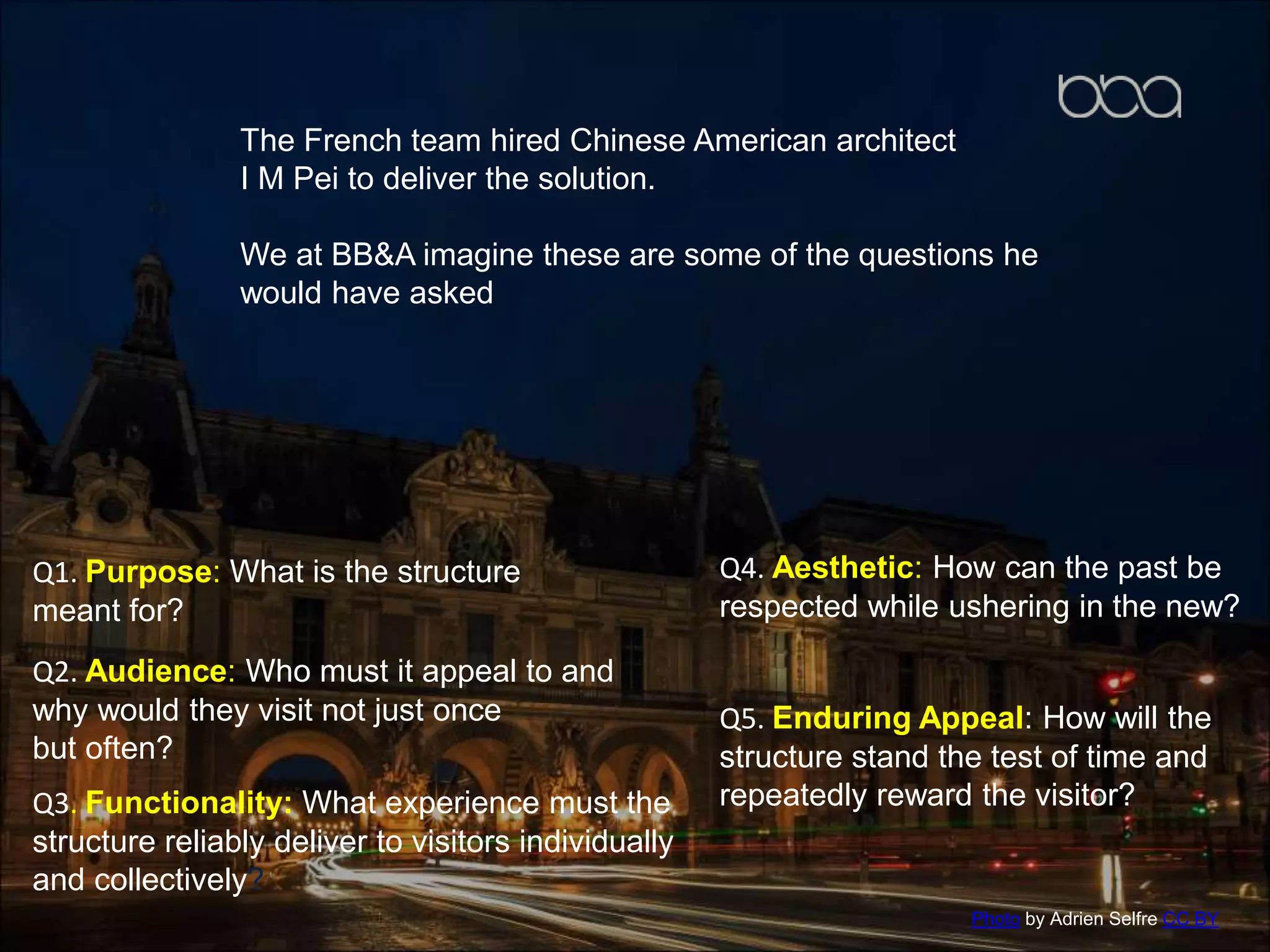
The French team hired Chinese American architect
I M Pei to deliver the solution.
We at BB&A imagine these are some of the questions he
would have asked
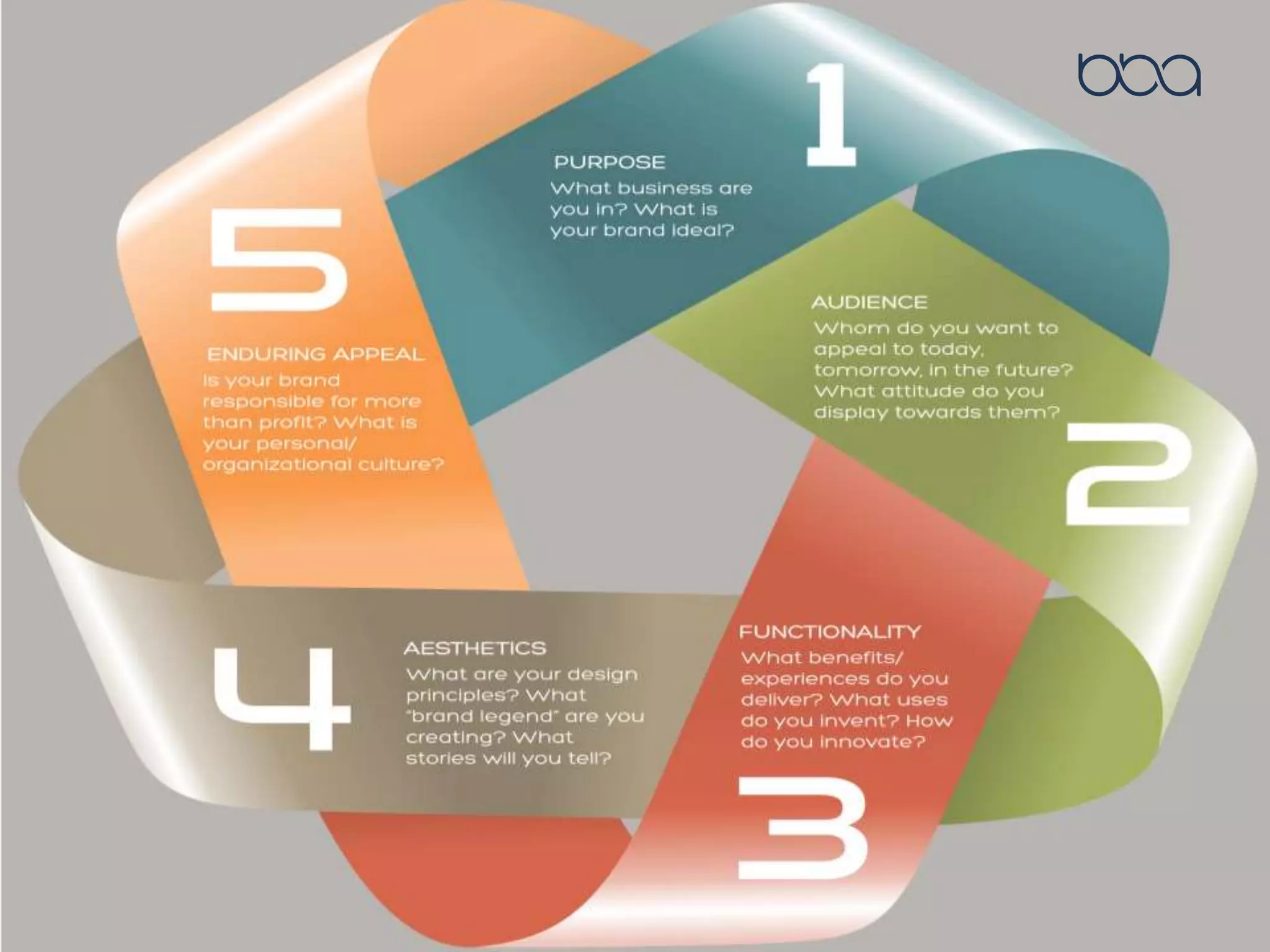
Q1. Purpose: What is the structure
meant for?
Q2. Audience: Who must it appeal to and
why would they visit not just once
but often?
Q3. Functionality: What experience must the
structure reliably deliver to visitors individually
and collectively?
Q4. Aesthetic: How can the past be
respected while ushering in the new?
Q5. Enduring Appeal: How will the
structure stand the test of time and
repeatedly reward the visitor?
Photo by Adrien Selfre CC BY
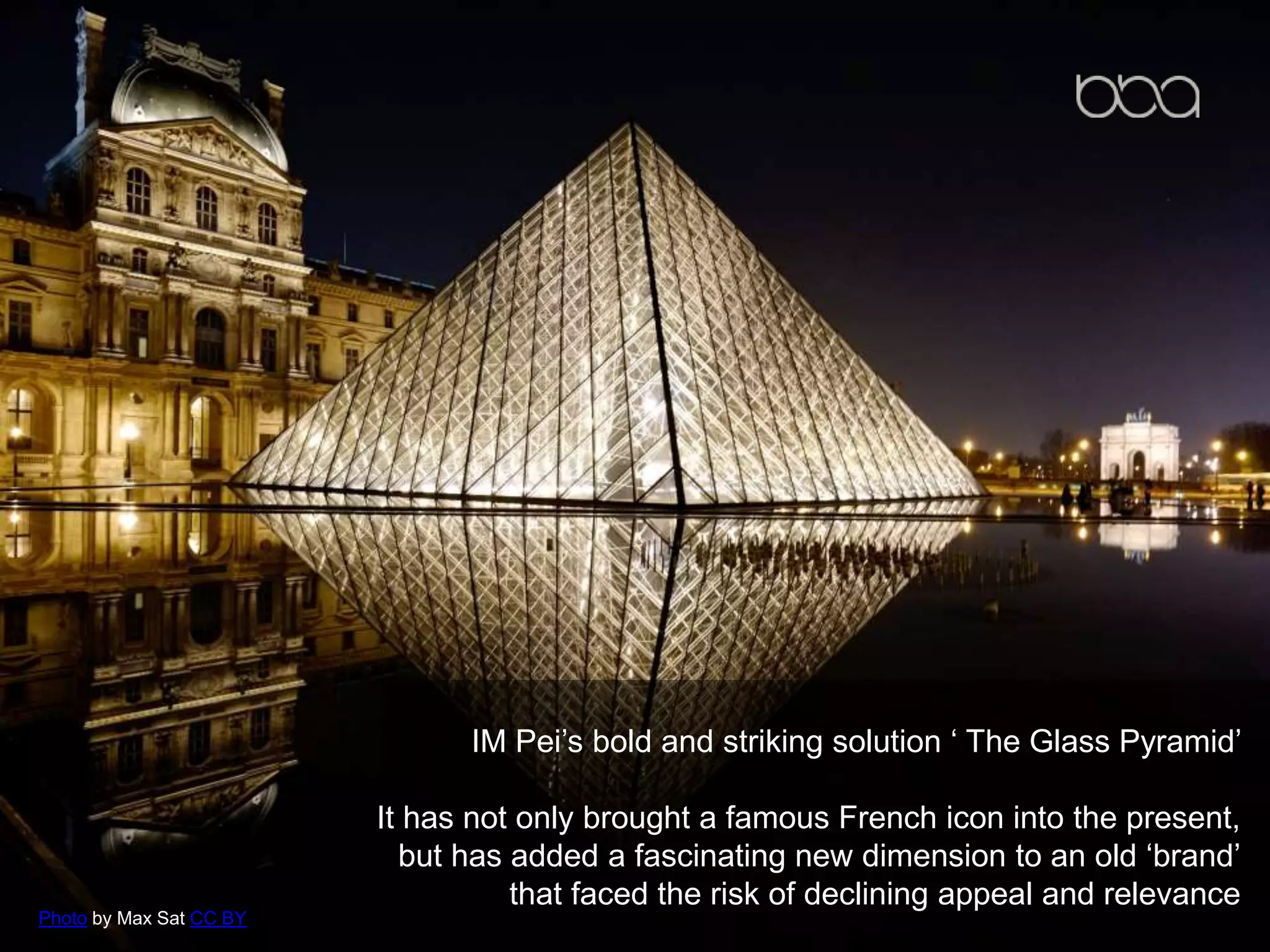
IM Pei’s bold and striking solution ‘ The Glass Pyramid’
It has not only brought a famous French icon into the present,
but has added a fascinating new dimension to an old ‘brand’
that faced the risk of declining appeal and relevance
Photo by Max Sat CC BY
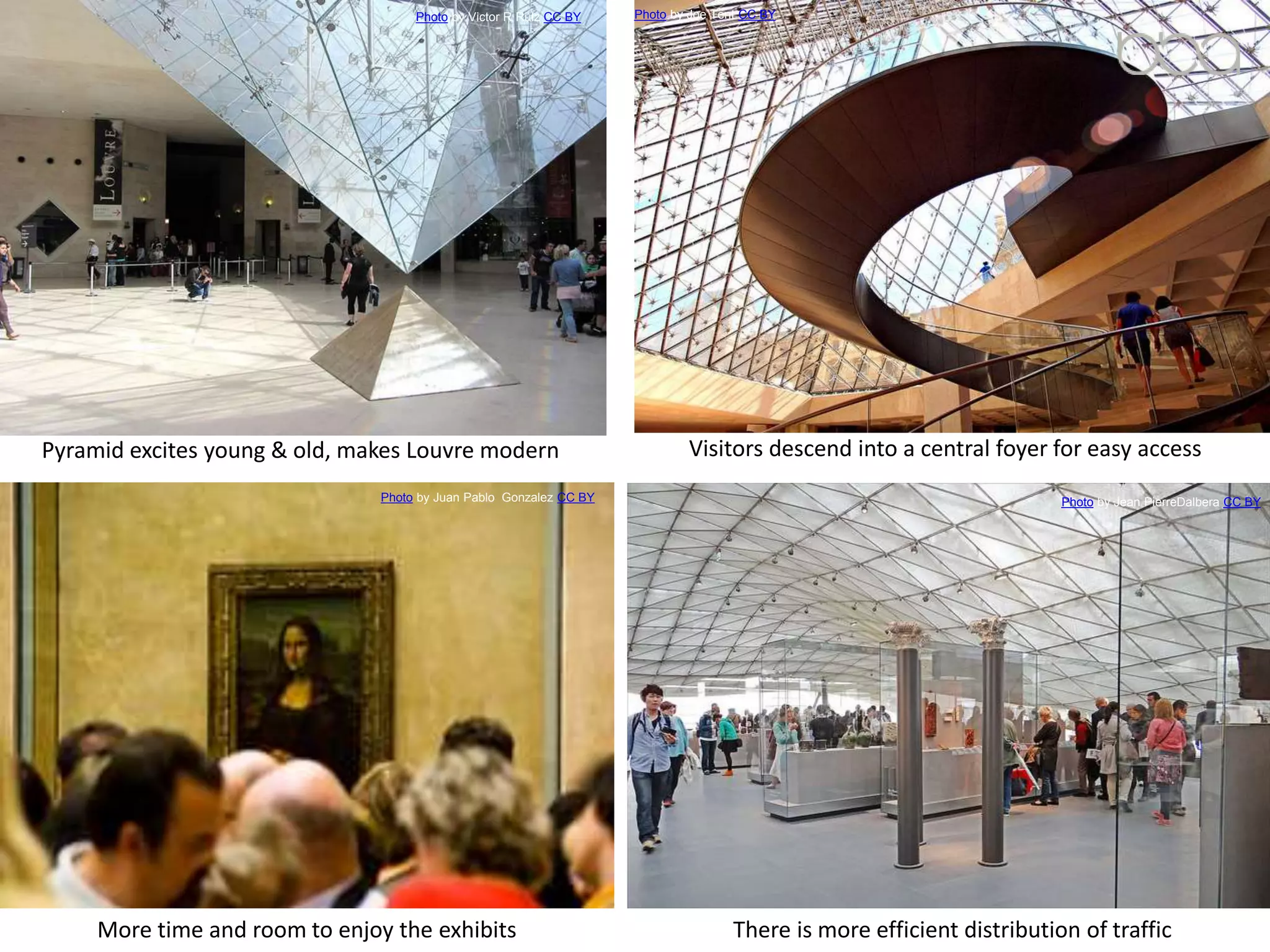
Pyramid excites young & old, makes Louvre modern Visitors descend into a central foyer for easy access
There is more efficient distribution of trafficMore time and room to enjoy the exhibits
Pictures courtesy Google Images
Photo by Joe Tent CC BYPhoto by Victor R Rulz CC BY
Photo by Jean PierreDalbera CC BYPhoto by Juan Pablo Gonzalez CC BY
At BB&A we find this story
fascinating and helpful.
It also gives a framework to
think of future-proofing brands
There are some questions that would
feature in a conversation
we would have on
brand future-proofing
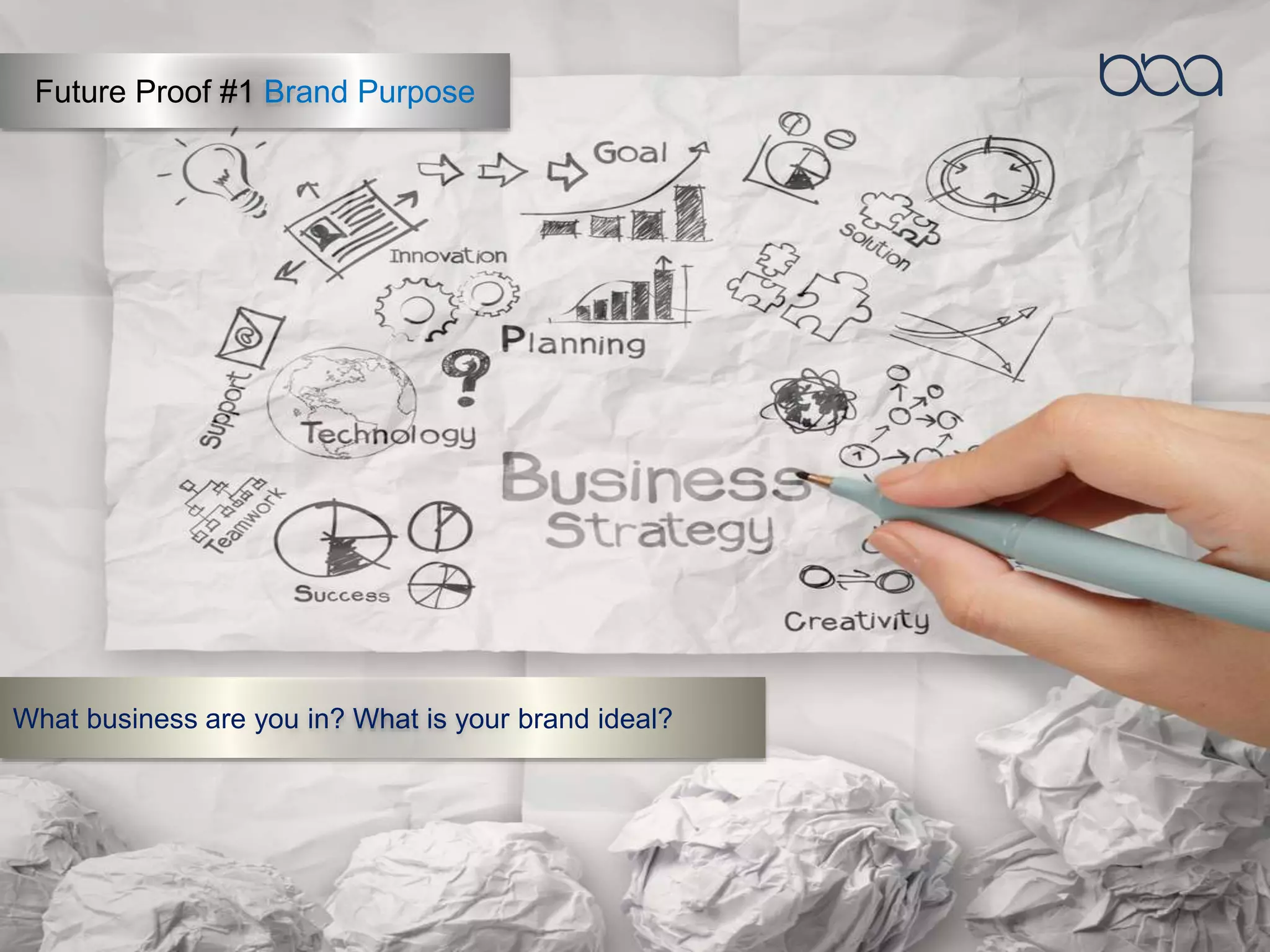
Future Proof #1 Brand Purpose
What business are you in? What is your brand ideal?
This fundamental question Professor Levitt posed has
great value to us when thinking about
brand future-proofing.
It invites us to think deeply about
business strategy and the
kind of consumers the brand must be relevant to
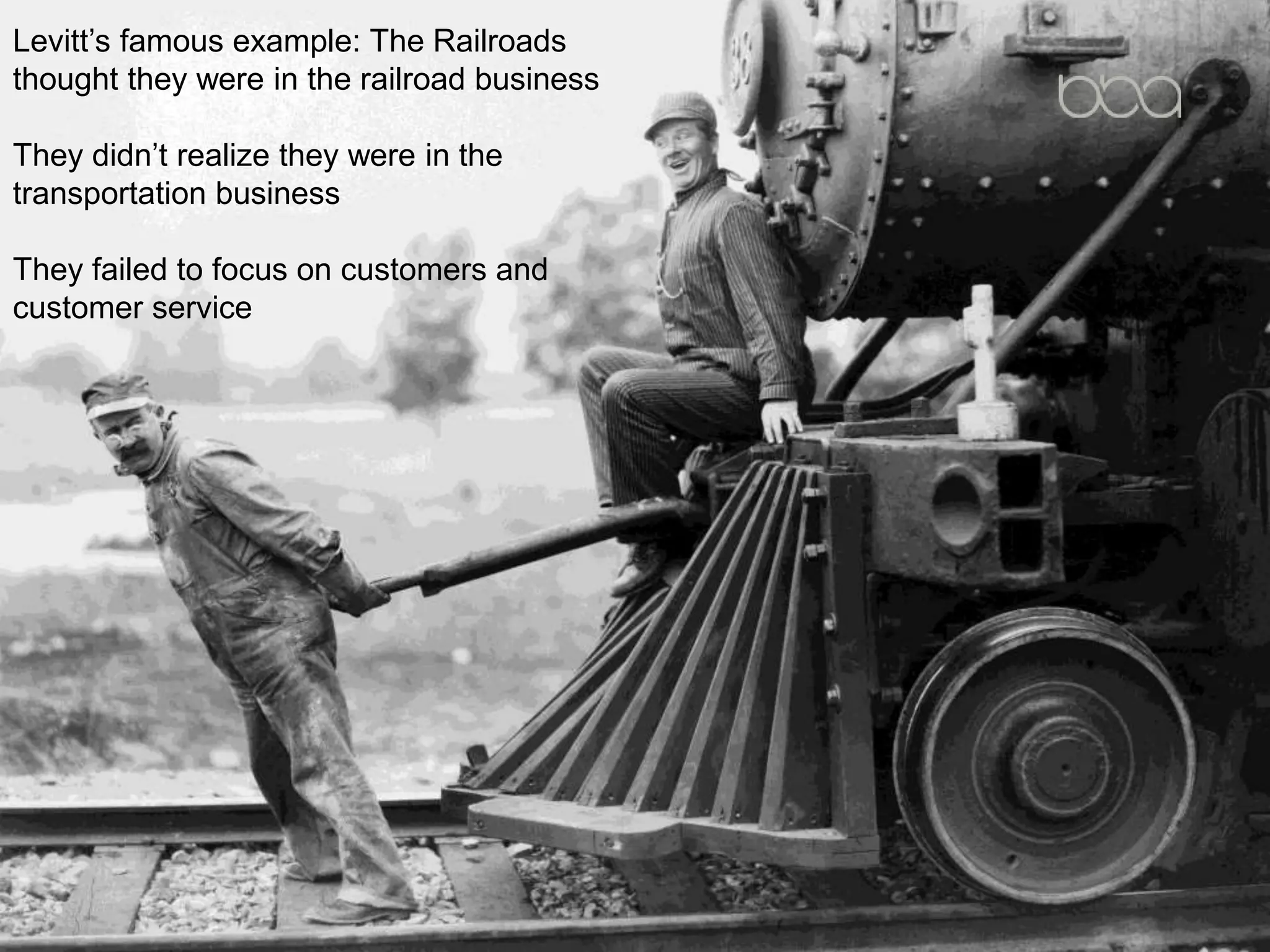
Levitt’s famous example: The Railroads
thought they were in the railroad business
They didn’t realize they were in the
transportation business
They failed to focus on customers and
customer service
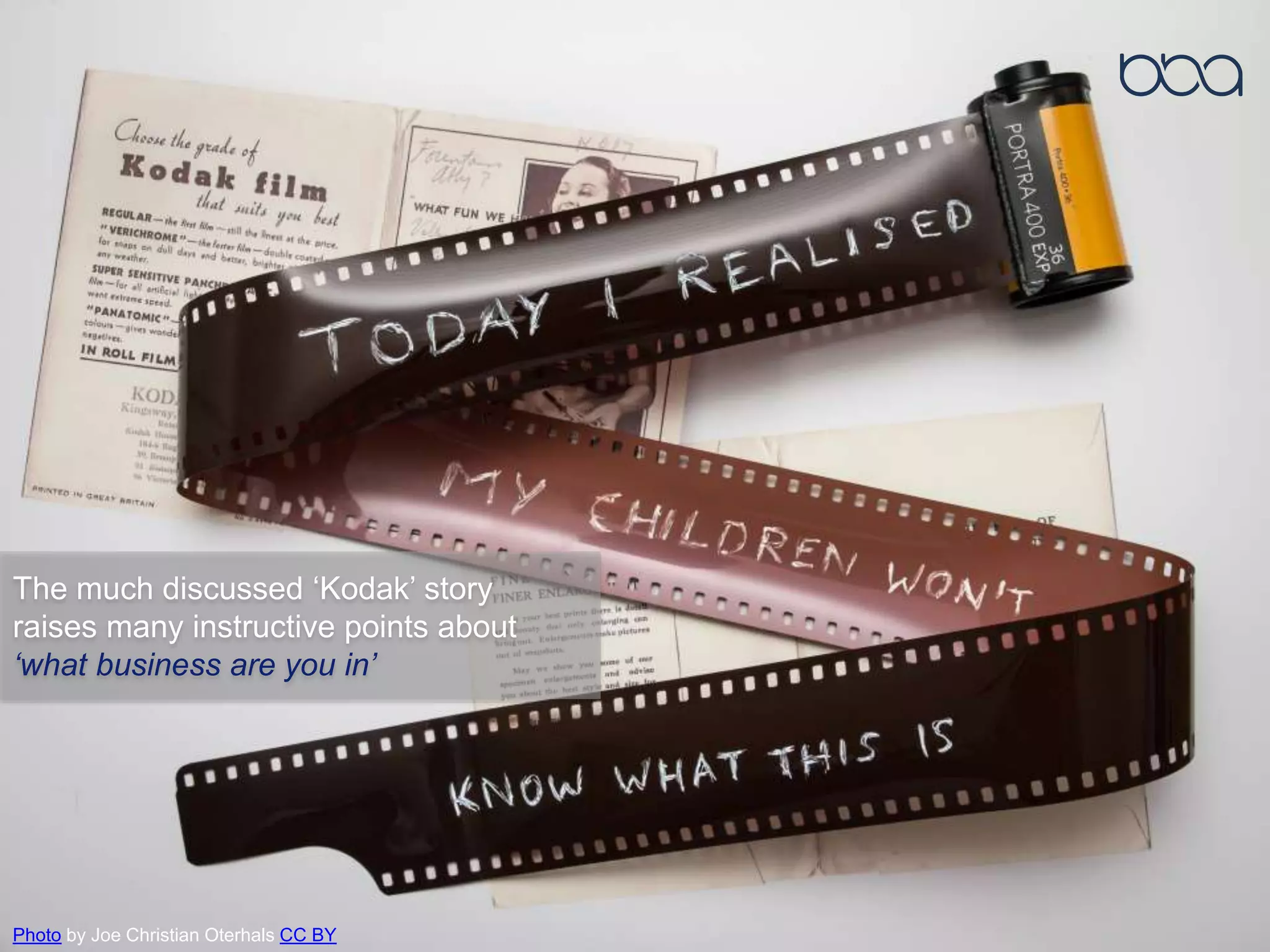
The much discussed ‘Kodak’ story
raises many instructive points about
‘what business are you in’
Photo by Joe Christian Oterhals CC BY
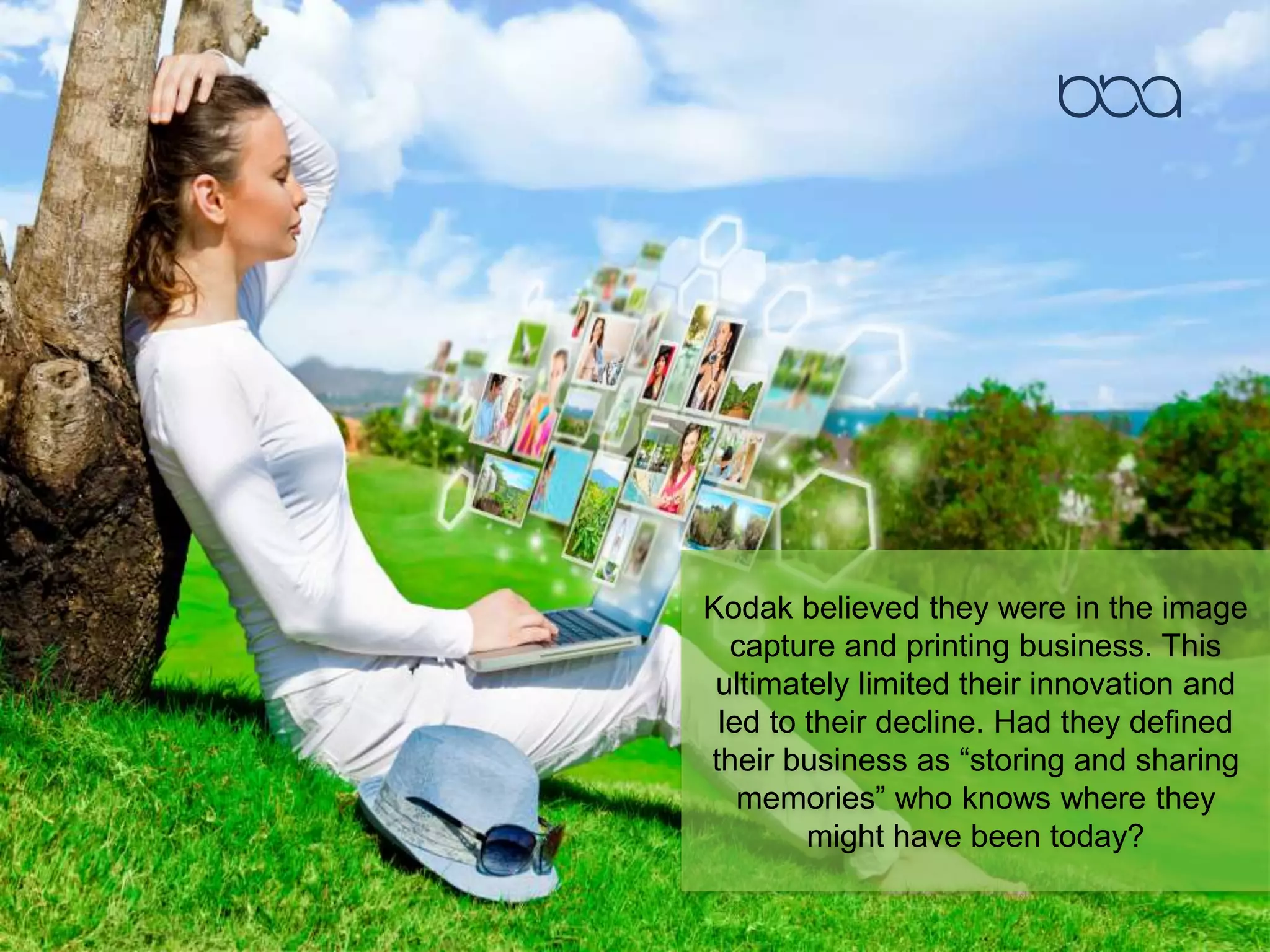
Kodak believed they were in the image
capture and printing business. This
ultimately limited their innovation and
led to their decline. Had they defined
their business as “storing and sharing
memories” who knows where they
might have been today?
Jim Stengel, former CMO of
Procter & Gamble, in his book “Grow”
elaborates how brand ideals must stand
for something compelling to the
people they touch
The right ideal, often becoming the
mission of the business, has a
profound impact on the future of a brand.
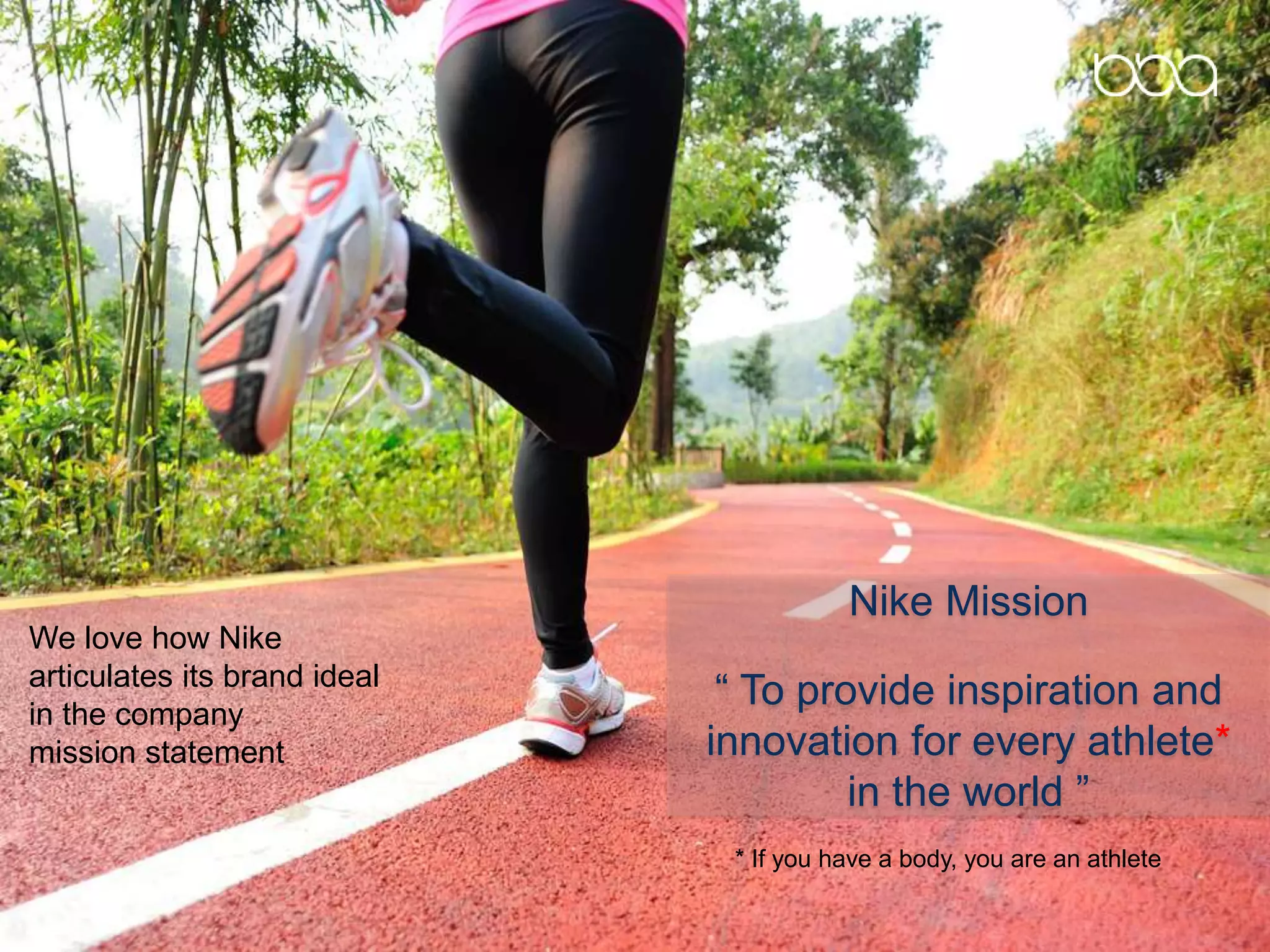
We love how Nike
articulates its brand ideal
in the company
mission statement
Nike Mission
“ To provide inspiration and
innovation for every athlete*
in the world ”
* If you have a body, you are an athlete
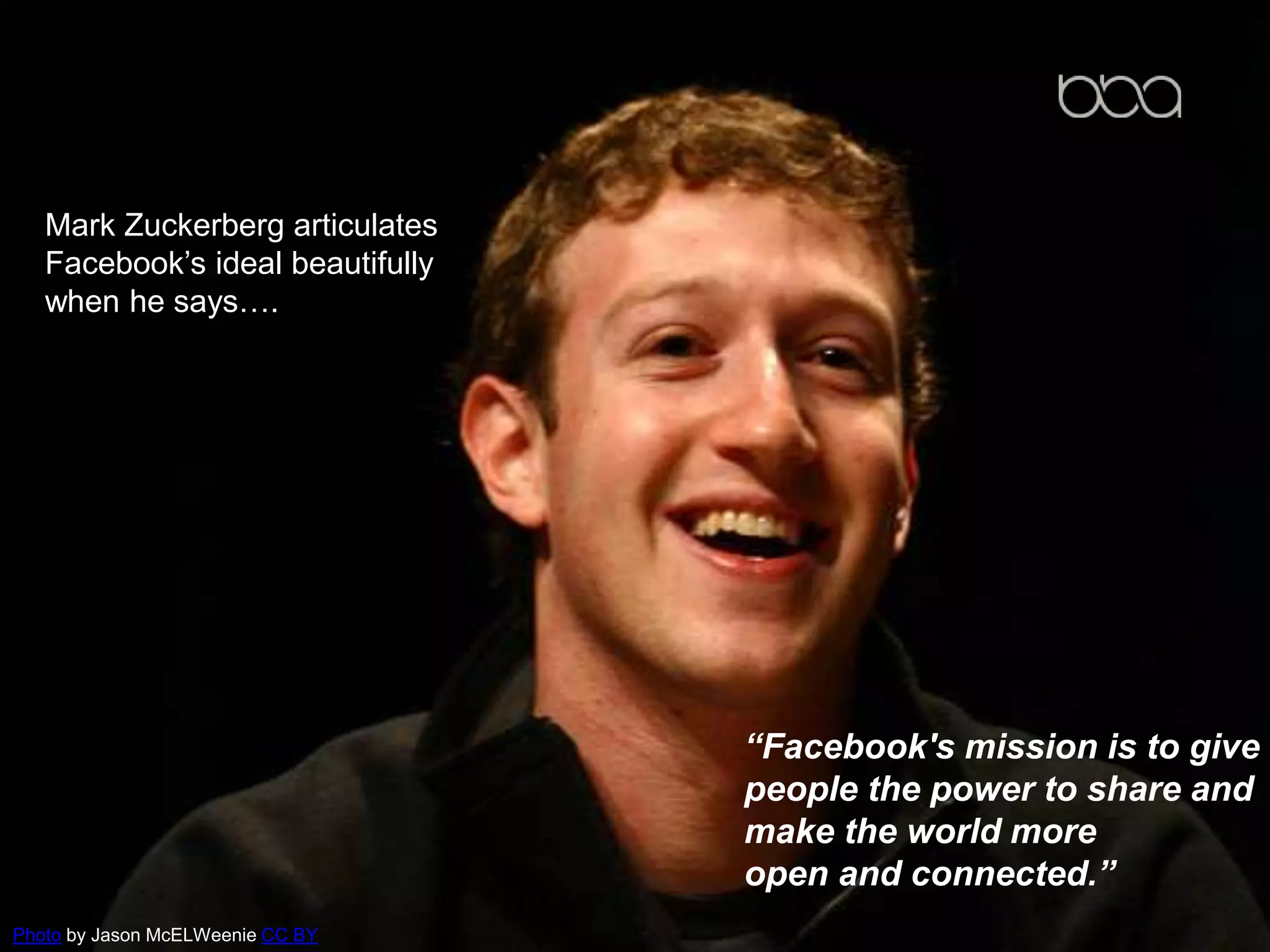
Mark Zuckerberg articulates
Facebook’s ideal beautifully
when he says….
“Facebook's mission is to give
people the power to share and
make the world more
open and connected.”
Photo by Jason McELWeenie CC BY
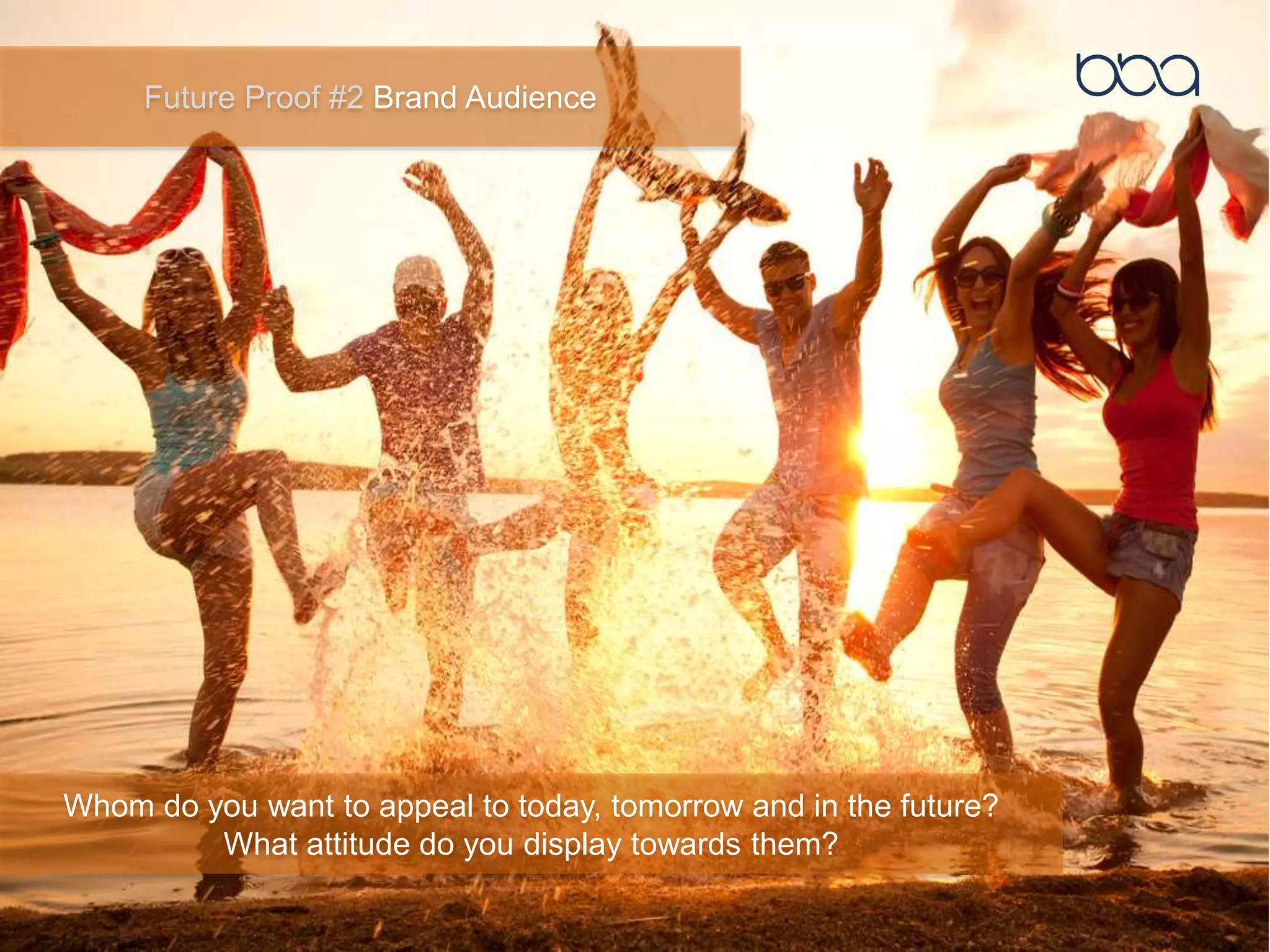
Future Proof #2 Brand Audience
Whom do you want to appeal to today, tomorrow and in the future?
What attitude do you display towards them?
On the following slides we give examples*
of two brands Bharat has personally worked on
in roles prior to founding BB&A
The examples illustrate how a
deep and fundamental understanding
of the human relationship
between a category and its target audience
profoundly influences a brand’s future success.
* The words in the slides are our own, and
may differ from any official documentation.
Omo/Surf Excel
Consumer Understanding
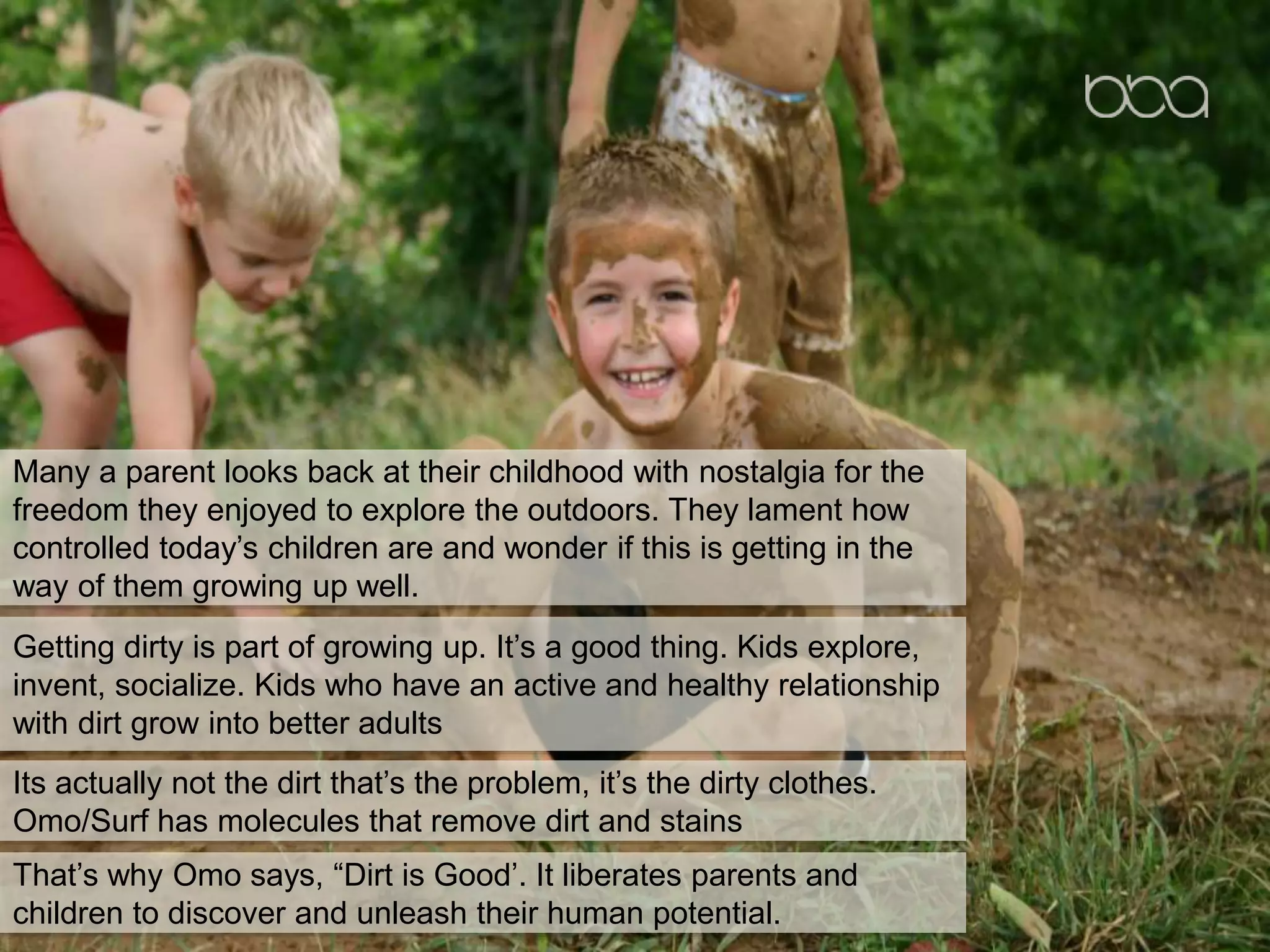
Many a parent looks back at their childhood with nostalgia for the
freedom they enjoyed to explore the outdoors. They lament how
controlled today’s children are and wonder if this is getting in the
way of them growing up well.
Getting dirty is part of growing up. It’s a good thing. Kids explore,
invent, socialize. Kids who have an active and healthy relationship
with dirt grow into better adults
Its actually not the dirt that’s the problem, it’s the dirty clothes.
Omo/Surf has molecules that remove dirt and stains
That’s why Omo says, “Dirt is Good’. It liberates parents and
children to discover and unleash their human potential.
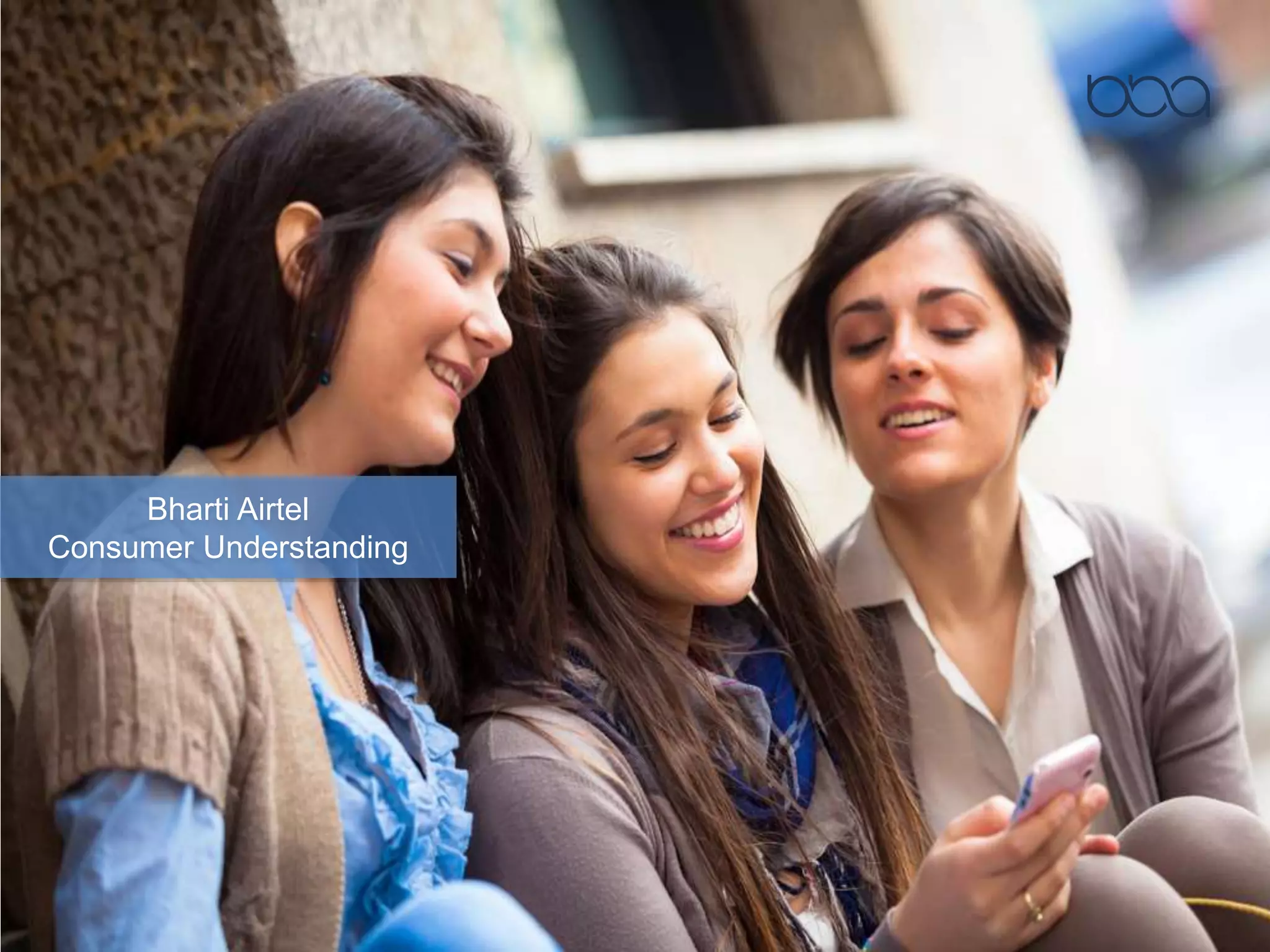
Bharti Airtel
Consumer Understanding
In the telecom industry, mobile internet is the future. Young
people are the largest consumers of mobile internet. And
their primary use of the internet is to share their lives with
friends.
Youth say, “Friends are not a part of my life,
they are my life!”
Airtel connects you to your friends anytime you want anywhere
you are and however you like
Airtel’s iconic campaigns ‘Har Friend Zaroori hota hai / Jo mera hai
who tera hai’ bring this consumer understanding to life
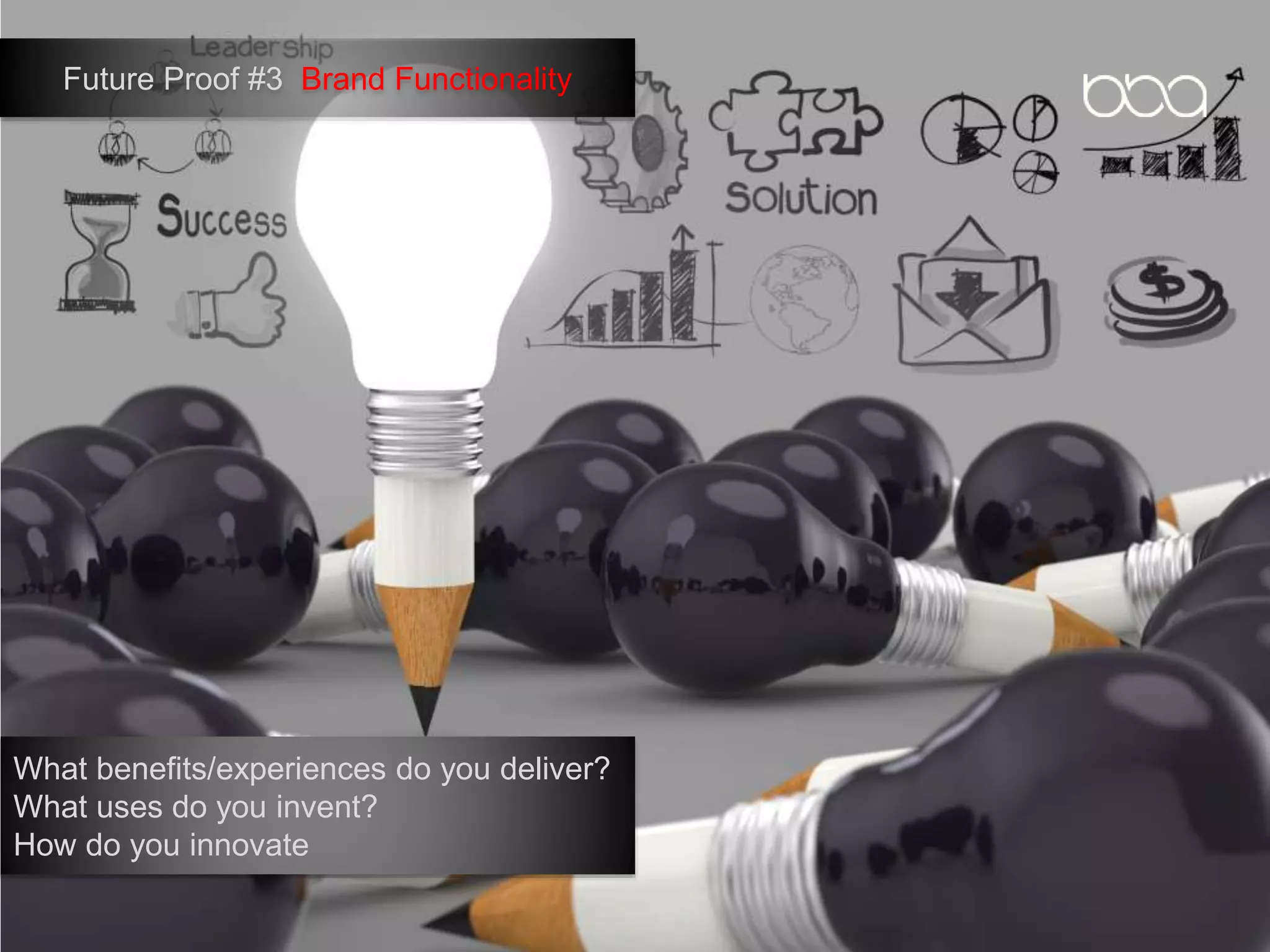
Future Proof #3 Brand Functionality
What benefits/experiences do you deliver?
What uses do you invent?
How do you innovate
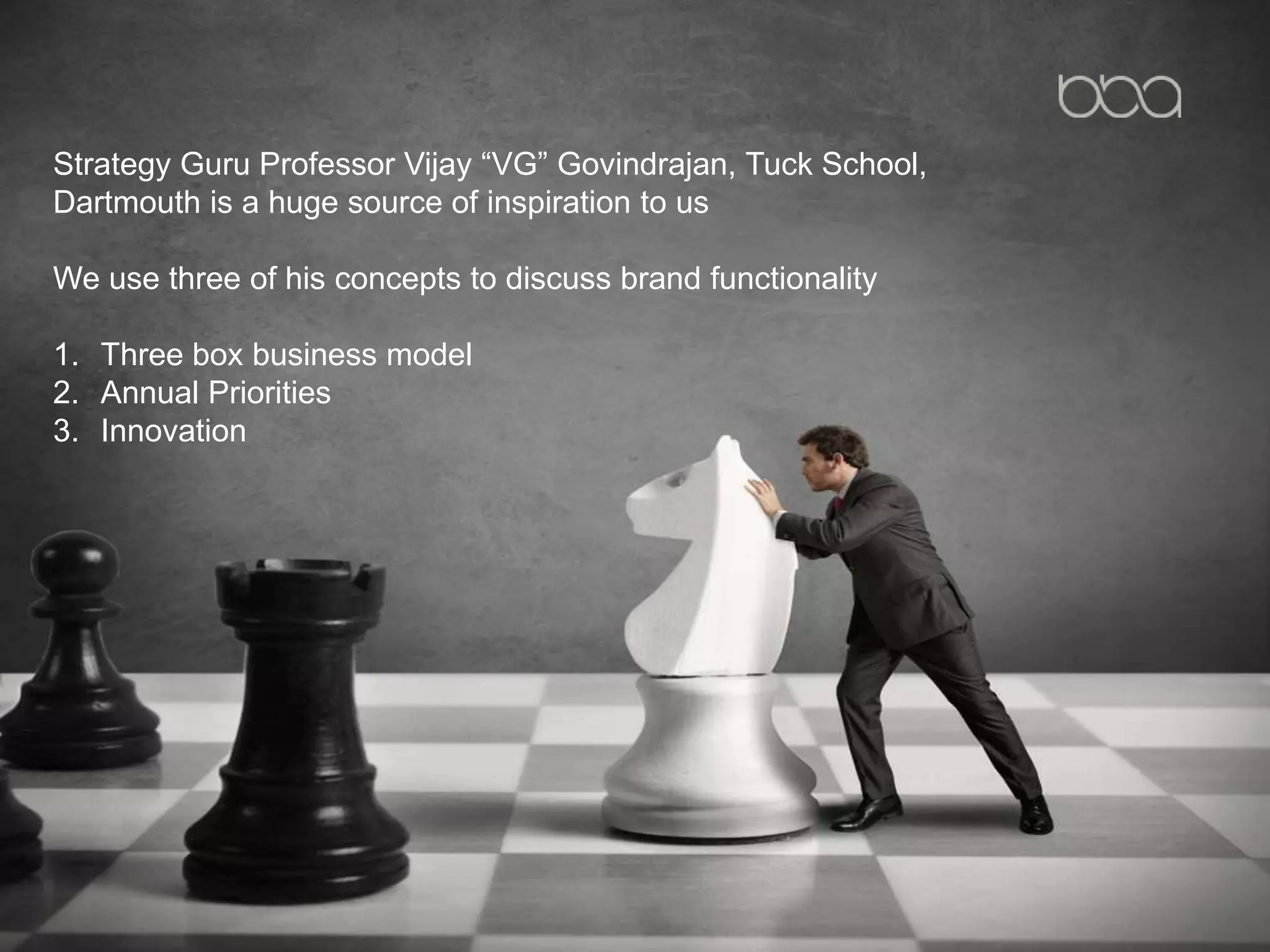
Strategy Guru Professor Vijay “VG” Govindrajan, Tuck School,
Dartmouth is a huge source of inspiration to us
We use three of his concepts to discuss brand functionality
1. Three box business model
2. Annual Priorities
3. Innovation
Manage the
present
Selectively
forget the past
Create the
future
Professor Govindrajan’s three-box model
Competition for the present
Based on clear & linear environment changes
Projects improve efficiency
Competition for the future
Based on non-linear
environment changes
Non-traditional competitors &
fundamentally different consumers
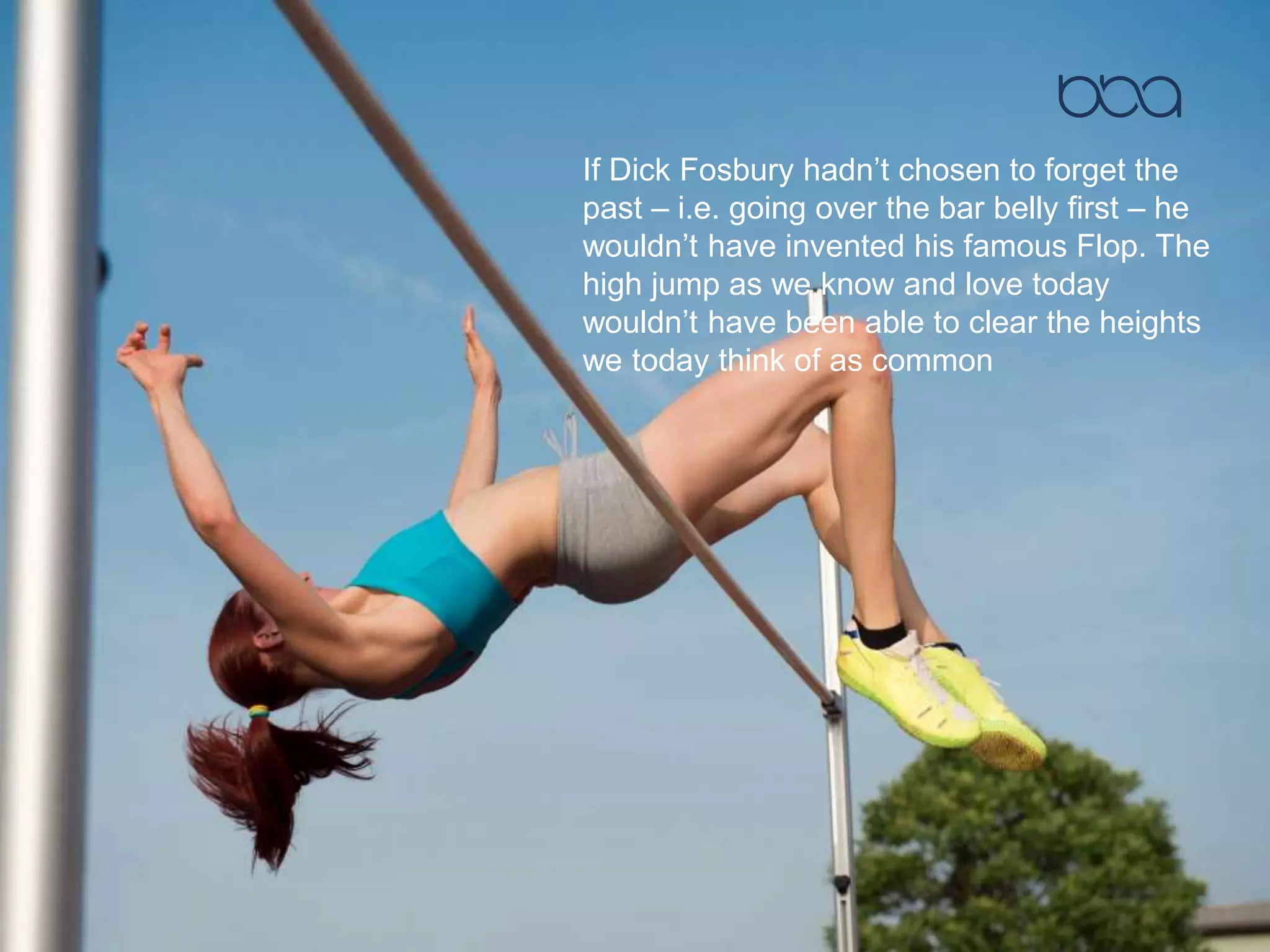
If Dick Fosbury hadn’t chosen to forget the
past – i.e. going over the bar belly first – he
wouldn’t have invented his famous Flop. The
high jump as we know and love today
wouldn’t have been able to clear the heights
we today think of as common
In Horizon 1, companies should focus on their core business
In Horizon 2, companies should develop competencies in spaces adjacent to their core business
In Horizon 3, companies should shift focus on entirely new spaces
Professor Govindrajan’s Annual Priorities
Netflix is an excellent example of a company that is future-proofing its brand by
continuously adapted their business model. They went from being a DVD-by-mail
company to a streaming service to being a producer of high quality original content
Professor Govindrajan on Reverse Innovation
Historically, companies
innovated in rich countries
and sold in
poor countries.
Reverse innovation
develops products in
poor countries that are for
poor countries and later
selectively
sold in rich countries.
The artificial leg developed in the USA is made of
titanium and costs $ 20,000. Asia simply can’t afford
them. A doctor in Thailand invented the $ 30 artificial
leg out of recycled plastic yoghurt tubs. It is strong,
flexible, affordable and a huge success. Later an
artificial leg of the same material was strong enough for
Mosha, a baby elephant who lost a leg to a Burmese
land-mine. What a delightful example of reverse
innovation!Photo by Kristen Ortwerth-Jewell CC BY
Future Proof #4 Brand Aesthetics
What are your design princip
What ‘brand legend’ are you creat
What stories will you
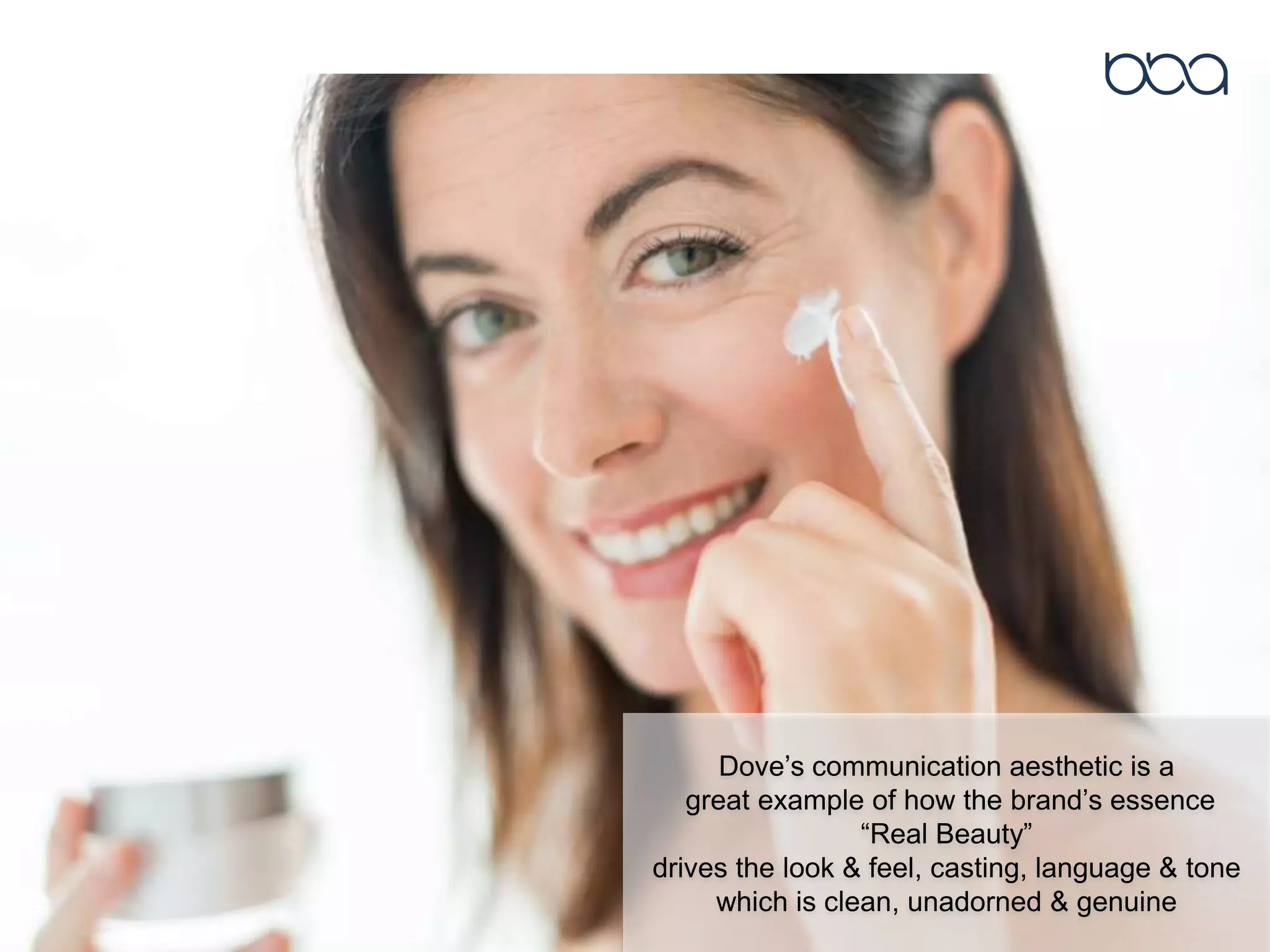
Dove’s communication aesthetic is a
great example of how the brand’s essence
“Real Beauty”
drives the look & feel, casting, language & tone
which is clean, unadorned & genuine
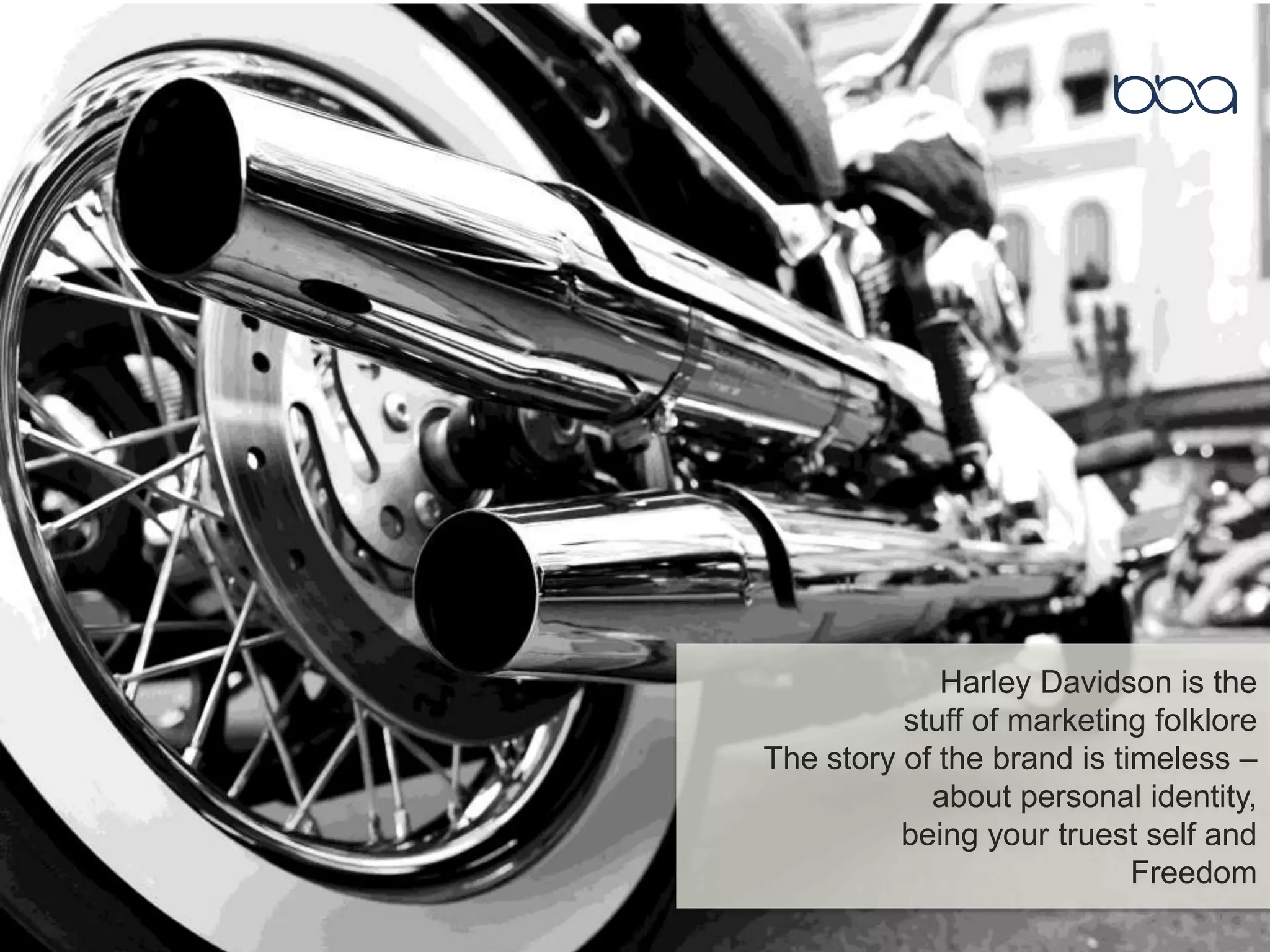
Harley Davidson is the
stuff of marketing folklore
The story of the brand is timeless –
about personal identity,
being your truest self and
Freedom
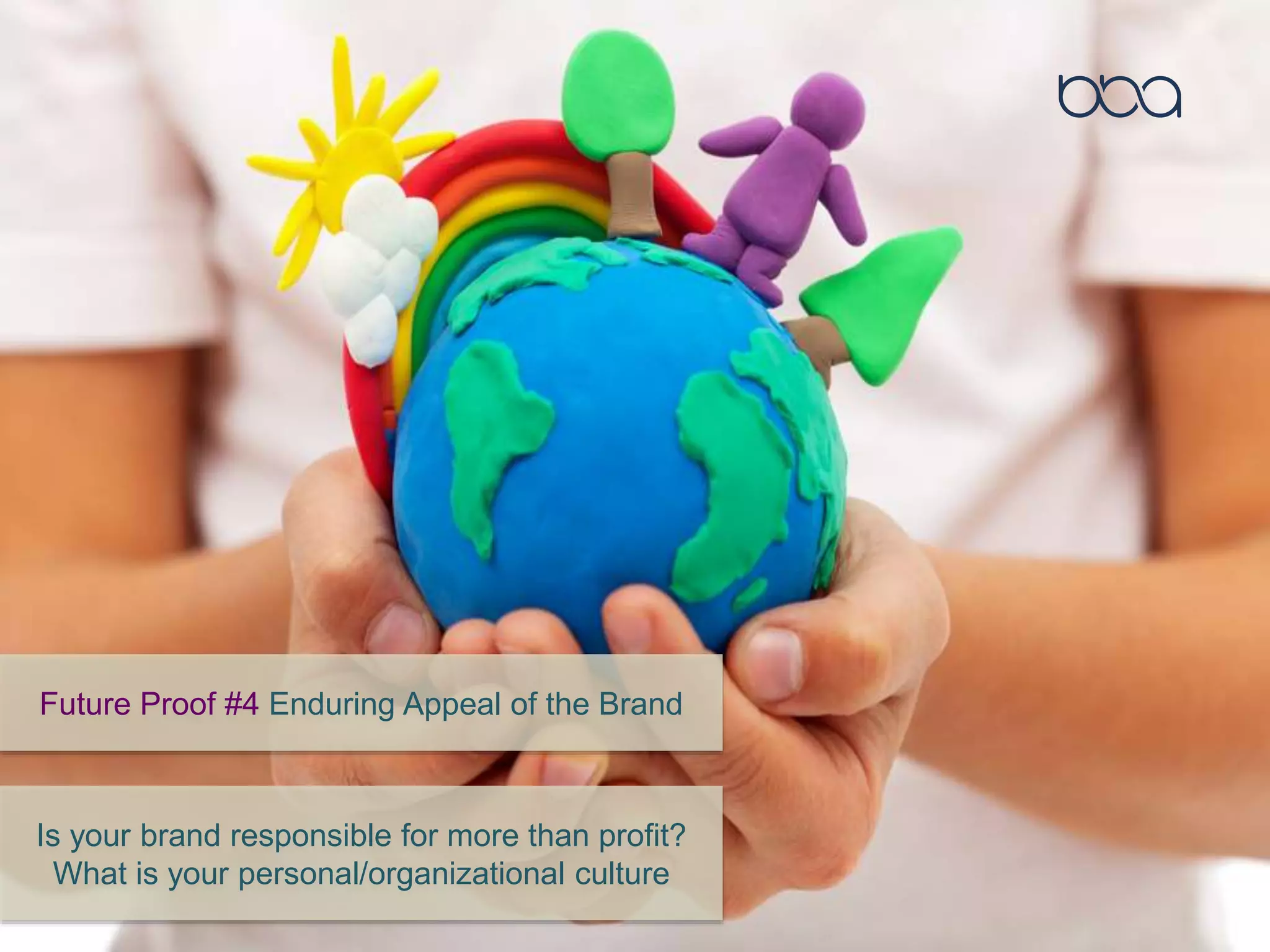
Future Proof #4 Enduring Appeal of the Brand
Is your brand responsible for more than profit?
What is your personal/organizational culture
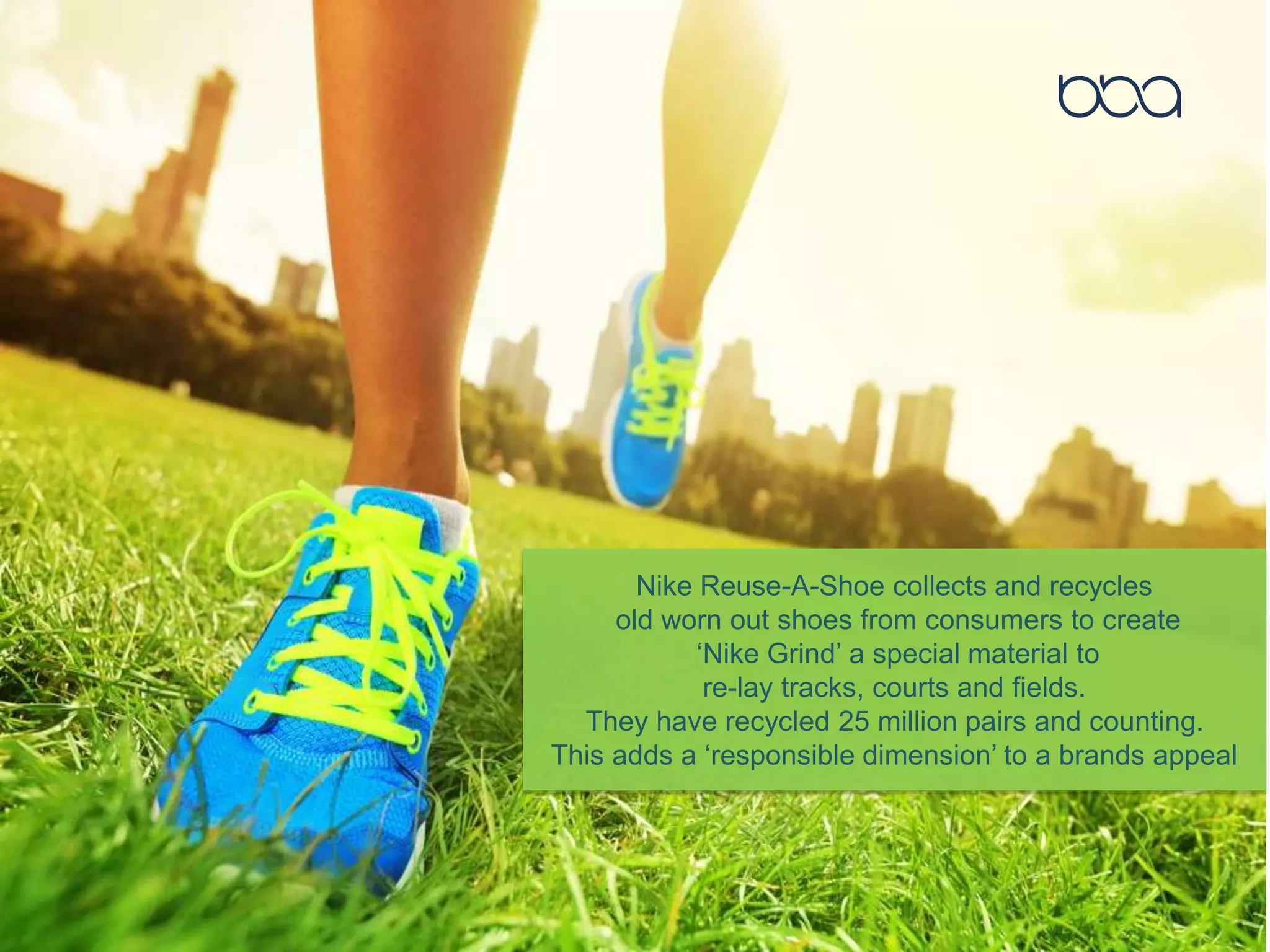
Nike Reuse-A-Shoe collects and recycles
old worn out shoes from consumers to create
‘Nike Grind’ a special material to
re-lay tracks, courts and fields.
They have recycled 25 million pairs and counting.
This adds a ‘responsible dimension’ to a brands appeal
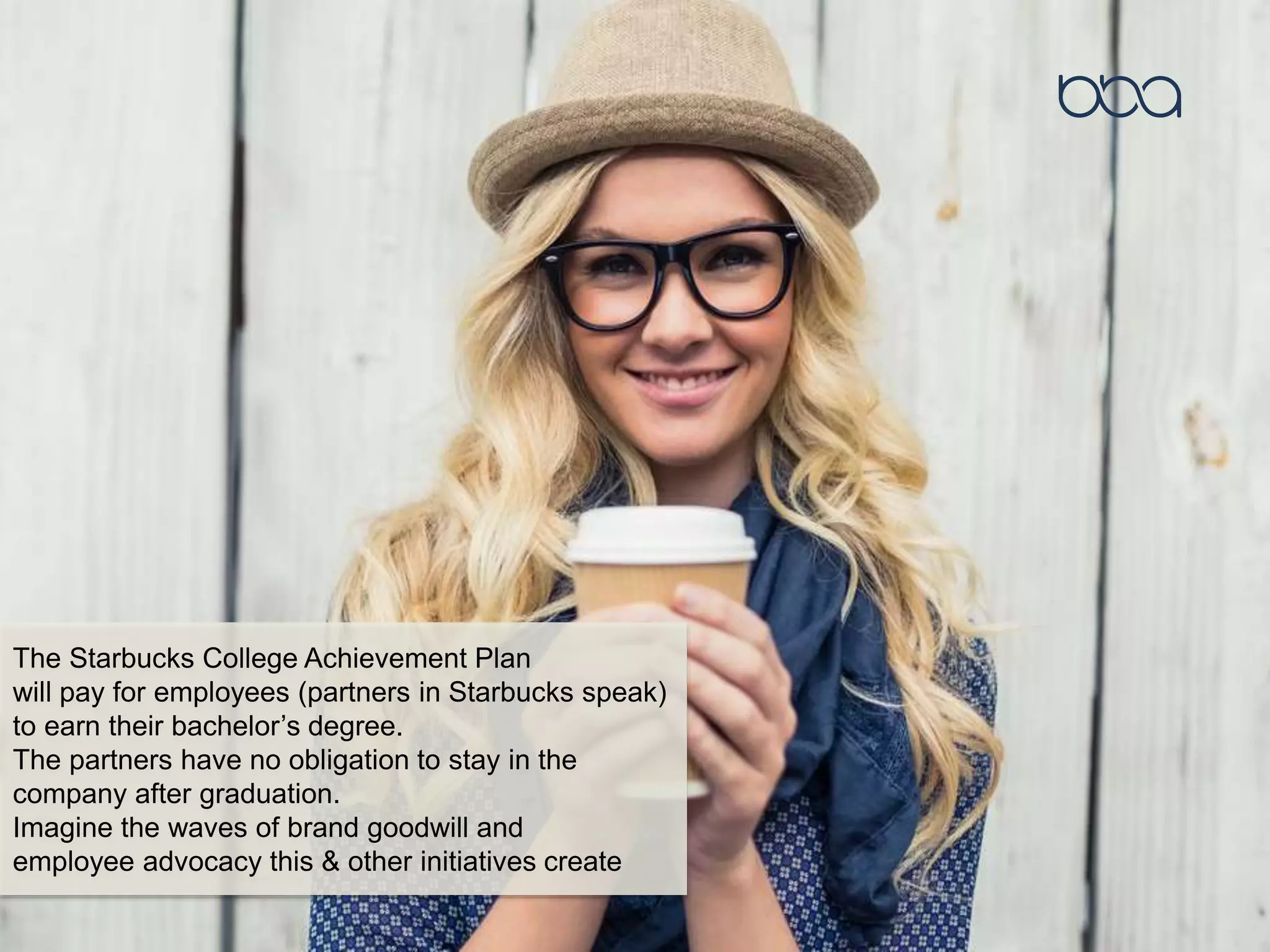
The Starbucks College Achievement Plan
will pay for employees (partners in Starbucks speak)
to earn their bachelor’s degree.
The partners have no obligation to stay in the
company after graduation.
Imagine the waves of brand goodwill and
employee advocacy this & other initiatives create
Future-proof brands combine
business purpose with brand ideals,
create authentic consumer connections,
innovate with design and functionality
and help create a more sustainable world
Future-proof brands are rewarded with extraordinary
financial profits,
consumer and stakeholder loyalty and become
a much-loved part of lives and popular culture
We would love to have a conversation on
how we can help you future proof your brand.
Do get in touch with us at
contact@bb-a.co.in or through our digital channels listed below
www.bb-a.co.in I www.twitter.com/bbaspeak I www.youtube.com/bbaspeak
www.linkedin.com/company/bharatbambawaleandassociates
© bba 2014

Future-Proofing your Brand

  • 1.
    Making your brandfuture-proof A Bharat Bambawale & Associates Perspective
  • 2.
    Organic growth mayill-prepare a brand for the future in a rapidly disruptive world Not just brands but entire categories can become irrelevant in a matter of months
  • 3.
    Present day relevanceis not enough. Brands need to meaningfully innovate and evolve for tomorrow’s consumers to be future-proof Brands who do this successfully remain consistently profitable and unique and inspire loyalty and advocacy
  • 4.
    Bharat Bambawale &Associates Is an independent brand and marketing consultancy based in New Delhi, India that works with clients to create immediate, mid-term and long-term brand value. Among our many services we help companies future-proof their brands. www.bb-a.co.in I www.twitter.com/bbaspeak I www.youtube.com/bbaspeak www.linkedin.com/company/bharatbambawaleandassociates
  • 5.
    We’ll like tostart by telling you a story A story in which a powerful brand, part of the proud heritage of the country it belongs to, was made future-ready and relevant to a new generation of consumers. This also a story of great belief and audacious execution
  • 6.
    It was 1984and French President Francis Mitterrand had a problem It concerned a national icon and a symbol of France His problem was The Louvre Photo by Christian Pierret CC BY
  • 7.
    The Louvre facedthe classic problem many a brand faces: a loss of relevance due to generational changes combined with a need to update access and appeal 1. Declining visitor traffic 2. Different sections functioned independently, inconveniencing visitors 3. Head of each sections acted autonomously 4. Flow of visitor traffic not evenly distributed 5. The Louvre needed an idea to engage and connect with a new generation of visitors Photo by Matt Biddulph CC BY
  • 8.
    The decision FrancoisMitterrand and his team took to make this French icon relevant and appealing to new consumers was audacious. This is especially inspiring and instructive in the context of future-proofing brands Photo by Renaud Camus CC BY
  • 9.
    The French teamhired Chinese American architect I M Pei to deliver the solution. We at BB&A imagine these are some of the questions he would have asked Q1. Purpose: What is the structure meant for? Q2. Audience: Who must it appeal to and why would they visit not just once but often? Q3. Functionality: What experience must the structure reliably deliver to visitors individually and collectively? Q4. Aesthetic: How can the past be respected while ushering in the new? Q5. Enduring Appeal: How will the structure stand the test of time and repeatedly reward the visitor? Photo by Adrien Selfre CC BY
  • 10.
    IM Pei’s boldand striking solution ‘ The Glass Pyramid’ It has not only brought a famous French icon into the present, but has added a fascinating new dimension to an old ‘brand’ that faced the risk of declining appeal and relevance Photo by Max Sat CC BY
  • 11.
    Pyramid excites young& old, makes Louvre modern Visitors descend into a central foyer for easy access There is more efficient distribution of trafficMore time and room to enjoy the exhibits Pictures courtesy Google Images Photo by Joe Tent CC BYPhoto by Victor R Rulz CC BY Photo by Jean PierreDalbera CC BYPhoto by Juan Pablo Gonzalez CC BY
  • 12.
    At BB&A wefind this story fascinating and helpful. It also gives a framework to think of future-proofing brands
  • 13.
    There are somequestions that would feature in a conversation we would have on brand future-proofing
  • 15.
    Future Proof #1Brand Purpose What business are you in? What is your brand ideal?
  • 16.
    This fundamental questionProfessor Levitt posed has great value to us when thinking about brand future-proofing. It invites us to think deeply about business strategy and the kind of consumers the brand must be relevant to
  • 17.
    Levitt’s famous example:The Railroads thought they were in the railroad business They didn’t realize they were in the transportation business They failed to focus on customers and customer service
  • 18.
    The much discussed‘Kodak’ story raises many instructive points about ‘what business are you in’ Photo by Joe Christian Oterhals CC BY
  • 19.
    Kodak believed theywere in the image capture and printing business. This ultimately limited their innovation and led to their decline. Had they defined their business as “storing and sharing memories” who knows where they might have been today?
  • 20.
    Jim Stengel, formerCMO of Procter & Gamble, in his book “Grow” elaborates how brand ideals must stand for something compelling to the people they touch The right ideal, often becoming the mission of the business, has a profound impact on the future of a brand.
  • 21.
    We love howNike articulates its brand ideal in the company mission statement Nike Mission “ To provide inspiration and innovation for every athlete* in the world ” * If you have a body, you are an athlete
  • 22.
    Mark Zuckerberg articulates Facebook’sideal beautifully when he says…. “Facebook's mission is to give people the power to share and make the world more open and connected.” Photo by Jason McELWeenie CC BY
  • 23.
    Future Proof #2Brand Audience Whom do you want to appeal to today, tomorrow and in the future? What attitude do you display towards them?
  • 24.
    On the followingslides we give examples* of two brands Bharat has personally worked on in roles prior to founding BB&A The examples illustrate how a deep and fundamental understanding of the human relationship between a category and its target audience profoundly influences a brand’s future success. * The words in the slides are our own, and may differ from any official documentation.
  • 25.
  • 26.
    Many a parentlooks back at their childhood with nostalgia for the freedom they enjoyed to explore the outdoors. They lament how controlled today’s children are and wonder if this is getting in the way of them growing up well. Getting dirty is part of growing up. It’s a good thing. Kids explore, invent, socialize. Kids who have an active and healthy relationship with dirt grow into better adults Its actually not the dirt that’s the problem, it’s the dirty clothes. Omo/Surf has molecules that remove dirt and stains That’s why Omo says, “Dirt is Good’. It liberates parents and children to discover and unleash their human potential.
  • 27.
  • 28.
    In the telecomindustry, mobile internet is the future. Young people are the largest consumers of mobile internet. And their primary use of the internet is to share their lives with friends. Youth say, “Friends are not a part of my life, they are my life!” Airtel connects you to your friends anytime you want anywhere you are and however you like Airtel’s iconic campaigns ‘Har Friend Zaroori hota hai / Jo mera hai who tera hai’ bring this consumer understanding to life
  • 29.
    Future Proof #3Brand Functionality What benefits/experiences do you deliver? What uses do you invent? How do you innovate
  • 30.
    Strategy Guru ProfessorVijay “VG” Govindrajan, Tuck School, Dartmouth is a huge source of inspiration to us We use three of his concepts to discuss brand functionality 1. Three box business model 2. Annual Priorities 3. Innovation
  • 31.
    Manage the present Selectively forget thepast Create the future Professor Govindrajan’s three-box model Competition for the present Based on clear & linear environment changes Projects improve efficiency Competition for the future Based on non-linear environment changes Non-traditional competitors & fundamentally different consumers
  • 32.
    If Dick Fosburyhadn’t chosen to forget the past – i.e. going over the bar belly first – he wouldn’t have invented his famous Flop. The high jump as we know and love today wouldn’t have been able to clear the heights we today think of as common
  • 33.
    In Horizon 1,companies should focus on their core business In Horizon 2, companies should develop competencies in spaces adjacent to their core business In Horizon 3, companies should shift focus on entirely new spaces Professor Govindrajan’s Annual Priorities
  • 34.
    Netflix is anexcellent example of a company that is future-proofing its brand by continuously adapted their business model. They went from being a DVD-by-mail company to a streaming service to being a producer of high quality original content
  • 35.
    Professor Govindrajan onReverse Innovation Historically, companies innovated in rich countries and sold in poor countries. Reverse innovation develops products in poor countries that are for poor countries and later selectively sold in rich countries.
  • 36.
    The artificial legdeveloped in the USA is made of titanium and costs $ 20,000. Asia simply can’t afford them. A doctor in Thailand invented the $ 30 artificial leg out of recycled plastic yoghurt tubs. It is strong, flexible, affordable and a huge success. Later an artificial leg of the same material was strong enough for Mosha, a baby elephant who lost a leg to a Burmese land-mine. What a delightful example of reverse innovation!Photo by Kristen Ortwerth-Jewell CC BY
  • 37.
    Future Proof #4Brand Aesthetics What are your design princip What ‘brand legend’ are you creat What stories will you
  • 38.
    Dove’s communication aestheticis a great example of how the brand’s essence “Real Beauty” drives the look & feel, casting, language & tone which is clean, unadorned & genuine
  • 39.
    Harley Davidson isthe stuff of marketing folklore The story of the brand is timeless – about personal identity, being your truest self and Freedom
  • 40.
    Future Proof #4Enduring Appeal of the Brand Is your brand responsible for more than profit? What is your personal/organizational culture
  • 41.
    Nike Reuse-A-Shoe collectsand recycles old worn out shoes from consumers to create ‘Nike Grind’ a special material to re-lay tracks, courts and fields. They have recycled 25 million pairs and counting. This adds a ‘responsible dimension’ to a brands appeal
  • 42.
    The Starbucks CollegeAchievement Plan will pay for employees (partners in Starbucks speak) to earn their bachelor’s degree. The partners have no obligation to stay in the company after graduation. Imagine the waves of brand goodwill and employee advocacy this & other initiatives create
  • 43.
    Future-proof brands combine businesspurpose with brand ideals, create authentic consumer connections, innovate with design and functionality and help create a more sustainable world Future-proof brands are rewarded with extraordinary financial profits, consumer and stakeholder loyalty and become a much-loved part of lives and popular culture
  • 44.
    We would loveto have a conversation on how we can help you future proof your brand. Do get in touch with us at contact@bb-a.co.in or through our digital channels listed below www.bb-a.co.in I www.twitter.com/bbaspeak I www.youtube.com/bbaspeak www.linkedin.com/company/bharatbambawaleandassociates
  • 45.