Branding Concepts
Product Design
Iconic design beats generic design in the
              marketplace


  An iconic product design engages the
consumer senses and creates an emotional
               attachment


    It is has a compelling brand imagery
It is unique, scalable and expresses brand
                    values
                    .
A product is the first
 impression of the
      brand
Physical representation of
   brand personality
Experience is the
    product
The problem lies with the misconception
that branding is about selling the product.

 When you’re dealing with consumers’
higher needs, the brand experience can
 actually become the primary source of
    value, with the product or service
becoming a vehicle for that experience.
Don't focus on technology and features.


 Focus on the experience you want to
create, and build a system that gets you
                 there.
Differentiates the brand
User Experience is the
 Product Experience
Jelly Bean Theory
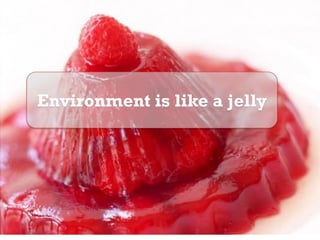
Environment is like a jelly
It changes its shape according to the
         vessel you put it in

It changes shape and is wobbling all
              the time.
SPELT
Standardization Political, Economical,
        Legal &Technological
       aspects of the society

  Both Individual and Organization
            work on SPELT
Aim: Make the organization grow and gain
                 profits

   Theory explains how organization is
    nothing but a group of individuals

And how if you don’t put the profits gained
    by either the individual side or the
 organization side back into the system it
    leads to no growth in the business
E                     SPELT
      Social
N                                     Products

V   Psychologic
    al
                                     Manageme
                                     nt
I
R   Basic Needs
                                      Growth
                                        &
O                                     Profits

N
M      Needs
                                       Needs
E     Needs                            Needs
N                 Exchange Process
T
SAMSUNG
Organization circle:

 Samsung’s management philosophy is to
 innovate.
 Coming up with a new product is their
 planned event.
 They come from a management belief that
 they have to compete globally. This
 philosophy is helping them innovate and
 come up with new products and services.
Individual circle:

 The individual’s basic need it to communicate.
 And the mobile phone’s have psychologically
 built this perception that you need a smart
 phone to stand out and to communicate
 better. With so many smart phones coming
 into the market and so much of competition it
 has also become a social need for the
 individuals. They want to stand out in the
 society and want to have the best of all.
These two circles can not function without each other, to
survive in the competitive environment (market) they need
       to keep the exchange process on all the time.

As the requirement of the individual keeps increasing the
         organization needs to keep innovating.

  And as the innovation keeps happening the needs of the
individual both psychological and social keeps increasing.

     And all of this results in growth and profit of the
     organization and fulfillment of individual's need.

    The environment keeps changing according to the
 requirement of both the individual and organization. And
               all this is effected by SPELT.
Good Works/ CSR
• ‘Good Works’ or Cause Marketing
  involves the cooperative efforts of a "for
  profit" business and a non-profit
  organization for mutual benefit.

• Has a social or charitable causes
  attached to it
Benefits of cause marketing
• Improves social welfare
• Creates a differentiated brand positioning
• Builds strong customer bonds by spreading
  goodwill
• Enhances the company’s public image
• Boosts internal morale
• Drive sales and increases market value of
  firm
How does it help the brand?
Builds Brand Awareness
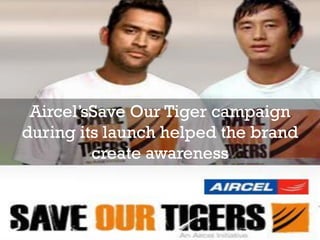
Aircel’sSave Our Tiger campaign
during its launch helped the brand
         create awareness
Builds Brand Loyalty
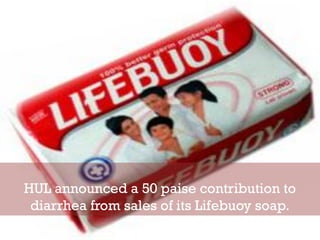
HUL announced a 50 paise contribution to
 diarrhea from sales of its Lifebuoy soap.
Builds Brand Image
OberoiGroup placed an envelope in all Oberoi
properties wherein guest could contribute to CRY
             (Child Relief and You)
Help Increase Market
        Share
Whisper sanitary napkins announced a
donation of 1 Re on every purchase to the
           blind relief society.

          Ithelped boost sales
Increases Brand
  Engagement
HUL announced a Rs 5/- contribution to SOS
  children’s village which was dedicated to
            engaging consumers.
   This was done by placing coupons in its
          Brooke Bond TajMahal Tea.
 Contribution could be made by dialing the
toll free number and inserting coupon code.
Evoke Brand Feelings
Tata Tea Jaago Re campaign
Establish Brand
  Credibilty
Great wall of Education is a mega book
    donation drive for the underprivileged
                   children.


This is done by Aviva in collaboration with the
  NGO ‘ Save the Children India’ every year.
Creates a sense of
brand community
During the Tsunami, P&G donated a sum of 32
 lakhs towards rehabilitation efforts via the
         Prime Minister’s relief fund.
Culture in Branding
Culture is the cumulative concept that
encompasses knowledge, belief, customs,
practices and any other habits acquired by
people as members of society.

A major consequence of culture is its impact
on consumption patterns of individuals and
institutions.
Successful brands have been able to adopt
their branding strategies in line with this
 dominant cultural philosophy and weave
   their brands into the cultural fiber.
Cultural differences are indeed a major factor
that has an impact on the success or failure of a
                     brand.


   As brands enter different
cultures, it becomes imperative
for them to carefully study and
understand the psychology and
   buying behaviour of local
           population.
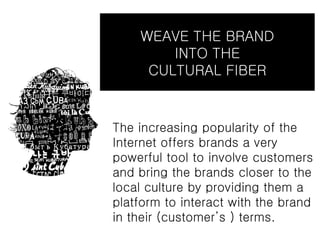
WEAVE THE BRAND
        INTO THE
     CULTURAL FIBER


The increasing popularity of the
Internet offers brands a very
powerful tool to involve customers
and bring the brands closer to the
local culture by providing them a
platform to interact with the brand
in their (customer’s ) terms.
Online discussion groups, and online brand
communities is a firm step towards co-creating
brand value with the customers.

By weaving the brand essence into the societal
fiber, brands can leverage cultural differences
to their advantage.
Understand The Consumption
              Patterns

                       Individualistic
Individualisti         cultures
c and                  support
collectivistic         customers to
                       make
cultures tend          consumption
to be the two          decisions
ends of a              based on their
continuum.             personal
                       choice, at an
                       individual
                       level.
To maximize the opportunities
brands should be sensitive to the
cultural subtleties and adopt
accordingly
SUCCESS STORY
Nokia recognized the
growing importance of
rural customers in the
Indian mobile telephone
market which grew from
a     mere       300,000
subscribers in 1996 to a
whopping 55 million
subscribers in 2004.
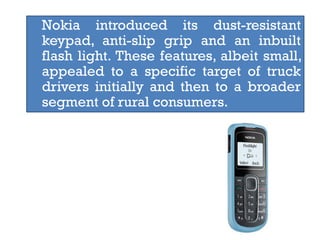
Nokia introduced its dust-resistant
keypad, anti-slip grip and an inbuilt
flash light. These features, albeit small,
appealed to a specific target of truck
drivers initially and then to a broader
segment of rural consumers.
Epic Fail
Disneyland
  Disneyland launched Euro Disney and
 maintained its standard tried and tested
     formula with the assumption that
customers would seek the authentic Disney
               experience.
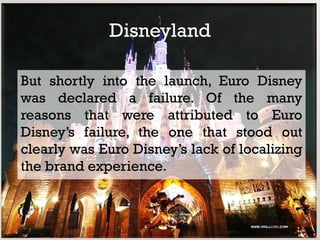
Disneyland

But shortly into the launch, Euro Disney
was declared a failure. Of the many
reasons that were attributed to Euro
Disney’s failure, the one that stood out
clearly was Euro Disney’s lack of localizing
the brand experience.
Brand Tribalism
Brand tribalism is sense of
belonging a brand is able to
create amongst its followers.
When a brand develops strong
tribalism amongst its followers,
they can become almost
cult-like in their support for the brand.

The brand becomes a tribe
These tribes follow their
favourite brands like a religion.
Marketers need to help develop
rituals and practices which
surround their brand and help
the members spread the word
to their friends and families.
Widely accepted as one of the few iconic brands, Nike has been
   able to develop a status that transcends functional benefits.
The Swoosh represents something other than just a company. It
                represents a whole value system.
 It has stopped being a brand and has started to become a way,
      that you are defining the way you are living on earth.”
Nike has made understanding its heritage and brand an intrinsic
 part of its corporate culture. Its brand is truly ubiquitous – the
company’s growth has never really been based on the technical
    superiority of its products, its success has been built on
 transforming the technology and design of its products into a
             high performance brand people believe in
Nike has made understanding its heritage and brand an intrinsic
 part of its corporate culture. Its brand is truly ubiquitous – the
company’s growth has never really been based on the technical
    superiority of its products, its success has been built on
 transforming the technology and design of its products into a
             high performance brand people believe in
Because of compelling rhetoric and the charismatic persona of a
  mere basketball player (Michael Jordan), a lowly gym shoe
 became the Shoes, -its creed a clarion call for anyone who has
                     ever broken a sweat.

      Nike became THE tribe for achievers and sweaters.
Diesel has established a strong sense of identity and belonging
and that goes a long way to understanding their high
performance and the tribe that surrounds this brand.
The company is well known for picking out social issues and
things people are debating in the public and repackaging them in
interesting new ways that engage its brand tribe.
Diesel has imposed originality and creativity by bringing out a
     personality that’s about humour, daring colours and
 provocation. It has, literally and otherwise, created its own
    CULT. It became THE cool thing with its identity and its
communication like “Stop Knifing. Start Spooning.” and “Stay
                        Young Forever”.
Myth Making
Myths are narratives about divine or heroic beings, arranged in a coherent system,
passed down traditionally, and linked to the spiritual or religious life of a
community, endorsed by rulers or priests.

Several Brand have a certain mythology built around them which makes them mysterious
and desirable. There is a history and past attached. There are legends and there are
archetypes attached to it. And the followers feel like they are a part of something timeless
and transcendental.
A Mythic brand would have a story, not just a product or a pile of facts. That story
would promise (and deliver) an heroic outcome. And there needs to be growth
and mystery as well, so the user can fill in his/her own blanks with the fulfilment
of brand’s promise.
Mythological brands make a deep mental connection with the user, delivering
something that they can't find on our own or, at the very least, giving a slate we
can use to write our own sub conscious on.

People use a Dell. They are an Apple.
While the product is truly excellent, ever since its “1984” TV commercial, Apple has
    obtained and maintained demigod like status. With its super-sleek design,
                             packaging and advertising,

                 Apple is way more than hardware -it’s Lifeware.


With the entire identity and life of steve jobs resembling that of a God with a world
to run, Apple became Jesus. God’s messenger on earth. Embrace the son and feel
                                   the grace of god.
Like Greek heroes have a turbulent life, steve jobs’ life provided the mythological
        stories that brought Apple even closer to the hero in public’s mind.

                     Use apple and be on the side of the rebel.
Thank You!


     Submitted by

       Group 12

Ishita Shelat        86
 Ishank Gorla        85
Shivani Sharma      128
Vishakha Pithwal    141
Yasmin Hussain      144

brand scavenging

  • 1.
  • 2.
  • 3.
    Iconic design beatsgeneric design in the marketplace An iconic product design engages the consumer senses and creates an emotional attachment It is has a compelling brand imagery It is unique, scalable and expresses brand values .
  • 4.
    A product isthe first impression of the brand
  • 6.
    Physical representation of brand personality
  • 8.
  • 10.
    The problem lieswith the misconception that branding is about selling the product. When you’re dealing with consumers’ higher needs, the brand experience can actually become the primary source of value, with the product or service becoming a vehicle for that experience.
  • 11.
    Don't focus ontechnology and features. Focus on the experience you want to create, and build a system that gets you there.
  • 13.
  • 15.
    User Experience isthe Product Experience
  • 17.
  • 18.
  • 19.
    It changes itsshape according to the vessel you put it in It changes shape and is wobbling all the time.
  • 20.
    SPELT Standardization Political, Economical, Legal &Technological aspects of the society Both Individual and Organization work on SPELT
  • 21.
    Aim: Make theorganization grow and gain profits Theory explains how organization is nothing but a group of individuals And how if you don’t put the profits gained by either the individual side or the organization side back into the system it leads to no growth in the business
  • 22.
    E SPELT Social N Products V Psychologic al Manageme nt I R Basic Needs Growth & O Profits N M Needs Needs E Needs Needs N Exchange Process T
  • 23.
  • 24.
    Organization circle: Samsung’smanagement philosophy is to innovate. Coming up with a new product is their planned event. They come from a management belief that they have to compete globally. This philosophy is helping them innovate and come up with new products and services.
  • 25.
    Individual circle: Theindividual’s basic need it to communicate. And the mobile phone’s have psychologically built this perception that you need a smart phone to stand out and to communicate better. With so many smart phones coming into the market and so much of competition it has also become a social need for the individuals. They want to stand out in the society and want to have the best of all.
  • 26.
    These two circlescan not function without each other, to survive in the competitive environment (market) they need to keep the exchange process on all the time. As the requirement of the individual keeps increasing the organization needs to keep innovating. And as the innovation keeps happening the needs of the individual both psychological and social keeps increasing. And all of this results in growth and profit of the organization and fulfillment of individual's need. The environment keeps changing according to the requirement of both the individual and organization. And all this is effected by SPELT.
  • 27.
  • 28.
    • ‘Good Works’or Cause Marketing involves the cooperative efforts of a "for profit" business and a non-profit organization for mutual benefit. • Has a social or charitable causes attached to it
  • 29.
    Benefits of causemarketing • Improves social welfare • Creates a differentiated brand positioning • Builds strong customer bonds by spreading goodwill • Enhances the company’s public image • Boosts internal morale • Drive sales and increases market value of firm
  • 30.
    How does ithelp the brand?
  • 31.
  • 32.
    Aircel’sSave Our Tigercampaign during its launch helped the brand create awareness
  • 33.
  • 34.
    HUL announced a50 paise contribution to diarrhea from sales of its Lifebuoy soap.
  • 35.
  • 36.
    OberoiGroup placed anenvelope in all Oberoi properties wherein guest could contribute to CRY (Child Relief and You)
  • 37.
  • 38.
    Whisper sanitary napkinsannounced a donation of 1 Re on every purchase to the blind relief society. Ithelped boost sales
  • 39.
    Increases Brand Engagement
  • 40.
    HUL announced aRs 5/- contribution to SOS children’s village which was dedicated to engaging consumers. This was done by placing coupons in its Brooke Bond TajMahal Tea. Contribution could be made by dialing the toll free number and inserting coupon code.
  • 41.
  • 42.
    Tata Tea JaagoRe campaign
  • 43.
    Establish Brand Credibilty
  • 44.
    Great wall ofEducation is a mega book donation drive for the underprivileged children. This is done by Aviva in collaboration with the NGO ‘ Save the Children India’ every year.
  • 45.
    Creates a senseof brand community
  • 46.
    During the Tsunami,P&G donated a sum of 32 lakhs towards rehabilitation efforts via the Prime Minister’s relief fund.
  • 47.
  • 48.
    Culture is thecumulative concept that encompasses knowledge, belief, customs, practices and any other habits acquired by people as members of society. A major consequence of culture is its impact on consumption patterns of individuals and institutions.
  • 49.
    Successful brands havebeen able to adopt their branding strategies in line with this dominant cultural philosophy and weave their brands into the cultural fiber.
  • 50.
    Cultural differences areindeed a major factor that has an impact on the success or failure of a brand. As brands enter different cultures, it becomes imperative for them to carefully study and understand the psychology and buying behaviour of local population.
  • 51.
    WEAVE THE BRAND INTO THE CULTURAL FIBER The increasing popularity of the Internet offers brands a very powerful tool to involve customers and bring the brands closer to the local culture by providing them a platform to interact with the brand in their (customer’s ) terms.
  • 52.
    Online discussion groups,and online brand communities is a firm step towards co-creating brand value with the customers. By weaving the brand essence into the societal fiber, brands can leverage cultural differences to their advantage.
  • 53.
    Understand The Consumption Patterns Individualistic Individualisti cultures c and support collectivistic customers to make cultures tend consumption to be the two decisions ends of a based on their continuum. personal choice, at an individual level.
  • 54.
    To maximize theopportunities brands should be sensitive to the cultural subtleties and adopt accordingly
  • 55.
  • 56.
    Nokia recognized the growingimportance of rural customers in the Indian mobile telephone market which grew from a mere 300,000 subscribers in 1996 to a whopping 55 million subscribers in 2004.
  • 57.
    Nokia introduced itsdust-resistant keypad, anti-slip grip and an inbuilt flash light. These features, albeit small, appealed to a specific target of truck drivers initially and then to a broader segment of rural consumers.
  • 58.
  • 59.
    Disneyland Disneylandlaunched Euro Disney and maintained its standard tried and tested formula with the assumption that customers would seek the authentic Disney experience.
  • 60.
    Disneyland But shortly intothe launch, Euro Disney was declared a failure. Of the many reasons that were attributed to Euro Disney’s failure, the one that stood out clearly was Euro Disney’s lack of localizing the brand experience.
  • 61.
  • 62.
    Brand tribalism issense of belonging a brand is able to create amongst its followers. When a brand develops strong tribalism amongst its followers, they can become almost cult-like in their support for the brand. The brand becomes a tribe
  • 63.
    These tribes followtheir favourite brands like a religion. Marketers need to help develop rituals and practices which surround their brand and help the members spread the word to their friends and families.
  • 64.
    Widely accepted asone of the few iconic brands, Nike has been able to develop a status that transcends functional benefits. The Swoosh represents something other than just a company. It represents a whole value system. It has stopped being a brand and has started to become a way, that you are defining the way you are living on earth.”
  • 65.
    Nike has madeunderstanding its heritage and brand an intrinsic part of its corporate culture. Its brand is truly ubiquitous – the company’s growth has never really been based on the technical superiority of its products, its success has been built on transforming the technology and design of its products into a high performance brand people believe in
  • 66.
    Nike has madeunderstanding its heritage and brand an intrinsic part of its corporate culture. Its brand is truly ubiquitous – the company’s growth has never really been based on the technical superiority of its products, its success has been built on transforming the technology and design of its products into a high performance brand people believe in
  • 67.
    Because of compellingrhetoric and the charismatic persona of a mere basketball player (Michael Jordan), a lowly gym shoe became the Shoes, -its creed a clarion call for anyone who has ever broken a sweat. Nike became THE tribe for achievers and sweaters.
  • 68.
    Diesel has establisheda strong sense of identity and belonging and that goes a long way to understanding their high performance and the tribe that surrounds this brand. The company is well known for picking out social issues and things people are debating in the public and repackaging them in interesting new ways that engage its brand tribe.
  • 69.
    Diesel has imposedoriginality and creativity by bringing out a personality that’s about humour, daring colours and provocation. It has, literally and otherwise, created its own CULT. It became THE cool thing with its identity and its communication like “Stop Knifing. Start Spooning.” and “Stay Young Forever”.
  • 70.
  • 71.
    Myths are narrativesabout divine or heroic beings, arranged in a coherent system, passed down traditionally, and linked to the spiritual or religious life of a community, endorsed by rulers or priests. Several Brand have a certain mythology built around them which makes them mysterious and desirable. There is a history and past attached. There are legends and there are archetypes attached to it. And the followers feel like they are a part of something timeless and transcendental.
  • 72.
    A Mythic brandwould have a story, not just a product or a pile of facts. That story would promise (and deliver) an heroic outcome. And there needs to be growth and mystery as well, so the user can fill in his/her own blanks with the fulfilment of brand’s promise.
  • 73.
    Mythological brands makea deep mental connection with the user, delivering something that they can't find on our own or, at the very least, giving a slate we can use to write our own sub conscious on. People use a Dell. They are an Apple.
  • 74.
    While the productis truly excellent, ever since its “1984” TV commercial, Apple has obtained and maintained demigod like status. With its super-sleek design, packaging and advertising, Apple is way more than hardware -it’s Lifeware. With the entire identity and life of steve jobs resembling that of a God with a world to run, Apple became Jesus. God’s messenger on earth. Embrace the son and feel the grace of god. Like Greek heroes have a turbulent life, steve jobs’ life provided the mythological stories that brought Apple even closer to the hero in public’s mind. Use apple and be on the side of the rebel.
  • 75.
    Thank You! Submitted by Group 12 Ishita Shelat 86 Ishank Gorla 85 Shivani Sharma 128 Vishakha Pithwal 141 Yasmin Hussain 144