Brainstorming

1. A sudden bright idea; 2. a harebrained idea
Before you begin your research, write out a
few detailed sentences about your topic.
Underline the main words in these
sentences.
From the description that you wrote,
create a list of related keywords and
phrases.
Once you have an initial list, think of other
terms that also describe your topic.

Write down any ideas you have, even the
ones that seem harebrained; sometimes they
end up being the most helpful.

You should also identify words that have
broader or narrower meanings than your
original terms.
Come up with synonyms - other words or
phrases that have the same meaning - for
your terms.
Don't forget to list alternative spellings,
abbreviations, and acronyms for words on
your list.
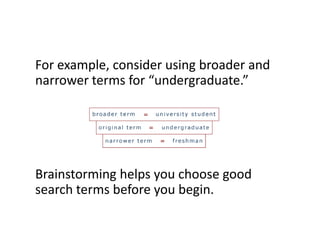
For example, consider using broader and
narrower terms for “undergraduate.”


Brainstorming helps you choose good
search terms before you begin.
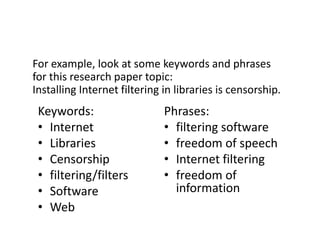
For example, look at some keywords and phrases
for this research paper topic:
Installing Internet filtering in libraries is censorship.
 Keywords:                    Phrases:
 • Internet                   • filtering software
 • Libraries                  • freedom of speech
 • Censorship                 • Internet filtering
 • filtering/filters          • freedom of
 • Software                     information
 • Web
Now it's your turn. We'll give you a sample
topic so you can practice brainstorming for
good keywords and phrases.
Now, list all the main ideas related to the
research paper topic below:
• Studies of Internet users have concluded
  that spending too much time online can
  adversely affect a person's psychological
  well-being. Some surveys found long
  hours on the Internet can lead to
  depression and loneliness.
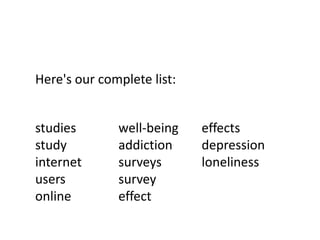
Here's our complete list:


studies       well-being    effects
study         addiction     depression
internet      surveys       loneliness
users         survey
online        effect
For any topic you choose, the Thought
Process will help you focus your research
and select appropriate search terms.

Once you have determined the keywords
and phrases for your topic, where are you
going to search?
You need to think about SCOPE.

E-LEARN: Brainstorming

  • 1.
    Brainstorming 1. A suddenbright idea; 2. a harebrained idea
  • 2.
    Before you beginyour research, write out a few detailed sentences about your topic. Underline the main words in these sentences. From the description that you wrote, create a list of related keywords and phrases.
  • 3.
    Once you havean initial list, think of other terms that also describe your topic. Write down any ideas you have, even the ones that seem harebrained; sometimes they end up being the most helpful. You should also identify words that have broader or narrower meanings than your original terms.
  • 4.
    Come up withsynonyms - other words or phrases that have the same meaning - for your terms. Don't forget to list alternative spellings, abbreviations, and acronyms for words on your list.
  • 5.
    For example, considerusing broader and narrower terms for “undergraduate.” Brainstorming helps you choose good search terms before you begin.
  • 6.
    For example, lookat some keywords and phrases for this research paper topic: Installing Internet filtering in libraries is censorship. Keywords: Phrases: • Internet • filtering software • Libraries • freedom of speech • Censorship • Internet filtering • filtering/filters • freedom of • Software information • Web
  • 7.
    Now it's yourturn. We'll give you a sample topic so you can practice brainstorming for good keywords and phrases.
  • 8.
    Now, list allthe main ideas related to the research paper topic below: • Studies of Internet users have concluded that spending too much time online can adversely affect a person's psychological well-being. Some surveys found long hours on the Internet can lead to depression and loneliness.
  • 9.
    Here's our completelist: studies well-being effects study addiction depression internet surveys loneliness users survey online effect
  • 10.
    For any topicyou choose, the Thought Process will help you focus your research and select appropriate search terms. Once you have determined the keywords and phrases for your topic, where are you going to search? You need to think about SCOPE.