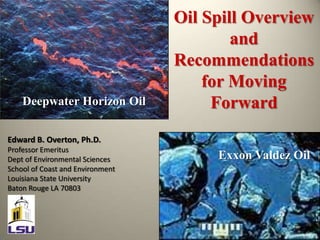
Oil Spill Overview and Recommendations for Moving ForwardDeepwater Horizon OilEdward B. Overton, Ph.D.Professor EmeritusDept of Environmental SciencesSchool of Coast and EnvironmentLouisiana State UniversityBaton Rouge LA 70803Exxon Valdez Oil
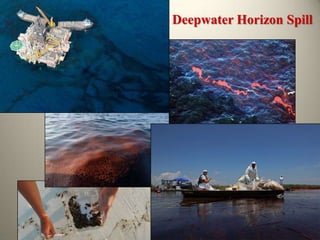
Deepwater Horizon Spill
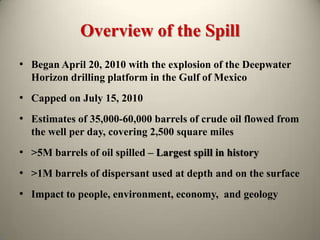
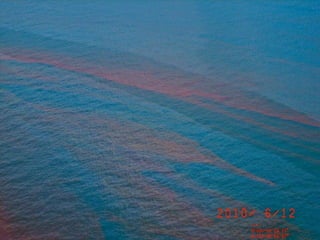
Overview of the SpillBegan April 20, 2010 with the explosion of the Deepwater Horizon drilling platform in the Gulf of MexicoCapped on July 15, 2010Estimates of 35,000-60,000 barrels of crude oil flowed from the well per day, covering 2,500 square miles>5M barrels of oil spilled – Largest spill in history>1M barrels of dispersant used at depth and on the surfaceImpact to people, environment, economy,  and geology
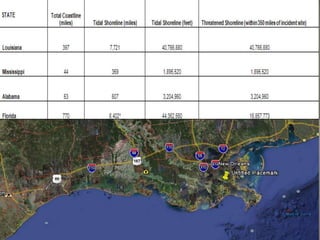
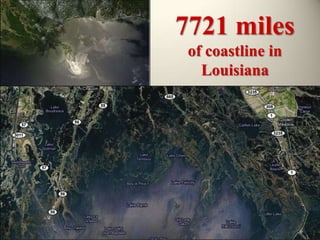
7721 milesof coastline in Louisiana
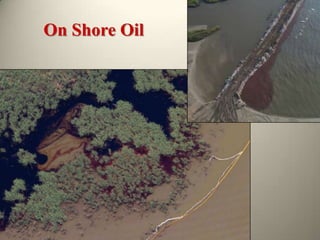
On Shore Oil
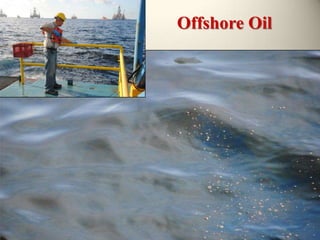
Offshore Oil
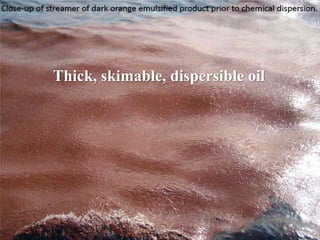
Thick, skimable, dispersible oil
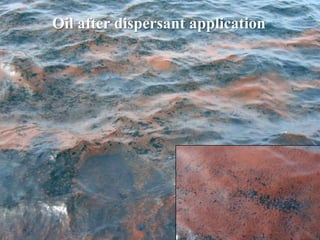
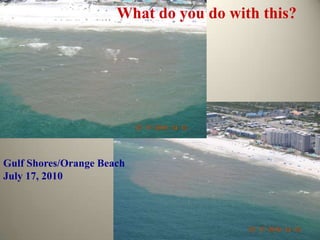
Oil after dispersant application
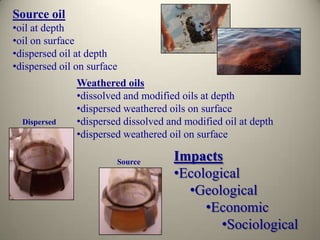
Source oiloil at depth
oil on surface
dispersed oil at depth
dispersed oil on surfaceWeathered oilsdissolved and modified oils at depth
dispersed weathered oils on surface
dispersed dissolved and modified oil at depth
dispersed weathered oil on surfaceDispersedImpactsEcological
Geological
Economic
SociologicalSource
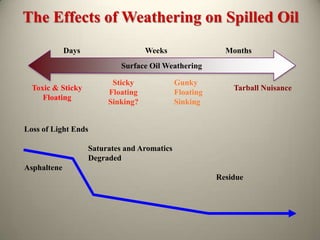
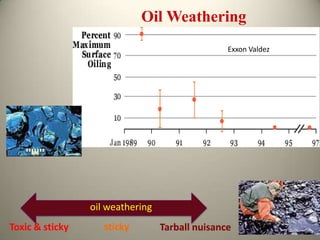
The Effects of Weathering on Spilled OilDaysWeeksMonthsSurface Oil WeatheringStickyFloatingSinking?GunkyFloatingSinkingToxic & StickyFloatingTarball NuisanceLoss of Light Ends				Saturates and Aromatics				DegradedAsphaltene												Residue
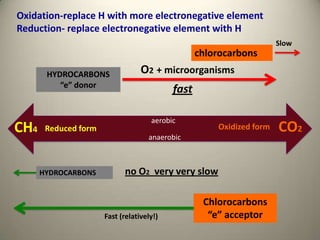
Oxidation-replace H with more electronegative elementReduction- replace electronegative element with HSlowchlorocarbonsO2+ microorganismsHYDROCARBONS“e” donorfastCO2CH4Oxidized formReduced formaerobicanaerobicno O2  very very slowHYDROCARBONSChlorocarbons“e” acceptorFast (relatively!)
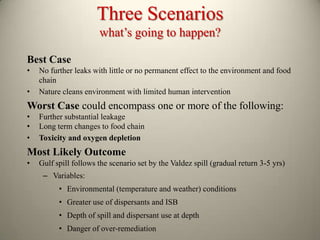
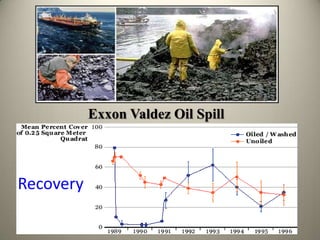
Three Scenarioswhat’s going to happen?Best CaseNo further leaks with little or no permanent effect to the environment and food chainNature cleans environment with limited human intervention Worst Case could encompass one or more of the following:  Further substantial leakageLong term changes to food chainToxicity and oxygen depletionMost Likely OutcomeGulf spill follows the scenario set by the Valdez spill (gradual return 3-5 yrs)Variables:Environmental (temperature and weather) conditionsGreater use of dispersants and ISBDepth of spill and dispersant use at depthDanger of over-remediation
Exxon Valdez Oil SpillRecovery
Oil WeatheringExxon Valdezoil weatheringstickyToxic & stickyTarball nuisance
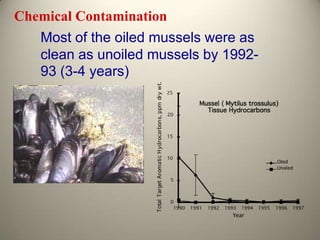
Chemical ContaminationMost of the oiled mussels were as clean as unoiled mussels by 1992-93 (3-4 years)
Valdez/Ixtoc1 and other oil spills lessons learned: Most but not all environmental indicators return to normal in 3-5 annual cycles.
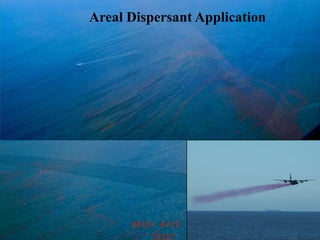
Oil Spills are acute events, not a chronic eventsOil Removal Options: 3 tools in Toolbox:Chemical
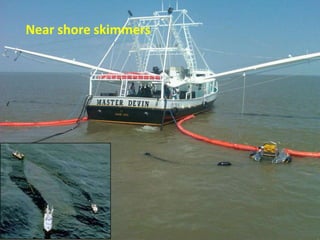
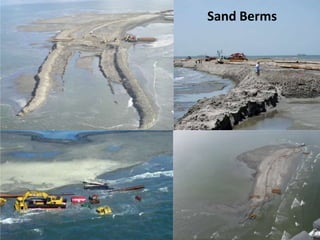
Mechanical
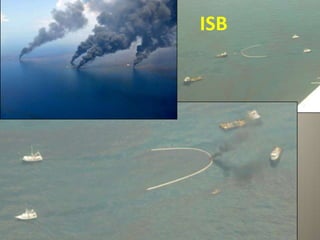
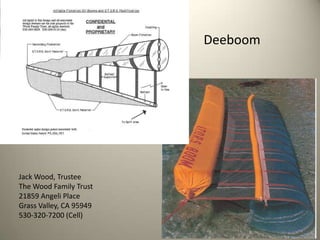
In-situ burningISB

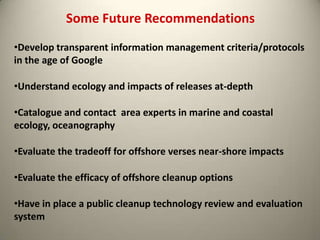
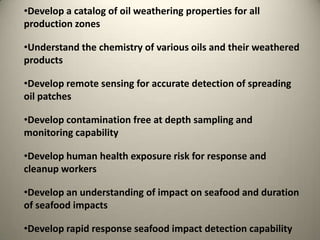
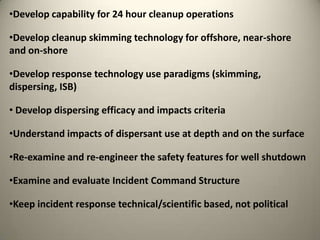
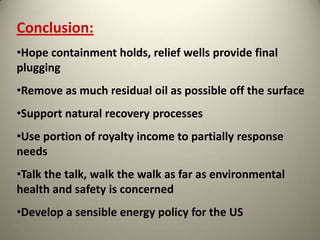
BP oil spill

  • 1.
    Oil Spill Overviewand Recommendations for Moving ForwardDeepwater Horizon OilEdward B. Overton, Ph.D.Professor EmeritusDept of Environmental SciencesSchool of Coast and EnvironmentLouisiana State UniversityBaton Rouge LA 70803Exxon Valdez Oil
  • 2.
  • 3.
    Overview of theSpillBegan April 20, 2010 with the explosion of the Deepwater Horizon drilling platform in the Gulf of MexicoCapped on July 15, 2010Estimates of 35,000-60,000 barrels of crude oil flowed from the well per day, covering 2,500 square miles>5M barrels of oil spilled – Largest spill in history>1M barrels of dispersant used at depth and on the surfaceImpact to people, environment, economy, and geology
  • 5.
  • 6.
  • 8.
  • 10.
  • 11.
  • 13.
  • 14.
  • 15.
  • 16.
    dispersed oil onsurfaceWeathered oilsdissolved and modified oils at depth
  • 17.
  • 18.
    dispersed dissolved andmodified oil at depth
  • 19.
    dispersed weathered oilon surfaceDispersedImpactsEcological
  • 20.
  • 21.
  • 22.
  • 23.
    The Effects ofWeathering on Spilled OilDaysWeeksMonthsSurface Oil WeatheringStickyFloatingSinking?GunkyFloatingSinkingToxic & StickyFloatingTarball NuisanceLoss of Light Ends Saturates and Aromatics DegradedAsphaltene Residue
  • 24.
    Oxidation-replace H withmore electronegative elementReduction- replace electronegative element with HSlowchlorocarbonsO2+ microorganismsHYDROCARBONS“e” donorfastCO2CH4Oxidized formReduced formaerobicanaerobicno O2 very very slowHYDROCARBONSChlorocarbons“e” acceptorFast (relatively!)
  • 25.
    Three Scenarioswhat’s goingto happen?Best CaseNo further leaks with little or no permanent effect to the environment and food chainNature cleans environment with limited human intervention Worst Case could encompass one or more of the following: Further substantial leakageLong term changes to food chainToxicity and oxygen depletionMost Likely OutcomeGulf spill follows the scenario set by the Valdez spill (gradual return 3-5 yrs)Variables:Environmental (temperature and weather) conditionsGreater use of dispersants and ISBDepth of spill and dispersant use at depthDanger of over-remediation
  • 26.
    Exxon Valdez OilSpillRecovery
  • 27.
    Oil WeatheringExxon ValdezoilweatheringstickyToxic & stickyTarball nuisance
  • 28.
    Chemical ContaminationMost ofthe oiled mussels were as clean as unoiled mussels by 1992-93 (3-4 years)
  • 29.
    Valdez/Ixtoc1 and otheroil spills lessons learned: Most but not all environmental indicators return to normal in 3-5 annual cycles.
  • 30.
    Oil Spills areacute events, not a chronic eventsOil Removal Options: 3 tools in Toolbox:Chemical
  • 31.
  • 32.